Customer Favorites

Spiritual friendship

What if the leading energy in our lives were to be our heart and our heart’s cry? What if living a “spiritual life” was actually synonymous with living a “heart-centered life”? These are some of the questions I have been asking myself—and the answers have pushed me more and more into prioritizing what I am calling “spiritual friendship.” What is spiritual friendship to me? It is the genuine meeting of two people who are vulnerable and open and truth-telling and available for actual contact and communion at the feeling level.

For the past eight years, I have been working closely with a Hakomi therapist (Hakomi is a type of therapy that works with mindfulness in a body-centered way). One of the principles of Hakomi is that the interpersonal wounds we have experienced in our life (for example, early wounds from childhood in relationship to our parents … sound familiar?) can only be healed in relationship with others. What this means is that interpersonal challenges can’t be healed on the meditation cushion or in solitary retreat.

Wounds from relationship require the context of relationship for healing. This seems pretty obvious, huh? But as someone who has been a meditator now for almost three decades, this was not something that was obvious to me in the early stages of my journey. Somehow I thought I was going to open completely to the universe and all of its mystery without ever needing to relate closely and vulnerably with others.

What I am actually finding is that connecting with other people in a heart-centered way is not just about healing. It is actually the most rewarding and fulfilling part of my life. Period. There is something about being fully received by another person and fully receiving another person, without the need for any part to be edited or left out, that feels to me like the giving and receiving of the greatest soul nourishment that there is.

blossom

Recently, I found myself in a room alone with a renowned scientist who specializes in the field of perception. We were at a conference and were sitting with each other in a room that had been set aside for presenters at the event. Finding ourselves alone in the room together, we both seemed a bit awkward at first. What would we talk about? I decided to bring up the topic of uncertainty as I knew that he taught quite a bit about uncertainty in the context of perception (for example, how we never know if what we are perceiving is the same as what someone else is perceiving, even when we are looking at the same thing).

Right at the beginning of what I feared would be an awkward conversation, this scientist said to me, “When you really start investigating how uncertain everything is, it’s enough to make you feel totally insane. There is only one thing that has kept me even the least bit sane, and that is loving relationships.” When he said this, I leaned over and said, “Would it be okay if I kissed you now?” He looked quite shocked. I gave him a big kiss on the cheek and said, “I never thought I would hear a scientist say such a thing. I have come to the same conclusion, but I thought that was just because I was some kind of a mushy-mush person.”

That moment in the green room was a moment for me of spiritual friendship, a moment of genuine connection where the heart breaks through any awkwardness or fear or holding back. I am finding those moments occurring more and more in my life, often in unexpected ways, and it is those types of moments that I hope will fill the Wake Up Festival from start to finish. We need each other so much. We need each other’s acceptance and reflection. We need each other’s unhurried presence. We need our love to break through. We need “community” in the sense of knowing that we are connected to others who are on a similar journey, where the vulnerability and tenderness of our hearts are leading the way.

Multiple bottom lines

Throughout the years, we at Sounds True have developed a guiding philosophy that we call “multiple bottom lines.” Our dedication to this principle is embodied in our Mission Statement:

The mission of Sounds True is to find teachers and artists who serve as a gateway to spiritual awakening and to produce, publish, and distribute their work with beauty, intelligence, and integrity. We treat our authors, vendors, and partners in the same way we would want to be treated. We work flexibly and efficiently together to create a cooperative, loving environment that honors respectful authenticity and individual growth. We maintain a healthy level of profitability so that we are an independent and sustainable employee-owned organization.values

The three essential bottom lines for Sounds True are the integrity of our purpose, the well-being of our people, and the maintaining of healthy profits. All three of these priorities are important in the decisions we make as a company. It is our conviction that each of these bottom lines must be healthy for the company to prosper as a whole.

In this short video, Sounds True’s founder, Tami Simon, explains our commitment to “multiple bottom lines”:


The Practical Art of Divining

Tami Simon speaks with Meg Lundstrom a journalist and author who has extensively written on the topics of self-development, health, and the search for meaning. She discovered the art of divining over 20 years ago, and calls upon her vast knowledge in the subject for a new book with Sounds True called What to Do When You Can’t Decide: Useful Tools for Finding the Answer Within. Meg discusses synchronicity and divining, the three types of divining methods discussed in her book, and the mechanisms at work behind the art of divining. (45 minutes)

Living as a River

Tami Simon speaks with Bodhipaksa, a Buddhist teacher, author, and member of the Western Buddhist Order since 1993. He currently teaches Buddhism and meditation to prisoners and is the author of several books, including Wildmind: A Step-by-step Guide to Meditation, as well as the Sounds True audio learning programs Still the Mind and The Wisdom of the Breath. In this interview, Bodhipaksa discusses the fluid nature of identity: what he calls “living as a river.” (56 minutes)

Hard Questions for a Vajra Master

Tami Simon speaks with Reggie Ray, a teacher carrying on the lineage of the great Tibetan Buddhist meditation teacher Chögyam Trungpa Rinpoche, a faculty member of Naropa University since its inception, and president and spiritual director of the Dharma Ocean Foundation based in Crestone, Colorado. He is the author of several books including Touching Enlightenment, as well as the Sounds True audio learning programs Meditating with the Body and Buddhist Tantra. Reggie answers a series of challenging and difficult questions from his student Tami. (52 minutes)

Gabor Maté on Trauma: Understanding the Roots of Heal...

Trauma is a word we hear often, yet many of us still wonder what it truly means. Is it only about extreme events, or can it take root in quieter moments of disconnection? Why do patterns like anxiety, addiction, or emotional shutdown persist even when we genuinely want change? Gabor Maté invites us to look beneath behaviors and symptoms to the deeper emotional wounds that shape how we relate to ourselves and others. His perspective reframes trauma not as a flaw in our character, but as an adaptation to experiences that once felt overwhelming.

At Sounds True, we have been recording and sharing the living wisdom of transformative teachers since 1985. With a library of thousands of titles and conversations with leading voices in psychology, spirituality, and human development, we are devoted to preserving teachings in their authentic, unscripted voice. Our mission is to support awakening and healing by offering resources that speak to the heart as well as the mind.

Here, we will discuss Gabor Maté’s insights on trauma, the connection between addiction and trauma, and how understanding the roots of healing can guide meaningful trauma healing grounded in compassion and awareness.

Key Takeaways:

  • Trauma Defined: Gabor Maté describes trauma as the internal impact of overwhelming experiences, not simply the event itself.
  • Addiction and Trauma Link: Addictive behaviors often serve as coping mechanisms for unresolved emotional pain rooted in early attachment wounds.
  • Roots of Healing: Compassionate awareness and relational safety form the foundation of sustainable trauma healing.

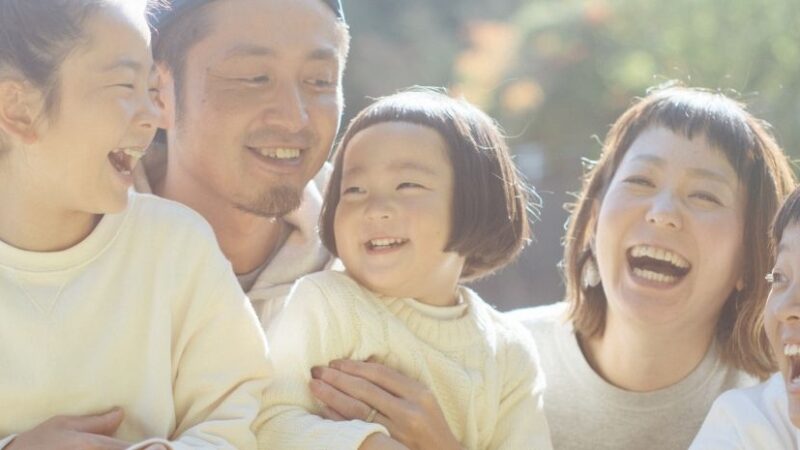
Build relationships that nourish and sustain

Gabor Maté on Trauma: A New Understanding of Emotional Wounds

In this conversation, Gabor Maté reframes trauma as an inner wound rather than a single external event. Trauma is not only what happened to us. It is what occurred inside us when we felt overwhelmed, unseen, or unsafe.

From this perspective, many of our adult patterns began as intelligent adaptations. A child who suppresses emotion to preserve attachment is not dysfunctional. That child is surviving. Over time, these survival strategies can become anxiety, self-criticism, emotional numbness, or people-pleasing.

Understanding Gabor Mate’s trauma means recognizing that these patterns are rooted in protection. When we ask, “What happened to you?” instead of “What is wrong with you?” shame loosens its grip. Compassion becomes possible.

At Sounds True, we have long been devoted to preserving the living wisdom of teachers like Dr. Maté. His work points us toward the roots of healing by inviting awareness, honesty, and self-compassion. Trauma healing begins with understanding how we adapted and gently reconnecting with the parts of ourselves that had to go into hiding.

Addiction and Trauma: Why Coping Mechanisms Begin in Childhood

Gabor Maté explains that addiction and trauma often begin long before adulthood. Coping mechanisms form in childhood as intelligent responses to emotional stress or disconnection.

Addiction as an Attempt to Regulate Pain

Addiction is not primarily about substances or behaviors. It is about relief. When children lack consistent emotional attunement, they may suppress overwhelming feelings. Later in life, compulsive behaviors can become ways to regulate what was never safely processed.

Seeing addiction through this lens shifts the focus from blame to understanding and supports meaningful trauma healing.

Attachment Wounds and the Roots of Healing

Children prioritize attachment over authenticity. If expressing anger, fear, or sadness threatens connection, those emotions are pushed aside. Over time, this creates internal disconnection that can fuel addiction and trauma patterns.

Recognizing these early attachment wounds reveals the roots of healing. With awareness and compassion, survival strategies can gradually give way to healthier forms of connection.

Awaken Your Inner Healing Power

The Roots of Healing: How Trauma Shapes the Developing Self

Gabor Maté explains that trauma shapes not only behavior, but identity. A child adapts to their environment in order to preserve attachment. Over time, these adaptations influence how the developing self relates to emotion, stress, and connection.

Adaptation and the Loss of Authenticity

When certain emotions threaten belonging, a child learns to suppress them. Anger, sensitivity, or fear may be hidden to maintain closeness with caregivers. These strategies protect attachment, yet they can create a lasting split between authenticity and connection.

Trauma healing begins by recognizing these patterns without judgment. As awareness grows, the parts of the self that were once silenced can gradually return.

Reclaiming the Self and the Roots of Healing

Healing involves reconnecting with the authentic self beneath survival strategies. With compassionate attention, individuals begin to see how early experiences shaped their beliefs and coping mechanisms. Trauma and the Embodied Brain offers a deeper look at how trauma lives in the nervous system and body, providing a somatic foundation for understanding why healing requires more than insight alone. As these insights unfold, the roots of healing become grounded in self-understanding, presence, and renewed connection.

Compassionate Inquiry: A Pathway to Trauma Healing

Gabor Maté presents Compassionate Inquiry as a gentle method for uncovering the beliefs and emotional patterns shaped by trauma. Rather than focusing only on symptoms, it brings awareness to the deeper wounds beneath them.

What Is Compassionate Inquiry?

This approach uses careful, attuned questioning to help individuals recognize how past experiences shape present reactions. By slowing down and listening inwardly, hidden narratives come into awareness, creating space for trauma healing.

Professionals seeking formal training can learn this modality through the Compassionate Inquiry Professional Training.

Compassion and the Roots of Healing

Compassion is central to this work. When shame softens, the nervous system feels safer, and authentic expression becomes possible. In this way, compassionate inquiry supports the roots of healing by restoring connection to the self. The Trauma Skills Program builds on this foundation, offering structured tools for developing the practical skills that support lasting nervous system regulation and emotional resilience.

Trauma Healing Through Presence, Awareness, and Self-Compassion

In this portion of the conversation, Gabor Maté emphasizes that trauma healing is not a technique to master but a way of relating to ourselves differently. Healing unfolds through steady awareness, nervous system regulation, and compassionate self-observation.

Core Elements of Trauma Healing

  • Presence with bodily experience: Trauma is stored in the body. Healing begins when we learn to notice physical sensations without immediately reacting or suppressing them.
  • Awareness of triggers: Emotional reactions often point to unresolved wounds. By observing triggers with curiosity, we trace them back to their origins in earlier experiences.
  • Self-compassion instead of self-judgment: Harsh inner criticism reinforces trauma patterns. Gentle acknowledgment helps restore internal safety.
  • Understanding addiction and trauma patterns: Recognizing how coping behaviors once protected us allows those patterns to soften rather than intensify.
  • Safe relational support: Healing deepens in the presence of attuned connection, where authenticity no longer threatens attachment.

Dr. Maté reminds us that trauma healing is gradual. It is not about erasing the past but about building capacity to stay present with ourselves. Through awareness and compassion, the nervous system learns that it no longer has to remain in survival mode.

Addiction and Trauma in Adults: Recognizing the Hidden Pain

In adulthood, addiction and trauma often show up as chronic stress, compulsive behaviors, or emotional numbness. What appears to be self-sabotage is frequently an attempt to regulate unresolved pain rooted in early attachment wounds. Gabor Maté invites us to look beneath the behavior and ask what the nervous system is trying to soothe. When addiction is seen as an adaptation rather than a failure, space for trauma healing opens.

For deeper insight and practical guidance, the Trauma Skills Summit brings together leading experts on trauma healing. Those seeking a structured approach to understanding how trauma lives in the body can turn to the Healing Trauma Online Course. Through awareness and informed support, the hidden pain beneath addiction and trauma can be met with compassion and clarity.

The Roots of Healing in Relationships and Community

Gabor Maté reminds us that trauma often forms in relationships and healing unfolds there as well. Early attachment patterns shape how we connect as adults, influencing trust, boundaries, and emotional expression.

When we experience safe, attuned relationships, the nervous system begins to settle. Authenticity no longer feels threatening to belonging. In a supportive community, addiction and trauma can be understood with compassion rather than shame.

The roots of healing deepen when we are seen, heard, and accepted as we are.

Compassionate Inquiry and the Future of Trauma Healing

In closing, Gabor Maté points toward a future of trauma healing grounded in compassion rather than pathology. If trauma is an adaptive response to disconnection, healing must center on reconnection to self and others.

Compassionate Inquiry reflects this shift. Instead of labeling symptoms, it listens beneath them. It recognizes that addiction and trauma arise from unmet needs and suppressed emotions. With awareness, long-held beliefs begin to soften.

The roots of healing are found in presence, relational safety, and authenticity. As we continue sharing these conversations at Sounds True, our intention remains clear: to support trauma healing that honors the whole person and restores connection at every level.

Discover the power of daily meditation

Final Thoughts

Gabor Maté reminds us that trauma is not a personal flaw but an adaptive response to pain and disconnection. When we understand the link between addiction and trauma, self-judgment begins to soften, and compassion takes its place.

The roots of healing are found in awareness, relational safety, and the courage to gently face what once felt overwhelming. Through compassionate inquiry and embodied presence, trauma healing becomes less about fixing ourselves and more about returning to who we have always been beneath survival patterns.

At Sounds True, we remain devoted to sharing conversations that support this return to wholeness.

Frequently Asked Questions About Gabor Maté Trauma and the Roots of Healing

What does Gabor Maté mean by trauma?

Gabor Maté defines trauma as the internal wound that forms when a person feels overwhelmed and unsupported. It is less about the event itself and more about the lasting impact on the nervous system and sense of self.

How does Gabor Maté connect trauma to physical health?

He suggests that chronic stress rooted in early trauma can affect the body over time. Emotional suppression and prolonged survival states may contribute to illness by keeping the nervous system in constant activation.

Is trauma always caused by extreme events?

No. Gabor Maté emphasizes that trauma can result from subtle, repeated experiences such as emotional neglect, lack of attunement, or pressure to suppress authentic feelings.

What role does authenticity play in trauma?

According to Maté, many people sacrifice authenticity to preserve attachment in childhood. This split between the true self and the adapted self becomes a core element of trauma.

How does Gabor Maté approach trauma differently from traditional models?

Rather than focusing only on symptoms or diagnoses, he looks at the emotional and relational roots beneath behaviors. His approach centers on compassion and curiosity rather than correction.

Can trauma exist even in loving families?

Yes. Trauma can occur even when caregivers have good intentions. Stress, distraction, or unresolved wounds in parents can limit emotional attunement, affecting a child’s development.

How does trauma affect decision-making in adulthood?

Unresolved trauma can influence choices through unconscious beliefs about worth, safety, and belonging. These beliefs may shape relationships, work patterns, and self-perception.

What is the relationship between stress and trauma?

Trauma often creates a heightened stress response. The body may remain on alert long after the original threat has passed, leading to chronic tension or emotional reactivity.

Is trauma healing a linear process?

No. Healing tends to unfold gradually and sometimes unevenly. Progress often involves increased awareness and capacity rather than a simple elimination of symptoms.

Why is compassion central to Gabor Maté’s view of trauma?

Compassion helps regulate shame and defensiveness. When individuals feel safe and understood, they are more willing to face painful memories and long-held beliefs.

Michelle Cassandra Johnson is an author, activist, spiritual teacher, racial equity consultant, and intuitive healer. She is the author of six books, including Skill in Action and Finding Refuge. Amy Burtaine is a leadership coach and racial equity trainer. With Robin DiAngelo, she is the coauthor of The Facilitator’s Guide for White Affinity Groups. For more, visit https://www.michellecjohnson.com/wisdom-of-the-hive.