October is a meaningful month for me as it honors two important parts of my identity. It is Filipino American History Month, a time to acknowledge and honor the presence and contributions of Filipino Americans. Although my parents immigrated to the United States from the Philippines in 1980, records show that Filipinos were present here as early as 1587, landing in present-day Morro Bay, California as part of a Spanish galleon. In an interesting moment of alignment, I am writing this to you from Morro Bay, feeling the palpable power of the land and seeing the sacred 600-foot-tall Morro Rock–known as Lisamu’ in the Chumash language and Lesa’mo’ by the Salinan people–standing proudly just outside the window of our Airstream trailer. October is also Pregnancy and Infant Loss Awareness Month, a time to increase awareness about and honor those of us who have endured such loss- what I often refer to as womb loss.
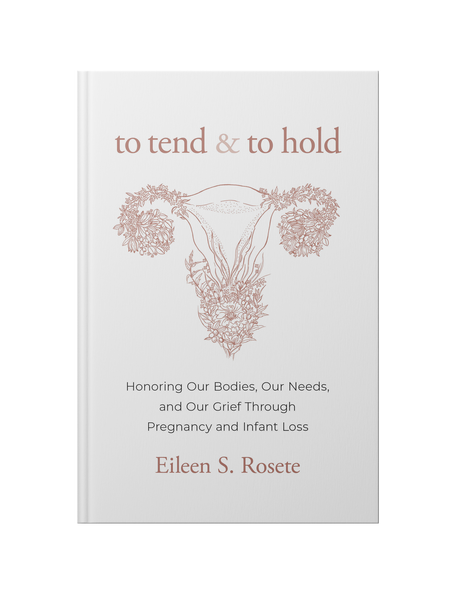
This October is particularly meaningful with my book, To Tend and To Hold: Honoring Our Bodies, Our Needs, and Our Grief Through Pregnancy and Infant Loss, officially launching on October 22. In it I share how my identities as a Filipina American and bereaved mother intertwine, and how valuable it can be for survivors of womb loss to turn to their cultural traditions for support as they grieve and as their postpartum bodies return to a non-pregnant state. How I came across this online essay and found solace in the language of my ancestors who use terms to describe miscarriage as “someone from whom something was taken away” rather than placing blame with the prefix mis- which means wrongly or badly. I did not carry my pregnancies wrongly or badly. Loss was something that my body experienced.
The following is an excerpt from To Tend and To Hold that I hold dear as it shares a traditional Filipino dish I grew up eating and that I share now as a postpartum doula to offer comfort and nourishment to those who are postpartum, both with living children and after loss. I hope it may offer you comfort as well, no matter if your experience of womb loss was recent, in the past weeks, months or even many years ago. My heart is with you and please know that you are not alone as you grieve and as you heal- at your own pace and in your own way.
~
I recently cooked this recipe for champorado, a Filipino rice porridge, for my beloved friend Katrina on a very tender anniversary, the due date of one of her children and the death date of another. Her child, Zeo Thomas, would have been born that day had he not died in the womb at five months gestation. It was within the same year of his death that her second child, Solis Vida, died in the womb in the first trimester. In truth, Katrina had been bleeding for over a week to release her second pregnancy, but as she bled through Zeo’s due date, she felt an intuitive pull to honor this same date as Solis’s death date. I thought of my friend as I made my way slowly through the grocery store. Though it was crowded and busy, I felt cocooned in my thoughts and intentions for her—how I wanted to help her feel seen and held during this difficult time—and I found myself gathering each of the ingredients in a mindful way that felt like the beginning of a bigger ritual. Knowing I was going to cook for her to honor her, her babies, her grief, and also her longings added a layer of reverence to what would otherwise be a standard grocery run. Later as I cooked the porridge in her home, I channeled my love and condolences into each step. And when I finally brought the warm bowl of champorado to her and saw her reaction, it was my turn to feel honored. Honored to be there with her. Honored to tend to her. And with a dish we both knew from our childhoods. She dubbed it “postpartum champorado,” and so it shall be known.
Warm and soft, rice porridge is one of the best postpartum foods as it is easy to eat, warming to the body, and gentle on the digestive system. Its very nature is to offer comfort. In my opinion, champorado, a Filipino chocolate rice porridge I grew up savoring, is one of the most heartwarming dishes, with the cacao tending as much to the emotional heart as to the physical body. It can be offered any time of day for both a filling meal and a gentle reminder that there is still sweetness in life even amidst grief.
In this nourishing version, cacao powder is used in place of cocoa so that we may benefit from all that this superfood has to offer, including iron to help rebuild red blood cells, flavonoids to improve blood flow, and magnesium to ease anxiety and depression. In addition to being nutrient-rich, cacao is also known to lift the mood. If the thought of preparing food feels beyond your current capacity at this moment, consider sharing this recipe with a partner, postpartum doula, or other support person and asking them to cook it for you. Additionally, if you are currently pregnant, please consult your health-care provider before consuming cacao as it contains caffeine.
Champorado: Filipino chocolate rice porridge
1 cup sweet rice (also called glutinous or sticky rice) or sushi rice
5 cups water
1/4 cup cacao powder
1/2 cup brown sugar
1 tablespoon unflavored protein powder (optional)
Condensed coconut milk for topping
Cacao nibs (optional)
Rinse the sweet rice several times until the water runs clear when drained.
Combine rice and water in a pot over medium-high heat. Bring to a boil, then reduce heat to medium and continue to cook until the rice is soft and the porridge thickens (about 20 minutes), stirring often to keep from sticking to the bottom of the pot.
Add cacao powder, brown sugar, and unflavored protein powder. Stir to combine, then remove from heat.
Drizzle condensed coconut milk (or other milk of choice) and top with cacao nibs. Serve hot.
Are certain individuals more inclined to awaken spiritually? Do some of us have a natural proclivity to experience spiritual states of oneness? Welcome to the first episode in our new podcast series, Being Open: Spirituality and the Neurodivergent Mind. In this illuminating conversation, Tami Simon speaks with intuitive energy healer and awakening trail guide Sarah Taylor about the empowering revelations and approaches she has discovered throughout the course of her life—including the late-in-life realization that she has both autism and ADHD.
Give a listen to this compelling and informative dialogue on: waking up to our interconnection; the shift from “head awakening” to “heart awakening”; Dzogchen and “the one taste”; the receptivity and porousness of neurodivergent people; the healing power of integration and embodiment; the critical importance of downtime and self-care; experiencing equanimity; unraveling the adaption strategies that no longer serve you; living with a high level of “raw sensitivity”; owning your truths—instead of masking your wants, needs, and authenticity; the misunderstood habit of “stimming” (or self-stimulation); the concept of samskaras (or energetic blockages in your subtle anatomy); reckoning with grief; the futility and harm of self-labeling; reframing limitations as gifts; managing your energy and seeking support when you need it; the connection between our increased understanding of the neurodivergent brain and the collective evolution of humanity; and more.
Note: This episode originally aired on Sounds True One, where these special episodes of Insights at the Edge are available to watch live on video and with exclusive access to Q&As with our guests. Learn more at join.soundstrue.com.
Recently, someone who works at Sounds True asked me if I would be her “buddy” in an experiment. She is getting married in June,and she has historically been a nail-biter. She wants her finger nails to look beautiful and elegant when she reaches out her hand and her husband-to-be places the ring on her wedding finger (perhaps you can see the photograph of this moment in your mind?). Her question to me: Would I stop biting my finger nails (I have been an engaged nail-biter since childhood….it’s all coming out here on the ST blog site) as a way to support her in this goal?
At first I thought, forget it. I have never been successful at stopping biting my nails for very long and why should I bother with this. And then I thought, I love this person. And she almost never asks of anything of me. And she is getting MARRIED after all. I have to say “Yes” without giving this another thought. So I quickly took the leap and agreed.
Now here is the interesting thing: It has been almost a month since we made this agreement, and so far, I have been supremely vigilant in upholding my word (one small nail was ripped off, but otherwise I am ready to scratch anything with 9 long nails). Why is this approach working? Obviously, it’s not because I care about having good looking nails (since I haven’t for decades). It’s because I care about this person. I feel inspired by my love of her and my desire to support her in any way that I can. And beyond that, her goal matched a goal that I have that has been lingering under the surface.
And this has made me think about all of the support groups that exist for all kinds of things (from Weight Watchers to AA), and the tremendous power of creating a resolve not on our own but in relationship with another person. This is such an OBVIOUS point, but I have never seen this so clearly before. And as the Publisher of a company dedicated to transformation, I am asking some new questions: How can we help the Sounds True community link up (“buddy up”) with people who share similar transformational goals? Perhaps we could create “practice partnerships” where people check in with each other on a daily basis for a period of time in order to follow through on a commitment to a specific spiritual discipline? What type of vulnerability does it take to reach out and ask for support and how can we encourage people to do this? What other areas of my life do I want to “buddy up” with someone (whether that be a friend or coach) to achieve certain outcomes?
And at another level, I am reflecting on how much we simply need each other to grow and change. How another person’s love and presence can inspire us to stretch and do something differently, perhaps something we have always wanted to do but just didn’t have enough forward-motion on our own. And how this is the power of being accompanied and is something readily available we can offer and receive from each other.
And to take this even further, there are certain Sounds True authors who I feel are “accompanying” me on the spiritual path. Some of them might suspect they are playing that type of role in my life, others probably have no idea. These people are inner “touchstones” — their life and work inspires me to continue with my own life and work. Occasionally, during a difficult moment, I invoke their name or their face, and I feel heartened. And since this is all happening in the inner chambers of the heart, it is very possible that we don’t know who is feeling “accompanied” by our life, who is deriving strength and perseverance and follow-through from invoking our name and presence. I feel so grateful for all of the writers and teachers, past and present, who I draw on as “buddies”. It sounds trite to say “we need each other” and it is not strong enough language. My sense is that we actually exist for each other and because of each other. And the more wildly and passionately and freely we can acknowledge our companionship, the more daring we can be. We become supportive and supported risk-takers. We become fellow travelers on a journey where our love for each other calls us ever-deeper.
Each of us has a somewhat mysterious inner power that could be called a “soul force.” In my experience, our soul force feels unstoppable, and it carries with it our uniqueness and what we care the most about. You could say it is the most essential part of us, that which we cannot be “talked out of,” that which demands expression.
Many people believe that this soul force, if it even exists, is not necessarily related to our work in the world. I am proposing just the opposite: that if we are to find our deepest fulfillment at work and achieve the highest potential in our career, in whatever field that might be, we need to engage and unleash this power.
What does it feel like to “work from our soul”? In my experience, there is a sense of drawing on a source of pure potential that is self-renewing and feels electrically charged. I don’t feel like I am working from a thin and limited layer of thoughts or strategy, but instead, there is a sense of being tapped into a charged energetic system of support and creativity.
Your Belly, Heart, and Head
For many years, I practiced somatic meditation, a type of meditation where we practice (among other things) inhabiting the inner space of the body and developing what’s known as interoception (being aware of internal bodily sensations). One of the things I discovered was the felt experience of three energy centers—the belly, heart, and head—that are referenced in many different systems of spiritual practice, and how these three centers can help us in engaging our soul force at work.
This might sound esoteric, but I actually think these three inner energy centers (called the “three brains” or “tan tiens” in Chinese medicine or “elixir fields” in certain types of qigong) are very discoverable and accessible to people who start to turn their attention inward.
To say more, when our belly center is open and energy is flowing through it in an unimpeded way, we can feel a sense of grounded power. We feel anchored and sense that we can weather the storms of life like a strong tree that is rooted deeply in the earth.
When our heart center is open, we can feel a sense of love streaming from us in every direction. This stream carries with it our care and concern for others. You could even say that we sense a stream of well wishes pouring out from our heart. Our work becomes imbued with a motivation to be of service to others and our world.
And when the center of our head is open, energy and information flow in through the top of our head in a way that often feels, at least in my experience, quite mysterious. New ideas come to us that can feel sparkly, such that even we are surprised by what is occurring to us. We become endlessly innovative in our work.
The Power of Letting Go
What does it take to awaken the intelligence of these three “inner brains” and allow the full power of our soul force to stream through these three energy centers? In my experience, what is required is not what you might expect. We don’t need to add anything to us. What is needed is a whole lot of letting go.
What are we letting go of? All of the ways we block ourselves, all of the ways we hold back. We are letting go of all of the ways we seek approval and are twisted up trying to appeal to others to be liked by them, the many ways we try to find acceptance and success via the unspoken and sometimes spoken rules of the status quo. We let go of twisting ourselves to fit a norm that doesn’t fit the truth of who we are. We let go of the mental construct of who we are so we can be the unique expression of the truth of who we are.
One year at Sounds True, we decided to give T-shirts out to the staff as part of our holiday gifting. Not a particularly original idea, but something we thought people would like. And our creative director put this slogan on the T-shirt: “Sounds True: Here for the Weird.” And I loved it.
Now, not everyone likes the word “weird”… but I do. A chapter was once written about me for a book on bringing your whole self to work, and the authors called it “Tami Simon: Flying Her Freak Flag.” I didn’t mind the use of the word “freak” either. The reason is that these are just words in popular culture that mean someone is willing to be themselves in all of their uniqueness and eccentricities. And that courage to step forward and be a brave truth-teller is something that I value.
Recently, I was in a discussion with a spiritual teacher about how interesting it is that we don’t become a blob of paste-like oneness when we drop deeply into what some people refer to as the “field of being,” the boundless, awake awareness that we share. Instead, we often become more uniquely expressive and can even appear a bit quirky. He shared his observation that it is our ego-construct, the veneer of “I’ve got it together,” that keeps us looking like copycats of others. When we allow that ego construct to lose its presentational grip, and perhaps even drop away, we make room for the emergence of our soul force, the innermost part of ourselves, to shine forth. We liberate our own “weird.”
As a leader of an organization, one of the things I have noticed is that when I present and speak from this innermost place without a lot of self-censorship, it naturally invites others to do the same. It is as if a “permission field” has been established. The company founder is telling it like it is—talking about what she learned in therapy this week, or something that occurred when talking with her wife (of the same sex), or a discovery that came through a sleepless night—and this sets up a new norm. This organization is actually a place where I don’t need to wear a mask at work; my truth-telling and uniqueness are welcome here. And this liberates a tremendous amount of energy and, dare I say, “soul power.”
What’s Your Genius Zone?
Several years ago, as the CEO at Sounds True, I found myself having difficulty figuring out how to best structure our organization (as our direct-to-consumer digital business began to grow rapidly with a different set of infrastructure needs from our traditional publishing business). I decided to hire an organizational consultant, Lex Sisney, the founder of Organizational Physics, whose expertise is helping midsize companies design to scale.
To my surprise, Lex started his assessment of Sounds True’s structural needs by having me do a deep-dive review of whether or not I was working in what he calls one’s “genius zone.” As I have come to understand Lex’s approach, part of what he believes contributes to organizational flourishing (and the ability to scale) is when people are in job functions that make the best use of their natural capacities and passions.
In a way, this seems utterly obvious. Like any good sporting team, you want people in the positions where they have the most natural affinity and talent. And when you have a whole team of people working in their genius zones, you have a much greater likelihood of having a winning team.
And yet as a founder, I have always had the attitude of “I will do whatever it takes. This isn’t about being in a ‘genius zone’; this is about getting done what needs to be done. All work is not enjoyable anyway, and just buck up and do the next thing needed.” This sounds very dutiful, and it is, but it is not the stance that creates the most high-functioning team, nor the most joy, nor the most soul engagement at work.
About a year and a half ago, I did an exercise where I went through my calendar for several weeks in a row and numbered every scheduled meeting on a 1-to-10 scale in terms of how excited I was for the meeting to take place. A very obvious pattern emerged: about half of the meetings in my calendar received the number 2 or 3, and about half of the meetings were an 8 or a 9 or even a 10.
The events in the calendar that received a high score related to interviews I was hosting, new partnerships that were being formed, and working directly with authors on new projects. The meetings that received a low score had to do with the business’s strategic execution in terms of finance, operations, and the coordination of various departments. This simple exercise presented a clear picture: I needed to shift my role and pass on a whole set of responsibilities so I could be free to focus on and expand the parts of my work that were exciting to me.
We have this notion that we need to trade what we really care about in order to make money. In a conversation with Rha Goddess, author of the book The Calling, I asked her about this. She said something to the effect of, “Why wouldn’t you earn the most money in your career doing what you are uniquely good at, what you excel at, what you uniquely have the ability to contribute?”
Her words landed. What if our greatest career achievement can only come from working in our area of natural genius, from letting go of all the ways we hold ourselves back and bringing our full soul force to work?
I believe that when we do, we find fulfillment at work. And also in life. And then, when our days come to an end, we find ourselves at peace, hands open and empty. We gave away all that we were given.
In support of your journey,
Tami Simon
Tami Simon
Tami Simon is the founder of Sounds True and the Sounds True Foundation, and cofounder of the Inner MBA online immersion learning program and conscious business community created in partnership with LinkedIn and Wisdom 2.0.
The Inner MBA program connects a global community from more than 90 countries. It includes teachings from conscious business leaders, influential CEOs, spiritual luminaries, and faculty from leading universities. Together, we engage in the inner work of growth and transformation, empowering ourselves and our organizations to contribute powerfully to our collective good.
Relationships rarely fall apart all at once. More often, the distance grows slowly, through unspoken needs, quiet compromises, and conversations that never quite happen. Terry Real’s teaching on fierce intimacy names this pattern with clarity and compassion. He asks us to look honestly at how love begins to falter when silence takes the place of truth, and accommodation takes the place of self-respect.
For nearly four decades, Sounds True has been devoted to preserving and sharing the living wisdom of transformative teachers in their own voices. Terry Real is one of those voices. His work bridges psychological depth with relational courage, drawing from real human experience and decades of clinical practice. Through digital courses, audio programs, and long-form conversations, Sounds True brings his teachings to people ready to bring greater dignity, honesty, and emotional maturity into their relationships.
Here, we’ll examine Terry Real’s approach to fierce intimacy, the practice of standing up with love, and how assertive communication and relationship repair contribute to deeper, more resilient connections.
Key Takeaways:
When Honesty Becomes the Most Loving Thing You Can Do: Fierce intimacy weaves together truth-telling and genuine connection, replacing silence and accommodation with accountability and closeness.
How to Speak Up Without Shutting Down: Standing up with love means voicing needs and limits clearly while staying emotionally present, so honesty and connection can exist in the same breath.
Repair Is the Real Measure of a Lasting Relationship: Long-term intimacy grows stronger through consistent relationship repair, shared responsibility, and a mutual commitment to choosing each other, again and again.
What Terry Real Means by Fierce Intimacy
In this conversation, Terry Real speaks to a form of intimacy that refuses silence and self-erasure. Fierce intimacy asks us to stay connected while telling the truth about what we feel, what we need, and where we draw the line. Rather than framing closeness as endless accommodation, Terry names intimacy as an active, relational stance. Love, in this view, is not passive. It is participatory.
His work challenges the idea that harmony is the highest goal in a relationship, hence why he points instead to mutual dignity. Fierce intimacy means refusing to collapse in the face of conflict while also refusing to dominate. The practice asks us to stay present, emotionally grounded, and accountable to ourselves and to the relationship at the same time.
This teaching is central to Fierce Intimacy by Terry Real, where intimacy is defined by courage rather than compliance. Terry invites us to examine how fear, power dynamics, and learned survival strategies shape the way we show up with the people we love. The invitation is both simple and demanding: speak honestly, stay connected, and take responsibility for your impact.
Fierce Intimacy and Standing Up With Love
Fierce intimacy asks for honesty without withdrawal and connection without self-betrayal. Standing up with love is the practice of holding both at once, even when doing so feels uncomfortable or unfamiliar.
Moving Beyond Accommodation
Accommodation often looks like care, but over time, it weakens intimacy. When needs go unspoken, resentment quietly takes their place. Fierce intimacy invites a different choice: staying rooted in personal truth while remaining emotionally engaged. This shift is central to The Freedom to Choose Something Different, where breaking habitual relational patterns is understood as an act of courage rather than disruption.
From Opposition to Partnership
Conflict can quickly turn partners into adversaries. Standing up with love reframes disagreement as a relational moment rather than a threat. Each person takes responsibility for their impact, making room for accountability without blame. When practiced consistently, this stance moves relationships out of opposition and back into collaboration, where honesty strengthens connection instead of breaking it.
Standing Up With Love Through Communication
Assertive communication, as Terry Real teaches it, is rooted in self-respect expressed through relationships. Standing up with love means speaking clearly without aggression and staying connected without losing oneself in the process. Nonviolent Communication Online Training Course offers practical, grounded tools for doing exactly this — expressing needs and limits with honesty while keeping the relational connection intact.
Speaking From the Adult Self
Terry distinguishes adult communication from reactive speech driven by fear or the need for control. Adult communication stays anchored in personal experience and shared responsibility. The focus remains on impact rather than accusation, and on inviting dialogue rather than escalation.
Boundaries Preserve Connection
Standing up with love includes setting boundaries that protect dignity on both sides. These boundaries are not threats or ultimatums. They are clear statements of self-care offered in service of the relationship, creating space for honesty without rupture. Boundaries, Communication & Living True explores this balance directly, helping practitioners find language for their limits that feels both firm and loving.
Relationship Repair as a Daily Practice of Fierce Intimacy
Fierce intimacy is measured not by how little conflict a couple has, but by how willing both partners are to repair when something breaks down. Terry Real treats relationship repair as a daily relational discipline, not a special intervention reserved for major ruptures.
Shifting From Blame to Accountability
In moments of disconnection, the pull toward tracking what the other person did wrong can be strong. Terry Real redirects attention toward personal responsibility instead. Repair begins when we ask how our own behavior, tone, or withdrawal contributed to the breakdown. This shift does not excuse harm, but rather, it restores agency. The Power of Self-Compassion supports this process by helping practitioners take honest responsibility without collapsing into shame, making accountability sustainable rather than punishing.
Taking responsibility opens the door to dialogue. The gesture signals a willingness to stay engaged rather than retreat into righteousness. Without this posture, conflict calcifies, and closeness becomes fragile.
Repair as a Relational Skill
Terry teaches that repair is learnable. The process involves naming the rupture, acknowledging the impact, and recommitting to connection.
This unfolds differently depending on where a relationship is developmentally, a theme explored in depth through The Three Stages of Intimacy. Recognizing these stages helps partners see why certain conflicts repeat and how repair matures as the relationship does. Practiced consistently, repair builds genuine trust. Partners learn that conflict does not threaten the bond. Instead, it becomes a doorway back to each other.
Assertive Communication in Moments of Conflict
Conflict is where old patterns surface most quickly. Terry Real emphasizes that assertive communication during charged moments is less about saying the perfect words and more about staying regulated, present, and accountable while emotions are active. A few principles guide this practice:
Name impact without accusation: Instead of leading with blame, assertive communication names what landed and why it mattered. This keeps the focus on experience rather than character and lowers defensiveness.
Stay grounded in the present moment: Terry cautions against piling on past grievances during conflict. Fierce intimacy asks us to address what is happening now, which keeps the conversation workable and relational.
Hold your position without escalating: Standing up with love means maintaining clarity without raising emotional volume. Assertiveness is expressed through steadiness, not force.
Signal commitment while setting limits: Even in disagreement, it matters to reaffirm the connection. Communicating care alongside boundaries reminds both partners that the relationship itself is not in question.
Standing Up With Love in Long-Term Relationships
Relationships tend to organize themselves around familiar roles. One person adapts while the other leads. One pursues while the other withdraws. Terry Real speaks to how these arrangements often emerge quietly and then harden, shaping intimacy without either partner consciously choosing them. Standing up with love interrupts this drift.
In long-term relationships, fierce intimacy calls for a willingness to renegotiate these roles. Each partner is invited to notice where they have gone along to keep the peace, and where resentment has quietly taken root as a result. Standing up with love does not mean destabilizing the bond. Rather, it means bringing vitality back into it by reintroducing honesty.
Terry emphasizes that commitment does not mean tolerating what diminishes us. It means staying engaged enough to name what is no longer working and to ask for change without threat or withdrawal. When practiced consistently, this stance restores aliveness. Love becomes less about maintenance and more about mutual growth.
Relationship Repair Across the Three Stages of Intimacy
Terry Real situates relationship repair within a larger developmental arc. Early intimacy often emphasizes connection and harmony, sometimes at the expense of individuality. As relationships mature, conflict emerges as partners begin to assert themselves more fully. Repair becomes essential at this stage, not as damage control, but as a way to integrate truth with closeness.
In later-stage relationships, repair reflects a deeper capacity for accountability. Partners are less focused on who is right and more attuned to how their actions affect the bond. Repair is no longer about restoring comfort. It is about restoring alignment with shared values and mutual respect. This shift requires emotional maturity and a willingness to tolerate discomfort without retreating or attacking.
This form of relational maturity is explored further in Third Stage Love, where intimacy is shaped by choice rather than dependency. Here, repair becomes an expression of commitment. Partners stay engaged not because they are fused or fearful of loss, but because they are devoted to the relationship as a living, evolving practice.
Fierce Intimacy and Third Stage Love
Fierce intimacy comes into full focus within Third Stage Love. At this level of relational maturity, partners remain emotionally connected without giving up their individuality. Standing up with love is no longer reactive. It becomes a shared value that guides how conflict, difference, and repair are handled.
In Third Stage Love, accountability replaces blame, and repair is offered without defensiveness. Assertive communication supports honesty without threat, allowing intimacy to deepen through choice rather than dependency. Fierce intimacy, practiced this way, sustains relationships that are grounded, resilient, and emotionally alive.
Final Thoughts
Terry Real’s work on fierce intimacy centers on a clear commitment: staying present without abandoning oneself or the relationship. Standing up with love is not about avoiding conflict, but about meeting it with honesty, accountability, and care. Through assertive communication, consistent relationship repair, and the maturity of Third Stage Love, intimacy becomes resilient rather than fragile. Fierce intimacy asks us to choose connection grounded in truth, again and again.
Frequently Asked Questions About Terry Real and Fierce Intimacy
What does Terry Real mean by “standing up with love”?
Standing up with love means expressing needs and limits clearly while staying emotionally present, rather than choosing silence, appeasement, or dominance. Terry Real teaches that this kind of honest engagement is one of the most caring things a person can bring to a relationship.
How is fierce intimacy different from traditional relationship advice?
Fierce intimacy places mutual dignity at the center, prioritizing accountability and truth over harmony or conflict avoidance. Rather than aiming for a peaceful surface, his approach encourages partners to build something more durable through honesty and shared responsibility.
Is fierce intimacy only relevant for romantic relationships?
No. Terry Real’s framework applies to family relationships, friendships, and professional partnerships where honesty and respect matter. The principles of assertive communication and relationship repair translate across many relational contexts with equal depth.
Can fierce intimacy be practiced if only one partner is committed to it?
Yes. While mutual participation deepens the work, one person shifting toward accountability and clarity can reshape the entire relational dynamic. A change in one partner often opens the door for change in the other.
Does standing up with love mean being confrontational?
Not necessarily. The approach emphasizes steadiness and clarity, not aggression, blame, or emotional escalation. Standing up with love is about staying grounded and honest, not about picking a fight or winning an argument.
How does fierce intimacy address power imbalances in relationships?
Fierce intimacy encourages both partners to examine where power is misused or surrendered, and to renegotiate roles in the service of mutual respect. This process requires honesty and a genuine willingness to look at patterns that have formed, often quietly, over time.
Is fierce intimacy compatible with spiritual or contemplative practices?
Yes. Terry Real’s work bridges psychological insight with spiritual maturity, drawing on themes of truth-telling, presence, and personal accountability that resonate deeply with contemplative traditions.
What role does self-awareness play in fierce intimacy?
Self-awareness is foundational. Recognizing personal triggers, defenses, and habitual patterns allows for more grounded and responsible communication. The more clearly we see ourselves, the more fully we can show up for others.
Can fierce intimacy help prevent long-term resentment?
By addressing needs and tensions early and directly, fierce intimacy reduces the buildup of unspoken frustration that tends to harden into resentment over time. Honest conversations, held with care, protect the relationship from slow erosion.
Michelle Cassandra Johnson is an author, activist, spiritual teacher, racial equity consultant, and intuitive healer. She is the author of six books, including Skill in Action and Finding Refuge. Amy Burtaine is a leadership coach and racial equity trainer. With Robin DiAngelo, she is the coauthor of The Facilitator’s Guide for White Affinity Groups. For more, visit https://www.michellecjohnson.com/wisdom-of-the-hive.
Have you ever noticed how quickly your mind reacts to stress, emotion, or even a passing thought? Many of these responses feel automatic, as if they happen before we have a chance to choose. Yoga offers another way of meeting these moments. Through breath, movement, and attention, we begin to slow down and notice what is happening within us. With practice, this awareness creates space, allowing for more clarity, steadiness, and a deeper connection to our emotional life.
At Sounds True, we have spent decades sharing the living wisdom of transformational teachers in their own authentic voice. Our work is rooted in making these teachings accessible and meaningful for everyday life. Through conversations with teachers like Stephen Cope, we bring forward insights that bridge ancient practice with modern understanding of the mind.
Here, we look at how yoga brain science shapes emotional health through Stephen Cope’s teachings on awareness, neuroplasticity, and mental well-being.
Key Takeaways:
Neuroplasticity in Action: Yoga brain science shows that repeated awareness and breathwork can reshape neural pathways over time.
Emotional Awareness: Yoga’s psychological benefits include recognizing and responding to emotions with greater clarity and steadiness.
Mind-Body Connection: Practices rooted in yoga and mental health strengthen the relationship between physical sensations and emotional experience.
Stephen Cope on Yoga Brain Science and Emotional Transformation
In conversation with Stephen Cope, yoga brain science is not a general idea, but something lived and felt in the body and mind. Cope draws from decades of practice to highlight a simple truth: the brain is shaped by where we place our attention. Through yoga, we begin to notice our patterns, how reactions form, and how awareness can gently shift them.
Many of us move through life on autopilot, reacting quickly to stress and emotion. Yoga invites a slower pace. It encourages us to pause, feel, and stay present. Over time, this creates space between impulse and action, allowing for new ways of responding.
This transformation is not about becoming someone else. It is about becoming more aware of our own experience. Yoga brain science helps us understand this process, but the real change happens through practice, moment by moment.
Yoga Neuroplasticity: How Practice Rewires the Brain
Yoga offers a direct experience of neuroplasticity, showing us that change is not only possible but natural. Through steady practice, the brain begins to reorganize in response to new patterns of attention and presence.
Repetition and Awareness in Yoga Neuroplasticity
In yoga, repetition is not about perfection. It is about returning. Each time we bring awareness back to the breath or body, we are strengthening pathways in the brain that support presence. These moments may seem small, yet they accumulate in meaningful ways. Over time, the familiar pull of distraction or reactivity begins to shift.
This is how yoga neuroplasticity unfolds. The brain learns from experience. When we repeatedly choose awareness, the brain adapts to that choice. Patterns of calm, clarity, and steadiness become more accessible. What once required effort begins to feel more natural.
From Conditioned Patterns to Conscious Choice
Many of our emotional habits are deeply conditioned. They arise quickly and often without conscious awareness. Yoga creates an opportunity to see these patterns more clearly. As awareness deepens, we begin to recognize the early signs of reaction. A tightening in the body, a shift in breath, a familiar thought pattern.
In that recognition, there is a pause. That pause is significant. It allows for choice. Instead of being carried forward by habit, we can respond with intention. Cope points to this as a turning point in practice. It reflects a movement toward greater freedom, supported by the brain’s inherent capacity to change.
Yoga Psychological Benefits for Emotional Awareness and Resilience
The psychological benefits of yoga are grounded in the development of awareness and the cultivation of a steady relationship with inner experience. Through practice, we begin to understand our emotions in a more direct and embodied way.
Developing Emotional Awareness Through Practice
Yoga invites us to listen closely to what is happening within. Emotions are not abstract ideas. They are felt experiences that move through the body. By paying attention to sensations, breath, and subtle shifts, we begin to recognize emotional states as they arise.
This awareness changes our relationship with emotion. Instead of being swept away, we learn to stay present. We can name what is happening without becoming overwhelmed by it. This creates a sense of clarity that supports emotional balance.
Building Resilience Through Presence
Resilience is often thought of as strength in the face of difficulty. In yoga, resilience is cultivated through presence. When discomfort arises in practice, we are invited to stay with it, to observe it without immediately trying to change it.
This builds capacity. Over time, we develop the ability to remain steady even when emotions are intense. This steadiness carries into daily life. Challenges are still present, yet our way of meeting them shifts. There is more space, more patience, and a deeper sense of grounding.
Stephen Cope on Yoga and Mental Health in Daily Life
For Stephen Cope, yoga and mental health are inseparable. Practice is not limited to a specific time or place. It is woven into the fabric of daily living.
Attention as a Tool for Mental Health
Attention shapes experience. When attention is scattered or pulled into repetitive thought patterns, the mind can feel unsettled. Yoga trains attention in a gentle and consistent way. By returning to the breath or body, we begin to anchor awareness in the present moment.
This shift has a meaningful impact on mental health. Patterns of rumination begin to soften. The mind becomes less caught in loops of worry or self-judgment. There is a growing sense of stability that comes from being present with what is here.
Integrating Practice Into Daily Living
Integration is at the heart of yoga. The insights gained in practice are meant to be lived. This can be as simple as pausing before responding in a conversation or noticing the breath during a moment of stress.
These small moments matter. They reinforce the same patterns of awareness cultivated during practice. Over time, yoga becomes less about doing and more about being. Mental health is supported not through isolated efforts, but through a continuous relationship with awareness.
How Yoga Brain Science Supports Mental Health and Well-Being
Yoga brain science offers a grounded understanding of how practice supports well-being on multiple levels. It reflects the connection between body, mind, and attention, showing how each influences the other.
Yoga supports the regulation of the nervous system by encouraging slower, more conscious breathing
It brings awareness to habitual thought patterns, allowing for a different relationship with them
It creates space for emotional processing by inviting presence rather than avoidance
It strengthens the capacity for focused attention, which supports clarity and stability
It deepens the connection between body and mind, helping us recognize early signals of stress
These elements work together to support mental health in a way that feels both practical and accessible. As practice continues, many people notice a shift toward greater balance. There is a growing sense of ease in how emotions are experienced and expressed.
This is not about removing difficulty from life. It is about developing the capacity to meet life as it unfolds. Yoga brain science helps us understand how this capacity is built through consistent, mindful engagement with our inner world.
Exploring Yoga Neuroplasticity and Long-Term Habit Change
Habit change is often seen as effort-driven, but yoga offers another approach. Through yoga neuroplasticity, habits are shaped and reshaped by attention and repetition.
Each moment of awareness, whether noticing the breath or a reactive thought, supports new patterns. These small shifts build over time, creating lasting change.
As practice continues, old habits loosen, and the mind becomes more flexible, allowing for greater freedom in how we respond.
The Psychological Benefits of Yoga for Stress and Emotional Balance
Stress is part of life, but yoga can change how we relate to it. By grounding attention in the body and breath, we create an anchor that helps us stay steady during intense or uncertain moments.
Instead of reacting automatically, we learn to remain present. This builds a sense of balance where emotions can move without overwhelming us. Over time, this steadiness becomes more natural, rooted in a deeper connection to awareness.
Integrating Yoga and Mental Health Practices Through Stephen Cope’s Teachings
Through the teachings of Stephen Cope, yoga and mental health become a lived practice grounded in both tradition and modern insight. He encourages approaching experience with curiosity rather than judgment, creating space for meaningful change.
Through attention, breath, and presence, yoga offers tools to meet ourselves more fully and support greater clarity, connection, and emotional well-being.
Final Thoughts
Yoga brain science reminds us that meaningful change begins with awareness. Through the teachings of Stephen Cope, we see how steady practice can reshape the way we meet our thoughts, emotions, and daily experiences. At Sounds True, we hold this work as a living process, one that invites patience, presence, and a deeper relationship with ourselves over time.
Frequently Asked Questions About Yoga, Brain Science, and Emotional Health
What is yoga brain science in simple terms?
Yoga brain science refers to how yoga practices like breathing, movement, and meditation influence brain function. It explains how consistent practice can shape attention, emotional patterns, and overall mental well-being.
How long does it take for yoga to affect the brain?
Changes can begin with a single session, especially in stress reduction. However, lasting shifts in brain patterns and emotional responses typically develop through consistent practice over weeks or months.
Can yoga replace therapy for mental health concerns?
Yoga can support mental health, but it is not a replacement for therapy. It works well alongside professional care by helping individuals build awareness, regulate emotions, and stay grounded.
Is yoga effective for anxiety and overthinking?
Yes, many people find yoga helpful for anxiety. Practices that focus on breath and body awareness can calm the nervous system and reduce cycles of overthinking.
Do you need physical flexibility to gain mental benefits from yoga?
No. The mental and emotional benefits of yoga come from awareness and attention, not physical ability. Anyone can experience these benefits regardless of flexibility.
What type of yoga is best for brain and emotional health?
Slower, mindful practices such as Hatha, restorative, or gentle flow yoga tend to support emotional regulation and awareness. The key factor is consistency and presence, not intensity.
How does breathing in yoga affect the brain?
Breathing practices influence the nervous system by signaling safety to the body. Slow, steady breathing can reduce stress responses and support clearer thinking.
Can yoga help with emotional burnout?
Yoga can help individuals reconnect with their body and internal state, which is often disconnected during burnout. This reconnection supports recovery and emotional balance over time.
Is meditation necessary to experience yoga’s brain benefits?
Meditation can deepen the effects, but it is not required. Many of the benefits come from mindful movement and breath awareness practiced during yoga itself.
How often should someone practice yoga for mental health support?
Even a few minutes daily can be helpful. Regular, consistent practice tends to be more beneficial than occasional longer sessions.
Michelle Cassandra Johnson is an author, activist, spiritual teacher, racial equity consultant, and intuitive healer. She is the author of six books, including Skill in Action and Finding Refuge. Amy Burtaine is a leadership coach and racial equity trainer. With Robin DiAngelo, she is the coauthor of The Facilitator’s Guide for White Affinity Groups. For more, visit https://www.michellecjohnson.com/wisdom-of-the-hive.