Customer Favorites

Ep 8: Eros and Thanatos

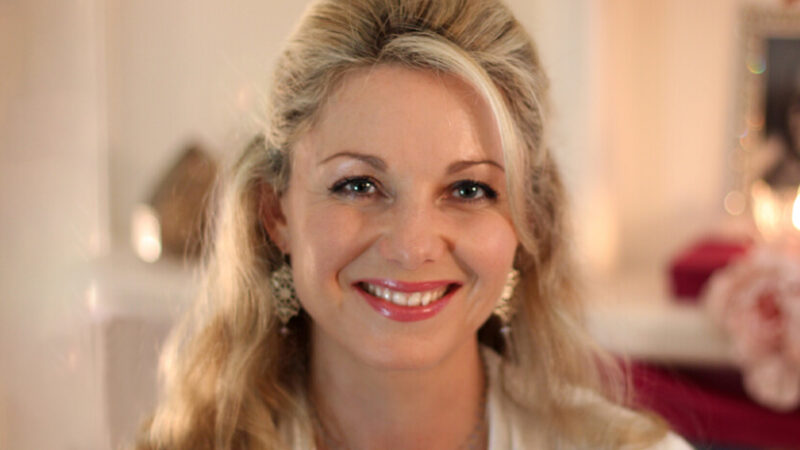
This episode explores the powerful role of Eros (sensual love) and Thanatos (death) in fueling our connection to the world as we contribute to the Great Turning. Joanna and Jess discuss how we might learn to see our world as our lover (and as our self), the gifts of cultivating a sensual connection with the world, and how facing mortality can make the gift of being alive feel even more precious. They also reflect on the closeness of Joanna’s own death, which Joanna sees as “going home” to rejoin the cycle of life.

In this episode:

  • Using our love and awareness of impermanence as fuel for activism
  • Discovering ways to truly feel interconnected with all life through sensual presence
  • Reflections on mortality and our place in the cycle of life

We recommend starting a podcast club with friends or family to do these practices together. Links and assets to help prompt reflection and build community can be found with every episode on WeAreTheGreatTurning.com.

However you need to grieve, that’s the right way for...

Grieving a cat—or any kind of grief—is not a one-size-fits-all experience (as though any experience or emotion were?). Some people can’t stop sobbing, while others reflect quietly. Some are comforted by hugs and rituals; others need solitude to process their loss.

There’s no “right” way to grieve, and there’s no “right” length of time. In fact, I don’t see a loss as something we “get over,” but rather something that becomes a part of our life experience. When our skin is gravely injured, it doesn’t go back to looking the way it did before; it heals, and we have a scar. 

Loss changes the fabric of our lives; it changes the way we perceive and interact with the world. And like a scar, walking through grief (not trying to circumvent it) makes something in us stronger, more resilient. Grief is something to be healed, not to transcend.

Grief is nonlinear, too. Our human minds would love to make grief into a process that has a distinct beginning, middle and end…but in my experience, that’s just not true. Grief, like life, is messy and unpredictable. As Jon Kabat-Zinn writes, “You can’t stop the waves, but you can learn to surf.”

We all grieve, and for each of us, our grief is as unique as a fingerprint. If we try to avoid grief, it will redouble its strength and burst forth anyway. However you need to grieve, that’s the right way for you.

An original post by Sarah Chancey, the author of P.S. I Love You More Than Tuna, the first gift book for people grieving the loss of their feline friend. This originally appeared on morethantuna.com.

sarah chaunceySarah Chauncey has written and edited for nearly every medium over the past three decades, from print to television to digital. Her writing has been featured on EckhartTolle.com and Modern Loss, as well as in Lion’s Roar and Canadian Living. She lives on Vancouver Island in British Columbia, where she divides her time between writing, editing nonfiction, and walking in nature. Learn more at morethantuna.com and sarahchauncey.com.


ps i love you more than tuna

Amazon  |  Barnes & Noble  |  IndieBound  |  Bookshop


Miranda Macpherson: The Transforming Power of Ego Rela...

Many of us struggle to truly live what we believe spiritually. What if closing that gap wasn’t about trying harder, but something quite the opposite? “Through the practice of ego relaxation,” teaches Miranda Macpherson, “we can stop trying to beat ourselves into spiritual shape and yield instead to an unshakable presence within.”

In this episode of Insights at the Edge, Tami Simon speaks with Miranda about taking a more feminine approach to spiritual seeking and why that involves creating an atmosphere of unconditional love. Miranda explains ego relaxation, her unique process of letting go of all the qualities that maintain the illusion of being separate from the rest of existence. Considering the roles of trust and vulnerability on the spiritual path, Tami and Miranda discuss what it means to be a channeler of grace. Finally, Miranda leads us in a guided practice for discovering the mountainous presence already available in each moment.

Meet The Author of Sovereign Self

The Author
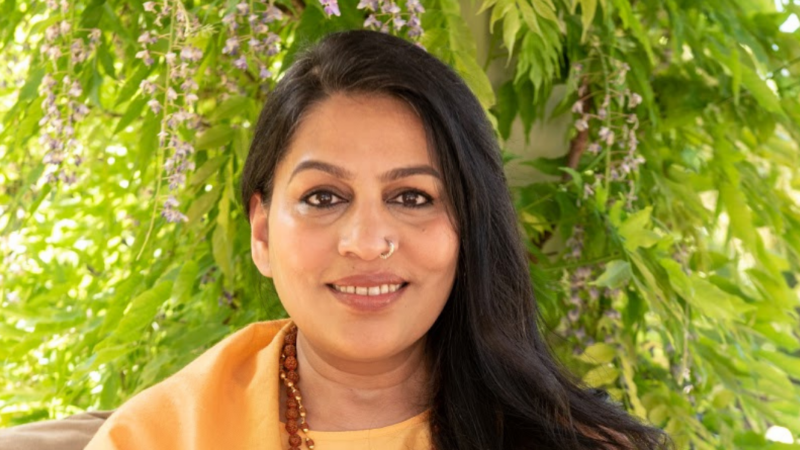
Acharya Shunya is an award-winning and internationally renowned spiritual teacher and scholar of Advaita (nondual wisdom) and a classically-trained master of Yoga and Ayurveda. The first female head of her 2,000-year-old Indian spiritual lineage, she has dedicated her life to the dissemination of Vedic knowledge for the spiritual uplifting of all beings. She is the president of the Awakened Self Foundation with its international headquarters in San Francisco and founder of the spiritual nonprofit Vedika Global. Learn more at acharyashunya.com.
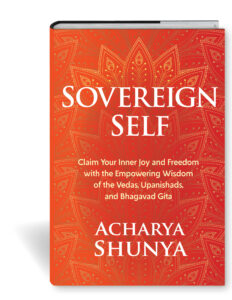
Sovereign-Self-3D-CoverThe Book
A comprehensive guide to yoga’s most influential texts, making their profound teachings both accessible and immediately practical for modern seekers. Filled with hidden insights and engaging guidance, Sovereign Self will help you awaken and recognize your potential to be joyful, resourceful, abundant, limitlessly expansive, and sovereign.


Show us a day in your life.

I lead the life I want to lead, every day,  my heart leading me, and not because I must.
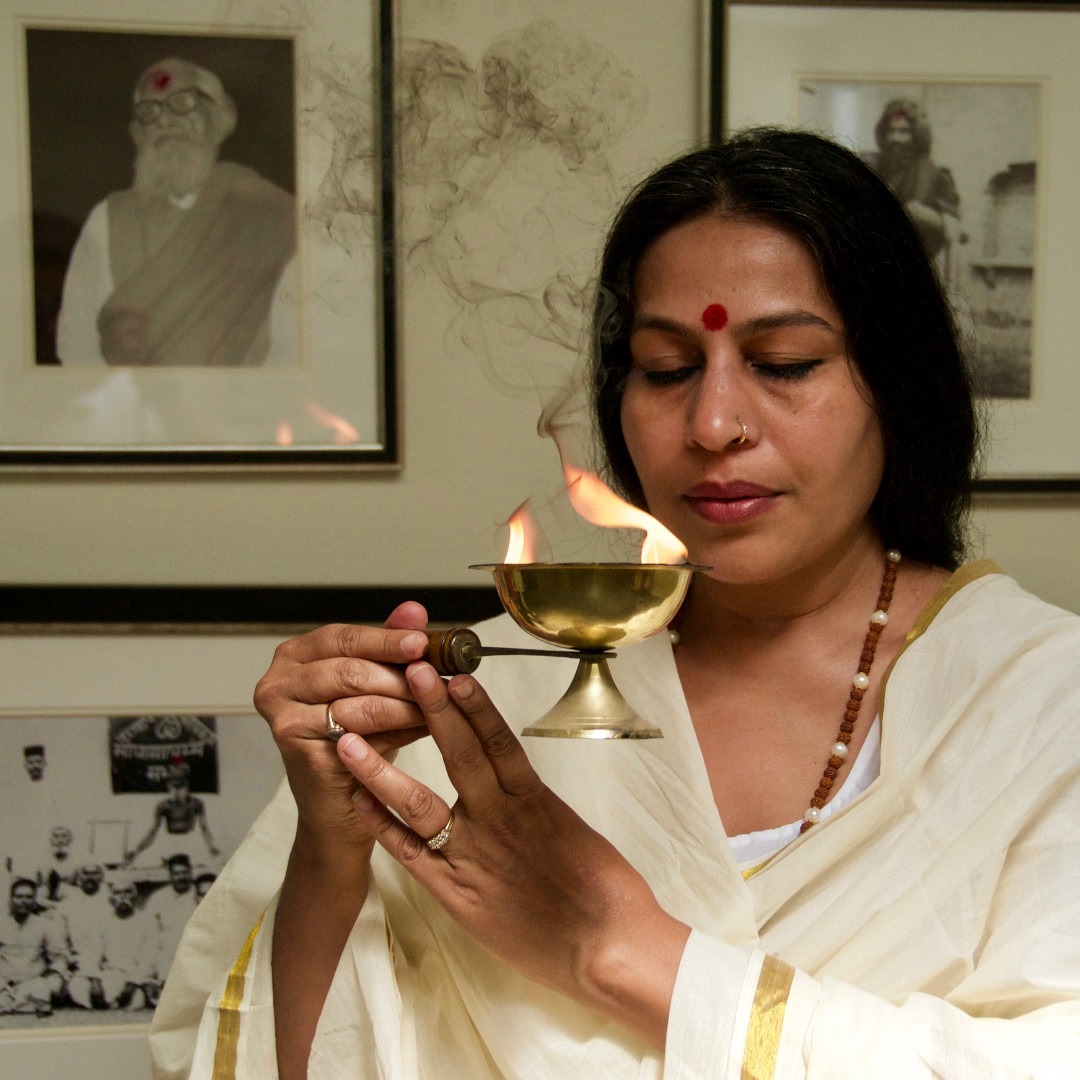
Acharya-Shunya-Saying-a-Prayer-to-her-Guru

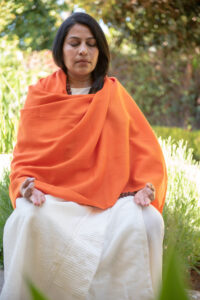
 Acharya Shunya Meditating in the Early Morning

In the early morning I say a prayer of gratitude to my guru and meditate on the beautiful and divine, forever sovereign presence in my heart, that is my true Self. 

Self rises silently in meditation to fill my heart with light, and bless me from within.  I become, as if renewed, to meet my day with my spiritual power, full on.
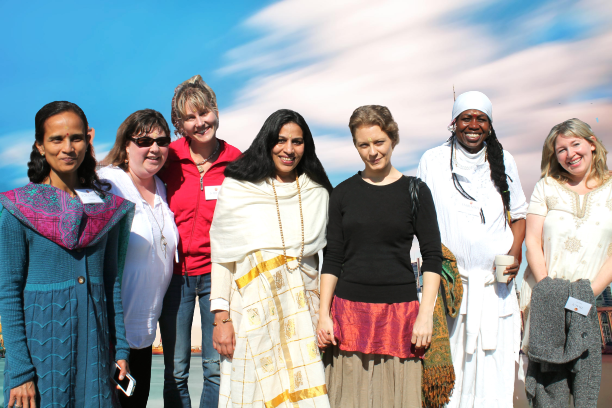


out and about


Many spiritual seekers and members of my Vedic lineage often join me through my day.
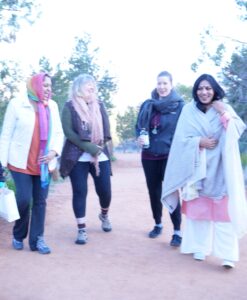
Acharya Shunya Hiking with FriendsAcharya-Shunya-Teaching-MomentAcharya-Shunya-Teaching-Group-scaled

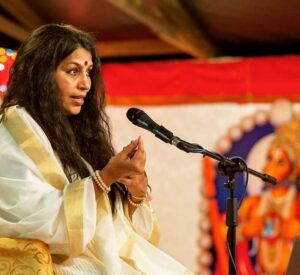
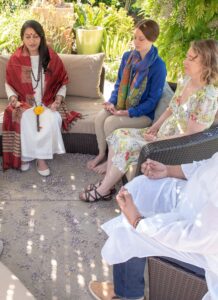
I go hiking with students, lead them through meditations, and impart Vedic wisdom from my 2000-year-old Vedic lineage from India.

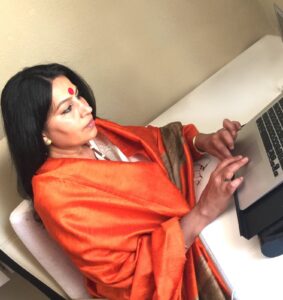
in-hill-house-study-roomworking-on-my-book-copyConducting-fire-cermony-in-mid-morning-to-evoke-Universal-Peace

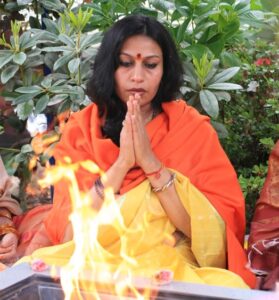
From lunch onwards, I like to be mostly by myself in my study, to think and imagine, to feel and to surrender to my higher Self, and capture my inspiration in words. On many days, I spend time in Vedic ceremony and its consciousness awakening inner rituals and meditations.
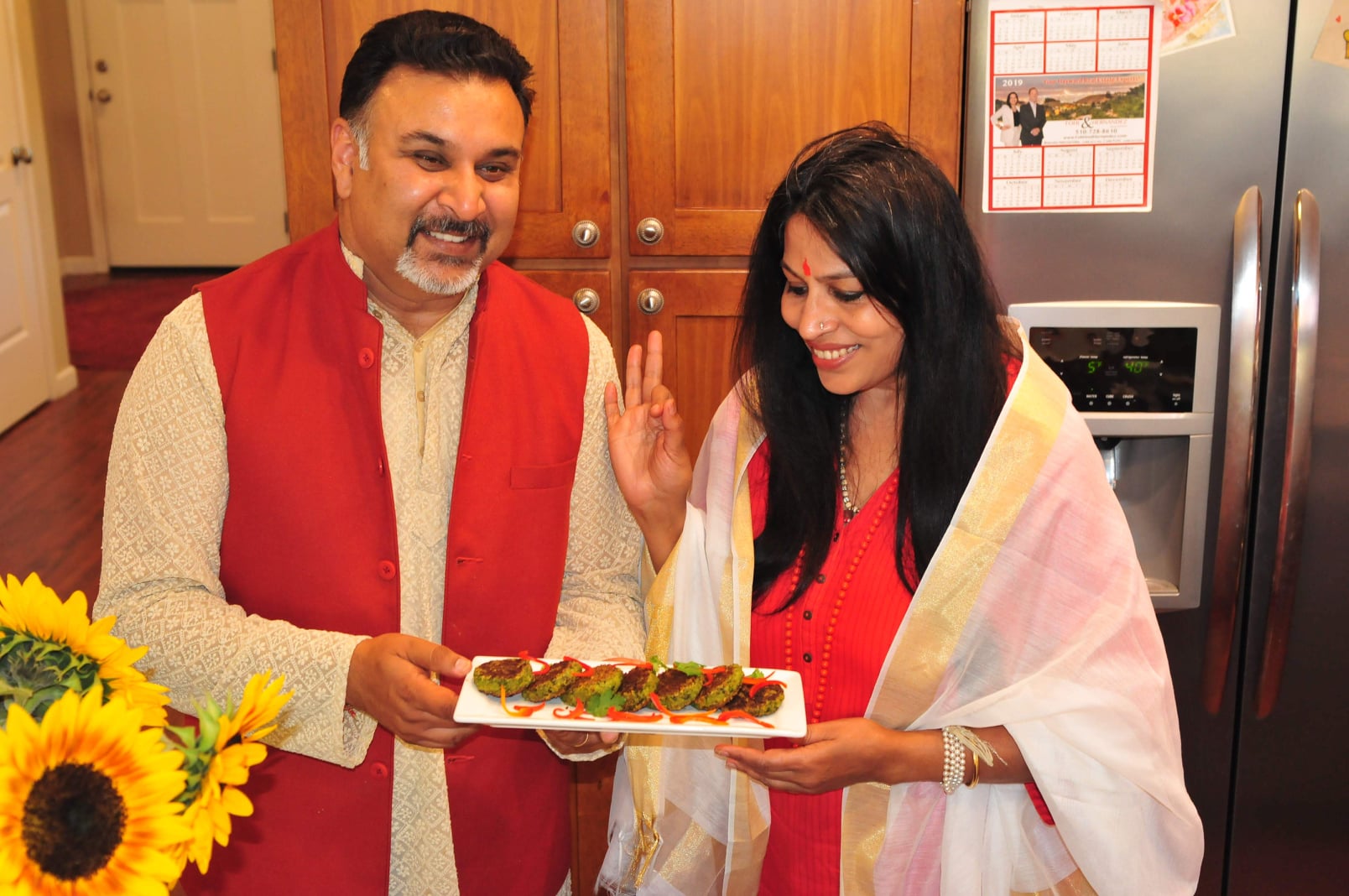
Acharya-Shunya-with-her-Chef-Husband-Sanjai

I also value spending time with my husband. Sanjai is a trained Ayurveda chef. Here we are enjoying the fruits of his labor in our kitchen.

Has your book taken on a new meaning in the world’s current circumstances? Is there anything you would have included in your book if you were writing it now?
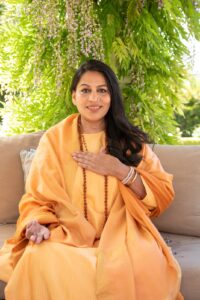
Shunyaji

In today’s uncertain world, embracing one’s unimagined power can open up possibilities as we synchronize with our true Self. 

According to the Vedas, Upanishads, and Bhagavad Gita—India’s oldest body of sacred yogic wisdom—human beings can be inspired to awaken from conditioning, shed limiting patterns and shackling attachments, and tap into the wisest, boldest, and most authentic and fearless parts of ourselves—which dwell as an invisible potential inside our heart, called Atma, the boundless one. This mighty Self, with all its hidden powers, becomes activated through right knowledge, meditations, and insights, making us true masters of our destiny, able to forge a path of sovereignty in every circumstance, good or bad.


Knowing the sovereign Self in our heart can alter the course of our life; this Self-knowledge can become a source of inner equanimity in any circumstance in life, not only when life is fun and people around us are acting supportively and lovingly, but also when life is unpredictable and people’s behavior is shadowy and dark. 

Naturally, this book has taken on a new meaning since I wrote it because today, our world is besieged by uncertainty and possibilities of disease; death is stalking each one of us, invisibly. To add to our collective sense of anxiety, we’ve also witnessed one of the most polarized elections in this country’s history. Social and racial injustice is at an all-time high. Our reality and our values stand to be changed forever. Now, more than ever, the sanctuary beyond fear and impermanence lies within the rediscovery of our true, invincible nature. 

If you are a sensitive and evolved soul who believes in dharma, nonviolence,  equality, and justice for all, my book, Sovereign Self, will be like a balm to your soul, a flame lit softly in a pitch-dark room—a path revealed, where none existed before.

Share a photo of you and your pet. Did your pet have a role in helping you write your book?
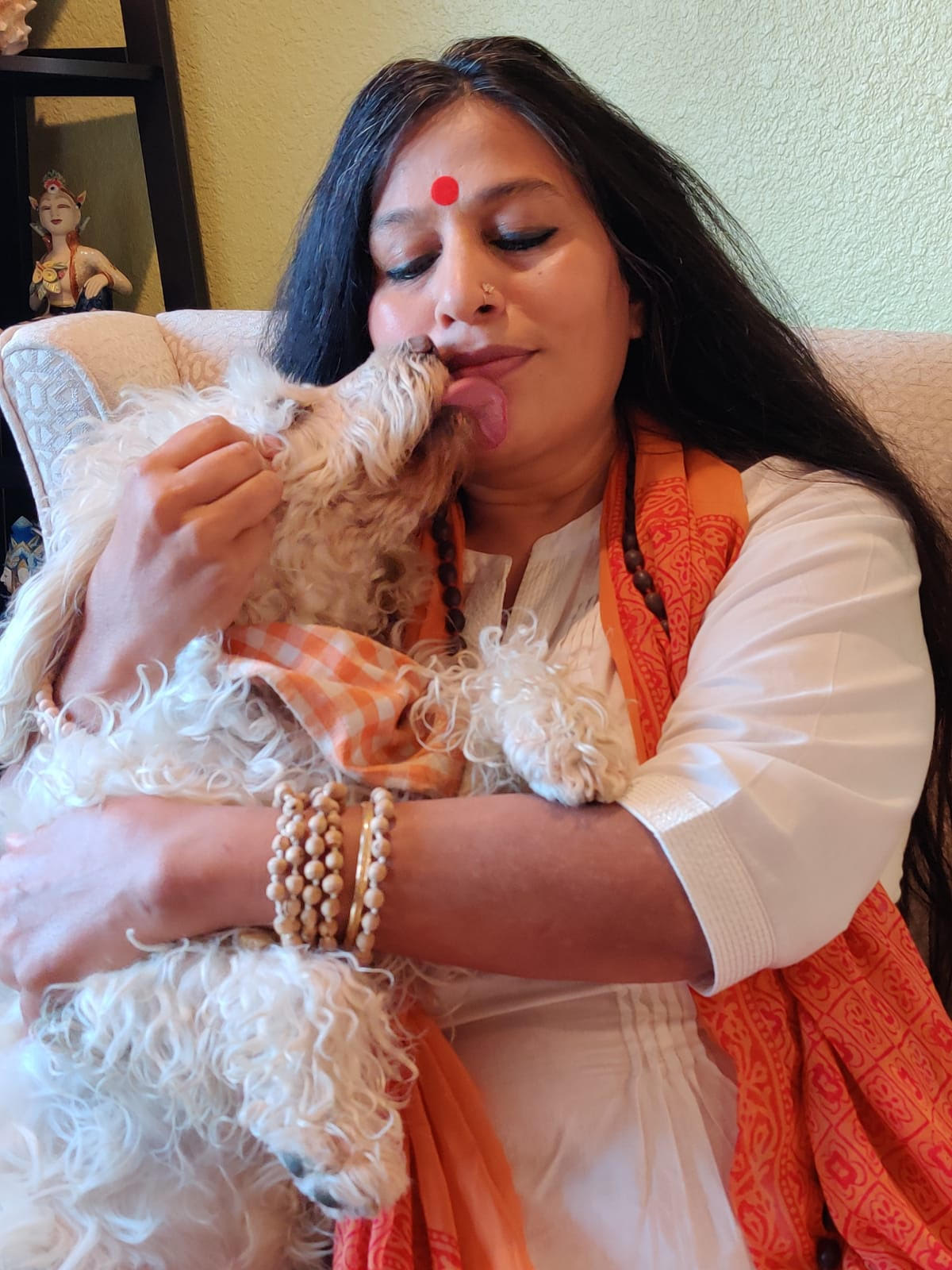
Acharya-Shunya-with-her-pet-and-writing-companion-Noddy

Noddy, my six-year old labradoodle, has been my constant companion through the writing of Sovereign Self, which took almost three long years. The process required me to let go and descend deep within the mystical realms of my being, and connect with the true Self—the boundless essence, Atma, which I talk about in my book. 

It is from here, from that boundless essence where I have always been perfect, complete, and inseparable from Source, that ideas would emerge spontaneously and words would become sentences that shall become path-showers for seekers all over the world. Many times, I would meditate and be lost in trance for hours. Noddy would sit patiently by me, and even sacrifice his desire to bark at his arch-enemy, “Mr. Squirrel.” As long as my eyes were closed, my baby would be quiet as a mouse. But the moment my eyes opened, he would greet me with an explosion of love and affection: “Woof, woof, welcome back to my world, mama; how was your inner world, mama, did you find me in your heart, mama?”  

Noddy and our next-door neighbor’s German Shepherd, Peet, have unresolved karmic issues from a relationship in their former lifetime. As a result, whenever Peet barks, Noddy barks back with recognition and emotional resolve to sort the karma issues in this lifetime itself! As I wrote and talked about the human ego and how it becomes lost in the chase of relationships and things, the experience of watching them go back and forth in their dance of egos, through playtime and tug-time and wagging-tail-time and angry growl-time, made me smile, and reminded me that we really are always enough in who we are. This is what Noddy means to me—when he kisses me with all his inner sweetness intact, he reminds me that while my ego may be employed in worldly tug-of-wars, my true Self remains whole, happy, and incredibly sweet within. Noddy, you are such a reminder!

Sovereign-Self-3D-Cover

Learn More

Sounds True | Amazon | Barnes & Noble | Indiebound | Bookshop

Ram Dass and Mirabai Bush: Walking Each Other Home

Ram Dass (born Richard Alpert) is a world-renowned spiritual teacher and the author of the indispensable classic Be Here Now. Despite suffering a massive stroke that left him with aphasia, Ram Dass continues to write and teach from his home in Maui. His longtime friend Mirabai Bush is the founder of the Center for Contemplative Mind in Society, and was the one of the co-creators of Google’s Search Inside Yourself program. They have teamed with Sounds True to publish Walking Each Other Home: Conversations on Loving and Dying. In this special episode of Insights at the Edge, Tami Simon speaks with Ram Dass and Mirabai Bush about changing our society’s dysfunctional relationship to dying, focusing on how to ease fears around the process. They talk about facing a lifetime of regrets and why going into our last moments consciously is so important. Finally, Mirabai leads listeners in a practice designed to help release attachments and comments on why grieving is an important act of love. (63 minutes)

Tami’s Takeaway: Ram Dass, who is now 87 years old, has planned at the time of his death for there to be an open-air funeral in Maui. He has even secured a government license for this to happen. Ever the teacher (even when it comes to his own death), Ram Dass’s intention is to introduce Westerners to teachings from the East—in this case, the value of sitting with a burning corpse while contemplating impermanence and living whole-heartedly. Of course, we don’t need to wait until we are at an open-air funeral to engage in such contemplation. We are each asked to die in some way every day, to let go of an old image of ourselves or an outmoded configuration of some kind. Can we embrace the dying we are going through right now? And in the process, experience our hearts breaking open so that we can live and love fully, without constraint?

6 Tips for Empaths to Survive the Holidays


Being in crowds and around energy vampires can be very challenging, almost overwhelming for empaths. During times of stress their ability to be emotional sponges heightens, which overrides their sublime capacity to absorb positive emotions and all that is beautiful. If empaths are around peace and love, their bodies assimilate these and flourish. Crowds or negativity, though, often feel assaultive, exhausting.

For empaths to fully enjoy the holiday gatherings with family and friends, they must learn to protect their sensitivity and find balance. Since I’m an empath, I want to help them cultivate this capacity and be comfortable with it.

I’ve always been hyper-attuned to other people’s moods, good and bad. Before I learned to protect my energy, I felt them lodge in my body. After being in crowds I would leave feeling anxious, depressed, or tired. When I got home, I’d just crawl into bed, yearning for peace and quiet.

Here are six strategies to help you manage empathy more effectively and stay centered without absorbing negative energies.

1. Move away. When possible, distance yourself by at least twenty feet from the suspected source. See if you feel relief. Don’t err on the side of not wanting to offend anyone. At the gathering try not to sit next to the identified energy vampire. Physical closeness increases empathy.

2. Surrender to your breath. If you suspect you are picking up someone else’s energies, concentrate on your breath for a few minutes. This is centering and connects you to your power. In contrast, holding your breath keeps negativity lodged in your body. To purify fear and pain, exhale stress and inhale calm. Picture unwholesome emotions as a gray fog lifting from your body, and wellness as a clear light entering it. This can produce quick results.

3. Practice Guerilla Meditation. Be sure to meditate before the gathering, centering yourself, connecting to spirit, feeling your heart. Get strong. If you counter emotional or physical distress while at an event, act fast and meditate for a few minutes. You can do this by taking refuge in the bathroom or an empty room. If it’s public, close the stall. Meditate there. Calm yourself. Focus on positivity and love. This has saved me many times at social functions where I feel depleted by others.

4. Set healthy limits and boundaries. Control how much time you spend listening to stressful people, and learn to say “no.” Set clear limits and boundaries with people, nicely cutting them off at the pass if they get critical or mean. Remember, “no” is a complete sentence.

5. Visualize protection around you. Research has shown that visualization is a healing mind/body technique. A practical form of protection many people use, including health care practitioners with difficult patients, involves visualizing an envelope of white light around your entire body. Or with extremely toxic people, visualize a fierce black jaguar patrolling and protecting your energy field to keep out intruders.

6. Define and honor your empathic needs. Safeguard your sensitivities. In a calm, collected moment, make a list of your top five most emotionally rattling situations. Then formulate a plan for handling them so you don’t fumble in the moment. Here are some practical examples of what to do in situations that predictably stymie empaths. If your comfort level is three hours max for socializing–even if you adore the people — take your own car or have an alternate transportation plan so you’re not stranded. If someone asks too much of you, politely tell them “no.” It’s not necessary to explain why. As the saying goes, “No is a complete sentence.”


Looking for more great reads?


Adapted from The Empath’s Survival Guide by Dr. Judith Orloff.

Judith Orloff, MD, is the author of The Empath’s Survival Guide (Sounds True, 2017). She is a leading voice in the fields of medicine, psychiatry, and intuitive development.