Adyashanti: Embracing the World: Resurrecting Jesus

    —
April 22, 2014

Adyashanti: Embracing the World: Resurrecting Jesus

Adyashanti April 22, 2014

Adyashanti speaks with Tami Simon about his understanding of the story of Jesus. Adyashanti is an American-born teacher trained in the Zen tradition who teaches today about the process of spiritual awakening. With Sounds True, his latest project is a book and audio program called Resurrecting Jesus: Embodying the Spirit of a Revolutionary Mystic. In this episode, Adya examines the deep mythic underpinnings of the story of Jesus and how it can serve as a map of awakening. He also talks about Jesus as a revolutionary figure, how the metaphor of the crucifixion helped him process his own experience with intense physical pain, and the redemptive power of love to restore us to our natural state. (79 minutes)

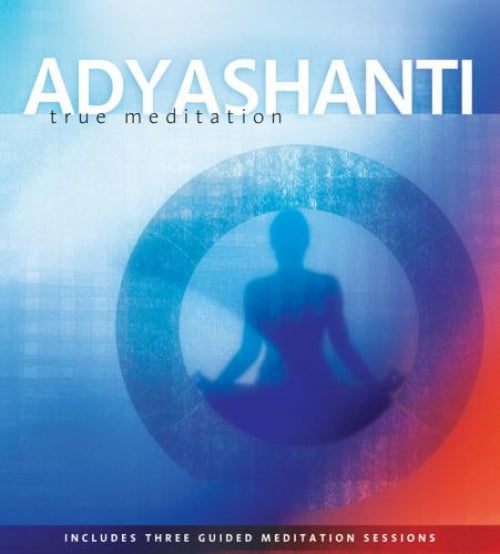
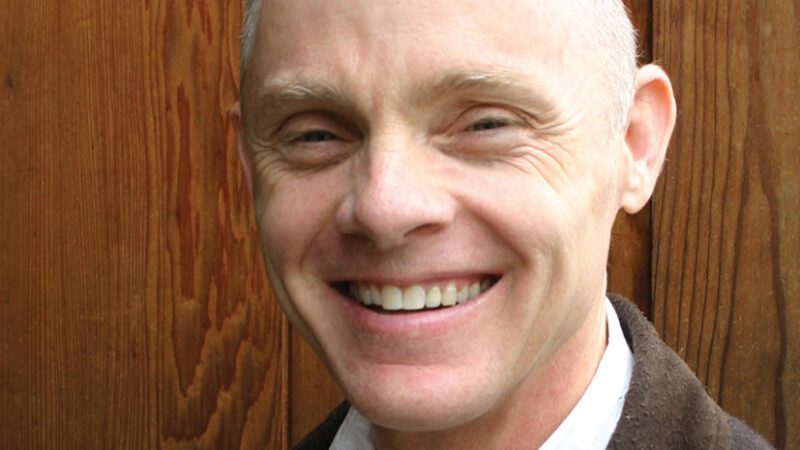
Adyashanti is an American-born spiritual teacher devoted to serving the awakening of all beings. His teachings are an open invitation to stop, inquire, and recognize what is true and liberating at the core of all existence. His books include Emptiness Dancing, The End of Your World, True Meditation, The Way of Liberation, and Falling into Grace.

Asked to teach in 1996 by his Zen teacher of 14 years, Adyashanti offers teachings that are free of any tradition or ideology. "The Truth I point to is not confined within any religious point of view, belief system, or doctrine, but is open to all and found within all." For more information, please visit adyashanti.org.

Author photo © Mukti

600 Podcasts and Counting…

Subscribe to Insights at the Edge to hear all of Tami’s interviews (transcripts available too!), featuring Eckhart Tolle, Caroline Myss, Tara Brach, Jack Kornfield, Adyashanti, and many more.

Meet Your Host: Tami Simon

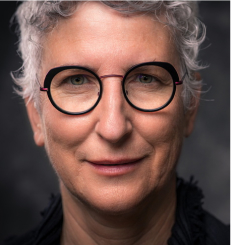
Founded Sounds True in 1985 as a multimedia publishing house with a mission to disseminate spiritual wisdom. She hosts a popular weekly podcast called Insights at the Edge, where she has interviewed many of today's leading teachers. Tami lives with her wife, Julie M. Kramer, and their two spoodles, Rasberry and Bula, in Boulder, Colorado.

Photo © Jason Elias

Also By Author

Waking Up: What Does It Really Mean?

Adyashanti is a widely beloved, American-born spiritual teacher whose practice is rooted in Zen Buddhism but has expanded beyond any one path or perspective. He has created many books and audio programs through Sounds True, including Resurrecting Jesus, Emptiness Dancing, and Healing the Core Wound of Unworthiness. In this episode of Insights of the Edge—which previously appeared as part of the provocative interview series Waking Up: What Does It Really Mean?—Tami Simon and Adyashanti inquire deeply into what exactly constitutes “awakening.” Adya describes his own experiences of awakening, vividly comparing and contrasting his felt sensation of each of these life-changing experiences. Tami and Adya also discuss whether awakening is a sudden or gradual process, and what one can and cannot expect from these moments of profound epiphany. Finally, Adya shares his pith instructions on how to encourage such a spiritual awakening.

Awakening the Spiritual Heart with Adyashanti

Adyashanti is an American-born spiritual teacher whose work adheres to no single tradition, but points the way toward awakening for all seekers. He has published many books and audio programs with Sounds True, including The Most Important Thing, The End of Your World, and Resurrecting Jesus. In this episode of Insights at the Edge, Tami Simon speaks with Adya (as his friends and students call him) about The 30-Day Wake Up Challenge, an upcoming online course designed to take listeners on a journey through the layers of awakened consciousness over the course of a single month. Tami expresses her excitement about the course and asks Adya whether it’s really possible to “wake up” in just a few weeks. Adya talks about the liberation of dropping into the Spiritual Heart, leading listeners in a practice for touching this sublime, compassionate inner space. Finally, they discuss the everyday applications of touching awakened awareness, as well as why The 30-Day Wake Up Challenge has been one of Adya’s intensive projects.

(66 minutes)

Adyashanti: Waking Up: What does it really mean?

Adyashanti is a widely beloved, American-born spiritual teacher whose practice is rooted in Zen Buddhism but has expanded beyond any one path or perspective. He has created many books and audio programs through Sounds True, including Resurrecting Jesus, Emptiness Dancing, and Healing the Core Wound of Unworthiness. In this episode of Insights of the Edge—which previously appeared as part of the provocative interview series Waking Up: What Does It Really Mean?—Tami Simon and Adyashanti inquire deeply into what exactly constitutes “awakening.” Adya describes his own experiences of awakening, vividly comparing and contrasting his felt sensation of each of these life-changing experiences. Tami and Adya also discuss whether awakening is a sudden or gradual process, and what one can and cannot expect from these moments of profound epiphany. Finally, Adya shares his pith instructions on how to encourage such a spiritual awakening.
(57 minutes)

You Might Also Enjoy

Thomas Moore: “Curing Our Cultural Lostness̶...

Thoreau said he wasn’t paddling the Assabet River—he was on the Ganges. Was he being poetic, or was he seeing something we’ve lost the capacity to see?

This week, Tami Simon speaks with Thomas Moore—bestselling author of Care of the Soul, Dark Nights of the Soul, and Ageless Soul—about his new book, The Cure at Walden Pond: A Guide to Recovering Our Humanity. At 85, Moore offers a reading of Thoreau that upends the one most of us were taught: not a naturalist cataloguing the woods, but a mystic looking for what he called the divine “lurking” there.

Join Tami and Thomas to explore:

  • Living daimonically: the guiding presence the Greeks called a daimon and the Romans called a genius—and how to tell it from your own ego agenda
  • Why Moore left the monastery after 13 years on the strength of a single morning’s clarity
  • “We are half human, half angel”—and what changes when you look at the people in your life through that lens
  • Musical time, Bach, and why playing the piano every day has made Moore think differently about dying
  • Why “the ultimate secret is to show the world who you are”—and why humiliation may be closer to the soul than confidence
  • Thoreau’s dark night: holding his brother as he died, and what it teaches about grief you never get over
  • The chapter called “Be Cold and Hungry,” and why the storms belong

Tami presses Moore on the parts she finds hard to swallow—and his answers are the heart of this episode.

Listen now, and find the cure. →

This conversation offers genuine transmission, not just concepts about awakening, but the palpable presence of realized teachers exploring the growing edge of spiritual understanding together, and it originally aired on Sounds True One.

Just One Question | Pānquetzani: How Do We Honor Our ...

Tami asks Pānquetzani how she would put words to the devotion she so clearly feels toward her ancestral line. The answer starts in the body. During her first postpartum womb adjustment, Pānquetzani felt an anger release that she is certain wasn’t hers — it was inherited, and it had arrived alongside the gifts.

That’s the premise of her work as a traditional healer of Mesoamerican and Mexican medicine: the gifts and the wounds come together, and tending the wounds is the job. Her ancestors survived colonization and violence, and they didn’t survive it only for themselves. So she owes them reverence — paid not in words but in living. Slowing down. Crying. Dancing. Sensual and sexual pleasure. All the things they may never have had the privilege to do.

Then there’s her son. At fifteen he taught himself metalwork — knives, swords, bows, tools. Pānquetzani showed the work to her eighty-three-year-old grandmother, who said, oh, your grandfather used to do that. A whole family trade back in Mexico, a shop, generations of it, and nobody had ever mentioned it. He found his way back to it because he was given room to follow what he loved.

In this episode:

  • Why ancestral gifts and ancestral wounds arrive together
  • Making your life an altar — reverence as something you live rather than something you say
  • Healing lineages backwards, and telling the dead their suffering wasn’t in vain
  • What thriving actually means: joy, energy, celebration, and getting your medicine to the people who need it
  • The inheritance beyond the physical — the energetic, mental, and social resources previous generations went without

Taken from the full Insights at the Edge conversation with Pānquetzani. Find the complete interview in this feed or at soundstrue.com

The Point of Insight | “Half Human, Half Mystery...

Somewhere between the human being you know yourself to be and something you can only call mystery—that’s where this one lands.

In this Point of Insight, Tami Simon follows a thread that runs through decades of her own practice and hundreds of conversations on Insights at the Edge. It begins with somatic meditation and the discovery of the central channel—the flow of energy in front of the spine that yoga calls the sushumna, and that Richard Freeman once told her is the real yoga teacher. It arrives, years later, at a moment mid-interview when Tami felt something press up against her back and realized she had become, in her words, part regular human and part something with wings.

Follow along as Tami explores:

  • The central channel as a key that unlocks a prison of constricted thinking
  • What Richard Freeman and Qigong master Robert Peng each revealed about the inner teacher and the flow between ida and pingala
  • Energy intuitive Lee Harris and “the angel behind you”—an eight- to twelve-foot presence available to all of us
  • Why you can’t be a light warrior alone, and what that means for the years ahead
  • Thomas Moore, Thoreau, and learning to see the transcendent in the people you love
  • The chrysalis, the goo, and Tami’s obstinate refusal of everyone’s butterfly metaphors
  • What became possible only when she stopped clawing for something to hold and let herself fall back

For anyone in a stripped-down season, or anyone who has sensed there’s more to them than the person they can see in the mirror, this is an invitation to stop bracing—and lean into the support that’s already pressing against your back.

Listen now. →

Find the original Insights at the Edge episodes here:
Lee Harris, “Be a Future Human and Find the New
Richard Freeman, “Living Yoga
Robert Peng, “The Master Key: Awakening the Four Golden Wheels