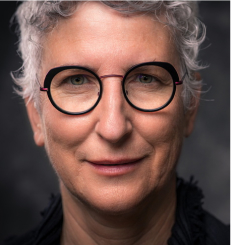
Albert Flynn DeSilver: Awakening Through Writing: The Space Between the Words

September 6, 2017

Albert Flynn DeSilver: Awakening Through Writing: The Space Between the Words

Albert Flynn DeSilver September 6, 2017

Albert Flynn DeSilver is an author, poet, and leader of writing workshops held worldwide. In addition to work appearing in dozens of literary journals, he has published the books Beamish Boy, Letters to Easy Street, and Walking Tooth and Cloud. With Sounds True, Albert has released the new book Writing as a Path to Awakening: A Year to Becoming an Excellent Writer and Living an Awakened Life. In this episode of Insights at the Edge, Tami Simon speaks with Albert about the difference between writing as a creative endeavor and writing as a gateway to spiritual inquiry. They talk about the exploration of difficult subjects such as failure and death through writing, and how those deep inquiries can help open us to the present moment. Finally, Albert comments on the cultivation of discipline and how the concept of time is one that we create for ourselves. (57 minutes)

ALBERT FLYNN DESILVER is an internationally published poet, memoirist, novelist, speaker, and workshop leader. He has published several books of poetry and Beamish Boy (Owl Press, 2012), which Kirkus Reviews calls, “A beautifully written memoir of awakening and self-acceptance.” He teaches at the Omega Institute, Esalen, Spirit Rock, and writing conferences nationally. He lives in northern California. For more, visit albertflynndesilver.com.

Author photo © Stephanie Mohan

600 Podcasts and Counting…

Subscribe to Insights at the Edge to hear all of Tami’s interviews (transcripts available too!), featuring Eckhart Tolle, Caroline Myss, Tara Brach, Jack Kornfield, Adyashanti, and many more.

Meet Your Host: Tami Simon

Founded Sounds True in 1985 as a multimedia publishing house with a mission to disseminate spiritual wisdom. She hosts a popular weekly podcast called Insights at the Edge, where she has interviewed many of today's leading teachers. Tami lives with her wife, Julie M. Kramer, and their two spoodles, Rasberry and Bula, in Boulder, Colorado.

Photo © Jason Elias

Also By Author

4 Ways to Cultivate Creativity This Holiday Season

4 ways to cultivate creativity this holiday season

In the craziness of the holiday season, it can be challenging to cultivate personal creativity—but when we think of creativity in terms of a gift, our hearts open to great and beautiful possibilities. Here are four ways you can cultivate creativity this holiday season. 

Write a series of haiku you can print on paper, ceramics, cloth or food

Spend some time reading and reminding yourself of the art of haiku. Practice writing a few of your own on paper first. Make it a ritual; bring presence and mindfulness and reflect on the immediacy of your experience here and now—and maybe touch of some sentiments around the holidays.

Transfer your haiku to a holiday ornament you can hang from a tree or. . .

Have fun with this practice! Invite your friends and family members to engage in this practice and have fun exploring different ways you can share your haiku on an ornament.

Write a haiku you can eat

Haiku holiday cookies anyone? Use icing as your ink. Explore different ways you might “write” your haiku using food.

Haiku writing with objects and documented in photographs

You can create your haiku with sticks, string, stones, sand, any material you want, and then document your poem by photographing it. Your last step is to create it so that you can give it away as a gift!

Happy holidays! 

Albert Flynn DeSilver is an internationally published poet, memoirist, novelist, speaker, and workshop leader. He served as Marin County’s first Poet Laureate from 2008–2010, and his work has appeared in more than 100 literary journals worldwide, including ZYZZYVA, New American Writing, and Exquisite Corpse. Albert is the author of Writing as a Path to AwakeningBeamish Boy: A Memoir, Letters to Early Street, and Walking Tooth & Cloud. He has taught workshops at The Esalen Institute, The Omega Institute, Spirit Rock Meditation Center, and literary conferences nationally. visit albertflynndesilver.com.

A Meditation + Writing Exercise to Conquer Your Fear

A meditation + writing exercise to conquer your fear, banner

To prepare for the dog days of summer, we move from amusement to audacity. Being a dog owner and lover, I particularly enjoy the expression “dog days.” I always picture a pile of lazy dogs panting away in the shade of a chestnut tree, waiting out the heat of the day to go for an evening walk. Venturing into the heat of creative and spiritual practice takes courage; it is an audacious undertaking.

This July, I invite you to take on a “BHAG”—a Big, Hairy, Audacious Goal. Write forth your truth and wake up to expanded awareness in the process. Whether that means starting a journal or writing a poem, novel, memoir, or letter to your grandmother, audacity will drive you forward. I want you to commit here and now to do your best in any given moment. Move forward with your best intentions of creativity and spiritual awakening at heart. This combined meditation and writing practice will help you get there.

A Meditation on Audacity

Let’s begin with where we are—in a grounded and courageous place, fully embodied. Find your comfortable place to sit. Rest your hands easily in your lap and your feet flat on the ground or cushion. Gently close your eyes. Take a few breaths inward and release. Find that natural rhythm of your breathing, connecting with your breathing body. Tune into your immediate sensory experience, just noticing what your experience is right in this moment. Let your breath be your anchor and ground.

See if you can bring to mind a particularly scary or vulnerable situation. Think of one in which you recently felt exposed, sensitive, even fearful; not one in which you were in a dangerous situation, but a memory of you putting yourself out there in some way—confronting someone, speaking to a group, asking someone new out on a date. As memories of the situation come to you, breathe deeply into your belly and know that you are safe now, breathing here in this moment in this body. If you need to, you can open your eyes, but try to remain grounded in your breathing body. Notice the rush of sensations and allow whatever arises to arise with love, patience, and compassion. Be gentle with yourself and remember that you are safe. See if you can stay with the feelings and simply explore how your fear or discomfort exists as a bodily sensation.

Notice where in your body you feel them. Breathe nurturing air into those places. Allow yourself to become familiar with the sensations of fear and vulnerability without the need to disconnect, distract, or avoid altogether. Be patient and kind with yourself as the emotions and feelings stream through. Gently note any physical changes: increased body heat, increased heart rate, tingling in your arms, increased sweating, and so on. Notice how the sensations linger, change, and dissipate. Become curious and open while kindly grounding yourself in the breath.

Put both hands on your heart, left on top of right, and take a deep breath. Say to yourself, “May I be well, may I be at peace, may I be bathed in the light of lovingkindness and compassion right now.” Take another deep breath, exhale, and release your hands. Bring them back together, palm to palm, at your heart and bow to yourself in gratitude for your courage and love. Open your eyes to complete the meditation.

You might try this meditation for five minutes at first and then extend it as you feel more audacious and courageous. The more you allow the feelings to arise and exist, the more familiar you will become with them. In turn, you will be better able to let them go and dissipate and see them for what they are—waves of energy and information arising and passing away.

Now for the writing . . . Write down three things you can do in the next month that scare you. They don’t have to be drastic acts such as speaking in front of 400 people. How about just sitting down to write that first scene of your novel? Typing up your first few poems? That can be scary enough. And these frightening endeavors don’t have to be related to writing. Maybe it’s a little terrifying to sit in meditation with your eyes closed for more than five minutes. Check in with yourself and see what’s a little scary for you—where can you push yourself a little further? Book a trip overseas, sign up for a rock-climbing adventure, agree to read at your local open mic. Keep in mind that you don’t have to actually do these things right now. Simply start by writing them down and sitting in their presence for a bit. Then you can take action to feel your fear and do it anyway!

This excerpt has been shortened and adapted from Writing as a Path to Awakening: A Year to Becoming an Excellent Writer and Living an Awakened Life.

A Meditation + Writing Exercise to Conquer Your Fear, Albert Flynn DeSilver


ALBERT FLYNN DESILVER is an internationally published poet, memoirist, novelist, speaker, and workshop leader. He has published several books of poetry, Beamish Boy, and his newest book, Writing as a Path to Awakening. He teaches at the Omega Institute, Esalen, Spirit Rock, and writing conferences nationally. He lives in Northern California. For more, visit albertflynndesilver.com.


A Meditation + Writing Exercise to Conquer Your Fear, Writing as a Path to Awakening, Albert Flynn DeSilver


Buy your copy of Writing as a Path to Awakening: A Year to Becoming an Excellent Writer and Living an Awakened Life at your favorite bookseller!

Sounds True | Amazon | Barnes & Noble | Indiebound


A Meditation + Writing Exercise to Conquer Your Fear, pinterest

A Guided Standing Meditation to Activate Your Creative...


Albert Flynn Desilver - A Guided Standing Meditation to Activate Your Creative Imagination Blog Banner

Springtime in the heart of May is a time of renewal and discovery, a time of reminding, reconnecting, and remembering our true imaginative potential. Mother may I? Yes, you May. Express your full imaginative self, just as the flowers, fourth graders, and fully feathered birds do.

You are your imagination. It’s not something outside of you that you read in the pages of some book, or something you overhear in the next booth over at Bubba’s Drive-In, or even the memory of your adventures trekking across Nepal (although these are all terrific things to write about). It’s found within you — your imaginative heart and soul, looking like a nebula of stars throbbing in your bloodstream a thousand times a second, at this very moment. Here’s a way to practice conjuring up (imagining) and letting go: the standing “skeleton scan” meditation.

Skeleton Scan Meditation

  • Find a quiet place in your house with a soft and comfortable surface to stand on. Close your eyes and take a deep breath inward.
  • Ground yourself in this moment, in your body. After the first deep breath, let your breathing become natural.
  • Now lightly bring a thread of your awareness to your feet and breathe into your feet. Feel the stability and grounding of your breath at your feet. Now, with your mind’s eye, see the little toe bones of your feet, then follow your imagining to the main parts of your feet and to where they meet your ankle bones.
  • Continue up your legs to view the bones joining to your knees then up to your hip bones.
  • See your hip bones where they connect to your sacrum and your spine. Now visualize your vertebrae climbing and then branching out into your rib cage. See the ribs of your body wrapping around you and joining at your sternum, protecting your heart.
  • Notice now the bones of your shoulders holding your arms, and see those bones of your upper arms, into your elbows, and down to your hands and finger bones.
  • Now bring your visualization back up your arms, past your elbows, back up to your shoulders, and see now your neck and where your spine connects to your skull.
  • See your skull, the round smoothness of the bone with hollow sockets for your eyes and nose, and see the bones of your jaw and teeth.
  • Breathe into this visualized experience of your skeleton. Breathe in and feel your body
    swaying gently, knowing right now that this skeleton is your stability and ground—these mineral bones are your conduit to earth and sky.
  • Take a deep breath inward, exhale, and open your eyes.


ALBERT FLYNN DESILVER is an internationally published poet, memoirist, novelist, speaker, and workshop leader. He has published several books of poetry, his memoir Beamish Boy (Owl Press, 2012), and his new book Writing as a Path to Awakening (Sounds True, 2017). He teaches at the Omega Institute, Esalen, Spirit Rock, and writing conferences nationally. He lives in Northern California. For more, visit albertflynndesilver.com.

Buy your copy of Writing as a Path to Awakening: A Year to Becoming an Excellent Writer and Living an Awakened Life at Sounds True or your favorite bookseller. 

You Might Also Enjoy

Jasper Young Bear: “Prophecies for This Time: Wh...


Something is shifting in the world—and the Indigenous peoples of Turtle Island have seen it coming for generations.

This week, Tami Simon speaks with Jasper Young Bear—wisdom keeper, storyteller, founder of the Medicine Lodge Confederacy, and member of the Mandan, Hidatsa, and Arikara Nation—about the sacred oral teachings he was entrusted to carry, and why he has chosen this urgent moment to share them with the world. Jasper is the featured teacher in a new medicine film and four-part audio series, The Creation Story, available to watch and listen to for free at thecreationstory.co.

Join Tami and Jasper to explore:

  • The Seventh Generation prophecy—and why we are living inside its fulfillment right now
  • The Prophecy of the Eagle and the Condor, and what the reunification of North and South means for the human family
  • Why the greatest preparation for coming change is spiritual and emotional—not physical
  • The sacred laws woven into Indigenous creation stories, and what whole-to-part perception makes possible
  • The importance of forgiving the unforgivable—and how it opens the frequency of true freedom
  • Ceremony as living technology: sweat lodges, sacred instruments, and star knowledge as tools of consciousness
  • Why Jasper believes love—not systems, not ideology—is ultimately what will heal the human family

This interview is unlike most. Tami listens more than she asks. And what Jasper Young Bear offers is truly a transmission: a vision of where we are, where we’re headed, and what each of us can do to become a worthy ancestor for the generations yet to come.

Watch and listen to The Creation Story for free at thecreationstory.co.

This conversation offers genuine transmission—not just concepts about awakening, but the palpable presence of realized teachers exploring the growing edge of spiritual understanding together. Originally aired on Sounds True One.

Andrew Holecek: Stop, Drop, and Be Held in the Dark


What if the most transformative place you could go isn’t a retreat center or a therapist’s office—but complete and total darkness?

This week, Tami Simon speaks with Andrew Holecek—interdisciplinary scholar, longtime practitioner of Tibetan Buddhism, and author of the new Sounds True book Total Eclipse of the Mind: Unleashing the Power of Darkness for Creativity, Healing, and Transformation—about the practice of dark retreat: full immersion in sealed, lightless environments used by yogis for centuries to accelerate inner transformation.

Holecek calls it the single most transformative practice of his fifty years of meditation, psychedelic exploration, and three-year Tibetan retreat—and in this interview, he explains why.

Join Tami and Andrew to explore:

  • What actually happens to the mind in extended darkness—and the neurological science behind why it’s so transformative
  • The descent of the mind through conscious, subconscious, and collective unconscious layers—and what waits at the bottom
  • Dark retreat as a “sober psychedelic”: how the brain generates its own endogenous DMT in extended darkness
  • The practice of enantiodromia—when extreme contraction suddenly flips into extraordinary openness
  • How to work with panic, trauma, and unwanted experience using the “reverse meditation” principle: feel it, but don’t feed it
  • Why appearances don’t matter in the dark—and why so many people emerge in tears, feeling safe and held for the first time
  • The four-step process for integrating darkness into daily life, from sleep masks to dedicated dark rooms

This interview was recorded with both Tami and Andrew wearing blackout masks—making it one of the most immersive listening experiences in Insights at the Edge history.

Listen now and discover what’s been waiting in the dark. →

This conversation offers genuine transmission—not just concepts about awakening, but the palpable presence of realized teachers exploring the growing edge of spiritual understanding together. Originally aired on Sounds True One.

This episode is sponsored by Omega Institute, a global gathering hub for lifelong learning and spiritual exploration. Located in upstate New York’s beautiful Hudson Valley, Omega offers weekend workshops, special events, rest and rejuvenation retreats, professional trainings, online learning, and more. Discover what calls to you at eomega.org/true.

Elizabeth Stanley on Trauma-Sensitive Mindfulness: Whe...

Meditation is often understood as a way to find calm by turning inward. Yet for many people, that inward focus can feel overwhelming instead of grounding. The body may tighten, emotions may rise quickly, or the mind may feel harder to settle. These responses are not a sign of failure. They reflect how the nervous system holds and processes past experiences. Trauma sensitive mindfulness offers a way to approach awareness with more care, allowing space for safety, pacing, and choice.

At Sounds True, we have spent decades sharing the living wisdom of teachers who speak to real human experience with honesty and depth. Through voices like Elizabeth Stanley, we bring forward teachings that integrate science, mindfulness, and compassion, offering practices that support meaningful and lasting inner growth.

Here, we look at trauma sensitive mindfulness through Elizabeth Stanley’s perspective, including why meditation is not always enough and how a more supportive approach can help.

Key Takeaways:

  • Nervous System Awareness: Trauma sensitive mindfulness centers on regulating the body, not just observing thoughts
  • Flexible Practice: Meditation can include movement, choice, and external focus to support safety
  • Healing Approach: Awareness becomes effective when paired with pacing, care, and nervous system support

Awaken Your Inner Healing Power with Guided Practices by Sounds True

What Is Trauma Sensitive Mindfulness and How It Differs from Traditional Mindfulness

Trauma sensitive mindfulness begins with a simple truth. The present moment does not feel safe for everyone. Turning inward can bring up intense sensations or emotions, and traditional mindfulness does not always account for how trauma shapes this experience.

This approach offers a gentler entry point. It considers how the body responds before asking it to be still. Instead of pushing through discomfort, it allows for choice, movement, and grounding.

Mindfulness then becomes less about doing it right and more about building a relationship with our experience. We learn to notice what feels supportive, pause when needed, and meet ourselves with care.

Elizabeth Stanley’s Approach to Trauma Sensitive Mindfulness and Healing

Elizabeth Stanley’s work brings clarity to why trauma sensitive mindfulness matters and how it can be practiced in a way that truly supports healing. Her perspective is grounded in both research and lived experience, creating a bridge between science and personal transformation.

Her Background in Trauma and Resilience

Stanley’s background includes years of studying resilience under extreme stress, alongside her own journey through trauma recovery. She emphasizes that resilience is not simply about mental strength. It is about the capacity of the nervous system to return to balance after disruption.

Through trauma sensitive mindfulness, she highlights how this capacity can be strengthened over time. The practice becomes less about observing thoughts and more about learning how to stay connected to the body without becoming overwhelmed.

The Limits of Traditional Mindfulness Practices

In her teaching, Stanley also speaks to the limitations of traditional mindfulness approaches. Many practices assume that the body can tolerate sustained attention. For someone carrying unresolved trauma, that assumption may not hold true.

Trauma sensitive mindfulness acknowledges that awareness alone is not always enough. Without support, attention can amplify distress rather than ease it. By integrating regulation and pacing, this approach creates a more supportive path that allows mindfulness to unfold gradually.

Why Trauma Sensitive Mindfulness Changes the Way We Practice Meditation

When we begin to understand mindfulness through the lens of trauma sensitivity, the practice itself starts to shift. Meditation is no longer about holding attention in one place at all costs. It becomes a responsive and adaptive experience.

Meditation Through the Lens of Trauma Sensitivity

In trauma sensitive mindfulness, meditation can include a wide range of options. A person might keep their eyes open, shift their focus between internal and external awareness, or engage in gentle movement. These choices are not distractions from the practice. They are part of the practice.

This flexibility helps create a sense of stability. It allows the practitioner to remain engaged without pushing beyond their capacity.

Creating Safety Within the Practice

Safety is not treated as an outcome. It is the foundation. Trauma sensitive mindfulness invites us to notice when something feels supportive and when it does not. That noticing becomes a form of guidance.

Over time, this builds trust. The practitioner begins to feel that they can stay present without losing themselves in the experience. Meditation then becomes a space where healing can happen at a natural pace.

When Trauma Sensitive Mindfulness Is Needed Beyond Standard Meditation

There are times when traditional mindfulness practices may not provide the support someone needs. Trauma sensitive mindfulness helps us recognize those moments with clarity and care.

Recognizing Signs That Mindfulness Alone Is Not Enough

Some people notice that meditation brings up anxiety, numbness, or a sense of disconnection. Others may feel flooded by emotion or unable to stay grounded. These experiences are not signs of failure. They are signals from the nervous system.

Trauma sensitive mindfulness encourages us to respond to these signals rather than push through them.

Expanding Beyond Stillness Into Regulation

In these moments, the practice may shift. Instead of remaining still, a person might focus on their surroundings, engage in movement, or connect with a steady rhythm like walking or breathing with sound.

These forms of regulation help restore balance. They create a pathway back to presence that feels supportive rather than overwhelming.

Discover the Hidden Power of Daily Meditation

The Role of the Nervous System in Trauma Sensitive Mindfulness Practice

Trauma sensitive mindfulness recognizes that the nervous system plays a central role in how we experience awareness. Before we can rest in presence, the body needs to sense that it is safe enough to do so.

  • The nervous system constantly interprets signals of safety and threat, often outside of conscious awareness
  • Trauma can leave the body in patterns of activation or shutdown that shape how mindfulness feels
  • Trauma sensitive mindfulness introduces gentle ways to support regulation before deep attention is invited
  • Small moments of ease help the nervous system learn that presence can be safe
  • Choice allows the practitioner to stay connected without feeling trapped in the experience

As these patterns begin to shift, mindfulness becomes more accessible. The body no longer experiences awareness as something to defend against. Instead, it becomes a place where steadiness can grow.

How to Practice Trauma Sensitive Mindfulness Safely and Effectively

Practicing trauma sensitive mindfulness begins with a willingness to move at the pace of the body. There is no need to force stillness or sustain attention beyond what feels manageable. Instead, we begin by noticing what feels supportive in the moment.

This might include grounding attention in the senses, feeling the contact of the body with a chair, or simply noticing the environment. At times, it may mean stepping away from internal awareness and focusing outward. These choices are not interruptions. They are expressions of care.

Over time, this approach builds a sense of trust. The practitioner learns that they can engage with mindfulness without becoming overwhelmed. Safety becomes something that is felt, not something that is assumed. From this foundation, awareness can deepen in a way that feels steady and sustainable.

Bringing Trauma Sensitive Mindfulness into Daily Life and Relationships

Trauma sensitive mindfulness does not remain confined to formal practice. It naturally extends into daily life. It can be present in the way we pause before responding, in how we notice tension in the body, or in the decision to take a moment of rest.

In relationships, this awareness can create space. Instead of reacting automatically, we begin to sense what is happening within us. This allows for more thoughtful responses and a greater sense of connection.

These small moments matter. They reflect a shift from striving to be present toward allowing presence to emerge. In this way, mindfulness becomes integrated into the rhythm of everyday life.

Building Resilience Through Trauma Sensitive Mindfulness Over Time

Resilience develops gradually. It is shaped through repeated experiences of safety, awareness, and regulation. Trauma sensitive mindfulness supports this process by honoring the body’s natural pace.

Each moment of grounded awareness strengthens the nervous system’s capacity to remain present. Over time, this creates a sense of stability that can hold a wider range of experiences.

This path is not about reaching a fixed state. It is about developing a relationship with ourselves that is steady, responsive, and compassionate. Through trauma sensitive mindfulness, we begin to discover that presence is not something we force. It is something that becomes possible as the body learns it is safe to be here.

Learn How your Mind Really Works with Sounds True

Final Thoughts

Trauma sensitive mindfulness invites a more compassionate way of being present. Rather than pushing through discomfort, it encourages us to listen to the body and move at a pace that feels supportive.

Elizabeth Stanley’s insights remind us that awareness and regulation go hand in hand. As we honor both, mindfulness becomes a steady, healing practice that meets us exactly where we are.

Frequently Asked Questions About Trauma Sensitive Mindfulness

What makes trauma sensitive mindfulness different from trauma informed care?

Trauma sensitive mindfulness is a specific approach within the broader framework of trauma informed care. While trauma informed care can apply to many fields, such as healthcare or education, trauma sensitive mindfulness focuses directly on how mindfulness practices are adapted to support nervous system safety and regulation.

Can trauma sensitive mindfulness be practiced without a teacher?

Yes, it can be practiced individually, especially with gentle awareness and self-guided pacing. However, some people benefit from working with a trained practitioner who understands trauma and can offer guidance when difficult experiences arise.

Is trauma sensitive mindfulness suitable for beginners?

Yes, it is often more accessible for beginners because it emphasizes choice and flexibility. Instead of requiring strict focus, it allows people to ease into awareness in a way that feels manageable.

How long does it take to see benefits from trauma sensitive mindfulness?

The experience varies from person to person. Some may notice small shifts in awareness and calm within a short time, while bigger changes in resilience and regulation tend to develop gradually through consistent practice.

Can trauma sensitive mindfulness replace therapy?

It is not a replacement for therapy, especially for those working through significant trauma. It can be a supportive complement to therapeutic work, helping individuals build awareness and regulation skills alongside professional support.

What types of practices are included in trauma sensitive mindfulness?

Practices may include grounding exercises, sensory awareness, gentle movement, and flexible attention techniques. The focus is on what supports stability rather than following a fixed method.

How does trauma sensitive mindfulness support physical well-being?

By helping regulate the nervous system, this approach can reduce chronic stress responses in the body. Over time, this may support improved sleep, reduced tension, and a greater sense of ease.

Is it normal to feel discomfort during trauma sensitive mindfulness?

Some discomfort can arise, especially when becoming more aware of internal experiences. The key difference is that this approach encourages responding to discomfort with care, rather than pushing through it.

Can trauma sensitive mindfulness be practiced in short moments?

Yes, it is well suited for brief, everyday moments. Even a few seconds of grounding or awareness can support regulation and help build consistency over time.

Who can benefit most from trauma sensitive mindfulness?

Anyone can benefit, but it is especially supportive for individuals who find traditional meditation challenging or overwhelming. It offers an alternative path that honors personal capacity.

Michelle Cassandra Johnson is an author, activist, spiritual teacher, racial equity consultant, and intuitive healer. She is the author of six books, including Skill in Action and Finding Refuge. Amy Burtaine is a leadership coach and racial equity trainer. With Robin DiAngelo, she is the coauthor of The Facilitator's Guide for White Affinity Groups. For more, visit https://www.michellecjohnson.com/wisdom-of-the-hive.