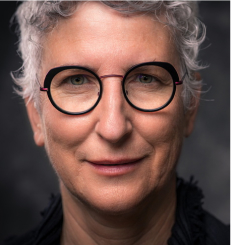
Deb Dana: Befriending Your Nervous System

    —
June 16, 2020

Deb Dana: Befriending Your Nervous System

Deborah Dana — June 16, 2020

How well do you know your nervous system? Deb Dana is a clinician and consultant specializing in complex trauma, and is the coordinator of the Kinsey Institute Traumatic Stress Research Consortium. Her work at the Kinsey Institute is focused on using the lens of Polyvagal Theory to understand and resolve the impact of trauma, and create approaches that honor the role of the autonomic nervous system. With Sounds True, Deb has created a new audio program called Befriending Your Nervous System: Looking Through the Lens of Polyvagal Theory. In this podcast, Deb offers an introduction to the human nervous system, how Polyvagal Theory informs our understanding of the nervous system, how to manage the state known as “dysregulation,” and more.

Author Info for Deborah Dana Coming Soon

900 Episodes and Counting…

Subscribe to Insights at the Edge to hear all of Tami’s interviews (transcripts available too!), featuring Eckhart Tolle, Caroline Myss, Tara Brach, Jack Kornfield, Adyashanti, and many more.

Meet Your Host: Tami Simon

Each week on Insights at the Edge, Tami Simon interviews leading voices in the Mind/Body/Spirit space about a vast spectrum of fascinating ideas. Since 2009, Tami and her guests have been exploring the edge of understanding, nearly 1,000 episodes on the honest work of change, including spiritual discovery, awakening, intuition, purpose, trauma, and grief.

Photo © Jason Elias

Also By Author

Becoming an Active Operator of Your Nervous System

Deb Dana, LCSW, is a clinician and consultant specializing in using the lens of Polyvagal Theory to understand and resolve the impact of trauma and create ways of working that honor the role of the autonomic nervous system. Her clinical publications include The Polyvagal Theory in Therapy: Engaging the Rhythm of Regulation and The Polyvagal Flip Chart: Understanding the Science of Safety, and her Sounds True publications include the audio program, Befriending Your Nervous System: Looking Through the Lens of Polyvagal Theory, and her new book Anchored: How to Befriend Your Nervous System Using Polyvagal Theory.

In this podcast, Tami Simon converses with Deb Dana to offer listeners a practical understanding of Polyvagal Theory and how we can begin to decode the language of our body for better health and better relationships. Tami and Deb also discuss the dorsal, sympathetic, and ventral states of our nervous system; the gifts of becoming “anchored in ventral”; neuroception, your nervous system’s way of taking in information to assess your safety; curiosity and the capacity for self-reflection; the importance of self-care; co-regulation as a biological imperative; why self-regulation is especially critical for therapists and other helping professionals; music and nature as healing resources; the practice of self-compassion as a means of “getting our anchor back”; and more.

Deb Dana: Befriending Your Nervous System

How well do you know your nervous system? Deb Dana is a clinician and consultant specializing in complex trauma, and is the coordinator of the Kinsey Institute Traumatic Stress Research Consortium. Her work at the Kinsey Institute is focused on using the lens of Polyvagal Theory to understand and resolve the impact of trauma, and create approaches that honor the role of the autonomic nervous system. With Sounds True, Deb has created a new audio program called Befriending Your Nervous System: Looking Through the Lens of Polyvagal Theory. In this podcast, Deb offers an introduction to the human nervous system, how Polyvagal Theory informs our understanding of the nervous system, how to manage the state known as “dysregulation,” and more.

You Might Also Enjoy

Just One Question | Gabor Maté: What Keeps Me from Be...

Why do some of the most hardened people—lifers on death row, people who’ve killed—turn out to be, underneath it all, remarkably sensitive? Physician and trauma expert Dr. Gabor Maté has spent decades working with addicts and prisoners, and he’s found a pattern that upends how we usually think about cruelty and compassion.

Dr. Gabor Maté is a physician and bestselling author whose work on trauma and addiction has shaped how millions understand pain, illness, and healing. He’s the author of In the Realm of Hungry Ghosts, When the Body Says No, Scattered Minds, and, with his son Daniel, The Myth of Normal.

In this conversation, Tami and Gabor explore:

  • Why compassion is wired into us from birth and what shuts it down
  • The neuroscience of care, drawing on affective neuroscientist Jaak Panksepp’s research on emotional systems
  • What Gabor has witnessed firsthand working with lifers and people on death row
  • The difference between “orchid” and “dandelion” temperaments, and why high sensitivity can become either a liability or a gift
  • Why genes linked to addiction may really be genes for sensitivity

This one’s for anyone trying to understand the roots of cruelty, or working through their own compassion fatigue; toward others, or toward themselves.

Taken from the full Insights at the Edge conversation with Gabor Maté titled “Gabor Maté: Healing Principles to Embody in a Traumatized World”

Just One Question | Lissa Rankin: Can Healing Our Trau...

Physician Lissa Rankin says trauma doesn’t just live in the mind; it can trigger measurable physical disease, from autoimmune conditions to chronic illness that conventional medicine can’t explain. But her most provocative claim is the reverse: that healing the nervous system may be the missing piece in reversing illnesses that have resisted every other treatment.

Dr. Rankin, a physician and author of Sacred Medicine and the New York Times bestseller Mind Over Medicine, has spent years studying the link between the nervous system and self-healing, including polyvagal theory and the ventral vagal branch of the vagus nerve. In this conversation with Tami Simon, she widens the definition of trauma well beyond childhood wounds to include systemic racism, environmental toxins, and the everyday stress of simply living in the world today.

In this conversation, Tami and Lissa explore:

  • Why Dr. Rankin believes trauma and chronic illness are intrinsically connected
  • How polyvagal theory and the vagus nerve point to a physical mechanism for healing
  • Why “developmental trauma” can affect even people who had privileged childhoods
  • How collective traumas — like systemic racism and white-body supremacy — show up in the body
  • Why treating trauma isn’t a guarantee of cure, but can still open the door to real healing

This episode is for anyone who has tried everything to heal a chronic or life-threatening illness and wants to understand what role the nervous system might play.

Taken from the full Insights at the Edge conversation with Lissa Rankin, “Is There a Holy Grail of Healing?”

Laurel Parnell: “The Evolution from EMDR to Mult...


What if some of what we’re carrying was never ours to begin with?

This week, Tami Simon speaks with Laurel Parnell—psychologist, longtime spiritual practitioner, and a leading innovator in EMDR (eye movement desensitization and reprocessing). Laurel developed attachment-focused EMDR and resource tapping, and now, in her new book with Sounds True, Releasing What Isn’t Yours: Living from Your True Self Through Multidimensional Integrative Healing, she introduces her most far-reaching approach yet—one born out of the devastating loss of her son.

Join Tami and Laurel to explore:

  • How EMDR works, and why bilateral stimulation—whether eye movements, tapping, or sound—seems to unlock the brain’s natural healing system
  • The difference between EMDR and resource tapping, and how each supports transformation
  • Why Laurel came to believe that trauma work can open a portal to other dimensions
  • Missing and attached soul parts, spirit release work, and how to sense what isn’t yours
  • A profound, real-time account of guiding a soul’s crossing at Esalen, and its connection to the region’s Indigenous history
  • Why Laurel sees Western psychotherapy as, in some ways, colonized—and what other healing traditions have to teach it
  • The image of a multidimensional mycelium network of light and love that connects all beings

This is a candid, moving conversation about grief, the limits of what evidence-based therapy can explain, and the courage it takes to follow where healing actually leads.

Listen now to explore the evolving edge of trauma healing. →

This conversation offers genuine transmission, not just concepts about awakening, but the palpable presence of realized teachers exploring the growing edge of spiritual understanding together, and it originally aired on Sounds True One.

Get a FREE month of membership at https://bit.ly/STOne-Free-Month.