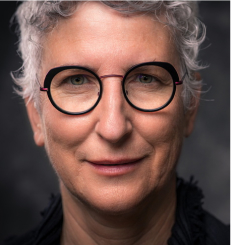
Edward Espe Brown is a renowned chef and Zen teacher who is best known as the first head cook at the Tassajara Zen Mountain Center. In addition to writing several cookbooks including the classic Tassajara Bread Book, Edward founded Greens Restaurant in San Francisco. With Sounds True, he has published No Recipe: Cooking as Spiritual Practice. In this episode of Insights at the Edge, Tami Simon speaks with Edward about Zen teachings on what it means to have to feel our way through the dark—both in the kitchen and on the spiritual path. They talk about cooking as a form of offering and why working with food can be one of the most potent ways to express our hearts in wholeness. Edward shares what he learned in his turbulent first days as the head cook for a spiritual community, including insights from his first Zen teacher, Shunryu Suzuki Roshi. Finally, Edward and Tami discuss what it means to seek out our heart’s true desire, as well as how to embody that search in all that we do. (72 minutes)
Edward Espe Brown began cooking and practicing Zen in 1965. He was the first head resident cook at Tassajara Zen Mountain Center from 1967 to 1970. He later worked at the celebrated Greens Restaurant in San Francisco, serving as busboy, waiter, floor manager, wine buyer, cashier, host, and manager. Ordained a priest by Shunryu Suzuki Roshi, he has taught meditation retreats and vegetarian cooking classes throughout North America and Europe. He is the author of several bestselling cookbooks, including The Tassajara Bread Book, and the editor of Not Always So, a book of lectures by Shunryu Suzuki Roshi. He is the subject of the critically acclaimed 2007 documentary film How to Cook Your Life. He resides in Fairfax, California.
Subscribe to Insights at the Edge to hear all of Tami’s interviews (transcripts available too!), featuring Eckhart Tolle, Caroline Myss, Tara Brach, Jack Kornfield, Adyashanti, and many more.
Founded Sounds True in 1985 as a multimedia publishing house with a mission to disseminate spiritual wisdom. She hosts a popular weekly podcast called Insights at the Edge, where she has interviewed many of today's leading teachers. Tami lives with her wife, Julie M. Kramer, and their two spoodles, Rasberry and Bula, in Boulder, Colorado.
Edward Espe Brown is a Zen priest and the former head cook at Tassajara Mountain Zen Mountain Center who helped found Greens Restaurant in San Francisco. He is the author of No Recipe and the classic Tassajara Bread Book. With Sounds True, he is publishing The Most Important Point: Zen Teachings of Edward Espe Brown. In this episode of Insights at the Edge, Tami Simon speaks with Edward about the origin of his newest book: a quote from his teacher Suzuki Roshi, who said, “The most important point is to find out what the most important point is.” Edward describes his discipleship with Suzuki Roshi and why Zen practice can sometimes be like feeling your way through pitch darkness. Tami and Edward talk about the tradition of “taking the backward step” and moments of realization that transcend your expected practice. Finally, they talk about Edward’s path away from extremely low self-esteem and the role of difficult emotions in Zen contemplative practice. (77 minutes)
During
the twenty years I lived in a meditation center, I rushed through my morning
coffee. After all, if I didn’t drink it fast enough, I’d be late for
meditation. It was important to get to meditation on time; otherwise, one had
to endure the social stigma of being late (obviously lacking the proper
spiritual motivation), as well as the boredom and frustration of having to wait
outside the zendo to meditate until latecomers were admitted.
When I
moved out of the center, I had to learn to live in the world. I had been
institutionalized for nearly twenty years. Now I was out and about. What did it
mean? There was no formal meditation hall in my home. I could set my meditation
cushion in front of my home altar, or I could sit up in my bed and cover my
knees with the blankets. There were no rules.
Soon,
I stopped getting up at 3:30 am. Once I did awaken, I found that a hot shower,
which had not really fit with the previous circumstances, was quite
invigorating. Of course, getting more sleep also helped.
Then I
was ready for coffee—hot, freshly brewed, exquisitely delicious coffee. Not
coffee in a cold cup from an urn; not coffee made with lukewarm water out of a
thermos; not coffee with cold milk, 2 percent milk, or nonfat milk—but coffee with
heated half-and-half. Here was my opportunity to satisfy frustrated longings
from countless mornings in my past. I would not have just any old coffee, but
Peet’s Garuda blend—a mixture of Indonesian beans—brewed with recently boiled
water and served in a preheated cup.
Unfortunately,
by the time I finished the coffee, I had been sitting around so long that it
was time to get started on the day, but I hadn’t done any meditation. With this
heavenly beverage in hand, who needed to meditate?
The
solution was obvious: bring the ceremoniously prepared coffee in the preheated
cup to the meditation cushion. This would never have been allowed at the center
or in any formal meditation hall I have visited, but in my own home, it was a
no-brainer. Bring the coffee to the cushion—or was it the other way around?
I
light the candle and offer incense. “Homage to the Perfection of Wisdom, the
Lovely, the Holy,” I say. “May all beings be happy, healthy, and free from
suffering.” I sit down on the cushion and place the coffee just past my right
knee. I cross my legs and then put the cup right in front of my ankles. I sit
without moving so I don’t accidentally spill the coffee. I straighten my
posture and sip some coffee.
I feel
my weight settling onto the cushion, lengthen the back of my neck, and sip some
coffee. Taste, enjoy, soften, release. I bring my awareness to my breath moving
in, flowing out. If I lose track of my breath, I am reminded to take another sip
of coffee—robust, hearty, grounding. Come back to the coffee. Come back to the
breath.
A
distraction? A thought? Sip of coffee. Enjoy the coffee. Enjoy the breath.
Focus on the present moment. Remembering the words of a Vipassana teacher of
mine: “Wisdom in Buddhism is defined as the proper and efficacious use of
caffeine.”
I
stabilize my intention. “Now as I drink this cup of coffee, I vow with all
beings to awaken body, mind, and spirit to the true taste of the dharma. May
all beings attain complete awakening at this very moment. As I visualize the
whole world awakening, my mind expands into the vastness.
Friends, this is one of the teaching stories that is shared in my new book, The Most Important Point. This offering comes to you with my gratitude for the efforts of Danny S. Parker, who edited over 60 of my Zen talks for inclusion in this volume.
Lastly, I invite you to try the Tea and Ginger Muffins recipe that accompanies this story. Danny must have enjoyed them!
Edward Espe Brown is a Zen Buddhist priest and was the first head cook at Tassajara Zen Mountain Center.
Danny S. Parker is a longtime student of Brown’s and is an ordained Zen Buddhist priest.
Pick up a copy of Edward Espe Brown’s newest book, The Most Important Point, today!
Edward Espe Brown is a renowned chef and Zen teacher who is best known as the first head cook at the Tassajara Zen Mountain Center. In addition to writing several cookbooks including the classic Tassajara Bread Book, Edward founded Greens Restaurant in San Francisco. With Sounds True, he has published No Recipe: Cooking as Spiritual Practice. In this episode of Insights at the Edge, Tami Simon speaks with Edward about Zen teachings on what it means to have to feel our way through the dark—both in the kitchen and on the spiritual path. They talk about cooking as a form of offering and why working with food can be one of the most potent ways to express our hearts in wholeness. Edward shares what he learned in his turbulent first days as the head cook for a spiritual community, including insights from his first Zen teacher, Shunryu Suzuki Roshi. Finally, Edward and Tami discuss what it means to seek out our heart’s true desire, as well as how to embody that search in all that we do. (72 minutes)
“This is sometimes what love looks like. People want to love you—let people love you.”
It’s a phrase death doula Darnell Lamont Walker has spoken countless times at bedsides, to those who feel ashamed of being seen in their vulnerability, those who don’t want to be a burden, those who have spent a lifetime giving but struggle to receive. What he’s discovered is that the end of life has a way of revealing what love actually is—and it often looks nothing like we expected.
An Emmy-nominated children’s television writer, documentary filmmaker, and death doula, Darnell has accompanied people through life’s final transition since he was a teenager. In this deeply moving conversation, he shares the profound lessons about love and connection he’s gathered from decades of this sacred work.
Join Tami and Darnell as they explore:
Why letting ourselves be loved—especially when we feel most vulnerable—is one of life’s hardest and most important lessons
“Grief is the sequel to love”—reframing loss as a testament to how deeply we’ve connected
The stories people most need to tell before they die, and how sharing them becomes an act of love
How spirits and ancestors return for the dying—and what this reveals about love’s continuity
The surprising joy that emerges from death work
What it means to “die empty” and leave nothing unloved or unexpressed
Whether you’ve supported someone through dying or are simply longing to love and be loved more fully, Darnell offers wisdom that will stay with you long after the conversation ends.
This conversation offers genuine transmission—not just concepts about awakening, but the palpable presence of realized teachers exploring the growing edge of spiritual understanding together. Originally aired on Sounds True One.
What if aging isn’t about decline, but about becoming brighter—like a meteor that grows more luminous even as it falls through the atmosphere?
Tami Simon speaks with beloved poet-philosopher Mark Nepo about his deeply moving new book, The Fifth Season: Creativity in the Second Half of Life. Drawing from Chinese wisdom traditions and his own journey through chronic pain and back surgery, Mark illuminates aging as the “heavenly pivot” (love that phrase) which is the transformative shift from living outwardly to inhabiting life from the inside out.
Join Mark and Tami for this episode to explore:
The meteor metaphor: how we grow brighter as our outer casing flakes away • “Entering time” versus moving through it—and why slowing down opens the eternal moment • The paradox of limitation: how loss simultaneously deepens and expands us • Breaking through to joy as the depth of being that holds all the waves • Why the heart, not the mind, must lead in the second half of life • Living with chronic pain and learning to let beauty in while suffering • The difference between being victims of life versus initiates into life • How grief changes everything and why we don’t get over it, we get under it • Being swift of heart—living without hesitation from the inside out
Mark’s wisdom arises from decades of spiritual practice, surviving cancer, and facing the inevitable losses that come with a long life—essential listening for anyone navigating aging, chronic pain, loss, or simply seeking to live more fully present to the life they have.
Listen now to discover how the second half of life can be your most luminous yet.
This conversation offers genuine transmission—not just concepts about awakening, but the palpable presence of realized teachers exploring the growing edge of spiritual understanding together. Originally aired on Sounds True One.
How do we move beyond fear and separation to experience our true divine nature—especially in times of collective upheaval and uncertainty?
This week, Tami Simon welcomes Paul Selig, a channeler, author, and teacher who has brought through 13 extraordinary books from non-physical guides he describes as teaching from “the upper room.” Born an atheist and trained at Yale, Paul experienced a spontaneous kundalini awakening in 1987 that left him clairvoyant and fundamentally changed his understanding of reality. Since then, he has served as what he calls a “spoken stenographer” for teachings on consciousness, awakening, and our capacity to align with the divine.
Join Tami and Paul to explore:
Paul’s dramatic awakening experience and emergence as a channel
What it feels like to receive and transmit channeled wisdom
The “upper room”—a vibrational state beyond fear and separation
How to recognize when we’re acting from fear versus divine knowing
The clearing process that accompanies spiritual awakening
Why this particular time calls for radical transformation of old structures
The powerful attunement: “I am in God, I am of God, I am with God”
How to maintain trust and openness when part of us still holds back
Practical ways to realign with source amidst chaos and uncertainty
If you’re navigating this time of collective change and seeking a deeper connection to your divine nature, this conversation offers both inspiration and practical guidance for claiming the upper room—that aspect of consciousness where we already dwell in union with all that is.
This conversation offers genuine transmission—not just concepts about awakening, but the palpable presence of realized teachers exploring the growing edge of spiritual understanding together. Originally aired on Sounds True One.
Session expired
Please log in again.
The login page will open in a new tab. After logging in you can close it and return to this page.