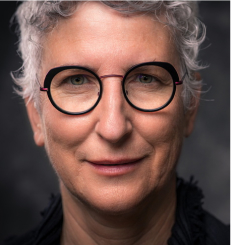
Edward Espe Brown is a renowned chef and Zen teacher who is best known as the first head cook at the Tassajara Zen Mountain Center. In addition to writing several cookbooks including the classic Tassajara Bread Book, Edward founded Greens Restaurant in San Francisco. With Sounds True, he has published No Recipe: Cooking as Spiritual Practice. In this episode of Insights at the Edge, Tami Simon speaks with Edward about Zen teachings on what it means to have to feel our way through the dark—both in the kitchen and on the spiritual path. They talk about cooking as a form of offering and why working with food can be one of the most potent ways to express our hearts in wholeness. Edward shares what he learned in his turbulent first days as the head cook for a spiritual community, including insights from his first Zen teacher, Shunryu Suzuki Roshi. Finally, Edward and Tami discuss what it means to seek out our heart’s true desire, as well as how to embody that search in all that we do. (72 minutes)

Edward Espe Brown began cooking and practicing Zen in 1965. He was the first head resident cook at Tassajara Zen Mountain Center from 1967 to 1970. He later worked at the celebrated Greens Restaurant in San Francisco, serving as busboy, waiter, floor manager, wine buyer, cashier, host, and manager. Ordained a priest by Shunryu Suzuki Roshi, he has taught meditation retreats and vegetarian cooking classes throughout North America and Europe. He is the author of several bestselling cookbooks, including The Tassajara Bread Book, and the editor of Not Always So, a book of lectures by Shunryu Suzuki Roshi. He is the subject of the critically acclaimed 2007 documentary film How to Cook Your Life. He resides in Fairfax, California.
Subscribe to Insights at the Edge to hear all of Tami’s interviews (transcripts available too!), featuring Eckhart Tolle, Caroline Myss, Tara Brach, Jack Kornfield, Adyashanti, and many more.
Founded Sounds True in 1985 as a multimedia publishing house with a mission to disseminate spiritual wisdom. She hosts a popular weekly podcast called Insights at the Edge, where she has interviewed many of today's leading teachers. Tami lives with her wife, Julie M. Kramer, and their two spoodles, Rasberry and Bula, in Boulder, Colorado.
Edward Espe Brown is a Zen priest and the former head cook at Tassajara Mountain Zen Mountain Center who helped found Greens Restaurant in San Francisco. He is the author of No Recipe and the classic Tassajara Bread Book. With Sounds True, he is publishing The Most Important Point: Zen Teachings of Edward Espe Brown. In this episode of Insights at the Edge, Tami Simon speaks with Edward about the origin of his newest book: a quote from his teacher Suzuki Roshi, who said, “The most important point is to find out what the most important point is.” Edward describes his discipleship with Suzuki Roshi and why Zen practice can sometimes be like feeling your way through pitch darkness. Tami and Edward talk about the tradition of “taking the backward step” and moments of realization that transcend your expected practice. Finally, they talk about Edward’s path away from extremely low self-esteem and the role of difficult emotions in Zen contemplative practice. (77 minutes)
During
the twenty years I lived in a meditation center, I rushed through my morning
coffee. After all, if I didn’t drink it fast enough, I’d be late for
meditation. It was important to get to meditation on time; otherwise, one had
to endure the social stigma of being late (obviously lacking the proper
spiritual motivation), as well as the boredom and frustration of having to wait
outside the zendo to meditate until latecomers were admitted.
When I
moved out of the center, I had to learn to live in the world. I had been
institutionalized for nearly twenty years. Now I was out and about. What did it
mean? There was no formal meditation hall in my home. I could set my meditation
cushion in front of my home altar, or I could sit up in my bed and cover my
knees with the blankets. There were no rules.
Soon,
I stopped getting up at 3:30 am. Once I did awaken, I found that a hot shower,
which had not really fit with the previous circumstances, was quite
invigorating. Of course, getting more sleep also helped.
Then I
was ready for coffee—hot, freshly brewed, exquisitely delicious coffee. Not
coffee in a cold cup from an urn; not coffee made with lukewarm water out of a
thermos; not coffee with cold milk, 2 percent milk, or nonfat milk—but coffee with
heated half-and-half. Here was my opportunity to satisfy frustrated longings
from countless mornings in my past. I would not have just any old coffee, but
Peet’s Garuda blend—a mixture of Indonesian beans—brewed with recently boiled
water and served in a preheated cup.
Unfortunately,
by the time I finished the coffee, I had been sitting around so long that it
was time to get started on the day, but I hadn’t done any meditation. With this
heavenly beverage in hand, who needed to meditate?
The
solution was obvious: bring the ceremoniously prepared coffee in the preheated
cup to the meditation cushion. This would never have been allowed at the center
or in any formal meditation hall I have visited, but in my own home, it was a
no-brainer. Bring the coffee to the cushion—or was it the other way around?
I
light the candle and offer incense. “Homage to the Perfection of Wisdom, the
Lovely, the Holy,” I say. “May all beings be happy, healthy, and free from
suffering.” I sit down on the cushion and place the coffee just past my right
knee. I cross my legs and then put the cup right in front of my ankles. I sit
without moving so I don’t accidentally spill the coffee. I straighten my
posture and sip some coffee.
I feel
my weight settling onto the cushion, lengthen the back of my neck, and sip some
coffee. Taste, enjoy, soften, release. I bring my awareness to my breath moving
in, flowing out. If I lose track of my breath, I am reminded to take another sip
of coffee—robust, hearty, grounding. Come back to the coffee. Come back to the
breath.
A
distraction? A thought? Sip of coffee. Enjoy the coffee. Enjoy the breath.
Focus on the present moment. Remembering the words of a Vipassana teacher of
mine: “Wisdom in Buddhism is defined as the proper and efficacious use of
caffeine.”
I
stabilize my intention. “Now as I drink this cup of coffee, I vow with all
beings to awaken body, mind, and spirit to the true taste of the dharma. May
all beings attain complete awakening at this very moment. As I visualize the
whole world awakening, my mind expands into the vastness.
Friends, this is one of the teaching stories that is shared in my new book, The Most Important Point. This offering comes to you with my gratitude for the efforts of Danny S. Parker, who edited over 60 of my Zen talks for inclusion in this volume.
Lastly, I invite you to try the Tea and Ginger Muffins recipe that accompanies this story. Danny must have enjoyed them!
Edward Espe Brown is a Zen Buddhist priest and was the first head cook at Tassajara Zen Mountain Center.
Danny S. Parker is a longtime student of Brown’s and is an ordained Zen Buddhist priest.
Pick up a copy of Edward Espe Brown’s newest book, The Most Important Point, today!
Edward Espe Brown is a renowned chef and Zen teacher who is best known as the first head cook at the Tassajara Zen Mountain Center. In addition to writing several cookbooks including the classic Tassajara Bread Book, Edward founded Greens Restaurant in San Francisco. With Sounds True, he has published No Recipe: Cooking as Spiritual Practice. In this episode of Insights at the Edge, Tami Simon speaks with Edward about Zen teachings on what it means to have to feel our way through the dark—both in the kitchen and on the spiritual path. They talk about cooking as a form of offering and why working with food can be one of the most potent ways to express our hearts in wholeness. Edward shares what he learned in his turbulent first days as the head cook for a spiritual community, including insights from his first Zen teacher, Shunryu Suzuki Roshi. Finally, Edward and Tami discuss what it means to seek out our heart’s true desire, as well as how to embody that search in all that we do. (72 minutes)
What is the “energy” in energy healing? Healers channel it. Patients reach for it. Ancient healing traditions built entire systems around it, and modern researchers are working to study it. But what is energy, biologically, physically, measurably…but also spiritually, and how does it move through the body to influence health and healing?
In this special feed takeover, we’re bringing you the season finale of Phenomena: The Science and Stories of Energy Healing, in which host Ivy Ross brings together three renowned scientists whose visions, taken together, begin to answer that question:
Martin Picard, PhD, of Columbia University, has spent his career studying mitochondria, the body’s cellular power sources, and has found them far more connected to our inner experience and consciousness than biomedicine ever assumed, and likely far more central to how we heal.
Richard Hammerschlag, PhD, co-authored the paper that helped define the modern science of the biofield: the organizing fields of energy and information that operate within the body and extend outward from it, echoing the nested qi fields of older healing traditions.
Neil Theise, MD, of NYU, helped identify the interstitium, a major recent discovery of a fluid-filled network running throughout the body that may explain how signals fundamental to health and healing actually travel.
Together, these three voices offer a compelling, deeply human vision of the body and mind not as a machine, but as a dynamic energetic ecosystem.
To close out the season, Ivy and researcher Meredith Sprengel also welcome special guest Jonathan Cohen, co-creator and executive producer of Mayim Bialik’s Breakdown, to help land these big ideas about energy, healing, and life.
This episode marks the finale of Phenomena‘s first season. To continue the journey and explore the full docuseries, visit phenomenahealing.com. →
When we heard Osho Zenju Earthlyn Manuel share her story of a terrifying night she couldn’t breathe, it was eerily similar to a personal experience—and helpful too. We knew we had to share this moment from her conversation with Tami Simon on Insights at the Edge, in which she tells the story of the night she nearly died from a severe anaphylactic reaction and how she got through it not by searching for light at the end of the tunnel, but by staying present with the darkness itself.
Zenju, a poet and ordained Zen Buddhist priest, challenges the instinct most of us have to fear darkness, rush out of it, or wait for a gift on the other side. Instead, she describes an experience of profound non-struggle — a moment of near-death where she wasn’t afraid, didn’t fight, and somehow found a way to keep breathing by trusting her body completely.
Key themes from this episode:
Why darkness — and even light — may be far more unknown and unknowable than we assume
How struggling against a frightening experience can make it worse, while staying present with it can be transformative
A firsthand account of surviving a full-blown anaphylactic shock without fear
Rethinking our cultural instinct to rush ourselves and others out of difficult emotional or physical states
Why “the absence of light” might be less about despair and more about a different kind of awakening
Taken from the full Insights at the Edge conversation with Zenju Earthlyn Manuel “Opening to Darkness,” which is also the title of her book. Find the complete interview in this feed or at soundstrue.com.
This episode is sponsored by Omega Institute, a global gathering hub for lifelong learning and spiritual exploration. Omega offers weekend workshops, special events, rest and rejuvenation retreats, professional training, online learning, and more. Discover what calls to you ateomega.org/true.
What if the pain you’ve been avoiding is actually the thing that could set you free?
This week, Tami Simon speaks with Michael A. Singer, beloved wisdom teacher, founder of the Temple of the Universe, and author of The Untethered Soul, The Surrender Experiment, Living Untethered, and his newest book, Wisdom Untethered: The Time for Questions. Drawn from 1,200 reader questions distilled into 200 essential ones, the conversation keeps returning to a single teaching Michael once received from a saint: “It’s the pain that ends all pain.”
Join Tami and Michael to explore:
Why “letting go” is an inner practice, not spiritual bypassing or passivity
What samskaras are, and why blocked energy, not memory, is the real source of inner darkness
Why the willingness to feel disturbance, rather than suppress it, is the actual path of purification
The practice of “falling behind” resistance, and other techniques for letting stuck energy move and release
The difference between preferences and fears, and why the Buddha named preference as the root of suffering
How to face real-world injustice with clarity instead of ego-driven reactivity
Why the true motive of spiritual practice is simply to let go of what’s in the way
Whether you’ve read The Untethered Soul a dozen times or are new to Michael’s teachings, this conversation offers both the practical tools and the felt experience of what it means to stop blocking the shakti that’s already flowing within you.
Listen now, and discover why the pain you’ve been running from might be exactly what ends it. →
This conversation offers genuine transmission, not just concepts about awakening, but the palpable presence of realized teachers exploring the growing edge of spiritual understanding together, and originally aired on Sounds True One.
Insights at the Edge is supported by Magic Hour, whose ceremonial teas carry more presence, beauty, and ritual into ordinary days. Magic Hour draws its leaves and botanicals from regenerative small farms around the world, in blends made to nourish the body and open the mind.
Explore their teas, matchas, and herbal rituals atclubmagichour.com. Get 20% off your first order with the code TRUE.