Shinzen Young: The Science of Enlightenment, Part 1

    —
October 25, 2016

Shinzen Young: The Science of Enlightenment, Part 1

Shinzen Young October 25, 2016

Shinzen Young is a renowned mindfulness teacher known for his live gatherings, where he uses a scientific, “algorithmic” approach to explain the many aspects of meditation. With Sounds True, he has published the decades-in-the-making book The Science of Enlightenment: How Meditation Works. In this episode of Insights at the Edge, Tami Simon and Shinzen speak on his approach to mindfulness, including a method of breaking down sensory experience into easily parsed categories. They talk about the three core powers of focused attention—sensory clarity, concentration, and equanimity—and how mindfulness can free us of the impression that our selves are static and unchanging. Finally, Shinzen and Tami discuss the different ways in which we can understand the concept of enlightenment, including an in-depth consideration of what Shinzen calls “classical enlightenment.” (66 minutes)

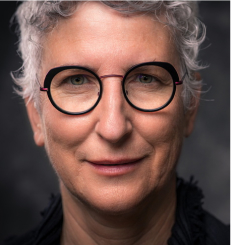
Photo of ()\

Shinzen Young became fascinated with Asian culture while a teenager in Los Angeles. Later he enrolled in a PhD program in Buddhist Studies at the University of Wisconsin. Eventually, he went to Asia and did extensive training in each of the three major Buddhist traditions: Vajrayana, Zen and Vipassana. Upon returning to the United States, his academic interests shifted to the burgeoning dialogue between Eastern meditation and Western science. Shinzen is known for his innovative “interactive, algorithmic approach” to mindfulness, a system specifically designed for use in pain management, recovery support, and as an adjunct to psychotherapy. He leads meditation retreats throughout North America and has helped establish numerous mindfulness centers and programs. He also consults widely on meditation-related research, in both the clinical and the basic science domains. He often says: “My life’s passion lies in exploring what may arise from the cross-fertilization of the best of the East with the best of the West.”

Author photo © Eric Hamburg

600 Podcasts and Counting…

Subscribe to Insights at the Edge to hear all of Tami’s interviews (transcripts available too!), featuring Eckhart Tolle, Caroline Myss, Tara Brach, Jack Kornfield, Adyashanti, and many more.

Meet Your Host: Tami Simon

Founded Sounds True in 1985 as a multimedia publishing house with a mission to disseminate spiritual wisdom. She hosts a popular weekly podcast called Insights at the Edge, where she has interviewed many of today's leading teachers. Tami lives with her wife, Julie M. Kramer, and their two spoodles, Rasberry and Bula, in Boulder, Colorado.

Photo © Jason Elias

Also By Author

Shinzen Young: The Science of Enlightenment, Part 2

Shinzen Young is a renowned mindfulness teacher known for his live gatherings, where he uses a scientific, “algorithmic” approach to explain the many aspects of meditation. With Sounds True, he has published the decades-in-the-making book The Science of Enlightenment: How Meditation Works. In the second half of an extensive interview on Insights at the Edge, Tami Simon and Shinzen talk about how to bring equanimity to both pleasurable and painful sensory experiences and how that has a purifying effect on consciousness. In order to ground this experience, Shinzen leads Tami and the audience on a guided practice to help give a “taste of purification.” Finally, Shinzen shares a quick, powerful technique for starting on the path to enlightenment and something intensely personal—his happiest thought. (75 minutes)

Shinzen Young: The Science of Enlightenment, Part 1

Shinzen Young is a renowned mindfulness teacher known for his live gatherings, where he uses a scientific, “algorithmic” approach to explain the many aspects of meditation. With Sounds True, he has published the decades-in-the-making book The Science of Enlightenment: How Meditation Works. In this episode of Insights at the Edge, Tami Simon and Shinzen speak on his approach to mindfulness, including a method of breaking down sensory experience into easily parsed categories. They talk about the three core powers of focused attention—sensory clarity, concentration, and equanimity—and how mindfulness can free us of the impression that our selves are static and unchanging. Finally, Shinzen and Tami discuss the different ways in which we can understand the concept of enlightenment, including an in-depth consideration of what Shinzen calls “classical enlightenment.” (66 minutes)

A Meeting with a Pioneering Meditation Teacher

Tami Simon speaks with Shinzen Young, a pioneering meditation teacher, the founder of the Vipassana Support Institute, and an expert in the field of pain management. With Sounds True, Shinzen has created several programs to help people work with physical and emotional pain through meditation, including a book/CD called Break Through Pain. Additionally, Shinzen has called upon his decades as a meditation teacher to create an introductory audio program on meditation: Meditation. Shinzen discusses what science and meditation have in common and how these two fields can collaborate in the future to create technologies of awakening. (69 minutes)

You Might Also Enjoy

Thomas Moore: “Curing Our Cultural Lostness̶...

Thoreau said he wasn’t paddling the Assabet River—he was on the Ganges. Was he being poetic, or was he seeing something we’ve lost the capacity to see?

This week, Tami Simon speaks with Thomas Moore—bestselling author of Care of the Soul, Dark Nights of the Soul, and Ageless Soul—about his new book, The Cure at Walden Pond: A Guide to Recovering Our Humanity. At 85, Moore offers a reading of Thoreau that upends the one most of us were taught: not a naturalist cataloguing the woods, but a mystic looking for what he called the divine “lurking” there.

Join Tami and Thomas to explore:

  • Living daimonically: the guiding presence the Greeks called a daimon and the Romans called a genius—and how to tell it from your own ego agenda
  • Why Moore left the monastery after 13 years on the strength of a single morning’s clarity
  • “We are half human, half angel”—and what changes when you look at the people in your life through that lens
  • Musical time, Bach, and why playing the piano every day has made Moore think differently about dying
  • Why “the ultimate secret is to show the world who you are”—and why humiliation may be closer to the soul than confidence
  • Thoreau’s dark night: holding his brother as he died, and what it teaches about grief you never get over
  • The chapter called “Be Cold and Hungry,” and why the storms belong

Tami presses Moore on the parts she finds hard to swallow—and his answers are the heart of this episode.

Listen now, and find the cure. →

This conversation offers genuine transmission, not just concepts about awakening, but the palpable presence of realized teachers exploring the growing edge of spiritual understanding together, and it originally aired on Sounds True One.

The Point of Insight | “Half Human, Half Mystery...

Somewhere between the human being you know yourself to be and something you can only call mystery—that’s where this one lands.

In this Point of Insight, Tami Simon follows a thread that runs through decades of her own practice and hundreds of conversations on Insights at the Edge. It begins with somatic meditation and the discovery of the central channel—the flow of energy in front of the spine that yoga calls the sushumna, and that Richard Freeman once told her is the real yoga teacher. It arrives, years later, at a moment mid-interview when Tami felt something press up against her back and realized she had become, in her words, part regular human and part something with wings.

Follow along as Tami explores:

  • The central channel as a key that unlocks a prison of constricted thinking
  • What Richard Freeman and Qigong master Robert Peng each revealed about the inner teacher and the flow between ida and pingala
  • Energy intuitive Lee Harris and “the angel behind you”—an eight- to twelve-foot presence available to all of us
  • Why you can’t be a light warrior alone, and what that means for the years ahead
  • Thomas Moore, Thoreau, and learning to see the transcendent in the people you love
  • The chrysalis, the goo, and Tami’s obstinate refusal of everyone’s butterfly metaphors
  • What became possible only when she stopped clawing for something to hold and let herself fall back

For anyone in a stripped-down season, or anyone who has sensed there’s more to them than the person they can see in the mirror, this is an invitation to stop bracing—and lean into the support that’s already pressing against your back.

Listen now. →

Find the original Insights at the Edge episodes here:
Lee Harris, “Be a Future Human and Find the New
Richard Freeman, “Living Yoga
Robert Peng, “The Master Key: Awakening the Four Golden Wheels

Rob Bell: “The Risk of Not Becoming More YouR...


What if not doing the thing is the riskier choice?

This week, Tami Simon speaks with Rob Bell—New York Times bestselling author of 14 books and plays, host of The RobCast, and a former pastor—about what he calls his civilian phase. Rob left the role years ago. What surprised him was how long the role stayed with him afterward: “We leave an external form, and then over the years, the form begins to leave us.”

This is an unusually candid conversation. Tami goes first, admitting she didn’t feel free to fully reveal herself until she had economic security—and Rob meets her there without a tidy answer.

Join Tami and Rob to explore:

  • Why he doesn’t believe in risk versus no risk—only in risk management, and which risk is actually smaller
  • The “answer man” conditioning of a job that expected crisp soundbites about the deepest human questions—and what it did to his nervous system
  • Hiding in plain sight: how public visibility can be its own kind of concealment
  • The abyss, the void, the fallow field—learning to stop fighting the empty seasons
  • “And then I kept going”: the phrase that came out of pandemic sessions, and why people can’t see their own resilience
  • What shifted when a plant medicine experience dropped his head into his heart
  • Toxic positivity, a lineage that didn’t know what to do with pain, and the son who taught him it’s okay to be sad
  • Why a birch tree scatters 250 million seeds and doesn’t seem worried about efficiency
  • His father’s dementia, temporariness, and the strange way mortality heightens aliveness

Rob will lead an immersive workshop, The Ongoing Creation of Your Life, at Omega Institute, August 30–September 4.

Listen now and hear what it costs to keep standing at a distance from your own life. →

This conversation offers genuine transmission, not just concepts about awakening, but the palpable presence of realized teachers exploring the growing edge of spiritual understanding together, and originally aired on Sounds True One.