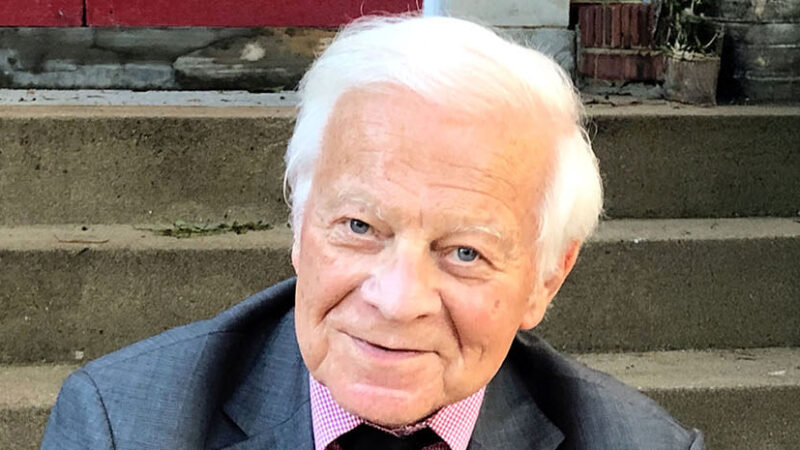
Just One Question | James Hollis: Why Am I Here?

    —
August 13, 2026

Just One Question | James Hollis: Why Am I Here?

James Hollis August 13, 2026

Tami came to Living with Borrowed Dust wanting to talk about the abyss — the chapter that held her attention most. James Hollis offers Heidegger’s framing of it: not the pit that swallows you, but the openness of being.

Then he does something guests rarely do here. He takes the question back. The abyss opens, he says, every time we ask a truly radical question — radical from radix, root — and there is none more radical than “Why am I here?”

He answers it from inside a hospital bed. Two serious spinal surgeries, real doubt about whether he’d come through, and what he describes feeling is not despair but something closer to adventure. He thanked his surgeon on the way into the operating room. Fear is normal, he says, and anxiety is real — but neither one has to be the thing that decides how you live.

In this episode:

  • Heidegger’s abyss as the openness of being, and how that reframe exposed Hollis’s own defenses
  • The patterns we build against the unknown: power over small things, staying out of harm’s way, narcissistic inflation
  • Why mortality is the one statistic with no uncertainty in it, and what that should free us to do
  • Keep walking — if you’re in the middle of the forest, you’re halfway through
  • Dignity over pride, and the one thing nobody can take from you unless you give it away

Taken from the full Insights at the Edge conversation with James Hollis. Find the complete interview in this feed or at soundstrue.com

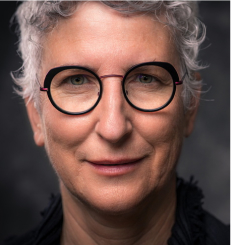
James Hollis, PhD, is a licensed Jungian analyst in private practice in Washington, DC. Originally from Springfield, Illinois, he graduated from Manchester University in 1962 and Drew University in 1967. He taught humanities for 26 years in various colleges and universities before retraining as a Jungian analyst at the Jung Institute of Zürich, Switzerland (1977–82). He served as executive director of the Jung Educational Center in Houston, Texas, for many years. He was executive director of the Jung Society of Washington until 2019, and now serves on its board of directors. He is a retired senior training analyst for the Inter-Regional Society of Jungian Analysts, was first director of training of the Philadelphia Jung Institute, and is vice-president emeritus of the Philemon Foundation. Additionally, he was a professor of Jungian Studies for Saybrook University of San Francisco.

He has written 20 books, available in translations around the world, including Living Between WorldsWhat Matters Most, and Living an Examined Life. He lives with his wife, Jill, an artist and retired therapist, near Washington, DC. Together they have three living children and eight grandchildren. For more, visit jameshollis.net.

Author photo © Oxana Holtmann 

600 Podcasts and Counting…

Subscribe to Insights at the Edge to hear all of Tami’s interviews (transcripts available too!), featuring Eckhart Tolle, Caroline Myss, Tara Brach, Jack Kornfield, Adyashanti, and many more.

Meet Your Host: Tami Simon

Founded Sounds True in 1985 as a multimedia publishing house with a mission to disseminate spiritual wisdom. She hosts a popular weekly podcast called Insights at the Edge, where she has interviewed many of today's leading teachers. Tami lives with her wife, Julie M. Kramer, and their two spoodles, Rasberry and Bula, in Boulder, Colorado.

Photo © Jason Elias

Also By Author

Just One Question | James Hollis: Why Am I Here?

Tami came to Living with Borrowed Dust wanting to talk about the abyss — the chapter that held her attention most. James Hollis offers Heidegger’s framing of it: not the pit that swallows you, but the openness of being.

Then he does something guests rarely do here. He takes the question back. The abyss opens, he says, every time we ask a truly radical question — radical from radix, root — and there is none more radical than “Why am I here?”

He answers it from inside a hospital bed. Two serious spinal surgeries, real doubt about whether he’d come through, and what he describes feeling is not despair but something closer to adventure. He thanked his surgeon on the way into the operating room. Fear is normal, he says, and anxiety is real — but neither one has to be the thing that decides how you live.

In this episode:

  • Heidegger’s abyss as the openness of being, and how that reframe exposed Hollis’s own defenses
  • The patterns we build against the unknown: power over small things, staying out of harm’s way, narcissistic inflation
  • Why mortality is the one statistic with no uncertainty in it, and what that should free us to do
  • Keep walking — if you’re in the middle of the forest, you’re halfway through
  • Dignity over pride, and the one thing nobody can take from you unless you give it away

Taken from the full Insights at the Edge conversation with James Hollis. Find the complete interview in this feed or at soundstrue.com

[ENCORE EPISODE] James Hollis: What Is Wanting to Find...

**SPECIAL ENCORE PRESENTATION IN SUPPORT OF WORLD MENTAL HEALTH DAY THIS OCTOBER**

Dr. James Hollis is a Jungian analyst, a former director of the Jung Society of Washington, DC, and a professor of Jungian Studies for Saybrook University of San Francisco/Houston. He is the author of The Middle PassageLiving an Examined Life, Through the Dark Wood, and Living Between Worlds, among many others. With Sounds True, he’s released the expansive audio program A Life of Meaning: Exploring Our Deepest Questions and Motivations.

In this episode of Insights at the Edge, Tami Simon speaks with James about the journey for personal fulfillment—how it starts, what it demands, and how it changes your life. James explains what it really means to take responsibility for your life’s path, as well as how you can rediscover and reclaim your innate authority. Tami and James discuss how childhood experiences shape our present behavior and what it takes to live fearlessly. Finally, they talk about overcoming lethargy and the joy of becoming comfortable with mysteries.

This episode is sponsored by BetterHelp. Listeners of Insights At The Edge get 10% off their first month at www.betterhelp.com/soundstrue.

James Hollis: “Find What You Love and Let It Kill Yo...


By what lights do you live your journey? What fires your imagination? What stirs your curiosity? What asks of you something that is so deep within you that perhaps it hurts, but you can’t let go of it because it won’t let go of you? These are some of the “large questions” explored by Tami Simon and her guest, Jungian teacher and author James Hollis. Hollis is one of those authors who’s beloved by everyone who works at Sounds True—especially those of us who’ve entered the second half of life—and in this podcast, you’ll discover why. 

Listen now as Tami and Jim discuss his new book, Living with Borrowed Dust, sharing thought-provoking insights about: the evanescence of our human journey; making your life luminous; asking large questions, and how we lose contact with the inquiries that serve our individuation; fate versus destiny; the independence of the psyche; the ego’s need for control; dreams as “health correctives” and an avenue to the numinous; showing up for your “appointment” in life; trusting the wisdom of nature; how psychoanalysis helps us rewrite the self-limiting narratives that hold us back; the worst damage of trauma: identifying who we are with what happened to us; why we can’t solve certain problems, but we can outgrow them; courage and perseverance; paying close attention to your inner life; living in a culture of distraction; dialoguing with your soul; the paradox of passion; facing the abyss; taking advantage of the precious moments; learning to live with ambiguity; and more.

Note: This episode originally aired on Sounds True One, where these special episodes of Insights at the Edge are available to watch live on video and with exclusive access to Q&As with our guests. Learn more at join.soundstrue.com.

You Might Also Enjoy

Just One Question | James Hollis: Why Am I Here?

Tami came to Living with Borrowed Dust wanting to talk about the abyss — the chapter that held her attention most. James Hollis offers Heidegger’s framing of it: not the pit that swallows you, but the openness of being.

Then he does something guests rarely do here. He takes the question back. The abyss opens, he says, every time we ask a truly radical question — radical from radix, root — and there is none more radical than “Why am I here?”

He answers it from inside a hospital bed. Two serious spinal surgeries, real doubt about whether he’d come through, and what he describes feeling is not despair but something closer to adventure. He thanked his surgeon on the way into the operating room. Fear is normal, he says, and anxiety is real — but neither one has to be the thing that decides how you live.

In this episode:

  • Heidegger’s abyss as the openness of being, and how that reframe exposed Hollis’s own defenses
  • The patterns we build against the unknown: power over small things, staying out of harm’s way, narcissistic inflation
  • Why mortality is the one statistic with no uncertainty in it, and what that should free us to do
  • Keep walking — if you’re in the middle of the forest, you’re halfway through
  • Dignity over pride, and the one thing nobody can take from you unless you give it away

Taken from the full Insights at the Edge conversation with James Hollis. Find the complete interview in this feed or at soundstrue.com
Just One Question | Rev angel Kyodo williams: How Do W...

Reverend angel Kyodo williams has spent decades bridging Zen practice and social change, and she doesn’t offer the version of spirituality where relief is waiting somewhere down the road. She told Tami Simon that our joy lives at the center of our suffering, and Tami, to her credit, pushed back. Really? Right in the middle of my deep suffering and the world’s deep suffering?

Reverend angel’s answer is why this segment felt so powerful and transformative to us. She argues we’ve been handed a spiritual life that lives in a box: well-maintained, kept in good order, scheduled for Tuesday evenings from 6:30 to 8:30. Real practice, she says, pulls the lens all the way back to take in a whole life: the trauma, the history, the parts we’ve been trained to walk around. And when we refuse to touch our own suffering, we don’t contain it. We leave it behind us like roadkill, in how we treat each other and in what we let stand: patriarchy, racism, xenophobia.

In this episode:

  • Why “radical” means whole rather than extreme, and what a complete dharma asks of us
  • The cold-water method—entering your suffering ankle-deep, then further
  • What joy actually is, and why it isn’t an ice cream cone in the middle of the mess
  • The question Reverend angel keeps returning to in her own practice: where have I not yet looked?
  • Why fearlessness isn’t something you choose, but something that surfaces once the path is clear

Taken from the full Insights at the Edge conversation with Reverend angel Kyodo williams. Find the complete interview here: Reverend angel Kyodo williams: Warrior Spirit.

Matthew Fox on Original Blessing: Why You Were Born Go...

What if the first step on your spiritual path wasn’t about fixing something broken in you, but about recognizing how whole you already are? Matthew Fox has spent decades asking this question, and his answer, rooted in the teaching of original blessing, invites us to begin our spiritual lives with wonder rather than with shame.

At Sounds True, we are dedicated to sharing the living wisdom of trusted spiritual teachers through immersive podcasts, digital courses, and transformational programs that support personal growth and awakening.

Here, we’ll walk through Matthew Fox’s teachings on original blessing, creation spirituality, the influence of Meister Eckhart, and how these ideas offer a grounded, compassionate path forward for anyone who longs for a more reverent relationship with life.

Key Takeaways:

  • Learn Why You Were Born Good: Original blessing reframes the spiritual journey by centering humanity’s inherent goodness, offering a life-affirming path rooted in wonder rather than shame.
  • Creation as Sacred Ground: Creation spirituality teaches that the divine is woven into nature, community, and everyday life, inviting us to meet the sacred right where we are.
  • The Mystic Who Shaped Fox: Meister Eckhart’s vision of a God present in all things continues to shape Matthew Fox’s teachings on creativity, compassion, and sacred connection.

Awaken Your Inner Healing Power: Your Wellness Journey Starts Now

Matthew Fox and the Meaning of Original Blessing

Many spiritual traditions begin with the idea that humanity arrived in this world already broken, separated from the divine through original sin. Matthew Fox gently but firmly challenges this starting point. His teaching of original blessing asks us to return to the very beginning, to the opening pages of Genesis, where something far warmer is waiting.

In the first chapter of the Bible, God’s spirit hovers over the waters like a brood hen watching over her eggs, nurturing and alive with creative energy. Fox sees this image as living, not static. God here is a verb, a dynamic creator who calls all of life good. This reading opens with vitality, growth, and a love that precedes any misstep. When we begin from goodness, the spiritual journey takes on a different quality.

Readers who feel called to go deeper into this kind of spiritually grounded inquiry will find our Spirituality & Awakening collection brings together teachings that help cultivate that sense of sacred connection in daily life.

Original Blessing as an Original Sin Alternative

The original sin alternative that Fox offers is a reorientation, not a rejection of accountability or depth. Original blessing invites us to arrive in this life carrying a gift to live, and to let that gift be the foundation. This shifts the entire atmosphere of the spiritual journey.

When we start from goodness, compassion flows more naturally. Responsibility becomes something we can embrace openly. Care for the Earth, for one another, and for ourselves becomes an act of reverence. Fox honors the full complexity of being human. His invitation is simply to stop making the hard parts the foundation.

What Is Creation Spirituality?

Creation spirituality teaches that the sacred is woven into creation itself, present in a forest, in a conversation, in a piece of music that stops you mid-step. The divine isn’t something we reach only by turning away from the physical world. This path invites us to encounter God within it.

Fox describes creation spirituality as a recovery project, a return to the awe that the earliest humans felt standing inside a world too vast and beautiful to explain. That sense of wonder is still available to us. Readers drawn to practices that cultivate this kind of felt presence may find resonance in the teachings within our Subtle Energy collection, which opens pathways into the deeper dimensions of human experience.

Fall Redemption vs Creation Spirituality

The conversation around fall redemption vs creation spirituality highlights two distinct starting points. The fall/redemption framework begins with human failure, emphasizing original sin and the need for rescue. Creation spirituality begins with God’s creative energy already alive and generous in the world. While one starts in the wound, the other starts with the gift.

In fall redemption theology, faith centers on trust in an external authority to restore what was lost. Creation spirituality offers something complementary: faith as trust in the aliveness already present within you and around you. Compared to the fall redemption theory, creation spirituality is feminist and gender-balanced. To hear this conversation in Fox’s own voice, visit our Insights at the Edge Podcast, where he and other teachers speak openly about these ideas in conversation with host Tami Simon.

Uncover Hw Your Mind Really Works With Sounds True

How Meister Eckhart Shaped Matthew Fox’s Teachings

Few thinkers have shaped Matthew Fox’s work as deeply as Meister Eckhart, the 14th-century German Dominican mystic whose writings continue to stir spiritual imagination centuries after his death. Eckhart taught that the divine is not remote or indifferent but present at the very ground of every soul, a living God who dwells within all things.

Fox engaged with Eckhart as a living guide. He saw in Eckhart’s teachings a confirmation of what creation spirituality already sensed: that the sacred pervades the world, that creativity is a form of prayer, and that every person carries a spark of the divine. Fox’s deep engagement with Eckhart helped bring these 700-year-old ideas to contemporary seekers in language they could feel and act on.

Those who want to learn more about Matthew Fox and the many teachers whose work touches these themes can visit our All Teachers & Authors page for a full look at the voices in our community.

Living Original Blessing Through Creation Spirituality

Receiving original blessing isn’t a single moment of insight. Living it is an ongoing practice, a way of meeting each day with a different set of assumptions. Fox’s vision of creation spirituality gives us language for that practice and a few grounded ways to begin.

  • Start the Day with Gratitude: Pause before the mental inventory of what needs fixing. Acknowledge what is already here: your breath, the light, the life moving through you. This is a choice to place goodness at the center of the day before anything else takes over.
  • Let Nature Be a Teacher: Creation spirituality invites us to treat the natural world as a living text. A walk outside, a moment watching clouds shift, or tending a small garden becomes an act of communion. Fox’s work reminds us that the Earth participates in the sacred, and that paying attention to it is itself a form of prayer.
  • Create Without an Agenda: Fox views creativity as one of the most direct expressions of divine energy available to us. Cooking, drawing, writing, singing, building — any act of making can become a form of spiritual practice when approached with presence and care.

Discover the Power of Daily Meditation and Inner Stillness

Final Thoughts

Matthew Fox’s teachings ask us to do something both simple and radical: begin with ourselves as good. From that foundation, creation spirituality opens into a way of living that honors the sacred in everything, in other people, in the natural world, in the creativity and care we bring to ordinary days. The influence of Meister Eckhart runs through all of this as a reminder that this longing to find the divine close has deep roots.

Frequently Asked Questions About Matthew Fox on Original Blessing

What is Matthew Fox best known for?

Matthew Fox is a spiritual teacher, theologian, and author known for developing creation spirituality, a path that emphasizes the sacredness of creation and humanity’s inherent goodness.

Why did Matthew Fox write about original blessing?

Matthew Fox introduced the concept of original blessing to encourage a more life-affirming view of spirituality. His teachings invite people to begin with gratitude and sacred connection instead of focusing on human faults.

Is original blessing a religious belief?

Original blessing is a spiritual perspective that can resonate with people from many faith traditions. It emphasizes the goodness of creation and encourages a deeper relationship with the divine through everyday life.

How does creation spirituality relate to environmental care?

Creation spirituality teaches that the natural world is sacred. This perspective encourages respect for the Earth and inspires people to care for the environment as an expression of their spiritual values.

Who was Meister Eckhart, and why is he important?

Meister Eckhart was a Christian mystic whose teachings emphasized experiencing the divine within. His writings continue to influence spiritual thinkers, including Matthew Fox.

What can readers gain from Matthew Fox’s teachings?

Readers often find a renewed sense of purpose, compassion, and connection with the world. His teachings encourage a spiritual practice rooted in gratitude, creativity, and reverence for life.

Why does Matthew Fox emphasize creativity?

Matthew Fox views creativity as a reflection of the divine. Artistic expression, problem-solving, and innovation can all become meaningful spiritual practices that celebrate the gift of creation.

Michelle Cassandra Johnson is an author, activist, spiritual teacher, racial equity consultant, and intuitive healer. She is the author of six books, including Skill in Action and Finding Refuge. Amy Burtaine is a leadership coach and racial equity trainer. With Robin DiAngelo, she is the coauthor of The Facilitator's Guide for White Affinity Groups. For more, visit https://www.michellecjohnson.com/wisdom-of-the-hive.