Jacqueline Suskin: Being an Artist for the Earth

January 2, 2024

Jacqueline Suskin: Being an Artist for the Earth

Jacqueline Suskin January 2, 2024

In our modern world, many of us live predominantly out of sync with the rhythms and cycles of nature and the Earth. In her new book, A Year in Practice, Jacqueline Suskin offers readers a wealth of teachings, tools, and rituals to realign with the four seasons and the transitions between them for creative insight and inspiration. 

Take a listen as Tami Simon speaks with the celebrated poet and author about the rewards we reap through a return to harmony with our immediate natural surroundings and our larger planetary home, in this conversation on: following your own creative impulse; letting the experiment be the guide; the shift from creative practice to profession; guesswork and trust; the Earth and the seasons as ever-present muse; the many faces of devotion and meaning-making; remembering our connection to nature on a daily basis; the importance of carefully tending to transitional times; the benefits of cultivating a greater sense of embodiment; balancing hope and hopelessness; the sacred function of the poet; the healing power of intentional rest, and the “medicine of winter” so many of us need; introspection, silence, and solitude; making the “radical return” to nature’s cycles; the poem “Desert Bear” and the metaphor of hibernation; shedding what’s no longer needed; and more.

Note: This episode originally aired on Sounds True One, where these special episodes of Insights at the Edge are available to watch live on video and with exclusive access to Q&As with our guests. Learn more at join.soundstrue.com.

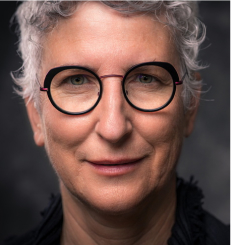
Jacqueline Suskin has composed over forty thousand poems with her ongoing improvisational writing project, Poem Store. She is the author of six books, including Help in the Dark Season. Her work has been featured in the New York Times, the Atlantic, and Yes! magazine. She lives in Northern California. For more, see jacquelinesuskin.com.

Author photo © James Adam Taylor

600 Podcasts and Counting…

Subscribe to Insights at the Edge to hear all of Tami’s interviews (transcripts available too!), featuring Eckhart Tolle, Caroline Myss, Tara Brach, Jack Kornfield, Adyashanti, and many more.

Meet Your Host: Tami Simon

Founded Sounds True in 1985 as a multimedia publishing house with a mission to disseminate spiritual wisdom. She hosts a popular weekly podcast called Insights at the Edge, where she has interviewed many of today's leading teachers. Tami lives with her wife, Julie M. Kramer, and their two spoodles, Rasberry and Bula, in Boulder, Colorado.

Photo © Jason Elias

Also By Author

Winter’s Reminder to Slow Down and Sink into Deep Re...

My constant reminder to myself all winter is to not push too hard. The essence of the season reminds me that I don’t have to document every aha moment that happens in these cold, quiet months. I don’t have to share every discovery or turn every insight into a poem. In the winter, I’m much more inclined to commune with the Divine and let those conversations remain private. This is the influence of winter, the way it teaches me to shift from an overly productive participant’s pace into a person with a battery that needs to plug in and recharge gradually in order to rise up refreshed for the act of creation.

Rest isn’t easy for us, and we have to be intentional about it. How will you ensure that rest is a central part of your winter schedule? A lot can be accomplished in these sleepy months of contemplation, but if you position rest as the central focus of your routine, you’ll emerge from this season with more endurance for the working days ahead of you.

What does an ideal period of rest look like for you?

Unwinding looks different for everyone, and you’ll need to spend some time making a list of ways you can actualize rest in your daily winter life.

Maybe once a week you wake up and immediately take a hot bath. Maybe you watch a movie in the middle of the day. Maybe you get under your electric blanket and read a book for an hour after lunch. Resting usually requires doing (or not doing) something that will break your routine of constant output. How can you convince yourself to pause and be leisurely?

You’ll have to choose activities that will force you to slow down. You’ll have to remind yourself that resting will expand your creative practice in the long run, even if it seems like the opposite is happening in the moment. Experiment with what works best for you.

Prompts from the Planet

What do plants and other animals do in the winter?

They go dormant. Seeds wait, inactive in the dark soil or stored away, safe and dry.

They harden, keep warm, and get slow. Some stop growing. Others sleep and dream.

Below ground, everything works anew, protective and focused on survival.

The plant world pauses its creation and changes its approach, waiting for the sun to return.

Remember, we are part of the same cycle.

Remember to ask yourself: What is the natural world up to right now? How does it include me?

This is an adapted excerpt from A Year in Practice: Seasonal Rituals and Prompts to Awaken Cycles of Creative Expression by Jacqueline Suskin.


Jacqueline Suskin has composed over forty thousand poems with her ongoing improvisational writing project, Poem Store. She is the author of six books, including Help in the Dark Season. Her work has been featured in the New York Times, the Atlantic, and Yes! magazine. She lives in Northern California. For more, see jacquelinesuskin.com.

Author photo © James Adam Taylor

A Year in Practice

Learn More

Amazon | Barnes & Noble | Bookshop | Sounds True

Jacqueline Suskin: Being an Artist for the Earth

In our modern world, many of us live predominantly out of sync with the rhythms and cycles of nature and the Earth. In her new book, A Year in Practice, Jacqueline Suskin offers readers a wealth of teachings, tools, and rituals to realign with the four seasons and the transitions between them for creative insight and inspiration. 

Take a listen as Tami Simon speaks with the celebrated poet and author about the rewards we reap through a return to harmony with our immediate natural surroundings and our larger planetary home, in this conversation on: following your own creative impulse; letting the experiment be the guide; the shift from creative practice to profession; guesswork and trust; the Earth and the seasons as ever-present muse; the many faces of devotion and meaning-making; remembering our connection to nature on a daily basis; the importance of carefully tending to transitional times; the benefits of cultivating a greater sense of embodiment; balancing hope and hopelessness; the sacred function of the poet; the healing power of intentional rest, and the “medicine of winter” so many of us need; introspection, silence, and solitude; making the “radical return” to nature’s cycles; the poem “Desert Bear” and the metaphor of hibernation; shedding what’s no longer needed; and more.

Note: This episode originally aired on Sounds True One, where these special episodes of Insights at the Edge are available to watch live on video and with exclusive access to Q&As with our guests. Learn more at join.soundstrue.com.
Poetic Mindset Tip: Your Awe Can Be Connective

POETIC MINDSET TIP: YOUR AWE CAN BE CONNECTIVE

Try applying a mentality of awe when you’re interacting with someone who lives a life very different from yours. Let your awe be the inspiration for a connection. How did they come to believe something that makes you so uncomfortable? What is the root of their behavior? Maybe this person has a dissimilar political view. Maybe they live in a rural town, and you live in a city. Maybe they grew up practicing a particular religion, and you didn’t. These are the big facts that surround the difference between you, but maybe this contrast can be intriguing instead of off-putting? When I find myself on a disparate page from someone else, I try not to close up. I try to lean in to discovery. It’s frequently these occasions that surprise me the most and give me new insight.

When I let myself stay curious about another person’s point of view instead of shutting down, I’m challenged to see with a new lensand that feels creative. What would I have overlooked if I hadn’t led with a sense of reverential respect? For example, through Poem Store, I developed very unlikely friendships that are still a huge part of my life.

From a familial bond with a timber baron to a deep camaraderie with a wealthy businessman, I found myself open to all kinds of folks I might normally shut out if I weren’t in the mode of poetic openness.

quote

These relationships continue to teach me how to develop compassionate language and an availability for dialogue that focuses on similarities, respect, and humanity, as opposed to difference, disdain, and judgment.

Letting your interest in a person’s inner world outweigh your differences could have unifying results. Awe is often the key to the similarities we all share. It’s our curiosity that links us, and these connections can cause the largest transformations.

poem

Housemates

Pierre Talón lives

in the kitchen,

close to the kettle

with an invisible web.

His brothers and sisters

share the same name.

Long glass-like legs

and dark teardrop bodies.

Penelope is on the front porch,

blending with the potted plant,

her green abdomen longer each day, 

her hind legs like mechanical armor. 

Pierre Talón catches the flies

and Penelope reminds me

to pause, peering between blossoms. 

The spider never leaves, just changes 

corners and sizes, and dodges the steam 

when I make tea. The grasshopper 

greets me for months, until one day

she sheds her skin and leaves me

with a perfect paper version of herself.

This is an excerpt from Every Day Is A Poem: Find Clarity, Feel Relief, and See Beauty in Every Moment by Jacqueline Suskin.


jacqueline suskinJacqueline Suskin has composed over forty thousand poems with her ongoing improvisational writing project, Poem Store. She is the author of six books, including Help in the Dark Season. Her work has been featured in the New York Times, the Atlantic, and Yes! magazine. She lives in Northern California. For more, see jacquelinesuskin.com.


book cover

Sounds True | Amazon | Barnes & Noble | Indiebound | Bookshop


You Might Also Enjoy

Just One Question | Connie Zweig: What Does It Mean to...

You know the object of your addiction is bad for you. So why can’t you stop? Dr. Connie Zweig has spent decades working with people who feel stuck in exactly that gap between knowing and changing.

Zweig is a retired Jungian therapist and the author of the newly republished Meeting the Shadow and Romancing the Shadow — the books that helped launch the shadow-work movement, and the reason a new generation is now discovering it on TikTok.

In this clip, she walks Tami through her method step by step, using the story of a client who couldn’t stop eating ice cream every night while waiting for an unavailable boyfriend to call. Awareness alone, Zweig explains, is never enough. You have to name the shadow character, trace it back to where it was first modeled, and uncover the valid need hiding underneath it.

What you’ll take away from this clip:

  • Why awareness of a compulsive pattern rarely changes it on its own
  • How to identify a “shadow character” through its recurring thoughts, feelings, and body sensations
  • Why every addictive or compulsive behavior is protecting a valid, hidden need
  • Zweig’s own story of discovering her “judge” shadow character — inherited from her father

This clip is taken from the full Insights at the Edge conversation with Connie Zweig: “Meeting One of the World’s Leading Experts on the Shadow.” 

This episode is sponsored by Omega Institute, a global gathering hub for lifelong learning and spiritual exploration. Omega offers weekend workshops, special events, rest and rejuvenation retreats, professional training, online learning, and more. Discover what calls to you at eomega.org/true.

Caroline Myss: Breaking Through Fear—Welcome to Spir...

Why does the world feel so unstable right now—and why does the fear so many of us are feeling seem to have no clear target?

In this special episode, Tami Simon shares an excerpt from medical intuitive and New York Times bestselling author Caroline Myss’s opening presentation for Spiritual Home Base, the new online community where Caroline serves as spiritual director. In her session, “Breaking Through Fear,” Caroline offers a wide-lens view of this moment in human evolution—and closes with a live Q&A drawn directly from program participants.

Join Caroline to explore:

  • Why humanity appears to be moving through a collective “download” in consciousness—and why so much of today’s fear doesn’t seem to have a clear target
  • The real difference between what causes us pain and what causes us to suffer or break down
  • How our relationship to time, technology, and attention is reshaping our sense of personal power
  • Why an old, punishing image of God is giving way to a more expansive understanding rooted in love, light, and law
  • A practical teaching on staying “impersonal” with fear and old stories—without becoming uncaring
  • Live questions from program participants on grief, loneliness, faith, and staying spiritually grounded amid world events

Whether you’re feeling the weight of the world or searching for steadier ground, this excerpt offers both a map for making sense of the moment and practical tools for meeting it with more trust and less fear. 

Learn more and join at myss.com/spiritual-homebase.

Listen now, and step into Spiritual Home Base. →

This conversation offers genuine transmission—not just concepts about awakening, but the palpable presence of realized teachers exploring the growing edge of spiritual understanding together. Originally aired on Sounds True One.

Just One Question | Craig Foster: Why am I Afraid of N...


We’ve all felt it: the excitement of heading out into nature, followed almost immediately by “wow, that’s a lot of bugs” energy. Turns out, that’s not just you being an urban dweller — it’s a genuine evolutionary paradox, and this week’s guest has spent his whole career living inside it.

Craig Foster is the filmmaker and naturalist behind My Octopus Teacher, and in this episode he tackles a question Tami poses about her own experience: why can she melt into a deep, connected feeling about nature from the safety of meditation, but feel completely terrified and separate the moment she’s actually standing in a wilderness with wolves, cougars, or sharks nearby?

Craig’s answer reframes the whole thing. He explains that we’re each carrying millions of years of “wild” memory, hardwired into who we are, while our conscious, modern selves have only had a few generations to adjust to industrial life. The fix isn’t a heroic leap into the deep wild — it’s small, steady reconnection.

A few takeaways from Craig’s answer:

  • We’re designed for wildness — our discomfort with it is a mismatch, not a flaw
  • Reconnection starts small: get to know the trees, insects, and animals right around your house
  • Comfort with the wild builds faster than you’d expect — sometimes in a matter of months
  • Even one backyard animal can teach you something profound about yourself and the natural world

If this got you thinking about your own relationship with the wild, you’ll want to hear the whole conversation — Craig and Tami go even deeper into what it means to live an amphibious life, split between our tame and wild selves.

Taken from the full Insights at the Edge conversation with Craig Foster. Find the complete interview in this feed or at soundstrue.com.

This episode is sponsored by Omega Institute, a global gathering hub for lifelong learning and spiritual exploration. Omega offers weekend workshops, special events, rest and rejuvenation retreats, professional training, online learning, and more. Discover what calls to you at eomega.org/true.