Can you medicate meditation?

    —
September 24, 2013

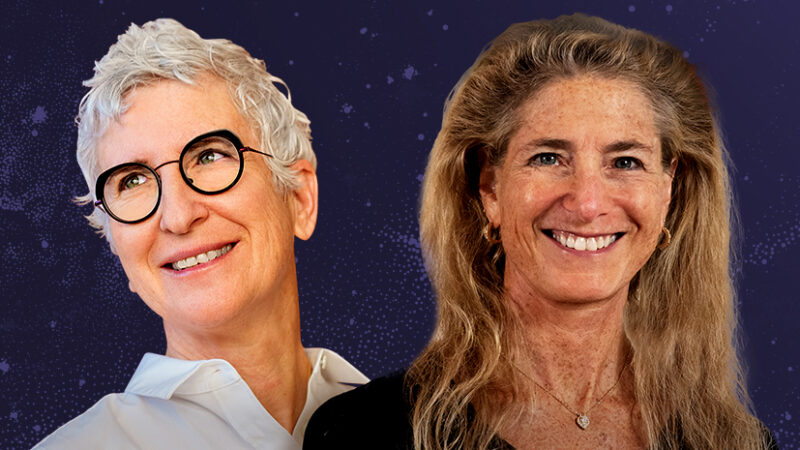
Tara Brach is right. The use of psychiatric medication by those committed to spiritual practice is one of those topics that can get real heated, real fast. This is a complex issue and one that many of our authors and listeners have grappled with over the years. Is it possible for medication and meditation to work together, as allies on the path of healing and awakening? We hope you enjoy this short article by Tara and would love to hear your thoughts as always.

Can you medicate meditation? by Tara Brach

The use of anti-depressants by those involved in meditation practice is a very hot topic. Students often ask me things like, “If I take Prozac, isn’t that as good as giving up? Aren’t I admitting that meditation doesn’t work?”

Those who’ve been advised by a doctor to consider medication tell me they are afraid of becoming dependent on it, afraid they’ll never function again without it. Some wonder if taking medication doesn’t directly undercut the process of spiritual awakening.

They ask, “Don’t medications numb the very experiences we are trying to unconditionally accept? Wouldn’t liberation be impossible if we were on medication?” One student even quipped, “It’s hard to imagine the Buddha reaching for Prozac while under the Bodhi Tree.”

It’s true that some of the most widely used anti-depressants can create a sense of distance from acute fear, and a degree of emotional numbing. It’s also possible to become at least psychologically dependant on any substance that provides relief.

Yet, for some people, no matter how hard they try something else is needed to engender safety and bring anxiety to a manageable level. Whether the cause is life trauma or genetic predisposition, the brain chemistry and nervous system of some people lead to intolerably high levels of fear. For them prescribed medication for depression and anxiety may provide additional—and possibly critical—aid in finding the safety that enables them to trust others and to pursue spiritual practices.

At least for a period of time, in these cases medical intervention may be the most compassionate response.

I’ve seen students who were utterly incapacitated by anxiety and fear finally able to face it with mindfulness and lovingkindness once they started on medications. As a psychiatrist friend says, medications make it possible for some people to “stop anxiously doing, and just sit there.”

Medication and meditation can work together. As medications shift the biological experience of fear, mindfulness practice can help undo the complex of reactive thoughts and feelings that sustain it.

One of my meditation students, Seth, a composer and pianist, took anti-depressants after struggling unsuccessfully for years with debilitating anxiety, shame and depression. Seth dreaded performances and the expectation of perfection that surrounded them. He told me, “Knowing how to write and play music is my life. When I feel like I’m blowing it, I lose it completely. I feel totally worthless.”

When Seth began taking anti-depressants his fear level dropped significantly. The familiar stories and self-judgments would still arise, but because the fear was less intense, he was able to see that his thoughts were just thoughts, not the truth about how things were. Gradually, as Seth deepened his meditation practice, he became familiar with a new and different sense of himself. Rather than rejecting himself as sick and broken, he began wanting to care for and comfort himself.

After two years, Seth decided to stop taking anti-depressants. While his fear had decreased, he had also lost a certain degree of his natural sensitivity and empathy, and his libido was diminished. Within a few months of discontinuing the medication, Seth began to experience once again waves of acute fear and, at times, oppressive depression. But now when the old stories made their appearance, he could note them mindfully rather than getting lost in them.

Taking medication had driven a wedge into the trance of fear, and it no longer was so engulfing. While Seth’s emotions were still intense, his fear wasn’t fueled by overwhelming self-judgment and shame. He no longer identified himself as a broken person. Perhaps from time to time he might seek relief again from medications, but Seth now had a strength to his spiritual practice and a faith in himself that gave him a genuine sense of inner freedom.

There are no absolute recipes for working with this issue of taking medications. In making choices on our path, it’s important to ask ourselves whether or not they will serve awakening and freedom. Our best answers are found by honestly looking into our intentions.

For instance: What is our intention in doing therapy, in taking medication or doing a particular style of meditation? Are we using meditation as a way of escaping from painful relationships or unwanted responsibilities? Do we truly intend to face and accept fear? Are our choices helping us relax and become more kind?

As we honestly explore these questions, we can experiment through our practice to discover which of our choices are the most compassionate, and will best bring an end to our suffering.

Adapted from Radical Acceptance (2003) via Tara’s blog.

freudbuddha

Tara Brach

Tara Brach has been practicing and teaching meditation since 1975, as well as leading workshops and meditation retreats at centers throughout North America and Europe. She has a PhD in clinical psychology, is the founder of the Insight Meditation Community of Washington (IMCW), and is the author of Radical Acceptance, True Refuge, Radical Compassion, and Trusting the Gold. Tara’s weekly podcasts of talks and meditations are downloaded more than three million times each month. For more, visit tarabrach.com.

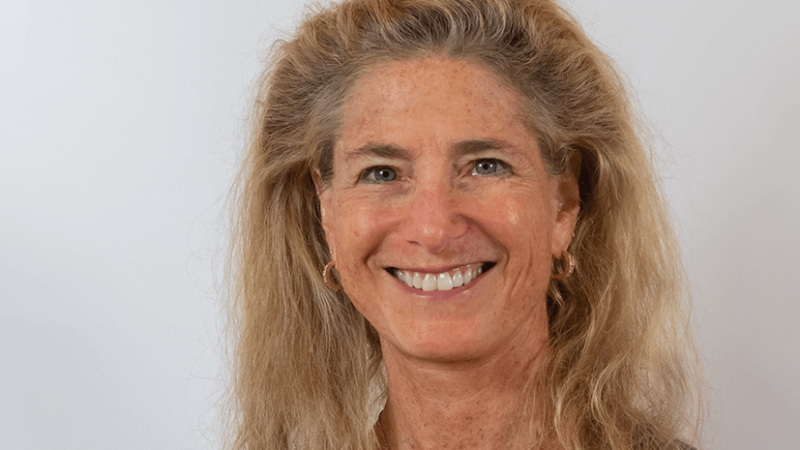
Author photo © Jonathan Foust

Also By Author

Tara Brach: Choosing to Love in Perilous Times


What if the bravest thing you can do right now is refusing to close your heart?

This week, Tami Simon speaks with Tara Brach—beloved meditation teacher, clinical psychologist, and bestselling author of Radical Acceptance and Trusting the Gold—about her new inner workbook with Sounds True, The Courageous Heart: Choosing to Love in Perilous Times. At a moment when so many people feel pulled between despair and action, Tara offers a grounded path through both.

Join Tami and Tara to explore:

  • How to stay spiritually engaged—without burning out or spiritually bypassing the reality of suffering
  • The bodhisattva path as a living practice: what it means to be an “awakening being” in ordinary, everyday life
  • Why grief is often covered over by anger—and how moving through grief unlocks the capacity for love and action
  • The RAIN practice (Recognize, Allow, Investigate, Nurture) for working with armoring, fear, and excruciating pain in the heart
  • The shift from head space to heart space—and a brief guided meditation to experience it directly
  • How aspiration becomes the fuel for the spiritual path—and why Tara “sandwiches” her day with it
  • The practice of seeing basic goodness in others—including stories of Father Gregory Boyle and John Lewis that illuminate how this changes everything
  • What to do when you feel alone, disconnected, and uncertain where to start

Whether you’re overwhelmed by current events or searching for a more engaged and openhearted way to meet this moment, Tara Brach offers both the courage and the practical tools to begin.

Listen now and choose to love. →

This conversation offers genuine transmission—not just concepts about awakening, but the palpable presence of realized teachers exploring the growing edge of spiritual understanding together. Originally aired on Sounds True One.

Enter for a chance to win the Monthly Magic Subscription Journey. It includes 12 months of tea, a loose leaf starter kit, monthly virtual classes, and free shipping worth $673. Learn more at ClubMagicHour.com/TRUE (no purchase required). Get 20% off your first order of Magic Hour tea at ClubMagicHour.com with the code TRUE.

“Showing Up For Each Other” | Tami Simon & Ta...

Join Tami Simon and renowned meditation teacher and clinical psychologist Tara Brach for this special episode of Insights At The Edge as they explore the intersection of spirituality and therapeutic practices and thank the many therapists of the world who accompany us on these deeply meaningful journeys within.

This episode is sponsored by BetterHelp. Listeners of Insights At The Edge get 10% off their first month at www.betterhelp.com/soundstrue

Trusting the Gold

Tara Brach has been practicing and teaching meditation since 1975, as well as leading workshops and meditation retreats throughout North America and Europe. She has a PhD in clinical psychology, is the founder of the Insight Meditation Community of Washington (IMCW), and is the author of Radical Acceptance, True Refuge, Radical Compassion, and most recently, Trusting the Gold. 

In this podcast, Tara Brach speaks with Sounds True founder Tami Simon about rediscovering the inner “gold” of our intrinsic goodness, love, and purity. In addition, they discuss Tara’s teachings on the “trance of unworthiness” and how we can break free from it; recognizing the secret beauty in others and mirroring it back; relaxation for the go-getters; working with difficult emotions; how shame can become a portal to freedom; the RAIN practice for self-compassion; the power of the phrase “this belongs”; the practice of “softening” in response to contractions of fear or anger; and seeing the sacredness in all things.

You Might Also Enjoy

Cecily Mak: “My Life Is Better Clear”

What if sobriety isn’t the point? Tami Simon talks with Cecily Mak, founder of the ClearLife Movement, about the spontaneous thirty-day break from drinking that began at Burning Man and never really ended. They explore why “alcohol-free” became a more honest word for her than “sober,” and what it looks like to face what we’re really avoiding when we reach for a drink, a distraction, or anything that dims our life.

Cecily Mak is the founder and visionary of the ClearLife Movement, a former attorney and Silicon Valley executive turned writer, podcast host, and co-founder of Wisdom Ventures. She is the author of Undimmed: The Eight Awarenesses for Freedom from Unwanted Habits.

In this conversation, Tami and Cecily explore:

  • The spontaneous thirty-day alcohol-free experiment that began at Burning Man, and the divorce decision behind it
  • Why Cecily chose the language “alcohol-free” over “sober,” and a therapist’s model of use, abuse, and addiction
  • The concept of dimmers: the habits, substances, and behaviors we use to soften difficult feelings
  • How to tell whether a habit is helping us grow, or helping us avoid something we already know
  • Forgiveness and letting go as an inside job, including her path toward her ex-husband and her late mother
  • Why self-compassion, not self-judgment, is often the real work underneath changing any habit
  • The sixth awareness: learning not to judge or impose our own path onto someone else’s

This conversation is for anyone questioning their relationship with alcohol or another habit, anyone doing forgiveness work with a parent or former partner, and anyone curious what it actually takes to live with more clarity and presence.

Listen now and discover what it means to live undimmed. →

This interview originally aired on Sounds True One, where you can enjoy early, ad-free access to episodes of Insights at the Edge: https://join.soundstrue.com/

Dr. Sue Morter: “The Energetic Architecture of A...

Twenty-six years ago, a chiropractor sitting in her first meditation class was transported into a field of light ten times brighter than the desert sun. Dr. Sue Morter, bestselling author of The Energy Codes, joins Tami Simon to map the energetic architecture behind that kind of awakening, and how the rest of us can build the inner circuitry to access it on purpose instead of by accident.

Dr. Sue earned her doctorate in chiropractic more than 40 years ago and has spent decades developing a body of work in bioenergetics—the study of how energy flows through, builds, and heals the body. She’s the founder of the Body Awake School of Yoga and the Morter Institute, an internationally recognized speaker, and the author of the new book The Anatomy of Awakening: The 5 Hidden Codes to Activate Self-Healing, Unlock Your Higher Consciousness, and Live Your Divine Destiny, which maps five additional energy centers beyond the familiar seven chakras.

In this conversation, Tami and Dr. Sue explore:

  • The spiritual experience that reoriented Dr. Sue’s entire career and, over time, helped resolve her lifelong scoliosis and migraines
  • Why “seeking enlightenment” misses the point, and why embodiment, not transcendence, is the real work
  • The five additional chakras beyond the traditional seven (eight through twelve), and what each one governs in our energetic architecture
  • How to build “energetic circuitry” at the site of a trigger instead of getting lost in its story
  • Spherical breathing and Mula Bandha as practical tools for grounding and stabilizing the nervous system
  • What it actually means to regulate your nervous system, and why trying too hard to do it can backfire

This episode is for anyone navigating a season of nervous system dysregulation, energy practitioners and bodyworkers, and listeners drawn to the chakra system who want a more embodied, practical approach to awakening.

Listen in for a guided practice you can use the next time you feel triggered, overwhelmed, or ungrounded.

Dr. Sue uses a number of visual aids throughout this conversation, so if you’d rather watch than just listen, you can find the video version on YouTube @SoundsTrueManyVoices or on our premium membership platform at soundstrueone.com

Just One Question | Lama Rod Owens: How Can I Receive ...


Giving love comes easy, but can you actually receive it? Lama Rod Owens says most of us flinch at being cared for, even by something as simple as the chair we’re sitting in. In this practice from his book The New Saints, he walks us through what it takes to actually let love in.

Lama Rod Owens, a Black Buddhist Southern Queen, authorized lama in the Kagyu lineage of Tibetan Buddhism, and author of The New Saints: From Broken Hearts to Spiritual Warriors, guides Tami Simon (and all of us listening) through a short meditation on receiving care, drawn straight from the pages of his new book.

In this conversation, Tami and Lama Rod explore:

  • Feeling supported by the seat or ground beneath you
  • Recalling a time someone, or something, really loved you
  • Letting that love move through the body, including the grief it can stir up along the way
  • Imagining the whole universe wanting you safe, happy, and free
  • Gently returning to the body and closing the practice

This one’s for anyone who finds it easier to give love than to receive it, which, let’s be honest, is most of us.

Taken from the full Insights at the Edge conversation with Lama Rod Owens. Find the complete interview in this feed or at https://bit.ly/new-saint

3 comments on Can you medicate meditation?

  1. Grayson Towler says:

    Seth’s experience is kind of like my own when I had severe depression and went on antidepressants.

    For me, antidepressants were helpful for getting a break from the internal death-spiral of depression… perhaps if I’d known more meditative tools at the time, I could’ve pulled out without them. I would say the medications helped.

    I would also say that I did not appreciate the continuous pressure from the mental health pros I was working with at the time to stay on the drugs. They suggested a gradual weaning once I improved, down to a “maintenance dose” that would basically last indefinitely. Every shift in dosage produced an incredibly crappy month or so of adjustment.

    One of my top priorities when I chose to start taking the drugs was to get off them as soon as I could. The medical advisers I dealt with did not share that priority.

    Eventually I took myself off the stuff, and I believe strongly it was the right call. The side-effects were miserable. I felt all the things Seth described, with an additional one: I had no creativity. Art and writing were lost to me while I was on antidepressants. It was better than the depths of depression, but even at the lowest dose I was living a kind of half-life, and I needed to get off the drugs to come fully back into the world.

    Since then, I have done a pretty fair amount of research into antidepressants and the treatment of depression. My own conclusion is that the drugs CAN be helpful, but there are a lot of legitimate concerns. I don’t trust the companies that make the drugs, nor their motives in suggesting a continuous dependence on them. I don’t trust the claims that these drugs are somehow “precise” in their effects. I don’t even trust that they are really much more effective than a placebo… that matter seems to be increasingly in question with some of the research.

    Many thanks to Tara Brach for bringing this issue into the spotlight.

  2. Eric Nelson says:

    This is a great post. Thanks Matt!

  3. Jacek Ostrowski says:

    I was using antidepressants (SSRI type) exactly a year, 365 days, and stopped over a year ago. I can say that they did what they were supposed to do — stopped a spiral of fearful thoughts and showed that things may become better. Then I decided that that was enough and that I want to find ways to solve my problems without pills. Stopping was not easy, I was unstable, but now when I look at these 15 month since I stopped — many things changed. I lost 14 kg during last 6 months, take better care of my health and my meditation practice never was so serious and stable as now.
    To summarize, it makes sense to use pills when things are going out of control and you can’t afford to take a break to take care of yourself. It’s only a tool for that, in many cases quite effective. But still it’s chemistry, so I wouldn’t feel good without perspective of finishing with it. More subtle reason is that I didn’t want to feel that I was entirely dependent on mechanical fix in my brain. I was creating an impression that I was a kind of mechanism, not a living, conscious being.

Leave a Reply

Your email address will not be published. Required fields are marked *