The Journey of Inner Courage – with Mark Nepo

    —
March 11, 2014

Enjoy this short teaching from poet, philosopher, and bestselling author Mark Nepo, on the journey of inner courage. No matter where we are in our lives, we all have an edge that we’re being asked to grow at and explore. In order to make genuine contact with life, we must learn to listening with our hearts and to somehow stay open to whatever life presents.

In this video, Mark shares his understanding of courage along with a simple practice for opening to its presence in our daily lives.

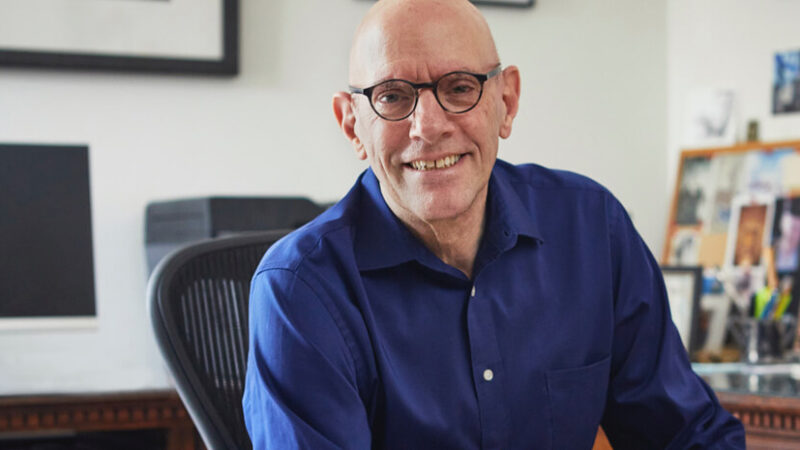
Mark Nepo

Mark Nepo is a poet and philosopher who has taught in the fields of poetry and spirituality for over 40 years. A New York Times #1 bestselling author, he has published 21 books and recorded 14 audio projects. Mark has been interviewed several times by Oprah Winfrey as part of her Super Soul Sunday TV show, and was interviewed by Robin Roberts on Good Morning America. As a cancer survivor, Mark devotes his writing and teaching to the journey of inner transformation and the life of relationship. His work has been translated into more than 20 languages. For more, see marknepo.com.

Author photo © Brian Bankston

Listen to Tami Simon's in-depth audio podcast interviews with Mark Nepo:
Holding Nothing Back »
Becoming the Poem »
Writing Is Listening with Your Heart and Taking Notes »

Also By Author

Mark Nepo: Age Like a Meteor

What if aging isn’t about decline, but about becoming brighter—like a meteor that grows more luminous even as it falls through the atmosphere?

Tami Simon speaks with beloved poet-philosopher Mark Nepo about his deeply moving new book, The Fifth Season: Creativity in the Second Half of Life. Drawing from Chinese wisdom traditions and his own journey through chronic pain and back surgery, Mark illuminates aging as the “heavenly pivot” (love that phrase) which is the transformative shift from living outwardly to inhabiting life from the inside out.

Join Mark and Tami for this episode to explore:

  • The meteor metaphor: how we grow brighter as our outer casing flakes away • “Entering time” versus moving through it—and why slowing down opens the eternal moment • The paradox of limitation: how loss simultaneously deepens and expands us • Breaking through to joy as the depth of being that holds all the waves • Why the heart, not the mind, must lead in the second half of life • Living with chronic pain and learning to let beauty in while suffering • The difference between being victims of life versus initiates into life • How grief changes everything and why we don’t get over it, we get under it • Being swift of heart—living without hesitation from the inside out

Mark’s wisdom arises from decades of spiritual practice, surviving cancer, and facing the inevitable losses that come with a long life—essential listening for anyone navigating aging, chronic pain, loss, or simply seeking to live more fully present to the life they have.

Listen now to discover how the second half of life can be your most luminous yet.

This conversation offers genuine transmission—not just concepts about awakening, but the palpable presence of realized teachers exploring the growing edge of spiritual understanding together. Originally aired on Sounds True One.

Mark Nepo: The Half-Life of Angels

How do we know our own authenticity? How can we return to our hearts when we find we’ve left them? As we evolve and change along our journey, how do we relate to the “former selves” in our past? In this podcast, Tami Simon and poet-philosopher Mark Nepo address these questions and more, as they discuss his creative process; his new book, The Half-Life of Angels; and how we can each touch the ever-present and wholly miraculous “spark of becoming” waiting to guide our lives. 

Tune in as Tami and Mark talk about the introspective nature of the creative process; the metaphor of the soul as an inlet; congruency; how the heart shatters but inevitably heals; becoming a student to the mystery of life; the meaning of the word “admit,” and the practice of return; seeing through the lens of the miraculous; the intersection of meditation and creativity; the art of re-visioning; how a commitment to truthfulness grows in concentric circles; living from the deep versus diving and coming back up; the shift from being driven to being drawn; impermanence and perseverance; how the life of expression is one of discovery, relationship, and inquiry; why “there’s always a teacher next to you”; “becoming the poem”; and more.

Note: This episode originally aired on Sounds True One, where these special episodes of Insights at the Edge are available to watch live on video and with exclusive access to Q&As with our guests. Learn more at join.soundstrue.com.

Mark Nepo: Authentic Expression is Heart-Based

“All my work is about devotion to the messy, magnificent human journey”

—Mark Nepo

Every day, we learn. We take in more of the new. And yet, we can only respond to situations based on what we know already. We rely on the old.

Mark Nepo seems to be asking about the space between. What does it mean to grow and change with grace? What does it mean to have faith in that process? And what does this have to do with writing and expression?

We are constantly tasked to face the unknown using tools that may have only worked for us in the past (and that is freaking scary).

I believe that asking questions is elemental to human nature. But, it is impossible to truly know any of the answers.

For Mark, there is no one right way forward. There is no way out of fear. There is only a sensibility that can be adopted: that is, the willingness to listen. 

In other words, there are no objectives. There are no end products. The “answer” is in letting go of resistance to what we know, have, and are.

That way, the invisible can make itself known.

WITNESSING

“How do we talk about the things that matter that you really can’t see?”

—Mark Nepo

The ephemeral connection between ourselves and the world of essence exists within our hearts. With this practice—this practice of inner trust, perhaps even surrender—we can begin to gesture at expressing the unsayable.

What’s clear about Mark Nepo is that he is first and foremost a writer. However, his ideas can be applied to any form of expression.

To bear witness in writing, Mark advises giving full attention to whatever is in front of you, then describing it in as much detail as possible. It’s important not to make it seem magnificent or assign it “a bunch of meaning.”

Don’t evaluate it.

We are the observers and not yet the translators.

There is another part to it. Look inward. Feel what is moving through you at that moment. “Paint” that feeling with words. Don’t judge. Don’t bother with meaning. This disposition is inherently freeing. 

In this state (and I fall in and out of it even as I write this), reality moves up to our eyes like a mirror. We can look at it and hear it, be part of it.

THE INVISIBLE WORLD

“You can’t see light except for what it illuminates. All the forces that hold us and support us are invisible”

—Mark Nepo

We name things all the time. We have to. It keeps chaos at bay.

But, naming things tends to keep us separate from them. That is this and I am this and you are there and I am here.

In his Insights at the Edge episode with Tami, Mark mentions that we are accustomed to listening in this way.

We immediately assign names, places, spaces, reasons, meaning and significance to everything we see and feel. We judge and assume (partly because it is efficient; partly because we are so used to doing it).

This is in stark contrast to the “essence of wholehearted presence, however and whenever that appears.”

IMMERSION

“The truth is, I barely understand half of what comes through me. The other half leads me”

—Mark Nepo

Immersion is a different kind of listening.

Rather than naming, one engages in a mutual conversation with the world. Discovery and creation unite as the byproduct of participation in oneness.

For Mark, immersion is a way to stop resisting our naturalness and be… whatever it is we were meant to be, as humans.

When he talks about “the things that matter,” what he seems to mean is the invisible world, “that which holds us together.” In immersion, we have the chance to interact with the invisible source of our unity.

Like the fiery and untouchable sun from which our individual experiences emanate.

WHOLEHEARTEDNESS

“It’s a gift that we can’t reach what we’re trying to say or what we see, because of all that it gives us”

—Mark Nepo

In his interview, Mark says to Tami about art-making, “What matters more is our wholeheartedness than whether we do it well.”

Tami’s response struck me. “I notice, as you offer that answer, there’s a part of me that really softens.”

Creation can be a meeting place. Rather than prescribing, you meet something somewhere, and then you embrace whatever happens. You accept what is present—and in return, you are accepted just as you are.

Wholeheartedness: letting go of expectation for the sake of the unsayable.

SELF-EXPRESSION

“Just because I write it doesn’t mean that I have the meaning of it all”

—Mark Nepo

As a writing teacher, I often tell my students that if they’re stuck, they may not be empty of ideas. In fact, they may be too full.

Creating space for the heart allows the bubbles to rise up. Like attracts like. We see what we see.

“If you’re not quite there, go back to the heart of whatever the expression is about, and get closer, and get stiller, and put your defenses down, and get closer. … Go back and have a more open heart, and see what comes then.”

Sometimes, it’s unpleasant.

Sometimes, it’s utterly nonsensical.

Poetry, as one possible example of this art, has long emptied itself of pragmatic purpose and precise meaning for the sake of beauty and potentiality.

You may end up with something that you don’t understand for years. You may just take that thing out later and realize what you meant. Authentic expression is not a product. It’s a message from you to you, from the universe to the universe.

And it is always miraculous.

You Might Also Enjoy

The Quiet Joy of Being: Rupert Spira on Non-Dual Aware...

What if the peace you have been searching for has never left you? This question sits at the heart of non dual awareness, and it is one that teacher Rupert Spira has spent decades helping people sit with. In this conversation, Spira examines the nature of consciousness and gently invites us to look beneath the changing stream of thoughts, emotions, and daily experiences to the awareness that is always, quietly, present.

At Sounds True, we have spent more than four decades bringing transformational teachings from the world’s most respected spiritual voices to seekers everywhere. Through our courses, podcasts, and conversations, we work to make profound wisdom accessible to people at every stage of the path.

Here, we walk through Rupert Spira’s perspective on non dual awareness, the influence of Advaita Vedanta on his work, and how non-duality teachings can open a richer sense of what the self is.

Key Takeaways:

  • Awareness Beyond the Personal Mind: Non dual awareness shifts attention away from personal identity and passing thoughts toward the ever-present awareness that underlies all experience.
  • Ancient Wisdom, Made Accessible: Rupert Spira draws from advaita vedanta and other timeless traditions to make non-duality teachings approachable for contemporary seekers.
  • Rethinking What the Self Is: Questions about consciousness and identity can open a doorway to a deeper sense of who we are, beyond the stories we have always told about ourselves.

Center Yourself With Meditative Teachings by Sounds True

Rupert Spira on Non Dual Awareness and the Nature of Consciousness

Rupert Spira came to his teachings through decades of sincere inquiry. He studied the Advaita tradition with Dr. Francis Roles, drew from the writings of Krishnamurti, Ramana Maharshi, and Nisargadatta Maharaj, and engaged with Sufi thought throughout his path. Today, he leads in-person and online retreats and webinars, offering people around the world a space to look closely at the nature of consciousness and what it truly means to be aware.

Spira approaches non dual awareness not as a philosophy to adopt, but as a direct recognition. Consciousness, he teaches, is not something we possess, but rather, it is what we fundamentally are. Most of us assume that awareness is a product of the mind or something that switches on when we are alert and dims when we are tired, but Spira challenges this. To him, awareness is the ever-present background in which thoughts, sensations, and feelings arise and pass away, unchanged, always here.

When we stop chasing experience and instead notice the awareness in which all experience occurs, something settles. The sense of being a separate self navigating a difficult world begins to soften. What remains is a kind of quiet joy, not because circumstances have changed, but because we have recognized something that was never missing. 

Many of the teachers in our Spirituality & Awakening collection point toward this same recognition, each through their own unique lens and tradition.

The Roots of Advaita Vedanta 

Spira’s work draws deeply from Advaita Vedanta, one of the oldest non-dual traditions. The word advaita means “not two” in Sanskrit. At its center is the teaching that the apparent separation between self and world, between the one who is aware and what is being aware of, is a misunderstanding that arises when we identify with the body and mind rather than with the open, undivided awareness that holds them.

A direct example of Advaita Vedanta at work is a question deceptively simple in form: right now, who or what is noticing these words? Most of us answer automatically with a name, a history, a sense of being a person inside a body. Advaita asks us to look more carefully. Before we label the experiencer, what is simply here? That open, noticing presence, without form or boundary, is what this tradition calls our true nature. The happiness and connection we seek are not things found somewhere else; they are already the nature of the awareness we are.

Non-duality teachings return us again and again to this kind of direct observation, rather than asking us to accept new beliefs. Similar conversations can be heard throughout our Insights at the Edge Podcast.

What Is the Self According to Rupert Spira?

One of the most central questions in Spira’s work is this: what is the self? Most of us answer without hesitation — a name, a history, a body, a set of opinions. Spira invites a pause and asks whether these things, thoughts, memories, emotions, and physical sensations can truly be what we are at our core, given that all of them come and go.

Thoughts arise and dissolve, and feelings pass through like weather. The body changes steadily across a lifetime, yet something remains constant through every experience. According to Spira, that constant is awareness itself, not the contents of experience, but the space in which all experience occurs.

This does not mean individuality disappears. What it means is that our deepest nature exists before the labels we carry about ourselves. The teachers gathered across our All Teachers & Authors page offer many pathways into this same depth of inquiry, drawn from traditions near and far.

Your Wellness Journey Starts Here At Sounds True

Bringing Non-Duality Into Everyday Life

One of the most common questions around these teachings is practical: how does any of this apply to daily life? Spira’s work is not limited to the meditation cushion. The recognition of awareness as our fundamental nature can be woven into ordinary moments throughout any day.

Notice Before You React

The next time a difficult emotion arises, frustration, anxiety, or sadness without a clear cause, try pausing before responding. Rather than being swept into the feeling, ask: what is aware of this? This shift does not make the emotion disappear. What it does is create a breath of space between the feeling and the story we begin building around it. That space is where clarity lives, and returning to it again and again changes our relationship to our own inner weather.

Bring Awareness to Simple Tasks

Washing dishes, making tea, and folding laundry are the moments where the mind often runs hardest. Non-duality teachings suggest that these are also where recognition is most available. No special state is required. Simply notice what is already noticing: the sounds, the warmth, the aliveness present in an ordinary moment. This spirit of present-moment inquiry is central to what our Online Courses carry forward, where respected teachers guide students into exactly these kinds of direct, grounded practices.

Return to the Question

Spira often uses the question “What is aware?” as a gentle pointing device throughout his retreats and conversations. Throughout the day, this question can serve as a brief return, a moment to step back from the cascade of tasks and check in with the awareness that has been present all along. Rupert Spira, alongside many other teachers whose work we carry at Sounds True, offers this not as a technique to master, but as an invitation to notice what is already true.

Uncover How Your Mind Works with Valuable Resources

Final Thoughts

Rupert Spira’s reflections on non dual awareness offer a direct and tender invitation. Look beneath the changing stream of daily experience and recognize the awareness in which everything arises. Drawing from advaita vedanta and timeless non-duality teachings, he points toward a deeper sense of the nature of consciousness and what is the self. His message is as simple as it is lasting. The quiet joy we seek is not something to attain, but something already present at the very center of who we are. 

Frequently Asked Questions About Non Dual Awareness and the Nature of Self

Is non dual awareness a religious belief?

No. While non dual awareness appears in several spiritual traditions, it is not tied to a specific religion. Many people approach it as a direct investigation into consciousness and experience rather than a system of beliefs.

How is non dual awareness different from mindfulness?

Mindfulness often involves paying attention to present-moment experiences such as thoughts, emotions, and sensations. Non dual awareness goes a step further by examining the awareness in which those experiences arise.

Why do non-duality teachings emphasize direct experience?

Non-duality teachings encourage personal observation because understanding awareness conceptually is different from recognizing it directly. The focus is on seeing the truth of experience firsthand.

Does non dual awareness eliminate difficult emotions?

No. Difficult emotions may still arise, but the relationship to them can change. Rather than feeling completely defined by emotional states, individuals may experience greater space and perspective around them.

Is the concept of the self the same across all spiritual traditions?

No. Different traditions offer varying interpretations of the self. Some emphasize a permanent essence, while others focus on the absence of a fixed personal identity.

Can someone understand non dual awareness without meditation?

Yes. Meditation can be helpful, but many teachers, including Rupert Spira, suggest that simple self-inquiry and attentive observation can also reveal insights into awareness.

Michelle Cassandra Johnson is an author, activist, spiritual teacher, racial equity consultant, and intuitive healer. She is the author of six books, including Skill in Action and Finding Refuge. Amy Burtaine is a leadership coach and racial equity trainer. With Robin DiAngelo, she is the coauthor of The Facilitator's Guide for White Affinity Groups. For more, visit https://www.michellecjohnson.com/wisdom-of-the-hive.

Embodied Realization: Judith Blackstone on Bringing Aw...

What if spiritual awakening was not something that happened above the noise of daily life, but something that could be lived, felt, and carried into the most ordinary moments of being? Judith Blackstone’s teachings invite us to consider exactly that. Her work shows how awareness, at its most fundamental level, can be experienced throughout the whole body and integrated into the texture of everyday living.

At Sounds True, our mission has always been to wake up the world by bringing transformative wisdom directly to those who seek it. Over more than four decades, we have shared trusted teachings from leading voices in spirituality, psychology, mindfulness, and personal growth through books, courses, in-depth programs, and live events.

We are honored to share Judith Blackstone’s perspective on embodied realization, nondual embodiment, and the practice of bringing awakening into the body and into every layer of daily living.

Key Takeaways:

  • Awakening Lives in the Body: Judith Blackstone teaches that spiritual awakening becomes richer and more sustainable when awareness is experienced through the body, not just the mind, making presence something we carry into every moment of life.
  • Nondual Embodiment and Daily Presence: Nondual embodiment supports a deeper sense of connection, clarity, and emotional openness that extends into ordinary moments, relationships, and the way we traverse the world.
  • Steps Toward Embodied Realization: Blackstone offers guided exercises and practical wisdom for transforming how you experience yourself, your relationships, and the world around you.

Who Is Judith Blackstone and Her Foundations of Embodied Realization?

Judith Blackstone is an innovative teacher and licensed clinical psychotherapist based in New York, working at the intersection of nondual realization and spiritual, relational, and somatic psychotherapy. She developed the Realization Process, a direct path for realizing fundamental consciousness, as well as its application to psychological, relational, and physical healing.

Central to her work is a belief that has shaped everything she teaches: awakening is not a destination reached by moving beyond the body, but a living reality that can be experienced within it. Judith holds that awareness pervades every cell, every sensation, and every relationship. When we settle into that ground, we do not leave life behind but meet it more fully.

Her approach weaves together the wisdom of nondual philosophy with the practical tools of somatic and relational psychology, cultivated through decades of clinical experience and contemplative practice. The result is a body of work that makes some of the most profound spiritual teachings accessible and livable for anyone on the path.

Awaken Something Greater Within You. Find Teachings that Speak to You With Sounds True.

How Embodied Realization Brings Awakening Into the Body

Judith Blackstone’s approach to embodied realization is rooted in a belief that awakening can take root and flourish within the body. She has explored these themes across five books, including Trauma and the Unbound Body, Belonging Here, The Intimate Life, The Enlightenment Process, and The Empathic Ground. These titles reflect the full scope of her teaching, from the ways held tension can constrain presence to the relational and spiritual dimensions of an embodied life. 

At Sounds True, we encourage exploring her audio courses and programs to bring this work into living practice. Judith’s work can open the door to healing, a more direct experience of awakening, and a richer quality of empathy.

Healing Through Presence

When awareness reaches into the body at its most fundamental level, areas of long-held tension and contraction can begin to soften. Judith teaches that many of the patterns shaping how we feel and how we relate to others have roots in earlier experiences, and that meeting these patterns with open, grounded awareness creates real conditions for change. In this context, healing is less about fixing and more about returning to the aliveness that was always there.

A Direct Experience of Awakening

Embodied realization offers more than a fleeting glimpse of expanded awareness. Judith’s work invites practitioners to stabilize that awareness so it becomes a living ground rather than a peak state that fades. The kind of awakening she points toward is sustainable, integrated, and present in the midst of everyday life.

Empathy Through Embodied Presence

When we inhabit our bodies more fully, our capacity for connection with others naturally deepens. Judith’s work in this area, especially in The Empathic Ground, explores how the same awareness that opens inward also opens outward, making us more attuned and present in our relationships. She teaches that presence goes beyond the personal, and when grounded in the body, it becomes the foundation from which real connection grows.

Meet Your Sorrow with Kindness. Learn Practices for Self-Compassion with Sounds True.

How Nondual Embodiment Supports Everyday Awareness

Nondual embodiment refers to the lived experience of wholeness, in which awareness, the body, and the surrounding world are no longer felt as separate. That familiar sense of being an isolated self, cut off from experience, gives way to something more continuous and alive.

Embodied realization and nondual embodiment are closely related but distinct in emphasis. Embodied realization describes the process of bringing awakening into full-body experience, allowing fundamental consciousness to be inhabited rather than only glimpsed. Nondual embodiment is what that realization feels like when it is lived: a quality of presence that extends through the body and outward into relationship and environment.

Judith explores how physical tension and long-held patterns can limit this openness. Years of guarding against difficult experiences can create a kind of inner contraction that narrows both perception and connection. Meeting these patterns with gentle awareness, rather than force or analysis, allows them to soften naturally.

As the body settles into greater ease, emotional resilience tends to follow. Reactions that once felt overwhelming begin to lose their grip, and awareness becomes a steadier ground from which to meet whatever arises. Relational presence deepens in much the same way. Nondual embodiment opens the capacity to arrive with another person without strategy or performance, the kind of contact that transforms relationships in ways no technique alone can replicate.

Judith Blackstone on Living Through Embodied Realization

Those ready to take these teachings into practice will find a rich and structured path in The Realization Process, Judith Blackstone’s audio course available through Sounds True. Spanning six hours of insights and guided exercises, this program brings the full depth of her approach into a format designed for ongoing practice and return:

  • Releasing What Limits Presence: Judith guides practitioners through recognizing and releasing “holding patterns,” the subtle ways the body braces against experience that, accumulated across years, become second nature. Working through these contractions creates more space for the awareness that was always present beneath them.
  • The Subtle Core as Entryway: At the heart of the course is the subtle core, an interior channel Judith describes as the most direct entryway into fundamental consciousness. This is not a visualization or abstract concept. The subtle core is a felt, living experience of presence that opens from the inside.
  • Stabilizing and Expanding Awakening: Judith offers practical guidance on the maturation of the ego and how to follow the body’s energetic circuitry as a path into greater embodiment. The goal is presence as a living ground, not a passing state.

When the body becomes a home for awareness rather than a source of distraction, every ordinary moment carries the potential for presence, connection, and genuine aliveness.

Your Wellness Journey Starts Here At Sounds True

Final Thoughts

Judith Blackstone’s work offers something rare in the landscape of spiritual teaching. Her path honors both the depth of awakening and the full richness of human life. These teachings on embodied realization and nondual embodiment remind us that presence is not a retreat from the world, but a way of meeting it with greater openness, warmth, and clarity. At Sounds True, this is the kind of wisdom we have always sought to share: grounded, lived, and deeply human. 

Frequently Asked Questions About Embodied Realization

What is Judith Blackstone best known for?

Judith Blackstone is best known for developing the Realization Process, an approach that integrates spiritual awakening with the lived experience of the body, supporting both personal growth and contemplative practice.

What is the Realization Process developed by Judith Blackstone?

The Realization Process is a series of practices designed to help individuals experience a deeper sense of presence, embodiment, and connection. It combines principles from meditation, psychology, and body awareness.

How is embodied realization different from mindfulness?

While mindfulness often emphasizes observing thoughts and experiences, embodied realization places greater attention on inhabiting the body as a way of experiencing nondual awareness.

What does nondual embodiment mean in simple terms?

Nondual embodiment refers to experiencing a sense of wholeness where awareness, the body, and the surrounding environment are no longer perceived as separate.

Does Judith Blackstone’s work belong to a specific spiritual tradition?

Her teachings draw inspiration from multiple contemplative traditions while remaining accessible to people from diverse spiritual and secular backgrounds.

Why is the body important in spiritual practice?

The body provides a direct way to experience awareness in daily life, helping spiritual insights become more integrated and sustainable over time.

What topics are discussed in this podcast with Judith Blackstone?

The podcast covers embodiment, spiritual development, the Realization Process, the relationship between awareness and the body, and practical applications of these teachings.

Michelle Cassandra Johnson is an author, activist, spiritual teacher, racial equity consultant, and intuitive healer. She is the author of six books, including Skill in Action and Finding Refuge. Amy Burtaine is a leadership coach and racial equity trainer. With Robin DiAngelo, she is the coauthor of The Facilitator's Guide for White Affinity Groups. For more, visit https://www.michellecjohnson.com/wisdom-of-the-hive.

Barbara Marx Hubbard on Conscious Evolution and Our Co...

What if the greatest challenges facing our world today carry within them an invitation to evolve together? Barbara Marx Hubbard believed that humanity can consciously shape its future through personal growth, collaboration, and shared purpose. She offers grounded insights into conscious evolution and how individual transformation can contribute to humanity’s next stage.

At Sounds True, we have been sharing the wisdom of leading spiritual teachers and transformational voices since 1985, offering resources that support personal growth, spiritual awakening, and lasting change. This conversation with Barbara Marx Hubbard reflects the heart of what we do by bringing the living teachings of visionary thinkers directly to you.

This conversation covers Barbara Marx Hubbard’s perspective on conscious evolution and the key insights she shares about humanity’s collective next step.

Key Takeaways:

  • Awareness Shapes Human Development: Learn how Barbara Marx Hubbard viewed conscious participation as a cornerstone of human development. When people choose awareness over reactivity, they contribute to their own growth and to a broader cultural shift.
  • Evolving Through Shared Responsibility: Learn the connection between conscious evolution and humanity’s next stage through cooperation and collective awakening. Barbara Marx Hubbard taught that global progress begins at the individual level, and that choosing to grow consciously is itself a form of service to the whole.
  • A Vision That Endures: Gain insight into why Barbara Marx Hubbard’s ideas continue to inspire conversations about personal and collective transformation. Her work remains a touchstone for anyone asking how to live with greater purpose in a rapidly changing world.

Who Is Barbara Marx Hubbard and What’s Her Lasting Perspective on Human Evolution?

As a futurist, thought leader, social innovator, and public speaker, Barbara Marx Hubbard spent her life asking what humanity could become when we choose our direction with purpose. As the author of seven books and the president of the Foundation for Conscious Evolution, she devoted her work to a single, enduring vision: what happens when evolution itself becomes aware of what it is doing? 

She cofounded the World Future Society and the Association for Global New Thought, and through The Shift Network, she brought these teachings to thousands of students. Her legacy lives in every learner who has asked the same question she spent a lifetime answering. In this episode of Insights at the Edge, host Tami Simon speaks with Barbara Marx Hubbard about conscious evolution, or what she called the “thinking field of humanity.”

Barbara believed this field is in the process of opening its eyes. She described evolution as, for the first time, becoming conscious of itself. She encouraged people to view human development as an ongoing journey shaped by awareness, purpose, and shared commitment. Her reflections offer a grounded perspective on the role each of us can play in creating positive collective change.

Teachings like Barbara’s are at the heart of what we do at Sounds True. Our online courses and in-depth programs bring the wisdom of transformational voices directly to you, wherever you are in your journey.

Center Yourself With Meditative Teachings by Sounds True

How Conscious Evolution Leads to Humanity’s Next Stage

Barbara Marx Hubbard believed that every period of challenge also carries the possibility of renewal. She viewed today’s global issues as opportunities to awaken greater creativity, cooperation, and responsibility. She encouraged people to step into change with clarity and purpose, seeing each disruption as an opportunity for deeper growth.

Her vision of humanity’s next stage begins with recognizing that personal growth and collective progress are deeply connected. As individuals become more aware of their values and sense of purpose, they contribute to broader cultural shifts. This movement begins with everyday choices that reflect compassion, curiosity, and shared responsibility. Small acts ripple outward and shape the larger world around us.

Her vision of humanity’s next stage was also deeply practical. She focused on showing how the seeds of transformation are already present, alive in the choices we make, the communities we build, and the awareness we bring to our everyday relationships.

Awaken Something Greater Within You. Find Teachings that Speak to You With Sounds True.

Approaching Life Through a Conscious Lens

When we take Barbara Marx Hubbard’s invitation seriously, to approach the world with awareness and a commitment to growth, we find that life opens up in new ways. Conscious evolution goes far beyond academic philosophy. It is a living orientation that changes how we see ourselves, how we relate to others, and how we respond to the world’s most pressing challenges.

Moving Beyond Passive Survival

Barbara Marx Hubbard’s work invites us to see beyond the survival instincts that have shaped much of human history. When we view the world through a conscious lens, asking how we can contribute to something larger, we begin to move from reaction to creation. Her teachings remind us that we are capable of more than endurance. We are capable of evolving, growing, and contributing to a future worth building together.

Solving Global Problems

Barbara Marx Hubbard believed that the solutions to our greatest global challenges will arise from the collective awakening of individuals who choose to show up with greater empathy and a commitment to our shared world. 

When we develop our inner capacities, including compassion, creativity, and resilience, we naturally begin contributing to solutions that benefit the whole. This is the promise at the heart of conscious evolution: that personal growth and collective progress are deeply intertwined, two expressions of the same fundamental shift. Barbara Marx Hubbard saw individual awakening and global change as the same journey, viewed from different vantage points.

Creating New Choices for Everyday Living

One of the most practical gifts Barbara Marx Hubbard offered was the reminder that conscious evolution begins with everyday choices that reflect our deepest values. The way we listen to someone in conflict, the way we respond to stress, the way we engage with our communities: all of it matters. 

Her teachings encourage us to stay curious, stay open, and stay connected to our sense of purpose. At Sounds True, our programs bring these teachings into daily life, offering practical wisdom for navigating change with grace and groundedness. Resources like these become especially valuable when life feels uncertain, offering a steady, grounded anchor for growth.

Build Relationships That Nourish And Sustain

Final Thoughts

Barbara Marx Hubbard’s reflections on conscious evolution continue to encourage active participation in humanity’s next stage. This conversation offers an opportunity to sit with how personal awareness, shared purpose, and compassionate action can contribute to positive change, one choice at a time. Her legacy is both an enduring idea and an open invitation: to trust that our individual growth matters, and that when we grow together, we become capable of far more than we ever imagined alone. 

Frequently Asked Questions About Barbara Marx Hubbard on Conscious Evolution and Our Collective Next Step

What is Barbara Marx Hubbard best known for?

Barbara Marx Hubbard is best known for her work as an author, futurist, and educator who promoted the idea that humanity can consciously participate in its own evolution through greater awareness, collaboration, and innovation.

How did Barbara Marx Hubbard define conscious evolution?

She described conscious evolution as the ability to intentionally influence human development by aligning personal growth with the well-being of society and the planet.

Why is Barbara Marx Hubbard considered a visionary thinker?

Her ideas connected science, spirituality, social change, and human potential, encouraging people to view the future as something they can help shape through conscious action.

Is conscious evolution connected to spirituality?

Conscious evolution can include spiritual growth, but it also extends to education, creativity, leadership, science, and community building. It is an interdisciplinary perspective rather than a single spiritual practice.

What does humanity’s next stage mean?

Humanity’s next stage refers to the possibility of evolving beyond old patterns of division by developing greater empathy, shared responsibility, and conscious cooperation.

What books did Barbara Marx Hubbard write?

Some of her best-known works include Conscious Evolution, The Hunger of Eve, and Emergence, which expand on her ideas about human potential and the future of civilization.

Why do Barbara Marx Hubbard’s teachings remain relevant?

Her teachings continue to resonate because they address enduring questions about purpose, global interconnectedness, and humanity’s capacity to respond creatively to change.

Michelle Cassandra Johnson is an author, activist, spiritual teacher, racial equity consultant, and intuitive healer. She is the author of six books, including Skill in Action and Finding Refuge. Amy Burtaine is a leadership coach and racial equity trainer. With Robin DiAngelo, she is the coauthor of The Facilitator's Guide for White Affinity Groups. For more, visit https://www.michellecjohnson.com/wisdom-of-the-hive.

Leave a Reply

Your email address will not be published. Required fields are marked *