The Journey of Inner Courage – with Mark Nepo

    —
March 11, 2014

Enjoy this short teaching from poet, philosopher, and bestselling author Mark Nepo, on the journey of inner courage. No matter where we are in our lives, we all have an edge that we’re being asked to grow at and explore. In order to make genuine contact with life, we must learn to listening with our hearts and to somehow stay open to whatever life presents.

In this video, Mark shares his understanding of courage along with a simple practice for opening to its presence in our daily lives.

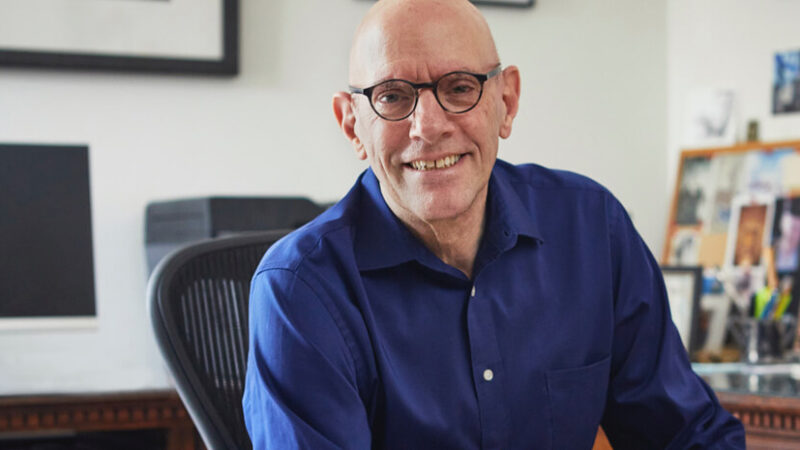
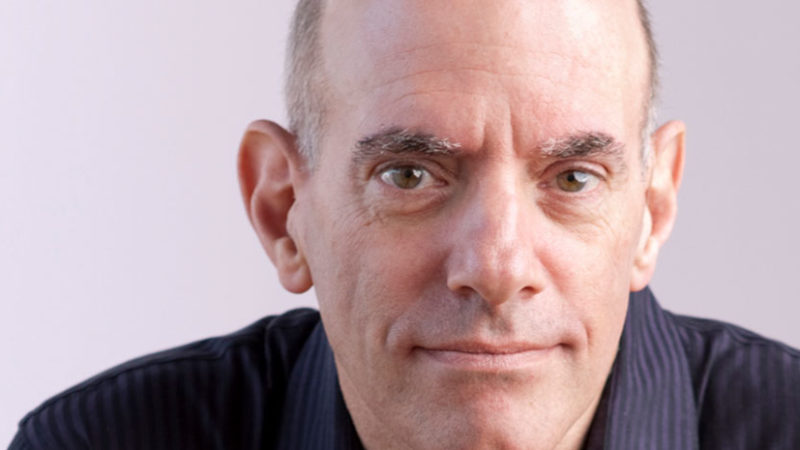
Mark Nepo

Mark Nepo is a poet and philosopher who has taught in the fields of poetry and spirituality for over 40 years. A New York Times #1 bestselling author, he has published 21 books and recorded 14 audio projects. Mark has been interviewed several times by Oprah Winfrey as part of her Super Soul Sunday TV show, and was interviewed by Robin Roberts on Good Morning America. As a cancer survivor, Mark devotes his writing and teaching to the journey of inner transformation and the life of relationship. His work has been translated into more than 20 languages. For more, see marknepo.com.

Author photo © Brian Bankston

Listen to Tami Simon's in-depth audio podcast interviews with Mark Nepo:
Holding Nothing Back »
Becoming the Poem »
Writing Is Listening with Your Heart and Taking Notes »

Also By Author

Mark Nepo: Age Like a Meteor

What if aging isn’t about decline, but about becoming brighter—like a meteor that grows more luminous even as it falls through the atmosphere?

Tami Simon speaks with beloved poet-philosopher Mark Nepo about his deeply moving new book, The Fifth Season: Creativity in the Second Half of Life. Drawing from Chinese wisdom traditions and his own journey through chronic pain and back surgery, Mark illuminates aging as the “heavenly pivot” (love that phrase) which is the transformative shift from living outwardly to inhabiting life from the inside out.

Join Mark and Tami for this episode to explore:

  • The meteor metaphor: how we grow brighter as our outer casing flakes away • “Entering time” versus moving through it—and why slowing down opens the eternal moment • The paradox of limitation: how loss simultaneously deepens and expands us • Breaking through to joy as the depth of being that holds all the waves • Why the heart, not the mind, must lead in the second half of life • Living with chronic pain and learning to let beauty in while suffering • The difference between being victims of life versus initiates into life • How grief changes everything and why we don’t get over it, we get under it • Being swift of heart—living without hesitation from the inside out

Mark’s wisdom arises from decades of spiritual practice, surviving cancer, and facing the inevitable losses that come with a long life—essential listening for anyone navigating aging, chronic pain, loss, or simply seeking to live more fully present to the life they have.

Listen now to discover how the second half of life can be your most luminous yet.

This conversation offers genuine transmission—not just concepts about awakening, but the palpable presence of realized teachers exploring the growing edge of spiritual understanding together. Originally aired on Sounds True One.

Mark Nepo: The Half-Life of Angels

How do we know our own authenticity? How can we return to our hearts when we find we’ve left them? As we evolve and change along our journey, how do we relate to the “former selves” in our past? In this podcast, Tami Simon and poet-philosopher Mark Nepo address these questions and more, as they discuss his creative process; his new book, The Half-Life of Angels; and how we can each touch the ever-present and wholly miraculous “spark of becoming” waiting to guide our lives. 

Tune in as Tami and Mark talk about the introspective nature of the creative process; the metaphor of the soul as an inlet; congruency; how the heart shatters but inevitably heals; becoming a student to the mystery of life; the meaning of the word “admit,” and the practice of return; seeing through the lens of the miraculous; the intersection of meditation and creativity; the art of re-visioning; how a commitment to truthfulness grows in concentric circles; living from the deep versus diving and coming back up; the shift from being driven to being drawn; impermanence and perseverance; how the life of expression is one of discovery, relationship, and inquiry; why “there’s always a teacher next to you”; “becoming the poem”; and more.

Note: This episode originally aired on Sounds True One, where these special episodes of Insights at the Edge are available to watch live on video and with exclusive access to Q&As with our guests. Learn more at join.soundstrue.com.

Mark Nepo: Authentic Expression is Heart-Based

“All my work is about devotion to the messy, magnificent human journey”

—Mark Nepo

Every day, we learn. We take in more of the new. And yet, we can only respond to situations based on what we know already. We rely on the old.

Mark Nepo seems to be asking about the space between. What does it mean to grow and change with grace? What does it mean to have faith in that process? And what does this have to do with writing and expression?

We are constantly tasked to face the unknown using tools that may have only worked for us in the past (and that is freaking scary).

I believe that asking questions is elemental to human nature. But, it is impossible to truly know any of the answers.

For Mark, there is no one right way forward. There is no way out of fear. There is only a sensibility that can be adopted: that is, the willingness to listen. 

In other words, there are no objectives. There are no end products. The “answer” is in letting go of resistance to what we know, have, and are.

That way, the invisible can make itself known.

WITNESSING

“How do we talk about the things that matter that you really can’t see?”

—Mark Nepo

The ephemeral connection between ourselves and the world of essence exists within our hearts. With this practice—this practice of inner trust, perhaps even surrender—we can begin to gesture at expressing the unsayable.

What’s clear about Mark Nepo is that he is first and foremost a writer. However, his ideas can be applied to any form of expression.

To bear witness in writing, Mark advises giving full attention to whatever is in front of you, then describing it in as much detail as possible. It’s important not to make it seem magnificent or assign it “a bunch of meaning.”

Don’t evaluate it.

We are the observers and not yet the translators.

There is another part to it. Look inward. Feel what is moving through you at that moment. “Paint” that feeling with words. Don’t judge. Don’t bother with meaning. This disposition is inherently freeing. 

In this state (and I fall in and out of it even as I write this), reality moves up to our eyes like a mirror. We can look at it and hear it, be part of it.

THE INVISIBLE WORLD

“You can’t see light except for what it illuminates. All the forces that hold us and support us are invisible”

—Mark Nepo

We name things all the time. We have to. It keeps chaos at bay.

But, naming things tends to keep us separate from them. That is this and I am this and you are there and I am here.

In his Insights at the Edge episode with Tami, Mark mentions that we are accustomed to listening in this way.

We immediately assign names, places, spaces, reasons, meaning and significance to everything we see and feel. We judge and assume (partly because it is efficient; partly because we are so used to doing it).

This is in stark contrast to the “essence of wholehearted presence, however and whenever that appears.”

IMMERSION

“The truth is, I barely understand half of what comes through me. The other half leads me”

—Mark Nepo

Immersion is a different kind of listening.

Rather than naming, one engages in a mutual conversation with the world. Discovery and creation unite as the byproduct of participation in oneness.

For Mark, immersion is a way to stop resisting our naturalness and be… whatever it is we were meant to be, as humans.

When he talks about “the things that matter,” what he seems to mean is the invisible world, “that which holds us together.” In immersion, we have the chance to interact with the invisible source of our unity.

Like the fiery and untouchable sun from which our individual experiences emanate.

WHOLEHEARTEDNESS

“It’s a gift that we can’t reach what we’re trying to say or what we see, because of all that it gives us”

—Mark Nepo

In his interview, Mark says to Tami about art-making, “What matters more is our wholeheartedness than whether we do it well.”

Tami’s response struck me. “I notice, as you offer that answer, there’s a part of me that really softens.”

Creation can be a meeting place. Rather than prescribing, you meet something somewhere, and then you embrace whatever happens. You accept what is present—and in return, you are accepted just as you are.

Wholeheartedness: letting go of expectation for the sake of the unsayable.

SELF-EXPRESSION

“Just because I write it doesn’t mean that I have the meaning of it all”

—Mark Nepo

As a writing teacher, I often tell my students that if they’re stuck, they may not be empty of ideas. In fact, they may be too full.

Creating space for the heart allows the bubbles to rise up. Like attracts like. We see what we see.

“If you’re not quite there, go back to the heart of whatever the expression is about, and get closer, and get stiller, and put your defenses down, and get closer. … Go back and have a more open heart, and see what comes then.”

Sometimes, it’s unpleasant.

Sometimes, it’s utterly nonsensical.

Poetry, as one possible example of this art, has long emptied itself of pragmatic purpose and precise meaning for the sake of beauty and potentiality.

You may end up with something that you don’t understand for years. You may just take that thing out later and realize what you meant. Authentic expression is not a product. It’s a message from you to you, from the universe to the universe.

And it is always miraculous.

You Might Also Enjoy

Thomas Moore: “Curing Our Cultural Lostness̶...

Thoreau said he wasn’t paddling the Assabet River—he was on the Ganges. Was he being poetic, or was he seeing something we’ve lost the capacity to see?

This week, Tami Simon speaks with Thomas Moore—bestselling author of Care of the Soul, Dark Nights of the Soul, and Ageless Soul—about his new book, The Cure at Walden Pond: A Guide to Recovering Our Humanity. At 85, Moore offers a reading of Thoreau that upends the one most of us were taught: not a naturalist cataloguing the woods, but a mystic looking for what he called the divine “lurking” there.

Join Tami and Thomas to explore:

  • Living daimonically: the guiding presence the Greeks called a daimon and the Romans called a genius—and how to tell it from your own ego agenda
  • Why Moore left the monastery after 13 years on the strength of a single morning’s clarity
  • “We are half human, half angel”—and what changes when you look at the people in your life through that lens
  • Musical time, Bach, and why playing the piano every day has made Moore think differently about dying
  • Why “the ultimate secret is to show the world who you are”—and why humiliation may be closer to the soul than confidence
  • Thoreau’s dark night: holding his brother as he died, and what it teaches about grief you never get over
  • The chapter called “Be Cold and Hungry,” and why the storms belong

Tami presses Moore on the parts she finds hard to swallow—and his answers are the heart of this episode.

Listen now, and find the cure. →

This conversation offers genuine transmission, not just concepts about awakening, but the palpable presence of realized teachers exploring the growing edge of spiritual understanding together, and it originally aired on Sounds True One.

Shinzen Young’s Algorithmic Approach to Mindfuln...

Meditation can sometimes feel mysterious, but Shinzen Young offers a practical way to see it differently. Through his systematic approach to mindfulness, he shows how thoughts, emotions, and sensations can be observed with greater clarity, helping people untangle habitual patterns and move toward a deeper sense of freedom.

At Sounds True, we have spent more than 40 years bringing the authentic teachings of respected wisdom teachers to life through digital courses, audio programs, and podcasts. Shinzen Young’s work reflects our commitment to making transformative wisdom both accessible and applicable to everyday life.

Here, we cover his algorithmic approach to mindfulness, how meditation works, the science of enlightenment, and the core principles of unified mindfulness.

Key Takeaways:

  • Algorithmic Mindfulness: Learn how Shinzen Young uses a mindfulness algorithm to make meditation more systematic, observable, and accessible.
  • Core Practice Skills: Sensory clarity, concentration, and equanimity work together to build a more balanced and present relationship with whatever life brings.
  • Everyday Application: See how unified mindfulness can be integrated into daily life to reduce reactivity and support greater emotional freedom.

Center Yourself With Meditative Teachings by Sounds True

Shinzen Young and the Science of Enlightenment

Shinzen Young’s path to mindfulness teaching began with a PhD program in Buddhist Studies at the University of Wisconsin. He later traveled to Asia and completed training across three Buddhist traditions: Vajrayana, Zen, and Vipassana. That cross-tradition depth became the foundation for his well-known interactive, algorithmic approach to mindfulness, a system designed for use in pain management, recovery support, and addition to psychotherapy.

Rather than presenting enlightenment as something distant or abstract, Shinzen invites practitioners to observe how suffering is created moment by moment. Through careful attention, people begin to identify the habits, reactions, and mental patterns that keep them feeling stuck. As awareness deepens, those patterns lose their grip.

Much of this inquiry lives at the heart of the teachings and programs we carry in our Meditation & Mindfulness collection, where we gather practical guidance for cultivating presence and self-awareness across many traditions.

How Meditation Works According to Shinzen Young

One of the central questions Shinzen addresses is how meditation works. For many people, the practice seems simple on the surface, yet its effects can feel hard to explain. His framework helps make the process more understandable.

According to his approach, meditation trains awareness to recognize experience more clearly. Thoughts, emotions, and physical sensations continue to arise, but practitioners learn to observe them without becoming immediately entangled. This shift creates space between an experience and the reaction that often follows.

Shinzen has shared many of these ideas through conversations on our Insights at the Edge Podcast, where wisdom teachers break down the mechanics of mindfulness in ways that feel grounded, lived, and real.

What the Algorithm Does

The word “algorithm” can sound technical, but Shinzen uses it to mean something very human: a clear, repeatable process for working with experience. Just as a recipe breaks cooking into steps, his mindfulness algorithm breaks awareness down into observable parts that anyone can practice.

Here is a practical example: someone sits with a wave of anxiety. Rather than labeling it broadly as “stress,” Shinzen’s system guides them to notice where the feeling lives in the body, whether mental imagery is attached to it, and what internal dialogue surrounds it. That level of precision transforms an overwhelming experience into something workable. 

Awaken Something Greater Within You. Find Teachings that Speak to You With Sounds True.

Sensory Clarity, Concentration, and Equanimity as Core Mindfulness Skills

At the heart of Shinzen Young’s system are three foundational skills. As they develop, many practitioners find they become less reactive and more able to respond skillfully to life’s challenges. Our Online Courses bring together structured study with teachers who have devoted their lives to this kind of work, making these skills reachable no matter where someone is on their path.

Sensory Clarity

Sensory clarity is the ability to distinguish the elements of experience as they arise. A practitioner learning to separate a physical tension in the chest from the mental story attached to it is exercising sensory clarity directly. That distinction alone can reduce the sense of being overwhelmed by what might otherwise feel like one undifferentiated wave of distress.

Concentration

Concentration is the capacity to direct and sustain attention. This skill allows practitioners to stay present with experience rather than drifting into mental commentary. A meditator who keeps returning gently to a breath sensation, again and again, is building this capacity in real time.

Equanimity

Equanimity is the ability to allow experiences to come and go without resistance. This does not mean becoming passive or indifferent. It is a quality of openness that can be felt when someone sits with discomfort without needing to fix or escape it immediately. A practitioner who meets an uncomfortable emotion with steadiness rather than reactivity is practicing equanimity in action.

Applying Unified Mindfulness in Everyday Life

One of the most compelling aspects of Shinzen’s work is how applicable it is beyond the meditation cushion. The principles of unified mindfulness can be practiced during conversations, in professional settings, during family interactions, and in moments of everyday stress.

Mindfulness in Difficult Conversations

A difficult conversation is one of the richest places to practice. Rather than reacting from old patterns, unified mindfulness offers a way to observe emotional reactions as they arise, noticing where tension shows up in the body, what thoughts are running in the background, and what the urge to respond feels like before acting on it. That quality of presence makes a person more capable of navigating it with care.

Stress as a Practice Ground

Stressful situations are not obstacles to mindfulness. They are where the practice becomes real. When pressure rises, unified mindfulness encourages practitioners to stay with the sensations of stress rather than suppressing them. A deadline at work, a long commute, or an unexpected setback each becomes a chance to strengthen equanimity. 

Awareness in Ordinary Moments

Even simple daily moments, like washing dishes, walking outside, or waiting in line, hold real value as mindfulness practice. When attention is brought to the sensory experience of an ordinary activity, the mind has a chance to settle and clarify. Many people who practice this way begin to notice patterns they could not previously see, and reactions that once felt automatic start to reveal a little more space.

The breadth of teachers we bring together at Sounds True reflects how many different ways there are into the same essential waking up. From Shinzen Young’s algorithmic approach to teachers like Rupert Spira, who draws from Advaita Vedanta and non-duality teachings to address questions of the nature of consciousness and the self, our All Teachers & Authors page is a way to find the teacher and the path that speaks to where you are right now.

Meet Your Sorrow with Kindness. Learn Practices for Self-Compassion with Sounds True.

Final Thoughts

Shinzen Young’s approach shows that mindfulness does not have to stay abstract or mysterious. By seeing how meditation works through the lens of the science of enlightenment, practitioners gain practical tools for navigating their inner world with greater awareness. Through sensory clarity, concentration, and equanimity, unified mindfulness offers a clear path toward untangling habitual patterns and cultivating greater freedom in everyday life. 

We are honored to carry Shinzen Young’s teachings as part of our living library at Sounds True, and we invite you to find the path that speaks to you. 

Frequently Asked Questions About Shinzen Young’s Algorithmic Approach to Mindfulness

Who is Shinzen Young?

Shinzen Young is a mindfulness teacher, meditation researcher, and author known for combining contemplative traditions with scientific language and practical meditation techniques.

What makes Shinzen Young’s teachings different from other mindfulness approaches?

His teachings emphasize precise observation of experience and use structured methods that help practitioners identify and work with thoughts, emotions, and physical sensations in real time.

Is Shinzen Young’s mindfulness algorithm based on a specific spiritual tradition?

His approach draws from several contemplative traditions, including Buddhist practices, while presenting mindfulness in a way that is accessible to people from diverse backgrounds and belief systems.

Can beginners practice Shinzen Young’s mindfulness methods?

Yes. His framework is designed to be approachable for beginners while offering enough depth to support experienced meditators seeking a more refined practice.

Why does Shinzen Young use scientific language when discussing meditation?

Scientific language helps make mindfulness concepts easier to understand, measure, and communicate for people who prefer practical explanations over philosophical descriptions.

Can mindfulness help with stress management?

Many practitioners use mindfulness to better understand their reactions to stress. Increased awareness can create more space between challenging situations and habitual responses.

What role does curiosity play in mindfulness practice?

Curiosity encourages practitioners to investigate experience openly rather than judging or resisting it. This attitude often supports deeper insight and learning.

Michelle Cassandra Johnson is an author, activist, spiritual teacher, racial equity consultant, and intuitive healer. She is the author of six books, including Skill in Action and Finding Refuge. Amy Burtaine is a leadership coach and racial equity trainer. With Robin DiAngelo, she is the coauthor of The Facilitator's Guide for White Affinity Groups. For more, visit https://www.michellecjohnson.com/wisdom-of-the-hive.

Robert Thurman on Tibetan Buddhism and the Revolutiona...

Robert Thurman spent more than five decades translating the language and logic of Tibetan Buddhism for a Western audience, and he passed away this year, leaving behind one of the most substantial bodies of work in that field. He was the first American ordained as a Tibetan Buddhist monk and later became the first person to hold an endowed chair in Buddhist studies anywhere in the West.

At Sounds True, we return to his teachings because few scholars managed to make a concept as difficult as emptiness feel both rigorous and useful. In this piece, we look at his life, his central ideas, and the legacy he leaves for students still working through his contributions to the tradition.

In this piece, we will look at his life, his central ideas, and the legacy he leaves for students still working through his books and translations.

Key Takeaways:

  • A Life Built for Teaching: Thurman became the first American Tibetan Buddhist monk and the first Western scholar to hold an endowed Buddhist studies chair, dedicating his career to making ancient teachings accessible to modern readers.
  • Emptiness as Full Belonging: Sunyata does not mean nothingness. Thurman taught that emptiness points to radical interdependence, the recognition that everything, including the self, arises in relationship.
  • The Revolution That Starts Within: The inner revolution Thurman described is not a retreat from the world. That recognition becomes the realization that inner freedom carries real social weight and opens the door to genuine compassion.

Build Relationships That Nourish And Sustain

Who Was Robert Thurman?

Thurman was ordained by the Dalai Lama in 1965, becoming the first Western Tibetan Buddhist monk, before later disrobing, marrying, and raising a family while continuing his scholarship. He earned a PhD in Sanskrit and Indo-Tibetan studies from Harvard in 1972 and went on to hold the Jey Tsong Khapa Professorship at Columbia, the first endowed Buddhist studies chair in the West. He also co-founded Tibet House US to help preserve Tibetan culture and teaching.

Over the course of his career, Thurman authored and translated nearly twenty works, including original texts on Tibetan philosophy that introduced Buddhist psychology to readers with no prior background in the tradition. His writing built a bridge that made these teachings widely accessible to Western minds.

His voice is among the many remarkable teachers we are honored to carry. Alongside Thurman, you can learn from a wide range of wisdom teachers through our All Teachers & Authors, where lineage and lived teaching come together in one place.

What Sunyata Really Means 

Thurman’s doctoral dissertation focused on Sunyata, the Sanskrit term usually translated as emptiness, and he spent much of his career correcting a common misreading. In his teachings, emptiness does not mean nothingness or absence. Instead, the concept points to the truth that nothing exists independently, that everything, including the self, arises through relationship and interdependence. 

Where Emptiness Meets Suchness

In Tibetan Buddhism, sunyata and suchness, called tathata in the tradition, are two ways of pointing at the same truth. 

Emptiness names the absence of fixed, independent existence. Suchness names what that freedom reveals: the world as it actually is, vivid, present, and unobstructed by our projections onto it. Thurman illustrated this with everyday examples rather than abstract philosophy, arguing that once people grasp interdependence, rigid ideas about identity and separation soften on their own.

This is also where emptiness opens into possibility. Nothing is fixed, and nothing is closed off from change. The same conditions that make our habits feel permanent are the very conditions that make genuine growth accessible.

Meet Your Sorrow with Kindness. Learn Practices for Self-Compassion with Sounds True.

How Inner Revolution Leads to Compassion 

In his most widely read work, Thurman argued for what he called the inner revolution, the idea that cultivating inner freedom is a direct challenge to materialism and oppression, not a private retreat from them. He positioned enlightenment as an active force in the world, not a personal achievement disconnected from politics or society.

The thread back to sunyata and emptiness is direct. When the illusion of a fixed, separate self begins to loosen, compassion arises in its place. On compassion, the Dalai Lama and Thurman were in full agreement: recognizing our shared interdependence is not a comfort. That recognition becomes a responsibility, one that asks us to re-enter the world with clearer eyes and a more open heart.

Living These Teachings Every Day

The practices Thurman introduced to Western readers have always been meant as lived tools, not only as philosophical frameworks. Tibetan Buddhism has long emphasized direct application: how we meet conflict, face uncertainty, and remain present even when things feel fixed and unresolvable. 

A daily sitting practice, even a brief one, can become the space for noticing when the grip of a fixed identity tightens and gently releasing it. Contemplative inquiry, the simple act of resting with a question without immediately grasping for an answer, mirrors what Thurman described as the fruit, or the meat, of emptiness work.

Those ready to bring this kind of practice into daily life will find our Meditation & Mindfulness collection brings together programs from teachers who have spent years making these ideas deeply livable.

Honoring His Academic and Cultural Legacy

Beyond his own writing, Thurman’s influence shows up in the institutions and honors that followed him. 

Time named him one of the twenty-five most influential Americans in 1997, and in 2020, he received India’s Padma Shri Award, one of the country’s highest civilian honors, for his contributions to education and literature. Also, The New York Times described him as the leading interpreter of Tibetan Buddhism in the West, a reputation built through his classroom teaching at Columbia. He also served as editor of the Treasury of the Buddhist Sciences series, overseeing scholarly translations meant to outlast any single career.

Likewise, his teachings on the bardo, the Tibetan concept for the states of consciousness encountered between one experience and the next, are among his most powerful contributions. His recording on liberation upon hearing in the between draws from this tradition, reminding practitioners that presence is possible even in the most disorienting transitions of everyday life. Anyone deepening a mindfulness practice will find these teachings open a doorway worth stepping through.

Conversations on lineage, lived practice, and the teachers who carry wisdom forward are part of what we explore on our Insights at the Edge Podcast. Those drawn to the broader tradition Thurman spent his life explaining will find our Spirituality & Awakening collection holds courses and programs rooted in similar questions about consciousness, interdependence, and meaning.

Awaken Something Greater Within You. Find Teachings that Speak to You With Sounds True.

Final Thoughts

Robert Thurman’s work asked readers to take an unfamiliar idea seriously enough to let it change how they saw themselves and their relationships to everyone around them. Emptiness, in his hands, became less an abstract puzzle and more an invitation toward compassion grounded in interdependence.

At Sounds True, our mission has always been to wake up the world. The teachers we carry, Thurman among them, offer a portal to presence through teachings that are both ancient and immediately relevant. We are grateful to have shared in carrying his work forward, and we hope revisiting it here offers something worth sitting with.

Frequently Asked Questions About Robert Thurman

What does sunyata or emptiness mean in Tibetan Buddhism?

It refers to interdependence, the idea that nothing exists independently, rather than nothingness or absence.

What is Robert Thurman’s Inner Revolution about?

The work argues that personal spiritual transformation is a form of resistance to materialism and social oppression. Thurman believed that the inner work of loosening a fixed sense of self is what makes compassion and social engagement possible. 

What was Robert Thurman’s connection to the Dalai Lama?

They shared a close friendship spanning over fifty years, rooted in shared teaching and cultural advocacy work.

What is Robert Thurman best known for academically?

Holding Columbia’s first endowed Buddhist studies chair and translating major Tibetan texts into English.

Did Robert Thurman receive any major honors?

Yes, including Time’s list of influential Americans and India’s Padma Shri Award for education and literature.

Where can I learn more about Robert Thurman’s teachings?

Sounds True features books, podcasts, and programs from Robert Thurman and other respected Buddhist teachers.

Michelle Cassandra Johnson is an author, activist, spiritual teacher, racial equity consultant, and intuitive healer. She is the author of six books, including Skill in Action and Finding Refuge. Amy Burtaine is a leadership coach and racial equity trainer. With Robin DiAngelo, she is the coauthor of The Facilitator's Guide for White Affinity Groups. For more, visit https://www.michellecjohnson.com/wisdom-of-the-hive.

Leave a Reply

Your email address will not be published. Required fields are marked *