3 Ways to Deepen Gratitude This Holiday Season

    —
December 20, 2019

It is true that misery cannot simultaneously exist alongside gratitude and that, despite ourselves, we are constantly being given more than we give. To prove that point, try this simple, elegant practice and see for yourself. Please note: If you resist doing this exercise, consider that you are doing so because you, like most human beings, prefer to believe that you give more than you receive. If you find you’re wrong, what will happen to your resentment or other feelings of disappointment?

Naikan Inventory List

Take a few full size notebook paper and draw three columns. At the top of column #1, write “What he/she/they gave to me.” At the top of column #2, write “What I gave to him/her/them.” At the top of column #3, write “The trouble I caused him/her/them. Exhaust each column with your list of SPECIFIC items before moving onto the next. The timeline to consider is the last 3 months. The use of “always” or “usually” should be avoided. Be precise.

Write three letters of gratitude

You should have enough evidence to write three separate letters of appreciation to your partner. Be sure to make each different, using alternate words expressing thanks to your partner. You can give your partner this letter (or card), or you can simply keep it to yourself. Your choice. The exercise was for you anyway.

Write three letters of apology

You should have enough evidence from your list to apologize for putting your partner out. Make each letter unique by saying “I’m sorry” in different ways. Again, you can give this to your partner or simply keep it private. Either way, the exercise does its magic. If you were honest and thorough, you might have noticed that column #2 was shorter than columns 1 & 3. We are selfish creatures; always aware of what we’re not getting and how our partners cause us grief.

I hope this exercise has helped deepen your gratitude during this holiday season!

Stan Tatkin, PsyD, MFT, is a clinician and author who integrates neuroscience, attachment theory, and current therapies. He directs training programs throughout North America and globally. He is the author of We Do: Saying Yes to a Relationship of Depth, True Connection, and Enduring Love, Wired for Love: How Understanding Your Partner’s Brain and Attachment Style Can Help You Defuse Conflict and Build a Secure Relationship. 

The community here at Sounds True wishes you a lovely holiday season! We are happy to collaborate with some of our Sounds True authors to offer you wisdom and practices as we move into this time together; please enjoy this blog series for your holiday season. 

To help encourage you and your loved ones to explore new possibilities this holiday season, we’re offering 40% off nearly all of our programs, books, and courses sitewide. May you find the wisdom to light your way. 

EXPLORE NOW


Stan Tatkin

Stan Tatkin, PsyD, MFT, is a clinician, teacher, and author who integrates neuroscience, attachment theory, and current therapies. He is the developer of A Psychobiological Approach to Couple Therapy® (PACT), and he and his wife, Tracey Boldemann-Tatkin, created the PACT Institute to train other psychotherapists in this methodology. Dr. Tatkin teaches and supervises family medicine residents at Kaiser Permanente in Woodland Hills, CA, is assistant clinical professor at the UCLA David Geffen School of Medicine, and directs training programs throughout North America and globally. He is the author of Wired for Love: How Understanding Your Partner's Brain and Attachment Style Can Help You Defuse Conflict and Build a Secure Relationship, and Your Brain on Love: The Neurobiology of Healthy Relationships.

Author photo © Cathy Cooley

Also By Author

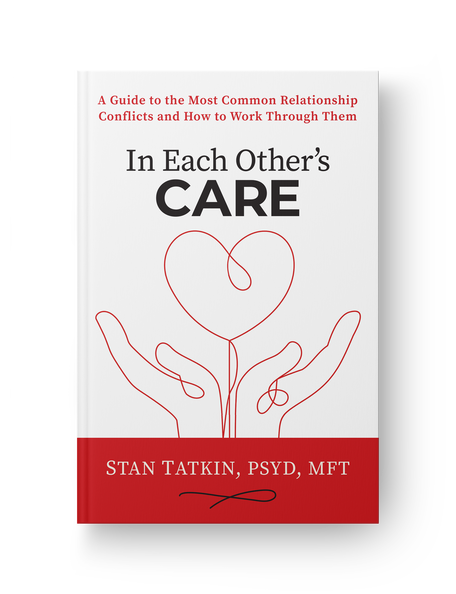
Stan Tatkin: In Each Other’s Care

Dr. Stan Tatkin is uniquely talented at helping couples shift from being in each other’s faces to being in each other’s care. In this podcast, Tami Simon speaks to the innovative therapist and author about his new book, In Each Other’s Care: A Guide to the Most Common Relationship Conflicts and How to Work Through Them, discussing some of the research-based, practical strategies he has developed in his celebrated PACT (Psychobiological Approach to Couples Therapy) model.

Give a listen to this gritty, honest, informative, and empowering conversation exploring: cultivating secure functioning relationships; why couples must create their own culture of shared power, respect, and collaboration; finding the balance between independence and interdependence; the one-directional nature of codependency; becoming your partner’s whisperer; why “earned love” is what endures; the fantasy of the same page; attachment versus love; mutual purpose and care as ingredients for an awesome relationship; the physical toll of an insecure functioning relationship; the Sherlocking technique; the power of eye contact; practicing quick repair; touch: an unequivocal signal of friendliness; the basic need in relationship: you and I are OK; the Big Five: sex, money, kids, time, and mess; jealousy and envy; longevity and happiness through co-creating the architecture of your relationship and understanding how you interact under stress; and more.

Note: This episode originally aired on Sounds True One, where these special episodes of Insights at the Edge are available to watch live on video and with exclusive access to Q&As with our guests. Learn more at join.soundstrue.com.

Do you really know whether your partner understands wh...

Human communication, even on a good day, is really terrible. It really is. We misunderstand each other much of the time.

Do you really know whether your partner understands what you are saying? Does your partner get the nuances or understand the purpose of the words you are using? Do you think they know exactly how you feel about your words or the meaning of the words? When you’re listening to someone, do you think you really understand them? Do you understand their mind? Their context? More often than not, you are approximating each other. You’re getting close.

Most of our communication is implicit, nonverbal. Our verbal communication, which we all love and adore and depend on, is really the culprit. It gets us into a lot of trouble.

When you were dating, I’m sure you were much more careful about the words you used. How careful are you now? Many couples grow sloppy with each other in terms of their verbal communication. They take shortcuts because they think they know each other.

You’re probably taking a lot of shortcuts, assuming your partner understands the meaning of your words, and you’re getting into trouble. Do you even have each other’s attention when you are communicating? Many times, you don’t. You both are busy, you are moving, and your lives are only getting busier. And then you find yourselves saying, as many couples do, “Oh, it’s my partner’s problem. They’re not listening.” Right?

When it comes to communication, you both must take responsibility for making sure that your speech is clear and understood by the other person. As you will read in this section, just because you say something, doesn’t mean your partner is translating it as you intend.

Here’s an example:

Partner A: I want more intimacy in our relationship.

Partner B: I want that, too!

The problem here is that to Partner A intimacy means “more sex.” Partner B, on the other hand, thinks that agreeing to intimacy will mean more interpersonal talk. What is more is that sex actually means “only intercourse,” and interpersonal talk specifically means “more questions about how I’m doing.” That is how we talk to each other—as if the other person knows exactly what we mean. Much of the time, we don’t even know exactly what we mean.

Remember the good old days (of course you don’t) when speech was simpler? We would just say, “Duck!” or “Eat!” or “Sleep!” or “Run!” or “Lion!” Fast forward to today’s linguistic complexities and consider for a moment all the nuances in our talk, all the lingo, all the changing meanings for regular words. Take the word sick, for example. Today it could mean physically ill, mentally ill, disgusting, or amazing. And the language couples use with each other can seem even more confusing. “I want to know you deeply” could mean many different things. “I want you to show me your soul” could make a person’s head spin. “I want you to say what you really feel” can, for some, seem like a trick or an insurmountable task. We use a great many words and phrases that mean a great many things, none of which partners clarify with each other. This is a terrific error.

The human brain is always trying to conserve energy; it does as little as possible until it must. Most people, particularly partners, will treat clarification as unnecessary and, in fact, frustrating. “You should know what I mean,” a partner might say. “My meaning is obvious.” Or, “Everyone knows what that means.” Both speaker and listener feel persecuted by the chasm between meaning and understanding. Minds misattune, which leads to heightened arousal (faster heartbeat, higher blood pressure), which leads to threat perception, which leads to fight, flight, or freeze.

Rinse and repeat.

Check and Recheck
This common and frankly annoying error is easily avoidable by returning to the formality likely present at the beginning of the relationship. Check in with simple, nonthreatening questions or requests:

  • “Are you saying . . . ?”
  • “I want your eyes because this is important . . .”
  • “Let me make sure I understand . . .”
  • “Say back what you heard . . .”
  • “Let me repeat that.”
  • “What do you think I meant by . . . ?”
  • “We may not be talking about the same thing. Are you saying . . . ?”

Checking and rechecking is vital to daily governance and the proper running of a two-person system. If you were two astronauts communicating out in space while tethered to the mothership, would you be incredibly careful with your communication? You bet you would. Your lives would be at stake. If you were two generals deciding a war plan, would you talk in shorthand or assume you were on the same page? If you did, people would die. You are no different. If you and your partner continue to use shoddy communication to share information, your relationship will suffer badly.

These errors, if repeated again and again, go right into your respective personal narratives about what’s wrong with the other partner and why you’re unhappy. Remember, our personal narratives form to protect our interests only and are almost always based on faulty data—like errors in communication!

Be orderly. Be precise. Be responsible. Be a two-person system.

This excerpt is adapted from In Each Other’s Care: A Guide to the Most Common Relationship Conflicts and How to Work Through Them by Stan Taktin, PsyD, MFT.

Stan Tatkin, PsyD, MFT, is a clinician, researcher, teacher, and developer of A Psychobiological Approach to Couple Therapy® (PACT). He has a clinical practice in Calabasas, California, and with his wife, Dr. Tracey Tatkin, cofounded the PACT Institute for the purpose of training other psychotherapists to use this method in their clinical practices. For more information, visit thepactinstitute.com.

3 Ways to Deepen Gratitude This Holiday Season

It is true that misery cannot simultaneously exist alongside gratitude and that, despite ourselves, we are constantly being given more than we give. To prove that point, try this simple, elegant practice and see for yourself. Please note: If you resist doing this exercise, consider that you are doing so because you, like most human beings, prefer to believe that you give more than you receive. If you find you’re wrong, what will happen to your resentment or other feelings of disappointment?

Naikan Inventory List

Take a few full size notebook paper and draw three columns. At the top of column #1, write “What he/she/they gave to me.” At the top of column #2, write “What I gave to him/her/them.” At the top of column #3, write “The trouble I caused him/her/them. Exhaust each column with your list of SPECIFIC items before moving onto the next. The timeline to consider is the last 3 months. The use of “always” or “usually” should be avoided. Be precise.

Write three letters of gratitude

You should have enough evidence to write three separate letters of appreciation to your partner. Be sure to make each different, using alternate words expressing thanks to your partner. You can give your partner this letter (or card), or you can simply keep it to yourself. Your choice. The exercise was for you anyway.

Write three letters of apology

You should have enough evidence from your list to apologize for putting your partner out. Make each letter unique by saying “I’m sorry” in different ways. Again, you can give this to your partner or simply keep it private. Either way, the exercise does its magic. If you were honest and thorough, you might have noticed that column #2 was shorter than columns 1 & 3. We are selfish creatures; always aware of what we’re not getting and how our partners cause us grief.

I hope this exercise has helped deepen your gratitude during this holiday season!

Stan Tatkin, PsyD, MFT, is a clinician and author who integrates neuroscience, attachment theory, and current therapies. He directs training programs throughout North America and globally. He is the author of We Do: Saying Yes to a Relationship of Depth, True Connection, and Enduring Love, Wired for Love: How Understanding Your Partner’s Brain and Attachment Style Can Help You Defuse Conflict and Build a Secure Relationship. 

The community here at Sounds True wishes you a lovely holiday season! We are happy to collaborate with some of our Sounds True authors to offer you wisdom and practices as we move into this time together; please enjoy this blog series for your holiday season. 

To help encourage you and your loved ones to explore new possibilities this holiday season, we’re offering 40% off nearly all of our programs, books, and courses sitewide. May you find the wisdom to light your way. 

EXPLORE NOW


You Might Also Enjoy

Kimberly Ann Johnson: “Becoming a Sexual Alchemi...

What if aging isn’t the slow closing of your erotic life, but the doorway into its most alive season?

This week, Tami Simon speaks with Kimberly Ann Johnson—sexological body worker, somatic experiencing practitioner, birth doula, and author of the new Sounds True book Erotic Seasons: Tuning In to the Rhythms of Women’s Sexuality and Spirituality—about what she calls erotic sovereignty, and the sentence that closes her book: the female body is its own spiritual path.

Join Tami and Kimberly to explore:

  • Erotic sovereignty—your relationship to your own life force, and why it stays with you across every season
  • Why the goal isn’t a more regulated nervous system, but a more responsive one, and what it means to run more charge
  • The four erotic seasons—maiden, mother, virgin, crone—and the surprising reason virgin comes after mother
  • Why hormonal transitions are “wet clay”: golden opportunities for repatterning that our culture teaches us to rush past
  • Menopause as a death rehearsal, and the life review that arrives decades before we expect it
  • Hot sex and warm sex—widening the range beyond adrenaline, and learning the language of the pause
  • “Hormones are gods”: the collective endocrine system, and why living intergenerationally may be the original hormone therapy
  • Becoming a sexual alchemist—arousal as healing energy, and why care is the whole ethic

Whether you are 25 or 75, Kimberly offers a map for meeting your body’s changes as thresholds rather than losses.

Please note: this episode includes candid discussion of sexual abuse and sexual wounding, including Kimberly Ann Johnson’s own experience.

Listen now, and meet your body as the path. →

This conversation offers genuine transmission, not just concepts about awakening, but the palpable presence of realized teachers exploring the growing edge of spiritual understanding together, and it originally aired on Sounds True One.

Get a FREE month of membership at https://bit.ly/STOne-Free-Month.

The Point of Insight | Our Medicine Lives in the Wound


What if the very thing that wounded you is the source of the medicine you’re here to give?

In this month’s Point of Insight, Tami Simon shares a personal story: minutes before going live with an archetypal astrologer, she was told—correctly, and within seconds—that she carried “the mother of all mother wounds.” That single moment became the culmination of a much longer, gradual unfolding: a lifetime’s worth of “drops,” from a mentor she called the Queen of the Reframe, to an interview with yoga teacher and activist Seane Corn titled “Your Pain Is Your Purpose,” to an email from a business coach whose four simple words reframed everything—your karma is your dharma.

Join Tami as she reflects on:

  • How a lifelong feeling of not belonging became the soil for a life’s work helping others feel connected
  • The difference between sudden insight and the slow, gradual “boiling water” of a tipping point
  • Why real breakthrough requires going all the way through pain, not around it
  • Joanna Macy’s question—”What breaks your heart?”—and how grief and care become fuel for service
  • Why “never turn away” may be one of the most important spiritual instructions there is

This is a shorter, solo reflection from Tami—released once a month on the Insights at the Edge feed—on where our deepest wounds and our clearest purpose meet.

Listen now. →

Find the original Insights at the Edge episodes here: “Seane Corn: Your Pain Is Your Purpose“

James Hollis: The Goal of Life Is Meaning, Not Happine...

Most of us were raised to chase happiness as the finish line, yet Jungian analyst James Hollis has spent his career arguing that happiness was never a reliable measure to begin with.

Sounds True has carried this conversation between depth psychology and everyday struggle for decades, and Hollis remains one of our clearest voices on the subject. 

In this piece, we look at why Jungian psychology treats happiness as an unreliable goal, how the soul signals when we’ve drifted off course, and what resilience looks like without the comfort of certainty.

Key Takeaways:

  • A Different Measure: Learn why James Hollis treats happiness as an unreliable goal to build a life around.
  • The Soul Sends Signals: Understand how restlessness and dread can point toward a wrong turn.
  • Resilience Without Certainty: See how meaning sustains people through periods without clear answers.

A Different Measure for a Well-Lived Life

Hollis tells Tami Simon that happiness is only ever transiently possible, while meaning, once found, tends to abide. This is not a small semantic distinction; it reorganizes how a person might evaluate an entire life, past and future.

Listen to this conversation in James Hollis: The Goal of Life Is Meaning, Not Happiness, part of the Insights at the Edge series.

Learn Practices for Self-Compassion with Sounds True.

Jungian Psychology’s Case Against Chasing Happiness

Drawing on Jungian psychology, Hollis explains why treating happiness as life’s organizing goal sets people up for repeated disappointment. Moods shift, circumstances change, and pleasure fades on its own schedule regardless of effort. Meaning operates differently in his framework, built less on favorable conditions and more on alignment between a person’s actions and their deeper psychological truth. This idea traces back through decades of depth psychology, which has long treated symptom and suffering as data rather than simply obstacles to remove. Hollis extends that lineage into plain, accessible language for readers outside clinical settings.

  • Happiness Is Transient: It depends on circumstances that are largely outside our control.
  • Meaning Is Durable: It persists even through hardship, loss, and difficult seasons.
  • Alignment Over Pleasure: True satisfaction comes from congruence, not from comfort alone.

How the Soul Signals a Wrong Turn

Hollis describes a kind of inner feedback system, subtle but consistent, that lets a person know when they’ve drifted from their own path: a persistent restlessness, a low-grade dread, symptoms that resist easy explanation. Rather than pathologizing these signals, Hollis treats them as intelligent messages worth decoding instead of medicating them away entirely. This reframing runs through much of his later work, including Living Between Worlds, where he writes at length about resilience during periods of upheaval.

He is careful to add that decoding these signals takes patience. The soul rarely communicates in plain language, and learning to translate restlessness into useful insight is itself a skill built slowly, often with the help of therapy, journaling, or sustained reflection over time.

Resilience Without Certainty

Much of this conversation addresses a question many listeners were quietly asking during a period of global instability: how does a person stay steady without pretending to have answers they don’t have? Hollis’s version of resilience does not rely on optimism. It relies on tolerance for ambiguity and a willingness to keep showing up for the questions life keeps asking, even when no clear resolution is in sight and the ground itself keeps shifting underfoot.

  • Repetition Builds Strength: Resilience grows through repeated encounters with difficulty, not avoidance of it.
  • Certainty Can Deceive: It often functions as a defense against anxiety rather than as an accurate perception.
  • Living Between Worlds: The title itself names the space between old certainties and whatever comes next.

Why Meaning Requires Ongoing Attention

Unlike a goal that can be checked off, meaning in Hollis’s framework demands continual renewal. It is less a destination reached once than a practice sustained through the accumulation of honest choices over time, which is part of why his work resists any tidy self-help formula or five-step solution. A person can find meaning in one season of life and still need to relocate it in the next, since circumstances, relationships, and inner priorities continue to shift.

Center Yourself With Meditative Teachings by Sounds True

The Difference Age Makes

Hollis suggests that this pursuit shifts noticeably across a lifetime. What felt meaningful in early adulthood, often tied to achievement or external validation, tends to lose its hold as people age, replaced by quieter, more internally sourced sources of significance. This isn’t decline, in Hollis’s reading, but maturation, a gradual trading of performance for depth. He describes the second half of life as an invitation to finally ask what was being pursued all along and whether it still fits.

A Fifteen-Book Case for Meaning

By the time of this conversation, Hollis had already authored fifteen books exploring meaning, purpose, and depth psychology, including Finding Meaning in the Second Half of Life and What Matters Most. Hollis describes the search for meaning as the defining topic of his life’s work, one he approaches not as an academic exercise but as something he watches play out daily in his clinical practice with real people navigating real crises, decade after decade, with remarkably consistent patterns.

The Weight of a Global Moment

This particular episode was recorded during a period of widespread uncertainty, and Hollis addresses that context directly rather than avoiding it. He suggests that collective instability tends to surface exactly the kind of questions his work has always centered: what actually matters when the usual supports fall away, and what remains standing once distraction is stripped back. Crisis, in his view, has a way of accelerating psychological work that might otherwise take decades to surface on its own.

What Meaning Asks Us to Give Up

Choosing meaning over happiness, Hollis suggests, often means giving up the comfort of a simpler narrative. It is easier to chase pleasure and call it a life well lived than to sit with the harder, slower project of aligning daily choices with something deeper than mood. Hollis doesn’t romanticize this trade-off; he describes it plainly as more demanding, and ultimately more honest, than the alternative most of us default toward without noticing, especially in a culture that constantly rewards comfort over depth.

The Sounds True Foundation and Wider Access

This particular episode also introduces listeners to the Sounds True Foundation, a nonprofit dedicated to making tools like mindfulness and self-compassion available regardless of financial or social circumstance. It’s a fitting companion to Hollis’s message, since meaning, unlike many luxuries, is something every listener deserves genuine access to explore, regardless of where they happen to start from.

Insight Is The First Step Toward Growth. Broaden Your Horizons With Sounds True.

Final Thoughts

James Hollis offers no promise that meaning arrives easily or stays without tending, only that it holds weight happiness alone cannot carry. 

Sounds True continues sharing this conversation because it captures something central to our mission of waking up the world: that a considered life asks more of us than comfort, and gives back more in return. 

Choosing meaning is rarely a single decision; it is a posture practiced again each time comfort tempts us toward the smaller path. Hollis’s broader catalog remains available for anyone ready to keep asking these questions.

Frequently Asked Questions About James Hollis

How many books has James Hollis written?

Hollis is the author of sixteen books, including Finding Meaning in the Second Half of Life.

What is Living Between Worlds about?

It explores personal resilience during periods of significant change, uncertainty, and cultural upheaval.

Was Hollis a university professor?

Yes, he taught Jungian studies at Saybrook University across its San Francisco and Houston programs.

Does Sounds True offer audio versions of Hollis’s teaching?

Yes, Sounds True has produced the audio learning series Through the Dark Wood with Hollis.

What is the Sounds True Foundation?

A nonprofit making transformational tools accessible to at-risk youth, veterans, and underserved communities worldwide.

Is meaning the same as religious belief, according to Hollis?

No, Hollis frames meaning as a psychological and personal experience, independent of any specific faith.

Where did James Hollis train as an analyst?

He trained at the C.G. Jung Institute in Zurich before practicing as a licensed analyst.

Can this teaching help during periods of grief?

Yes, many listeners find Hollis’s framework useful for locating meaning within difficult, uncertain seasons.


Michelle Cassandra Johnson is an author, activist, spiritual teacher, racial equity consultant, and intuitive healer. She is the author of six books, including Skill in Action and Finding Refuge. Amy Burtaine is a leadership coach and racial equity trainer. With Robin DiAngelo, she is the coauthor of The Facilitator's Guide for White Affinity Groups. For more, visit https://www.michellecjohnson.com/wisdom-of-the-hive.

Leave a Reply

Your email address will not be published. Required fields are marked *