Do you really know whether your partner understands what you are saying?

    —
April 3, 2023

Human communication, even on a good day, is really terrible. It really is. We misunderstand each other much of the time.

Do you really know whether your partner understands what you are saying? Does your partner get the nuances or understand the purpose of the words you are using? Do you think they know exactly how you feel about your words or the meaning of the words? When you’re listening to someone, do you think you really understand them? Do you understand their mind? Their context? More often than not, you are approximating each other. You’re getting close.

Most of our communication is implicit, nonverbal. Our verbal communication, which we all love and adore and depend on, is really the culprit. It gets us into a lot of trouble.

When you were dating, I’m sure you were much more careful about the words you used. How careful are you now? Many couples grow sloppy with each other in terms of their verbal communication. They take shortcuts because they think they know each other.

You’re probably taking a lot of shortcuts, assuming your partner understands the meaning of your words, and you’re getting into trouble. Do you even have each other’s attention when you are communicating? Many times, you don’t. You both are busy, you are moving, and your lives are only getting busier. And then you find yourselves saying, as many couples do, “Oh, it’s my partner’s problem. They’re not listening.” Right?

When it comes to communication, you both must take responsibility for making sure that your speech is clear and understood by the other person. As you will read in this section, just because you say something, doesn’t mean your partner is translating it as you intend.

Here’s an example:

Partner A: I want more intimacy in our relationship.

Partner B: I want that, too!

The problem here is that to Partner A intimacy means “more sex.” Partner B, on the other hand, thinks that agreeing to intimacy will mean more interpersonal talk. What is more is that sex actually means “only intercourse,” and interpersonal talk specifically means “more questions about how I’m doing.” That is how we talk to each other—as if the other person knows exactly what we mean. Much of the time, we don’t even know exactly what we mean.

Remember the good old days (of course you don’t) when speech was simpler? We would just say, “Duck!” or “Eat!” or “Sleep!” or “Run!” or “Lion!” Fast forward to today’s linguistic complexities and consider for a moment all the nuances in our talk, all the lingo, all the changing meanings for regular words. Take the word sick, for example. Today it could mean physically ill, mentally ill, disgusting, or amazing. And the language couples use with each other can seem even more confusing. “I want to know you deeply” could mean many different things. “I want you to show me your soul” could make a person’s head spin. “I want you to say what you really feel” can, for some, seem like a trick or an insurmountable task. We use a great many words and phrases that mean a great many things, none of which partners clarify with each other. This is a terrific error.

The human brain is always trying to conserve energy; it does as little as possible until it must. Most people, particularly partners, will treat clarification as unnecessary and, in fact, frustrating. “You should know what I mean,” a partner might say. “My meaning is obvious.” Or, “Everyone knows what that means.” Both speaker and listener feel persecuted by the chasm between meaning and understanding. Minds misattune, which leads to heightened arousal (faster heartbeat, higher blood pressure), which leads to threat perception, which leads to fight, flight, or freeze.

Rinse and repeat.

Check and Recheck
This common and frankly annoying error is easily avoidable by returning to the formality likely present at the beginning of the relationship. Check in with simple, nonthreatening questions or requests:

  • “Are you saying . . . ?”
  • “I want your eyes because this is important . . .”
  • “Let me make sure I understand . . .”
  • “Say back what you heard . . .”
  • “Let me repeat that.”
  • “What do you think I meant by . . . ?”
  • “We may not be talking about the same thing. Are you saying . . . ?”

Checking and rechecking is vital to daily governance and the proper running of a two-person system. If you were two astronauts communicating out in space while tethered to the mothership, would you be incredibly careful with your communication? You bet you would. Your lives would be at stake. If you were two generals deciding a war plan, would you talk in shorthand or assume you were on the same page? If you did, people would die. You are no different. If you and your partner continue to use shoddy communication to share information, your relationship will suffer badly.

These errors, if repeated again and again, go right into your respective personal narratives about what’s wrong with the other partner and why you’re unhappy. Remember, our personal narratives form to protect our interests only and are almost always based on faulty data—like errors in communication!

Be orderly. Be precise. Be responsible. Be a two-person system.

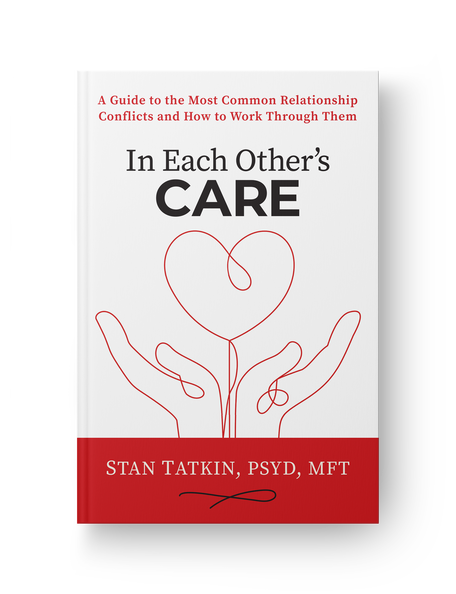
This excerpt is adapted from In Each Other’s Care: A Guide to the Most Common Relationship Conflicts and How to Work Through Them by Stan Taktin, PsyD, MFT.

Stan Tatkin, PsyD, MFT, is a clinician, researcher, teacher, and developer of A Psychobiological Approach to Couple Therapy® (PACT). He has a clinical practice in Calabasas, California, and with his wife, Dr. Tracey Tatkin, cofounded the PACT Institute for the purpose of training other psychotherapists to use this method in their clinical practices. For more information, visit thepactinstitute.com.
Stan Tatkin

Stan Tatkin, PsyD, MFT, is a clinician, teacher, and author who integrates neuroscience, attachment theory, and current therapies. He is the developer of A Psychobiological Approach to Couple Therapy® (PACT), and he and his wife, Tracey Boldemann-Tatkin, created the PACT Institute to train other psychotherapists in this methodology. Dr. Tatkin teaches and supervises family medicine residents at Kaiser Permanente in Woodland Hills, CA, is assistant clinical professor at the UCLA David Geffen School of Medicine, and directs training programs throughout North America and globally. He is the author of Wired for Love: How Understanding Your Partner's Brain and Attachment Style Can Help You Defuse Conflict and Build a Secure Relationship, and Your Brain on Love: The Neurobiology of Healthy Relationships.

Author photo © Cathy Cooley

Also By Author

Stan Tatkin: In Each Other’s Care

Dr. Stan Tatkin is uniquely talented at helping couples shift from being in each other’s faces to being in each other’s care. In this podcast, Tami Simon speaks to the innovative therapist and author about his new book, In Each Other’s Care: A Guide to the Most Common Relationship Conflicts and How to Work Through Them, discussing some of the research-based, practical strategies he has developed in his celebrated PACT (Psychobiological Approach to Couples Therapy) model.

Give a listen to this gritty, honest, informative, and empowering conversation exploring: cultivating secure functioning relationships; why couples must create their own culture of shared power, respect, and collaboration; finding the balance between independence and interdependence; the one-directional nature of codependency; becoming your partner’s whisperer; why “earned love” is what endures; the fantasy of the same page; attachment versus love; mutual purpose and care as ingredients for an awesome relationship; the physical toll of an insecure functioning relationship; the Sherlocking technique; the power of eye contact; practicing quick repair; touch: an unequivocal signal of friendliness; the basic need in relationship: you and I are OK; the Big Five: sex, money, kids, time, and mess; jealousy and envy; longevity and happiness through co-creating the architecture of your relationship and understanding how you interact under stress; and more.

Note: This episode originally aired on Sounds True One, where these special episodes of Insights at the Edge are available to watch live on video and with exclusive access to Q&As with our guests. Learn more at join.soundstrue.com.

Do you really know whether your partner understands wh...

Human communication, even on a good day, is really terrible. It really is. We misunderstand each other much of the time.

Do you really know whether your partner understands what you are saying? Does your partner get the nuances or understand the purpose of the words you are using? Do you think they know exactly how you feel about your words or the meaning of the words? When you’re listening to someone, do you think you really understand them? Do you understand their mind? Their context? More often than not, you are approximating each other. You’re getting close.

Most of our communication is implicit, nonverbal. Our verbal communication, which we all love and adore and depend on, is really the culprit. It gets us into a lot of trouble.

When you were dating, I’m sure you were much more careful about the words you used. How careful are you now? Many couples grow sloppy with each other in terms of their verbal communication. They take shortcuts because they think they know each other.

You’re probably taking a lot of shortcuts, assuming your partner understands the meaning of your words, and you’re getting into trouble. Do you even have each other’s attention when you are communicating? Many times, you don’t. You both are busy, you are moving, and your lives are only getting busier. And then you find yourselves saying, as many couples do, “Oh, it’s my partner’s problem. They’re not listening.” Right?

When it comes to communication, you both must take responsibility for making sure that your speech is clear and understood by the other person. As you will read in this section, just because you say something, doesn’t mean your partner is translating it as you intend.

Here’s an example:

Partner A: I want more intimacy in our relationship.

Partner B: I want that, too!

The problem here is that to Partner A intimacy means “more sex.” Partner B, on the other hand, thinks that agreeing to intimacy will mean more interpersonal talk. What is more is that sex actually means “only intercourse,” and interpersonal talk specifically means “more questions about how I’m doing.” That is how we talk to each other—as if the other person knows exactly what we mean. Much of the time, we don’t even know exactly what we mean.

Remember the good old days (of course you don’t) when speech was simpler? We would just say, “Duck!” or “Eat!” or “Sleep!” or “Run!” or “Lion!” Fast forward to today’s linguistic complexities and consider for a moment all the nuances in our talk, all the lingo, all the changing meanings for regular words. Take the word sick, for example. Today it could mean physically ill, mentally ill, disgusting, or amazing. And the language couples use with each other can seem even more confusing. “I want to know you deeply” could mean many different things. “I want you to show me your soul” could make a person’s head spin. “I want you to say what you really feel” can, for some, seem like a trick or an insurmountable task. We use a great many words and phrases that mean a great many things, none of which partners clarify with each other. This is a terrific error.

The human brain is always trying to conserve energy; it does as little as possible until it must. Most people, particularly partners, will treat clarification as unnecessary and, in fact, frustrating. “You should know what I mean,” a partner might say. “My meaning is obvious.” Or, “Everyone knows what that means.” Both speaker and listener feel persecuted by the chasm between meaning and understanding. Minds misattune, which leads to heightened arousal (faster heartbeat, higher blood pressure), which leads to threat perception, which leads to fight, flight, or freeze.

Rinse and repeat.

Check and Recheck
This common and frankly annoying error is easily avoidable by returning to the formality likely present at the beginning of the relationship. Check in with simple, nonthreatening questions or requests:

  • “Are you saying . . . ?”
  • “I want your eyes because this is important . . .”
  • “Let me make sure I understand . . .”
  • “Say back what you heard . . .”
  • “Let me repeat that.”
  • “What do you think I meant by . . . ?”
  • “We may not be talking about the same thing. Are you saying . . . ?”

Checking and rechecking is vital to daily governance and the proper running of a two-person system. If you were two astronauts communicating out in space while tethered to the mothership, would you be incredibly careful with your communication? You bet you would. Your lives would be at stake. If you were two generals deciding a war plan, would you talk in shorthand or assume you were on the same page? If you did, people would die. You are no different. If you and your partner continue to use shoddy communication to share information, your relationship will suffer badly.

These errors, if repeated again and again, go right into your respective personal narratives about what’s wrong with the other partner and why you’re unhappy. Remember, our personal narratives form to protect our interests only and are almost always based on faulty data—like errors in communication!

Be orderly. Be precise. Be responsible. Be a two-person system.

This excerpt is adapted from In Each Other’s Care: A Guide to the Most Common Relationship Conflicts and How to Work Through Them by Stan Taktin, PsyD, MFT.

Stan Tatkin, PsyD, MFT, is a clinician, researcher, teacher, and developer of A Psychobiological Approach to Couple Therapy® (PACT). He has a clinical practice in Calabasas, California, and with his wife, Dr. Tracey Tatkin, cofounded the PACT Institute for the purpose of training other psychotherapists to use this method in their clinical practices. For more information, visit thepactinstitute.com.

Learn More
Amazon | Barnes & Noble | Bookshop | Sounds True


3 Ways to Deepen Gratitude This Holiday Season

It is true that misery cannot simultaneously exist alongside gratitude and that, despite ourselves, we are constantly being given more than we give. To prove that point, try this simple, elegant practice and see for yourself. Please note: If you resist doing this exercise, consider that you are doing so because you, like most human beings, prefer to believe that you give more than you receive. If you find you’re wrong, what will happen to your resentment or other feelings of disappointment?

Naikan Inventory List

Take a few full size notebook paper and draw three columns. At the top of column #1, write “What he/she/they gave to me.” At the top of column #2, write “What I gave to him/her/them.” At the top of column #3, write “The trouble I caused him/her/them. Exhaust each column with your list of SPECIFIC items before moving onto the next. The timeline to consider is the last 3 months. The use of “always” or “usually” should be avoided. Be precise.

Write three letters of gratitude

You should have enough evidence to write three separate letters of appreciation to your partner. Be sure to make each different, using alternate words expressing thanks to your partner. You can give your partner this letter (or card), or you can simply keep it to yourself. Your choice. The exercise was for you anyway.

Write three letters of apology

You should have enough evidence from your list to apologize for putting your partner out. Make each letter unique by saying “I’m sorry” in different ways. Again, you can give this to your partner or simply keep it private. Either way, the exercise does its magic. If you were honest and thorough, you might have noticed that column #2 was shorter than columns 1 & 3. We are selfish creatures; always aware of what we’re not getting and how our partners cause us grief.

I hope this exercise has helped deepen your gratitude during this holiday season!

Stan Tatkin, PsyD, MFT, is a clinician and author who integrates neuroscience, attachment theory, and current therapies. He directs training programs throughout North America and globally. He is the author of We Do: Saying Yes to a Relationship of Depth, True Connection, and Enduring LoveWired for Love: How Understanding Your Partner’s Brain and Attachment Style Can Help You Defuse Conflict and Build a Secure Relationship. 

The community here at Sounds True wishes you a lovely holiday season! We are happy to collaborate with some of our Sounds True authors to offer you wisdom and practices as we move into this time together; please enjoy this blog series for your holiday season. 

To help encourage you and your loved ones to explore new possibilities this holiday season, we’re offering 40% off nearly all of our programs, books, and courses sitewide. May you find the wisdom to light your way. 

EXPLORE NOW


You Might Also Enjoy

Richard Schwartz and Tamala Floyd: Healing Across Gene...

What if the anxiety, grief, or fear you’ve struggled with for years is a burden you inherited—not one you earned?

This week, Tami Simon speaks with Richard Schwartz—founder of Internal Family Systems and author of the bestselling No Bad Parts—and Tamala Floyd, psychotherapist, IFS lead trainer, and author of Listening: When Parts Speak: A Practical Guide to Healing with IFS Therapy and Ancestor Wisdom. Together, they explore how IFS and ancestral healing converge to help us release intergenerational trauma at its root.

Join Tami, Dick, and Tamala to explore:

  • What “legacy burdens” are in IFS—and how to recognize when what you’re carrying came from someone else
  • How personal, ethnic, and cultural legacy burdens operate differently—and why racism, historical trauma, and collective suffering require their own healing
  • The concept of the “well ancestor”: why every lineage has one, and how to invite them into your healing
  • Heirlooms vs. burdens: how our ancestral lines carry gifts as well as wounds—and how to receive them
  • Why legacy burdens are often easier to release than personal ones—and what fear most commonly gets in the way
  • Tamala’s guided ancestral meditation, offered live: a practice for releasing what no longer serves you
  • What we offer future generations simply by doing our own inner work

The episode includes a full guided meditation led by Tamala Floyd—drawn directly from her ancestors—that listeners can return to again and again.

Listen now and begin your own healing across generations. →

This conversation offers genuine transmission—not just concepts about awakening, but the palpable presence of realized teachers exploring the growing edge of spiritual understanding together. Originally aired on Sounds True One.

Tian Dayton: If You Grew Up with Addicts, Healing Is a...

Trauma doesn’t show up in what we remember. It shows up in how we react.

This week, Tami Simon speaks with Dr. Tian Dayton—award-winning scholar, senior fellow at The Meadows, and author of Growing Up with Addiction: How Adult Children of Addicts Can Heal Family Trauma, Complex PTSD and Codependency—about what it means to grow up inside a family shaped by addiction, and what it actually takes to heal.

Drawing on decades of clinical work, her own lived experience, and her innovative Relational Trauma Repair (RTR) method, Dr. Dayton explores the neuroscience of relational trauma and the embodied, experiential path through it.

Join Tami and Tian to explore:

  • Why addiction is a family disease—and how process addictions like workaholism and overeating leave the same marks as substance use
  • How childhood trauma gets stored in the body, not the story—and why you can’t think your way out of complex PTSD
  • The neuroscience of overreaction: why triggers feel present-tense even when they’re decades old
  • Cognitive and somatic distortions—and how to recognize when the past is hijacking the present
  • Psychodrama and Relational Trauma Repair: the power of talking to instead of about
  • Timelines, social atoms, and letter writing as tools for putting fragmented memories back in order
  • Why healing is a discipline—and what it means to take ownership of your own darkness as a path to freedom

Whether you grew up in a home shaped by addiction or simply recognize the patterns Dr. Dayton describes, this interview offers both a map and the courage to begin the journey.

Listen now and start where you are. 

This conversation offers genuine transmission—not just concepts about awakening, but the palpable presence of realized teachers exploring the growing edge of spiritual understanding together. Originally aired on Sounds True One.

Deb Dana on Polyvagal Theory: How to Befriend Your Ner...

Understanding your nervous system can feel overwhelming at first, especially when it seems to react without warning. One moment you’re grounded, and the next, you’re tense, withdrawn, or unsure of what triggered the change. For many, this cycle can feel confusing or even frustrating. But what if your body’s responses weren’t something to fix, but instead something to get to know? That’s the invitation behind Polyvagal Theory. It offers a way to understand why we feel the way we do and how we can gently support ourselves through those changes.

At Sounds True, we’ve had the honor of working with some of the world’s most respected voices in healing, mindfulness, and personal growth. Deb Dana is one of them. As a leading teacher of Polyvagal Theory and a powerful translator of nervous system wisdom, Deb brings warmth, clarity, and deep compassion to her work. Through our courses and podcast conversations, we’re proud to help bring her insights into daily life for anyone seeking more connection and safety within.

In this piece, we’ll be discussing Deb Dana’s unique approach to Polyvagal Theory, how to befriend your nervous system, and ways to bring nervous system regulation into your everyday experience.

Key Takeaways:

  • Understanding Polyvagal States: The nervous system shifts between states of connection, protection, and shutdown in response to cues of safety or threat.
  • Deb Dana’s Practical Wisdom: Deb Dana offers gentle, real-life ways to build awareness and regulation through small, consistent practices.
  • Everyday Application: Polyvagal-informed living supports emotional resilience, deeper relationships, and a greater sense of inner safety.

Insight Is The First Step Toward Transformation

What Is Polyvagal Theory?

Polyvagal Theory, developed by Dr. Stephen Porges, offers a new understanding of how our nervous system helps us navigate safety, connection, and survival. Rather than seeing the nervous system as a simple on/off switch for stress and relaxation, this theory describes a more nuanced system built around three key pathways: the ventral vagal, sympathetic, and dorsal vagal states.

Each of these states plays a role in how we respond to the world. When we’re in ventral vagal regulation, we feel safe, open, and connected. In sympathetic activation, the body gears up to protect us through the fight-or-flight response. And when that’s not possible, we may shift into dorsal vagal shutdown, which can feel like disconnection or collapse.

Polyvagal Theory helps us map these shifts, not as signs of dysfunction, but as adaptive responses to our inner and outer environment. This framework gives language to experiences that many people have felt but struggled to explain. It also lays a foundation for healing by understanding how the body communicates cues of safety and danger.

Deb Dana’s Approach To Nervous System Regulation

Deb Dana, a clinician and author deeply connected to Stephen Porges’s work, has played a vital role in making Polyvagal Theory accessible and applicable in everyday life. Her approach is rooted in the belief that regulation begins with awareness, not with trying to fix or override our nervous system, but by building a relationship with it.

Rather than pathologizing our responses, Deb invites us to get curious about them. When we begin to notice the shifts between states, like feeling open and connected one moment, then anxious or withdrawn the next, we start to understand the language of our nervous system.

Deb often describes this work as befriending the nervous system. That means learning to listen without judgment, responding with compassion, and practicing gentle ways of returning to safety and connection. It’s not about forcing calm, but about finding cues of safety that our unique system can trust.

Her guidance encourages small, consistent practices, such as tracking your state through the day, recognizing what helps you feel anchored, and using these insights to gently support nervous system regulation over time.

What It Means To Befriend Your Nervous System

To befriend your nervous system is to shift from self-criticism to self-compassion. It’s the practice of meeting your internal experience with kindness, even when it’s uncomfortable or unfamiliar.

For many of us, the nervous system has felt like something to overcome. We may have learned to push through anxiety, shut down emotion, or dismiss signals of exhaustion. But Deb Dana invites a different approach: one where we slow down and listen, where we get to know the patterns that shape our responses, and where we begin to trust that our bodies are trying to protect us, even when they’re not quite getting it right.

Befriending doesn’t mean controlling. It means becoming a companion to your own system. This can look like:

  • Noticing when your body feels safe and what helps you get there
  • Naming your state (without judgment)
  • Practicing ways to gently return to regulation

This relationship is built over time. It’s tender, respectful, and deeply personal. And it opens the door to greater resilience, not by avoiding discomfort, but by learning how to move through it with care.

Vagal Tone And The Path To Safety

Vagal tone is central to the body’s capacity for nervous system regulation. It reflects how easily we can shift into a state of calm and connection after stress. Supporting vagal tone isn’t about forcing the body to relax, it’s about creating environments and experiences that feel safe enough to allow that shift. Here’s how that can look in daily life:

What Is Vagal Tone?

Vagal tone describes the strength and responsiveness of the vagus nerve, which plays a vital role in regulating heart rate, digestion, and emotional state. A well-toned vagus nerve helps the body recover more quickly from stress and supports a felt sense of safety in both the body and mind.

Cues Of Safety: The Foundation Of Regulation

According to Deb Dana, nervous system regulation starts with cues of safety: experiences that tell the body it’s okay to soften. This might be eye contact with someone trustworthy, a soothing sound, or the rhythm of a steady breath. These cues signal the ventral vagal system to activate, bringing us into a state of calm engagement.

Practices That Support Vagal Tone

Strengthening vagal tone doesn’t require a dramatic change. Small, consistent actions like breathing slowly through the nose, humming, singing, or spending time with someone who helps you feel grounded can be deeply regulating. These practices gently guide the system back into connection.

From Survival To Connection

When vagal tone is strong, the nervous system becomes more flexible. This means we can move through sympathetic or dorsal states without getting stuck in them. Over time, this builds the capacity to return to connection more easily, even after moments of disconnection or overwhelm.

Learn to Treat Yourself with the Care You Offer Others

Bringing Polyvagal Wisdom Into Daily Life

Understanding your nervous system is powerful, but what truly creates change is learning to live alongside it. Deb Dana encourages everyday practices that help us build a stronger relationship with our system, not through big interventions, but through small, meaningful moments of connection.

Begin With Awareness

The first step is simply noticing. How does your body respond in different settings? What does “regulated” feel like for you? By tracking your nervous system states throughout the day, you start to recognize patterns, and that awareness becomes the ground for change.

Build A Personal Map

Deb often speaks about creating a personal nervous system map. This means identifying your own signs of ventral, sympathetic, and dorsal states, and naming the things that help you shift. Maybe music brings you back, or a certain person’s voice helps you settle. Mapping these can guide you toward regulation when you need it most.

Practice Micro-Moments Of Regulation

Regulation isn’t about staying calm all the time; it’s about returning. Even brief practices, like placing a hand on your heart or stepping outside for fresh air, can bring a sense of anchoring. Over time, these micro-moments build a more stable foundation of safety.

Stay In A Relationship

We heal through connection, not isolation. Polyvagal practice isn’t a solo journey. Co-regulation, or feeling safe in the presence of others, is a key part of nervous system healing. This might come from a trusted friend, a therapist, or even the steady rhythm of a pet’s breathing beside you.

How Trauma Shapes Nervous System Responses

Trauma can reshape how the nervous system interprets the world. Instead of easily recognizing cues of safety, the system may become more attuned to cues of danger even when none are present. Deb Dana emphasizes that this isn’t a flaw. It’s a form of protection the body learned when it needed to survive.

Survival States Are Adaptive

When the nervous system perceives a threat, it automatically shifts into survival states such as fight-or-flight or shutdown. For someone who has experienced trauma, these responses may become more easily triggered, even in situations that feel safe to others. It’s the body doing what it knows to do to keep you safe.

The Importance Of Compassionate Awareness

Understanding these patterns with compassion is essential. Rather than asking, “What’s wrong with me?”, Deb invites us to ask, “What happened that shaped my system this way?” This shift softens judgment and opens the possibility for healing.

Regulation Takes Time And Trust

Regulation after trauma doesn’t happen overnight. It’s a process of slowly teaching the body that it no longer has to stay in protection mode. Through safe relationships, grounding practices, and patient attention, the system can begin to relearn what safety feels like.

Learn More With Deb Dana And Sounds True

For those who feel drawn to deepen their relationship with their nervous system, Deb Dana offers supportive, accessible guidance through Sounds True. Her courses and conversations are designed to meet people where they are, gently, without pressure, and with a deep respect for each person’s unique path.

To begin, the Befriending Your Nervous System program offers practical tools for working with your nervous system in everyday life. If you’re looking to understand how safety feels from the inside out, Finding Safety in Your Nervous System may be a helpful next step.

You can also listen to the Deb Dana Befriending Your Nervous System Podcast to hear her insights shared in conversation, or to explore The Healing Trauma Online Course for a more immersive experience.

Each of these offerings invites you into a gentler, more connected relationship with yourself, one grounded in the wisdom of your own nervous system.

Discover The Power Of Daily Meditation

Final Thoughts

Polyvagal Theory gives us a language for something many of us have felt but didn’t know how to name: the constant shifts in how safe, connected, or overwhelmed we feel in our bodies. Through Deb Dana’s work, this understanding becomes not just theoretical, but personal, relational, and deeply human.

Befriending your nervous system isn’t about perfection. It’s about learning to notice, respond, and return again and again. It’s about offering yourself the same care and attunement you would offer someone you love. Over time, this practice becomes a way of living a quiet, steady return to connection.

Frequently Asked Questions About Polyvagal Theory

What does polyvagal mean in simple terms?

“Polyvagal” refers to the different branches of the vagus nerve that influence how we feel safe, respond to stress, and connect with others. It describes a system that helps us navigate connection, danger, and disconnection based on cues from our environment.

Can polyvagal theory help with anxiety?

Yes. Polyvagal Theory offers insight into how anxiety arises from nervous system states, helping people recognize when their system is in a stress response and how to shift toward a state of calm.

Is polyvagal theory supported by science?

Polyvagal Theory is rooted in neurophysiology and has a growing base of clinical application, especially in trauma therapy. While still evolving in research, it’s widely respected in somatic and therapeutic communities.

What role does breathwork play in polyvagal regulation?

Breathwork, especially slow, nasal breathing, can activate the vagus nerve and support regulation. It’s a gentle, accessible way to shift into a more connected state.

Can children benefit from polyvagal-informed practices?

Yes. Children, especially those with emotional or behavioral challenges, can benefit from environments that offer clear cues of safety and regulated adult presence.

How is co-regulation different from self-regulation?

Co-regulation happens through connection with others, such as being with someone calm and supportive, while self-regulation involves managing one’s own nervous system responses.

Does polyvagal theory apply to everyday stress?

Absolutely. Everyday stressors like social tension, noise, or change can trigger shifts in the nervous system. Polyvagal Theory helps explain and work with these shifts.

Is polyvagal theory only used in therapy?

No. While it’s widely used in therapeutic settings, its principles apply to relationships, parenting, education, leadership, and even creative practice.

Can someone be stuck in a survival state without realizing it?

Yes. Many people live in chronic sympathetic (anxious) or dorsal (shut down) states without having language for it. Polyvagal Theory offers a way to recognize and respond to these patterns.

How long does it take to “befriend” your nervous system?

There’s no fixed timeline. It’s an ongoing relationship that builds over time with consistent practice, gentle awareness, and supportive environments.

Michelle Cassandra Johnson is an author, activist, spiritual teacher, racial equity consultant, and intuitive healer. She is the author of six books, including Skill in Action and Finding Refuge. Amy Burtaine is a leadership coach and racial equity trainer. With Robin DiAngelo, she is the coauthor of The Facilitator’s Guide for White Affinity Groups. For more, visit https://www.michellecjohnson.com/wisdom-of-the-hive.

>
Share via
Copy link
Powered by Social Snap