A Doctor’s Simple Tips on How to Get Better Sleep

May 5, 2020

Thanks to groundbreaking research, we have recently learned that every cell has its own timekeeper that can be thought of as a local clock. Deep within the brain, in the hypothalamus, lies a master clock that regulates all the local clocks, making sure that each one is set to the same time. This complex, coordinated process is in sync with the alternating cycles of day and night and with all the degrees of changing light that occur in a 24-hour period as Earth rotates on its axis. Called the “circadian rhythm”—from the Latin words circa, which means “going around,” and diem, meaning “day”—this internal process regulates the human body’s sleep-wake cycle, among many other functions. 

The master clock (think of it as circadian rhythm central) sends hormonal and nerve signals throughout the body, synchronizing the cells’ clocks to the day-night, light-dark cycle of life. On a continuous basis, the master clock can determine what time it is based on messages from photoreceptor cells in the retina that register light conditions outside and report these to the brain via specialized pathways. 
Meanwhile, the cellular clocks keep local time, making sure that various activities locally are timed right and are appropriately coordinated with other cells and organs. This is why, for example, key enzymes are produced at certain times, blood pressure and body temperature are controlled, hormones are secreted, the gut microbiome is populated with the right balance of bacteria, and gut motility is appropriate for the hour. 

Living in harmony with the way we have evolved brings physiological and emotional balance, creating a good fit between our bodies and minds, between what we’re doing and how we’re designed to function. Honoring our body’s natural rhythms helps stabilize our mood, become more resistant to stress, feel less physical pain, and generally feel and function better physically and mentally. It’s an essential step in cooling and calming emotional inflammation. 

The following are some ways you can adjust your habits so that they support your body’s inherent rhythms: 

  • Put yourself on a sleep schedule. Establish a regular sleep-wake schedule so that you go to bed at approximately the same time each night and wake up at the same time each morning. It’s fine to vary your bedtime by an hour or two occasionally, but don’t sleep in more than an extra hour on the weekends (unless you’re sick); otherwise, you will end up disrupting your sleep pattern for the next night. 
  • Identify your slumber sweet spot. Most adults need seven to nine hours of sleep per night to feel and function at their best. Once you figure out how much you need, determine what time you need to get up in the morning and work backward to set an appropriate bedtime; or, you can identify what time of night you typically feel sleepy and then set a wake-up time accordingly. 
  • Brighten your mornings. When you get up in the morning, expose yourself to bright, natural light to stimulate alertness, enhance your mood, and help calibrate your circadian rhythms. Take a brisk walk outside or have breakfast in a sunny spot. If you struggle to reset your internal clock to the “awake” setting in the morning, consider buying a commercial light box that emits 10,000 lux, which mimics a bright, sunny day. Sitting in front of such a light box for 30 minutes in the morning, perhaps while you have breakfast or read the newspaper or newsfeeds, has been found to stimulate alertness and improve mood. Alternatively, you could opt for a desk-lamp-style light box for your desk at work. 
  • Adjust your indoor lighting. Fascinating research has found that office workers who are exposed to greater amounts of light in the morning fall asleep more quickly at night. They also have better sleep quality and better moods, including less depression and stress, than those who are exposed to low light in the morning. 
  • Darken your evenings. There is another good reason to make sure that your bedroom (or wherever you sleep) is dark: When people are exposed to light during the night, their total daily melatonin production is suppressed dramatically, by as much as 50 percent. In other words, that nighttime light exposure throws the body’s 24-hour hormone production schedule off-kilter. It’s also wise to install a dimmer switch on the overhead light in the bathroom—or use a dim night-light—so that bright vanity lights don’t stimulate your senses and alertness while you’re taking care of bathroom business before hitting the sack or if you get up during the night.

Ultimately, honoring your body’s natural rhythms requires taking back control of your nights and days. It’s about putting time on your side and making conscious choices about the way you want to live so that you can restore your internal equilibrium, physiologically and psychologically. 

Yes, changing your behavior requires giving up the patterns you chose, consciously or not, in the past, and making the switch does take some effort and resolve. But if you make it a priority to stop upsetting your body’s internal rhythms and start living in sync with your body’s inherent needs, the payoffs will be well worth the effort. Your mood is likely to end up on a more even keel, and your energy will increase. Your physical health will probably improve and your emotional equilibrium will, too. Think of it this way: By respecting your body’s rhythms and doing whatever you can to maintain their regularity, you’ll be resetting your internal emotional thermostat, which will improve the way you react to and deal with the stresses and strains that are unavoidable in our modern world.

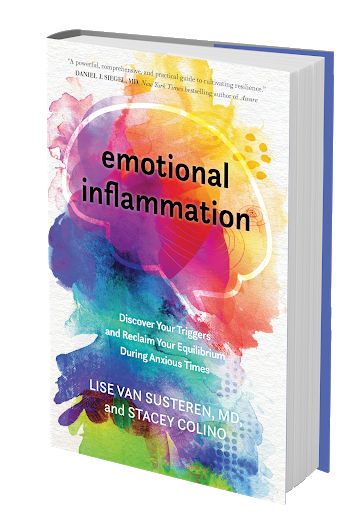
This is an excerpt from Emotional Inflammation: Discover Your Triggers and Reclaim Your Equilibrium During Anxious Times by Lise Van Susteren, MD, and Stacey Colino.

A Music Playlist for Better Sleep

To help you achieve the best night of rest, we recommend falling asleep to this relaxing music playlist, Music for Better Sleep, available through Sounds True on Spotify.


Lise Van Susteren, MD, previously served as a clinical professor of psychiatry at Georgetown University. She is a go-to commentator about anxiety and trauma for television (including CNN, Good Morning America, NBC, VOA, and Fox News), radio (NPR, Minnesota Public Radio, and others), print media (including the Washington Post, the Wall Street Journal, Newsweek, the Huffington Post, and CQ Magazine), and online outlets (such as Live Science, U.S. News & World Report, Global Health NOW, and many others).

As a thought leader and activist, Dr. Van Susteren addresses issues related to trauma and emotional inflammation through her roles at the Earth Day Network and Physicians for Social Responsibility. She is considered an expert in the psychological effects of climate change.

Stacey Colino is an award-winning writer specializing in health and psychology. In addition to her work as a book collaborator, she is a regular contributor to U.S. News & World Report and AARP.org. Her work has appeared in the Washington Post Health section, Newsweek, Parade, Cosmopolitan, Real Simple, Health, Prevention, Woman’s Day, Harper’s Bazaar, Parents, and Good Housekeeping, among other magazines and newspapers.

Buy your copy of Emotional Inflammation at your favorite bookseller!

Sounds True | Amazon | Barnes & Noble | Bookshop
Author Info for Lise Van Susteren, MD Coming Soon

Stacey Colino

STACEY COLINO is an award-winning writer specializing in health and psychology. Her work appears in U.S. News & World Report, Prevention, Family Circle, Parade, and Parents. She lives in Chevy Chase, MD.

Photo © Judy Licht

Also By Author

A Doctor’s Simple Tips on How to Get Better Sleep

Thanks to groundbreaking research, we have recently learned that every cell has its own timekeeper that can be thought of as a local clock. Deep within the brain, in the hypothalamus, lies a master clock that regulates all the local clocks, making sure that each one is set to the same time. This complex, coordinated process is in sync with the alternating cycles of day and night and with all the degrees of changing light that occur in a 24-hour period as Earth rotates on its axis. Called the “circadian rhythm”—from the Latin words circa, which means “going around,” and diem, meaning “day”—this internal process regulates the human body’s sleep-wake cycle, among many other functions. 

The master clock (think of it as circadian rhythm central) sends hormonal and nerve signals throughout the body, synchronizing the cells’ clocks to the day-night, light-dark cycle of life. On a continuous basis, the master clock can determine what time it is based on messages from photoreceptor cells in the retina that register light conditions outside and report these to the brain via specialized pathways. 

Meanwhile, the cellular clocks keep local time, making sure that various activities locally are timed right and are appropriately coordinated with other cells and organs. This is why, for example, key enzymes are produced at certain times, blood pressure and body temperature are controlled, hormones are secreted, the gut microbiome is populated with the right balance of bacteria, and gut motility is appropriate for the hour. 

Living in harmony with the way we have evolved brings physiological and emotional balance, creating a good fit between our bodies and minds, between what we’re doing and how we’re designed to function. Honoring our body’s natural rhythms helps stabilize our mood, become more resistant to stress, feel less physical pain, and generally feel and function better physically and mentally. It’s an essential step in cooling and calming emotional inflammation. 

The following are some ways you can adjust your habits so that they support your body’s inherent rhythms: 

  • Put yourself on a sleep schedule. Establish a regular sleep-wake schedule so that you go to bed at approximately the same time each night and wake up at the same time each morning. It’s fine to vary your bedtime by an hour or two occasionally, but don’t sleep in more than an extra hour on the weekends (unless you’re sick); otherwise, you will end up disrupting your sleep pattern for the next night. 
  • Identify your slumber sweet spot. Most adults need seven to nine hours of sleep per night to feel and function at their best. Once you figure out how much you need, determine what time you need to get up in the morning and work backward to set an appropriate bedtime; or, you can identify what time of night you typically feel sleepy and then set a wake-up time accordingly. 
  • Brighten your mornings. When you get up in the morning, expose yourself to bright, natural light to stimulate alertness, enhance your mood, and help calibrate your circadian rhythms. Take a brisk walk outside or have breakfast in a sunny spot. If you struggle to reset your internal clock to the “awake” setting in the morning, consider buying a commercial light box that emits 10,000 lux, which mimics a bright, sunny day. Sitting in front of such a light box for 30 minutes in the morning, perhaps while you have breakfast or read the newspaper or newsfeeds, has been found to stimulate alertness and improve mood. Alternatively, you could opt for a desk-lamp-style light box for your desk at work. 
  • Adjust your indoor lighting. Fascinating research has found that office workers who are exposed to greater amounts of light in the morning fall asleep more quickly at night. They also have better sleep quality and better moods, including less depression and stress, than those who are exposed to low light in the morning. 
  • Darken your evenings. There is another good reason to make sure that your bedroom (or wherever you sleep) is dark: When people are exposed to light during the night, their total daily melatonin production is suppressed dramatically, by as much as 50 percent. In other words, that nighttime light exposure throws the body’s 24-hour hormone production schedule off-kilter. It’s also wise to install a dimmer switch on the overhead light in the bathroom—or use a dim night-light—so that bright vanity lights don’t stimulate your senses and alertness while you’re taking care of bathroom business before hitting the sack or if you get up during the night.

Ultimately, honoring your body’s natural rhythms requires taking back control of your nights and days. It’s about putting time on your side and making conscious choices about the way you want to live so that you can restore your internal equilibrium, physiologically and psychologically. 

Yes, changing your behavior requires giving up the patterns you chose, consciously or not, in the past, and making the switch does take some effort and resolve. But if you make it a priority to stop upsetting your body’s internal rhythms and start living in sync with your body’s inherent needs, the payoffs will be well worth the effort. Your mood is likely to end up on a more even keel, and your energy will increase. Your physical health will probably improve and your emotional equilibrium will, too. Think of it this way: By respecting your body’s rhythms and doing whatever you can to maintain their regularity, you’ll be resetting your internal emotional thermostat, which will improve the way you react to and deal with the stresses and strains that are unavoidable in our modern world.

This is an excerpt from Emotional Inflammation: Discover Your Triggers and Reclaim Your Equilibrium During Anxious Times by Lise Van Susteren, MD, and Stacey Colino.

A Music Playlist for Better Sleep

To help you achieve the best night of rest, we recommend falling asleep to this relaxing music playlist, Music for Better Sleep, available through Sounds True on Spotify.


Lise Van Susteren, MD, previously served as a clinical professor of psychiatry at Georgetown University. She is a go-to commentator about anxiety and trauma for television (including CNN, Good Morning America, NBC, VOA, and Fox News), radio (NPR, Minnesota Public Radio, and others), print media (including the Washington Post, the Wall Street Journal, Newsweek, the Huffington Post, and CQ Magazine), and online outlets (such as Live Science, U.S. News & World Report, Global Health NOW, and many others).

As a thought leader and activist, Dr. Van Susteren addresses issues related to trauma and emotional inflammation through her roles at the Earth Day Network and Physicians for Social Responsibility. She is considered an expert in the psychological effects of climate change.

Stacey Colino is an award-winning writer specializing in health and psychology. In addition to her work as a book collaborator, she is a regular contributor to U.S. News & World Report and AARP.org. Her work has appeared in the Washington Post Health section, Newsweek, Parade, Cosmopolitan, Real Simple, Health, Prevention, Woman’s Day, Harper’s Bazaar, Parents, and Good Housekeeping, among other magazines and newspapers.

Buy your copy of Emotional Inflammation at your favorite bookseller!

Sounds True | Amazon | Barnes & Noble | Bookshop

You Might Also Enjoy

Frank Ostaseki: “I’m Allergic to the Notion of a G...

What truly matters when we face the end of life? After decades of sitting at the bedside of hundreds of dying people, Frank Ostaseski has distilled the deepest human concerns into two essential questions: Am I loved? Have I loved well?

This week on Insights at the Edge, Tami welcomes Frank Ostaseski—co-founder of America’s first Buddhist hospice, the Zen Hospice Project, founder of the Metta Institute, and author of The Five Invitations: Discovering What Death Can Teach Us About Living Fully. Frank brings extraordinary wisdom from his pioneering work in compassionate end-of-life care, along with profound personal insights from his own encounters with heart surgery, strokes, and the transformative vulnerability of being “on the other side of the sheets.”

Join Tami and Frank to explore:

  • The two essential questions that arise when facing death—and what they reveal about living fully now
  • Why emotional flexibility is the true condition for healing and transformation
  • How to meet our own fear and pain without abandoning ourselves or others
  • The practice of “allowing” as a path to both wisdom and compassion
  • What happens in the dying process: surrender, reconstitution, and coming home
  • Why Frank is allergic to the notion of a “good death”
  • The indestructible love that emerges when we keep our hearts open through pain
  • How to practice dying by paying attention to everyday endings

This conversation is for anyone grappling with loss, change, or the fundamental questions of existence—offering not prescriptive answers, but the profound medicine of honest presence and the recognition that our vulnerability itself is one of our most beautiful human qualities.

For more with Frank Ostaseski:

Year to Live Course (Spirit Rock Meditation Center)

Spirit of Service (Upaya Zen Center)

Awareness in Action: The Role of Love (Upaya Zen Center, Frank Ostaseski & Sharon Salzberg)

This conversation offers genuine transmission—not just concepts about awakening, but the palpable presence of realized teachers exploring the growing edge of spiritual understanding together. Originally aired on Sounds True One.

Steven Washington: “My Recovery Is Non-Negotiabl...

How do we remain committed to staying sober when grief strikes, when stress becomes overwhelming, or when shame threatens to pull us back into old patterns?

This week on Insights at the Edge, Tami Simon welcomes Steven Washington, a former professional Broadway dancer who has transformed his 23-year recovery journey into a powerful practice of embodied healing. Steven is the author of Recovering You: Soul Care and Mindful Movement for Overcoming Addiction and creator of the SWE Studio, an online community offering movement and meditation support for people in recovery.

In this deeply personal interview, Tami and Steven explore:

  • Why recovery must be “non-negotiable”—with no conditions attached, regardless of life’s challenges 
  • How shame operates as the linchpin of addiction and the healing power of sharing it with trusted others
  • The connection between sensitivity and addiction, and how to transform sensitivity from vulnerability into strength
  • Practical tools for creating a trigger plan that works for both small daily stressors and major life crises
  • How Qigong and embodied practices help regulate the nervous system and process emotions held in the body
  • The journey from inherited shame to self-compassion and authentic self-worth
  • Why asking for help—practiced with small things—prepares us for life’s biggest challenges
  • Developing a personal relationship with a higher power that feels authentic rather than inherited

If you’re navigating recovery, supporting someone who is, or seeking to understand the connection between embodiment and transformation, Steven offers both practical wisdom and profound compassion for the journey.

Note: This interview originally aired on Sounds True One, where these special episodes of Insights at the Edge are available to watch live on video and with exclusive access to Q&As with our guests. Learn more at https://www.join.soundstrue.com

Healing From The Inside Out: How Yoga Cultivates Emoti...

Finding mental peace can feel difficult when life keeps pulling your attention in a dozen directions. Your emotions may swing between high and low, and clarity can feel out of reach. Yoga offers more than physical postures, it offers a practice of slowing down, tuning in, and tending to what’s within. Whether you’re struggling with stress, feeling emotionally off balance, or simply needing space to breathe, yoga can support a deeper kind of healing that unfolds from the inside out.

For over 40 years, Sounds True has served as a trusted source for spiritual education and personal growth. We share practices that are rooted in authentic wisdom and designed for real, everyday lives. Our collection of digital courses, audio programs, and teachings from renowned guides such as Tara Brach, Eckhart Tolle, and Pema Chödrön reflect a living library of transformation, created to support your journey back to wholeness.

Key Takeaways:

  • Practice & Presence: Yoga offers tools to process emotions and calm the mind through movement, breath, and awareness.
  • Science & Soul: Evidence supports yoga’s ability to reduce stress while honoring its deeper spiritual roots in healing.
  • Sustainable Healing: Ongoing, compassionate practice encourages emotional resilience and lasting mental clarity.

How Yoga Supports Mental And Emotional Well-Being

Yoga’s influence goes far beyond the physical body. For many, it serves as an anchor through emotional storms and mental overwhelm. To understand how yoga for mental health can become part of your healing journey, let’s explore its core contributions:

A Holistic Practice That Meets You Where You Are

Yoga isn’t just movement, it’s a conversation with your inner world. It brings together the breath, body, and mind to create space for awareness, without pressure to perform or change. In that space, emotional patterns can soften, revealing clarity beneath the noise.

Scientific Support For Emotional And Mental Relief

Research continues to affirm what many practitioners intuitively feel. Regular yoga practice has been shown to reduce stress hormones, increase calming brain chemicals like GABA, and regulate the nervous system. This makes it a gentle, sustainable approach to both yoga and mental health.

Emotional Balance Begins With Compassionate Awareness

One of the most powerful aspects of yoga for emotional balance is its ability to foster self-compassion. When we step onto the mat with whatever emotions are present: anxiety, grief, joy, or numbness, yoga teaches us how to stay connected without judgment. Over time, this builds emotional resilience rooted in presence rather than resistance.

From Temporary Relief To Lasting Inner Stability

The effects of yoga can feel subtle at first, but they ripple outward. A consistent practice doesn’t just offer short-term calm; it strengthens your ability to self-regulate and respond, not react. This is how inner healing yoga supports transformation from within, one breath at a time.

Discover The Power Of Daily Meditation With Sounds True.

The Science And Spirit Of Yoga For Mental Health

Yoga’s unique power lies in its ability to bridge ancient wisdom with modern understanding. While it has spiritual roots that invite deep introspection, it also holds measurable benefits for mental health. To fully appreciate the role of yoga in emotional and psychological well-being, it helps to look at both perspectives side by side:

What Modern Research Reveals

Scientific studies continue to explore the mental health benefits of yoga. Results point to improved mood, reduced anxiety and depression, and enhanced emotional regulation. These outcomes support the growing use of yoga for mental health in therapeutic settings, including trauma recovery and stress management.

Why The Subtle Body Matters

In yogic philosophy, healing isn’t limited to the physical or even the psychological. The concept of prana, or life force, helps explain why movement and breath can shift emotional states. Practices that work with subtle energy including inner healing yoga, help release stored tension and clear emotional blockages.

Balancing Effort And Surrender

Yoga invites a delicate interplay between strength and softness. In doing so, it mirrors the healing process itself: part discipline, part letting go. This balance nurtures the experience of mental clarity through yoga, creating the conditions for stillness to arise naturally.

Explore Further With Embodied Resources

If you’re curious to deepen your connection to body and breath in a supported way, Sounds True offers a wide range of practices through yoga and movement. These digital programs are led by teachers who blend somatic wisdom with grounded guidance, meeting you right where you are.

Cultivating Emotional Balance Through Movement And Breath

Our emotions live in the body. They’re not just mental states but physical experiences, tightness in the chest, heaviness in the limbs, or fluttering in the gut. Yoga helps us move these feelings through instead of holding them in:

The Body As A Gateway To Emotional Awareness

Movement can unlock what words cannot. Through intentional poses, especially those that open the hips, heart, and spine, yoga supports the release of stored emotions. This is why yoga for emotional balance feels less like escape and more like a homecoming.

The Breath As Regulator And Messenger

Breathwork, or pranayama, is a powerful tool for emotional regulation. By consciously slowing the breath, we calm the nervous system and shift our state of mind. Over time, this supports both yoga and mental health by creating internal space for reflection rather than reaction.

Rhythmic Practice Builds Emotional Resilience

Consistency is key. Even short, daily practices help build the emotional strength needed to navigate life’s ups and downs. This steady rhythm reinforces the benefits of inner healing yoga, creating a supportive foundation for deeper personal work.

Supportive Tools For Emotional Healing

For those looking for gentle guidance, the yoga for your mood deck offers intuitive prompts and accessible poses to meet you where you are emotionally. It’s a helpful companion for days when you’re not sure how to begin but know you need something.

Build Relationships That Nourish And Sustain.

Accessing Mental Clarity Through Yogic Presence

Mental clarity often feels just out of reach in a noisy world. Yoga creates the internal conditions that allow clarity to surface, not by forcing it, but by slowing things down. When the body is calm and the breath is steady, the mind can begin to clear:

Slowing Down To See Clearly

Yoga encourages us to pause and notice. Whether you’re holding a posture or sitting in stillness, these moments of mindful presence quiet the mental chatter. This process is central to experiencing mental clarity through yoga, where insights arise not from thinking harder but from thinking less.

Meditation And Stillness As Deep Practices

While movement helps discharge tension, meditation helps us see beneath it. Even a few minutes of seated awareness can reveal thought patterns and emotional loops we didn’t realize were there. These practices are integral to both yoga for mental health and long-term emotional wellness.

The Restorative Power Of Rest

Rest is not a luxury, it’s essential for mental clarity and nervous system repair. Deep rest practices like Yoga Nidra offer profound restoration. For an accessible entry point, explore yoga nidra—the sleep yoga, which gently guides you into deep states of awareness without effort.

Clarity As A Byproduct, Not A Goal

Yoga doesn’t chase clarity. It invites you to create the right internal environment and let clarity arise in its own time. Over time, this approach nurtures both inner healing yoga and sustainable mental clarity rooted in presence.

Inner Healing Yoga As A Path To Wholeness

Healing is not always about fixing what’s broken. Often, it’s about remembering what has always been whole beneath the layers of stress, pain, and disconnection. Inner healing yoga invites this remembering through intentional practice and self-inquiry:

Creating A Safe Space Within

The mat becomes a mirror. Each posture, breath, and moment of stillness offers a chance to meet yourself with honesty and care. This safe internal space nurtures the emotional awareness essential for lasting transformation.

The Power Of Self-Compassion

Yoga teaches us that healing is not linear. There will be days when the mind is foggy, the body is tense, or emotions feel overwhelming. Returning to your practice anyway builds trust, in yourself, and in the process of yoga for emotional balance.

Integration Beyond The Mat

The most meaningful shifts often happen after practice, in how we speak to ourselves, how we move through relationships, and how we respond to life. This is the deeper work of yoga and mental health, where practice becomes a lived experience of wholeness.

An Ongoing Invitation To Go Deeper

Inner healing is not a destination. It’s a continuous invitation to be in relationship with yourself as you are right now. As your awareness grows, so does your capacity for mental clarity through yoga, clarity rooted in self-understanding, not perfection.

Expand Your Consciousness With Sounds True.

Final Thoughts

Yoga invites a return to ourselves. It doesn’t demand that we change who we are, but gently guides us to remember what already lives within us, clarity, calm, and connection. Whether you’re seeking stillness, release, or simply a moment to breathe, yoga offers the tools to support your healing from the inside out.

As you continue exploring the path of yoga for mental health, you may find that what once felt like emotional chaos begins to soften into something more spacious. With consistent practice, both yoga for emotional balance and inner healing yoga can become steady companions in your life. The clarity that arises is not forced but welcomed, cultivated through each breath, each pause, each mindful moment.

To deepen your experience, you might consider joining the global celebration of yoga through the international day of yoga offerings by Sounds True. These resources, created by trusted teachers and rooted in heart-centered wisdom, are here to support your personal journey, one that honors where you are and gently points toward where you’re going.

Read Also:

Frequently Asked Questions About Yoga For Mental Health

What type of yoga is best for mental health?

Gentle, breath-focused styles like Hatha, Yin, and Restorative Yoga are especially beneficial for mental health, as they calm the nervous system and promote inner stillness.

Can yoga replace therapy or medication for mental health conditions?

Yoga can be a powerful complement to therapy or medication, but it is not a substitute. Always consult a healthcare provider for individualized treatment plans.

How often should I practice yoga for mental health benefits?

Even 10 to 20 minutes daily can support mental and emotional wellness. Consistency matters more than intensity when it comes to cultivating inner balance.

Is it normal to feel emotional during or after yoga practice?

Yes, emotions can rise during yoga as physical movement and breathwork unlock stored tension. This is part of the body’s natural release and healing process.

Can beginners benefit from yoga for mental clarity and emotional healing?

Absolutely. No advanced skill is needed to start. Breath awareness, simple movements, and mindful rest can offer noticeable benefits, even for beginners.

What role does community play in yoga for mental health?

Practicing in community, whether in-person or online, can enhance feelings of support and connection. Shared practice helps reduce isolation and deepens healing.

How does yoga support nervous system regulation?

Yoga helps activate the parasympathetic nervous system through slow breathing and mindful movement, promoting a state of rest, recovery, and emotional stability.

Michelle Cassandra Johnson is an author, activist, spiritual teacher, racial equity consultant, and intuitive healer. She is the author of six books, including Skill in Action and Finding Refuge. Amy Burtaine is a leadership coach and racial equity trainer. With Robin DiAngelo, she is the coauthor of The Facilitator's Guide for White Affinity Groups. For more, visit https://www.michellecjohnson.com/wisdom-of-the-hive.

>
Share via
Copy link
Powered by Social Snap