We live in a wild world with a wealth of information at our fingertips. This means we can read reviews, check forums, and see what other parents are saying about everything we purchase or do for our children.
But that is not always a good thing. There is such a thing as too much research.
I distinctly remember working with a client who had very high expectations around her child’s food. She was concerned with what ingredients were in the food, how it was prepared, how it was served—and anything less than “healthy” felt wrong to her. She was a self-proclaimed perfectionist who wanted the best for her child—she wasn’t going to “lower her standards” at the request of her partner or anyone else.
As a result of her food concerns, she spent hours upon hours extensively researching topics related to food such as GMOs, toxins, ingredients, and safety. Through her research, she also read that stress could decrease her milk supply—so she shut down any conversations when her family tried to approach her about this or how it had taken over her life.
This level of research was no longer about the food—postpartum anxiety was in the driver’s seat, pushing her to search for control.
It’s also important to break away from the idea that there is one “right” way to mother. Just because we have access to information doesn’t mean there isn’t room for nuance. Take “healthy food” as an example. What constitutes a “healthy” diet has been a debated topic for decades and is often a wellness space filled with fads and extremes with each approach contradicting the next. There have been more rules prescribed to our food then I can count that cause people not to trust themselves and leave them seeing food as being good or bad. Food is not black or white. Our approach doesn’t have to be all or nothing.
In my client’s case, research had gone beyond just information-seeking. Sometimes, research is just research. But other times, research is:
Trying to find the “right” or “best” way to do something
Seeking reassurance
Grasping for certainty
Feeding your anxiety
An attempt to soothe your anxiety
I have seen this pattern play out many times with many of my clients. I believe that in many ways intensive mothering prevents us from seeing signs of anxiety. When we interpret perfectionism and the need to avoid mistakes at all costs as being a good mother, we have a lot of pressure to carry. It’s no wonder that so many of us find ourselves in the research rabbit hole.
Does that mean all research is bad? Of course not. But we need to learn the difference between when it’s helping and when it’s not. Researching should be used to provide you with enough information to make an informed decision. It should have boundaries—not be all-consuming.
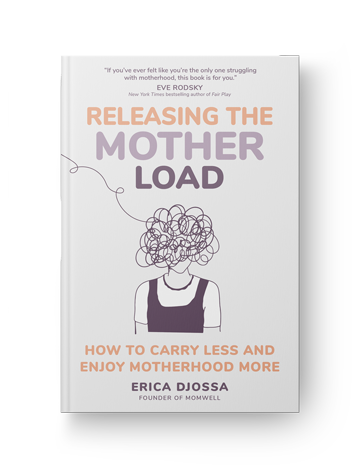
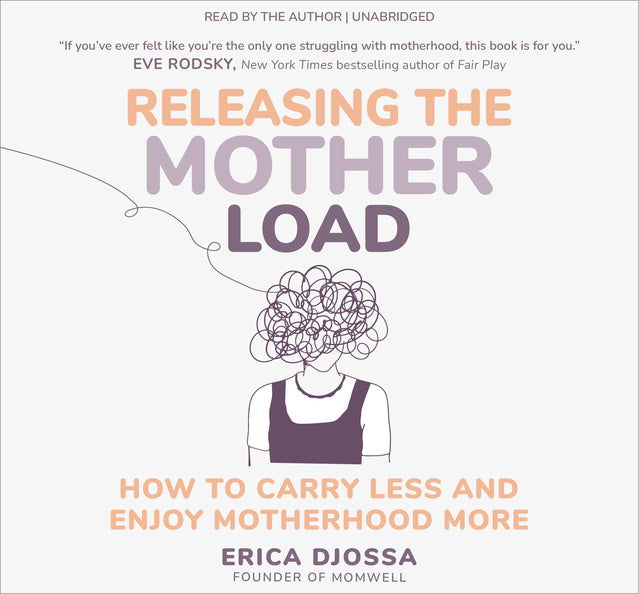
Excerpt from Releasing the Mother Load: How to Carry Less and Enjoy Motherhood More by Erica Djossa.
Erica Djossa
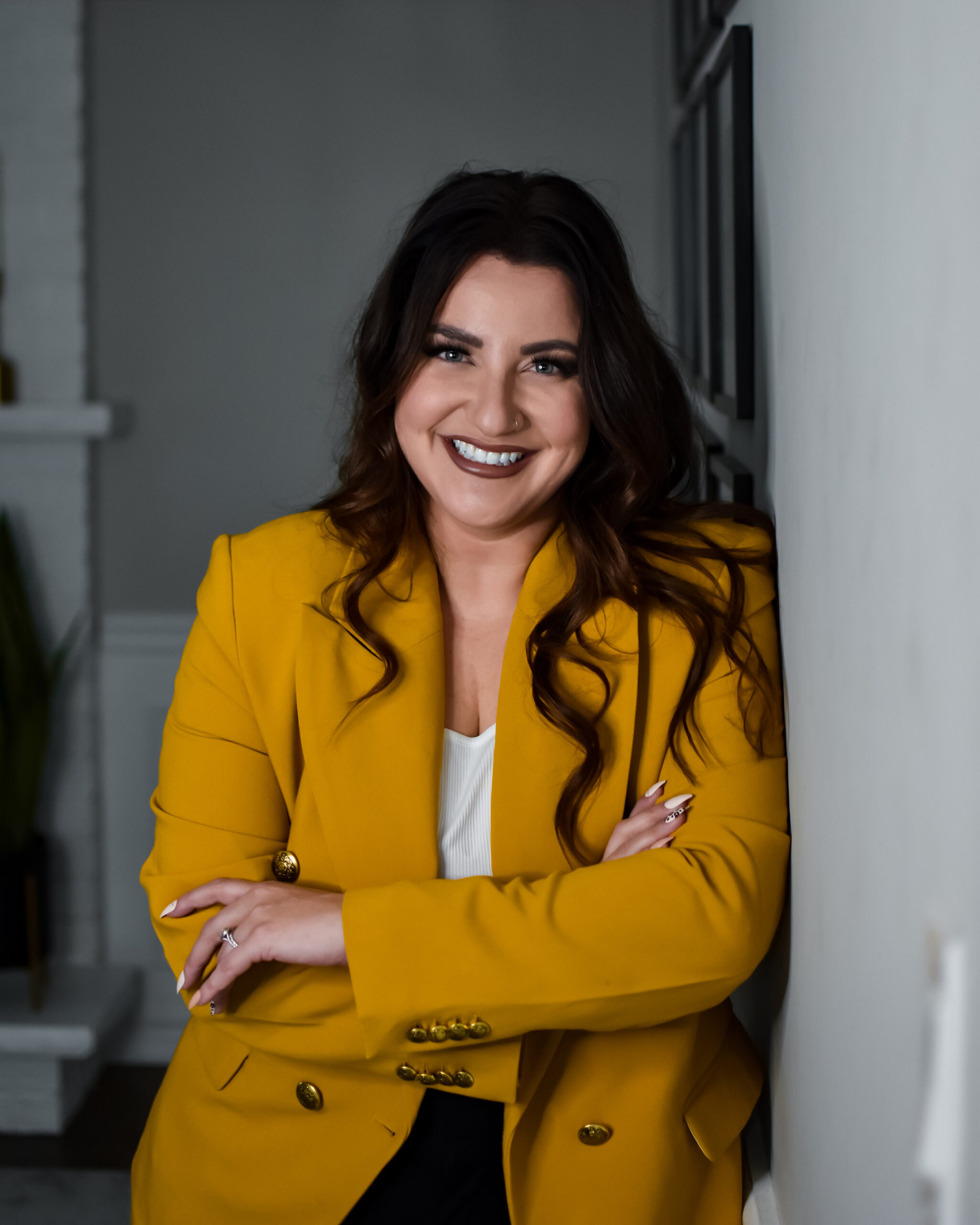
Erica Djossa is a registered psychotherapist, sought-after maternal mental health specialist, and the founder of wellness company Momwell. Her popular Momwell podcast has over a million downloads. Erica’s a regular contributor to publications like the Toronto Star, Scary Mommy, and Medium, and her insights have been shared by celebrities like Ashley Graham, Nia Long, Christy Turlington, and Adrienne Bosh. She lives in Toronto. For more, visit momwell.com
Erica Djossa is a registered psychotherapist, sought-after maternal mental health specialist, and the founder of wellness company Momwell. Her popular Momwell podcast has over a million downloads. Erica’s a regular contributor to publications like the Toronto Star, Scary Mommy, and Medium, and her insights have been shared by celebrities like Ashley Graham, Nia Long, Christy Turlington, and Adrienne Bosh. She lives in Toronto. For more, visit momwell.com.
What have we done to our mothers? Sociologists call our times “the era of intensive mothering,” a period in which moms must be it all and do it all for their children and families. Psychotherapist and maternal mental health specialist Erica Djossa has made it her mission to teach today’s mothers how to take care of their well-being in a sustainable way. In this podcast, Tami Simon speaks with Erica about her much-needed new book, Releasing the Mother Load, and the steps we can take to challenge the norms and change the culture around mothering.
Enjoy this empowering discussion of: values-centered mothering; mothers as martyrs; the pressures facing a generation of “overinformed, overeducated, and overwhelmed” moms; equally sharing our household duties; the cost of cognitive or invisible labor; boundaries; using the “load map” to redistribute the work; “mom rage,” its roots, and the unique nature of anger in motherhood; identifying the “red light and green light” times for difficult conversations with partners (and sticking to them); overcoming perfectionism; self-compassion; re-parenting yourself while you’re parenting your children; the disempowering belief that I’m failing as a mom; effective self-care for moms (it’s not just bubble baths!); advice for making changes—start small; and more.
Note: This episode originally aired on Sounds True One, where these special episodes of Insights at the Edge are available to watch live on video and with exclusive access to Q&As with our guests. Learn more at join.soundstrue.com.
We live in a wild world with a wealth of information at our fingertips. This means we can read reviews, check forums, and see what other parents are saying about everything we purchase or do for our children.
But that is not always a good thing. There is such a thing as too much research.
I distinctly remember working with a client who had very high expectations around her child’s food. She was concerned with what ingredients were in the food, how it was prepared, how it was served—and anything less than “healthy” felt wrong to her. She was a self-proclaimed perfectionist who wanted the best for her child—she wasn’t going to “lower her standards” at the request of her partner or anyone else.
As a result of her food concerns, she spent hours upon hours extensively researching topics related to food such as GMOs, toxins, ingredients, and safety. Through her research, she also read that stress could decrease her milk supply—so she shut down any conversations when her family tried to approach her about this or how it had taken over her life.
This level of research was no longer about the food—postpartum anxiety was in the driver’s seat, pushing her to search for control.
It’s also important to break away from the idea that there is one “right” way to mother. Just because we have access to information doesn’t mean there isn’t room for nuance. Take “healthy food” as an example. What constitutes a “healthy” diet has been a debated topic for decades and is often a wellness space filled with fads and extremes with each approach contradicting the next. There have been more rules prescribed to our food then I can count that cause people not to trust themselves and leave them seeing food as being good or bad. Food is not black or white. Our approach doesn’t have to be all or nothing.
In my client’s case, research had gone beyond just information-seeking. Sometimes, research is just research. But other times, research is:
Trying to find the “right” or “best” way to do something
Seeking reassurance
Grasping for certainty
Feeding your anxiety
An attempt to soothe your anxiety
I have seen this pattern play out many times with many of my clients. I believe that in many ways intensive mothering prevents us from seeing signs of anxiety. When we interpret perfectionism and the need to avoid mistakes at all costs as being a good mother, we have a lot of pressure to carry. It’s no wonder that so many of us find ourselves in the research rabbit hole.
Does that mean all research is bad? Of course not. But we need to learn the difference between when it’s helping and when it’s not. Researching should be used to provide you with enough information to make an informed decision. It should have boundaries—not be all-consuming.
Excerpt from Releasing the Mother Load: How to Carry Less and Enjoy Motherhood More by Erica Djossa.
Erica Djossa
Erica Djossa is a registered psychotherapist, sought-after maternal mental health specialist, and the founder of wellness company Momwell. Her popular Momwell podcast has over a million downloads. Erica’s a regular contributor to publications like the Toronto Star, Scary Mommy, and Medium, and her insights have been shared by celebrities like Ashley Graham, Nia Long, Christy Turlington, and Adrienne Bosh. She lives in Toronto. For more, visit momwell.com
Can the simple act of being kind to yourself actually be a doorway to awakening?
In this special episode of Insights at the Edge, Tami Simon brings together two remarkable teachers whose friendship has sparked a revolutionary approach to inner transformation. Kristin Neff—the researcher who first measured self-compassion and author of Fierce Self-Compassion—joins Caverly Morgan, a meditation teacher and former Zen monk, to explore how self-compassion practices can become what they call “a lifeboat” to our deepest nature.
Together, they reveal why self-compassion isn’t just a psychological tool for feeling better—it’s a direct path to recognizing who we really are beyond our limited sense of self.
In this interview, Tami, Kristin, and Caverly explore:
Why every moment of self-compassion is a moment of “letting go of identification with the small, separate, limited self”
The difference between witnessing awareness and embodied loving awareness—and why it matters
How gender conditioning shapes our relationship to both compassion and awakening practices
The power of “relational dharma” and why we sometimes need another person to help us access self-compassion
A guided practice for moving from suffering into the “stance-less stance” of presence
If you’ve practiced self-compassion but sensed there’s something deeper available, or if awakening teachings have felt too abstract or disembodied, this conversation offers a bridge between heart and awareness that could transform your practice.
This conversation offers genuine transmission—not just concepts about awakening, but the palpable presence of realized teachers exploring the growing edge of spiritual understanding together. Originally aired on Sounds True One.
What if aging isn’t about decline, but about becoming brighter—like a meteor that grows more luminous even as it falls through the atmosphere?
Tami Simon speaks with beloved poet-philosopher Mark Nepo about his deeply moving new book, The Fifth Season: Creativity in the Second Half of Life. Drawing from Chinese wisdom traditions and his own journey through chronic pain and back surgery, Mark illuminates aging as the “heavenly pivot” (love that phrase) which is the transformative shift from living outwardly to inhabiting life from the inside out.
Join Mark and Tami for this episode to explore:
The meteor metaphor: how we grow brighter as our outer casing flakes away • “Entering time” versus moving through it—and why slowing down opens the eternal moment • The paradox of limitation: how loss simultaneously deepens and expands us • Breaking through to joy as the depth of being that holds all the waves • Why the heart, not the mind, must lead in the second half of life • Living with chronic pain and learning to let beauty in while suffering • The difference between being victims of life versus initiates into life • How grief changes everything and why we don’t get over it, we get under it • Being swift of heart—living without hesitation from the inside out
Mark’s wisdom arises from decades of spiritual practice, surviving cancer, and facing the inevitable losses that come with a long life—essential listening for anyone navigating aging, chronic pain, loss, or simply seeking to live more fully present to the life they have.
Listen now to discover how the second half of life can be your most luminous yet.
This conversation offers genuine transmission—not just concepts about awakening, but the palpable presence of realized teachers exploring the growing edge of spiritual understanding together. Originally aired on Sounds True One.
What happens when a rational, skeptical filmmaker encounters evidence that consciousness might work in ways science hasn’t yet explained?
This week, Tami Simon welcomes Ky Dickens—an award-winning documentary filmmaker whose podcast The Telepathy Tapes became the #1 podcast in the world in 2025. Ky’s work explores telepathic communication within the non-speaking community, raising profound questions about consciousness, human potential, and how we can better support individuals with autism and apraxia.
Join Tami and Ky as they discuss:
How a lightning bolt creative moment led to The Telepathy Tapes and what it means to trust the creative muse
The scientific evidence for telepathic communication in non-speaking individuals with autism
“Mindsight”—the remarkable ability of young children to see through blindfolds, and why this capacity appears strongest before age twelve
The interstitium, a recently discovered system in the body that may explain ancient knowledge about energy meridians
Why consciousness as fundamental, rather than materialism, better explains emerging research in telepathy, energy healing, and remote viewing
The dignity and rights of non-speaking individuals and why Communication Regulation Partners (CRPs) should be standard in schools
How this work has transformed Ky’s understanding of death, the non-physical world, and why we’re here
If you’ve been curious about The Telepathy Tapes or wonder what lies at the frontiers of consciousness research, this conversation offers a grounded, scientifically minded exploration of phenomena that challenge our understanding of human potential and invite us into a more marvelous world.
Listen now to discover what becomes possible when we approach the unknown with curiosity rather than dismissal. And to see where Ky and her team are heading with Season 2 of The Telepathy Tapes…and beyond.
You can listen to both seasons of The Telepathy Tapeshere.
Session expired
Please log in again.
The login page will open in a new tab. After logging in you can close it and return to this page.