How to Cultivate Generosity in Our Children

December 5, 2017


Nearly every spiritual tradition has a practice of generosity and giving. We call it Dana in some traditions, Caritas in Christianity, Tzedekah in Judaism, alms or communal sharing in others, or in the United States, “The Holiday Season” stretching onward from Black Friday through the New Year. These spiritual (and commercial) practices existed long before the term “positive psychology,” but the principles overlap significantly. We know now that making a practice of kindness and generosity leads to physical and mental health and social and spiritual benefits.

In families, children are often in the “getting” role, while adults are in the “giving role,” but how can we encourage that spirit of generosity in the next generation?

We are wired to be generous, and both neuroscience and well-worn clichés tells us we feel more joy in giving than in receiving. However, our consumer culture tells us the opposite, that getting will make us feel better. These messages run counter to the spiritual and scientific wisdom showing health and happiness come more through giving than getting. Just imagine if our society received just as many messages urging us to give than get, if people camped outside stores for days just to donate to the latest charity.

Among the many benefits, generosity also builds trust between people. Studies show that the giver’s brain regions associated with trust and connection light up, fostering optimism, reducing depression, and creating healthy attachments, showing us why cultures develop practices related to gift-giving. The benefits even extend to just witnessing an act of generosity.


So how can we encourage generosity our families? Here are a few ideas to consider.

  • Involve your kids in the decision for charitable giving, taking into account what your family’s values are: Social justice, the environment, health issues that have impacted your family, presents for children or families in need, and so on.
  • Follow the lead of my friend’s grandmother who gave the grandkids $100 each year, with $50 to spend on themselves and $50 she would donate to a charity of their choice.
  • Remember that giving can also include your time or your support. Volunteer as a family, a practice shown to boost happiness, empathy, and build closeness.
  • Give experiences; the happiness will last longer than the lifespan of a toy. Perhaps travel, theater tickets, or museum passes.
  • Donate toys to make space for the new. Notice together which toys are getting lonely and would be happier in a new home, saying thank you and goodbye to old toys, and imagining the happiness they will bring after they’ve been donated.


Looking for more great reads?


Excerpted from Raising Resilience by Christopher Willard, Pysd.

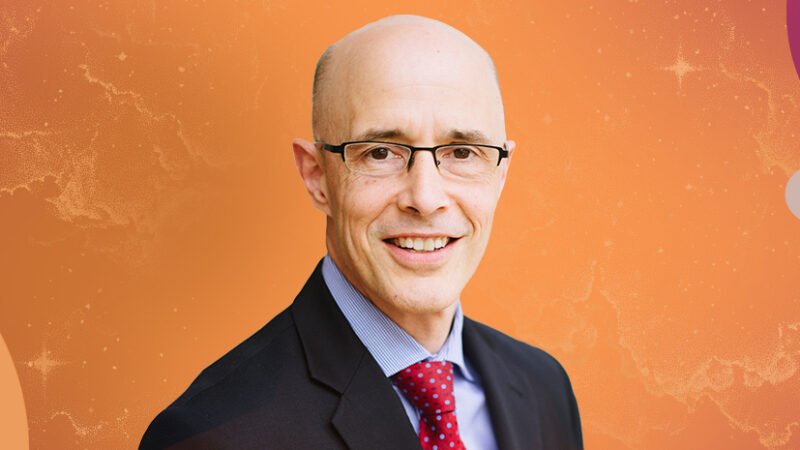
Christopher Willard, Psyd, is a clinical psychologist and consultant specializing in bringing mindfulness into education and psychotherapy. He lives in Cambridge, Massachusetts, teaches at Harvard Medical Schools, and leads workshops worldwide. For more, visit drchristopherwillard.com.

Christopher Willard

Christopher Willard, PsyD, is a clinical psychologist at Harvard Medical School and author of over 18 publications for children and adults. An internationally sought-after speaker and mindfulness educator, his books include Growing Up Mindful, Raising Resilience, The Breathing Book, Alphabreaths: The ABCs of Mindful Breathing, and Alphabreaths Too.

Author photo © Kevin Day

Also By Author

Christopher Willard: How We Grow Through What We Go Th...

Most of us are familiar with the concept of post-traumatic stress. Fortunately, there’s another way we can respond to extreme adversity. This is what researchers call post-traumatic growth—and it’s something we’re all biologically “hardwired” to access, to turn even our most difficult experiences into a source of resilience and strength. 

In this podcast, Tami Simon speaks with clinical psychologist and author Dr. Christopher Willard about “how we grow through what we go through”—which is also the title of his new book. Tune in as they explore how meditation can literally be lifesaving; avoiding the trap of spiritual bypassing; the “10,000 joys and 10,000 sorrows” of our lives; embodiment practices and nervous system self-regulation; mindfulness and the capacity to respond rather than react; the practice of stretching the breath; acting ourselves into a new way of thinking and feeling; how there are many ways to healing and recovery—and finding the best for yourself; the power of posture; the connection between self-compassion and personal transformation; the practice of putting your hand on your heart; becoming a source of co-regulation for others; the concept of downstream and upstream reciprocity; and more.

How to Cultivate Generosity in Our Children


Nearly every spiritual tradition has a practice of generosity and giving. We call it Dana in some traditions, Caritas in Christianity, Tzedekah in Judaism, alms or communal sharing in others, or in the United States, “The Holiday Season” stretching onward from Black Friday through the New Year. These spiritual (and commercial) practices existed long before the term “positive psychology,” but the principles overlap significantly. We know now that making a practice of kindness and generosity leads to physical and mental health and social and spiritual benefits.

In families, children are often in the “getting” role, while adults are in the “giving role,” but how can we encourage that spirit of generosity in the next generation?

We are wired to be generous, and both neuroscience and well-worn clichés tells us we feel more joy in giving than in receiving. However, our consumer culture tells us the opposite, that getting will make us feel better. These messages run counter to the spiritual and scientific wisdom showing health and happiness come more through giving than getting. Just imagine if our society received just as many messages urging us to give than get, if people camped outside stores for days just to donate to the latest charity.

Among the many benefits, generosity also builds trust between people. Studies show that the giver’s brain regions associated with trust and connection light up, fostering optimism, reducing depression, and creating healthy attachments, showing us why cultures develop practices related to gift-giving. The benefits even extend to just witnessing an act of generosity.


So how can we encourage generosity our families? Here are a few ideas to consider.

  • Involve your kids in the decision for charitable giving, taking into account what your family’s values are: Social justice, the environment, health issues that have impacted your family, presents for children or families in need, and so on.
  • Follow the lead of my friend’s grandmother who gave the grandkids $100 each year, with $50 to spend on themselves and $50 she would donate to a charity of their choice.
  • Remember that giving can also include your time or your support. Volunteer as a family, a practice shown to boost happiness, empathy, and build closeness.
  • Give experiences; the happiness will last longer than the lifespan of a toy. Perhaps travel, theater tickets, or museum passes.
  • Donate toys to make space for the new. Notice together which toys are getting lonely and would be happier in a new home, saying thank you and goodbye to old toys, and imagining the happiness they will bring after they’ve been donated.


Looking for more great reads?


Excerpted from Raising Resilience by Christopher Willard, Pysd.

Christopher Willard, Psyd, is a clinical psychologist and consultant specializing in bringing mindfulness into education and psychotherapy. He lives in Cambridge, Massachusetts, teaches at Harvard Medical Schools, and leads workshops worldwide. For more, visit drchristopherwillard.com.

Christopher Willard: Growing Up Mindful

Christopher Willard is a licensed psychologist who focuses on mindfulness, anxiety, and learning issues. With Sounds True, he has released a new book and companion audio called Growing Up Mindful: Essential Practices to Help Children, Teens, and Families Find Balance, Calm, and Resilience. In this episode of Insights at the Edge, Chris and Tami talk about the inherent difficulties of being a child and how mindfulness practice can help ease the tensions of growing up. They discuss the different ways one can teach meditation techniques to kids, as well as the different ages at which one can start this instruction. Finally, Chris shares his vision of how mindfulness could be a powerful public health intervention—one that could possibly have an essential place in the future of childhood education.
(59 minutes)

You Might Also Enjoy

Geneen Roth: It’s Not About Your Mother—Finding Lo...


What if the relationship you’ve been trying to fix your whole life isn’t actually broken in the way you think?

This week, Tami Simon speaks with Geneen Roth—author of 11 books including the New York Times bestseller Women, Food, and God—about her newest and most personal book yet: Love Finally: Untangling the Knot Between Mothers, Daughters, and Food. After 70 years of carrying wounds she believed came directly from her mother, Roth stumbled into a teaching that cracked everything open: the pain isn’t about your mother. It’s about what you concluded about yourself.

Join Tami and Geneen to explore:

  • Why the most painful legacy of childhood wounds isn’t what was done to us—but the lies we decided were true about ourselves
  • The six steps to freedom that Geneen learned from her mentor Coco, and how to begin working with them
  • How self-rejection—not the original wound—is what keeps us trapped, and how awareness dissolves it
  • Why affirmations and forgiveness meditations don’t work—and what actually does
  • The surprising transformation of Geneen’s relationship with her 97-year-old mother, and what it reveals about how we change
  • A candid revisiting of Geneen’s foundational teachings on intuitive eating—and what she’s learned to say differently now
  • What it means to be “the one you’ve been waiting for”—and why that’s not a platitude but a practice

Whether your relationship with your mother is tender, complicated, estranged, or something in between, this conversation offers a genuinely new way to understand where the real work lives—and why it might finally be possible to do it.

Listen now. →

This conversation offers genuine transmission—not just concepts about awakening, but the palpable presence of realized teachers exploring the growing edge of spiritual understanding together. Originally aired on Sounds True One.

Ky Dickens: The Telepathy Tapes and What Lies Beyond

What happens when a rational, skeptical filmmaker encounters evidence that consciousness might work in ways science hasn’t yet explained?

This week, Tami Simon welcomes Ky Dickens—an award-winning documentary filmmaker whose podcast The Telepathy Tapes became the #1 podcast in the world in 2025. Ky’s work explores telepathic communication within the non-speaking community, raising profound questions about consciousness, human potential, and how we can better support individuals with autism and apraxia.

Join Tami and Ky as they discuss:

  • How a lightning bolt creative moment led to The Telepathy Tapes and what it means to trust the creative muse
  • The scientific evidence for telepathic communication in non-speaking individuals with autism
  • “Mindsight”—the remarkable ability of young children to see through blindfolds, and why this capacity appears strongest before age twelve
  • The interstitium, a recently discovered system in the body that may explain ancient knowledge about energy meridians
  • Why consciousness as fundamental, rather than materialism, better explains emerging research in telepathy, energy healing, and remote viewing
  • The dignity and rights of non-speaking individuals and why Communication Regulation Partners (CRPs) should be standard in schools
  • How this work has transformed Ky’s understanding of death, the non-physical world, and why we’re here

If you’ve been curious about The Telepathy Tapes or wonder what lies at the frontiers of consciousness research, this conversation offers a grounded, scientifically minded exploration of phenomena that challenge our understanding of human potential and invite us into a more marvelous world.

Listen now to discover what becomes possible when we approach the unknown with curiosity rather than dismissal. And to see where Ky and her team are heading with Season 2 of The Telepathy Tapes…and beyond.

You can listen to both seasons of The Telepathy Tapes here.

Jim B. Tucker: Children’s Memories of Previous Lives

Explore the scientific evidence for reincarnation with renowned University of Virginia researcher Dr. Jim B. Tucker and host Tami Simon, as they reflect on the thousands of cases of children’s past-life memories.

Is the survival of a self beyond physical death just a wishful notion? For decades, psychiatrist and researcher Jim B. Tucker has continued the legendary work of Dr. Ian Stevenson to build a compelling case for the past-life experiences of more than 2,500 children—many of them supported by astonishing and verified evidence.

In this new Insights At The Edge episode, Dr. Tucker shares how this research raises profound implications about why we are here, and the very nature of consciousness and this reality.

Highlights:

  • The abundance of evidence for past lives and reincarnation
  • How these findings challenge the materialist worldview
  • “Consciousness is fundamental, and physical matter is derived from it.”
  • What these findings suggest about our purpose, here and now

Note: This interview originally aired on Sounds True One, where these special episodes of Insights at the Edge are available to watch live on video and with exclusive access to Q&As with our guests. Learn more at join.soundstrue.com.

Leave a Reply

Your email address will not be published. Required fields are marked *