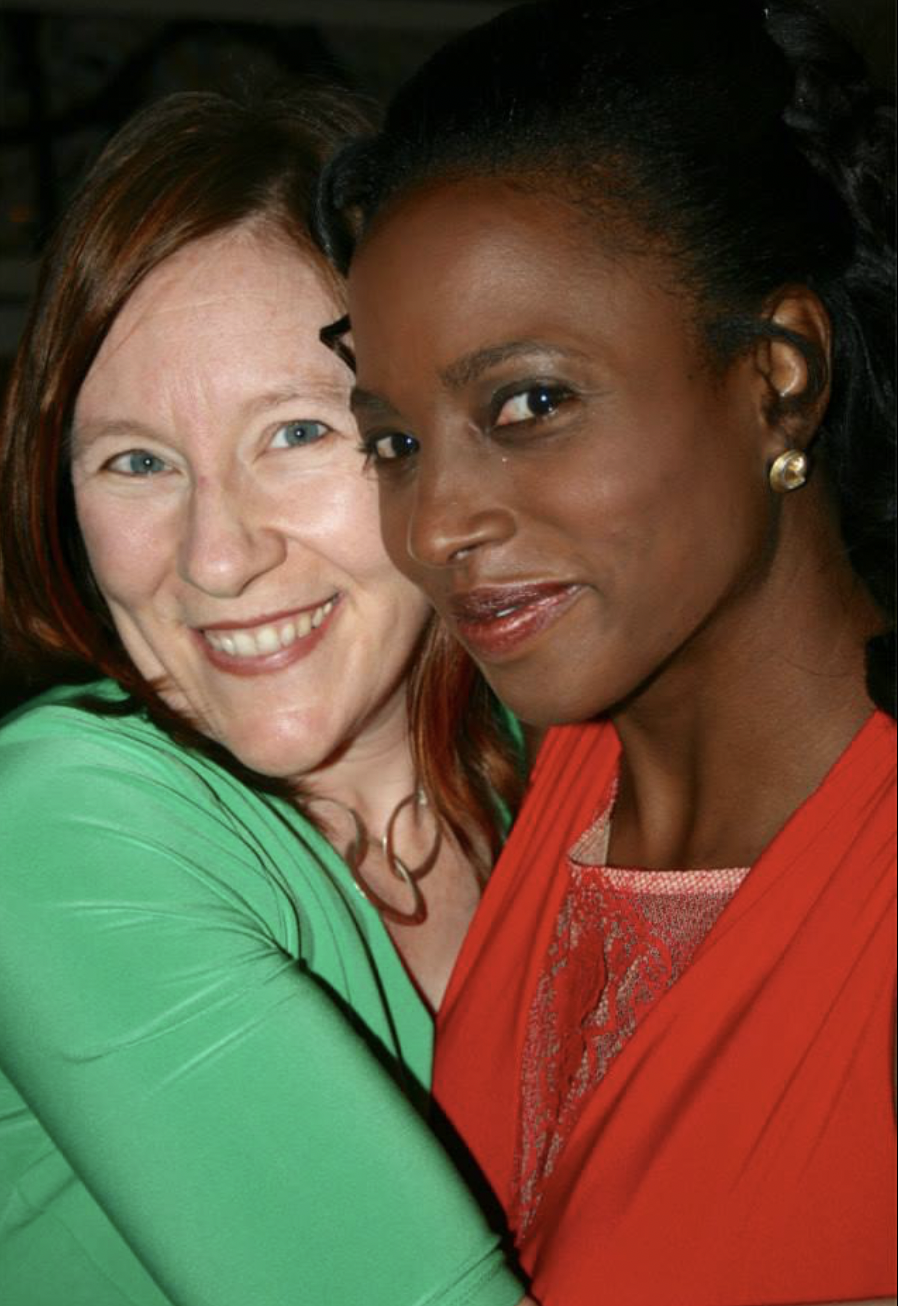
Holding mother in our heart

    —
May 12, 2013

Let us keep all mothers in our hearts today, creating for them the most luminous holding environment of love, in which they can rest and be nourished. Through the unknown – and through the most sacred womb – they have offered the gift of life, a rare, blessed opportunity to make this human journey, to allow this precious heart to be polished into eternity. No matter what our relationship with our mother in the physical world presently, we can exchange one moment of love with her – for the bond we have with her is beyond time and beyond space.

As the Tibetans believe, each being we encounter in this world has at one time been our mother, and has shown us the most precious kindness, care, and compassion; and has been willing to give her life so that we may come into being. May all mother-beings everywhere receive an outpouring of blessings on this day, may their hearts and their bodies be bathed in love, and may they come to know directly, even for a moment, the true preciousness of this life.

mother2

Author Info for Sounds True Coming Soon

Also By Author

Six Summer Reads You Won’t Want to Miss!

After the stillness of winter and the slow waking of spring, summer is a time for getting up, getting out, and getting our hands on what inspires us the most. Here are some recent Sounds True releases for tapping into a life well lived.

1. The Biophilia Effect – Clemens G. Arvay 

Summer Super Sale - The Biophilia Effect

This is a book that celebrates our interconnection with nature and shows how to deeply engage the natural world wherever you live to dramatically improve your health. Clemens G. Arvay presents fascinating research, practical tools and activities,

inspiring stories, and more in this accessible guide to the remarkable benefits of being in nature.

Get it here: https://www.soundstrue.com/store/the-biophilia-effect.html


2. The Healing Code of Nature – Clemens G. Arvay

The Healing Code of Nature - Clemens G. Arvay

Human beings are inseparable from the natural world, coevolving with all of life. In order to thrive, we need to nourish this bond. In his latest book, biologist Clemens G. Arvay illuminates the miraculous ways that the human body interprets the living “code” of plants, animals, and our larger natural habitat for healing and sustenance.

Get it here: https://www.soundstrue.com/store/the-healing-code-of-nature.html


3. Book of Beasties – Sarah Seidelman

Summer Super Sale - Book of Beasties

“From an ancient perspective, everything—including all natural things, like rocks, flowers, trees, insects, birds, and mammals

—is alive and infused with conscious energy or spirit,” writes Sarah Seidelmann. If you’re one of the many people looking to reconnect with the creativity, wisdom, and vital energy of the natural world, here is a fantastic guide for tapping into the power of animal totems, or “beasties.”

Get it here: https://www.soundstrue.com/store/book-of-beasties.html


4. No Recipe – Edward Espe Brown

Summer Super Sale - No Recipe“Making your love manifest, transforming your spirit, good heart, and able hands into food is a great undertaking,” writes renowned chef and Zen priest Edward Espe Brown, “one that will nourish you in the doing, in the offering, and in the eating.” With No Recipe: Cooking as Spiritual Practice, Brown beautifully blends expert cooking advice with thoughtful reflections on meaning, joy, and life itself.

Get it here: https://www.soundstrue.com/store/no-recipe.html


5. Yoga Friends – Mariam Gates & Rolf Gates 

Summer Super Sale - Yoga FriendsFrom the creators of Good Night Yoga and Good Morning Yoga comes a beautifully illustrated city adventure that introduces children to the delights and benefits of partner yoga.

Perfect for teaming up with a friend, sibling, parent, or caregiver, each easy practice shows how cooperation helps us to imagine, move, and have fun in a whole new way.

Includes a back-page guide for parents and caregivers, showing how to do each pose and how to connect them into an easy-to-follow flow.

Get it here: https://www.soundstrue.com/store/yoga-friends.html


6. Happier Now – Nataly Kogan

Summer Super Sale - Happier Now

What if you could be happier, right now, without radically changing your life? As nationally recognized happiness expert Nataly Kogan teaches, happiness is not a nice feeling or a frivolous extra. It’s a critical, non-negotiable ingredient for living a fulfilling, meaningful, and healthy life—and it’s a skill that we can all learn and improve through practice. In Happier Now, Nataly shares an illuminating, inspiring, and science-based guide to help you build your happier skills and live with more joy, starting now.

Get it here: https://www.soundstrue.com/store/happier-now.html


Have other books you’ve read by the poolside or under a shade tree ended up changing the way you see the world? Tell us about those summer reads that ended up being more than you expected!


Singing Bowl Meditation Sounds True Spotify Playlist

Sounds True is on Spotify!

Need some tunes for rest and relaxation? Check out our Singing Bowl Meditation Playlist! A variety of artists who make a soothing mix of infinite rhythms using Tibetan singing bowls. Perfect throughout a meditative practice.


November New Releases and Giveaway

NOVEMBER NEW RELEASES


The Integrity Advantage by Kelly Kosow

Are you ready to open up to new levels of self-trust and self-love, to get where you want to go?

You vowed to speak up at work, and then sat silent in the meeting yet again.

You told yourself “this time the diet is going to stick,” only to watch the scale inching up.

You felt that something just wasn’t right about someone that—until you learned the hard way that your instincts were right.

“Every time you bite your tongue,” teaches Kelley Kosow, “you swallow your integrity.”

Before Kelley Kosow was a renowned life coach and CEO, she constantly second-guessed herself, let her “to-do” lists and others steer her dreams and passions, and played it “small and safe.”

Inspired by the groundbreaking principles of her renowned mentor Debbie Ford, who hand-picked Kelley to be her successor, The Integrity Advantage is Kelley’s step-by-step guide for facing the fear, shame, and false beliefs that cause us to lose our way.

Through life-changing insights, true stories, and proven strategies, this book will show you how to live on your own terms—according to you—from the inside out.


Daring to Rest by Karen Brody

As modern women, we’re taught that we can do it all, have it all, and be it all. While this freedom is beautiful, it’s also exhausting. Being a “worn-out woman” is now so common that we think feeling tired all the time is normal. According to Karen Brody, feeling this exhausted is not normal—and it’s holding us back. In Daring to Rest, Brody comes to the rescue with a 40-day program to help you reclaim rest and access your most powerful, authentic self through yoga nidra, a meditative practice that guides you into one of the deepest states of relaxation imaginable.

It’s time to lie down and begin the journey to waking up


Breathe and Be by Anna Emilia Laitinen and Kate Coombs

Teaching mindfulness helps kids learn to stay calm, regulate their emotions, and appreciate the world around them. With Breathe and Be, author Kate Coombs and illustrator Anna Emilia Laitinen team up to present a book of poetry and art for young readers to make mindfulness easy, natural, and beautiful. Here is a book sure to delight parents and kids alike, blending lovingly illustrated nature imagery with elegant verse about living with awareness and inner peace.


Leopard Warrior by John Lockley

A Teaching Memoir That Crosses the Barriers Between Worlds

A shaman is one who has learned to move between two worlds: our physical reality and the realm of spirits. For John Lockley, shamanic training also meant learning to cross the immense divide of race and culture in South Africa.

As a medic drafted into the South African military in 1990, John Lockley had a powerful dream. “Even though I am a white man of Irish and English descent, I knew in my bones that I had received my calling to become a sangoma, a traditional South African shaman,” John writes. “I felt blessed by the ancient spirit of Africa, and I knew that I had started on a journey filled with magic and danger.” His path took him from the hills of South Korea, where he trained as a student under Zen Master Su Bong, to the rural African landscape of the Eastern Cape and the world of the sangoma mystic healers, where he found his teacher in the medicine woman called MaMngwev


Things That Join the Sea and the Sky by Mark Nepo

A Reader for Navigating the Depths of Our Lives

The Universe holds us and tosses us about, only to hold us again. With Things That Join the Sea and the Sky, Mark Nepo brings us a compelling treasury of short prose reflections to turn to when struggling to keep our heads above water, and to breathe into all of our sorrows and joys.

Inspired by his own journal writing across 15 years, this book shares with us some of Mark’s most personal work. Many passages arise from accounts of his own life events—moments of “sinking and being lifted”—and the insights they yielded. Through these passages, we’re encouraged to navigate our own currents of sea and sky, and to discover something fundamental yet elusive: How, simply, to be here.

To be enjoyed in many ways—individually, by topic, or as an unfolding sequence—Things That Join the Sea and the Sky presents 145 contemplations gathered into 17 themes, each intended to illuminate specific situations.


                NOVEMBER GIVEAWAY


WIN OUR NEW RELEASE BUNDLE:The Integrity Advantage, Daring to Rest, Breathe and Be, Leopard Warrior, and Things That Join the Sea and the Sky

TO ENTER: Simply reply in the comments with why you’d like to win!

You Might Also Enjoy

Terri Cole: “Healing the Worthiness Wound”

Terri Cole calls it an invisible wound: the imprint left when a daughter never receives protection, presence, or emotional attunement from her father. This week, Tami Simon talks with Terri Cole—Sounds True’s own Boundary Boss—about her new book, Father Wound, and why even women with loving fathers can carry this wound without ever naming it.

Terri Cole, MSW, LCSW, is a licensed psychotherapist, relationship expert, and best-selling author who has spent nearly three decades helping people break dysfunctional patterns and build healthier relationships with themselves and others. With Sounds True, she is the author of the trilogy that began with Boundary Boss and continued with Too Much: A Guide to Breaking the Cycle of High-Functioning Codependency. Her newest book, Father Wound: Break Unhealthy Patterns to Reclaim Your Worth and Power, examines what happens when a father or father figure is absent, abusive, immature, or simply not emotionally attuned—and why daughters of patriarchy carry a version of this wound no matter what kind of father they had.

In this conversation, Tami and Terri explore:

  •  How to recognize a father wound even when “my father wasn’t that bad”
  • Why Terri defines the father wound as, at its root, a worthiness wound
  • The difference between self-parenting and re-parenting, and what healing your inner child looks like in daily decisions
  • The “father wound trance”: how old patterns resurface in adult relationships, and how to work with transference instead of being run by it
  • Mourning the Dream, Terri’s exercise for grieving the father you wished you’d had
  • Why healing this wound personally is tied to healing patriarchy at a collective, societal level

Who this episode is for: anyone doing inner child work, anyone who keeps finding themselves in the same relationship pattern and wondering why, and anyone ready to ask whether their sense of worth was shaped long before they had any say in it.

Listen now, and start reclaiming your worth. →


This interview originally aired on Sounds True One, where you can enjoy early, ad-free access to episodes of Insights at the Edge: https://join.soundstrue.com/

James Hollis: The Goal of Life Is Meaning, Not Happine...

Most of us were raised to chase happiness as the finish line, yet Jungian analyst James Hollis has spent his career arguing that happiness was never a reliable measure to begin with.

Sounds True has carried this conversation between depth psychology and everyday struggle for decades, and Hollis remains one of our clearest voices on the subject. 

In this piece, we look at why Jungian psychology treats happiness as an unreliable goal, how the soul signals when we’ve drifted off course, and what resilience looks like without the comfort of certainty.

Key Takeaways:

  • A Different Measure: Learn why James Hollis treats happiness as an unreliable goal to build a life around.
  • The Soul Sends Signals: Understand how restlessness and dread can point toward a wrong turn.
  • Resilience Without Certainty: See how meaning sustains people through periods without clear answers.

A Different Measure for a Well-Lived Life

Hollis tells Tami Simon that happiness is only ever transiently possible, while meaning, once found, tends to abide. This is not a small semantic distinction; it reorganizes how a person might evaluate an entire life, past and future.

Listen to this conversation in James Hollis: The Goal of Life Is Meaning, Not Happiness, part of the Insights at the Edge series.

Learn Practices for Self-Compassion with Sounds True.

Jungian Psychology’s Case Against Chasing Happiness

Drawing on Jungian psychology, Hollis explains why treating happiness as life’s organizing goal sets people up for repeated disappointment. Moods shift, circumstances change, and pleasure fades on its own schedule regardless of effort. Meaning operates differently in his framework, built less on favorable conditions and more on alignment between a person’s actions and their deeper psychological truth. This idea traces back through decades of depth psychology, which has long treated symptom and suffering as data rather than simply obstacles to remove. Hollis extends that lineage into plain, accessible language for readers outside clinical settings.

  • Happiness Is Transient: It depends on circumstances that are largely outside our control.
  • Meaning Is Durable: It persists even through hardship, loss, and difficult seasons.
  • Alignment Over Pleasure: True satisfaction comes from congruence, not from comfort alone.

How the Soul Signals a Wrong Turn

Hollis describes a kind of inner feedback system, subtle but consistent, that lets a person know when they’ve drifted from their own path: a persistent restlessness, a low-grade dread, symptoms that resist easy explanation. Rather than pathologizing these signals, Hollis treats them as intelligent messages worth decoding instead of medicating them away entirely. This reframing runs through much of his later work, including Living Between Worlds, where he writes at length about resilience during periods of upheaval.

He is careful to add that decoding these signals takes patience. The soul rarely communicates in plain language, and learning to translate restlessness into useful insight is itself a skill built slowly, often with the help of therapy, journaling, or sustained reflection over time.

Resilience Without Certainty

Much of this conversation addresses a question many listeners were quietly asking during a period of global instability: how does a person stay steady without pretending to have answers they don’t have? Hollis’s version of resilience does not rely on optimism. It relies on tolerance for ambiguity and a willingness to keep showing up for the questions life keeps asking, even when no clear resolution is in sight and the ground itself keeps shifting underfoot.

  • Repetition Builds Strength: Resilience grows through repeated encounters with difficulty, not avoidance of it.
  • Certainty Can Deceive: It often functions as a defense against anxiety rather than as an accurate perception.
  • Living Between Worlds: The title itself names the space between old certainties and whatever comes next.

Why Meaning Requires Ongoing Attention

Unlike a goal that can be checked off, meaning in Hollis’s framework demands continual renewal. It is less a destination reached once than a practice sustained through the accumulation of honest choices over time, which is part of why his work resists any tidy self-help formula or five-step solution. A person can find meaning in one season of life and still need to relocate it in the next, since circumstances, relationships, and inner priorities continue to shift.

Center Yourself With Meditative Teachings by Sounds True

The Difference Age Makes

Hollis suggests that this pursuit shifts noticeably across a lifetime. What felt meaningful in early adulthood, often tied to achievement or external validation, tends to lose its hold as people age, replaced by quieter, more internally sourced sources of significance. This isn’t decline, in Hollis’s reading, but maturation, a gradual trading of performance for depth. He describes the second half of life as an invitation to finally ask what was being pursued all along and whether it still fits.

A Fifteen-Book Case for Meaning

By the time of this conversation, Hollis had already authored fifteen books exploring meaning, purpose, and depth psychology, including Finding Meaning in the Second Half of Life and What Matters Most. Hollis describes the search for meaning as the defining topic of his life’s work, one he approaches not as an academic exercise but as something he watches play out daily in his clinical practice with real people navigating real crises, decade after decade, with remarkably consistent patterns.

The Weight of a Global Moment

This particular episode was recorded during a period of widespread uncertainty, and Hollis addresses that context directly rather than avoiding it. He suggests that collective instability tends to surface exactly the kind of questions his work has always centered: what actually matters when the usual supports fall away, and what remains standing once distraction is stripped back. Crisis, in his view, has a way of accelerating psychological work that might otherwise take decades to surface on its own.

What Meaning Asks Us to Give Up

Choosing meaning over happiness, Hollis suggests, often means giving up the comfort of a simpler narrative. It is easier to chase pleasure and call it a life well lived than to sit with the harder, slower project of aligning daily choices with something deeper than mood. Hollis doesn’t romanticize this trade-off; he describes it plainly as more demanding, and ultimately more honest, than the alternative most of us default toward without noticing, especially in a culture that constantly rewards comfort over depth.

The Sounds True Foundation and Wider Access

This particular episode also introduces listeners to the Sounds True Foundation, a nonprofit dedicated to making tools like mindfulness and self-compassion available regardless of financial or social circumstance. It’s a fitting companion to Hollis’s message, since meaning, unlike many luxuries, is something every listener deserves genuine access to explore, regardless of where they happen to start from.

Insight Is The First Step Toward Growth. Broaden Your Horizons With Sounds True.

Final Thoughts

James Hollis offers no promise that meaning arrives easily or stays without tending, only that it holds weight happiness alone cannot carry. 

Sounds True continues sharing this conversation because it captures something central to our mission of waking up the world: that a considered life asks more of us than comfort, and gives back more in return. 

Choosing meaning is rarely a single decision; it is a posture practiced again each time comfort tempts us toward the smaller path. Hollis’s broader catalog remains available for anyone ready to keep asking these questions.

Frequently Asked Questions About James Hollis

How many books has James Hollis written?

Hollis is the author of sixteen books, including Finding Meaning in the Second Half of Life.

What is Living Between Worlds about?

It explores personal resilience during periods of significant change, uncertainty, and cultural upheaval.

Was Hollis a university professor?

Yes, he taught Jungian studies at Saybrook University across its San Francisco and Houston programs.

Does Sounds True offer audio versions of Hollis’s teaching?

Yes, Sounds True has produced the audio learning series Through the Dark Wood with Hollis.

What is the Sounds True Foundation?

A nonprofit making transformational tools accessible to at-risk youth, veterans, and underserved communities worldwide.

Is meaning the same as religious belief, according to Hollis?

No, Hollis frames meaning as a psychological and personal experience, independent of any specific faith.

Where did James Hollis train as an analyst?

He trained at the C.G. Jung Institute in Zurich before practicing as a licensed analyst.

Can this teaching help during periods of grief?

Yes, many listeners find Hollis’s framework useful for locating meaning within difficult, uncertain seasons.

Michelle Cassandra Johnson is an author, activist, spiritual teacher, racial equity consultant, and intuitive healer. She is the author of six books, including Skill in Action and Finding Refuge. Amy Burtaine is a leadership coach and racial equity trainer. With Robin DiAngelo, she is the coauthor of The Facilitator's Guide for White Affinity Groups. For more, visit https://www.michellecjohnson.com/wisdom-of-the-hive.

Andrea Gibson on Facing Mortality and Being Adored by ...

Andrea Gibson did not write about mortality from a safe distance. Colorado’s 2023–25 Poet Laureate spoke with Sounds True founder Tami Simon while living with cancer, and Sounds True later shared the conversation again as an encore after Gibson’s passing.

Great poets tend to expand our view of ourselves, of each other, and of the wider universe we share, and Sounds True has spent four decades making room for voices willing to speak this honestly. 

In this piece, we look at what Gibson taught about softening rather than pushing, what poetry offered as a container for grief, and what it looked like to keep showing up for a cause while loosening one’s grip on the outcome.

Key Takeaways:

  • Softness Over Force: Learn why Andrea Gibson chose trying softer instead of harder while living with cancer.
  • Poetry Holds Grief: Understand how Gibson used verse to witness sorrow rather than resolve it.
  • Activism Without Grip: See how Gibson stayed committed to causes while loosening control over outcomes.

A Conversation Recorded From Inside the Fire

What emerged was not wisdom delivered from a place of having already arrived, but a real-time account of learning to love a life that was actively slipping away, told with a rare mix of humor, ache, and clarity.

Hear the full conversation in Andrea Gibson on Facing Mortality and Being Adored by the Universe, recorded as part of our Insights at the Edge series.

Insight Is The First Step Toward Growth. Broaden Your Horizons With Sounds True.

Trying Softer, Not Harder

A phrase that anchors much of this conversation, trying softer instead of harder, captures something Gibson circled back to again and again. Illness stripped away the option of pushing through discomfort the way Gibson once might have. What replaced it was a different relationship to effort itself, one built on relaxation rather than force, and one that felt genuinely earned rather than borrowed from a wellness slogan.

  • Relaxation as Skill: Gibson treated softening as a practice, not a passive default.
  • Effort Redefined: Trying softer did not mean giving up, only releasing unnecessary tension.
  • Presence Over Push: Staying with what is real mattered more than forcing outcomes.

Poetry and Grief as the Same Practice

For Gibson, poetry and grief were never separate disciplines. Writing became the place where sorrow could be witnessed rather than managed, and the poem “Acceptance Speech After Setting the World Record in Goosebumps,” read aloud during the episode, shows this directly. Rather than resolving grief into something tidy, Gibson’s poems tend to sit within it, finding unexpected tenderness there instead of rushing toward comfort or closure, a quality that has resonated with readers facing their own losses.

This approach offers something rare: permission to let a poem remain unresolved, because life itself often remains unresolved. Gibson never treated grief as a problem waiting for a solution, but as a companion worth genuinely listening to.

Being Adored by the Universe

The episode’s title borrows Gibson’s own language for a shift in perception that arrived alongside the diagnosis: a felt sense of being cherished by existence itself, not despite the illness but somehow through it. This was not framed as denial or spiritual bypassing. Gibson spoke openly about fear and about the ordinary difficulty of staying present with an uncertain future, refusing to perform a peace that wasn’t fully felt.

Gibson described this shift as something closer to surrender than achievement, a letting go of the need to control how the story ended in exchange for a fuller experience of what was happening right now.

Center Yourself With Meditative Teachings by Sounds True

Activism Without a Death Grip on Outcomes

Gibson’s decades of work in queer, disability, and social justice movements gave the conversation another dimension: how does a lifelong activist hold hope when illness limits what the body can do? Gibson didn’t retreat from these questions, instead treating illness as another lens for examining how change actually happens. Several threads run through this part of the discussion:

  • Loosened Attachment: Committing to a cause without needing a specific outcome to feel it mattered.
  • Rest as Contribution: Recognizing presence and rest as valid forms of participation, not failures of dedication.
  • Joy Beside Grief: Letting both feelings coexist rather than treating one as a distraction.

Self-Love as a Radical Practice

Much of this conversation returns to self-love, not as an indulgent afterthought but as something Gibson treated as foundational work. Loving the self fully, Gibson suggested, is inseparable from loving the whole world, since the way we treat our own fear and fragility often mirrors how we treat everyone else’s. This wasn’t offered as a tidy affirmation but as ongoing practice, revisited daily and never fully finished, especially on days when self-compassion felt hardest to access.

Finding Joy in Every Instant

Gibson resisted the idea that joy has to wait for circumstances to improve. Even amid a serious diagnosis, Gibson described locating genuine joy inside small, present moments rather than deferring it to some future recovery. This wasn’t forced positivity; Gibson was candid about fear and grief throughout the conversation. The joy Gibson described lived alongside difficulty, not instead of it, which is part of what makes this teaching feel honest rather than aspirational, and part of why it has stayed with so many listeners since.

  • Small Moments Count: A conversation, a breath, or a piece of music could hold real joy.
  • No Waiting Required: Joy did not depend on the illness resolving or improving first.
  • Coexistence, Not Contradiction: Fear and joy showed up together without canceling each other out.

Authenticity as the Foundation of Gibson’s Writing

Throughout the conversation, Gibson returns to authenticity as the single most important quality in creative work. Writing that performs certainty or polish, in Gibson’s view, tends to ring hollow, while writing that admits confusion and fear invites readers closer rather than pushing them away. This belief shaped Gibson’s entire body of work, long before illness entered the picture, and it became even more pronounced once every page carried real stakes.

Awaken Your Inner Healing Power

Why This Conversation Stays With Sounds True

Sounds True has always believed spiritual teaching lands hardest when it comes from an unscripted, honest voice rather than a polished script. Gibson’s conversation with Tami embodies that belief completely, offering listeners a chance to sit with mortality alongside someone who was living it in real time rather than theorizing from a comfortable distance. That kind of transmission is rare, and it’s part of why this episode has continued to reach new listeners well beyond its original air date.

Final Thoughts

Andrea Gibson left behind a body of work that refuses to separate beauty from difficulty, and this conversation captures that refusal in its most direct form. At Sounds True, our mission has always been to wake up the world, and Gibson’s willingness to stay tender in the face of mortality is exactly the kind of courage that mission was built to honor. Their words remain in our library for anyone who needs company in facing what feels unfaceable, today or on a harder day ahead, and their voice continues to offer that company long after the recording ended.

Frequently Asked Questions About Andrea Gibson

Who was Andrea Gibson?

Andrea Gibson was Colorado’s 2023–25 Poet Laureate, celebrated for poetry on love, identity, and social justice.

When was this conversation originally recorded?

The conversation with Tami Simon originally aired in 2023 and was later shared again as an encore.

What poem does Gibson read during the episode?

Gibson reads “Acceptance Speech After Setting the World Record in Goosebumps” during the conversation.

Does Sounds True offer more of Gibson’s work?

Sounds True continues sharing Gibson’s recorded conversations and reflections through our podcast archives.

What podcast series includes this episode?

This conversation appears on Insights at the Edge, hosted by Sounds True founder Tami Simon.

Is this conversation appropriate for someone newly diagnosed?

Many listeners facing illness find comfort in Gibson’s honesty about fear, softness, and staying present.

Where can I explore similar teachings on self-compassion?

Visit our Self-Compassion collection for related titles and programs from other Sounds True authors.

Does Sounds True cover grief and loss elsewhere?

Yes, related conversations and resources appear throughout our Relationships and Spirituality & Awakening collections.

Michelle Cassandra Johnson is an author, activist, spiritual teacher, racial equity consultant, and intuitive healer. She is the author of six books, including Skill in Action and Finding Refuge. Amy Burtaine is a leadership coach and racial equity trainer. With Robin DiAngelo, she is the coauthor of The Facilitator's Guide for White Affinity Groups. For more, visit https://www.michellecjohnson.com/wisdom-of-the-hive.

2 comments on Holding mother in our heart

  1. Sondra says:

    Matt, a wonderful reminder, we are all mothering life one way and another.

  2. Matt Licata says:

    Hi Sondra, nice to hear from you here – yes, may we all hold preciously the care and love of a mother as it moves through us, in its many ways. Happy spring, Sondra – and here’s to much success with Secrets of Your Cells!

Leave a Reply

Your email address will not be published. Required fields are marked *