How Does Meditation Liberate Us?

MATTHIEU RICARD: In the beginning, our mind is very turbulent, so it is very difficult to complete an analytical meditation and to cultivate compassion, and it’s still more difficult to observe the nature of awareness. We just have to deal with a whirligig of thoughts. The first step, therefore, as we have seen, is to achieve a certain level of calm. We don’t do this by knocking out the mind the way we would knock somebody out with a stick; rather we give it a chance to become a little clearer, a little more stable.

That’s why most meditations begin with observation of the breath. It is at the same time practical (the breath is always there), simple (a constant movement of coming and going), and subtle (it’s invisible, and if we don’t pay attention, it disappears instantly from our perceptual field). It is, therefore, an excellent object for refining our attentional faculty. This simple training is not necessarily easy, however. We can even be discouraged at the beginning by seeing that “I have more thoughts now than I had before; meditation is not for me.” There are not necessarily more of the thoughts; rather we have begun to perceive what is going on, to be able to gauge the extent of the damages. However, like a waterfall turning into a mountain torrent, and then into a river, and finally a still lake, the mind calms down with time.

After a few weeks or even a few months, I can pass on to the next stage: “Now that I have a more flexible and accessible mind and can direct it like a well-trained horse, I can say to it: ‘Apply yourself to compassion.’” This sequence of progression should be respected, and it is of no use trying to skip ahead. If you try to meditate on compassion when your mind still won’t hold still, you won’t cultivate compassion; you’ll simply be distracted.

I can also ask myself, “In the end, who is meditating? The ego? Awareness?” I can analyze the nature of all that. In a more contemplative and direct fashion, I can deepen my questioning: “What is behind all these thoughts? Is it not awakened presence, the quality of pure awareness that is behind all mental events?” At that point, I begin to glimpse that which, underlying all thoughts, is always there like the unmoving sky behind the clouds. I can then let the mind rest in this pure awareness.


A Toolbox for Meditation

CHRISTOPHE ANDRÉ:

Meditation is not only a religious or spiritual practice; it is also a form of mind training. It can help us cultivate attention, detachment, understanding, and emotional balance. It can also help us to develop our basic human virtues, which otherwise might lie dormant deep within us and not express themselves. I’m talking about kindness, compassion, generosity, and so on.

Meditation is simple. It only requires us to regularly pause and observe the nature of our experience—our breathing, sensations, emotions, thoughts. Everything starts with that.

Starting with very simple kinds of exercises like those recommended in mindfulness meditation (the kind of meditation we use in health care and education), there are many meditative traditions that are much more demanding and complex. As with the piano, we can very quickly learn to play a few little pleasant tunes; then we can go on to cultivate virtuosity for the rest of our lives.


ALEXANDRE JOLLIEN:

Let things pass. If I had to sum up the practice in three words, without hesitation, I’d go for “Let things pass.” In the midst of chaos or deep in one’s inner battlefields, dare to make the experiment of not controlling, of dropping the self. It’s mayhem, but there’s no problem! Far from giving up and far from resignation, letting things pass means distinguishing between the psychodramas (the problems created by conceptual mind) and the genuine tragedies of existence, which call for solidarity, commit- ment, and perseverance.

Meditating is stripping down, daring to live nakedly in order to give oneself, contributing to the welfare of the world, giving one’s share. Why don’t we look at the day that lies ahead of us not as a store where we can acquire things, but as a clinic, a dispensary of the soul, where together we can recover and advance?


MATTHIEU RICARD:

Meditation requires diligence, which should be nourished by enthusiasm, by joy in the virtues, by inner peace, by compassion, and by the feeling of having a clear direction in life.

Meditation, in itself, does not have harmful effects. Meditation is not contraindicated unless it is not properly understood or properly used—used in the wrong conditions or at the wrong time. Whether we like it or not, from morning till night we are dealing with our mind. Who wouldn’t want their mind to be functioning in the optimal fashion and to be providing them with inner freedom rather than playing rotten tricks on them?

This is an adapted excerpted from the newest book from Matthieu Ricard, Christophe André, and Alexandre Jollien, Freedom For All Of Us: A Monk, A Philosopher, and a Psychiatrist on Finding Inner Freedom.
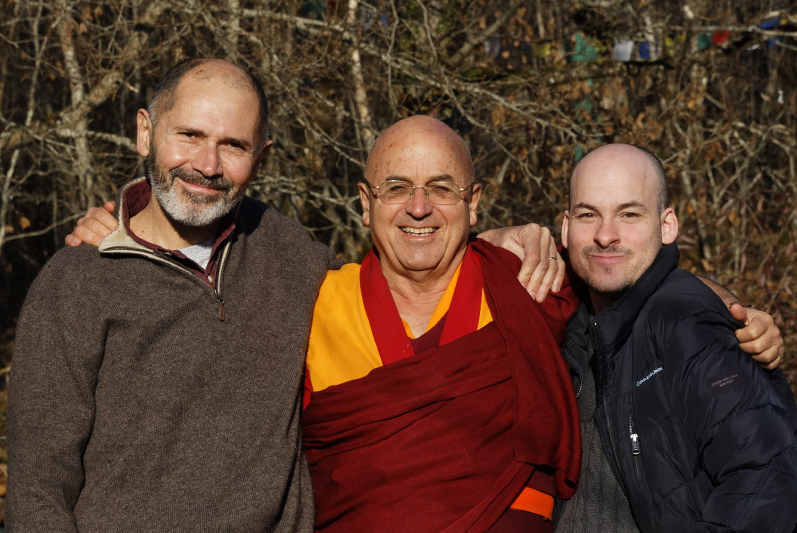
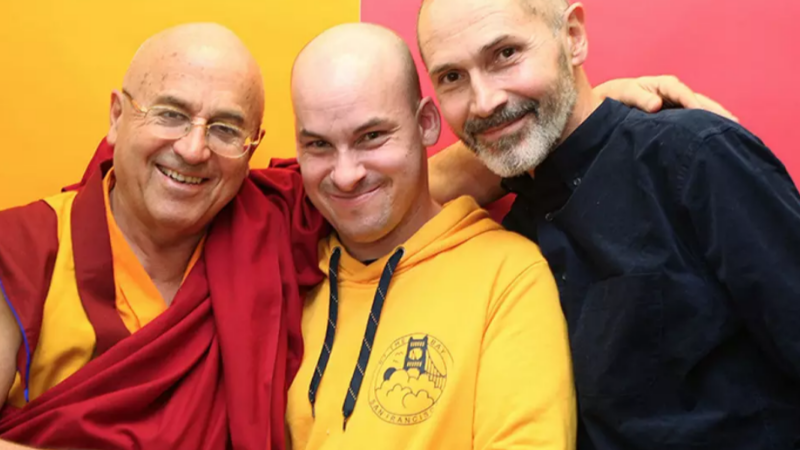
Copy of MatthieuRicard-AlexandreJollien-ChristopheAndré©PhilippeDanais2017

Matthieu Ricard is a Buddhist monk, a photographer, and a molecular geneticist who has served as an interpreter for the Dalai Lama. 

Christophe André is a psychiatrist and one of the primary French specialists in the psychology of emotions and feelings.

Alexandre Jollien is a philosopher and a writer whose work has been attracting an ever-growing readership. Together, they are the authors of In Search of Wisdom and Freedom For All of Us.

Learn More

Sounds True | Amazon | Barnes & Noble | Bookshop | IndieBound


Alexandre Jollien

Alexandre Jollien is a philosopher and writer who spent 17 years in a home for the physically disabled. His books include In Praise of Weakness. He lives in Switzerland. For more, visit alexandre-jollien.ch.

Christophe André

Christophe André is a psychiatrist specializing in the psychology of emotions. His books include Imperfect, Free, and Happy, and Meditating, Day After Day. He lives in France. For more, visit christopheandre.com.

Matthieu Ricard

Photo of ()\

Matthieu Ricard is a Buddhist monk and has authored several books, including The Monk and the Philosopher and The Quantum and the Lotus. He is a major participant in the research collaboration between cognitive scientists and Buddhist practitioners, spearheaded by the Dalai Lama and the Mind and Life Institute. Ricard is a noted translator and photographer, and initiates and oversees humanitarian projects in India, Tibet, and Nepal. For more information, visit www.shechen.org.

Author photo © PhilippeDanais2017

Listen to Tami Simon's in-depth audio podcast interview with Matthieu Ricard:
The Altruistic Revolution: Transform Ourselves to Better Serve Others »
Happiness Is a Skill »

Also By Author

How Does Meditation Liberate Us?

MATTHIEU RICARD: In the beginning, our mind is very turbulent, so it is very difficult to complete an analytical meditation and to cultivate compassion, and it’s still more difficult to observe the nature of awareness. We just have to deal with a whirligig of thoughts. The first step, therefore, as we have seen, is to achieve a certain level of calm. We don’t do this by knocking out the mind the way we would knock somebody out with a stick; rather we give it a chance to become a little clearer, a little more stable.

That’s why most meditations begin with observation of the breath. It is at the same time practical (the breath is always there), simple (a constant movement of coming and going), and subtle (it’s invisible, and if we don’t pay attention, it disappears instantly from our perceptual field). It is, therefore, an excellent object for refining our attentional faculty. This simple training is not necessarily easy, however. We can even be discouraged at the beginning by seeing that “I have more thoughts now than I had before; meditation is not for me.” There are not necessarily more of the thoughts; rather we have begun to perceive what is going on, to be able to gauge the extent of the damages. However, like a waterfall turning into a mountain torrent, and then into a river, and finally a still lake, the mind calms down with time.

After a few weeks or even a few months, I can pass on to the next stage: “Now that I have a more flexible and accessible mind and can direct it like a well-trained horse, I can say to it: ‘Apply yourself to compassion.’” This sequence of progression should be respected, and it is of no use trying to skip ahead. If you try to meditate on compassion when your mind still won’t hold still, you won’t cultivate compassion; you’ll simply be distracted.

I can also ask myself, “In the end, who is meditating? The ego? Awareness?” I can analyze the nature of all that. In a more contemplative and direct fashion, I can deepen my questioning: “What is behind all these thoughts? Is it not awakened presence, the quality of pure awareness that is behind all mental events?” At that point, I begin to glimpse that which, underlying all thoughts, is always there like the unmoving sky behind the clouds. I can then let the mind rest in this pure awareness.


A Toolbox for Meditation

CHRISTOPHE ANDRÉ:

Meditation is not only a religious or spiritual practice; it is also a form of mind training. It can help us cultivate attention, detachment, understanding, and emotional balance. It can also help us to develop our basic human virtues, which otherwise might lie dormant deep within us and not express themselves. I’m talking about kindness, compassion, generosity, and so on.

Meditation is simple. It only requires us to regularly pause and observe the nature of our experience—our breathing, sensations, emotions, thoughts. Everything starts with that.

Starting with very simple kinds of exercises like those recommended in mindfulness meditation (the kind of meditation we use in health care and education), there are many meditative traditions that are much more demanding and complex. As with the piano, we can very quickly learn to play a few little pleasant tunes; then we can go on to cultivate virtuosity for the rest of our lives.


ALEXANDRE JOLLIEN:

Let things pass. If I had to sum up the practice in three words, without hesitation, I’d go for “Let things pass.” In the midst of chaos or deep in one’s inner battlefields, dare to make the experiment of not controlling, of dropping the self. It’s mayhem, but there’s no problem! Far from giving up and far from resignation, letting things pass means distinguishing between the psychodramas (the problems created by conceptual mind) and the genuine tragedies of existence, which call for solidarity, commit- ment, and perseverance.

Meditating is stripping down, daring to live nakedly in order to give oneself, contributing to the welfare of the world, giving one’s share. Why don’t we look at the day that lies ahead of us not as a store where we can acquire things, but as a clinic, a dispensary of the soul, where together we can recover and advance?


MATTHIEU RICARD:

Meditation requires diligence, which should be nourished by enthusiasm, by joy in the virtues, by inner peace, by compassion, and by the feeling of having a clear direction in life.

Meditation, in itself, does not have harmful effects. Meditation is not contraindicated unless it is not properly understood or properly used—used in the wrong conditions or at the wrong time. Whether we like it or not, from morning till night we are dealing with our mind. Who wouldn’t want their mind to be functioning in the optimal fashion and to be providing them with inner freedom rather than playing rotten tricks on them?

This is an adapted excerpted from the newest book from Matthieu Ricard, Christophe André, and Alexandre Jollien, Freedom For All Of Us: A Monk, A Philosopher, and a Psychiatrist on Finding Inner Freedom.

Copy of MatthieuRicard-AlexandreJollien-ChristopheAndré©PhilippeDanais2017

Matthieu Ricard is a Buddhist monk, a photographer, and a molecular geneticist who has served as an interpreter for the Dalai Lama. 

Christophe André is a psychiatrist and one of the primary French specialists in the psychology of emotions and feelings.

Alexandre Jollien is a philosopher and a writer whose work has been attracting an ever-growing readership. Together, they are the authors of In Search of Wisdom and Freedom For All of Us.

Learn More

Sounds True | Amazon | Barnes & Noble | Bookshop | IndieBound


Tools for Cultivating Supportive Friendships & Re...

Tools for Cultivating Supportive Friendships & Relationships:

CHRISTOPHE ANDRÉ:

For this toolbox I’d like to put forward a little bit of theory about how we are supported by relationships — that is, to offer an overall look at what we receive from our relationships with others.

The five benefits of relationships. Studies show that social support can be broken down into several families of benefits:

  1. Material support: Others can help us in concrete ways. If I’ve broken my leg, I will be glad if somebody will do my shopping for me. If I have to move, I will be happy to have my friends help me transport the boxes.
  2. Informational support: Others can advise us, give us useful infor- mation, and play the role of human search engines — as intelligent as Google but alive and compassionate — and they won’t resell our personal information afterward.
  3. Emotional support: Others are the source of positive emotions; they give us affection, love, friendship, trust, admiration.
  4. The support of esteem. Others can remind us of our value and good qualities, tell us what they like about us, and sustain our self-esteem at moments of uncertainty.
  5. The inspiration of their example: This is more difficult to evaluate scientifically, but it’s quite real, as we have indicated.

The four varieties of relationships. Another important point is that it is helpful to cultivate varied social relationships, just as it is important to have a varied diet. There are four families of relationships, distributed in four concentric circles:

  1. Our intimates: the people we live with, whom we touch and embrace practically every day. This means mostly our family and best friends.
  2. Our close relations: our friends and colleagues, people with whom we regularly have close and regular exchanges.
  3. Our acquaintances: the whole network of people with whom we have a connection, even occasional, and who we keep track of and who keep track of us.
  4. Unknowns: those who we might also have relationships with, depending on our character. This includes people we might speak to on the street, on public transport, in stores. They can also be sources of help or information for us, as we can for them.

Specialists in social relations remind us that it is important to draw sup- port from these four circles — not only from our intimate and close relations—and to sustain our connections with these four relational spheres by giving and receiving help, information, support, eye contact, advice, and smiles. Because the idea is not only to receive but also to give, by speaking to unknowns and maintaining warm relations with our acquaintances, neighbors, and shopkeepers, we do ourselves good. And we embellish the world, improve it, and make it more human!


MATTHIEU RICARD:

The importance of social connection. We should choose to live in an environment where people are warm, altruistic, and compassionate. If this isn’t the case in all areas of our living space, we should progressively try to establish these values or, if it’s possible, we should leave the toxic environment.

In this connection, I like to cite the case of a community on the Japanese island of Okinawa, which claims to have one of the world’s highest concentrations of people aged a hundred or over. It appears that the main factor in this exceptional longevity is not the climate or the food, but the power of this community, where people maintain particularly rich social relationships. From cradle to grave, they relate very closely with one another. The elderly people in particular get together several times a week to sing, dance, and have a good time. Almost every day they go to schools to greet the children (whether they have familial links with them or not) at the end of the school day. The elders take the children in their arms and give them treats.

Draw inspiration from the righteous, from people who, in our eyes, embody the values of impartiality, tolerance, compassion, love, and kindness. In these times of the migratory crisis, I think of all those who have taken great risks, and I remember those who protected Jewish people during the Nazi persecutions of World War II, particularly those who hid Jews in their homes. These people have since come to be called “The Righteous.” The only common point that emerges from their many accounts is a view of others based on recognition of their common human- ity. All human beings deserved to be treated with kindness. Where we saw a stranger, they saw a human being.

Meditate on altruistic love. Studies in psychology have shown that meditating on altruistic love increases people’s feelings of belonging to a community; it enhances the quality of social connections and compassionate attitudes toward unknown people, while at the same reduc- ing discrimination toward particular groups, like people of color, homeless people, and immigrants.

Draw inspiration from friends in the good and spiritual masters. I recommend that everyone see a historical documentary made in India by Arnaud Desjardins at the end of the 1960s, in which we are shown the most respected of the Tibetan masters who took refuge on the Indian slopes of the Himalayas following the Chinese invasion of their country. The film is called The Message of the Tibetans.


ALEXANDRE JOLLIEN:

The audacity to live. Existing, opening oneself to the other, is running a risk. It means dropping one’s armor, one’s protective coverings, and opening one’s eyes and daring to give oneself to the other and to the entire world. There’s no way you can invest in a relationship, so throw out your logic of profit and loss! What if we were to embark on our day without any idea of gain or of using our fellow human beings? What if we stayed attentive to all the women and men it is given to us to encoun- ter on that day, looking to find among them masters in being human? 

Identify our profound aspirations. Helping others can often amount to imposing a view of the world on them without really paying any attention to what they really want in their hearts. A man bought an elephant without giving any thought in advance to how he was going to feed it. At a loss, he was obliged to turn for help to those around him, and what he got from them was, “You never should have bought such a big animal!” What does it mean to help others? Does it mean committing completely to being there for them? Does it mean going all the way with them?

Authentic compassion. A will to power might enter into our move- ment toward the other—a thirst for recognition, a twisted attempt to redeem ourselves. Daring a true encounter means quitting the sphere of your neurosis and walking the path of freedom together. There’s no more “me,” no more “you,” but a coalescent “us,” a primordial solidarity.

Coming out of the bunker. As a result of having been burned in our relationship with another, the temptation is great to put on armor, to completely shut ourselves up in a bunker-like fortress, even to the point of suffocation. Don’t our passions, our griefs, our loves, and the fierce- ness of our desire remind us that we are essentially turned toward the other, in perpetual communication? Is there a way to live the thousand and one contacts of daily life without our ego appropriating them?

This is excerpted from the newest book from Matthieu Ricard, Christophe André, and Alexandre Jollien, Freedom For All Of Us: A Monk, A Philosopher, and a Psychiatrist on Finding Inner Freedom.

Copy of MatthieuRicard-AlexandreJollien-ChristopheAndré©PhilippeDanais2017


Matthieu Ricard is a Buddhist monk, a photographer, and a molecular geneticist who has served as an interpreter for the Dalai Lama. 

Christophe André is a psychiatrist and one of the primary French specialists in the psychology of emotions and feelings.

 Alexandre Jollien is a philosopher and a writer whose work has been attracting an ever-growing readership. Together, they are the authors of In Search of Wisdom and Freedom For All of Us.

picture of the book titles Freedom for All of Us

Learn More

Sounds True | Amazon | Barnes & Noble | Bookshop | IndieBound


Meet a Coauthor of . . . Freedom for All of Us

The Author

Alexandre Jollien is a philosopher and writer who spent 17 years in a home for the physically disabled. His books include In Praise of Weakness. He lives in Switzerland. For more, visit alexandre-jollien.ch.

Freedom for All of Us Cover

The Book

With their acclaimed book In Search of Wisdom, three gifted friends—a monk, a philosopher, and a psychiatrist—shed light on our universal quest for meaning, purpose, and understanding. Now, in this new in-depth offering, they invite us to tend to the garden of our true nature: freedom.

Filled with unexpected insights and specific strategies, Freedom for All of Us presents an inspiring guide for breaking free of the unconscious walls that confine us.


Translated from the original responses in French.

What is one unexpected thing or habit that inspires your writing practice? Is there a

playlist or album you listen to?

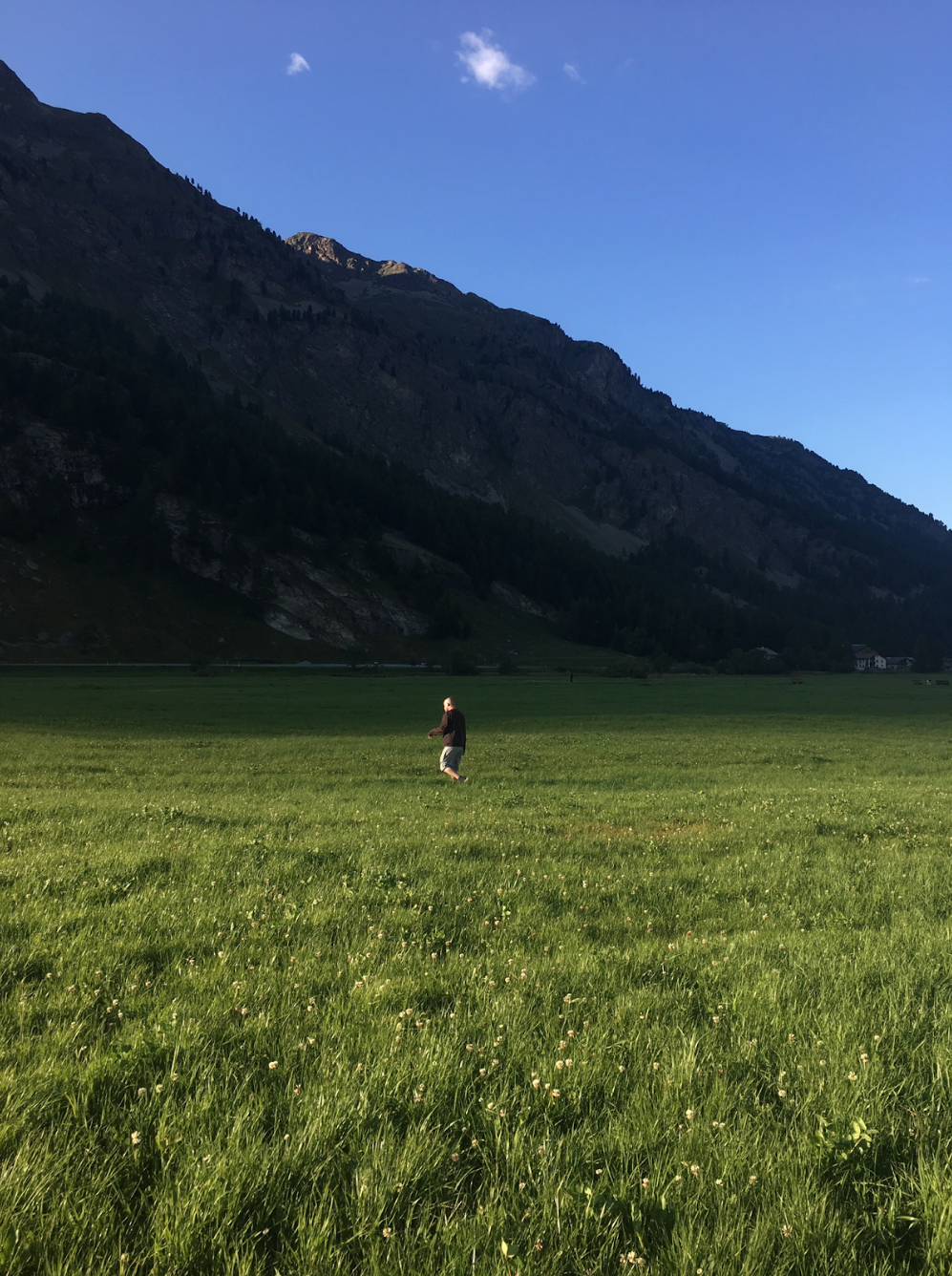
Sils Maria

Meditation really opens me up to write. Walking too. Above is a photo of me walking in Sils Maria, Switzerland, where Friedrich Nietzsche lived at one time. However, in my eyes, writing is never systematic [or methodical]. It’s not a [mere] technique. A writer has to render themself available to messages that come—in some sense—from beyond. Conversations with friends, explorations into the mundane, family life, the readings of the great thinkers, the practice of Zazen … all these things feed my desire to pick up my pen again. I write, or rather I dictate my writings, in silence. However, sometimes I do enjoy techno music, which keeps me going and wards off anything that could poison an idea I have; “the sad passions” as the philosopher, Baruch Spinoza, called them.

Send us a photo of you and your pet (and let us know if your pet had any role in helping you write your book)!

Grisette

We have a little hamster at home, Grisette, who is our children’s little darling. For me, he embodies peace and a certain serenity. When I look at him, I see a being that isn’t deep in denial and agitated. [Although] sometimes, when he frolics on his hamster wheel, I have the impression that he’s reminding me that my mind, too, can often run in [unnecessary] circles …


If there is a book that started your spiritual journey, what was it? How old were you, and

how did you discover it? How would you describe its impact?

When I was a child, I didn’t enjoy reading and I thought that wisdom was reserved for the elite. I considered culture to be so far removed from everyday problems that I avoided it completely. One day, I accompanied a friend into a bookstore. While I was waiting for her, I flipped through pages from books by Plato and Aristotle. The book [that made an impact] was L’étonnement philosophique [“Philosophic Wonder”] by Jeanne Hersch, which traces the history of Western thought. In my adolescence, that book gave me a great foundation, a benchmark, a marker, a starting point. It’s an admirable book. Afterwards, I really fell into reading the greats, like Plato, Spinoza, Nietzsche, Epictetus, all of which still inspire me today. I was 14 years old then, and reading had changed my life.

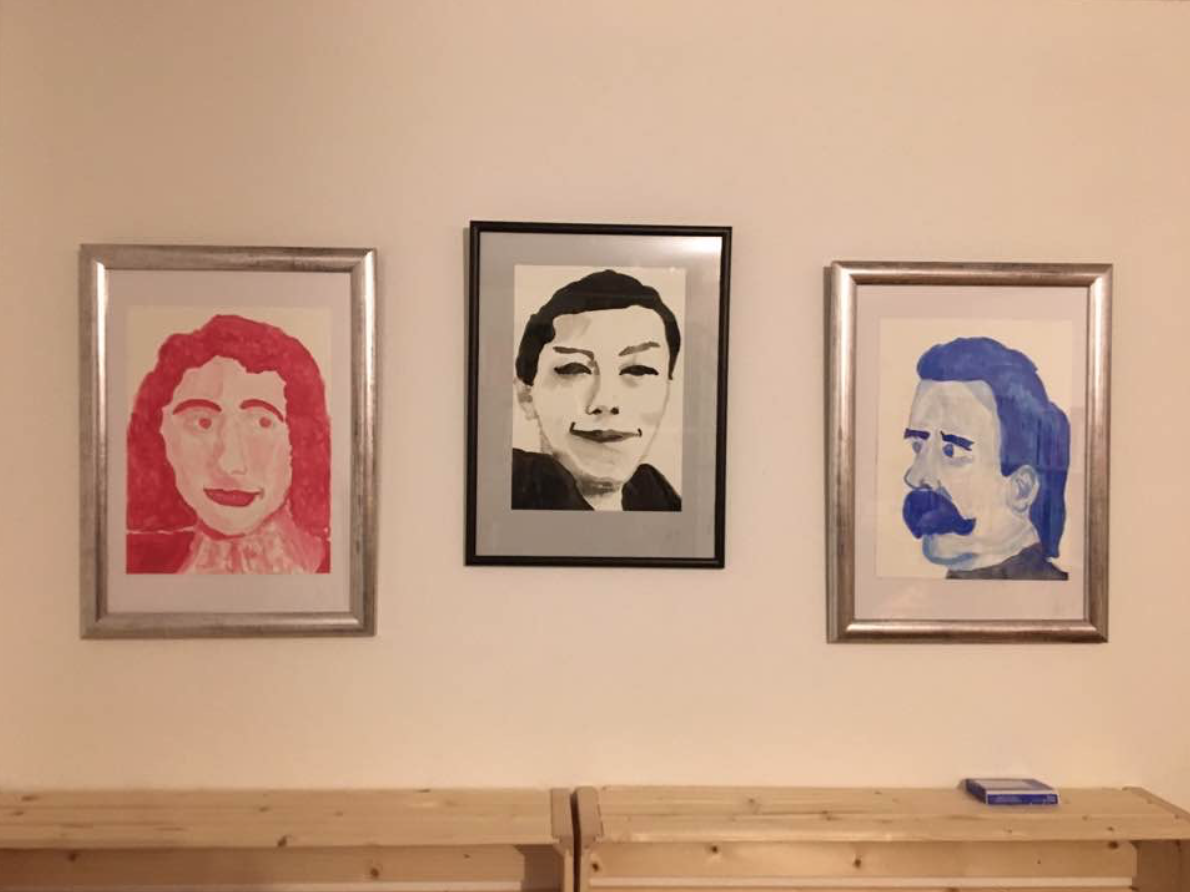
Below are portraits [of some of my favorite philosophers and spiritual teachers] painted by my son, Augustin.

portraits


Learn More

Sounds True | Amazon | Barnes & Noble | Bookshop | IndieBound


You Might Also Enjoy

Elizabeth Stanley on Trauma-Sensitive Mindfulness: Whe...

Meditation is often understood as a way to find calm by turning inward. Yet for many people, that inward focus can feel overwhelming instead of grounding. The body may tighten, emotions may rise quickly, or the mind may feel harder to settle. These responses are not a sign of failure. They reflect how the nervous system holds and processes past experiences. Trauma sensitive mindfulness offers a way to approach awareness with more care, allowing space for safety, pacing, and choice.

At Sounds True, we have spent decades sharing the living wisdom of teachers who speak to real human experience with honesty and depth. Through voices like Elizabeth Stanley, we bring forward teachings that integrate science, mindfulness, and compassion, offering practices that support meaningful and lasting inner growth.

Here, we look at trauma sensitive mindfulness through Elizabeth Stanley’s perspective, including why meditation is not always enough and how a more supportive approach can help.

Key Takeaways:

  • Nervous System Awareness: Trauma sensitive mindfulness centers on regulating the body, not just observing thoughts
  • Flexible Practice: Meditation can include movement, choice, and external focus to support safety
  • Healing Approach: Awareness becomes effective when paired with pacing, care, and nervous system support

Awaken Your Inner Healing Power with Guided Practices by Sounds True

What Is Trauma Sensitive Mindfulness and How It Differs from Traditional Mindfulness

Trauma sensitive mindfulness begins with a simple truth. The present moment does not feel safe for everyone. Turning inward can bring up intense sensations or emotions, and traditional mindfulness does not always account for how trauma shapes this experience.

This approach offers a gentler entry point. It considers how the body responds before asking it to be still. Instead of pushing through discomfort, it allows for choice, movement, and grounding.

Mindfulness then becomes less about doing it right and more about building a relationship with our experience. We learn to notice what feels supportive, pause when needed, and meet ourselves with care.

Elizabeth Stanley’s Approach to Trauma Sensitive Mindfulness and Healing

Elizabeth Stanley’s work brings clarity to why trauma sensitive mindfulness matters and how it can be practiced in a way that truly supports healing. Her perspective is grounded in both research and lived experience, creating a bridge between science and personal transformation.

Her Background in Trauma and Resilience

Stanley’s background includes years of studying resilience under extreme stress, alongside her own journey through trauma recovery. She emphasizes that resilience is not simply about mental strength. It is about the capacity of the nervous system to return to balance after disruption.

Through trauma sensitive mindfulness, she highlights how this capacity can be strengthened over time. The practice becomes less about observing thoughts and more about learning how to stay connected to the body without becoming overwhelmed.

The Limits of Traditional Mindfulness Practices

In her teaching, Stanley also speaks to the limitations of traditional mindfulness approaches. Many practices assume that the body can tolerate sustained attention. For someone carrying unresolved trauma, that assumption may not hold true.

Trauma sensitive mindfulness acknowledges that awareness alone is not always enough. Without support, attention can amplify distress rather than ease it. By integrating regulation and pacing, this approach creates a more supportive path that allows mindfulness to unfold gradually.

Why Trauma Sensitive Mindfulness Changes the Way We Practice Meditation

When we begin to understand mindfulness through the lens of trauma sensitivity, the practice itself starts to shift. Meditation is no longer about holding attention in one place at all costs. It becomes a responsive and adaptive experience.

Meditation Through the Lens of Trauma Sensitivity

In trauma sensitive mindfulness, meditation can include a wide range of options. A person might keep their eyes open, shift their focus between internal and external awareness, or engage in gentle movement. These choices are not distractions from the practice. They are part of the practice.

This flexibility helps create a sense of stability. It allows the practitioner to remain engaged without pushing beyond their capacity.

Creating Safety Within the Practice

Safety is not treated as an outcome. It is the foundation. Trauma sensitive mindfulness invites us to notice when something feels supportive and when it does not. That noticing becomes a form of guidance.

Over time, this builds trust. The practitioner begins to feel that they can stay present without losing themselves in the experience. Meditation then becomes a space where healing can happen at a natural pace.

When Trauma Sensitive Mindfulness Is Needed Beyond Standard Meditation

There are times when traditional mindfulness practices may not provide the support someone needs. Trauma sensitive mindfulness helps us recognize those moments with clarity and care.

Recognizing Signs That Mindfulness Alone Is Not Enough

Some people notice that meditation brings up anxiety, numbness, or a sense of disconnection. Others may feel flooded by emotion or unable to stay grounded. These experiences are not signs of failure. They are signals from the nervous system.

Trauma sensitive mindfulness encourages us to respond to these signals rather than push through them.

Expanding Beyond Stillness Into Regulation

In these moments, the practice may shift. Instead of remaining still, a person might focus on their surroundings, engage in movement, or connect with a steady rhythm like walking or breathing with sound.

These forms of regulation help restore balance. They create a pathway back to presence that feels supportive rather than overwhelming.

Discover the Hidden Power of Daily Meditation

The Role of the Nervous System in Trauma Sensitive Mindfulness Practice

Trauma sensitive mindfulness recognizes that the nervous system plays a central role in how we experience awareness. Before we can rest in presence, the body needs to sense that it is safe enough to do so.

  • The nervous system constantly interprets signals of safety and threat, often outside of conscious awareness
  • Trauma can leave the body in patterns of activation or shutdown that shape how mindfulness feels
  • Trauma sensitive mindfulness introduces gentle ways to support regulation before deep attention is invited
  • Small moments of ease help the nervous system learn that presence can be safe
  • Choice allows the practitioner to stay connected without feeling trapped in the experience

As these patterns begin to shift, mindfulness becomes more accessible. The body no longer experiences awareness as something to defend against. Instead, it becomes a place where steadiness can grow.

How to Practice Trauma Sensitive Mindfulness Safely and Effectively

Practicing trauma sensitive mindfulness begins with a willingness to move at the pace of the body. There is no need to force stillness or sustain attention beyond what feels manageable. Instead, we begin by noticing what feels supportive in the moment.

This might include grounding attention in the senses, feeling the contact of the body with a chair, or simply noticing the environment. At times, it may mean stepping away from internal awareness and focusing outward. These choices are not interruptions. They are expressions of care.

Over time, this approach builds a sense of trust. The practitioner learns that they can engage with mindfulness without becoming overwhelmed. Safety becomes something that is felt, not something that is assumed. From this foundation, awareness can deepen in a way that feels steady and sustainable.

Bringing Trauma Sensitive Mindfulness into Daily Life and Relationships

Trauma sensitive mindfulness does not remain confined to formal practice. It naturally extends into daily life. It can be present in the way we pause before responding, in how we notice tension in the body, or in the decision to take a moment of rest.

In relationships, this awareness can create space. Instead of reacting automatically, we begin to sense what is happening within us. This allows for more thoughtful responses and a greater sense of connection.

These small moments matter. They reflect a shift from striving to be present toward allowing presence to emerge. In this way, mindfulness becomes integrated into the rhythm of everyday life.

Building Resilience Through Trauma Sensitive Mindfulness Over Time

Resilience develops gradually. It is shaped through repeated experiences of safety, awareness, and regulation. Trauma sensitive mindfulness supports this process by honoring the body’s natural pace.

Each moment of grounded awareness strengthens the nervous system’s capacity to remain present. Over time, this creates a sense of stability that can hold a wider range of experiences.

This path is not about reaching a fixed state. It is about developing a relationship with ourselves that is steady, responsive, and compassionate. Through trauma sensitive mindfulness, we begin to discover that presence is not something we force. It is something that becomes possible as the body learns it is safe to be here.

Learn How your Mind Really Works with Sounds True

Final Thoughts

Trauma sensitive mindfulness invites a more compassionate way of being present. Rather than pushing through discomfort, it encourages us to listen to the body and move at a pace that feels supportive.

Elizabeth Stanley’s insights remind us that awareness and regulation go hand in hand. As we honor both, mindfulness becomes a steady, healing practice that meets us exactly where we are.

Frequently Asked Questions About Trauma Sensitive Mindfulness

What makes trauma sensitive mindfulness different from trauma informed care?

Trauma sensitive mindfulness is a specific approach within the broader framework of trauma informed care. While trauma informed care can apply to many fields, such as healthcare or education, trauma sensitive mindfulness focuses directly on how mindfulness practices are adapted to support nervous system safety and regulation.

Can trauma sensitive mindfulness be practiced without a teacher?

Yes, it can be practiced individually, especially with gentle awareness and self-guided pacing. However, some people benefit from working with a trained practitioner who understands trauma and can offer guidance when difficult experiences arise.

Is trauma sensitive mindfulness suitable for beginners?

Yes, it is often more accessible for beginners because it emphasizes choice and flexibility. Instead of requiring strict focus, it allows people to ease into awareness in a way that feels manageable.

How long does it take to see benefits from trauma sensitive mindfulness?

The experience varies from person to person. Some may notice small shifts in awareness and calm within a short time, while bigger changes in resilience and regulation tend to develop gradually through consistent practice.

Can trauma sensitive mindfulness replace therapy?

It is not a replacement for therapy, especially for those working through significant trauma. It can be a supportive complement to therapeutic work, helping individuals build awareness and regulation skills alongside professional support.

What types of practices are included in trauma sensitive mindfulness?

Practices may include grounding exercises, sensory awareness, gentle movement, and flexible attention techniques. The focus is on what supports stability rather than following a fixed method.

How does trauma sensitive mindfulness support physical well-being?

By helping regulate the nervous system, this approach can reduce chronic stress responses in the body. Over time, this may support improved sleep, reduced tension, and a greater sense of ease.

Is it normal to feel discomfort during trauma sensitive mindfulness?

Some discomfort can arise, especially when becoming more aware of internal experiences. The key difference is that this approach encourages responding to discomfort with care, rather than pushing through it.

Can trauma sensitive mindfulness be practiced in short moments?

Yes, it is well suited for brief, everyday moments. Even a few seconds of grounding or awareness can support regulation and help build consistency over time.

Who can benefit most from trauma sensitive mindfulness?

Anyone can benefit, but it is especially supportive for individuals who find traditional meditation challenging or overwhelming. It offers an alternative path that honors personal capacity.

Michelle Cassandra Johnson is an author, activist, spiritual teacher, racial equity consultant, and intuitive healer. She is the author of six books, including Skill in Action and Finding Refuge. Amy Burtaine is a leadership coach and racial equity trainer. With Robin DiAngelo, she is the coauthor of The Facilitator's Guide for White Affinity Groups. For more, visit https://www.michellecjohnson.com/wisdom-of-the-hive.

How to Find Fulfillment in a Purpose Larger Than Yours...

Finding purpose often begins as a quiet question. It can show up in moments when life feels uncertain or when something familiar no longer feels meaningful. There is a natural pull toward something deeper, a sense that fulfillment is connected to more than personal success. A purpose driven life starts to emerge when we begin to notice this pull and stay open to meaning beyond self in our everyday experience.

At Sounds True, we have spent decades sharing spiritual wisdom and amplifying the voices of teachers who guide people toward deeper awareness and authentic living. Through our living library of teachings, we support individuals in connecting with life purpose, spiritual insight, and experiencing fulfillment and purpose in a grounded and meaningful way.

Here, we look at how finding purpose can unfold through alignment with something larger than ourselves and how that shapes the way we live each day.

Key Takeaways:

  • Purpose as Practice: Finding purpose is an ongoing experience shaped by awareness, not a one-time realization.
  • Beyond the Self: Meaning beyond self deepens fulfillment and purpose through connection and contribution.
  • Daily Alignment: A purpose driven life is built through small, consistent choices rooted in presence.

Learn How your Mind Really Works with Sounds True

Finding Purpose Through a Purpose Driven Life and Meaning Beyond Self

A quiet question often guides our choices, even if we cannot fully name it. Finding purpose begins not by searching outward, but by listening more deeply to life itself.

A purpose driven life grows from this shift. Instead of asking what we can gain, we begin to sense what is being asked of us, opening us to meaning beyond self through connection and presence.

Fulfillment purpose unfolds through this participation. It is not a fixed destination, but an ongoing experience shaped by our willingness to stay present and respond to what is emerging.

Life Purpose Spiritual Insights for a Purpose Driven Life

A life purpose spiritual path often begins with a quiet sense that something deeper is calling. This awareness invites us to look beyond surface-level goals and move toward a purpose driven life rooted in meaning beyond self.

Listening Beyond the Surface

Clarity comes from slowing down and listening within. As we become more present, meaning beyond self begins to emerge naturally, supporting a deeper sense of fulfillment and purpose.

Recognizing Inner Alignment

Inner alignment often feels steady and grounded, even during uncertainty. A purpose driven life grows as we trust this feeling and allow fulfillment to unfold over time.

How Fulfillment Purpose Emerges When You Embrace Meaning Beyond Self

There comes a point when personal achievement no longer feels like enough. This shift opens the door to meaning beyond self and a deeper sense of fulfillment and purpose.

Expanding Beyond Personal Identity

As we move beyond roles and labels, we begin to see ourselves as part of something larger. A purpose driven life grows from this awareness, allowing fulfillment to emerge naturally.

Allowing Contribution to Arise Naturally

Contribution becomes more authentic when it is not forced. By embracing meaning beyond self, fulfillment purpose unfolds through simple, genuine ways of showing up.

Living a Purpose Driven Life Rooted in Life Purpose Spiritual Awareness

Living a purpose driven life does not require us to step away from our everyday responsibilities. It invites us to meet them with a different quality of awareness. A life purpose spiritual perspective brings attention to how we are being, not just what we are doing.

Bringing Awareness Into Daily Life

Meaning beyond self is not limited to major decisions or life transitions. It is present in the ordinary moments that make up our day. In how we listen to someone. In how we respond when something does not go as planned.

When we bring awareness into these moments, we begin to see that fulfilling purpose is already woven into our lives. Finding purpose becomes less about searching and more about noticing.

A purpose driven life grows through this kind of attention. It is shaped by small, consistent moments of presence.

Staying Grounded in What Matters

Distraction is a natural part of being human. We are constantly pulled in different directions, both externally and internally. A life purpose spiritual path invites us to return, again and again, to what feels meaningful.

This return does not require perfection. It asks for willingness. When we stay connected to meaning beyond self, we create a foundation for fulfilling purpose to deepen over time.

A purpose driven life is sustained not by constant clarity, but by a steady commitment to what matters most.

Discover the Hidden Power of Daily Meditation

Meaning Beyond Self as the Heart of Fulfillment Purpose

As our awareness deepens, we begin to recognize that fulfilling purpose is not separate from meaning beyond self. It is rooted in it. This understanding gently reshapes how we move through our lives and how we relate to our choices.

  • We begin to notice where our attention is going and gently guide it toward what feels aligned with meaning beyond self. This supports a purpose driven life that is intentional and responsive.
  • We create space for reflection, allowing life purpose spiritual insight to arise without pressure. In this openness, the fulfillment of purpose becomes clearer over time.
  • We recognize that contribution does not need to be large to be meaningful. Small, sincere actions can carry a deep sense of connection.
  • We allow our understanding of purpose to evolve, rather than holding it too tightly. A purpose driven life is not fixed. It is living and dynamic.
  • We stay connected to our inner experience, using it as a guide as we continue finding purpose in an ongoing way.

As these ways of being take root, fulfilling purpose becomes less something we seek and more something we live. Meaning beyond self is no longer an idea. It becomes a quiet, steady presence in how we relate to the world.

In this way, a purpose driven life is not defined by a single direction. It is defined by the quality of attention we bring to each moment and the sincerity with which we respond.

Life Purpose Spiritual Practices That Support a Purpose Driven Life

A life purpose spiritual path is supported by simple, consistent practices that help us return to ourselves. These moments create space to listen and notice what is true.

A purpose driven life grows through this steady awareness. As we pause and stay present, meaning beyond self becomes more accessible.

Fulfillment purpose develops gradually. Finding purpose becomes less about searching and more about staying connected to life as it unfolds.

Finding Purpose by Aligning With Meaning Beyond Self and Fulfillment Purpose

Finding purpose is often described as a goal, something we eventually arrive at. Yet in lived experience, it feels more like an ongoing alignment. It is something we return to again and again, especially in moments when we feel disconnected or uncertain.

When we orient toward meaning beyond self, we begin to experience life differently. A purpose driven life is not defined by having everything figured out. It is defined by a willingness to stay open and engaged with what is present.

Life purpose spiritual awareness supports this openness. It reminds us that we do not need to control every step of the path. We can trust the unfolding, even when it is not clear. Fulfillment purpose reveals itself in moments of connection, in the quiet sense that what we are doing matters in a deeper way.

This alignment is not something we hold onto tightly. It is something we return to with care and attention. Each time we reconnect, we strengthen our relationship with purpose.

Purpose Driven Life as an Expression of Life Purpose Spiritual Growth and Fulfillment Purpose

A purpose driven life is not separate from our growth. It is one of the ways that growth expresses itself. As we deepen in life purpose spiritual awareness, we begin to see that fulfillment of purpose is not something outside of us. It is reflected in how we live, how we relate, and how we respond to the world.

Meaning beyond self becomes a quiet guide. It shapes our choices in ways that may not always be visible to others, but feel deeply true within us. Finding purpose is no longer about defining a single path. It becomes a living process that continues to evolve.

At Sounds True, we have seen again and again that this process is not about perfection. It is about sincerity. It is about showing up, listening deeply, and allowing ourselves to be shaped by something larger than our individual concerns.

Fulfillment purpose, in this sense, is not something we reach at the end of the journey. It is something we participate in, moment by moment. As we continue to live in alignment with a purpose driven life, we begin to recognize that the very act of being present, aware, and connected is already an expression of meaning beyond self.

Awaken Your Inner Healing Power with Guided Practices by Sounds True

Final Thoughts

Finding purpose is less about having clear answers and more about staying in a relationship with what feels true. A purpose driven life unfolds through presence, not perfection. As we return to meaning beyond self, fulfillment purpose becomes something we live into each day, shaped by awareness, sincerity, and a willingness to listen.

Frequently Asked Questions About Finding Purpose

What is the difference between finding purpose and setting goals?

Finding purpose is about aligning with a deeper sense of meaning, while goals are specific outcomes you aim to achieve. Purpose can guide your goals, but it is not limited to them or dependent on success.

Can your purpose change over time?

Yes, purpose can evolve as you grow and your awareness deepens. Different life stages may bring new expressions of purpose without losing the underlying sense of meaning.

Is finding purpose tied to a specific career or role?

Not necessarily. Purpose can be expressed through many areas of life, including relationships, creativity, and service. It is not confined to a job or title.

How do you know if you are living with purpose?

You may notice a sense of connection, engagement, or quiet fulfillment in what you do. It often feels less about external validation and more about inner resonance.

Can someone have more than one purpose?

Yes, purpose can have multiple expressions. Rather than a single fixed direction, it can show up in different ways across various parts of your life.

What if you feel lost and unsure about your purpose?

Feeling lost can be part of the process. It may signal a transition or an invitation to pause and reflect rather than push for immediate clarity.

Does finding purpose require spiritual belief?

No, although many people connect purpose with spirituality. It can also be experienced through personal values, connection, and a sense of contribution.

How does purpose relate to happiness?

Purpose and happiness are connected but not the same. Purpose can bring a deeper sense of fulfillment, even during challenging or uncomfortable moments.

Can purpose exist without helping others?

Purpose often includes some form of connection or contribution, but it does not always have to be outwardly focused. Inner growth and self-understanding can also be meaningful expressions.

How long does it take to find your purpose?

There is no set timeline. Finding purpose is often an ongoing process that unfolds gradually rather than something achieved at a specific moment.

Michelle Cassandra Johnson is an author, activist, spiritual teacher, racial equity consultant, and intuitive healer. She is the author of six books, including Skill in Action and Finding Refuge. Amy Burtaine is a leadership coach and racial equity trainer. With Robin DiAngelo, she is the coauthor of The Facilitator's Guide for White Affinity Groups. For more, visit https://www.michellecjohnson.com/wisdom-of-the-hive.

Sally Kempton on Meditation: Why Trying to Quiet Your ...

Many people come to meditation hoping to quiet the mind, only to find themselves facing more thoughts than ever. This can feel discouraging, especially when it seems like the practice is not working. Yet the real challenge may not be the presence of thoughts, but the belief that they should not be there at all. Sally Kempton offers a perspective that shifts this assumption and opens the door to a more natural way of meditating.

At Sounds True, we have spent decades sharing the living wisdom of trusted spiritual teachers, preserving their teachings in a way that keeps their depth, warmth, and authenticity alive. Through voices like Sally Kempton’s, we continue to support a more compassionate and honest approach to inner practice.

Here, we look at Sally Kempton’s perspective on meditation for love of it, why trying to quiet the mind can create struggle, and how effortless meditation invites a different experience of awareness.

Key Takeaways:

  • Approach Shift: Meditation for love of it replaces control with curiosity and allows awareness to unfold naturally
  • Mindset Change: You can’t quiet mind meditation by force, but you can change your relationship to thoughts
  • Core Insight: Effortless meditation and Kashmir Shaivism meditation both point to awareness as already present

Discover the Hidden Power of Daily Meditation

Meditation for Love of It: Why Effortless Meditation Changes the Approach

Sally Kempton offers a way of understanding meditation that moves away from control and toward relationship. Meditation for love of it is not about fixing the mind, but about being drawn to presence itself.

This shift changes how practice feels. Thoughts and emotions no longer need to be treated as distractions. Effortless meditation allows experience to unfold without forcing the mind into silence.

Over time, it becomes clear that awareness does not depend on controlling thought. Instead of striving for stillness, meditation becomes a recognition of the awareness already present within every moment.

Why “Can’t Quiet Mind Meditation” Is a Misleading Goal

Many people believe meditation is about stopping thoughts, which can make the practice feel frustrating from the start. Sally Kempton reframes this by showing that the issue is not a busy mind, but the expectation that it should always be quiet.

The Problem with Trying to Silence the Mind

Trying to force the mind into stillness creates tension. The more we resist thoughts, the more persistent they become, turning meditation into a struggle and reinforcing frustration within the practice over time.

A More Supportive Way to Relate to Thought

Instead of stopping thoughts, we can allow them and simply notice them. This softens the experience and lets the mind settle naturally over time with greater ease and acceptance, without unnecessary effort.

Sally Kempton on Meditation for Love of It and Letting Thoughts Be

Sally Kempton’s teaching carries a sense of permission that many practitioners find deeply relieving. Instead of striving for an ideal state, she encourages a return to a more natural and compassionate way of practicing.

Letting Meditation Be Enjoyable

Meditation for love of it begins with enjoyment. This does not mean every session feels peaceful or pleasant. It means there is a genuine interest in being present. The practice is no longer driven by obligation or self-improvement alone.

When enjoyment is present, meditation becomes something we return to willingly. It feels like a space of connection rather than effort. This changes consistency in a meaningful way. We sit not because we should, but because something in us is drawn to the experience.

Allowing Thoughts Without Judgment

Another essential aspect of this teaching is the ability to allow thoughts without judgment. Thoughts arise on their own. They do not need to be evaluated or corrected at the moment.

When we stop judging our thoughts, we begin to notice them differently. There is more space between awareness and the thinking process. This space allows awareness itself to become more apparent. The practitioner begins to sense that they are not defined by the constant movement of the mind.

Effortless Meditation According to Sally Kempton

Effortless meditation is not the absence of attention. It is a refined form of attention that does not rely on strain. Sally Kempton describes it as a way of being with experience that feels both engaged and relaxed.

Effort Without Strain

There is still a form of effort in meditation, but it is gentle and responsive. When attention wanders, it is brought back without criticism. This creates a rhythm that feels supportive rather than demanding.

This kind of effort respects the nature of the mind. It allows for movement while gently guiding attention toward awareness. Over time, this builds a sense of stability that does not depend on controlling every thought.

Trusting the Process of Awareness

Trust plays a central role in effortless meditation. Awareness has its own intelligence. It does not need to be constantly directed. When we relax the impulse to correct every experience, something deeper begins to reveal itself.

This trust allows the practitioner to rest more fully in awareness. Instead of constantly adjusting the mind, there is a sense of allowing. This creates the conditions for a more natural and sustainable meditation practice.

Awaken Your Inner Healing Power with Guided Practices by Sounds True

Kashmir Shaivism Meditation and the Nature of Awareness

Kashmir Shaivism meditation offers a perspective that supports this approach by recognizing awareness as the essence of all experience.

  • Awareness is understood as the foundation of everything we perceive, including thoughts and emotions
  • Thoughts are not obstacles but expressions of consciousness itself
  • The aim of practice is recognition of awareness, not control of the mind
  • Every experience is included within the same field of awareness
  • Meditation is not separate from life but part of a continuous unfolding

Through this lens, the need to quiet the mind begins to soften. The practitioner is no longer trying to change what arises. Instead, there is a growing recognition that awareness is already present, holding every experience.

This understanding brings a sense of ease into meditation. It aligns naturally with meditation for love of it, where the focus is on connection and presence rather than effort and correction.

What Sally Kempton Says About Can’t Quiet Mind Meditation

Sally Kempton offers reassurance to those who feel discouraged by an active mind. She emphasizes that thinking is not a sign of failure. It is part of the field of awareness that meditation reveals.

When we notice that we are thinking, something important has already happened. Awareness has recognized the activity of the mind. This moment of recognition is itself a form of meditation. It does not need to last long to be meaningful.

Rather than trying to eliminate thoughts, Kempton encourages a gentle return. Each return to awareness strengthens familiarity with presence. Over time, this builds confidence in the practice. The mind may still be active, but the relationship to it begins to change.

Practicing Effortless Meditation Through Kashmir Shaivism Meditation

When effortless meditation is combined with the insights of Kashmir Shaivism meditation, practice becomes both simple and profound. There is no need to create a special state. Awareness is already here.

One way to practice is to notice the space in which thoughts arise. Instead of focusing on the content of thought, attention shifts to the awareness that is observing. This shift can happen at any moment, not only during formal meditation.

As this becomes more familiar, meditation begins to extend into daily life. Moments of awareness appear in ordinary activities. Walking, listening, or pausing between tasks can all become part of the practice.

This continuity changes how meditation is experienced. It is no longer limited to a specific time or posture. It becomes an ongoing relationship with awareness itself.

Living Meditation for Love of It Without Trying to Quiet the Mind

Living meditation for love of it means allowing this relationship with awareness to move into everyday life. There is less emphasis on achieving stillness and more emphasis on staying connected to presence.

Thoughts and emotions continue to arise, as they always have. The difference is in how they are met. There is more space, more patience, and a deeper sense of allowing. This creates a quiet that is not forced but naturally emerges from acceptance.

Over time, this way of relating begins to influence how we experience ourselves and the world around us. Meditation is no longer something we do only when we sit down. It becomes part of how we live, moment by moment, grounded in awareness and guided by a genuine sense of care for the experience itself.

Learn How your Mind Really Works with Sounds True

Final Thoughts

Sally Kempton’s teaching reminds us that meditation is not about mastering the mind but about changing our relationship to it. When we practice meditation for love of it, the pressure to quiet every thought begins to fall away. What remains is a more natural awareness, one that includes everything rather than pushing anything aside.

In this way, effortless meditation becomes less about doing and more about allowing. Awareness is already present, steady and open, meeting each moment as it is.

Frequently Asked Questions About Meditation for Love of It

What does meditation for love of it actually mean?

Meditation for love of it means practicing without trying to achieve a specific outcome. The focus is on being present and engaged with the experience itself, rather than improving or fixing the mind.

Is it okay if my mind stays busy during meditation?

Yes. A busy mind does not prevent meditation from being meaningful. What matters is your awareness of what is happening, not the absence of thought.

How is effortless meditation different from traditional meditation?

Effortless meditation places less emphasis on control and more on allowing. It invites a softer attention that works with the mind rather than trying to direct it forcefully.

Can beginners practice meditation for love of it?

Yes. This approach can be especially helpful for beginners because it removes pressure and encourages curiosity instead of performance.

Does this approach improve focus over time?

Yes. While focus is not forced, it often develops naturally as the mind becomes less resistant and more settled through consistent practice.

What role does awareness play in meditation?

Awareness is the foundation of meditation. It is the capacity to notice thoughts, sensations, and emotions without becoming fully identified with them.

Do I still need a technique for meditation?

Techniques can be helpful, but they are not the center of this approach. They serve as gentle supports rather than strict rules to follow.

How long should I meditate using this method?

You can start with a few minutes and gradually extend your practice. The quality of attention matters more than the length of time.

Can this style of meditation reduce stress?

Yes. By changing how you relate to thoughts and emotions, this approach can create a sense of ease that supports emotional balance.

Is meditation for love of it connected to spiritual traditions?

Yes. It is influenced by teachings such as Kashmir Shaivism meditation, which emphasize awareness and the inclusion of all experience.

Michelle Cassandra Johnson is an author, activist, spiritual teacher, racial equity consultant, and intuitive healer. She is the author of six books, including Skill in Action and Finding Refuge. Amy Burtaine is a leadership coach and racial equity trainer. With Robin DiAngelo, she is the coauthor of The Facilitator's Guide for White Affinity Groups. For more, visit https://www.michellecjohnson.com/wisdom-of-the-hive.

Leave a Reply

Your email address will not be published. Required fields are marked *