Nature in the Wintertime: Making White Pine Tea

    —
February 18, 2020

Nature in the Wintertime: Making White Pine TeaOur five primary senses (sight, hearing, touch, taste, and smell) evolved in relationship with our environment and other life-forms to become highly sensitive instruments that help us survive and thrive as a species. Perhaps you can recall walking behind someone wearing strong cologne or perfume. Now imagine that you can smell the musk of a buck or the odor of a bear that a spring breeze carries toward you. We still have the capacity; we need only to awaken our senses again. It’s not enough simply to go outside. We also need to bring our attention and intention to the senses in order to consciously invoke, awaken, and sharpen their capabilities. 

Our hunter-gatherer ancestors lived in simple shelters made of poles, straw mats, animal skins, and other natural objects. These human nests were often arranged in circles, following the way energy moves in nature, and they were permeable, allowing the sounds of the earth to filter in, along with drafts, which carried information. Although we’ve improved the functionality and comfort of our homes, we’ve also sealed ourselves off from the living, breathing world out there. As a result, many people who live mostly indoors suffer from sensory anesthesia, the gradual loss of sensory experience. Think about the number of plants growing in a forest or a field, the myriad decomposing life-forms washing around the ocean, the dry herbs and tree resins in a high desert plain. All these environments have their own concoction of smells, textures, sights, sounds, and flavors, richer and more varied than the average office environment.

In the woods and out on the land, the sense of smell is essential for survival. It can help us detect an incoming storm (think of the smell of the ozone before a thunderstorm) or the musk of a predator, like a skunk we want to avoid. To awaken this sense outdoors, I often invite folks to gather eastern hemlock or balsam needles, press them between their palms to release the aromatic oils, and then cup their hands and take deep inhalations. Another great stimulus for scent are the fallen leaves in autumn; crush them in your hands and take in their sweet, earthy smell.

During an outdoor mindfulness retreat I led with the Audubon Society one winter, we kept coming up on fox tracks in the snow. My co-facilitator, Dale, a naturalist, kept sniffing and asking the group if we could smell the scent of fox on the air. At first the group was oblivious to it. Then Dale knelt down and lifted a small handful of snow with a small, yellow ice crystal in it, a drop of frozen fox urine. He invited us to take a whiff, and sure enough, it had a potent, musky, almost skunk-like smell. From then on, we were on our knees sniffing every little yellow patch of snow we found near fox tracks. After a few days, the group began picking up the smell on the wind.

You can feel a sensual connection with the living earth after only a few minutes of quiet and reflective nature meditation and observation. It may give you peace and joy, but it may also stir up other emotions, including grief—grief for species loss, environmental degradation, and climate change. Awakening our senses and countering sensory anesthesia is a practice of awareness, and when awareness expands, it perceives both pleasure and pain, light and dark, joy and sadness. That is why in the contemplative traditions there is an emphasis on clear seeing and calm abiding. We might be able to see the truth, to observe what is really happening, but can we handle it? Can we hold an experience of deep, clear perception without being totally swept away by it? We need to learn how to be with the expanding boundaries of our awareness. This comes as we develop a strong witness consciousness, that part of us that soars like an eagle and can see the big picture. When we can temper feeling more with wisdom, we build our capacity of true spiritual growth.

All year-round, but especially during the winter, we can often easily find natural areas where the wonderful smell of pine fills the atmosphere—freshening the senses and stimulating the mind. I do a lot of mindful breathing and tend to pause often to take deep breaths within pine forests, which has a calming effect on the mind and body. This practice is enhanced by the concentration of essential oils in the air. In ancient times, pine boughs were believed to ward off evil spirits and disease. Today, research into the power of phytoncides bears out this ancient belief in pine’s medicinal attributes. Essential oil, tea made from the needles, and ointment made from the pine resin have all been shown to have healing properties. 

Eastern White Pine Natue in the Wintertime: Making White Pine Tea

Below, I share my recipe for an eastern white pine tea:

In the depths of winter, the eastern white pine (Pinus strobus), like other evergreens, holds on to its green needles. Rich in vitamin C, the needles can be used to make a comforting tea. The eastern white pine is a prosperous and beautiful member of the forest community in New England. Its needles grow in packets of five, which is an easy way to identify it since white has five letters.

To make a bright, citrus-pine-flavored tea from white pine needles, you will want to gather at least 20 packets of white pine needles.

  1. Rub a couple of the packets between your hands to release the pine resin, as you offer a gesture of thanks to the trees for this provision. 
  2. Drop the crushed needles into a pot of freshly boiled water and allow them to steep for 5 to 15 minutes (although I like to cut them up into smaller pieces to help release the oils before steeping them). 
  3. Strain the needles from the boiled water and pour the tea into a mug. 
  4. Before sipping, hold the cup up near your nose and take a few deep inhalations. Drink as is or sweeten with maple syrup or honey. Enjoy!

Safety Note: Be sure to always properly identify the tree using a field guide or the internet before consuming any part of it. Avoid pines that aren’t really pines such as yew (Podocarpus macrophylla), Norfolk Island pine (Araucaria heterophylla), as well as lodgepole pine (Pinus contorta) and ponderosa pine (Pinus ponderosa), because they are poisonous.

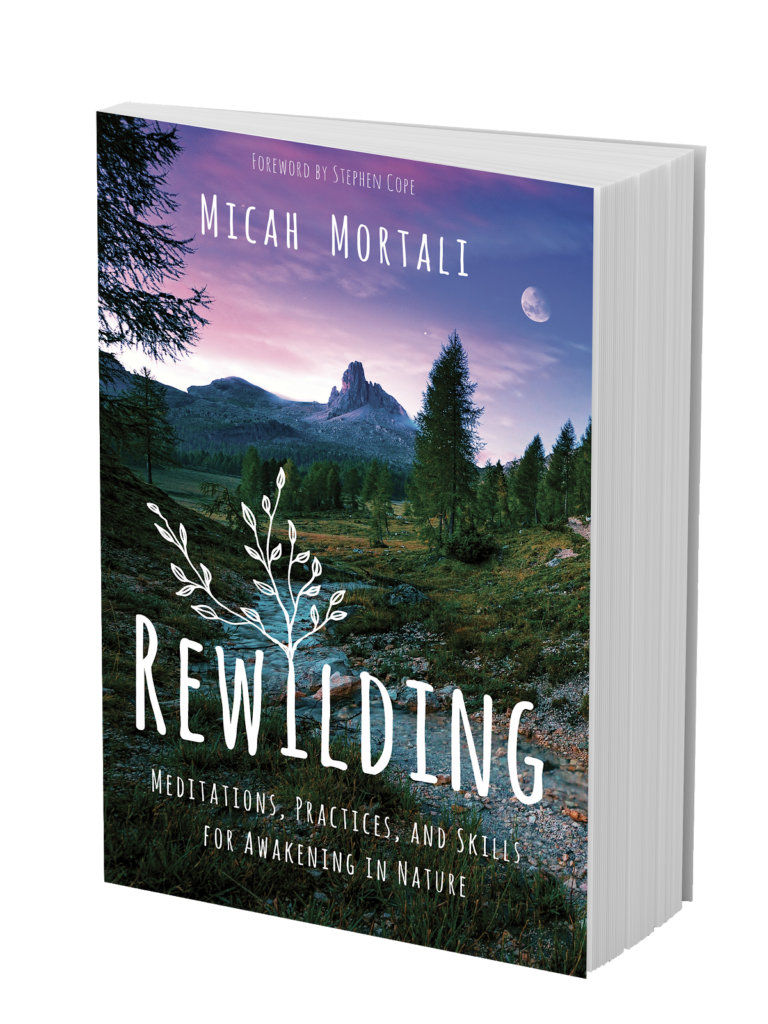
This is an excerpt from Rewilding: Meditations, Practices, and Skills for Awakening in Nature by Micah Mortali.

Micah Mortali HeadshotRewilding Book CoverMicah Mortali is director of the Kripalu Schools, one of the largest and most established centers for yoga-based education in the world. An avid outdoorsman, mindful wilderness guide, 500-hour Kripalu yoga teacher, and popular meditation teacher, Mortali has been leading groups in wilderness and retreat settings for 20 years. In 2018, he founded the Kripalu School of Mindful Outdoor Leadership. Mortali has a passion for helping people come home to themselves and the earth, and he is finishing his master’s at Goddard College on nature awareness and mindfulness practices. He lives with his wife and children in the Berkshires. For more, visit micahmortali.com.

Read Rewilding today!

Sounds True | Amazon | Barnes&Noble | IndieBound


Nature in the Wintertime: Making White Pine Tea Pinterest

Micah Mortali

>

Micah Mortali is director of the Kripalu Schools, one of the largest and most established centers for yoga-based education in the world. An avid outdoorsman, mindful wilderness guide, 500-hour Kripalu yoga teacher, and popular meditation teacher, Mortali has been leading groups in wilderness and retreat settings for 20 years. In 2018, he founded the Kripalu School of Mindful Outdoor Leadership. Mortali has a passion for helping people come home to themselves and the earth, and he is finishing his Master’s at Goddard College on nature awareness and mindfulness practices. He lives with his wife and children in the Berkshires. For more, visit kripalu.org.

Author photo © Jonathan Canlas

Also By Author

The Place You Awaken

Establishing a place for regular outdoor meditation and nature observation is often referred to as a “sit spot” or “medicine spot”.  Like the Buddha, who found his own tree of awakening, we too can go to nature and practice being awake to the reality of the present moment.  This practice can also help us become more intimate with all the qualities of the land we live with.  

If one day I see a small bird and recognize it, a thin thread will form between me and that bird. If I just see it but don’t really recognize it, there is no thin thread. If I go out tomorrow and see and really recognize that same individual small bird again, the thread will thicken and strengthen just a little. Every time I see and recognize that bird, the thread strengthens. Eventually it will grow into a string, then a cord, and finally a rope. This is what it means to be a Bushman. We make ropes with all aspects of the creation in this way.” 

San bushman

Guided Sit Spot Practice

  1. Go to a place in nature that is close to where you live and that you can visit regularly.
  1. Take a few moments to center yourself, breathing in and out, and arriving fully in the present moment.
  1. As you are ready begin to walk mindfully with an intention to find a spot that calls out to you, a place you can sit and deepen your relationship with this place.  The spot should feel welcoming, safe and comfortable.  It could be under a tree, beside a boulder or in an open space.  Often, east facing spots can be nice for early morning sits.
  1. When you find a spot that feels good, in your own way, ask permission of that place and wait to see what comes to you.  If you feel invited, sit.  If not, keep looking.
  1. Once in your spot, sit comfortably and become as still as you can.  Imagine that you are melting into the earth, becoming a part of the land.  Sit for at least 15-30 minutes, noticing any movement, sounds, or other sensations and activities.
  1. Return often.

Find more practices for connecting to nature in Rewilding: Meditations, Practices, and Skills for Awakening in Nature by Micah Mortali.

Read Rewilding today!

Sounds True | Amazon | Barnes&Noble | Bookshop

Nature Meditation by a Window

With many people home-bound, we may need to get creative in seeking ways to connect with the natural world.  Sitting by an open window is one excellent practice for connecting with the outdoors, and it can be a powerful form of nature meditation as well.

“What is life?  It is the flash of a firefly in the night.  It is the breath of a buffalo in the wintertime.  It is the little shadow which runs across the grass and loses itself in the sunset.”

Crowfoot, Orator of the Blackfoot Confederacy

  1. Find a comfortable seat by an open window that looks outdoors.  
  2. Morning, during the dawn chorus when birds are most active, can be a perfect time to enjoy your morning coffee or tea as you observe a new day emerge.
  3. Set an intention to stay present, letting go of thoughts or stories in your mind as they arise, and instead focusing your attention on whatever is fascinating in your environment.
  4. Sit for at least 15-30 minutes if you can.  Practice regularly to help alleviate stress, increase your sense of connection with your local environment, and awaken your senses.

Micah Mortali Facebook Live clickable image for guided meditation earthday


Find more practices for connecting to nature in Rewilding: Meditations, Practices, and Skills for Awakening in Nature by Micah Mortali.

Read Rewilding today!

Sounds True | Amazon | Barnes&Noble | Bookshop

The Basics of Nature Mindfulness

Ursasana: Bear Posture

Many years ago, a bear sat down next to me while I was meditating in the woods. It was an afternoon in mid-October in the Berkshires, and I had been mountain biking in my favorite preserve. I took a break from riding to enjoy the perfect fall afternoon. I was overflowing with gratitude. My life was going well.

I sat under a strong oak tree and closed my eyes. I asked Spirit to come and sit with me, to share in my heartfelt thanksgiving. I spoke the words aloud and immediately heard footsteps in the woods behind me. They got closer, but I continued with my meditation, until directly behind me, I heard a twig snap and a loud exhalation through a very big nose. I knew in that moment, in every cell of my body, that a bear was behind me.

My heart pounded, and adrenaline surged through my body. I was totally alert and aware. I very slowly turned my head to look behind me and saw shining black fur from shoulder to rump, close enough to reach out and touch. It was a large black bear. Immediately my mind provided options for survival. Get up and run away? Get up and yell to scare the bear away? Climb a tree? Those ideas seemed bad. Sit still, do nothing, and breathe? Yes, that made sense. And so I did. I slowed my breathing and meditated on the intensity of my body’s response to this perceived threat.

In my yoga I had learned that strong sensations and emotions, including fear, can be powerful doorways into meditation. Rather than turning away from an uncomfortable experience, I had learned to breathe into what I was feeling. In this case, the fight-or-flight response was a huge wave washing over my mind, body, and soul. Instead of making a big story about what was happening, I remembered to face the experience in all of its raw power. I had the thought, This is the coolest thing that has ever happened to me! I had another thought, too: This might be the worst thing that has ever happened to me! Many hundreds of hours, I had practiced breathing through the intense sensations of yoga postures, watching my experience without reaction and allowing things to be the way they are. All that training on the mat was now being put to the test in a pose I had never tried before, Bear Pose, or Ursasana.

For a moment, I wondered how it might feel to be bitten by a bear. That was not a helpful thought, so I returned to my breathing. Moments seemed to stretch into hours. The bear walked out from behind the tree and sat next to me. It was smelling me. Still I remained motionless. In time, the bear walked away. I turned to look as it walked away. It turned to look back at me. Our eyes met, and then it disappeared down the hill. I stood up and fell down, my legs weak and wobbly. I stood again and got to my bike. I climbed on board and pedaled out of those woods like a bat out of hell!

For days, I was in a state of profound shock and elation. My life was filled with magic, possibility, and power. Anything could happen. I felt incredibly alive. The presence of the bear stayed with me—even to this day. I have never been a thrill seeker or adrenaline junkie. I’ve never jumped out of an airplane or tried bungee jumping. I’ve always been drawn to more meditative outdoor activities, like canoeing, archery, or watching birds. But sitting in meditation with a bear gave me an unexpected adrenaline jolt.

While sitting with a bear is not likely to happen to many people, you may encounter other life-forms or elements that can help you awaken and experience a greater degree of aliveness. We long for connection with our relatives who roam the forests and wildlands, and we still find nourishment in their company. In mindful rewilding, we open ourselves up to the sensations and life-giving experiences that the land holds for us. Such moments of communion between you and the living earth can open doorways into a more magical, mysterious, and meaningful life. And it makes all the difference to have the right mental tools and preparation to help you ride the waves of powerful energies you will encounter in both the human and the more-than-human worlds.

When sitting with that bear, I used a technique we lovingly call “BRFWA”: Breathe, Relax, Feel, Watch, and Allow. You might use BRFWA on your first walk in a park or a wood that is new to you. You might use it during your first solo camping experience or when you see an animal that frightens you. I once used BRFWA when I got caught in a rip current while swimming off the Big Island of Hawaii. It allowed me to remain calm and to act skillfully, possibly saving my life. In any survival situation, the first advice is almost always to remain calm and think, not to react or panic. But how we are supposed to do that is not often explained. 

By practicing mindful rewilding, you are not looking to put yourself in a survival situation, though many of these skills can help you feel more confident and capable when you’re away from the conveniences of modern society. Inevitably, the more time we spend outdoors, the more likely we are to come up against our comfort zone or find ourselves in a situation where remaining calm and being skillful are necessary. In these moments, BRFWA can be a great ally.

I recommend that you use BRFWA regularly as a moment-to-moment practice. Using it daily will support your developing a general state of mindfulness. You can also use BRFWA to go deeper into a pleasant experience. Maybe you practice it when you take a walk or when you dip your feet in a cool stream or when you feel a fresh breeze moving through your neighborhood. Practice BRFWA regularly so that when something truly challenging happens, it is second nature for you, as it was for me when I had my encounters with the bear and the rip current.

BRFWA: Breathe, Relax, Feel, Watch, Allow

To begin working with BRFWA outdoors, try the following steps:

  1. Go outside. Find a place where you can sit comfortably and have a view of a natural, outdoor space. (This might also be the place where you want to establish your daily nature meditation.)
  2. Get grounded. Feel your sitz bones and imagine they are plugging in to the earth. As you ground down through your seat, also lengthen your spine and let it rise up through the crown of your head. Imagine that your spine is the trunk of a great tree and you are the bridge that connects the heavens and the earth.
  3. Breathe. Soften your belly, and slowly deepen your breathing with each inhalation and exhalation. If possible, breathe in and out through the nose. A good ratio for this breath is to inhale for four counts and hold the breath gently for seven counts; then exhale for eight counts, and repeat the cycle. As you breathe, notice the qualities of the air. What is the temperature? Is it hot, cold, or somewhere in between? How moist or dry is the air? What can you smell? Leaves, pine needles, the smoke from nearby fireplaces? In which direction is the wind moving? What can you hear? Your breath, your heartbeat, your joints settling? Branches creaking against each other, leaves rustling in the breeze, dew dripping to the ground, chipmunks or squirrels scampering, crows cawing, pigeons cooing, an airplane passing overhead?
  4. Relax. As you breathe, begin to consciously scan your body. Notice any places where you are holding tension. Focus on each of these places, as you continue to breathe calmly and deeply, and invite these places to soften and let go. Maybe your forehead is tense, and your brow is furrowed. Maybe your shoulders are tight and raised with tension. Perhaps your jaw is clenched. See if you can allow your jaw to relax, so that your teeth are parted. Invite your tongue to sit heavy and relaxed in your mouth, with the tip of the tongue resting against the ridge of skin behind your two front top teeth. With each exhalation, feel tension melting out of your body, mind, and spirit. Relax into the support of the earth element. Feel the earth beneath you and within your bones and muscles.
  5. Feel. As you continue to breathe and relax, notice what you can feel. Notice your body and what your body can feel—the air on your skin, the earth against your buttocks and legs, the light on your skin or coming through your clothing. Notice your heart and how you are feeling right now, not from a place of judgment, but from a place of compassion for yourself, and from a larger perspective, from your witness. Notice how the breath moving in and out helps you to feel more. This is one of the great secrets of yoga: the more deeply you breathe, the more of your own life you can feel.
  6. Watch. Be the witness. Observe your experience and allow as much space as you can for whatever is happening to be the way it is. Simply observe the land around you. Notice movement wherever it may be. Watch the play of light and the subtle movement created by the atmosphere’s constant state of motion. Watch everything, and be curious about any life you see, whether birds in the bushes or trees, ants crawling on the ground, or a squirrel leaping from limb to limb. When you come into the present moment using these steps, doors of perception will open to you. You will see the world through new eyes.
  7. Allow. Let it be. Let the moment be exactly the way that it is. Let go of grasping to your idea of what this moment should be. Let go of any aversion to things as they are. See if you can simply allow this moment to be as it is, and give yourself the opportunity to experience this moment right now in its pure expression. No matter the weather, no matter the terrain, can you allow this living earth and your relationship with it to be the way that it is? Moment by moment, can you keep letting go of your opinions, preferences, and judgments? It’s not easy for any of us, which is why we practice. This awareness is something to come back to moment after moment after moment, always beginning again.
  8. This is an excerpt from Rewilding: Meditations, Practices, and Skills for Awakening in Nature by Micah Mortali.

You Might Also Enjoy

Stephen Cope on How Yoga Changes Your Brain and Emotio...

Have you ever noticed how quickly your mind reacts to stress, emotion, or even a passing thought? Many of these responses feel automatic, as if they happen before we have a chance to choose. Yoga offers another way of meeting these moments. Through breath, movement, and attention, we begin to slow down and notice what is happening within us. With practice, this awareness creates space, allowing for more clarity, steadiness, and a deeper connection to our emotional life.

At Sounds True, we have spent decades sharing the living wisdom of transformational teachers in their own authentic voice. Our work is rooted in making these teachings accessible and meaningful for everyday life. Through conversations with teachers like Stephen Cope, we bring forward insights that bridge ancient practice with modern understanding of the mind.

Here, we look at how yoga brain science shapes emotional health through Stephen Cope’s teachings on awareness, neuroplasticity, and mental well-being.

Key Takeaways:

  • Neuroplasticity in Action: Yoga brain science shows that repeated awareness and breathwork can reshape neural pathways over time.
  • Emotional Awareness: Yoga’s psychological benefits include recognizing and responding to emotions with greater clarity and steadiness.
  • Mind-Body Connection: Practices rooted in yoga and mental health strengthen the relationship between physical sensations and emotional experience.

Awaken Your Inner Healing Power with Guided Practices by Sounds True

Stephen Cope on Yoga Brain Science and Emotional Transformation

In conversation with Stephen Cope, yoga brain science is not a general idea, but something lived and felt in the body and mind. Cope draws from decades of practice to highlight a simple truth: the brain is shaped by where we place our attention. Through yoga, we begin to notice our patterns, how reactions form, and how awareness can gently shift them.

Many of us move through life on autopilot, reacting quickly to stress and emotion. Yoga invites a slower pace. It encourages us to pause, feel, and stay present. Over time, this creates space between impulse and action, allowing for new ways of responding.

This transformation is not about becoming someone else. It is about becoming more aware of our own experience. Yoga brain science helps us understand this process, but the real change happens through practice, moment by moment.

Yoga Neuroplasticity: How Practice Rewires the Brain

Yoga offers a direct experience of neuroplasticity, showing us that change is not only possible but natural. Through steady practice, the brain begins to reorganize in response to new patterns of attention and presence.

Repetition and Awareness in Yoga Neuroplasticity

In yoga, repetition is not about perfection. It is about returning. Each time we bring awareness back to the breath or body, we are strengthening pathways in the brain that support presence. These moments may seem small, yet they accumulate in meaningful ways. Over time, the familiar pull of distraction or reactivity begins to shift.

This is how yoga neuroplasticity unfolds. The brain learns from experience. When we repeatedly choose awareness, the brain adapts to that choice. Patterns of calm, clarity, and steadiness become more accessible. What once required effort begins to feel more natural.

From Conditioned Patterns to Conscious Choice

Many of our emotional habits are deeply conditioned. They arise quickly and often without conscious awareness. Yoga creates an opportunity to see these patterns more clearly. As awareness deepens, we begin to recognize the early signs of reaction. A tightening in the body, a shift in breath, a familiar thought pattern.

In that recognition, there is a pause. That pause is significant. It allows for choice. Instead of being carried forward by habit, we can respond with intention. Cope points to this as a turning point in practice. It reflects a movement toward greater freedom, supported by the brain’s inherent capacity to change.

Yoga Psychological Benefits for Emotional Awareness and Resilience

The psychological benefits of yoga are grounded in the development of awareness and the cultivation of a steady relationship with inner experience. Through practice, we begin to understand our emotions in a more direct and embodied way.

Developing Emotional Awareness Through Practice

Yoga invites us to listen closely to what is happening within. Emotions are not abstract ideas. They are felt experiences that move through the body. By paying attention to sensations, breath, and subtle shifts, we begin to recognize emotional states as they arise.

This awareness changes our relationship with emotion. Instead of being swept away, we learn to stay present. We can name what is happening without becoming overwhelmed by it. This creates a sense of clarity that supports emotional balance.

Building Resilience Through Presence

Resilience is often thought of as strength in the face of difficulty. In yoga, resilience is cultivated through presence. When discomfort arises in practice, we are invited to stay with it, to observe it without immediately trying to change it.

This builds capacity. Over time, we develop the ability to remain steady even when emotions are intense. This steadiness carries into daily life. Challenges are still present, yet our way of meeting them shifts. There is more space, more patience, and a deeper sense of grounding.

Stephen Cope on Yoga and Mental Health in Daily Life

For Stephen Cope, yoga and mental health are inseparable. Practice is not limited to a specific time or place. It is woven into the fabric of daily living.

Attention as a Tool for Mental Health

Attention shapes experience. When attention is scattered or pulled into repetitive thought patterns, the mind can feel unsettled. Yoga trains attention in a gentle and consistent way. By returning to the breath or body, we begin to anchor awareness in the present moment.

This shift has a meaningful impact on mental health. Patterns of rumination begin to soften. The mind becomes less caught in loops of worry or self-judgment. There is a growing sense of stability that comes from being present with what is here.

Integrating Practice Into Daily Living

Integration is at the heart of yoga. The insights gained in practice are meant to be lived. This can be as simple as pausing before responding in a conversation or noticing the breath during a moment of stress.

These small moments matter. They reinforce the same patterns of awareness cultivated during practice. Over time, yoga becomes less about doing and more about being. Mental health is supported not through isolated efforts, but through a continuous relationship with awareness.

Discover the Hidden Power of Daily Meditation

How Yoga Brain Science Supports Mental Health and Well-Being

Yoga brain science offers a grounded understanding of how practice supports well-being on multiple levels. It reflects the connection between body, mind, and attention, showing how each influences the other.

  • Yoga supports the regulation of the nervous system by encouraging slower, more conscious breathing
  • It brings awareness to habitual thought patterns, allowing for a different relationship with them
  • It creates space for emotional processing by inviting presence rather than avoidance
  • It strengthens the capacity for focused attention, which supports clarity and stability
  • It deepens the connection between body and mind, helping us recognize early signals of stress

These elements work together to support mental health in a way that feels both practical and accessible. As practice continues, many people notice a shift toward greater balance. There is a growing sense of ease in how emotions are experienced and expressed.

This is not about removing difficulty from life. It is about developing the capacity to meet life as it unfolds. Yoga brain science helps us understand how this capacity is built through consistent, mindful engagement with our inner world.

Exploring Yoga Neuroplasticity and Long-Term Habit Change

Habit change is often seen as effort-driven, but yoga offers another approach. Through yoga neuroplasticity, habits are shaped and reshaped by attention and repetition.

Each moment of awareness, whether noticing the breath or a reactive thought, supports new patterns. These small shifts build over time, creating lasting change.

As practice continues, old habits loosen, and the mind becomes more flexible, allowing for greater freedom in how we respond.

The Psychological Benefits of Yoga for Stress and Emotional Balance

Stress is part of life, but yoga can change how we relate to it. By grounding attention in the body and breath, we create an anchor that helps us stay steady during intense or uncertain moments.

Instead of reacting automatically, we learn to remain present. This builds a sense of balance where emotions can move without overwhelming us. Over time, this steadiness becomes more natural, rooted in a deeper connection to awareness.

Integrating Yoga and Mental Health Practices Through Stephen Cope’s Teachings

Through the teachings of Stephen Cope, yoga and mental health become a lived practice grounded in both tradition and modern insight. He encourages approaching experience with curiosity rather than judgment, creating space for meaningful change.

Through attention, breath, and presence, yoga offers tools to meet ourselves more fully and support greater clarity, connection, and emotional well-being.

Learn How your Mind Really Works with Sounds True

Final Thoughts

Yoga brain science reminds us that meaningful change begins with awareness. Through the teachings of Stephen Cope, we see how steady practice can reshape the way we meet our thoughts, emotions, and daily experiences. At Sounds True, we hold this work as a living process, one that invites patience, presence, and a deeper relationship with ourselves over time.

Frequently Asked Questions About Yoga, Brain Science, and Emotional Health

What is yoga brain science in simple terms?

Yoga brain science refers to how yoga practices like breathing, movement, and meditation influence brain function. It explains how consistent practice can shape attention, emotional patterns, and overall mental well-being.

How long does it take for yoga to affect the brain?

Changes can begin with a single session, especially in stress reduction. However, lasting shifts in brain patterns and emotional responses typically develop through consistent practice over weeks or months.

Can yoga replace therapy for mental health concerns?

Yoga can support mental health, but it is not a replacement for therapy. It works well alongside professional care by helping individuals build awareness, regulate emotions, and stay grounded.

Is yoga effective for anxiety and overthinking?

Yes, many people find yoga helpful for anxiety. Practices that focus on breath and body awareness can calm the nervous system and reduce cycles of overthinking.

Do you need physical flexibility to gain mental benefits from yoga?

No. The mental and emotional benefits of yoga come from awareness and attention, not physical ability. Anyone can experience these benefits regardless of flexibility.

What type of yoga is best for brain and emotional health?

Slower, mindful practices such as Hatha, restorative, or gentle flow yoga tend to support emotional regulation and awareness. The key factor is consistency and presence, not intensity.

How does breathing in yoga affect the brain?

Breathing practices influence the nervous system by signaling safety to the body. Slow, steady breathing can reduce stress responses and support clearer thinking.

Can yoga help with emotional burnout?

Yoga can help individuals reconnect with their body and internal state, which is often disconnected during burnout. This reconnection supports recovery and emotional balance over time.

Is meditation necessary to experience yoga’s brain benefits?

Meditation can deepen the effects, but it is not required. Many of the benefits come from mindful movement and breath awareness practiced during yoga itself.

How often should someone practice yoga for mental health support?

Even a few minutes daily can be helpful. Regular, consistent practice tends to be more beneficial than occasional longer sessions.

Michelle Cassandra Johnson is an author, activist, spiritual teacher, racial equity consultant, and intuitive healer. She is the author of six books, including Skill in Action and Finding Refuge. Amy Burtaine is a leadership coach and racial equity trainer. With Robin DiAngelo, she is the coauthor of The Facilitator's Guide for White Affinity Groups. For more, visit https://www.michellecjohnson.com/wisdom-of-the-hive.

Richard Schwartz on IFS: Why There Are No Bad Parts In...

Many people experience moments of inner conflict. One part may want to take action, while another feels cautious or protective. Internal Family Systems offers a way to understand these experiences by recognizing that the mind is made up of different parts, each shaped by life experiences and emotional needs.

At Sounds True, we are dedicated to sharing transformational teachings from leading spiritual teachers in their authentic voices. Through our books, audio programs, and podcasts, we help bring wisdom from teachers such as Richard Schwartz to people seeking deeper self-understanding and personal growth.

Here, we discuss Richard Schwartz’s perspective on Internal Family Systems and the idea that there are no bad parts within us.

Key Takeaways:

  • The Core Idea of IFS: Internal Family Systems explains the mind as a system of inner parts that influence thoughts, emotions, and behaviors.
  • The Meaning of No Bad Parts: Richard Schwartz teaches that every part develops for a reason and often serves a protective role within a person’s inner system.
  • The Purpose of Parts Work Therapy: IFS therapy helps people build awareness and compassion toward their inner parts, supporting emotional healing and self-understanding.

Learn How your Mind Really Works with Sounds True

What Is Internal Family Systems and How Does It Work

Internal Family Systems is a therapeutic model developed by Richard Schwartz that views the mind as made up of different inner parts, each with its own perspective, emotions, and intentions. Instead of seeing these parts as problems, IFS therapy understands them as meaningful aspects of our inner world that developed to help us navigate life. Many people recognize this experience in moments of inner conflict, when one part of them wants to move forward while another part feels afraid or hesitant. In parts work therapy, these inner dynamics are approached with curiosity and compassion. By learning to listen to and understand these parts, people can begin to relate to themselves with greater awareness and balance.

Richard Schwartz and the Origins of Internal Family Systems

Internal Family Systems grew out of the work of family therapist Richard Schwartz. While listening to clients describe their inner struggles, he noticed that many spoke about different parts of themselves with distinct voices and roles.

How Richard Schwartz Developed IFS Therapy

During his clinical work in the 1980s, Schwartz began inviting clients to speak directly with these inner parts. He observed that the parts often had clear intentions and were trying to help in some way. This insight became the foundation of IFS therapy.

The Insight Behind “No Bad Parts”

Over time, Schwartz realized that even the most difficult reactions were protective in nature. This understanding led to the core idea in Internal Family Systems that there are no bad parts, only parts that need understanding and care.

The Core Idea Behind IFS Therapy and Inner Parts

Internal Family Systems teaches that the mind contains different parts, each shaped by life experiences. IFS therapy views these parts as meaningful aspects of the inner system that try to help a person cope, protect themselves, or manage emotional pain.

How Inner Parts Form in IFS Therapy

In parts work therapy, inner parts often develop during difficult or overwhelming experiences. These parts adopt roles that help a person handle stress, avoid pain, or maintain stability.

The Role of the Self in Internal Family Systems

IFS also describes a core presence called the Self. When people connect with the Self, they can approach their parts with calmness and compassion, allowing the inner system to move toward greater balance.

Why Richard Schwartz Says There Are No Bad Parts

Richard Schwartz teaches that many reactions we judge harshly are actually parts trying to protect us. In Internal Family Systems, these behaviors are understood as strategies that formed in response to difficult experiences. The idea of “no bad parts” invites people to look at their inner world with curiosity rather than criticism.

Why Protective Parts Form

Protective parts develop to help manage emotional pain or prevent past wounds from being triggered again. They step in to keep the person safe, even if their methods later create tension.

Seeing Difficult Reactions Through the Lens of IFS Therapy

IFS therapy encourages people to understand the intention behind their reactions. When parts are approached with compassion, it becomes easier to build trust within the inner system and support healing.

Awaken Your Inner Healing Power with Guided Practices by Sounds True

Understanding the Roles of Parts in Parts Work Therapy

In Internal Family Systems, parts are often grouped into different roles based on how they try to protect a person’s emotional system. Richard Schwartz observed that these roles help explain why certain thoughts, reactions, and behaviors appear in stressful situations. In parts work therapy, recognizing these roles helps people understand how their inner system has been working to keep them safe.

Common Roles in Internal Family Systems

  • Managers Managers try to keep life organized and under control. These parts often focus on planning, perfectionism, or staying responsible so that painful emotions do not surface.
  • Firefighters Firefighters react quickly when emotional pain breaks through. They try to stop overwhelming feelings by distracting, numbing, or pushing their minds away from distress.
  • Exiles Exiles carry deeper emotional wounds, often connected to past hurt, rejection, or shame. Because these feelings can be intense, other parts work hard to keep them hidden or protected.

In IFS therapy, these roles are not viewed as problems. Each part was developed to help the system survive difficult experiences. As people begin to understand these roles with curiosity and compassion, they can start building a healthier relationship with every part of their inner world.

Understanding the Roles of Parts in Parts Work Therapy

In Internal Family Systems, parts take on different roles to protect a person from emotional pain. Richard Schwartz identified three common roles in IFS therapy: managers, firefighters, and exiles.

Managers try to keep life organized and controlled, often pushing people to perform well or avoid situations that may trigger painful emotions. Firefighters respond when distress surfaces and attempt to quickly reduce emotional intensity through distraction or other coping behaviors. Exiles carry deeper emotional wounds, such as shame, fear, or sadness that formed during difficult experiences.

In parts work therapy, healing begins when people approach these parts with curiosity and compassion, allowing the inner system to gradually move toward balance.

How IFS Therapy Helps You Build a Relationship With Your Parts

IFS therapy teaches people to relate to their inner parts with curiosity rather than judgment. Instead of trying to control or silence difficult reactions, Internal Family Systems encourages listening to what each part is trying to communicate.

Through this process, people begin to recognize the concerns and intentions behind their parts. As trust develops within the inner system, protective parts can relax and allow deeper healing to take place. This relationship between the Self and the parts is a central element of growth in parts work therapy.

Healing Through Internal Family Systems and the “No Bad Parts” Principle

A key teaching in Internal Family Systems is the understanding that every part has a positive intention. Richard Schwartz describes this idea as the principle of “no bad parts.” In IFS therapy, even reactions that seem unhelpful are viewed as protective strategies that developed in response to pain or stress.

By approaching these parts with compassion instead of criticism, people can begin to understand their purpose. As trust grows within the inner system, these parts often relax their roles, creating space for healing and greater inner balance.

Why Parts Work Therapy Is Transforming Modern Psychology

Parts work therapy has gained widespread attention because it offers a compassionate way to understand inner conflict. Instead of viewing difficult emotions as problems to eliminate, Internal Family Systems helps people recognize the protective roles behind their reactions. Through the teachings of Richard Schwartz and the principle of “no bad parts,” many individuals are finding a more respectful and healing relationship with their inner world. This approach continues to influence therapists, researchers, and people seeking deeper self-understanding.

Discover the Hidden Power of Daily Meditation

Final Thoughts

Internal Family Systems offers a compassionate way to understand our inner world. Through the work of Richard Schwartz and the practice of IFS therapy, many people are learning that the thoughts and reactions they struggle with are parts that formed to protect them. The principle of “no bad parts” invites a shift from self-judgment to curiosity and care. As people begin to listen to their inner system with respect, parts work therapy can open the door to deeper healing and a more balanced relationship with themselves.

Frequently Asked Questions About Internal Family Systems

What is the main goal of Internal Family Systems therapy?

The main goal of Internal Family Systems is to help individuals develop a healthier relationship with their inner parts. IFS therapy encourages people to approach their thoughts and emotions with curiosity so they can better understand the intentions behind them and create more balance within their internal system.

Who created Internal Family Systems?

Internal Family Systems was developed by Richard Schwartz, a family therapist who began noticing that clients often described their inner experiences as different parts interacting with one another. His observations led to the development of IFS therapy as a structured approach to understanding and healing these inner dynamics.

How is IFS therapy different from traditional talk therapy?

IFS therapy focuses on direct communication with inner parts rather than only discussing experiences at a surface level. This approach helps people understand the roles their parts play and encourages internal dialogue that can lead to deeper emotional insight and healing.

What does the phrase “no bad parts” mean in Internal Family Systems?

The phrase “no bad parts” reflects the belief that every part of the mind developed for a reason. Even parts that lead to difficult behaviors are often trying to protect a person from emotional pain or past experiences.

Can Internal Family Systems be practiced outside of therapy?

Many people apply principles of Internal Family Systems in their daily lives by paying attention to their thoughts and emotional reactions. While professional guidance can be helpful, practicing awareness and curiosity about inner parts can support personal reflection and growth.

Is Internal Family Systems useful for personal development?

Yes. Beyond clinical therapy, Internal Family Systems is widely used for personal growth. The model helps people understand their emotional patterns, strengthen self-awareness, and develop a more compassionate relationship with themselves.

Why do people experience internal conflict, according to IFS?

In IFS, internal conflict happens when different parts of the mind have competing goals or fears. One part may want safety and stability, while another may seek change or expression. Understanding these differences can help people respond to conflict with greater clarity.

Is Internal Family Systems supported by modern psychology?

Internal Family Systems has gained increasing recognition among therapists and mental health professionals. Many practitioners integrate parts work therapy into their practice because it provides a structured way to understand complex emotional patterns.

What role does self-awareness play in IFS therapy?

Self-awareness allows people to notice when different parts are active. By observing these inner reactions without immediate judgment, individuals can begin to understand the needs and motivations of their parts more clearly.

Who can benefit from Internal Family Systems therapy?

IFS therapy can benefit a wide range of people, including those interested in emotional healing, mindfulness, and personal insight. It is often helpful for individuals who want to better understand their inner experiences and build a more compassionate relationship with themselves.

Michelle Cassandra Johnson is an author, activist, spiritual teacher, racial equity consultant, and intuitive healer. She is the author of six books, including Skill in Action and Finding Refuge. Amy Burtaine is a leadership coach and racial equity trainer. With Robin DiAngelo, she is the coauthor of The Facilitator's Guide for White Affinity Groups. For more, visit https://www.michellecjohnson.com/wisdom-of-the-hive.

Resmaa Menakem on Somatic Abolitionism: Healing Racial...

Healing racial trauma is often approached through conversation and reflection, yet many responses live deeper than words. The body carries patterns shaped by lived experience and inherited stress, influencing how we react, connect, and feel safe. Somatic abolitionism brings attention to this embodied layer, inviting a different kind of awareness rooted in sensation and presence.

At Sounds True, we have spent decades sharing living wisdom from teachers whose work speaks directly to real human experience. Our mission is to make these teachings accessible and grounded, offering guidance that supports meaningful transformation in everyday life. The embodied approach of Resmaa Menakem reflects this commitment to depth, clarity, and care.

Here, we look at how somatic abolitionism helps us understand and heal racial trauma in the body, and how these practices can be integrated into daily life.

Key Takeaways:

  • Body Awareness: Healing racial trauma begins by recognizing how the body stores and expresses stress responses shaped by lived and inherited experiences.
  • Capacity Building: Developing nervous system resilience allows individuals to stay present in difficult conversations and reduce reactive patterns.
  • Embodied Healing: Somatic abolitionism supports lasting change by engaging the body directly, not just through intellectual understanding.

Awaken Your Inner Healing Power with Guided Practices by Sounds True

Resmaa Menakem and the Foundations of Somatic Abolitionism

What if healing racial trauma is not only something we think through, but something we experience in the body? At Sounds True, we share teachings that honor lived wisdom, and the work of Resmaa Menakem reflects this deeply. His approach invites us to move beyond analysis and into the body’s intelligence.

Somatic abolitionism recognizes that the body carries the imprint of history and survival. These patterns shape how we respond to stress and connection. Many of our reactions are not just personal, but shaped by generations held in the nervous system.

This work invites us to slow down and notice what arises. Sensations like tension, breath, and impulse offer insight. Instead of overriding them, we stay with them gently.

Healing here is not about perfection. It is about building a new relationship with the body, creating space to respond with awareness rather than react automatically.

Understanding Racial Trauma Body and Its Lasting Impact

Racial trauma lives in the body through patterns of stress and response shaped over time. These patterns influence how we experience safety, connection, and threat, often without conscious awareness. Understanding the racial trauma body helps us see these responses as learned adaptations rather than personal flaws.

How the Racial Trauma Body Forms

The racial trauma body develops through repeated experiences of stress, both lived and inherited. The nervous system adapts to protect itself, creating patterns like hypervigilance or disconnection. Over time, these responses become automatic, shaping everyday behavior and perception.

Why the Body Remembers What the Mind Forgets

The body stores memory through sensation rather than story. Even without a clear recall, it reacts to familiar patterns of stress. By noticing these sensations with awareness, we begin to understand and gently shift how the body responds.

What Somatic Abolitionism Teaches About Healing

Somatic abolitionism teaches that healing happens through the body, not just through understanding. It focuses on how the nervous system responds to stress and invites us to build awareness and regulation over time. This approach supports lasting change by working with lived experience rather than relying on insight alone.

Moving Beyond Cognitive Understanding

Knowing about trauma is different from feeling safe in the body. Somatic abolitionism encourages us to notice physical responses like tension or breath and work with them directly, creating space for more intentional reactions. Over time, this awareness helps shift automatic patterns into more grounded responses.

Building Capacity for Discomfort and Growth

Healing involves increasing the body’s ability to stay present during discomfort. By gradually building this capacity, we become less reactive and more able to engage with challenging experiences in a grounded way. This creates resilience that supports deeper connection and sustained personal growth.

My Grandmother’s Hands and Intergenerational Trauma

In My Grandmother’s Hands, Menakem brings attention to the ways trauma is carried across generations. The phrase my grandmother’s hands evokes the lineage of experience that lives within each of us.

The Legacy Carried Through My Grandmother’s Hands

Our bodies carry stories that began long before we were born. The experiences of our ancestors shape how we respond to stress, connection, and belonging. These patterns are often unconscious, yet they influence our daily lives.

Menakem encourages us to recognize this inheritance with compassion. It is not about assigning blame. It is about understanding the context in which these patterns developed. This awareness allows us to meet ourselves and others with greater empathy.

Interrupting the Cycle of Inherited Trauma

While trauma can be passed down, so can healing. Each moment of awareness creates an opportunity to shift long-held patterns. By engaging in somatic practices, we begin to offer the body new experiences of safety and regulation.

These small changes ripple outward. As individuals develop greater capacity, they contribute to a broader field of healing within families and communities. The cycle begins to shift, not through force, but through consistent, embodied presence.

Discover the Hidden Power of Daily Meditation

The Body as a Vessel for Racial Trauma Body and Repair

The body holds both the weight of trauma and the possibility of healing. Learning to listen to its signals is an essential part of this work.

  • The body communicates through sensation, offering cues about safety and threat
  • Patterns of tension reveal how past experiences are still being held
  • Gentle awareness allows these patterns to shift over time
  • Grounding practices support the nervous system in finding balance
  • Connection with others helps regulate and restore a sense of safety

As we deepen our relationship with the body, repair becomes something we experience directly. It unfolds gradually, through attention, patience, and care. This process invites us to trust the body’s capacity to move toward healing.

Somatic Healing Race: Practices for Regulation and Resilience

Somatic healing race is rooted in simple, consistent practices that support the nervous system. These practices invite us to slow down and notice what is present in the body. A hand placed on the chest, a moment of feeling the feet on the ground, or a conscious breath can begin to shift our state.

These moments may seem small, yet they build over time. The body learns that it can move from activation to regulation without shutting down. This creates a foundation for resilience. Instead of being carried by automatic reactions, we begin to experience choice.

Menakem reminds us that this work is ongoing. It is not about reaching a final state, but about continuing to return to the body with curiosity and care. Through this process, we develop a deeper sense of presence that supports both personal and collective healing.

How Somatic Abolitionism Supports Collective Healing

Somatic abolitionism recognizes that healing does not happen in isolation. Our nervous systems are deeply connected, and the state of one body can influence others. When individuals cultivate regulation, they contribute to a shared sense of safety.

This has important implications for communities. Conversations that might otherwise escalate can unfold with greater presence and understanding. People are more able to listen, to pause, and to respond with intention.

Collective healing is not a single event. It is a continuous process that requires commitment and care. As more individuals engage in somatic work, the potential for meaningful change expands. New patterns of interaction begin to take shape, grounded in awareness and connection.

Integrating Somatic Healing Race into Everyday Life

Integration happens through repetition and attention. Somatic healing race becomes part of daily life when we begin to notice the body in ordinary moments. Standing in line, sitting in conversation, or moving through a busy day all offer opportunities to return to sensation.

This practice does not require extra time or special conditions. It asks only for a willingness to pause and notice. Over time, these pauses become more natural. The body becomes a steady point of reference, offering guidance in moments of stress and ease alike.

At Sounds True, we believe that this kind of embodied awareness supports a deeper connection to ourselves and to one another. It allows teachings like somatic abolitionism to move beyond concept and into lived experience, where real transformation can unfold.

Learn How your Mind Really Works with Sounds True

Final Thoughts

Healing racial trauma asks us to move beyond ideas and into direct experience. Through somatic abolitionism, Resmaa Menakem reminds us that the body holds both the imprint of harm and the capacity for repair. As we learn to listen, stay present, and build capacity, we begin to shift patterns that have lived within us for generations. This work unfolds one moment at a time, grounded in awareness, care, and a willingness to return to the body.

Frequently Asked Questions About Resmaa Menakem and Somatic Abolitionism

Who is Resmaa Menakem, and why is his work important?

Resmaa Menakem is a therapist and trauma specialist who focuses on how racialized experiences are stored in the body. His work is important because it brings attention to the physical dimension of trauma, offering a path that complements traditional psychological and social approaches.

What makes somatic abolitionism different from traditional activism?

Somatic abolitionism emphasizes internal regulation and embodied awareness alongside external action. It recognizes that sustainable change requires individuals to work with their nervous systems, not just their beliefs or behaviors.

Is somatic abolitionism only relevant for certain racial groups?

No, this work is for all bodies. While experiences differ across racial identities, everyone carries patterns shaped by history and culture. Somatic abolitionism invites each person to engage with their own embodied experience.

Can somatic practices replace therapy or counseling?

Somatic practices can support healing, but they are not a replacement for professional care when it is needed. They are best understood as complementary tools that deepen awareness and regulation.

How long does it take to see results from somatic healing practices?

The timeline varies for each person. Some may notice small shifts quickly, while deeper patterns may take time to change. Consistency and patience are key elements of this work.

Do I need prior experience with mindfulness to begin somatic work?

No prior experience is required. Somatic work often begins with very simple awareness practices that are accessible to anyone, regardless of background.

What challenges might arise when starting somatic abolitionism?

People may encounter discomfort as they begin to notice sensations that were previously ignored. This is a natural part of the process and can be approached gradually with care and support.

How does community support enhance somatic healing?

Being in regulated, supportive environments helps the nervous system feel safe. This shared sense of safety can deepen individual healing and strengthen relational connections.

Are there specific environments that support somatic healing more effectively?

Quiet, safe, and grounded environments can help, but somatic awareness can also be practiced in everyday settings. The key factor is the ability to bring attention to the body without overwhelm.

How can someone stay consistent with somatic practices?

Consistency grows through simplicity. Choosing small, repeatable practices and integrating them into daily routines makes it easier to maintain them over time.

Michelle Cassandra Johnson is an author, activist, spiritual teacher, racial equity consultant, and intuitive healer. She is the author of six books, including Skill in Action and Finding Refuge. Amy Burtaine is a leadership coach and racial equity trainer. With Robin DiAngelo, she is the coauthor of The Facilitator's Guide for White Affinity Groups. For more, visit https://www.michellecjohnson.com/wisdom-of-the-hive.

One comment on “Nature in the Wintertime: Making White Pine Tea

  1. Glad to run into this! Have read about collecting the pollen and figured the needles were good for things as well. Will definitely be brewing a cup! Can it be done with pitch pine? There’s a lot more of that around me.

Leave a Reply

Your email address will not be published. Required fields are marked *