Short on Time? Try Mindfulness

    —
October 27, 2013

A new study suggests that just 10 minutes of mindfulness meditation changes our experience of time. A great way to learn the practice of mindfulness, requiring no previous experience, is through the groundbreaking new book from Jon Kabat-Zinn, Mindfulness for Beginners, and also through the new online course in Mindfulness-Based Stress Reduction.

From our friends at the Greater Good Science Center

Short on Time? Try Mindfulness

Bogged down with responsibilities at work and at home? Many of us wish we had more time to get it all done—and still steal time to relax.

While adding more hours to our day may not be possible, a recent study suggests a little mindfulness meditation can help us at leastfeel like we have more time in our lives.

Researcher Robin Kramer and his colleagues trained students at the University of Kent in the United Kingdom to link different shapes to either a short and a long period of time. Shapes shown on a computer screen for 400 milliseconds represented a short duration, while shapes shown for 1600 milliseconds represented a long duration. Next, all of the participants were presented with shapes held on the screen for a variety of durations and had to determine whether the duration was more similar to the short or the long period of time.

Half of the participants then listened to a 10-minute mindfulness meditation exercise, which guided them to concentrate on the movement of their breath throughout their body. The other half listened to the audiobook version of The Hobbit for 10 minutes. Immediately afterward, the researchers again presented them with varying durations of time.

The results, published in the journal Consciousness and Cognition, show that the meditators were more likely to report that durations of time were “long” after they had meditated. In contrast, participants didn’t report any difference in time duration if they had listened to theHobbit recording. The researchers conclude that mindfulness meditation made participants experience time as passing more slowly. Remarkably, they saw this effect after just a single 10-minute meditation, among participants who had no prior meditation experience.

Though more study is needed to explain this finding, the researchers suspect that the mindfulness meditation altered time perception because it induced people to shift their attention inward. In the paper, the authors write that when people are distracted by a task in the world around them, they have less capacity to pay attention to time passing, and so experience time as moving more quickly. Because the mindfulness meditation exercise cued participants to focus on internal processes such as their breath, that attentional shift may have sharpened their capacity to notice time passing.

Kramer thinks that this finding could be used in everyday situations, to help people gain control over their experience when they feel short on time. “If things feel like they’re running away,” he says, “slowing things down might help you deal with them more easily.”

Kramer also speculates that while a mindfulness exercise that shifts attention to internal events extends one’s experience of time, a mindfulness exercise that shifts attention to an external event could potentially make time feel like it’s passing more quickly. If this were true, mindfulness could have clinical applications for people who feel like time is moving too slowly, such as those experiencing depression, who tend to overestimate the duration of negative events.

Though Greater Good has previously reported on many positive effects of mindfulness, as well as on how experiencing awe can alter how we perceive time, this study is one of the first to investigate the relationship between mindfulness and time perception. In the future, the researchers aim to uncover how long mindfulness meditation’s effects on time perception last, and to explore further the precise causes of this shift in time perception.

bluelakespass

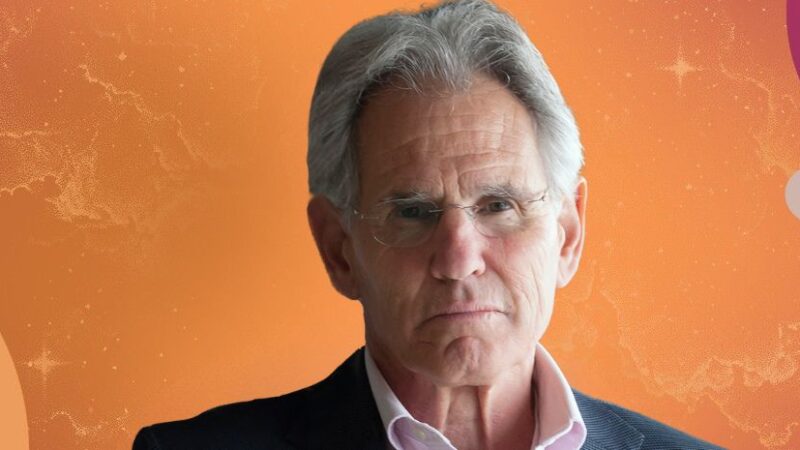
Jon Kabat-Zinn

Jon Kabat-Zinn, PhD, is professor of medicine emeritus at the University of Massachusetts Medical School and the founder and director of its renowned Mindfulness-Based Stress Reduction Clinic. His clinic was featured in 1993 in the public television series Healing and the Mind with Bill Moyers. Jon Kabat-Zinn is the author of 15 books, in print in over 45 languages. These include Full Catastrophe LivingWherever You Go, There You Are; Coming to Our Senses; and Mindfulness for Beginners.

Author photo © Jaume Cosialls

Also By Author

[ENCORE EPISODE] Jon Kabat-Zinn: Befriending Pain

**SPECIAL ENCORE PRESENTATION**

Current statistics tell us that 20% of the US population has some form of chronic pain, defined as severe discomfort that has continued for six months or more. That’s more than 50 million people. Jon Kabat-Zinn has received international acclaim for his leading work in bringing the life-changing practices of meditation and mindfulness into the mainstream of medicine and society. In this inspiring podcast, Tami Simon speaks with Jon about his empowering new book, Mindfulness Meditation for Pain Relief, and how we can greatly improve our lives (and our entire world) by reframing the way we relate to our thoughts, our minds, and the sensations of our bodies.

Listen in as they discuss the epidemic of chronic pain and the power of mindfulness to ease suffering of all kinds, the myth of the “good meditator,” the body as the starting point for practice, exploring your “emotionally freighted thoughts,” our longing to be who we really are, working with the mind and learning to inhabit a space of embodied awareness, the refuge that is meditation practice, letting go of our stories, befriending the sensory field of what we call pain, the miracle of life on Earth, the Buddha’s teaching on mindfulness as the direct path to liberation, surfing the waves of your own experience, unity within diversity and the arising of compassion, focusing on what’s right instead of what’s wrong, how we are all on a growth curve on life’s journey, and more.

Note: This episode originally aired on Sounds True One, where these special episodes of Insights at the Edge are available to watch live on video and with exclusive access to Q&As with our guests. Learn more at join.soundstrue.com.

This episode is sponsored by BetterHelp. Listeners of Insights At The Edge get 10% off their first month at

www.betterhelp.com/soundstrue

Jon Kabat-Zinn: Befriending Pain

Current statistics tell us that 20% of the US population has some form of chronic pain, defined as severe discomfort that has continued for six months or more. That’s more than 50 million people. Jon Kabat-Zinn has received international acclaim for his leading work in bringing the life-changing practices of meditation and mindfulness into the mainstream of medicine and society. In this inspiring podcast, Tami Simon speaks with Jon about his empowering new book, Mindfulness Meditation for Pain Relief, and how we can greatly improve our lives (and our entire world) by reframing the way we relate to our thoughts, our minds, and the sensations of our bodies. 

Listen in as they discuss the epidemic of chronic pain and the power of mindfulness to ease suffering of all kinds, the myth of the “good meditator,” the body as the starting point for practice, exploring your “emotionally freighted thoughts,” our longing to be who we really are, working with the mind and learning to inhabit a space of embodied awareness, the refuge that is meditation practice, letting go of our stories, befriending the sensory field of what we call pain, the miracle of life on Earth, the Buddha’s teaching on mindfulness as the direct path to liberation, surfing the waves of your own experience, unity within diversity and the arising of compassion, focusing on what’s right instead of what’s wrong, how we are all on a growth curve on life’s journey, and more.

Note: This episode originally aired on Sounds True One, where these special episodes of Insights at the Edge are available to watch live on video and with exclusive access to Q&As with our guests. Learn more at join.soundstrue.com.

On The Mindfulness Revolution and Our Fear of Authenti...

The Mindfulness Revolution Header Image

Deepen your personal healing practice with guided meditations, audio presentations, and learning intensives by Jon Kabat-Zinn on Sounds True »

Have you ever wondered who coined the term ‘mindfulness’? That was Dr. Jon Kabat-Zinn. He describes it as “paying attention on purpose with a non-judgmental attitude.”

“I take an enormous amount of pleasure in actually not trying to get anywhere” —Jon Kabat-Zinn

Partly because of his work and research, this concept of ‘mindfulness’ has become mainstream. We see it at colleges, small businesses and large corporations, and—perhaps most notably—in medicine (Kabat-Zinn also founded the Stress Reduction Clinic at the University of Massachusetts Medical School).

In Tami’s interview with Kabat-Zinn on Insights at the Edge, the two begin asking: Why is mindfulness gaining popularity in the first place? In the process, they explore what’s simple, profound, and relatable about it.

AGE OF MINDFULNESS

mindfulness revolution woman

“Once you realize that we are completely embedded in an interconnected world … the only real response is a sense of profound appreciation or affection for the fact that we are not separate” 

Mindfulness has always been a part of humanity. It has been called different names and interpreted by different lenses, but the concept of some greater unity of which we are all a part—that doesn’t seem to be going anywhere.

So, even if it’s a trend, couldn’t there be more to it? In a way, mindfulness seems to take on the breath of intuition, not necessarily logic or reason. It is truly the air of possibility.

YOU ARE NOT YOUR THOUGHTS

mindfulness revolution thoughts

You cannot get rid of your thoughts. But when you create distance between yourself and your thoughts, you can let them wash through you. You do not have to fight to maintain them or believe them. And, you do not have to fight to let them go.

“Suppose the sky is awareness. If a bird flew through, then the sky would know it. … [The sky] has its own sort of ground condition of just being the sky, just being awareness”

He describes this awareness not as a state of being, but as a shift in seeing. There was always space there. We just needed to rotate a lens.

Have you ever retreated your vision while meditating, so that you were gazing out from between your two closed eyes? Like that. That field of awareness stretches infinitely—as conscious beings, it weaves us together.

This feeling is both humbling and terrifying in its awesomeness. When the sky is so big, we don’t know what we are. But we can accept this uncertainty. Our minds, our egos, our bodies—can expand with it.

WE ARE ALL GENIUSES

mindfulness revolution connected

Homo sapien sapien literally translates from Latin to “the species that knows and knows that it knows.”

In the episode, Jon and Tami talk beautifully about mindfulness’s fundamental humanness. There is an utter connection between our feet grounded on this Earth, and the spaces we don’t understand.

“There is something about mindfulness that is absolutely core to our humanity … the final common pathway of what makes us human”

Sometimes, meditation helps us feel the truth of this. Once we know this awareness is there, we can integrate it into the ways we think and make decisions.

FEAR OF AUTHENTICITY

mindfulness revolution authenticityWe reach for purpose; we wish to understand our place in the universe. (It isn’t weird for us to do this. If I were an alien, and I heard humans were doing this, I would be like, well, yeah.)

Yet, we are afraid to be ourselves. We don’t want ourselves to disappear. So we keep inside our deepest sorrows, anxieties, and emotions.

The parts of us we try and protect so carefully end up banging on the walls inside of us, stuck.

“It’s not like we can never suppress that shadow side … but if we can come to understand it in a deeper way, then I think there is a potential … [to] elevate what is most beautiful and good about all human beings”

What if we gave all of it—ourselves, and our connection to the world—the space to breathe?

(And the possibilities begin to shimmer.)


ABOUT JON KABAT-ZINN

Jon Kabat-Zinn Author Photo

Jon Kabat-Zinn, PhD, is professor of medicine emeritus at the University of Massachusetts Medical School, where he founded the Center for Mindfulness in Medicine, Health Care, and Society in 1995, and its world-renowned Mindfulness-Based Stress Reduction (MBSR) Clinic in 1979. His trailblazing research has helped bring mindfulness meditation into mainstream medicine. He is the author of 10 books, including the bestsellers Full Catastrophe Living; Wherever You Go, There You Are; and Mindfulness for Beginners.

Take a look at Jon Kabat-Zinn’s book and accompanying CD of guided practices, Mindfulness for Beginners, published by Sounds True!

★★★★★ Easy to read and informative as well as inspiring. —gus c
★★★★★ In my opinion, a must-read for all humans. —Yves N

ABOUT THE AUTHORDani Ferrara Blogger Author Photo

When she isn’t writing, playing music or teaching, Dani Ferrara blogs at Sounds True and researches the alchemy of healing. Explore her art at daniferrarapoet.com.


You Might Also Enjoy

Shi Heng Yi: The Shaolin Shift: This Is It


What if the greatest battle you’ll ever face is the one happening inside your own mind?

This week, Tami Simon speaks with Shi Heng Yi—a 35th generation Shaolin master, founder of the Shaolin Temple Europe, and author of Shaolin Spirit: The Way to Self-Mastery—about what it truly means to master yourself from the inside out.

Born in Germany to Vietnamese immigrant parents, Master Shi Heng Yi began martial arts training at age four and has spent decades making the profound teachings of Shaolin Buddhism accessible to modern seekers worldwide.

Join Tami and Shi Heng Yi to explore:

  • What self-mastery actually means—and why it has nothing to do with control
  • The difference between the self and the persona, and why most suffering comes from confusing the two
  • The concept of elevation—how life becomes lighter when we stop grasping
  • How the body becomes a doorway to discovering what lies beyond it
  • The mind lessons hidden inside the Shaolin horse stance (mabu)
  • Why the heart of a Buddha and the fight of a warrior are not opposites
  • The yin dimension within one of the world’s most physically demanding traditions

Whether you’re carrying the weight of a heavy identity, stuck in a cycle of suffering, or simply curious about what ancient wisdom has to say to the modern world, listen in to discover the freedom that comes from turning inward.

This conversation offers genuine transmission—not just concepts about awakening, but the palpable presence of realized teachers exploring the growing edge of spiritual understanding together. Originally aired on Sounds True One.

Finding Freedom Behind Bars: Spiritual Awakening in Pr...

Prison is often defined by restriction, routine, and loss of control, yet within these confines, many people encounter an unexpected invitation to turn inward. Through meditation and mindfulness, incarceration can become a setting for deep self-examination, where thoughts, emotions, and long-held patterns are met with honesty rather than avoidance.

At Sounds True, decades of sharing living wisdom from teachers who speak from direct experience have shaped everything we do. Our work centers on preserving unscripted teachings that reflect real transformation in the midst of hardship. By amplifying voices such as Fleet Maull, we remain committed to offering grounded spiritual guidance that honors accountability, compassion, and human dignity.

Let’s examine prison meditation and spiritual awakening behind bars, looking at how mindfulness, responsibility, and sustained practice support inner freedom and shared humanity, even in confinement.

Key Takeaways:

  • Freedom Is An Inside Job: Even behind bars, awareness and radical responsibility open a doorway to inner freedom that no external circumstance can close.
  • Awakening Happens One Breath at a Time: Spiritual awakening in prison grows through small, steady moments of honest attention, not one dramatic turning point.
  • Beneath Every Label, We Share the Same Humanity: Mindfulness in prison cultivates empathy, accountability, and real human connection across the divides of separation and restriction.

Prison Meditation and the Inner Work of Freedom Behind Bars

Prison meditation shifts attention from external conditions to inner experience. When freedom of movement is removed, the mind becomes the primary place where suffering and relief are encountered. Meditation offers a way to meet that reality directly, without distraction or avoidance.

Incarceration often intensifies habitual thought patterns like fear, anger, and regret. Sitting in meditation allows these patterns to be observed rather than acted out. Over time, this creates space between impulse and response, a form of inner freedom that practitioners carry with them long after a session ends.

Though it’s important to note that this practice does not deny the hardship of prison life. Instead, it supports a steady relationship with what is present. Through consistent attention to breath, sensation, and thought, meditation becomes a training in clarity and self-honesty.

At Sounds True, meditation is understood as a lived practice grounded in direct experience. The Power of Awareness offers exactly this kind of grounded, moment-to-moment guidance, emphasizing simplicity, discipline, and the steadiness of attention — qualities that carry deep weight in environments where control is limited. Within that framework, prison meditation becomes a way to reclaim dignity and agency from the inside out.

Your Next Chapter Starts Here: Explore Our Thought-Provoking Courses

Spiritual Awakening in Prison as a Lived, Moment-to-Moment Practice

Spiritual awakening in prison rarely arrives as a lightning bolt. Far more often, this awakening unfolds through repeated contact with what is present, day after day, under conditions that leave little room for looking away.

Meeting Reality Without Escape

Awakening in confinement begins with facing reality as it is, like the absence of familiar outlets brings thoughts and emotions into sharper focus. Meditation encourages staying with discomfort, restlessness, and fear rather than trying to fix or suppress them. This willingness to remain present often reveals that suffering is amplified by resistance far more than by circumstance alone.

Awakening Through Responsibility and Attention

As awareness stabilizes, responsibility naturally comes into view. Practitioners begin to notice how reactions, beliefs, and internal narratives shape their experience. This insight is not about self-blame. It reflects a growing capacity to take responsibility for one’s inner life. Living from a Place of Surrender speaks directly to this shift — the turning away from resistance and toward honest, open-hearted presence — showing how sustained attention can become a foundation for meaningful inner change.

Fleet Maull on Entering Prison Meditation Through Direct Experience

Fleet Maull’s work in prison meditation emerges from lived experience rather than theory. His teaching reflects what it means to turn toward inner life under extreme conditions and to use practice as a means of genuine transformation.

From Incarceration to Practice

Fleet Maull began meditating while serving a long prison sentence, encountering the practice not as self-improvement but as survival. In an environment shaped by control and unpredictability, meditation became a way to establish inner stability. Sitting with the breath offered a rare opportunity to observe the mind without being driven by it. That steady attention laid the groundwork for insight, discipline, and emotional regulation.

Responsibility as the Turning Point

A defining element of Maull’s teaching is the role of responsibility in awakening. Rather than framing prison solely as injustice or punishment, he emphasizes accountability for one’s internal responses. This perspective aligns with teachings like Living from a Place of Surrender, which invites practitioners to release the grip of control and meet life as it arrives — an especially resonant practice when external freedom is constrained. Through this lens, prison meditation becomes a path toward reclaiming agency, even when external freedom is limited.

Mindfulness in Prison: Learning to Stay Present When Pressure Is Constant

Mindfulness in prison is shaped by intensity. Noise, surveillance, and lack of privacy place constant demands on attention. In that environment, mindfulness is not about relaxation. Learning how to remain present when pressure is unavoidable becomes the true test.

Working with Stress and Reactivity

Daily prison life often activates the nervous system. Mindfulness practice helps create a pause between stimulus and response. By noticing sensations, thoughts, and emotional surges as they arise, practitioners learn to interrupt automatic reactions. This pause can reduce conflict and support clearer decision-making, even in charged situations.

Building Stability Through Daily Practice

Consistency is key. Mindfulness becomes effective when it is practiced repeatedly, not only during formal meditation but throughout the day. Walking, standing in line, or engaging in routine tasks all become opportunities for awareness.

The MBSR Online Course offers a structured, accessible path for developing exactly this kind of steady rhythm, providing evidence-based tools for staying present amid stress and disruption. Over time, mindfulness in prison becomes a source of groundedness that supports both emotional balance and personal responsibility.

Discover the power of daily meditation

Radical Responsibility as a Foundation for Spiritual Awakening in Prison

Radical responsibility becomes essential in prison because it brings attention back to the one place where choice still exists. While external conditions are fixed, the way experience is met internally remains flexible. This understanding sits at the heart of spiritual awakening in prison.

Responsibility Without Self-Blame

Radical Responsibility should not be about punishment or shame. Seeing clearly how thoughts, reactions, and patterns shape suffering becomes the real work. In prison meditation, this clarity helps practitioners move out of denial and into honest self-awareness. Responsibility becomes an act of dignity rather than judgment.

Awakening Through Ownership of Inner Life

As responsibility deepens, awakening becomes practical. Practitioners learn to recognize where they still have agency, even within confinement. Taking ownership of one’s inner life supports stability, accountability, and a growing sense of inner freedom that is not dependent on circumstance.

Prison Meditation as a Training Ground for Radical Responsibility

Prison meditation offers a direct, experiential way to practice responsibility under conditions that leave little room for avoidance. The structure of incarceration makes inner habits visible, turning daily life into a continuous field of practice.

  • Seeing patterns clearly: Meditation reveals habitual reactions such as anger, withdrawal, or blame as they arise. This visibility makes it possible to interrupt patterns rather than reinforce them.
  • Choosing response over reaction: In a high-pressure environment, even brief pauses matter. Prison meditation strengthens the capacity to respond intentionally instead of acting from impulse.
  • Holding accountability with compassion: Responsibility deepens when it is paired with care rather than self-judgment. Insight Meditation offers this balance directly, guiding practitioners toward clear seeing without harshness and supporting sustainable inner change.
  • Practicing consistency in constrained conditions: Regular meditation builds discipline and trust in the practice itself. Over time, responsibility becomes less about effort and more about alignment with one’s values.
  • Reclaiming agency from the inside: Each mindful choice reinforces the understanding that inner agency remains available, even when external freedom is limited.

Through repetition and reflection, prison meditation becomes far more than a coping strategy. This practice becomes a lived training in responsibility that cultivates clarity, dignity, and spiritual awakening, even within confinement.

Fleet Maull on Mindfulness in Prison and Shared Humanity

Fleet Maull’s teaching on mindfulness in prison consistently returns to the recognition of shared humanity. In an environment shaped by separation and control, mindfulness becomes a way to remember what is held in common beneath roles, labels, and histories. Practice brings attention to universal experiences like fear, remorse, longing, and the desire for dignity.

Mindfulness in prison encourages a steady relationship with the present moment, even when conditions are harsh. The MBSR Online Course supports this through structured, repeatable practices that help practitioners return to awareness amid stress and disruption. This kind of repetition strengthens emotional regulation and cultivates patience, both of which are essential for maintaining human connection in restrictive environments.

For Maull, mindfulness is not separate from ethical reflection or compassion. The Power of Awareness speaks to this directly, emphasizing sincerity and direct experience and reinforcing the understanding that awareness is not about withdrawal but engagement. As individuals learn to stay present with themselves, they become more capable of seeing others clearly and responding with respect.

Through shared practice, mindfulness restores a sense of belonging. Sitting together in silence creates a temporary suspension of hierarchy and judgment, allowing humanity to come forward. In this way, mindfulness in prison becomes both a personal discipline and a relational act, supporting inner awakening alongside collective healing.

Spiritual Awakening in Prison and Carrying the Practice Forward

Spiritual awakening in prison continues beyond confinement. The awareness cultivated through meditation often becomes a stabilizing force during transition and reentry, offering continuity in the face of change.

Practices developed behind bars tend to remain simple and direct. Attention to breath, bodily sensation, and mental patterns supports emotional regulation and helps prevent automatic reactions from taking over. The discipline learned in restrictive conditions frequently strengthens resilience in less structured environments.

Awakening also shows up in relationships. Increased awareness supports patience, accountability, and more careful listening. What begins as a response to confinement carries forward as a commitment to presence, responsibility, and shared humanity in daily life.

Ready to Go Deeper? Explore Sounds True’s Full Living Library

Final Thoughts

Prison meditation shows that inner freedom remains available, even under severe restriction. Through awareness and radical responsibility, spiritual awakening in prison becomes a lived practice rooted in honesty and presence. These teachings point to a quiet but enduring truth: when attention is cultivated with care, dignity, and shared humanity can be restored from the inside out, one breath at a time. At Sounds True, our courses are here to walk alongside anyone ready to take that first step inward, wherever they may be on the journey.

Frequently Asked Questions About Finding Freedom Behind Bars: Spiritual Awakening in Prison

What is prison meditation?

Prison meditation refers to contemplative practices adapted for incarcerated settings, often focused on breath awareness, body awareness, and observing thoughts to build stability and insight. These practices are intentionally simple and accessible, meeting people exactly where they are.

Can meditation be practiced safely in prison environments?

Yes. Many programs adapt meditation to fit safety requirements, emphasizing seated or standing practices that require minimal space and no special equipment. These adaptations make meditation genuinely accessible across a wide range of prison settings and populations.

Is spiritual awakening in prison tied to a specific religion?

No. Spiritual awakening in prison is often nonsectarian, centered on awareness, responsibility, and ethical reflection rather than belief systems or doctrine. This openness makes the practice welcoming to people from all backgrounds and traditions.

Why does meditation resonate so strongly with incarcerated individuals?

Meditation offers tools for working with intense emotions, long periods of inactivity, and lack of control, which are common features of incarceration. Many practitioners find that consistent practice gives them a renewed sense of agency and inner steadiness they did not know was possible.

How long does it take to see benefits from prison meditation?

Experiences vary. Some notice small shifts in emotional regulation early on, while deeper changes develop through consistent, long-term practice. Patience and repetition tend to be the most reliable guides on this path.

Do people continue meditating after release from prison?

Yes, many do. Practices learned in confinement often translate naturally to daily life because they rely on attention rather than ideal conditions. The simplicity of the practice tends to carry well across very different environments and circumstances.

Can prison meditation support rehabilitation efforts?

Meditation can complement rehabilitation by strengthening self-awareness, impulse control, and the ability to reflect before acting. Many practitioners find that it becomes one of the most grounding tools in their long-term growth.

Who teaches prison meditation programs?

Programs are often led by trained meditation teachers, former practitioners who were incarcerated themselves, or volunteers affiliated with mindfulness organizations. This diversity of instructors helps keep teachings grounded, relatable, and deeply human.

Is prison meditation appropriate for people new to mindfulness?

Yes. Many incarcerated practitioners begin with no prior experience, using simple, accessible techniques designed for beginners. The practice is built to meet people at the very start of their journey.

Michelle Cassandra Johnson is an author, activist, spiritual teacher, racial equity consultant, and intuitive healer. She is the author of six books, including Skill in Action and Finding Refuge. Amy Burtaine is a leadership coach and racial equity trainer. With Robin DiAngelo, she is the coauthor of The Facilitator's Guide for White Affinity Groups. For more, visit https://www.michellecjohnson.com/wisdom-of-the-hive.

Paul Selig: A Journey to the Upper Room: An Attunement...

How do we move beyond fear and separation to experience our true divine nature—especially in times of collective upheaval and uncertainty?

This week, Tami Simon welcomes Paul Selig, a channeler, author, and teacher who has brought through 13 extraordinary books from non-physical guides he describes as teaching from “the upper room.” Born an atheist and trained at Yale, Paul experienced a spontaneous kundalini awakening in 1987 that left him clairvoyant and fundamentally changed his understanding of reality. Since then, he has served as what he calls a “spoken stenographer” for teachings on consciousness, awakening, and our capacity to align with the divine.

Join Tami and Paul to explore:

  • Paul’s dramatic awakening experience and emergence as a channel
  • What it feels like to receive and transmit channeled wisdom
  • The “upper room”—a vibrational state beyond fear and separation
  • How to recognize when we’re acting from fear versus divine knowing
  • The clearing process that accompanies spiritual awakening
  • Why this particular time calls for radical transformation of old structures
  • The powerful attunement: “I am in God, I am of God, I am with God”
  • How to maintain trust and openness when part of us still holds back
  • Practical ways to realign with source amidst chaos and uncertainty

If you’re navigating this time of collective change and seeking a deeper connection to your divine nature, this conversation offers both inspiration and practical guidance for claiming the upper room—that aspect of consciousness where we already dwell in union with all that is.

This conversation offers genuine transmission—not just concepts about awakening, but the palpable presence of realized teachers exploring the growing edge of spiritual understanding together. Originally aired on Sounds True One.

  • Diana says:

    So interesting that mindfulness can alter one’s perception of time, even for beginning practicioners.

  • jess says:

    attributing ultimate value to a relatively important tool of the mind (time) detours our purpose of formlessness knowing itself in form.

  • >
    Share via
    Copy link
    Powered by Social Snap