Meditation has found a home in the West. Countless scientific studies tout its benefits, and a multitude of students proclaim its life-changing value. I am one of those students. For over forty-five years I have practiced this ancient art, and I continue to reap its remarkable rewards. While I remain a follower of many wisdom traditions, and believe that no one has a patent on truth, thirty years ago I took refuge in Buddhism. The adage “Chase two rabbits; catch none” points out the necessity of commitment, and the dangers of spreading yourself too thin.
My passion for meditation led me into the traditional Tibetan three-year retreat, where I became a monk with robes and a shaved head, meditating fourteen hours a day in a remote monastery. I even slept sitting up in meditation posture, practicing the nocturnal meditations of dream and sleep yoga. Three-year retreat is like a meditation university, providing the opportunity to practice dozens of meditations in the most nurturing environment. It remains the most transformative experience of my life.
Of the many practices I was introduced to in retreat, one meditation stands out: the quirky, intense, multifaceted, and revolutionary practice of reverse meditation. I learned these practices within the context of Mahāmudrā (Sanskrit for “great seal”), a lofty tradition in Tibetan Buddhism that explores the nature of the mind. This was over twenty years ago, and since then these radical meditations have become a cornerstone of my spiritual path.
They’re called “reverse” meditation for a number of reasons. First, these practices are the opposite, or reverse, of what many of us associate with meditation. Most people think that meditation is about feeling good, getting “Zen,” or otherwise chilling out. But this is just one small aspect of meditation. Complete meditation is not about feeling good—it’s about getting real. And getting real requires dealing with the reality of difficult situations.
Second, these unique meditations are designed to reverse our relationship to unwanted experiences, which means going directly into them instead of avoiding them. In so doing we can discover the basic goodness of whatever arises, which is deeper than interpretative goodness. Basic goodness refers to the ineffable “suchness, isness, thatness” of whatever occurs—good or bad.
If we capitulate to our usual avoidance strategies, we push the acute, conscious psychological discomfort of avoidance into becoming a chronic, unconscious mental cramp. The discomfort is still there, but now it’s buried deep in our body-mind matrix, where it works backstage to dictate much of our onstage life. The rejected experience then manifests symptomatically—it becomes an undiagnosed reflection of an underlying discord that expresses itself in virtually everything we do. Our actions then become evasion tactics—reactivity, psychological duress, physical illness, and all manner of unskillful responses to the challenges of life—as we try to skirt these buried, uncomfortable feelings.
The reverse meditations give us the opportunity to relate to our mind instead of from it—and also to establish a relationship to our evasion tactics, which otherwise become obstacles that act like scar tissue to sequester the unwanted experience from consciousness. Relating from our mind, from our reactivity, is no relationship at all. In place of conscious relationship, we respond with knee-jerk reflexes to difficult experience, a reactivity that kicks us out of our feeling body and into our thinking head, and into unnecessary suffering. Instead of dealing authentically with the challenging somatic sensation, we leap into inauthentic conceptual proliferation (confabulating and catastrophizing) to buffer ourselves from the discomfort of our feelings. We run from the honest pain and real news that come with being human, and into dishonest commentary and fake news. The truth is that many of the worst things in our life are things that never really “happened”!
Third, the reverse meditations upend our sense of meditation altogether. They represent a revolution in spiritual practice that turns our understanding of meditation inside out and upside down, and therefore radically expand our practice. Situations that were once antithetical to meditation now become our meditation. Obstacles that previously obstructed our spiritual path now become our path. This means that everything becomes our meditation. Nothing is forbidden. We can enter lifetime retreat in the midst of ordinary life.
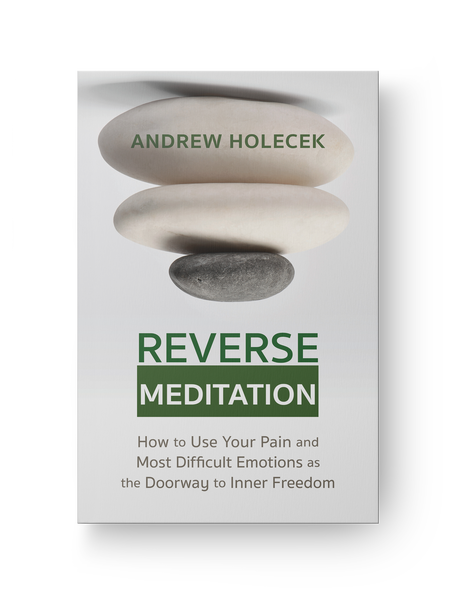
Excerpted from Reverse Meditation: How to Use Your Pain and Most Difficult Emotions as the Doorway to Inner Freedom by Andrew Holecek.

Andrew Holecek is an author, speaker, and humanitarian who offers seminars internationally on meditation, lucid dreaming, and the art of dying. His work has appeared in Psychology Today, Parabola, Lion’s Roar, Tricycle, Utne Reader, Buddhadharma, Light of Consciousness, and many other periodicals. Learn more at andrewholecek.com.
Andrew Holecek is a renowned author and humanitarian who teaches internationally on spirituality, meditation, lucid dreaming, and the art of dying. He has studied sleep yoga, bardo yoga, and other traditional practices with living masters in India and Nepal. Andrew’s books include Dreams of Light, Dream Yoga, and Reverse Meditation. His work has appeared in Psychology Today, Parabola, Lion’s Roar, Tricycle,Utne Reader, Buddhadharma, Light of Consciousness, and many other periodicals. He hosts the popular Edge of Mind podcast and is the founder of the Night Club community, a support platform for nocturnal meditations. Learn more at andrewholecek.com.
What if the most transformative place you could go isn’t a retreat center or a therapist’s office—but complete and total darkness?
This week, Tami Simon speaks with Andrew Holecek—interdisciplinary scholar, longtime practitioner of Tibetan Buddhism, and author of the new Sounds True book Total Eclipse of the Mind: Unleashing the Power of Darkness for Creativity, Healing, and Transformation—about the practice of dark retreat: full immersion in sealed, lightless environments used by yogis for centuries to accelerate inner transformation.
Holecek calls it the single most transformative practice of his fifty years of meditation, psychedelic exploration, and three-year Tibetan retreat—and in this interview, he explains why.
Join Tami and Andrew to explore:
What actually happens to the mind in extended darkness—and the neurological science behind why it’s so transformative
The descent of the mind through conscious, subconscious, and collective unconscious layers—and what waits at the bottom
Dark retreat as a “sober psychedelic”: how the brain generates its own endogenous DMT in extended darkness
The practice of enantiodromia—when extreme contraction suddenly flips into extraordinary openness
How to work with panic, trauma, and unwanted experience using the “reverse meditation” principle: feel it, but don’t feed it
Why appearances don’t matter in the dark—and why so many people emerge in tears, feeling safe and held for the first time
The four-step process for integrating darkness into daily life, from sleep masks to dedicated dark rooms
This interview was recorded with both Tami and Andrew wearing blackout masks—making it one of the most immersive listening experiences in Insights at the Edge history.
Listen now and discover what’s been waiting in the dark. →
This conversation offers genuine transmission—not just concepts about awakening, but the palpable presence of realized teachers exploring the growing edge of spiritual understanding together. Originally aired on Sounds True One.
This episode is sponsored by Omega Institute, a global gathering hub for lifelong learning and spiritual exploration. Located in upstate New York’s beautiful Hudson Valley, Omega offers weekend workshops, special events, rest and rejuvenation retreats, professional trainings, online learning, and more. Discover what calls to you at eomega.org/true.
Join Tami Simon and Andrew Holecek for the second half of their exploration of reincarnation. Here, they delve deeper into Tibetan Buddhist perspectives on death, rebirth, and the power of “dark retreat” practice, revealing practical guidance for navigating everyday life.
What happens after we die? And what do habits have to do with the process? In this episode of Insights at the Edge, host Tami Simon welcomes Andrew Holecek, scholar, author, and teacher of Tibetan Buddhism and non-dual wisdom traditions. Together, they dive into the mysteries of reincarnation and the “gap between lives.” Drawing from Tibetan teachings on the bardos, dream yoga, and the art of dying, Andrew shares practical insights on how these ancient teachings are not just about what happens after death, but also about navigating the transitions and challenges we face here and now.
Join them to explore:
How our beliefs about death deeply inform how we live
The nature of awareness and the influence of habits
How cultivating lucidity transforms both our dreams and our waking lives, and more
Note: These interviews originally aired on Sounds True One, where these special episodes of Insights at the Edge are available to watch live on video and with exclusive access to Q&As with our guests. Learn more at join.soundstrue.com.
What happens after we die? And what do habits have to do with the process?
In this episode of Insights at the Edge, host Tami Simon welcomes Andrew Holecek, scholar, author, and teacher of Tibetan Buddhism and non-dual wisdom traditions. Together, they dive into the mysteries of reincarnation and the “gap between lives.” Drawing from Tibetan teachings on the bardos, dream yoga, and the art of dying, Andrew shares practical insights on how these ancient teachings are not just about what happens after death, but also about navigating the transitions and challenges we face here and now.
Join them to explore:
How our beliefs about death deeply inform how we live
The nature of awareness and the influence of habits
How cultivating lucidity transforms both our dreams and our waking lives
Whether you’re curious about what happens after we die or seeking wisdom to live more fully, this episode offers insights for inner explorers of all beliefs and backgrounds.
Note: This interview originally aired on Sounds True One, where these special episodes of Insights at the Edge are available to watch live on video and with exclusive access to Q&As with our guests. Learn more at join.soundstrue.com.
Many people begin meditation hoping to quiet the mind, reduce stress, or create a sense of inner peace. Reverse meditation takes a different approach by encouraging people to turn toward the thoughts, emotions, and experiences they usually avoid. Instead of escaping discomfort, the practice invites awareness of it. Although this approach may feel unfamiliar at first, it can lead to deeper self-understanding, emotional honesty, and presence.
At Sounds True, we have spent decades sharing wisdom from leading spiritual teachers, meditation practitioners, and contemplative voices through books, audio programs, podcasts, and transformational learning experiences. Our mission has always been to support meaningful inner growth through teachings that are grounded, compassionate, and accessible.
Here, we discuss what reverse meditation is, how it differs from traditional mindfulness practices, and how it can support awakening through awareness, shadow work, and emotional openness.
Key Takeaways:
Emotional Awareness: Reverse meditation encourages people to stay present with difficult emotions instead of avoiding them.
Spiritual Insight: The practice helps uncover unconscious patterns that shape fear, identity, and emotional reactions.
Inner Freedom: Reverse meditation and shadow meditation support greater compassion, honesty, and emotional resilience.
What Is Reverse Meditation and Why Is It So Counterintuitive?
Reverse meditation challenges the привычка to avoid discomfort during spiritual practice. Instead of trying to quiet difficult emotions or achieve constant calm, practitioners learn how to stay present with fear, uncertainty, and emotional tension. Thoughts and uncomfortable feelings are not treated as distractions but as part of the practice itself.
This counterintuitive approach encourages greater self-awareness and emotional honesty. Rather than chasing ideal spiritual states, reverse meditation focuses on presence, openness, and a deeper relationship with inner experience.
The Origins of Reverse Meditation in Spiritual and Contemplative Traditions
Reverse meditation draws from contemplative traditions that emphasize awareness without resistance. Although the language surrounding the practice may vary, the central principle remains similar across many teachings. Freedom develops when people stop struggling against their inner experience.
Ancient Teachings on Turning Toward Experience
Many contemplative traditions teach practitioners to observe thoughts and emotions without immediately reacting to them. In Tibetan Buddhism and nondual teachings, awareness is seen as spacious enough to include discomfort, confusion, and emotional intensity.
Rather than viewing difficult emotions as obstacles, these traditions suggest they can lead to deeper understanding. Reverse meditation reflects this approach by encouraging awareness of the emotions and patterns people usually avoid.
Why Modern Practitioners Are Drawn to Reverse Meditation
Many people are drawn to meditation practices that feel emotionally honest and grounded. While traditional mindfulness can be meaningful, some practitioners realize they are using meditation to avoid discomfort instead of understanding it.
Reverse meditation creates space for vulnerability, uncertainty, and difficult emotions without judgment. Rather than pretending discomfort does not exist, the practice encourages a more open and honest relationship with inner experience.
Andrew Holecek Reverse Meditation Teachings on Awareness and Awakening
The growing conversation around reverse meditation has been influenced by Andrew Holecek, whose teachings combine Tibetan Buddhism, dream yoga, and nondual contemplative wisdom. His work often focuses on the patterns people use to avoid discomfort and reinforce identity.
Reversing Habitual Patterns of Avoidance
Andrew Holecek reverse meditation teachings emphasize how deeply conditioned people are to seek comfort and avoid emotional pain. Fear, anxiety, and uncertainty are usually treated as problems that need immediate resolution.
Reverse meditation interrupts this pattern. Instead of escaping difficult emotions, practitioners learn how to remain present with them long enough to observe what exists beneath the surface. Fear may reveal vulnerability. Anger may uncover grief. Emotional resistance may expose attachment to control.
The practice does not encourage emotional overwhelm. Instead, it develops the capacity to remain aware without immediately turning away from discomfort.
Awakening Through Openness and Curiosity
A central insight within reverse meditation is that awakening begins through openness rather than control. Many people spend years trying to perfect themselves spiritually while remaining disconnected from unresolved emotional experience.
Reverse meditation shifts that orientation. Curiosity replaces judgment. Awareness becomes less focused on fixing experience and more focused on understanding it directly.
This creates a different relationship with meditation itself. Practitioners stop measuring progress according to how peaceful they feel. Instead, they begin developing the ability to remain present with changing emotional states without becoming consumed by them.
Over time, this openness can create greater emotional resilience, compassion, and clarity.
How a Reverse Meditation Practice Changes Your Relationship With Fear
Fear often becomes one of the central doorways within a reverse meditation practice. Most people instinctively move away from emotional discomfort as quickly as possible. Reverse meditation asks practitioners to slow down and examine that impulse instead of following it automatically.
Learning to Stay Present With Discomfort
One of the first things practitioners notice is how quickly the mind reaches for distraction. Restlessness, analysis, and mental storytelling often appear when vulnerability begins surfacing.
Reverse meditation encourages practitioners to remain present with those reactions rather than immediately escaping them. Fear is no longer treated as something that must disappear before peace can emerge.
This shift can feel uncomfortable at first. Yet many practitioners discover that difficult emotions become less overwhelming once they are approached with awareness instead of resistance.
Fear as a Gateway to Deeper Insight
Fear often protects deeper emotional experiences that have not been fully acknowledged. Beneath anxiety, there may be grief, loneliness, uncertainty, or attachment to identity and control.
A reverse meditation practice creates space to observe these hidden layers more clearly. Instead of reacting automatically, practitioners begin recognizing how much emotional energy is spent avoiding vulnerability.
This awareness can gradually transform the relationship with fear itself. Fear becomes less of an enemy and more of a signal pointing toward areas that require compassion, honesty, and attention.
Why Counterintuitive Meditation Challenges Traditional Mindfulness
Counterintuitive meditation often challenges familiar ideas about what meditation is supposed to accomplish. Many people begin meditation expecting calmness, focus, or emotional relief. Reverse meditation introduces another possibility by encouraging awareness of all experience, including discomfort.
Traditional mindfulness practices often emphasize concentration on the breath or bodily sensations, while counterintuitive meditation opens awareness toward thoughts, emotions, and emotional tension.
Counterintuitive meditation encourages practitioners to notice resistance itself rather than immediately trying to eliminate uncomfortable feelings.
Emotional difficulty is not viewed as failure within the practice. Difficult emotions become opportunities for deeper awareness and self-understanding.
The practice shifts attention away from spiritual achievement and toward emotional honesty.
Practitioners learn how to remain present with uncertainty instead of constantly seeking resolution or control.
Counterintuitive meditation encourages greater compassion by helping people recognize the shared vulnerability within human experience.
Although this approach may feel challenging, many practitioners eventually develop a more grounded relationship with meditation. Awareness becomes less dependent on achieving ideal states and more connected to direct experience as it unfolds naturally.
The practice reminds people that awakening does not require perfection. It begins through willingness to remain present with reality in all its complexity.
The Connection Between Shadow Meditation and Reverse Meditation
Shadow meditation and reverse meditation encourage awareness of the hidden parts of the self, including fear, grief, shame, anger, and emotional pain. These emotions often surface during meditation through thoughts, physical sensations, or emotional reactions that are usually avoided.
Instead of suppressing those experiences, reverse meditation invites practitioners to meet them with compassion and curiosity. Over time, this process can reduce emotional resistance and create a greater sense of wholeness, honesty, and self-understanding.
Common Challenges That Arise During a Reverse Meditation Practice
A reverse meditation practice can feel emotionally intense, especially for people who are accustomed to avoiding vulnerability through distraction or control. Difficult emotions may become more visible once awareness slows down and becomes more attentive.
One common challenge involves expectations. Many people believe meditation should always feel peaceful or calming. Reverse meditation asks practitioners to reconsider that assumption. Emotional discomfort does not necessarily mean something is wrong. In many cases, it reflects a growing willingness to encounter inner experience honestly.
Impatience can also become part of the process. People often want immediate transformation or clarity, yet reverse meditation unfolds gradually through consistent awareness and self-compassion.
Support can be valuable during this process. Teachers, contemplative communities, and trusted spiritual resources can help practitioners navigate emotionally complex experiences with steadiness and care.
How Reverse Meditation and Shadow Meditation Support Inner Freedom
Reverse meditation and shadow meditation encourage a more compassionate relationship with difficult emotions and inner experiences. Instead of resisting fear, vulnerability, or uncertainty, practitioners learn how to remain present with them in a more open and grounded way.
Over time, this awareness can create greater emotional freedom and self-understanding. Rather than escaping pain or discomfort, reverse meditation supports a deeper sense of clarity, steadiness, and connection with human experience.
Final Thoughts
Reverse meditation offers a different relationship with awareness. Instead of moving away from discomfort, practitioners learn how to meet fear, uncertainty, and emotional complexity with openness and compassion. Through this counterintuitive practice, difficult experiences become opportunities for greater clarity rather than obstacles to awakening.
By turning gently toward the parts of ourselves we often resist, reverse meditation and shadow meditation can support a deeper sense of presence, honesty, and inner freedom.
Frequently Asked Questions About What Is Reverse Meditation?
Can reverse meditation help with emotional overwhelm?
Reverse meditation may help people develop a healthier relationship with overwhelming emotions by encouraging awareness instead of immediate avoidance. The practice focuses on observing emotional experiences with patience and compassion.
Is reverse meditation suitable for daily practice?
Yes. Many practitioners incorporate reverse meditation into daily routines through short periods of self-inquiry, mindful observation, or reflective awareness. Consistency is often more important than duration.
Does reverse meditation require silence?
Not necessarily. While quiet environments can support concentration, reverse meditation can also involve awareness during ordinary daily experiences, emotional reactions, or moments of discomfort.
How is reverse meditation different from positive thinking?
Positive thinking often focuses on replacing difficult thoughts with encouraging ones. Reverse meditation does not attempt to replace or fix emotions. Instead, it encourages awareness of experience exactly as it appears.
Can reverse meditation improve self-awareness?
Yes. The practice can deepen self-awareness by helping practitioners notice unconscious habits, emotional patterns, and reactions that often operate automatically.
Is reverse meditation connected to nondual teachings?
Many reverse meditation teachings share similarities with nondual traditions because both emphasize direct awareness and reduced identification with thoughts and emotions.
What role does the body play in reverse meditation?
The body often becomes an important source of awareness during reverse meditation. Emotional tension, fear, and stress frequently appear as physical sensations that practitioners learn to observe more consciously.
Can reverse meditation support spiritual growth without religion?
Yes. Although some teachings draw from Buddhist and contemplative traditions, reverse meditation can be practiced in a nonreligious way focused on awareness, emotional honesty, and inner reflection.
Why do some people resist reverse meditation at first?
The practice challenges the instinct to avoid discomfort. Remaining present with difficult emotions can initially feel unfamiliar, especially for people accustomed to distraction or emotional suppression.
How long does it take to understand reverse meditation?
Understanding develops gradually through experience rather than intellectual study alone. Many practitioners notice subtle shifts in awareness over time as they continue practicing with openness and consistency.
Michelle Cassandra Johnson is an author, activist, spiritual teacher, racial equity consultant, and intuitive healer. She is the author of six books, including Skill in Action and Finding Refuge. Amy Burtaine is a leadership coach and racial equity trainer. With Robin DiAngelo, she is the coauthor of The Facilitator’s Guide for White Affinity Groups. For more, visit https://www.michellecjohnson.com/wisdom-of-the-hive.
Compassion is not only an emotional response but also a skill that can grow through practice. During moments of stress or emotional exhaustion, compassion meditation offers a way to respond with greater patience, balance, and connection. Practices like loving kindness meditation and metta meditation are also gaining attention for their potential impact on emotional resilience and overall well-being.
At Sounds True, we have spent decades sharing the teachings of meditation practitioners, neuroscientists, psychologists, and spiritual teachers devoted to emotional healing and inner transformation.
Below, we discuss compassion meditation benefits, how loving kindness meditation may influence the brain, and the role self and other compassion can play in emotional well-being and human connection.
Key Takeaways:
Brain and Compassion: Compassion meditation may support emotional regulation and strengthen neural pathways connected to empathy and resilience.
Everyday Emotional Health: Loving kindness meditation can help reduce self-criticism, stress, and emotional reactivity in daily life.
Relationships and Connection: Practicing self and other compassion may encourage healthier communication, patience, and deeper human connection.
Compassion Meditation Benefits for Emotional and Physical Well-Being
Compassion is more than a feeling. It is a practice that helps us relate to ourselves and others with greater patience and care. Many people begin meditation to manage stress or emotional overwhelm, yet over time, compassion practices can also reshape how we respond to pain, conflict, and connection.
By encouraging emotional awareness and presence, compassion meditation helps build resilience in everyday life, from relationships and work to the way we speak to ourselves during difficult moments.
What Loving Kindness Meditation Reveals About Human Connection
Loving kindness meditation is one of the most accessible compassion practices because it begins with a simple intention: wishing well-being for ourselves and others. Rooted in the Buddhist tradition of metta, this practice helps soften habitual patterns of judgment and separation while strengthening feelings of care and interconnectedness.
The Foundations of Loving Kindness Meditation
In loving kindness meditation, practitioners silently repeat phrases of goodwill such as “May I be safe,” “May I be healthy,” or “May I live with ease.” These phrases are first directed inward before gradually expanding outward toward loved ones, strangers, and even difficult people.
While the practice appears simple, many people notice how challenging it can feel to offer compassion to themselves. This awareness is part of the process. Loving kindness meditation gently reveals the places where the heart has become guarded and invites greater openness over time.
Why Connection Matters for Emotional Health
Human beings are wired for connection. Research continues to show that supportive relationships influence emotional well-being, physical health, and longevity. Compassion meditation helps nurture these connections by increasing empathy and reducing reactive emotional patterns.
As people deepen their practice, they often report feeling less isolated in their struggles. Compassion creates space for shared humanity. Instead of seeing suffering as a personal failure, we begin recognizing that vulnerability belongs to everyone.
How Compassion Meditation Brain Research Is Changing Neuroscience
Modern neuroscience has opened an important conversation around how meditation changes the brain. Studies focused on compassion practices suggest that intentional emotional training can influence neural pathways connected to empathy, emotional regulation, and attention.
What Compassion Meditation Brain Studies Show
Brain imaging research has found that compassion meditation activates areas associated with emotional processing and positive social connection. Some studies also suggest increased activity in regions linked to empathy and caregiving responses.
This matters because the brain remains adaptable throughout life. Neuroplasticity allows repeated experiences to strengthen certain pathways over time. Compassion meditation becomes a form of mental training that supports healthier emotional habits rather than reinforcing fear or self-criticism.
Emotional Regulation and Nervous System Support
Many people carry tension without fully noticing it. Compassion meditation helps create a sense of emotional steadiness by teaching us to meet difficult emotions with awareness and care rather than avoidance. Over time, this practice may reduce emotional reactivity and help people feel more grounded, patient, and balanced.
Metta Meditation Benefits for Stress, Anxiety, and Emotional Healing
Metta meditation benefits extend into many areas of emotional health because the practice directly addresses patterns of fear, shame, and disconnection. Rather than forcing positivity, metta creates a supportive inner environment where healing becomes more possible.
Reducing Self-Criticism Through Metta Practice
For many people, the harshest voice they encounter is their own inner dialogue. Metta meditation helps interrupt cycles of self-judgment by introducing language rooted in care and acceptance.
Over time, these repeated phrases begin influencing how people relate to themselves during moments of failure or uncertainty. Self-compassion does not remove accountability. Instead, it creates the emotional safety needed for growth and honest reflection.
How Compassion Supports Recovery From Emotional Exhaustion
Stress and burnout often leave people emotionally numb or disconnected from their inner lives. Compassion practices can help restore emotional sensitivity without becoming overwhelming.
By slowing down and intentionally practicing care, individuals often reconnect with feelings they had learned to avoid. This process may feel tender at first, yet many practitioners find that compassion gives them greater strength to face life with openness rather than withdrawal.
Understanding Self and Other Compassion Through Meditation Practice
Compassion meditation helps strengthen awareness of both personal suffering and the struggles carried by others. Over time, this awareness creates meaningful shifts in how people relate within families, friendships, and communities.
Self and other compassion encourages emotional honesty without shame.
Compassion practices help people listen more fully during difficult conversations.
Meditation can reduce reactive patterns rooted in fear or defensiveness.
Greater empathy often leads to healthier relationship boundaries.
Practicing compassion regularly may support forgiveness and reconciliation.
Compassion helps people remain connected without absorbing every emotional burden around them.
As these qualities deepen, compassion becomes less of an isolated meditation exercise and more of a lived experience. Small moments of patience, understanding, and kindness begin shaping everyday interactions in lasting ways.
Loving Kindness Meditation Practices That Support Lasting Change
Consistency matters more than perfection in meditation practice. Many people believe they need long periods of silence or complete emotional calm before beginning. In reality, loving kindness meditation often works best when approached gently and without pressure.
A simple daily practice of five or ten minutes can gradually reshape emotional habits. Some practitioners begin each morning with a few compassionate phrases before moving into the rest of the day. Others return to the practice during stressful moments as a reminder to pause and reconnect with themselves.
The heart responds to repetition. Just as self-criticism becomes stronger through constant reinforcement, compassion also grows stronger through practice. Over time, these small moments accumulate into meaningful emotional change.
The Link Between Compassion Meditation Brain Activity and Resilience
Resilience is often misunderstood as emotional toughness or the ability to avoid pain. Compassion meditation offers another perspective. True resilience develops through the capacity to remain present with difficulty while responding with care instead of fear.
Research surrounding compassion meditation brain activity suggests that emotional resilience can be cultivated intentionally. Meditation appears to strengthen regions associated with emotional regulation while reducing patterns connected to chronic stress responses. Although the science continues evolving, many practitioners already recognize these changes through lived experience.
People who engage regularly in compassion practices often describe recovering more quickly from emotional setbacks. They may still experience grief, frustration, or uncertainty, yet these emotions become easier to navigate without spiraling into overwhelm. Compassion creates inner steadiness that supports healing rather than resistance.
How Metta Meditation Benefits Daily Relationships and Inner Awareness
One of the most meaningful aspects of metta meditation benefits is the way the practice extends beyond formal meditation sessions. Compassion begins influencing ordinary interactions, including how we respond to stress, disagreement, disappointment, and emotional vulnerability.
People often notice subtle changes first. Conversations may feel less reactive. Moments of frustration may soften more quickly. There can also be a growing awareness of shared humanity, especially during difficult encounters. Compassion does not require perfection or constant emotional warmth. Instead, it asks us to remain present enough to respond with care when it matters most.
Over time, loving kindness meditation can deepen inner awareness in profound ways. Many practitioners begin recognizing emotional patterns they previously ignored or suppressed. This awareness creates opportunities for healing because it replaces automatic judgment with curiosity and gentleness.
Compassion becomes a practice of remembering that every person, including ourselves, carries unseen struggles. From that understanding, relationships often become more honest, patient, and grounded in genuine connection.
Final Thoughts
Compassion is not a fixed trait reserved for a few people. It is a practice that can be strengthened over time through patience, awareness, and intentional care. Loving kindness meditation offers a way to reconnect with ourselves and others with greater openness, even during difficult moments.
As research into compassion meditation brain activity continues to grow, many people are also experiencing its effects firsthand through deeper emotional resilience, healthier relationships, and a stronger sense of connection. Small moments of compassion practiced consistently can create meaningful shifts that extend far beyond meditation itself.
Frequently Asked Questions About Compassion Meditation Benefits
What is the difference between compassion meditation and loving kindness meditation?
Compassion meditation focuses on recognizing suffering and responding with care, while loving kindness meditation centers on offering goodwill and positive intentions toward ourselves and others. The practices often overlap and support one another.
Can compassion meditation help with loneliness?
Many people find that compassion practices reduce feelings of isolation by strengthening emotional connection and shared humanity. The practice can help create a greater sense of belonging and openness toward others.
Is loving kindness meditation connected to Buddhism?
Yes, loving kindness meditation comes from Buddhist teachings and is traditionally known as metta practice. Today, people from many backgrounds use the practice for emotional well-being and mindfulness.
How long does it take to notice compassion meditation benefits?
Some people notice emotional shifts after a few sessions, while deeper changes often develop through consistent practice over time. Even short daily sessions may gradually support emotional awareness and resilience.
Can beginners practice loving kindness meditation?
Yes, loving kindness meditation is often recommended for beginners because the practice is simple and flexible. There is no need for previous meditation experience to begin.
Why do some people feel emotional during compassion meditation?
Compassion practices can bring attention to emotions that have been ignored or suppressed. Feeling emotional during meditation is common and may reflect the process of reconnecting with inner experiences gently and honestly.
Does compassion meditation require repeating phrases?
Many forms of compassion meditation include repeated phrases, but some practices focus on visualization, breath awareness, or emotional reflection instead. Different approaches work for different people.
Can compassion meditation improve workplace relationships?
Compassion practices may help people respond with greater patience, empathy, and emotional steadiness during stressful interactions, which can support healthier communication at work.
Is there scientific evidence behind compassion meditation brain research?
Research in neuroscience continues to examine how compassion practices affect emotional processing, empathy, and stress regulation in the brain. Findings suggest meditation may influence neural activity connected to emotional well-being.
Can self and other compassion exist at the same time?
Yes, self-compassion and compassion for others often strengthen together. Learning to respond kindly to personal struggles can make it easier to extend understanding and care toward other people as well.
Michelle Cassandra Johnson is an author, activist, spiritual teacher, racial equity consultant, and intuitive healer. She is the author of six books, including Skill in Action and Finding Refuge. Amy Burtaine is a leadership coach and racial equity trainer. With Robin DiAngelo, she is the coauthor of The Facilitator’s Guide for White Affinity Groups. For more, visit https://www.michellecjohnson.com/wisdom-of-the-hive.
There is a kind of awareness that exists beneath the constant stream of thoughts and reactions that fill daily life. Non-dual awareness points to this open, undivided quality of consciousness that many spiritual traditions have long recognized as the ground of all experience.
Sounds True has spent over 40 years gathering the voices of the world’s most respected spiritual teachers, including Eckhart Tolle, Pema Chödrön, and Tara Brach, into the largest living library of transformational wisdom available today.
In this piece, Sounds True will examine what non-dual awareness is and why it matters for spiritual seekers.
Key Takeaways:
Rooted in Tradition: Non-dual awareness has been recognized across diverse spiritual traditions for centuries.
A Shift in Perception: This understanding reveals that separation is a mental construct rather than an absolute truth.
Supported by Living Teachers: Contemporary guides make these ancient insights approachable and applicable to modern life.
What Is Non-Dual Awareness?
Non-dual awareness has been explored across centuries of spiritual traditions, from Advaita Vedanta to Zen Buddhism, and more recently through contemporary teachers reaching seekers worldwide. Here is a closer look at what this teaching actually means:
A State Beyond Subject And Object
Non-dual awareness is the recognition that the boundary between “you” and “everything else” is not as solid as it seems, a challenge to what the APA defines as self: a stable, separate identity distinct from others. The sense of a separate self softens, revealing a unified field of awareness that holds all experience without division, as explored by teachers like A.H. Almaas.
The Witness That Dissolves Into What It Sees
Rather than awareness being something you possess, nonduality teaches that awareness is what you fundamentally are, a recognition at the core of Zen practice as well as other contemplative paths. The observer and the observed are seen as two expressions of one seamless, undivided reality, a theme central to the work of Adyashanti.
Presence Without Separation
Non-dual awareness meditation offers a practical gateway into this lived quality of presence, moving it from concept into direct experience. It is the felt sense of being fully here, without the mental commentary that creates distance from life. Explore Sounds True’s resources to go deeper.
Final Thoughts
Non-dual awareness is not a destination reserved for monks or mystics. It is an invitation available to anyone willing to look honestly at the nature of their own experience. Teachers and communities exist today to support exactly this kind of inquiry, including life and spiritual awakening with Adyashanti.
What makes this journey so remarkable is that it does not ask you to become someone different. It simply invites you to recognize what has always been present. For those seeking nonduality teachings online, the insights at the edge podcast and other resources offer an accessible starting point.
Frequently Asked Questions About What Non-Dual Awareness Is
Can non-dual awareness be experienced without a spiritual background?
Yes, non-dual awareness is accessible to anyone regardless of prior spiritual experience or religious background.
Is non-dual awareness the same as enlightenment?
While related, non-dual awareness is better understood as a quality of perception rather than a fixed spiritual endpoint.
How long does it take to experience non-dual awareness?
There is no set timeline, as glimpses can arise spontaneously while deeper stabilization unfolds gradually.
Does non-dual awareness mean emotions no longer exist?
Emotions continue to arise, but they are experienced with greater spaciousness and less identification with their content.
Is non-dual awareness connected to any specific religion?
It appears across many traditions, including Hinduism, Buddhism, Taoism, and Christian mysticism, though it belongs exclusively to none.
Can therapy or psychology support the path toward non-dual awareness?
Yes, certain therapeutic approaches complement non-dual inquiry by helping clear emotional patterns that obscure open awareness.
Michelle Cassandra Johnson is an author, activist, spiritual teacher, racial equity consultant, and intuitive healer. She is the author of six books, including Skill in Action and Finding Refuge. Amy Burtaine is a leadership coach and racial equity trainer. With Robin DiAngelo, she is the coauthor of The Facilitator’s Guide for White Affinity Groups. For more, visit https://www.michellecjohnson.com/wisdom-of-the-hive.