October is a meaningful month for me as it honors two important parts of my identity. It is Filipino American History Month, a time to acknowledge and honor the presence and contributions of Filipino Americans. Although my parents immigrated to the United States from the Philippines in 1980, records show that Filipinos were present here as early as 1587, landing in present-day Morro Bay, California as part of a Spanish galleon. In an interesting moment of alignment, I am writing this to you from Morro Bay, feeling the palpable power of the land and seeing the sacred 600-foot-tall Morro Rock–known as Lisamu’ in the Chumash language and Lesa’mo’ by the Salinan people–standing proudly just outside the window of our Airstream trailer. October is also Pregnancy and Infant Loss Awareness Month, a time to increase awareness about and honor those of us who have endured such loss- what I often refer to as womb loss.
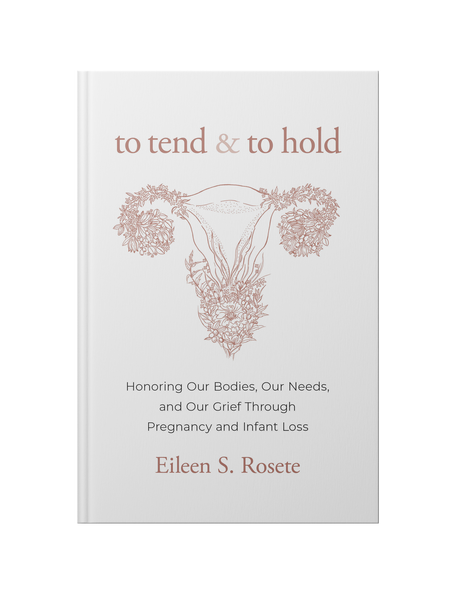
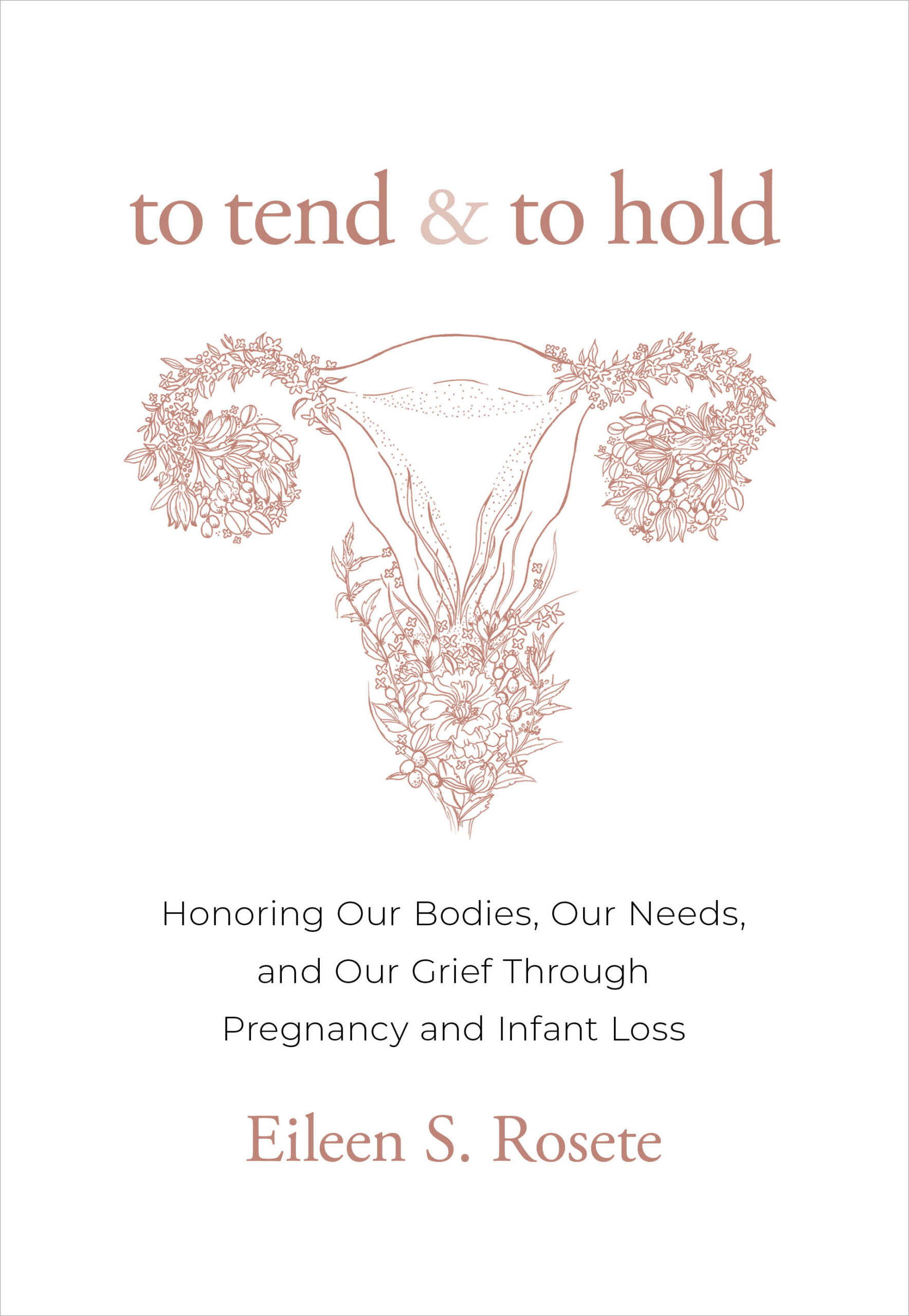
This October is particularly meaningful with my book, To Tend and To Hold: Honoring Our Bodies, Our Needs, and Our Grief Through Pregnancy and Infant Loss, officially launching on October 22. In it I share how my identities as a Filipina American and bereaved mother intertwine, and how valuable it can be for survivors of womb loss to turn to their cultural traditions for support as they grieve and as their postpartum bodies return to a non-pregnant state. How I came across this online essay and found solace in the language of my ancestors who use terms to describe miscarriage as “someone from whom something was taken away” rather than placing blame with the prefix mis- which means wrongly or badly. I did not carry my pregnancies wrongly or badly. Loss was something that my body experienced.
The following is an excerpt from To Tend and To Hold that I hold dear as it shares a traditional Filipino dish I grew up eating and that I share now as a postpartum doula to offer comfort and nourishment to those who are postpartum, both with living children and after loss. I hope it may offer you comfort as well, no matter if your experience of womb loss was recent, in the past weeks, months or even many years ago. My heart is with you and please know that you are not alone as you grieve and as you heal- at your own pace and in your own way.
~
I recently cooked this recipe for champorado, a Filipino rice porridge, for my beloved friend Katrina on a very tender anniversary, the due date of one of her children and the death date of another. Her child, Zeo Thomas, would have been born that day had he not died in the womb at five months gestation. It was within the same year of his death that her second child, Solis Vida, died in the womb in the first trimester. In truth, Katrina had been bleeding for over a week to release her second pregnancy, but as she bled through Zeo’s due date, she felt an intuitive pull to honor this same date as Solis’s death date. I thought of my friend as I made my way slowly through the grocery store. Though it was crowded and busy, I felt cocooned in my thoughts and intentions for her—how I wanted to help her feel seen and held during this difficult time—and I found myself gathering each of the ingredients in a mindful way that felt like the beginning of a bigger ritual. Knowing I was going to cook for her to honor her, her babies, her grief, and also her longings added a layer of reverence to what would otherwise be a standard grocery run. Later as I cooked the porridge in her home, I channeled my love and condolences into each step. And when I finally brought the warm bowl of champorado to her and saw her reaction, it was my turn to feel honored. Honored to be there with her. Honored to tend to her. And with a dish we both knew from our childhoods. She dubbed it “postpartum champorado,” and so it shall be known.
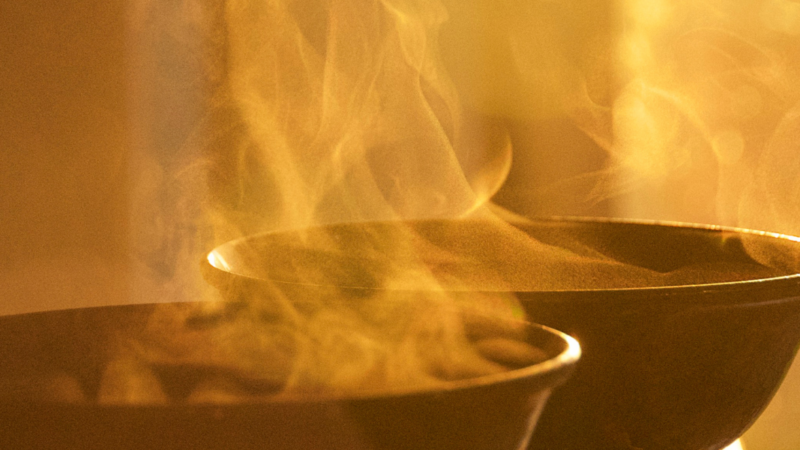
Warm and soft, rice porridge is one of the best postpartum foods as it is easy to eat, warming to the body, and gentle on the digestive system. Its very nature is to offer comfort. In my opinion, champorado, a Filipino chocolate rice porridge I grew up savoring, is one of the most heartwarming dishes, with the cacao tending as much to the emotional heart as to the physical body. It can be offered any time of day for both a filling meal and a gentle reminder that there is still sweetness in life even amidst grief.
In this nourishing version, cacao powder is used in place of cocoa so that we may benefit from all that this superfood has to offer, including iron to help rebuild red blood cells, flavonoids to improve blood flow, and magnesium to ease anxiety and depression. In addition to being nutrient-rich, cacao is also known to lift the mood. If the thought of preparing food feels beyond your current capacity at this moment, consider sharing this recipe with a partner, postpartum doula, or other support person and asking them to cook it for you. Additionally, if you are currently pregnant, please consult your health-care provider before consuming cacao as it contains caffeine.
Champorado: Filipino chocolate rice porridge
1 cup sweet rice (also called glutinous or sticky rice) or sushi rice
5 cups water
1/4 cup cacao powder
1/2 cup brown sugar
1 tablespoon unflavored protein powder (optional)
Condensed coconut milk for topping
Cacao nibs (optional)
Rinse the sweet rice several times until the water runs clear when drained.
Combine rice and water in a pot over medium-high heat. Bring to a boil, then reduce heat to medium and continue to cook until the rice is soft and the porridge thickens (about 20 minutes), stirring often to keep from sticking to the bottom of the pot.
Add cacao powder, brown sugar, and unflavored protein powder. Stir to combine, then remove from heat.
Drizzle condensed coconut milk (or other milk of choice) and top with cacao nibs. Serve hot.
Eileen Santos Rosete, MSMFT, PCD(DONA), CYT 200, holds a master of science in marriage and family therapy from Northwestern University and is certified as a DONA International postpartum doula, trauma-informed yoga teacher, and grief educator. Her brand, Our Sacred Women®, is known for its elevated offerings that help women feel seen, held, and honored. She is especially passionate about supporting all who give birth and are postpartum both after live births and after loss. To learn more, visit eileensantosrosete.com.
An Excerpt From To Tend And To Hold: Honoring Our Bodies, Our Needs, and Our Grief Through Pregnancy and Infant Loss
For as long as there has been life, there has been death. For as long as we have birthed life, we have also birthed death. What you feel has been felt since time immemorial, and it has been felt by many, though womb loss is still not widely known or acknowledged. Consider that even in the most optimal conditions, there is only a 30 to 40 percent chance that a clinically recognized pregnancy will occur in a given menstrual cycle, and only about 30 percent of conceived pregnancies progress to live birth.1 Globally, approximately one in four pregnancies end in miscarriage and 2.6 million pregnancies end in stillbirth.2 In 2022, 2.3 million newborns died in the first month of life,3 and approximately 73 million induced abortions occur every year.4 Womb loss in and after pregnancy is, in fact, a common and regular occurrence, though many of us may struggle with feelings of inadequacy and shame as if such loss is atypical and we are deserving of blame. The prevailing stigma surrounding womb loss makes enduring it all the more challenging as we may feel reluctant to reach out for support and hold on to harmful ideas about our worth. You are not alone, nor are you any less precious and deserving of support. You are not alone as the anguish of womb loss has been felt, is being felt at this very moment, and will continue to be felt the world over.
Before we go any further, let us reconnect with our breath. It can be hard to breathe if you’ve recently learned about your womb loss or impending loss and feel pressure to make decisions right away. Or if you have learned of the potential for a loss and have to endure a waiting period before you know for certain. It can be hard to breathe even as you process a loss long since passed. The following practice is an invitation to make the resilient choice to slow down and allow yourself a moment to breathe. So that you can feel grounded. So that you can have the capacity to be present to your grief. So that you can tend to your needs.
GROUNDING BREATHING PRACTICE
Three Deep Breaths
This offering is a simple and short breathing practice. Because you deserve breathing room, and because there is power in the pause. In that fleeting moment between what was and what can be, if you can breathe deeply and connect with your body, you may find yourself more able to understand what you feel and then what you need. Allow yourself this pause so you can make a more intentional decision about what comes next.
The Invitation
When you are ready, take three deep breaths at your own pace and in your own way. You might inhale and exhale through the nose or inhale through the nose and exhale audibly through the mouth. You might close your eyes or soften your gaze as you do so, allowing your awareness to gently follow each breath, letting everything else fade to the background. You might even think the following words as you breathe, allowing them to help you feel grounded in this moment.
Inhale. Exhale. One.
Inhale. Exhale. Two.
Inhale. Exhale. Two.
Your body may want to continue breathing this way, or it may feel like this was enough. Honor what feels right for you.
Sometimes breathing is the most we can bring ourselves to do, the best we can do, when our whole being is overcome. Deciding what comes next may feel like too much to ask of ourselves. If so, breathe, and trust that it is enough for this moment.
Eileen Santos Rosete, MSMFT, PCD(DONA), CYT 200, holds a master of science in marriage and family therapy from Northwestern University and is certified as a DONA International postpartum doula, trauma-informed yoga teacher, and grief educator. Her brand, Our Sacred Women®, is known for its elevated offerings that help women feel seen, held, and honored. She is especially passionate about supporting all who give birth and are postpartum both after live births and after loss. To learn more, visit eileensantosrosete.com.
Millions of women experience the loss of a pregnancy every year. Yet too often these individuals are not afforded the same dignity, support, and reverence we extend to other people facing grief after the death of a loved one. “We, too, are postpartum after pregnancy and infant loss,” says grief educator and doula Eileen Santos Rosete. “And we deserve the same care all who give birth need.”
In this podcast, Tami Simon speaks with Eileen about her new book, To Tend and To Hold. Tune in to hear how this groundbreaking educator is helping initiate a cultural shift in our understanding and attitude toward this sensitive and largely misunderstood topic, as Tami and Eileen discuss: the term “womb loss” as a respectful alternative to “miscarriage”; releasing the guilt that is so prevalent during pregnancy loss; choosing more respectful language to describe women’s reproductive health; integrating grief- and trauma-sensitive care into our medical system; affording reverence to someone who is grieving; self-tending practices to support relaxation and healing; feeling at home in your body; connecting with the womb space; self-trust and honoring what is most meaningful to you; approaches to soften the acute pain of grief; the candle-lighting ritual; and more.
October is a meaningful month for me as it honors two important parts of my identity. It is Filipino American History Month, a time to acknowledge and honor the presence and contributions of Filipino Americans. Although my parents immigrated to the United States from the Philippines in 1980, records show that Filipinos were present here as early as 1587, landing in present-day Morro Bay, California as part of a Spanish galleon. In an interesting moment of alignment, I am writing this to you from Morro Bay, feeling the palpable power of the land and seeing the sacred 600-foot-tall Morro Rock–known as Lisamu’ in the Chumash language and Lesa’mo’ by the Salinan people–standing proudly just outside the window of our Airstream trailer. October is also Pregnancy and Infant Loss Awareness Month, a time to increase awareness about and honor those of us who have endured such loss- what I often refer to as womb loss.
This October is particularly meaningful with my book, To Tend and To Hold: Honoring Our Bodies, Our Needs, and Our Grief Through Pregnancy and Infant Loss, officially launching on October 22. In it I share how my identities as a Filipina American and bereaved mother intertwine, and how valuable it can be for survivors of womb loss to turn to their cultural traditions for support as they grieve and as their postpartum bodies return to a non-pregnant state. How I came across this online essay and found solace in the language of my ancestors who use terms to describe miscarriage as “someone from whom something was taken away” rather than placing blame with the prefix mis- which means wrongly or badly. I did not carry my pregnancies wrongly or badly. Loss was something that my body experienced.
The following is an excerpt from To Tend and To Hold that I hold dear as it shares a traditional Filipino dish I grew up eating and that I share now as a postpartum doula to offer comfort and nourishment to those who are postpartum, both with living children and after loss. I hope it may offer you comfort as well, no matter if your experience of womb loss was recent, in the past weeks, months or even many years ago. My heart is with you and please know that you are not alone as you grieve and as you heal- at your own pace and in your own way.
~
I recently cooked this recipe for champorado, a Filipino rice porridge, for my beloved friend Katrina on a very tender anniversary, the due date of one of her children and the death date of another. Her child, Zeo Thomas, would have been born that day had he not died in the womb at five months gestation. It was within the same year of his death that her second child, Solis Vida, died in the womb in the first trimester. In truth, Katrina had been bleeding for over a week to release her second pregnancy, but as she bled through Zeo’s due date, she felt an intuitive pull to honor this same date as Solis’s death date. I thought of my friend as I made my way slowly through the grocery store. Though it was crowded and busy, I felt cocooned in my thoughts and intentions for her—how I wanted to help her feel seen and held during this difficult time—and I found myself gathering each of the ingredients in a mindful way that felt like the beginning of a bigger ritual. Knowing I was going to cook for her to honor her, her babies, her grief, and also her longings added a layer of reverence to what would otherwise be a standard grocery run. Later as I cooked the porridge in her home, I channeled my love and condolences into each step. And when I finally brought the warm bowl of champorado to her and saw her reaction, it was my turn to feel honored. Honored to be there with her. Honored to tend to her. And with a dish we both knew from our childhoods. She dubbed it “postpartum champorado,” and so it shall be known.
Warm and soft, rice porridge is one of the best postpartum foods as it is easy to eat, warming to the body, and gentle on the digestive system. Its very nature is to offer comfort. In my opinion, champorado, a Filipino chocolate rice porridge I grew up savoring, is one of the most heartwarming dishes, with the cacao tending as much to the emotional heart as to the physical body. It can be offered any time of day for both a filling meal and a gentle reminder that there is still sweetness in life even amidst grief.
In this nourishing version, cacao powder is used in place of cocoa so that we may benefit from all that this superfood has to offer, including iron to help rebuild red blood cells, flavonoids to improve blood flow, and magnesium to ease anxiety and depression. In addition to being nutrient-rich, cacao is also known to lift the mood. If the thought of preparing food feels beyond your current capacity at this moment, consider sharing this recipe with a partner, postpartum doula, or other support person and asking them to cook it for you. Additionally, if you are currently pregnant, please consult your health-care provider before consuming cacao as it contains caffeine.
Champorado: Filipino chocolate rice porridge
1 cup sweet rice (also called glutinous or sticky rice) or sushi rice
5 cups water
1/4 cup cacao powder
1/2 cup brown sugar
1 tablespoon unflavored protein powder (optional)
Condensed coconut milk for topping
Cacao nibs (optional)
Rinse the sweet rice several times until the water runs clear when drained.
Combine rice and water in a pot over medium-high heat. Bring to a boil, then reduce heat to medium and continue to cook until the rice is soft and the porridge thickens (about 20 minutes), stirring often to keep from sticking to the bottom of the pot.
Add cacao powder, brown sugar, and unflavored protein powder. Stir to combine, then remove from heat.
Drizzle condensed coconut milk (or other milk of choice) and top with cacao nibs. Serve hot.
What truly matters when we face the end of life? After decades of sitting at the bedside of hundreds of dying people, Frank Ostaseski has distilled the deepest human concerns into two essential questions: Am I loved? Have I loved well?
This week on Insights at the Edge, Tami welcomes Frank Ostaseski—co-founder of America’s first Buddhist hospice, the Zen Hospice Project, founder of the Metta Institute, and author of The Five Invitations: Discovering What Death Can Teach Us About Living Fully. Frank brings extraordinary wisdom from his pioneering work in compassionate end-of-life care, along with profound personal insights from his own encounters with heart surgery, strokes, and the transformative vulnerability of being “on the other side of the sheets.”
Join Tami and Frank to explore:
The two essential questions that arise when facing death—and what they reveal about living fully now
Why emotional flexibility is the true condition for healing and transformation
How to meet our own fear and pain without abandoning ourselves or others
The practice of “allowing” as a path to both wisdom and compassion
What happens in the dying process: surrender, reconstitution, and coming home
Why Frank is allergic to the notion of a “good death”
The indestructible love that emerges when we keep our hearts open through pain
How to practice dying by paying attention to everyday endings
This conversation is for anyone grappling with loss, change, or the fundamental questions of existence—offering not prescriptive answers, but the profound medicine of honest presence and the recognition that our vulnerability itself is one of our most beautiful human qualities.
This conversation offers genuine transmission—not just concepts about awakening, but the palpable presence of realized teachers exploring the growing edge of spiritual understanding together. Originally aired on Sounds True One.
How do we remain committed to staying sober when grief strikes, when stress becomes overwhelming, or when shame threatens to pull us back into old patterns?
This week on Insights at the Edge, Tami Simon welcomes Steven Washington, a former professional Broadway dancer who has transformed his 23-year recovery journey into a powerful practice of embodied healing. Steven is the author of Recovering You: Soul Care and Mindful Movement for Overcoming Addiction and creator of the SWE Studio, an online community offering movement and meditation support for people in recovery.
In this deeply personal interview, Tami and Steven explore:
Why recovery must be “non-negotiable”—with no conditions attached, regardless of life’s challenges
How shame operates as the linchpin of addiction and the healing power of sharing it with trusted others
The connection between sensitivity and addiction, and how to transform sensitivity from vulnerability into strength
Practical tools for creating a trigger plan that works for both small daily stressors and major life crises
How Qigong and embodied practices help regulate the nervous system and process emotions held in the body
The journey from inherited shame to self-compassion and authentic self-worth
Why asking for help—practiced with small things—prepares us for life’s biggest challenges
Developing a personal relationship with a higher power that feels authentic rather than inherited
If you’re navigating recovery, supporting someone who is, or seeking to understand the connection between embodiment and transformation, Steven offers both practical wisdom and profound compassion for the journey.
Note: This interview originally aired on Sounds True One, where these special episodes of Insights at the Edge are available to watch live on video and with exclusive access to Q&As with our guests. Learn more at https://www.join.soundstrue.com
Finding mental peace can feel difficult when life keeps pulling your attention in a dozen directions. Your emotions may swing between high and low, and clarity can feel out of reach. Yoga offers more than physical postures, it offers a practice of slowing down, tuning in, and tending to what’s within. Whether you’re struggling with stress, feeling emotionally off balance, or simply needing space to breathe, yoga can support a deeper kind of healing that unfolds from the inside out.
For over 40 years, Sounds True has served as a trusted source for spiritual education and personal growth. We share practices that are rooted in authentic wisdom and designed for real, everyday lives. Our collection of digital courses, audio programs, and teachings from renowned guides such as Tara Brach, Eckhart Tolle, and Pema Chödrön reflect a living library of transformation, created to support your journey back to wholeness.
Key Takeaways:
Practice & Presence: Yoga offers tools to process emotions and calm the mind through movement, breath, and awareness.
Science & Soul: Evidence supports yoga’s ability to reduce stress while honoring its deeper spiritual roots in healing.
Sustainable Healing: Ongoing, compassionate practice encourages emotional resilience and lasting mental clarity.
How Yoga Supports Mental And Emotional Well-Being
Yoga’s influence goes far beyond the physical body. For many, it serves as an anchor through emotional storms and mental overwhelm. To understand how yoga for mental health can become part of your healing journey, let’s explore its core contributions:
A Holistic Practice That Meets You Where You Are
Yoga isn’t just movement, it’s a conversation with your inner world. It brings together the breath, body, and mind to create space for awareness, without pressure to perform or change. In that space, emotional patterns can soften, revealing clarity beneath the noise.
Scientific Support For Emotional And Mental Relief
Research continues to affirm what many practitioners intuitively feel. Regular yoga practice has been shown to reduce stress hormones, increase calming brain chemicals like GABA, and regulate the nervous system. This makes it a gentle, sustainable approach to both yoga and mental health.
Emotional Balance Begins With Compassionate Awareness
One of the most powerful aspects of yoga for emotional balance is its ability to foster self-compassion. When we step onto the mat with whatever emotions are present: anxiety, grief, joy, or numbness, yoga teaches us how to stay connected without judgment. Over time, this builds emotional resilience rooted in presence rather than resistance.
From Temporary Relief To Lasting Inner Stability
The effects of yoga can feel subtle at first, but they ripple outward. A consistent practice doesn’t just offer short-term calm; it strengthens your ability to self-regulate and respond, not react. This is how inner healing yoga supports transformation from within, one breath at a time.
The Science And Spirit Of Yoga For Mental Health
Yoga’s unique power lies in its ability to bridge ancient wisdom with modern understanding. While it has spiritual roots that invite deep introspection, it also holds measurable benefits for mental health. To fully appreciate the role of yoga in emotional and psychological well-being, it helps to look at both perspectives side by side:
What Modern Research Reveals
Scientific studies continue to explore the mental health benefits of yoga. Results point to improved mood, reduced anxiety and depression, and enhanced emotional regulation. These outcomes support the growing use of yoga for mental health in therapeutic settings, including trauma recovery and stress management.
Why The Subtle Body Matters
In yogic philosophy, healing isn’t limited to the physical or even the psychological. The concept of prana, or life force, helps explain why movement and breath can shift emotional states. Practices that work with subtle energy including inner healing yoga, help release stored tension and clear emotional blockages.
Balancing Effort And Surrender
Yoga invites a delicate interplay between strength and softness. In doing so, it mirrors the healing process itself: part discipline, part letting go. This balance nurtures the experience of mental clarity through yoga, creating the conditions for stillness to arise naturally.
Explore Further With Embodied Resources
If you’re curious to deepen your connection to body and breath in a supported way, Sounds True offers a wide range of practices through yoga and movement. These digital programs are led by teachers who blend somatic wisdom with grounded guidance, meeting you right where you are.
Cultivating Emotional Balance Through Movement And Breath
Our emotions live in the body. They’re not just mental states but physical experiences, tightness in the chest, heaviness in the limbs, or fluttering in the gut. Yoga helps us move these feelings through instead of holding them in:
The Body As A Gateway To Emotional Awareness
Movement can unlock what words cannot. Through intentional poses, especially those that open the hips, heart, and spine, yoga supports the release of stored emotions. This is why yoga for emotional balance feels less like escape and more like a homecoming.
The Breath As Regulator And Messenger
Breathwork, or pranayama, is a powerful tool for emotional regulation. By consciously slowing the breath, we calm the nervous system and shift our state of mind. Over time, this supports both yoga and mental health by creating internal space for reflection rather than reaction.
Rhythmic Practice Builds Emotional Resilience
Consistency is key. Even short, daily practices help build the emotional strength needed to navigate life’s ups and downs. This steady rhythm reinforces the benefits of inner healing yoga, creating a supportive foundation for deeper personal work.
Supportive Tools For Emotional Healing
For those looking for gentle guidance, the yoga for your mood deck offers intuitive prompts and accessible poses to meet you where you are emotionally. It’s a helpful companion for days when you’re not sure how to begin but know you need something.
Accessing Mental Clarity Through Yogic Presence
Mental clarity often feels just out of reach in a noisy world. Yoga creates the internal conditions that allow clarity to surface, not by forcing it, but by slowing things down. When the body is calm and the breath is steady, the mind can begin to clear:
Slowing Down To See Clearly
Yoga encourages us to pause and notice. Whether you’re holding a posture or sitting in stillness, these moments of mindful presence quiet the mental chatter. This process is central to experiencing mental clarity through yoga, where insights arise not from thinking harder but from thinking less.
Meditation And Stillness As Deep Practices
While movement helps discharge tension, meditation helps us see beneath it. Even a few minutes of seated awareness can reveal thought patterns and emotional loops we didn’t realize were there. These practices are integral to both yoga for mental health and long-term emotional wellness.
The Restorative Power Of Rest
Rest is not a luxury, it’s essential for mental clarity and nervous system repair. Deep rest practices like Yoga Nidra offer profound restoration. For an accessible entry point, explore yoga nidra—the sleep yoga, which gently guides you into deep states of awareness without effort.
Clarity As A Byproduct, Not A Goal
Yoga doesn’t chase clarity. It invites you to create the right internal environment and let clarity arise in its own time. Over time, this approach nurtures both inner healing yoga and sustainable mental clarity rooted in presence.
Inner Healing Yoga As A Path To Wholeness
Healing is not always about fixing what’s broken. Often, it’s about remembering what has always been whole beneath the layers of stress, pain, and disconnection. Inner healing yoga invites this remembering through intentional practice and self-inquiry:
Creating A Safe Space Within
The mat becomes a mirror. Each posture, breath, and moment of stillness offers a chance to meet yourself with honesty and care. This safe internal space nurtures the emotional awareness essential for lasting transformation.
The Power Of Self-Compassion
Yoga teaches us that healing is not linear. There will be days when the mind is foggy, the body is tense, or emotions feel overwhelming. Returning to your practice anyway builds trust, in yourself, and in the process of yoga for emotional balance.
Integration Beyond The Mat
The most meaningful shifts often happen after practice, in how we speak to ourselves, how we move through relationships, and how we respond to life. This is the deeper work of yoga and mental health, where practice becomes a lived experience of wholeness.
An Ongoing Invitation To Go Deeper
Inner healing is not a destination. It’s a continuous invitation to be in relationship with yourself as you are right now. As your awareness grows, so does your capacity for mental clarity through yoga, clarity rooted in self-understanding, not perfection.
Final Thoughts
Yoga invites a return to ourselves. It doesn’t demand that we change who we are, but gently guides us to remember what already lives within us, clarity, calm, and connection. Whether you’re seeking stillness, release, or simply a moment to breathe, yoga offers the tools to support your healing from the inside out.
As you continue exploring the path of yoga for mental health, you may find that what once felt like emotional chaos begins to soften into something more spacious. With consistent practice, both yoga for emotional balance and inner healing yoga can become steady companions in your life. The clarity that arises is not forced but welcomed, cultivated through each breath, each pause, each mindful moment.
To deepen your experience, you might consider joining the global celebration of yoga through the international day of yoga offerings by Sounds True. These resources, created by trusted teachers and rooted in heart-centered wisdom, are here to support your personal journey, one that honors where you are and gently points toward where you’re going.
Frequently Asked Questions About Yoga For Mental Health
What type of yoga is best for mental health?
Gentle, breath-focused styles like Hatha, Yin, and Restorative Yoga are especially beneficial for mental health, as they calm the nervous system and promote inner stillness.
Can yoga replace therapy or medication for mental health conditions?
Yoga can be a powerful complement to therapy or medication, but it is not a substitute. Always consult a healthcare provider for individualized treatment plans.
How often should I practice yoga for mental health benefits?
Even 10 to 20 minutes daily can support mental and emotional wellness. Consistency matters more than intensity when it comes to cultivating inner balance.
Is it normal to feel emotional during or after yoga practice?
Yes, emotions can rise during yoga as physical movement and breathwork unlock stored tension. This is part of the body’s natural release and healing process.
Can beginners benefit from yoga for mental clarity and emotional healing?
Absolutely. No advanced skill is needed to start. Breath awareness, simple movements, and mindful rest can offer noticeable benefits, even for beginners.
What role does community play in yoga for mental health?
Practicing in community, whether in-person or online, can enhance feelings of support and connection. Shared practice helps reduce isolation and deepens healing.
How does yoga support nervous system regulation?
Yoga helps activate the parasympathetic nervous system through slow breathing and mindful movement, promoting a state of rest, recovery, and emotional stability.
Michelle Cassandra Johnson is an author, activist, spiritual teacher, racial equity consultant, and intuitive healer. She is the author of six books, including Skill in Action and Finding Refuge. Amy Burtaine is a leadership coach and racial equity trainer. With Robin DiAngelo, she is the coauthor of The Facilitator’s Guide for White Affinity Groups. For more, visit https://www.michellecjohnson.com/wisdom-of-the-hive.
Session expired
Please log in again.
The login page will open in a new tab. After logging in you can close it and return to this page.