Unwinding Trauma and PTSD: The Nervous System, Somatic Experiencing, and Embodiment

    —
January 10, 2023

The mind-body connection is still a new concept in Western medicine. Descartes’s declaration “I think, therefore I am” encouraged many to view the mind as separate from and superior to the body… for almost 400 years! So, to understand the discovery of feedback loops in the nervous system linking body and mind is to undergo a major paradigm shift, with radical implications for how we view and treat conditions like trauma and PTSD—and how you can empower yourself around your own healing journey.

Why Embodiment Decreases for Trauma Survivors

Until trauma survivors feel their safety has been truly restored, their nervous system relies on defensive mechanisms like dissociation, numbing out, or immobilization. This can feel subjectively like becoming a two-dimensional “stick figure” energetically, with a body that’s barely there.

If you feel like you’re not really inhabiting your body, know that it’s not your fault and you probably had very good historical reasons to leave it. With recent advances in mind-body therapies and somatic psychology, however, there are many ways—when you’re ready—to safely return to experiencing your fully embodied self. 

Perhaps the most popular of these therapies is Somatic Experiencing®.

What Is Somatic Experiencing?

Somatic Experiencing is a form of therapy originally developed by Dr. Peter Levine. It proceeds from the premise that trauma is not just “in your head.” Though you may feel off-kilter psychologically in the wake of trauma, you’re not “crazy”—you have a nervous system that has been put into overdrive.

The body can’t distinguish physical trauma from mental or emotional trauma, and this leads the brain, once you’ve had trauma, to get stuck in a state of believing that you’re in perpetual danger.

Without a way to shake off the effects of having been in a dangerous situation in the past, trauma survivors disconnect from their bodies; the trauma gets “frozen” inside. With this frozenness in the body, your emotions can become dysregulated easily; you might at times feel spacey, agitated, depressed, panicky, collapsed—or all of the above.

Again, it’s not your fault that any of this is happening: dissociating and numbing are a natural  defense mechanism. Still, it may take some work, often within a therapeutic container, to start to “thaw” the frozenness or unwind the trauma.

Somatic Experiencing practitioners help clients increase their awareness of their kinesthetic, embodied experience, and lead them through techniques to gradually release stresses that have been locked into the body. Allowing both physical responses and emotions to come through, bit by bit, restores psychological balance and can help resolve even long-term PTSD.

How It All Works: Polyvagal Theory

Neuroscientist and psychologist Dr. Stephen Porges synthesized Polyvagal Theory as a way to explain human behavior in terms of the evolution of our autonomic nervous system. It not only provides a biological frame for parts of Somatic Experiencing, it has helped therapists develop a host of somatically attuned interventions and refined the way they interact with clients.

The centerpiece of Polyvagal Theory is the vagus nerve. This long nerve mediates what Porges calls the “social engagement” system. The vagus nerve’s ventral branch supports social engagement: a calm and playful, pro-social state. Its dorsal branch supports the opposite: immobilization (characterized by dissociation, depression, numbness, or “freeze.”)

If you undergo a trauma, the dorsal branch of the vagus nerve activates a state of immobilization. On the other hand, when you feel safe and embodied, your parasympathetic nervous system functions smoothly and you can (ideally) engage socially. What makes all this possible is neuroception, perception that takes place without our conscious awareness, tipping us from safety into other modes, like fight, flight, or freeze.

Clinicians trained in Polyvagal Theory support clients in making shifts in their autonomic responses, from “freeze” and shutdown to fight or flight—to safety—in order to restore a healthy range of responses and the feeling of being safe. 

Practicing co-regulation with their clients helps the clients to re-establish inner safety and other positive feeling states.

How You Can Increase Your Embodiment

Trauma severs us from our body, and embodiment brings us back. 

Embodiment practices like somatic therapies, qigong, and various athletic activities are some of the best medicine around for the nervous system. Even just taking a long walk while paying attention to your feet making contact with the earth can be quite supportive.

Sounds True also has created The Healing Trauma Program to offer support for your healing. The course has a faculty of 13 esteemed trauma experts—including Somatic Experiencing founder Dr. Peter Levine, Polyvagal Theory expert Deb Dana, Dr. Gabor Maté, Konda Mason, Thomas Hübl, and many others. The program takes place over nine months and is truly an immersion into the world of trauma recovery, with teachings, guided practices, live practice sessions and Live Q&As. Find out more about The Healing Trauma Program.

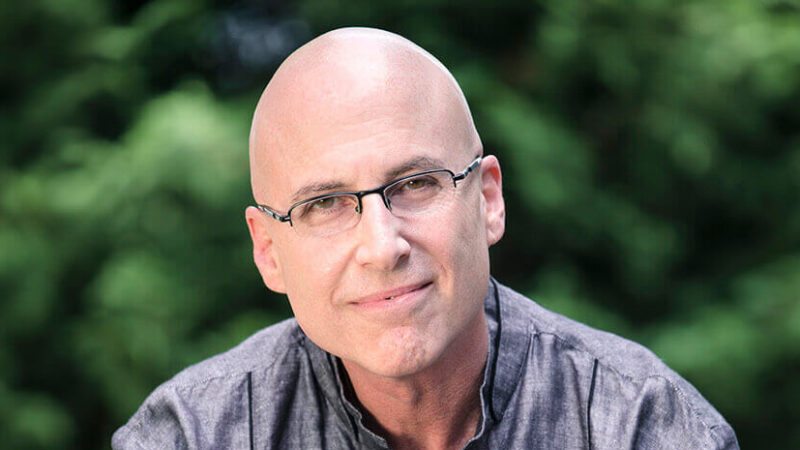
Jeffrey Rutstein

Dr. Jeffrey Rutstein is a clinical psychologist, an expert in the treatment of trauma, a certified Hakomi Mindfulness-Centered Somatic psychotherapist, and a meditation teacher who has been in private practice for over 35 years. He has practiced meditation for over 50 years. He has devoted his professional life to helping people reduce their suffering and struggle while empowering them to claim their strengths, their talents, and their unique abilities to live a more fulfilling and rich life.

Author photo © Josh Hailey

Also By Author

Jeffrey Rutstein, PsyD: You Can Shift the State of You...

Our understanding of the human nervous system has grown exponentially in recent years, thanks to astounding discoveries from neuroscience, Polyvagal Theory, trauma research, Attachment Theory, and other emerging fields. No longer do we see the functioning of the nervous system as an unconscious process outside of our control. Today, we know that you can actually befriend and work with your nervous system to self-regulate in the face of emotionally triggering situations, release unresolved trauma from the “stuck places” inside, and reclaim a life of integration and wholeness. Sounds True’s annual training, The Healing Trauma Program, was designed expressly for these purposes. In this podcast, Tami Simon speaks with psychotherapist and lead teacher of the program Dr. Jeffrey Rutstein. 

Tune in for an eye-opening conversation on: the connection between unhealed trauma and nervous system dysregulation; raising self-awareness around your personal triggers and conditioned responses; shifting from defensiveness to feelings of safety and belonging; chronic dysregulation; accurately discerning when you’re in danger; the vagus nerve, the ventral vagal response, and the “tend and befriend” zone where we can be fully present; the interplay of genetics and your upbringing in the formation of your “go-to nervous system states”; a nervous system approach to transforming self-blame and shame into self-compassion and worthiness; three pools of energy—hyperarousal, hypoarousal, and the Window of Tolerance; the empowering firsthand experience of changing your nervous system states; why there are no “bad” nervous system states; why being in a regulated state is so critical to healthy relationships; neuroception; simple, on-the-spot techniques (or “nervous system hacks”) you can use to self-regulate, from breathwork to gentle stretching and more; the shortcomings of talk therapy; co-regulation and the social engagement zone; the four key questions of the aspiring nervous system co-regulator; severe trauma and how “the state drives the story”; meditation practice, the true self, and the inner “hijacker”; and more.


Note: This episode originally aired on Sounds True One, where these special episodes of Insights at the Edge are available to watch live on video and with exclusive access to Q&As with our guests. Learn more at join.soundstrue.com. 

Unwinding Trauma and PTSD: The Nervous System, Somatic...

The mind-body connection is still a new concept in Western medicine. Descartes’s declaration “I think, therefore I am” encouraged many to view the mind as separate from and superior to the body… for almost 400 years! So, to understand the discovery of feedback loops in the nervous system linking body and mind is to undergo a major paradigm shift, with radical implications for how we view and treat conditions like trauma and PTSD—and how you can empower yourself around your own healing journey.

Why Embodiment Decreases for Trauma Survivors

Until trauma survivors feel their safety has been truly restored, their nervous system relies on defensive mechanisms like dissociation, numbing out, or immobilization. This can feel subjectively like becoming a two-dimensional “stick figure” energetically, with a body that’s barely there.

If you feel like you’re not really inhabiting your body, know that it’s not your fault and you probably had very good historical reasons to leave it. With recent advances in mind-body therapies and somatic psychology, however, there are many ways—when you’re ready—to safely return to experiencing your fully embodied self. 

Perhaps the most popular of these therapies is Somatic Experiencing®.

What Is Somatic Experiencing?

Somatic Experiencing is a form of therapy originally developed by Dr. Peter Levine. It proceeds from the premise that trauma is not just “in your head.” Though you may feel off-kilter psychologically in the wake of trauma, you’re not “crazy”—you have a nervous system that has been put into overdrive.

The body can’t distinguish physical trauma from mental or emotional trauma, and this leads the brain, once you’ve had trauma, to get stuck in a state of believing that you’re in perpetual danger.

Without a way to shake off the effects of having been in a dangerous situation in the past, trauma survivors disconnect from their bodies; the trauma gets “frozen” inside. With this frozenness in the body, your emotions can become dysregulated easily; you might at times feel spacey, agitated, depressed, panicky, collapsed—or all of the above.

Again, it’s not your fault that any of this is happening: dissociating and numbing are a natural  defense mechanism. Still, it may take some work, often within a therapeutic container, to start to “thaw” the frozenness or unwind the trauma.

Somatic Experiencing practitioners help clients increase their awareness of their kinesthetic, embodied experience, and lead them through techniques to gradually release stresses that have been locked into the body. Allowing both physical responses and emotions to come through, bit by bit, restores psychological balance and can help resolve even long-term PTSD.

How It All Works: Polyvagal Theory

Neuroscientist and psychologist Dr. Stephen Porges synthesized Polyvagal Theory as a way to explain human behavior in terms of the evolution of our autonomic nervous system. It not only provides a biological frame for parts of Somatic Experiencing, it has helped therapists develop a host of somatically attuned interventions and refined the way they interact with clients.

The centerpiece of Polyvagal Theory is the vagus nerve. This long nerve mediates what Porges calls the “social engagement” system. The vagus nerve’s ventral branch supports social engagement: a calm and playful, pro-social state. Its dorsal branch supports the opposite: immobilization (characterized by dissociation, depression, numbness, or “freeze.”)

If you undergo a trauma, the dorsal branch of the vagus nerve activates a state of immobilization. On the other hand, when you feel safe and embodied, your parasympathetic nervous system functions smoothly and you can (ideally) engage socially. What makes all this possible is neuroception, perception that takes place without our conscious awareness, tipping us from safety into other modes, like fight, flight, or freeze.

Clinicians trained in Polyvagal Theory support clients in making shifts in their autonomic responses, from “freeze” and shutdown to fight or flight—to safety—in order to restore a healthy range of responses and the feeling of being safe. 

Practicing co-regulation with their clients helps the clients to re-establish inner safety and other positive feeling states.

How You Can Increase Your Embodiment

Trauma severs us from our body, and embodiment brings us back. 

Embodiment practices like somatic therapies, qigong, and various athletic activities are some of the best medicine around for the nervous system. Even just taking a long walk while paying attention to your feet making contact with the earth can be quite supportive.

Sounds True also has created The Healing Trauma Program to offer support for your healing. The course has a faculty of 13 esteemed trauma experts—including Somatic Experiencing founder Dr. Peter Levine, Polyvagal Theory expert Deb Dana, Dr. Gabor Maté, Konda Mason, Thomas Hübl, and many others. The program takes place over nine months and is truly an immersion into the world of trauma recovery, with teachings, guided practices, live practice sessions and Live Q&As. Find out more about The Healing Trauma Program.

A Compassionate Approach to Recognizing Trauma Bonding

The theory of attachment styles became popularized in the last 15 years; now trauma is (finally) getting recognition from the mainstream. But most of us aren’t yet clear about the very deep connection that exists between trauma and certain attachment styles. This is where the concept of “trauma bonding” comes into play.

What is trauma bonding?

Trauma bonding happens when we get attached to someone who is often neglectful or abusive (physically, emotionally, or psychologically), but is also occasionally kind. When we’re attached to someone like this, we typically explain away their bad behavior, claiming “they had a hard day” or “it was my fault they got mad at me.” Rationalization offers us a semblance of protection from seeing the reality of the danger and inequality in the relationship. 

It’s common to form a trauma bonding pattern when one of our parents or partners is erratic, abusive, or absent. But often the template of trauma bonding gets applied to many of our relationships.

Signs You Have a Trauma Bond

If you’re in a trauma bond relationship right now, you may make dramatic or sudden life changes or even great sacrifices for the sake of the relationship to the detriment of outside friendships, family, and your autonomy. 

Even if the original, harmful relationship is now a thing of the past (e.g., you moved out, you broke up with the manipulative partner, or your former abuser has died), the trauma bonding pattern may remain embedded until you learn how to consciously uproot it.

Signs this trauma bonding template is still present can include:

  • Emotionally caretaking others while your own needs and desires are swept under the rug
  • Acting as if you continually need to prove your worth to others (and yourself)
  • Avoiding being authentic or open because it feels like too great a risk
  • Feeling frustrated, exhausted, hypervigilant, or unsupported in relationships due to perceiving pressure coming from others
  • A pattern of feeling disempowered around coworkers, a spouse, or family members

What Causes Trauma Bonding?

When we experience stress and feel (consciously or unconsciously) we’re in danger, our sympathetic nervous system activates the “fight or flight” response. As long as that circuitry is activated, we’re not able to plan for the future or assess risks very clearly; our nervous system gets locked in survival mode to get through the stress. In other words, it’s not your fault that you can’t see what’s going on.

The challenge is heightened because of the intermittent reinforcement that characterizes trauma bonds: we receive occasional comfort or love in the relationship, which is sprinkled on top of the typical abuse or neglect. Like other forms of intermittent reinforcement, it’s an addictive combination to be exposed to, and one that hampers our ability to understand we’re being mistreated. 

Because we focus so intently on the positive reinforcement we experience from time to time with our abuser, we contort ourselves psychologically to try to get the love as often as we can. Once this pattern is established, it is naturally hard to stop engaging it—again, because of the way our nervous system developed. Getting outside support to stop the cycle is an act of strength and wisdom.

Should You Break a Trauma Bond?  

If you’re in clear and real danger, it is most important to find a way to safely remove yourself from harm. Over the longer term, the best approach is learning to create healthy relational boundaries so as not to form or reform trauma bonds.  

Once you start to become aware of the trauma bonding pattern operating in you, you can recognize and address the behaviors it causes. You can uncover and listen to your buried needs and wants, and reclaim your personal power and freedom. Doing this can help you shift your nervous system out of past trauma bonding tendencies and toward new possibilities, including nurturing mutual relationships with people who are interested in your happiness and will support your thriving.

To find out more about healing traumas (including trauma bonding), please check out The Healing Trauma Program, hosted by Jeffrey Rutstein, PsyD, CHT.

You Might Also Enjoy

Kimberly Ann Johnson: “Becoming a Sexual Alchemi...

What if aging isn’t the slow closing of your erotic life, but the doorway into its most alive season?

This week, Tami Simon speaks with Kimberly Ann Johnson—sexological body worker, somatic experiencing practitioner, birth doula, and author of the new Sounds True book Erotic Seasons: Tuning In to the Rhythms of Women’s Sexuality and Spirituality—about what she calls erotic sovereignty, and the sentence that closes her book: the female body is its own spiritual path.

Join Tami and Kimberly to explore:

  • Erotic sovereignty—your relationship to your own life force, and why it stays with you across every season
  • Why the goal isn’t a more regulated nervous system, but a more responsive one, and what it means to run more charge
  • The four erotic seasons—maiden, mother, virgin, crone—and the surprising reason virgin comes after mother
  • Why hormonal transitions are “wet clay”: golden opportunities for repatterning that our culture teaches us to rush past
  • Menopause as a death rehearsal, and the life review that arrives decades before we expect it
  • Hot sex and warm sex—widening the range beyond adrenaline, and learning the language of the pause
  • “Hormones are gods”: the collective endocrine system, and why living intergenerationally may be the original hormone therapy
  • Becoming a sexual alchemist—arousal as healing energy, and why care is the whole ethic

Whether you are 25 or 75, Kimberly offers a map for meeting your body’s changes as thresholds rather than losses.

Please note: this episode includes candid discussion of sexual abuse and sexual wounding, including Kimberly Ann Johnson’s own experience.

Listen now, and meet your body as the path. →

This conversation offers genuine transmission, not just concepts about awakening, but the palpable presence of realized teachers exploring the growing edge of spiritual understanding together, and it originally aired on Sounds True One.

Get a FREE month of membership at https://bit.ly/STOne-Free-Month.

The Point of Insight | Our Medicine Lives in the Wound


What if the very thing that wounded you is the source of the medicine you’re here to give?

In this month’s Point of Insight, Tami Simon shares a personal story: minutes before going live with an archetypal astrologer, she was told—correctly, and within seconds—that she carried “the mother of all mother wounds.” That single moment became the culmination of a much longer, gradual unfolding: a lifetime’s worth of “drops,” from a mentor she called the Queen of the Reframe, to an interview with yoga teacher and activist Seane Corn titled “Your Pain Is Your Purpose,” to an email from a business coach whose four simple words reframed everything—your karma is your dharma.

Join Tami as she reflects on:

  • How a lifelong feeling of not belonging became the soil for a life’s work helping others feel connected
  • The difference between sudden insight and the slow, gradual “boiling water” of a tipping point
  • Why real breakthrough requires going all the way through pain, not around it
  • Joanna Macy’s question—”What breaks your heart?”—and how grief and care become fuel for service
  • Why “never turn away” may be one of the most important spiritual instructions there is

This is a shorter, solo reflection from Tami—released once a month on the Insights at the Edge feed—on where our deepest wounds and our clearest purpose meet.

Listen now. →

Find the original Insights at the Edge episodes here: “Seane Corn: Your Pain Is Your Purpose“

Guy Shahar and Melinda Edwards, MD: Sensitivity Is at ...

Autism is so often described in terms of what seems to be missing: eye contact, small talk, the expected social rhythms most people move through without thinking. This two-part conversation asks a different question entirely: what if the very traits read as absence are actually signs of a deeper, more intense form of connection than most neurotypical people ever access. It’s a reframing that asks listeners to set aside a familiar deficit lens and try on a considerably more generous one.

Sounds True brought Guy Shahar and Dr. Melinda Edwards together for this special episode of our Being Open series precisely because both speak from lived experience rather than from clinical distance alone, one as a father and later as a self-identified autistic adult, the other as a psychiatrist and mother of an autistic daughter. Their combined perspective reflects something Sounds True has believed since 1985: that the most transformative teaching often comes from people who have lived the question, not simply studied it.

In this piece, we look at what each of them learned, how their perspectives echo and diverge, and what it might mean to depathologize neurodiversity rather than simply manage it.

Key Takeaways:

  • A Late Discovery: Learn how Guy Shahar found out at age forty-six that he is autistic himself.
  • Connection, Not Absence: Understand why Dr. Melinda Edwards challenges the idea that autism means disconnection.
  • Three Practical Keys: See the approach Shahar offers parents and caregivers for genuinely connecting.

A Conversation in Two Parts

This episode unfolds across two connected conversations, each offering a different vantage point on the same central idea. Guy Shahar, author of Transforming Autism, opens the discussion focused on parenting and connection.

  • Part One: Shahar discusses educating caregivers, flexibility, and the intuitive capacity many autistic children show toward reading energy and intention. Full details appear in Guy Shahar and Melinda Edwards, MD: Sensitivity Is at the Heart of Autism.
  • Part Two: Dr. Edwards continues the conversation, focusing on the overlooked spiritual gifts and interconnection autism can reveal.

Insight Is The First Step Toward Growth. Broaden Your Horizons With Sounds True.

Guy Shahar: A Discovery That Reframed His Own Life

Shahar’s path into this work began with his son, whose autism led the family to unconventional and unusually effective treatments detailed in Transforming Autism. His son, once written off by parts of the medical establishment as severely disabled, went on to thrive in a mainstream school by age six, an outcome Shahar attributes to focusing on inherent strengths rather than symptom correction. What makes his perspective unusual is what came next: at age forty-six, Shahar discovered he was autistic himself, a revelation that suddenly explained decades of experiences he had never quite understood, from communication struggles to a persistent sense of not fitting expected molds.

This late discovery reshaped how Shahar approaches his own book’s central argument. Rather than treating autism as a problem requiring correction, Transforming Autism proposes understanding the inherent characteristics of autistic children and bringing out their natural strengths instead, a philosophy Shahar later carried into founding a charity dedicated to the same principle.

Autism Sensitivity: What Looks Like Withdrawal Often Isn’t

A central theme threading through both conversations is autism sensitivity, the idea that heightened perception, not deficit, sits at the core of many autistic experiences. What often reads to outside observers as withdrawal or overwhelm may actually reflect a nervous system taking in far more information than a typical environment accounts for.

  • Overwhelm as Overload: Shutdown often signals sensory flooding rather than disinterest in connection.
  • Intuitive Attunement: Many autistic children show unusual sensitivity to the emotional energy of people around them.
  • Idealism and Values: Shahar notes a strong pull toward altruism and idealistic values among many autistic individuals he has met.

Three Keys to Connecting with Autistic Children

Rather than offering another behavioral checklist, Shahar frames connection around three keys that emerged from years of trial, error, and eventual breakthrough with his own son:

  • Flexibility Over Correction: Meeting a child’s actual state rather than insisting on typical behavior first.
  • Play as a Bridge: Following a child’s own interests as the doorway into shared connection.
  • Presence Over Performance: Showing up authentically, since autistic children often sense forced or anxious energy quickly.

Find Teachings that Speak to You With Sounds True.

Dr. Melinda Edwards: Connection Where Others See Its Absence

Dr. Edwards approaches the same territory as both a psychiatrist and the mother of an autistic daughter, and her central claim reframes the entire conversation. Rather than reading her daughter’s symptoms as disconnection, Dr. Edwards has come to understand them as reflections of a connection so deep it exceeds what conventional language typically describes. Her clinical training and personal experience together let her speak to something rarely voiced this plainly: that autism may offer neurotypical people a glimpse of interconnection they have simply lost access to.

Dr. Edwards’s perspective carries particular weight because it bridges two worlds that don’t often speak to each other candidly: the clinical framework she was trained in and the lived reality of raising a daughter whose experience didn’t fit neatly into that framework. Rather than discarding one for the other, she has spent years holding both, letting each inform and complicate the other.

From Anxiety to Faith

Both guests describe a similar arc within their own families: an initial period defined by anxiety, fear about diagnosis, fear about the future, gradually giving way to something closer to faith. This shift doesn’t erase real challenges, but it does change how those challenges are met, with curiosity rather than dread, and with trust that difficulty can carry its own unexpected gift.

Shahar describes this shift as one of the hardest and most necessary parts of his own journey, since fear tends to narrow attention exactly when openness is most needed. Faith, in the way both guests use the term, isn’t about certainty that things will turn out fine. It’s closer to a willingness to stay present with a child, or with oneself, without needing to fix everything first.

Spiritual Gifts and Evolutionary Guides

One of the more striking claims in this conversation is the idea that autistic individuals may serve as spiritual and evolutionary guides for the wider human community. Rather than framing this as a burden placed on autistic people to be exceptional, both guests present it as an invitation for neurotypical listeners to notice qualities, sensitivity, intuitive attunement, and resistance to social pretense that the broader culture has undervalued for generations.

Center Yourself With Meditative Teachings by Sounds True

Final Thoughts

Guy Shahar and Dr. Melinda Edwards offer something rarer than advice: two honest accounts of watching a label reorganize itself into something closer to reverence. Neither pretends the path is simple, but both suggest that sensitivity itself, so often treated as a burden, may be the very quality worth protecting and learning from. What lingers longest from this conversation may be the quiet suggestion that connection was never actually missing, only expressed in a register most of us were never taught to hear. 

Sounds True shares conversations like this one because waking up the world sometimes means waking up to the people already sitting closest to us. If this conversation moved you, Guy Shahar’s book and the broader Being Open series carry it further.

Frequently Asked Questions About Guy Shahar

Who is Guy Shahar?

He is the author of Transforming Autism and co-founder of a charity supporting autistic children and their families.

When did Guy Shahar learn he was autistic?

He discovered his own autism at age forty-six, years after his son’s diagnosis.

What is the Being Open podcast series?

A special Insights at the Edge series exploring connection, consciousness, and openness across different life experiences.

Is Dr. Melinda Edwards a parent of an autistic child?

Yes, she is a psychiatrist and the mother of an autistic daughter, informing her perspective directly.

Does this conversation offer parenting techniques?

Yes, Shahar outlines three practical keys for connecting more effectively with autistic children.

What is Transforming Autism about?

It follows Shahar’s family journey as they support their son and reframes autism around inherent strengths.

Where can I find more Sounds True content on neurodiversity?

Related conversations continue throughout our Insights at the Edge Podcast archive and Relationships collection.

Is this conversation only relevant to parents?

No, its themes of sensitivity and connection speak to caregivers, clinicians, and curious listeners alike.

Michelle Cassandra Johnson is an author, activist, spiritual teacher, racial equity consultant, and intuitive healer. She is the author of six books, including Skill in Action and Finding Refuge. Amy Burtaine is a leadership coach and racial equity trainer. With Robin DiAngelo, she is the coauthor of The Facilitator's Guide for White Affinity Groups. For more, visit https://www.michellecjohnson.com/wisdom-of-the-hive.

Leave a Reply

Your email address will not be published. Required fields are marked *