Adreanna Limbach

Adreanna Limbach is the head teacher at MNDFL meditation studios and a personal development coach who helps women access their inherent clarity and confidence so that they can expand their freedom in business and life. She’s practiced meditation for the last twenty years and has taught Buddhist studies, meditation, and the cultivation of self-worth since 2012 at locations across the globe.
 
She has spent a decade mentoring do-gooders at the Institute for Integrative Nutrition as a coach, and she has catalyzed cohorts of tomorrow’s leaders around social change as an executive coach and faculty member at the Institute for Compassion Leadership. Her work has been featured by the New York Times, Refinery29, Women’s Health, and xoJane. She lives with her husband and too many small animals in an apartment in NYC. You can find out more at AdreannaLimbach.com.

Author photo © Veronika Kindred

Also By Author

Bigger Isn’t Always Better (and Other Cultural Myths...

Some of our beliefs aren’t even ours. Like old wives’ tales passed down through generations or reflected back to us through society, we inherited certain cultural and familial narratives, adopted them, and left them unquestioned as “Truth.” Sometimes these inherited narratives and beliefs manifest as unquestioned traditions. For example, when making the Thanksgiving turkey, my friend’s mother always cut the breast of the bird off and roasted it separately. This process was embedded in my friend’s view of “how to cook a turkey.” When she moved to New York and began hosting her own Thanksgivings, she also sliced the top off the turkey and cooked it separately. Naturally. 

One year a guest asked her why she didn’t cook the turkey whole, which got her to thinking. She didn’t actually know why. It’s just the way it had always been done. So she called her mother to ask about the tradition: Why do we cut the tops off our turkeys? Her mother replied that she had always taken the top off because her mother had always taken the top off; it’s just the way she had learned how to cook a turkey. Naturally curious as to where this learned behavior all began, her mother called her mother, my acquaintance’s grandmother, and asked: Why do we cut the tops off our turkeys?

The grandmother, stumped, thought for a long, hard minute. “Oh,” she remembered, “the oven in my very first apartment was too small to fit an entire turkey, so I had to cook it with the top cut off.” Sixty years later, in a city across the country, my acquaintance was still cooking turkeys as a result of an oven that was too small. This is how inherited narrative works.

Here are some of the narratives that I inherited over the years, in order from most helpful to least: You can be anything that you want to be. Money isn’t very important. It is what it is, and it can’t be changed. Men prefer pretty over smart. Asking for help means you’re weak and needy. These are the ones that I’ve managed to tease out; I’m sure there are plenty more operating in the background that I can’t see.

Part of developing a wholesome or Beneficial View is identifying the stories that we live by, where they came from, and, perhaps most importantly, whether or not they are helpful on the path of waking up to our worthiness. Shariputra, one of the Buddha’s chief disciples, described Beneficial View as the practice of identifying which of our views spring from beneficial beliefs and which spring from harmful beliefs, and then choosing which to nourish and cultivate. Sometimes this also means looking at the views of the culture that we live in.

A few times every year, I host group coaching programs for a rather large online training institute with a global reach, drawing students from a dozen countries, primarily women of varying ages. These groups offer an encouraging environment in which we can speak openly about our fears and hesitations. Over the past decade, working as a coach has revealed to me just how many of us feel a chronic sense of falling behind and a nagging suspicion that we’re not quite _________ enough. You can fill in the blank here with your own particular flavor of not-enough-ness. Not educated enough, smart enough, good-looking enough, likable enough, thin enough . . . You get the picture. A consistent element of these groups has been a gobsmacking number of women sharing that they view their capabilities as insufficient or lacking. Sometimes this feeling extends to the way that they view themselves as people. It’s said that if one fish washes up on the shore, the scientist will call it what it is: a dead fish. Nothing of note, really. However, if hundreds of fish wash up on the shore, the biologist won’t look to the fish for answers. They’ll test the water that the fish are swimming in. So what’s up with the water that we all seem to be swimming in?

In the Western hemisphere, there is a deeply embedded narrative of scarcity that is nearly invisible. I don’t know about you, but I clearly remember playing the childhood game of musical chairs. It begins as a cheerful romp around the circle, with kids squealing and running to nab a chair once the music stops. As the game progresses, however, the stakes get higher. The chairs begin to disappear. The slowest, smallest, and most accommodating kids get disqualified. And the fastest, most aggressive kids advance amidst the dwindling resource of chairs. Good, clean childhood fun. Also, a wonderful way to implicitly teach kids this prevailing myth of scarcity: There is simply not enough to go around. And you better get yours before someone else takes it.

Author, activist, and fund-raiser Lynne Twist illustrates this phenomenon exquisitely in her book The Soul of Money. She likens the scarcity narrative to a “helmet” of insufficiency that we wear throughout our day that flavors every interaction we have. For example, our first thought when getting up in the morning tends to be I didn’t get enough sleep. As we get ready for the day, we think, I don’t have enough to wear, I don’t have enough time, I don’t have enough room on the subway, I don’t have enough help to get this job done well, There aren’t enough good men or women on Tinder, I don’t have enough energy to meet up with my friends, and then our final thought before falling asleep is I didn’t get enough done. This view of not having enough is truly pervasive. It’s no wonder that the women I’ve worked with consistently communicate that they don’t feel like they can live up to their own, or society’s, expectations.

Even if we try to address the messages we might tell ourselves about what we have and don’t have, we can’t avoid them altogether. I was riding the subway to Brooklyn one day when a father and his daughter, who was all of five or six years old, entered the train and stood toward the center of the car. She was chatting to her dad about her day at school until one of the many subway ads caught her eye. In it, there were two juxtaposed photos of a blonde woman. In one photo, the woman was frowning while holding a lemon in each hand, which were hovering at chest height. In the other, she was holding two grapefruits, also at chest height, but she was grinning. “Dad, why is she happy in that one and sad in that one?” the girl asked, pointing to the ad for breast augmentation. I swear the entire subway car went silent in anticipation of how her father would respond. He awkwardly and skillfully lobbed the question back to his daughter. “Well . . . what do you think?” The girl waited a beat and then answered, “She’s happy there because she has big ones and sad there because she has small ones.”

Clearly she had understood the message this poster was communicating to us all: a message of scarcity, insufficiency, and how one might always be “better.” And in that instant I understood how conditioning works. Hello, demon of self-doubt. Just like the fish in the ocean, we’re bound to swallow the water that we swim in. When considering what it means to develop Beneficial View, and the view of our own worthiness, it can be helpful to identify why we might not feel worthy to begin with. If our cultural perspective is rooted in the myth of “not enough,” it would logically follow that we would inherit this not-so-beneficial view of ourselves. Through looking at our own mind in meditation practice, we begin to take stock of the stories and beliefs that are not serving us, unraveling this myth of “not enough,” and revealing the Beneficial View of our innate wholeness and worth.

This is an excerpt from Tea and Cake with Demons: A Buddhist Guide to Feeling Worthy by Adreanna Limbach.

 

adreanna limbachAdreanna Limbach is a personal coach and a lead meditation instructor at MNDFL, NYC’s premier drop-in meditation studio. Her teachings have been featured in the New York Times, Women’s Health, and Refinery29. She lives in New York City. For more, visit adreannalimbach.com.
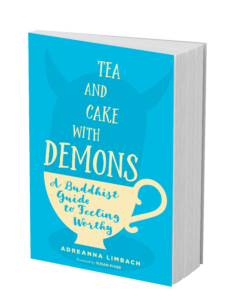


tea and cake with demons

Buy your copy of Tea and Cake with Demons at your favorite bookseller!

Sounds True | Amazon | Barnes & Noble | Indiebound | Bookshop

Adreanna Limbach: Tea and Cake with Demons

Adreanna Limbach is a personal coach and the lead meditation teacher at Mindful Meditation Studios in New York City. With Sounds True, she has published Tea and Cake with Demons: A Buddhist Guide to Feeling Worthy. In this episode of Insights at the Edge, Tami Simon speaks with Adreanna about contemplative practices that can open anyone to sitting down and becoming more familiar with their own difficult, painful feelings. Adreanna explains how these same practices helped her come to terms with panic attacks and become more resilient to extreme bursts of emotion. Tami and Adreanna discuss what it means to be “worthy” and why challenges are actually invitations to practice. Finally, they talk about the Four Noble Truths and how they might be interpreted in the modern era. (67 minutes)

Bigger Isn’t Always Better (and Other Cultural Myths...

Bigger Isn't Always BetterSome of our beliefs aren’t even ours. Like old wives’ tales passed down through generations or reflected back to us through society, we inherited certain cultural and familial narratives, adopted them, and left them unquestioned as “Truth.” Sometimes these inherited narratives and beliefs manifest as unquestioned traditions. For example, when making the Thanksgiving turkey, my friend’s mother always cut the breast of the bird off and roasted it separately. This process was embedded in my friend’s view of “how to cook a turkey.” When she moved to New York and began hosting her own Thanksgivings, she also sliced the top off the turkey and cooked it separately. Naturally. 

One year a guest asked her why she didn’t cook the turkey whole, which got her to thinking. She didn’t actually know why. It’s just the way it had always been done. So she called her mother to ask about the tradition: Why do we cut the tops off our turkeys? Her mother replied that she had always taken the top off because her mother had always taken the top off; it’s just the way she had learned how to cook a turkey. Naturally curious as to where this learned behavior all began, her mother called her mother, my acquaintance’s grandmother, and asked: Why do we cut the tops off our turkeys?

The grandmother, stumped, thought for a long, hard minute. “Oh,” she remembered, “the oven in my very first apartment was too small to fit an entire turkey, so I had to cook it with the top cut off.” Sixty years later, in a city across the country, my acquaintance was still cooking turkeys as a result of an oven that was too small. This is how inherited narrative works.

Here are some of the narratives that I inherited over the years, in order from most helpful to least: You can be anything that you want to be. Money isn’t very important. It is what it is, and it can’t be changed. Men prefer pretty over smart. Asking for help means you’re weak and needy. These are the ones that I’ve managed to tease out; I’m sure there are plenty more operating in the background that I can’t see.

Part of developing a wholesome or Beneficial View is identifying the stories that we live by, where they came from, and, perhaps most importantly, whether or not they are helpful on the path of waking up to our worthiness. Shariputra, one of the Buddha’s chief disciples, described Beneficial View as the practice of identifying which of our views spring from beneficial beliefs and which spring from harmful beliefs, and then choosing which to nourish and cultivate. Sometimes this also means looking at the views of the culture that we live in.

A few times every year, I host group coaching programs for a rather large online training institute with a global reach, drawing students from a dozen countries, primarily women of varying ages. These groups offer an encouraging environment in which we can speak openly about our fears and hesitations. Over the past decade, working as a coach has revealed to me just how many of us feel a chronic sense of falling behind and a nagging suspicion that we’re not quite _________ enough. You can fill in the blank here with your own particular flavor of not-enough-ness. Not educated enough, smart enough, good-looking enough, likable enough, thin enough . . . You get the picture. A consistent element of these groups has been a gobsmacking number of women sharing that they view their capabilities as insufficient or lacking. Sometimes this feeling extends to the way that they view themselves as people. It’s said that if one fish washes up on the shore, the scientist will call it what it is: a dead fish. Nothing of note, really. However, if hundreds of fish wash up on the shore, the biologist won’t look to the fish for answers. They’ll test the water that the fish are swimming in. So what’s up with the water that we all seem to be swimming in?

In the Western hemisphere, there is a deeply embedded narrative of scarcity that is nearly invisible. I don’t know about you, but I clearly remember playing the childhood game of musical chairs. It begins as a cheerful romp around the circle, with kids squealing and running to nab a chair once the music stops. As the game progresses, however, the stakes get higher. The chairs begin to disappear. The slowest, smallest, and most accommodating kids get disqualified. And the fastest, most aggressive kids advance amidst the dwindling resource of chairs. Good, clean childhood fun. Also, a wonderful way to implicitly teach kids this prevailing myth of scarcity: There is simply not enough to go around. And you better get yours before someone else takes it.

Author, activist, and fund-raiser Lynne Twist illustrates this phenomenon exquisitely in her book The Soul of Money. She likens the scarcity narrative to a “helmet” of insufficiency that we wear throughout our day that flavors every interaction we have. For example, our first thought when getting up in the morning tends to be I didn’t get enough sleep. As we get ready for the day, we think, I don’t have enough to wear, I don’t have enough time, I don’t have enough room on the subway, I don’t have enough help to get this job done well, There aren’t enough good men or women on Tinder, I don’t have enough energy to meet up with my friends, and then our final thought before falling asleep is I didn’t get enough done. This view of not having enough is truly pervasive. It’s no wonder that the women I’ve worked with consistently communicate that they don’t feel like they can live up to their own, or society’s, expectations.

Even if we try to address the messages we might tell ourselves about what we have and don’t have, we can’t avoid them altogether. I was riding the subway to Brooklyn one day when a father and his daughter, who was all of five or six years old, entered the train and stood toward the center of the car. She was chatting to her dad about her day at school until one of the many subway ads caught her eye. In it, there were two juxtaposed photos of a blonde woman. In one photo, the woman was frowning while holding a lemon in each hand, which were hovering at chest height. In the other, she was holding two grapefruits, also at chest height, but she was grinning. “Dad, why is she happy in that one and sad in that one?” the girl asked, pointing to the ad for breast augmentation. I swear the entire subway car went silent in anticipation of how her father would respond. He awkwardly and skillfully lobbed the question back to his daughter. “Well . . . what do you think?” The girl waited a beat and then answered, “She’s happy there because she has big ones and sad there because she has small ones.”

Clearly she had understood the message this poster was communicating to us all: a message of scarcity, insufficiency, and how one might always be “better.” And in that instant I understood how conditioning works. Hello, demon of self-doubt. Just like the fish in the ocean, we’re bound to swallow the water that we swim in. When considering what it means to develop Beneficial View, and the view of our own worthiness, it can be helpful to identify why we might not feel worthy to begin with. If our cultural perspective is rooted in the myth of “not enough,” it would logically follow that we would inherit this not-so-beneficial view of ourselves. Through looking at our own mind in meditation practice, we begin to take stock of the stories and beliefs that are not serving us, unraveling this myth of “not enough,” and revealing the Beneficial View of our innate wholeness and worth.

This is an excerpt from Tea and Cake with Demons: A Buddhist Guide to Feeling Worthy by Adreanna Limbach.Tea and Cake with Demons

Adreanna LimbachAdreanna Limbach is a personal coach and a lead meditation instructor at MNDFL, NYC’s premier drop-in meditation studio. Her teachings have been featured in the New York Times, Women’s Health, and Refinery29. She lives in New York City. For more, visit adreannalimbach.com.

Buy your copy of Tea and Cake with Demons at your favorite bookseller!

Sounds True | Amazon | Barnes & Noble | Indiebound


Bigger Isn't Always Better Pinterest

You Might Also Enjoy

Spirituality And Religion: Understanding The Pathways ...

When it comes to seeking meaning, healing, or connection to something greater than ourselves, we often find ourselves standing at a crossroads: one path lined with traditions, rituals, and long-established doctrines; the other shaped by intuition, personal reflection, and direct experience. This is where many people begin to ask deeper questions about the difference between spirituality vs religion, and how both might serve their longing for purpose, belonging, and awakening. These paths aren’t always opposites; sometimes, they overlap, complement, or evolve in relation to one another. Understanding how people navigate these sacred choices reveals just how diverse and personal the journey can be.

At Sounds True, we’ve spent over four decades curating one of the world’s most trusted archives of spiritual wisdom. From the voices of Eckhart Tolle, Tara Brach, Pema Chödrön, and Michael Singer, to emerging teachers reshaping the future of inner work, we share teachings that are raw, unscripted, and alive. Our courses and digital programs are not just content; they’re living transmissions that meet people where they are, offering companionship on a path that is deeply personal and profoundly sacred.

In this piece, we’ll be discussing the distinctions and connections between spirituality and religion, how sacred paths unfold in unique ways, and how Sounds True supports those on the journey of personal transformation.

Key Takeaways:

  • Definition Clarity: The article distinguishes spirituality from religion without judgment, emphasizing personal experience and structured tradition.
  • Inclusive Pathways: Readers will gain insight into how sacred paths vary across cultures, personal choices, and evolving beliefs.
  • Supportive Resources: Sounds True offers tools, courses, and teachings to help people deepen their spiritual journey in accessible, transformative ways.

What Does It Mean To Walk A Sacred Path?

A sacred path can look different for every seeker, yet it often begins with a quiet longing for deeper meaning and connection. People step onto this path when they feel called to explore the inner landscape of the heart and the mystery that surrounds them. This exploration often leads to a richer understanding of life, truth, and the presence of the sacred:

Honoring The Many Forms Of Sacred Exploration

To begin understanding sacred paths, a person must recognize that the sacred can reveal itself through many experiences. Some find it through community and shared ritual, and others discover it through silence, nature, or personal reflection. Every expression of connection carries wisdom that shapes a seeker’s unfolding journey.

Recognizing Differences In Spiritual Beliefs

There are countless differences in spiritual beliefs across cultures and traditions, yet each carries its own doorway to meaning. These differences are not barriers; they are invitations to appreciate the diversity of human experience. When seekers approach these differences with openness, they often discover insights that deepen their personal path.

Embracing The Inner Journey As Lifelong Practice

A sacred path is less about arriving at a final truth and more about the gradual awakening that unfolds over time. The journey involves presence, compassion, and a willingness to listen inwardly. Through this gentle unfolding, the seeker recognizes the sacred not only in extraordinary moments but also in the simplicity of daily life.

Discover The Power Of Daily Meditation With Sounds True.

Spirituality Vs Religion: How Do We Define Each?

Understanding the nuances between spirituality vs religion helps us appreciate how people seek the sacred in different ways. Both offer meaningful frameworks for connection and awakening, yet they shape inner experience through distinct approaches. Here is how these two pathways can be understood with clarity and compassion:

Defining Religion As A Structured Pathway

Religion offers shared beliefs, communal practices, and traditions that have guided seekers for generations. It provides a framework for understanding the sacred within a collective, and it supports individuals through ritual, moral teachings, and spiritual lineage.

Understanding Spirituality As Personal Inner Practice

Spirituality is often described as a personal journey of inner discovery and presence. While it may draw from religious teachings, it is shaped by reflection, intuition, and direct experience. Many people exploring spirituality vs religion resonate with the freedom that spirituality offers, since it adapts naturally to each individual’s unfolding path.

Bridging Differences In Spiritual Beliefs With Openness

There are countless differences in spiritual beliefs, and each one reflects the diversity of the human search for meaning. These differences invite curiosity rather than separation. When seekers honor these variations with openness, they learn to listen more deeply to one another and to themselves.

Supporting The Individual Journey With Resources

For those exploring spirituality in personal ways, resources like the Spirituality at Sounds True can offer guidance and companionship. These teachings support seekers as they clarify their path and deepen their sense of connection.

Exploring Faith Traditions Across Time And Culture

Faith traditions have shaped human experience for thousands of years. From ancient rites to contemporary contemplative practices, these pathways help individuals connect with the sacred through lineage, symbolism, and ritual. Each tradition offers its own doorway into the mystery of being:

Recognizing The Wisdom In Ancient Traditions

Many seekers begin exploring faith traditions by studying ancient paths such as Buddhism, Christianity, Indigenous teachings, or Sufi mysticism. These systems carry centuries of lived wisdom and provide tested frameworks for spiritual transformation, community, and insight.

Understanding Cultural Expressions Of The Sacred

Spiritual practice is deeply influenced by geography, culture, and time. What may be sacred in one tradition can look very different in another. Honoring these differences supports a deeper understanding of sacred paths and the wide variety of ways people access the divine.

Welcoming Modern Expressions Of Spiritual Seeking

Today, people often blend elements from multiple faith traditions into their personal practice. This integrative approach reflects the evolving nature of spiritual identity. Whether rooted in tradition or emerging through personal experience, these paths reflect the changing face of spirituality vs religion.

Learning Through Modern Teachings And Courses

Sounds True offers digital programs that support this kind of integrative seeking. The Spiritual Courses collection allows seekers to engage with diverse teachings and deepen their understanding from the comfort of their own space.

Differences In Spiritual Beliefs And Personal Meaning

Each person’s relationship with the sacred is shaped by experience, upbringing, and inner resonance. While spiritual traditions offer shared language, the deeper truths we uncover are often intimate and unique. Recognizing and honoring the variety of perspectives helps us move beyond division and toward understanding:

Noticing The Spectrum Of Belief

From structured religious frameworks to unbound spiritual exploration, there are countless differences in spiritual beliefs. Some hold firm to doctrine; others follow intuition or direct experience. Each position, whether inherited or chosen, reflects a deep desire to live in alignment with truth.

Personal Meaning As The Core Of Connection

For many, the heart of the spiritual path lies in meaning-making. The sacred becomes real not just through belief, but through lived experience. People navigating spirituality vs religion often find clarity when they trust their own encounters with insight, love, and mystery.

Creating Space For Curiosity And Compassion

Understanding these differences calls us to soften our assumptions and open ourselves to learning. When we approach diverse beliefs with presence and care, we strengthen the collective field of awakening and deepen our understanding of sacred paths.

Supporting Healing And Integration

Many seekers come to spirituality during moments of personal transition, grief, or transformation. Offerings like the Spiritual Healing Courses at Sounds True help guide that process, providing tools and teachings that support emotional and spiritual integration.

Expand Your Consciousness With Sounds True.

How Sounds True Supports Your Spiritual Journey

As seekers explore their own path, finding resources that reflect both depth and authenticity becomes essential. Sounds True was created to serve this exact purpose to offer teachings that honor each person’s unique experience while connecting them to timeless wisdom. Here’s how Sounds True walks beside you:

Sharing The Voices Of Visionary Teachers

For over 40 years, Sounds True has partnered with spiritual leaders such as Eckhart Tolle, Pema Chödrön, Tara Brach, and many others. These teachers bring alive the richness of exploring faith traditions from multiple perspectives, all with a commitment to presence and personal transformation.

Offering Courses That Meet You Where You Are

Whether someone is new to the path or has been walking it for decades, accessible resources matter. That’s why Sounds True emphasizes experiential learning through audio teachings, online retreats, and digital workshops, tools that support real-life application and inner growth.

Creating A Living Library Of Spiritual Wisdom

The company’s deep archive has been lovingly built as a space of spiritual preservation. Its mission is to transmit the essence of a teaching through the teacher’s unscripted voice, allowing the energy behind the words to be felt, not just understood.

Inviting You To Go Deeper With Limited-Time Offerings

For those seeking guidance during pivotal seasons of their life, the BFCM Spirituality from Sounds True provides access to exclusive programs designed to support transformation. These teachings meet you where you are and help you deepen your relationship with the sacred.

Build Relationships That Nourish And Sustain.

Final Thoughts

The path to the sacred is not one-size-fits-all. Whether someone finds depth through tradition or through personal discovery, both are valid, powerful, and worthy of respect. In honoring both spirituality vs religion, we open ourselves to deeper compassion, for others and for ourselves.

It is through this openness that we begin truly understanding sacred paths. Each belief system, each story, and each practice reflects a thread in the larger fabric of human longing. While our paths may look different, our destination is shared: wholeness, presence, and connection to something greater than ourselves.

As you walk your own sacred path, may you trust your inner knowing, find nourishment in your chosen practices, and remain open to the evolving journey ahead.

Read also:

Frequently Asked Questions About Spirituality And Religion

What Is The Main Difference Between Spirituality And Religion?

The main difference lies in structure and approach. Religion typically follows organized doctrines and communal practices, while spirituality is often personal, fluid, and guided by individual experience.

Can Someone Be Both Spiritual And Religious?

Yes, many people identify as both. They may follow religious traditions while also cultivating a personal spiritual practice that reflects their inner life.

Why Do Some People Leave Religion To Pursue Spirituality?

Some leave religion due to rigid doctrines, institutional experiences, or personal disconnection, and turn to spirituality for a more intuitive, direct connection to meaning.

Is Spirituality Always Non-Theistic?

No. While some spiritual paths are non-theistic, others include a belief in God or divine presence. Spirituality is flexible and may or may not involve theism.

Does Spirituality Require A Teacher Or Guide?

Not necessarily. Some individuals learn through books, inner reflection, or life experience. Others benefit from mentors, teachers, or spiritual communities.

How Do Cultural Backgrounds Influence Spirituality Vs Religion?

Cultural heritage often shapes religious upbringing, symbols, and practices. As people grow, they may evolve beyond those frameworks or integrate them into spiritual inquiry.

Are There Ethical Systems In Spirituality Like In Religion?

Yes. Many spiritual paths promote values such as compassion, integrity, mindfulness, and non-harming, even when not tied to formal commandments or doctrines.

Can Spirituality Provide Community Like Religion Does?

Spirituality can offer community through retreats, meditation groups, online platforms, or shared practices, but it often requires more active seeking than religion-based groups.

How Do Rituals Fit Into A Spiritual Practice Without Religion?

Spiritual rituals may include meditation, journaling, lighting candles, or observing nature. These acts mark intention, presence, or transition, even outside religious tradition.

Is One Path Better Than The Other, Spirituality Or Religion?

Neither is better; both paths serve different needs. What matters most is alignment, choosing the path that feels authentic, meaningful, and supportive for your growth.

Michelle Cassandra Johnson is an author, activist, spiritual teacher, racial equity consultant, and intuitive healer. She is the author of six books, including Skill in Action and Finding Refuge. Amy Burtaine is a leadership coach and racial equity trainer. With Robin DiAngelo, she is the coauthor of The Facilitator's Guide for White Affinity Groups. For more, visit https://www.michellecjohnson.com/wisdom-of-the-hive.

Try These Mindfulness Exercises To Ground Yourself

Mindfulness is an ancient, deeply personal practice that invites you into the present moment with compassion and awareness. And yet, for many of us, simply “being present” can feel elusive. We’re managing careers, relationships, health, and the constant pull of digital life. It’s no wonder anxiety and stress have become everyday companions. Through regular, intentional practices, we begin to notice the quiet steadiness underneath the noise. That’s where grounding lives.

For over 40 years, Sounds True has been a trusted leader in spiritual education and personal transformation, sharing the wisdom of teachers like Eckhart Tolle, Pema Chödrön, Tara Brach, and many others. As the world’s largest “living library” of transformational teachings, we’ve helped millions of people reconnect with presence, purpose, and their inner wisdom through unscripted, heart-centered resources.

In this piece, we’ll explore a series of mindfulness exercises to support your return to presence, whether you’re seeking mindfulness exercises for anxiety, tools for teens and adults, or daily mindfulness exercises for stress relief. You’ll also find soulful practices like inner rhythm meditations woven throughout to help you tune into your natural flow.

Key Takeaways:

  • Learn Audience-Specific Practices: This article offers tailored mindfulness exercises for anxiety, adults, teens, and daily stress relief.
  • Find Practical and Accessible Tools: Readers will find easy-to-implement, non-intimidating exercises they can begin using right away.
  • Integrating These Exercises into Daily Life: Meditation exercises encourage integrating mindfulness into ordinary activities for long-term emotional grounding and resilience.

Expand Your Consciousness With Sounds True.

Simple Mindfulness Exercises To Bring You Back To Center

Even the busiest mind can come back to stillness with a few moments of intention. These foundational mindfulness exercises are designed to be accessible, grounding, and easy to integrate into daily life.

Breathe For One Minute

This micro-practice is a gentle reminder that your breath is always available as an anchor. Set a timer for just 60 seconds. Sit or stand comfortably. Close your eyes if you’d like. Bring all of your awareness to the sensation of breathing, how the air enters and leaves your body, and how your chest rises and falls. Don’t change anything. Just notice. One minute of conscious breathing can create space between stimulus and response, making it a beautiful starting point for mindfulness exercises for anxiety or moments of stress.

Ground Through The Five Senses

When your thoughts are racing or your emotions feel overwhelming, coming back to your senses, literally, can reset your nervous system. To practice this, look around and quietly name five things you can see, four things you can touch, three things you can hear, two things you can smell, and one thing you can taste. This kind of sensory awareness anchors your attention in the here and now, making it one of the most reliable mindfulness exercises for stress relief.

Notice Without Fixing

Mindfulness isn’t about making anything go away. It’s about seeing clearly. Try sitting in silence for a few minutes, simply noticing your thoughts, sensations, and emotions without trying to change or solve them. Let everything be as it is. This witnessing awareness is central to many mindfulness exercises for adults, a reminder that your worth isn’t based on productivity, performance, or emotional “control.” Instead, it’s grounded in the simple act of being present.

Mindfulness Exercises For Anxiety And Overwhelm

Anxiety often pulls us into the future, into what-ifs, worst-case scenarios, and mental loops that feel impossible to exit. Mindfulness brings us back to now. These exercises aren’t about eliminating anxiety, but about meeting it with gentleness, spaciousness, and embodied awareness.

Anchor To The Present With Touch

When anxiety feels like it’s spiraling, physical touch can be incredibly grounding. Place one hand on your chest and one on your belly. Feel the rise and fall of your breath beneath your hands. You don’t need to breathe in any special way, just notice the contact. This creates a direct, calming feedback loop that reminds the body it’s safe to soften. Practices like this are especially helpful when exploring mindfulness exercises for anxiety that are simple and body-centered.

Name What’s True In This Moment

A powerful way to interrupt anxious thoughts is to name what is real right now. Quietly say to yourself: “Right now, I am sitting on a chair. My feet are on the floor. I am breathing. I am safe.” You can add more statements based on your environment or sensations. This kind of mindful self-talk offers the brain a stable narrative to hold onto when anxiety is trying to pull you elsewhere. It’s a core part of how many people approach mindfulness exercises for stress relief as well.

Return To Ritual

When anxiety is chronic or persistent, creating small, daily routines can provide a sense of continuity. This might be lighting a candle before meditation, washing your hands slowly and with full attention, or taking a short mindful walk at the same time each day. These are quiet acts of devotion that bring structure to emotional chaos. For many adults, integrating mindfulness exercises helps create a sense of calm and inner order.

For a deeper experience of this rhythm-based approach, practices like inner rhythm meditations can support a more attuned, embodied return to presence.

Awaken Your Inner Healing Power With Sound True.

How Adults Can Use Mindfulness To Reconnect

Adulthood often brings a gradual disconnection from inner life. The constant push to do more, fix more, and be more can drown out the quiet voice within. Mindfulness gives adults a way to return, to presence, to embodiment, and to what matters most. It’s less about adding something new and more about softening into what’s already here.

Practices like breath tracking, gentle movement, or body scanning help rebuild that inner relationship. These mindfulness exercises for adults aren’t about achieving calm; they’re about creating space for honesty and self-awareness. Even simple routines like morning stillness or mindful transitions between tasks can foster deep reconnection.

Supporting Teens With Mindfulness Tools

Teenagers today are navigating an overwhelming mix of stimulation, pressure, and emotional intensity, often without the tools to process it all. Mindfulness can offer teens a way to slow down, feel what they’re feeling, and build emotional resilience from the inside out.

Unlike adults, teens often benefit from shorter, more tactile practices that meet them where they are. Movement-based mindfulness, breath-focused exercises, or even mindful listening with music can help create moments of pause without feeling forced or overly formal. These mindfulness exercises for teens aren’t about “fixing” behavior, but rather they’re about helping young people relate to themselves and their experiences with more kindness and awareness.

Meditation can also be incredibly empowering for teens to choose their own practice. Whether it’s a brief body scan before school or a silent check-in before sleep, creating space for autonomy makes mindfulness feel like a supportive resource rather than another rule to follow. Integrating accessible resources like inner rhythm meditations can also help teens begin to understand their emotional patterns and physical rhythms in a more grounded, compassionate way.

Daily Mindfulness Exercises for Stress Relief

Stress thrives on momentum. It builds, layer by layer, until we’re no longer responding to life; we’re reacting to it. Mindfulness breaks that cycle. Through small, intentional practices, we create pockets of stillness that allow the nervous system to reset and the body to soften.

Daily mindfulness exercises for stress relief don’t need to be elaborate. A few minutes of conscious breathing before checking your phone, taking a mindful walk after lunch, or simply pausing to feel your feet on the floor between meetings can shift your entire internal state. These moments act like pressure valves, gently releasing stored tension before it accumulates.

Repetition is key. The more frequently you return to yourself, the more familiar that calm becomes. Over time, the body begins to recognize presence as its home base, not stress. For those who feel especially drained or dysregulated, incorporating inner rhythm meditations can help guide you back to your body’s natural flow and restore balance from within.

Whether you’re navigating a high-stress job or simply feeling emotionally stretched, these simple yet consistent practices can anchor you in a steadier way of being and offer a meaningful alternative to burnout.

Explore Teachings From World-Renowned Psychologists And Researchers On Trauma, Mindfulness, Resilience, And Cognitive Growth.

Final Thoughts

More than something to master, mindfulness is something you remember as time goes on. A gentle return, over and over again, to the breath, the body, and the moment you’re living right now. These practices don’t promise a life free from stress or anxiety. Instead, they offer a way to meet life with more presence, compassion, and steadiness.

Whether you’re exploring mindfulness exercises for anxiety, integrating mindfulness into adult life, supporting a teen, or simply seeking stress relief, the power lies in consistency. Even the smallest pause, repeated with care, can rewire your relationship to the world around you, and within you. Above all, mindfulness is not a task to accomplish but rather it’s a path to walk, one breath at a time. Every time you return, you deepen your connection to yourself, and that is where healing begins.

Read More:

Frequently Asked Questions About Mindfulness Exercises

What are the core components of a mindfulness exercise?

A mindfulness exercise typically includes intention, focused attention (often on the breath, body, or senses), non-judgmental awareness, and a return to the present moment. These elements work together to train the mind in presence and compassion.

How long should I practice mindfulness each day?

Even 5–10 minutes daily can be effective. The key is consistency. Start small and gradually extend the time as it feels natural. Mindfulness is about presence, not perfection.

Are mindfulness exercises religious?

No. While mindfulness has roots in contemplative traditions like Buddhism, modern mindfulness practices are secular and adaptable to all belief systems.

Can mindfulness exercises help improve sleep?

Yes, practicing mindfulness before bed can help calm racing thoughts, ease physical tension, and prepare the nervous system for restful sleep.

Is it normal to feel distracted during mindfulness practice?

Absolutely. Distraction is part of the process. The goal isn’t to stop thoughts, but to notice when the mind wanders and gently bring it back to your point of focus.

How do I know if mindfulness is working?

Results are often subtle at first, like feeling slightly calmer, more aware, or less reactive. Over time, many notice improved emotional regulation and clarity.

Can children benefit from mindfulness exercises too?

Yes, children can benefit greatly from age-appropriate mindfulness tools, as these help them recognize emotions, improve focus, and develop emotional resilience early on.

What’s the difference between meditation and mindfulness?

Mindfulness is a way of being present in daily life, while meditation is a formal practice that often cultivates mindfulness. You can practice mindfulness without meditating.

Do I need to sit still to practice mindfulness?

Not at all. Walking, stretching, eating, and even washing dishes can all become mindfulness exercises when done with full attention and presence.

Can mindfulness help with physical pain?

Yes, mindfulness can change your relationship to pain by reducing resistance, softening tension, and increasing awareness without judgment. It doesn’t eliminate pain, but can make it more manageable.

Michelle Cassandra Johnson is an author, activist, spiritual teacher, racial equity consultant, and intuitive healer. She is the author of six books, including Skill in Action and Finding Refuge. Amy Burtaine is a leadership coach and racial equity trainer. With Robin DiAngelo, she is the coauthor of The Facilitator's Guide for White Affinity Groups. For more, visit https://www.michellecjohnson.com/wisdom-of-the-hive.

Lorena Saavedra Smith: Heeding the Jaguar’s Call

Lorena Saavedra Smith shares how ancestral Pacha philosophy transforms the immigration experience into spiritual reclamation. Through the metaphor of the jaguar, she reveals a four-step method for calling back fragmented soul parts and reconnecting with nature’s wisdom. Discover how replanting yourself in new soil doesn’t require abandoning your roots—and why the matriarchs are calling us home.

Note: This interview originally aired on Sounds True One, where these special episodes of Insights at the Edge are available to watch live on video and with exclusive access to Q&As with our guests. Learn more at join.soundstrue.com.

>