Richard Miller

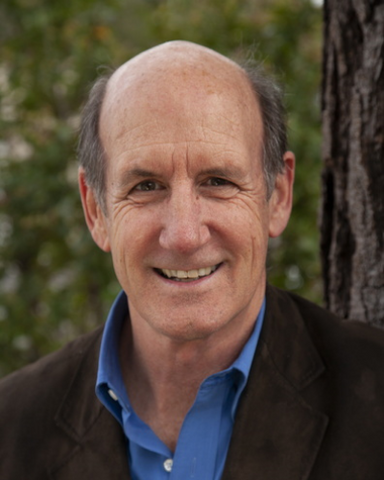
Richard Miller, PhD, is a master of yoga and meditation who holds a doctorate in clinical psychology. Recognized as a leading authority on the practice of Yoga Nidra, he has founded and cofounded several key organizations including the International Association of Yoga Therapy, the Institute for Spirituality and Psychology, and the Integrative Restoration Institute. Currently he is helping research the efficacy of iRest, a healing technique Miller developed based on Yoga Nidra with diverse populations. He lectures and teaches this method across the globe.

Author photo © DouglasSandberg2021

Also By Author

Welcoming Whatever Arises

Richard Miller is one of the world’s leading authorities on the practice of Yoga Nidra—a deep form of yogic meditation and relaxation. With Sounds True, Richard has published iRest Meditation: Restorative Practices for Health, Resiliency, and Well-Being, a comprehensive audio toolkit for the contemporary use of Yoga Nidra practices. In this episode of Insights at the Edge, Tami Simon and Richard talk about the use of Yoga Nidra to treat trauma—especially among returning military personnel. They also speak on the core ideas behind iRest, as well as events that led to its development. Finally, Richard guides listeners through a full iRest meditation practice designed for the reconciliation of seemingly opposite thoughts and emotions. (68 minutes)

Yoga Nidra—The Sleep Yoga

Tami Simon speaks with Richard Miller, a master of yoga and meditation who holds a doctorate in clinical psychology. He is recognized as a leading authority on the practice of yoga nidra, and is currently teaching iRest, a healing technique he developed based on deep relaxation and meditative inquiry. Richard has worked with Sounds True to create an integrated book-and-audio learning program called Yoga Nidra. Richard discusses the stages of yoga nidra, how the practice is a path to realization and self-inquiry, the nature of paradoxical sleep, and his ongoing work with soldiers suffering from post-traumatic stress disorder through the practice of yoga nidra. (61 minutes)

You Might Also Enjoy

Tracee Stanley: What We Need in These Threshold Times

What if the antidote to a world coming apart isn’t a bigger plan, but a smaller, daily act of devotion?

This week, Tami Simon speaks with Tracee Stanley—teacher of yoga nidra, meditation, and self-inquiry, founder of Empowered Life Circle, and author of the new Sounds True book Living Ritual: Infuse Each Day with Purpose and Spirit—about why ritual may be the most important practice we have during what she calls threshold times.

Join Tami and Tracee to explore:

  • The threshold question at the heart of ritual: what within me is dying, and what is waiting to be born?
  • Why devotion, not discipline, is the doorway—and how to weave practice through an ordinary householder’s day without shame
  • Tracee’s shard of light in Cape Town, and the years it took to find language for it
  • The body as shrine: the origins of yoga nidra in nyasa, the ancient practice of anointing the body as a divine temple
  • Earth dreaming—lying on the land and letting the land dream through you
  • Her reframe of the four Purusharthas, turning prosperity into support and pleasure into relationship
  • Sankalpa as a vow that leads to dharma, not a manifestation wish list
  • The analog cocoon and the night school: reclaiming sleep and dream time from the phone
  • Why enlightenment may be less a permanent state than a moment available in the space between two breaths

Tracee also speaks candidly about walking away from a successful film career, and what a surgery taught her about the ego that refuses to let the body rest.

Tracee opens and closes this interview with a short guided ritual you can practice along with.

Listen now, and let something be reshaped. →

This conversation offers genuine transmission, not just concepts about awakening, but the palpable presence of realized teachers exploring the growing edge of spiritual understanding together, and it originally aired on Sounds True One.

Get a FREE month of membership at https://bit.ly/STOne-Free-Month.

Guy Shahar and Melinda Edwards, MD: Sensitivity Is at ...

Autism is so often described in terms of what seems to be missing: eye contact, small talk, the expected social rhythms most people move through without thinking. This two-part conversation asks a different question entirely: what if the very traits read as absence are actually signs of a deeper, more intense form of connection than most neurotypical people ever access. It’s a reframing that asks listeners to set aside a familiar deficit lens and try on a considerably more generous one.

Sounds True brought Guy Shahar and Dr. Melinda Edwards together for this special episode of our Being Open series precisely because both speak from lived experience rather than from clinical distance alone, one as a father and later as a self-identified autistic adult, the other as a psychiatrist and mother of an autistic daughter. Their combined perspective reflects something Sounds True has believed since 1985: that the most transformative teaching often comes from people who have lived the question, not simply studied it.

In this piece, we look at what each of them learned, how their perspectives echo and diverge, and what it might mean to depathologize neurodiversity rather than simply manage it.

Key Takeaways:

  • A Late Discovery: Learn how Guy Shahar found out at age forty-six that he is autistic himself.
  • Connection, Not Absence: Understand why Dr. Melinda Edwards challenges the idea that autism means disconnection.
  • Three Practical Keys: See the approach Shahar offers parents and caregivers for genuinely connecting.

A Conversation in Two Parts

This episode unfolds across two connected conversations, each offering a different vantage point on the same central idea. Guy Shahar, author of Transforming Autism, opens the discussion focused on parenting and connection.

  • Part One: Shahar discusses educating caregivers, flexibility, and the intuitive capacity many autistic children show toward reading energy and intention. Full details appear in Guy Shahar and Melinda Edwards, MD: Sensitivity Is at the Heart of Autism.
  • Part Two: Dr. Edwards continues the conversation, focusing on the overlooked spiritual gifts and interconnection autism can reveal.

Insight Is The First Step Toward Growth. Broaden Your Horizons With Sounds True.

Guy Shahar: A Discovery That Reframed His Own Life

Shahar’s path into this work began with his son, whose autism led the family to unconventional and unusually effective treatments detailed in Transforming Autism. His son, once written off by parts of the medical establishment as severely disabled, went on to thrive in a mainstream school by age six, an outcome Shahar attributes to focusing on inherent strengths rather than symptom correction. What makes his perspective unusual is what came next: at age forty-six, Shahar discovered he was autistic himself, a revelation that suddenly explained decades of experiences he had never quite understood, from communication struggles to a persistent sense of not fitting expected molds.

This late discovery reshaped how Shahar approaches his own book’s central argument. Rather than treating autism as a problem requiring correction, Transforming Autism proposes understanding the inherent characteristics of autistic children and bringing out their natural strengths instead, a philosophy Shahar later carried into founding a charity dedicated to the same principle.

Autism Sensitivity: What Looks Like Withdrawal Often Isn’t

A central theme threading through both conversations is autism sensitivity, the idea that heightened perception, not deficit, sits at the core of many autistic experiences. What often reads to outside observers as withdrawal or overwhelm may actually reflect a nervous system taking in far more information than a typical environment accounts for.

  • Overwhelm as Overload: Shutdown often signals sensory flooding rather than disinterest in connection.
  • Intuitive Attunement: Many autistic children show unusual sensitivity to the emotional energy of people around them.
  • Idealism and Values: Shahar notes a strong pull toward altruism and idealistic values among many autistic individuals he has met.

Three Keys to Connecting with Autistic Children

Rather than offering another behavioral checklist, Shahar frames connection around three keys that emerged from years of trial, error, and eventual breakthrough with his own son:

  • Flexibility Over Correction: Meeting a child’s actual state rather than insisting on typical behavior first.
  • Play as a Bridge: Following a child’s own interests as the doorway into shared connection.
  • Presence Over Performance: Showing up authentically, since autistic children often sense forced or anxious energy quickly.

Find Teachings that Speak to You With Sounds True.

Dr. Melinda Edwards: Connection Where Others See Its Absence

Dr. Edwards approaches the same territory as both a psychiatrist and the mother of an autistic daughter, and her central claim reframes the entire conversation. Rather than reading her daughter’s symptoms as disconnection, Dr. Edwards has come to understand them as reflections of a connection so deep it exceeds what conventional language typically describes. Her clinical training and personal experience together let her speak to something rarely voiced this plainly: that autism may offer neurotypical people a glimpse of interconnection they have simply lost access to.

Dr. Edwards’s perspective carries particular weight because it bridges two worlds that don’t often speak to each other candidly: the clinical framework she was trained in and the lived reality of raising a daughter whose experience didn’t fit neatly into that framework. Rather than discarding one for the other, she has spent years holding both, letting each inform and complicate the other.

From Anxiety to Faith

Both guests describe a similar arc within their own families: an initial period defined by anxiety, fear about diagnosis, fear about the future, gradually giving way to something closer to faith. This shift doesn’t erase real challenges, but it does change how those challenges are met, with curiosity rather than dread, and with trust that difficulty can carry its own unexpected gift.

Shahar describes this shift as one of the hardest and most necessary parts of his own journey, since fear tends to narrow attention exactly when openness is most needed. Faith, in the way both guests use the term, isn’t about certainty that things will turn out fine. It’s closer to a willingness to stay present with a child, or with oneself, without needing to fix everything first.

Spiritual Gifts and Evolutionary Guides

One of the more striking claims in this conversation is the idea that autistic individuals may serve as spiritual and evolutionary guides for the wider human community. Rather than framing this as a burden placed on autistic people to be exceptional, both guests present it as an invitation for neurotypical listeners to notice qualities, sensitivity, intuitive attunement, and resistance to social pretense that the broader culture has undervalued for generations.

Center Yourself With Meditative Teachings by Sounds True

Final Thoughts

Guy Shahar and Dr. Melinda Edwards offer something rarer than advice: two honest accounts of watching a label reorganize itself into something closer to reverence. Neither pretends the path is simple, but both suggest that sensitivity itself, so often treated as a burden, may be the very quality worth protecting and learning from. What lingers longest from this conversation may be the quiet suggestion that connection was never actually missing, only expressed in a register most of us were never taught to hear. 

Sounds True shares conversations like this one because waking up the world sometimes means waking up to the people already sitting closest to us. If this conversation moved you, Guy Shahar’s book and the broader Being Open series carry it further.

Frequently Asked Questions About Guy Shahar

Who is Guy Shahar?

He is the author of Transforming Autism and co-founder of a charity supporting autistic children and their families.

When did Guy Shahar learn he was autistic?

He discovered his own autism at age forty-six, years after his son’s diagnosis.

What is the Being Open podcast series?

A special Insights at the Edge series exploring connection, consciousness, and openness across different life experiences.

Is Dr. Melinda Edwards a parent of an autistic child?

Yes, she is a psychiatrist and the mother of an autistic daughter, informing her perspective directly.

Does this conversation offer parenting techniques?

Yes, Shahar outlines three practical keys for connecting more effectively with autistic children.

What is Transforming Autism about?

It follows Shahar’s family journey as they support their son and reframes autism around inherent strengths.

Where can I find more Sounds True content on neurodiversity?

Related conversations continue throughout our Insights at the Edge Podcast archive and Relationships collection.

Is this conversation only relevant to parents?

No, its themes of sensitivity and connection speak to caregivers, clinicians, and curious listeners alike.

Michelle Cassandra Johnson is an author, activist, spiritual teacher, racial equity consultant, and intuitive healer. She is the author of six books, including Skill in Action and Finding Refuge. Amy Burtaine is a leadership coach and racial equity trainer. With Robin DiAngelo, she is the coauthor of The Facilitator's Guide for White Affinity Groups. For more, visit https://www.michellecjohnson.com/wisdom-of-the-hive.

Peter A. Levine: From Trauma to Awakening and Flow

At eighty-two, after fifty years treating trauma in thousands of people, Peter Levine sat down with Tami Simon to talk about something few clinicians his age are still willing to examine in public: his own unfinished healing. That willingness, more than any single technique, may be the most striking part of this conversation, and it sets an unusually candid tone from the very first exchange.

Peter A. Levine, PhD, holds doctorates in both biophysics and psychology and developed Somatic Experiencing, a body-based approach to trauma that is now practiced by an estimated 50,000 therapists in 44 countries. 

Sounds True has published his work for years, and this conversation, released alongside his book An Autobiography of Trauma, finds him reflecting on where the science of trauma has landed and where his own personal journey still continues. His willingness to speak this openly, decades into a celebrated career, reflects the same unscripted spirit Sounds True has tried to capture since our founding in 1985. What follows traces his case for the body as healer, the strange inheritance of trauma across generations, and what it might mean to move from woundedness toward flow.

Key Takeaways:

  • The Body Remembers First: Learn why Peter Levine treats the nervous system, not just the mind, as trauma’s true home.
  • Healing Has No Finish Line: Understand why Levine describes recovery as ongoing rather than a single resolved event.
  • Wounds Can Become Wisdom: See how Levine frames the archetype of the wounded healer in his own decades of work.

Awaken Your Inner Healing Power

Somatic Experiencing: A Body-Based Approach to an Old Problem

Levine developed Somatic Experiencing over five decades of clinical work, building an approach rooted in neurobiology rather than talk therapy alone. The premise is straightforward but radical in practice: trauma lives primarily in the nervous system, not in the story a person tells about what happened. 

Treatment, in this framework, focuses on helping the body complete interrupted survival responses rather than only processing memories cognitively. Levine has often pointed to how animals in the wild shake off intense stress almost immediately, a natural discharge process he believes humans have largely lost touch with under the pressures of modern life.

  • Body Before Narrative: Nervous system regulation often precedes, rather than follows, verbal insight.
  • Global Reach: Somatic Experiencing is now taught by roughly seventy trainers worldwide.
  • Naturalistic Roots: Levine drew inspiration from how animals in the wild discharge survival stress without lasting harm.

Conception Trauma and Procedural Memory

One of the more unusual threads in this conversation involves what Levine calls conception trauma, the idea that some of our earliest imprints form before conscious memory begins. He connects this to procedural memory, the body’s capacity to hold patterns and responses that never pass through language at all. This framing extends his broader argument that healing work often has to reach beneath the level of story, into territory the conscious mind was never given access to in the first place. It’s a claim that goes well beyond conventional talk therapy, suggesting that some of the most stubborn patterns a person carries were never available for conscious recall to begin with, which is part of why purely verbal approaches can sometimes fall short.

You can hear this full, wide-ranging conversation in Peter A. Levine: From Trauma to Awakening and Flow, recorded in celebration of his book An Autobiography of Trauma.

The Wounded Healer, Passed Down Through Generations

Levine speaks candidly about the archetype of the wounded healer, the idea that those drawn to healing work often carry significant wounds of their own. Rather than treating this as a liability, he frames it as a lineage: both trauma and wisdom, he suggests, pass down through generations, and understanding one often requires understanding the other. His own decades of practice have clearly been shaped by this dynamic, informing not just his clinical technique but also his willingness to keep examining his own history well into his eighties, a rare kind of transparency for someone of his professional standing. He speaks about this without self-pity, treating his own wounds as simply part of the material he continues to work with.

Insight Is The First Step Toward Growth. Broaden Your Horizons With Sounds True.

Self-Compassion as a Clinical Tool, Not a Luxury

Much of this conversation returns to self-compassion, not as a soft addition to trauma work but as something closer to a prerequisite for it. Levine suggests that kindness toward oneself often has to be practiced deliberately, since trauma frequently teaches the opposite lesson early and convincingly. Personal writing emerges here as one tool he recommends, a way of externalizing experience that can create enough distance for compassion to take hold. He describes this practice not as a one-time exercise but as something returned to repeatedly, each pass revealing a slightly different layer of the same material.

Psychedelics: Promise and Caution From Fifty Years of Practice

Levine also weighs in on the growing interest in psychedelics as a tool for trauma work, offering a perspective shaped by decades in the field rather than current enthusiasm alone. He acknowledges genuine promise in these substances while remaining candid about their pitfalls, particularly when used without adequate preparation, integration support, or somatic grounding. This measured stance reflects his broader approach throughout the conversation: genuine curiosity about emerging tools, balanced against hard-won caution about shortcuts in trauma healing. He returns often to the idea that no substance or technique replaces the slower work of learning to stay present with the body’s own signals.

Lessening the Fear of Dying

Late in the conversation, Levine and Tami turn toward mortality directly, discussing how his decades of trauma work have shaped his own relationship with dying. Rather than offering easy reassurance, Levine approaches this the way he approaches most difficult material: through the body first, suggesting that much of our fear around death is itself a somatic pattern worth examining rather than a fixed, unchangeable fact. He shares on-the-spot techniques for feeling safer within one’s own nervous system, tools meant for ordinary daily anxiety as much as for confronting larger existential fear.

Center Yourself With Meditative Teachings by Sounds True

Final Thoughts

Peter Levine doesn’t present healing as a destination reached once and settled permanently. Even after fifty years and thousands of clients, he describes his own journey from trauma toward awakening and flow as ongoing, a stance that feels more honest than any promise of complete resolution could offer. That honesty, arriving from someone with his level of experience and recognition, carries a weight that few younger voices in the field could match.

Sounds True has carried his work because it embodies exactly the kind of teaching our founder set out to preserve in 1985, wisdom spoken from lived experience rather than theory alone. 

Frequently Asked Questions About Peter Levine

Who is Peter A. Levine?

He is the developer of Somatic Experiencing, holding doctorates in biophysics and psychology, with fifty years of trauma work.

What is Somatic Experiencing?

A body-based method for healing trauma by helping the nervous system complete interrupted survival responses naturally.

How many practitioners use Somatic Experiencing today?

Approximately fifty thousand therapists practice the method across forty-four countries worldwide.

What is An Autobiography of Trauma?

Levine’s recent book reflects on his own healing journey, released when he was eighty-two years old.

Does Sounds True offer other programs by Peter Levine?

Yes, Sounds True has published Healing Trauma and Body as Healer among several of his audio programs.

Is Somatic Experiencing only for severe trauma?

No, the approach applies broadly to stress, anxiety, and everyday nervous system dysregulation as well as major events.

What does Levine mean by the wounded healer?

The idea that many healers carry their own wounds, which can inform rather than disqualify their work.

Where can I explore more trauma-informed teachings?

Related programs appear throughout our Health & Healing collection alongside other Sounds True authors.

Michelle Cassandra Johnson is an author, activist, spiritual teacher, racial equity consultant, and intuitive healer. She is the author of six books, including Skill in Action and Finding Refuge. Amy Burtaine is a leadership coach and racial equity trainer. With Robin DiAngelo, she is the coauthor of The Facilitator's Guide for White Affinity Groups. For more, visit https://www.michellecjohnson.com/wisdom-of-the-hive.