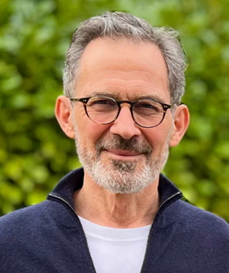
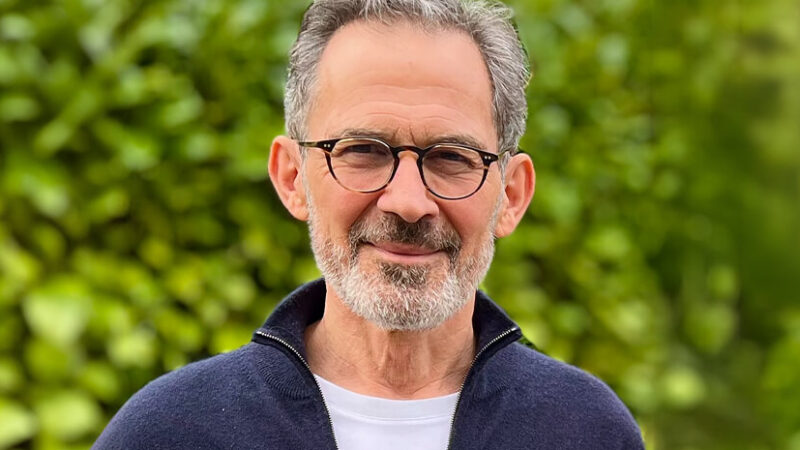
Rupert Spira

Rupert Spira discovered Rumi’s poetry at age fifteen, sparking a lifelong journey to understand the nature of being. He studied Advaita with Dr. Francis Roles, explored Sufism, and drew inspiration from Krishnamurti, Ramana Maharshi, and Nisargadatta Maharaj. He also pursued an interest in ceramics, training with British pioneers before opening his own studio. Meeting teacher Francis Lucille in the 1990s deepened Rupert’s understanding, integrating the teachings of Advaita and Kashmir Shaivism. Rupert holds regular in-person retreats, as well as online retreats and webinars. For more, see rupertspira.com.

Also By Author

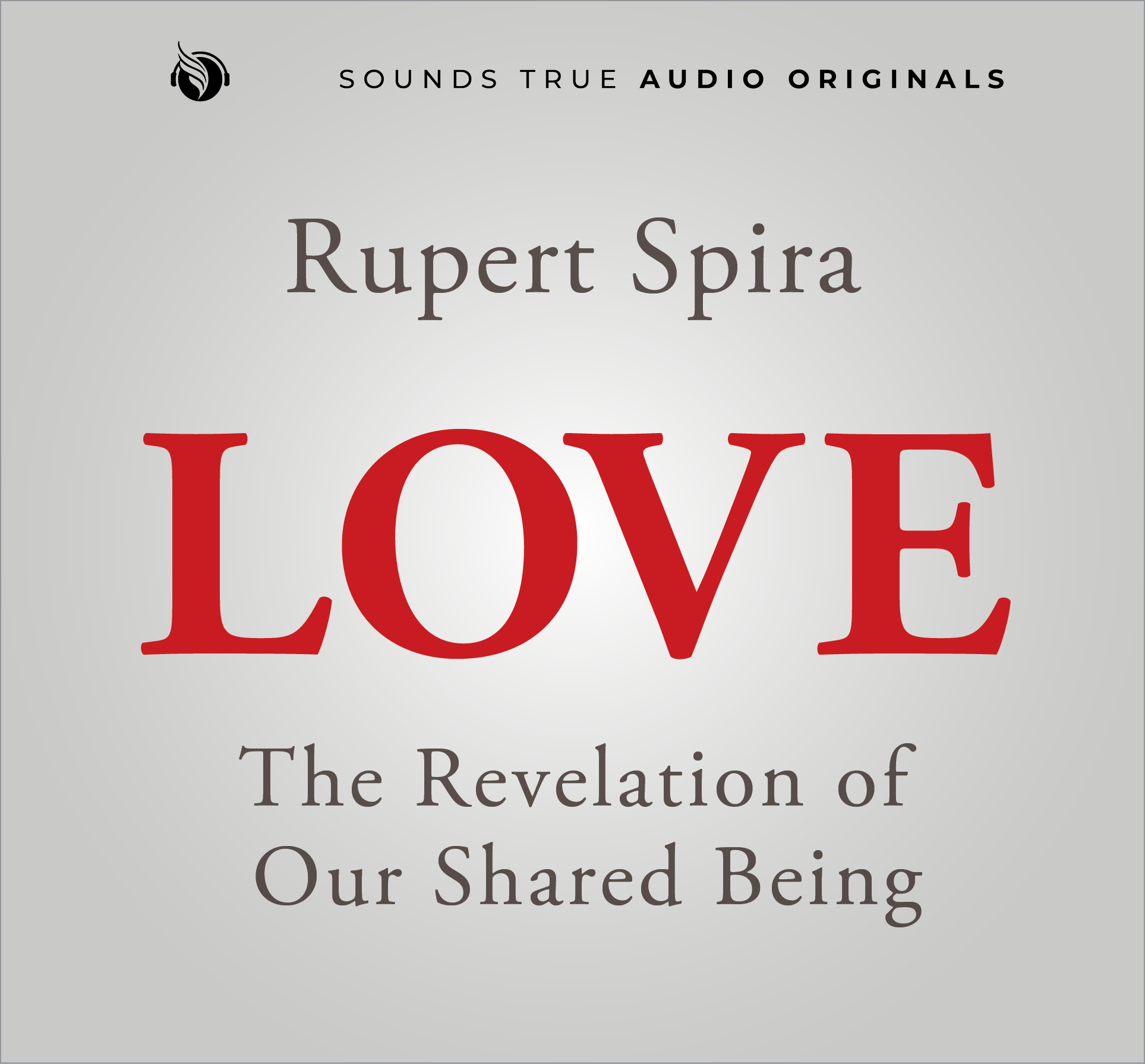
Love: The Shining of Being in Every Heart: A Message f...

Being is the shared element in all people, animals and things. Just as there is one universal physical space that pervades all individual buildings without being limited to them, likewise there is just one unlimited being from which everyone and everything borrows its apparent existence.

Just as the space in a room is not contained within its walls but is an apparent limitation of universal space, likewise the individual being that each of us seems to be is not contained within or generated by the body but is an apparent limitation of the one infinite being.

Infinite being is felt by each of us as the amness of our self. This feeling of ‘I am-ness’ is infinite being shining in each of our finite minds. Just as universal space seems to acquire the limitations of the four walls within which it seems to be contained, but in fact always remains the universal space,likewise infinite being – God’s being – seems to acquire the limitations of the body within which it seems to be housed, without ever actually ceasing to be infinite being. The apparent mixture of infinite being plus the content of experience seems to create a temporary finite being, a separate self or ego.

As a concession to the separate self or ego that we seem to be, most spiritual teachings give us something to do to become enlightened. This is like giving the space of a room a practice in order to become universal space. But the space needs no liberation, for it was never bound. The space inside is always and already identical to the space outside.

Likewise, our self needs no liberation or enlightenment. If we go deeply into the simple experience of being, we find no limit there – it is already infinite, already free. While thoughts, memories, feelings, sensations and so on have limits, these limitations do not pertain to our being.

Even to say being is mixed with experience isn’t quite right. Just as space remains unmixed with the walls that seem to contain it and the objects that it seems to contain, our being is never really mixed with experience. It always shines in its original condition: untarnished, unmixed, unlimited, unmodified. Inherently free and at peace.

Infinite being needs no enlightenment or spiritual practice. So, for whom are the teachings and the innumerable practices that have been elaborated in the various religious and spiritual traditions? For the temporary, finite separate self we seem to be. They are, as such, compassionate concessions –legitimate ones – but ones that ultimately perpetuate the illusion of a separate self. Therefore, the highest teaching is no teaching, no teacher, no effort, no practice – just the shining of being, the one being we all are.

Imagine that the vast physical space of the universe is conscious. If you were to ask the aware space in the room in which you are sitting about its nature, it may look at the walls around it and describe itself in terms of their limitations. And it would imagine that the space outside the walls was separate from it, and might engage in various efforts to know it or unite with it. But if instead it looked only at itself, it would recognize that it contained no inherent limitation. It would recognize that it is already the vast space of the universe. All its efforts would cease with that recognition.

Similarly, our apparently finite being, seemingly located in and bound by the body, looks beyond its limitations at the vast universe and ponders the nature of its reality. It may even engage in great efforts to know that or unite with it. But all we need do is look closely, to taste the nature of our own being. If we do so, we find no limitation there – our being finds no limitation in itself. Our being is already the one infinite being, the only being there is – in religious terms, God’s being. There is just that, just this.

This utter absence of anything other than itself – this absence of otherness, separation, duality – is the experience we know as love. Love is, as such, the shining of infinite being in each of our hearts. It is the taste of God’s being in us, as us.

Rupert Spira discovered Rumi’s poetry at age fifteen, sparking a lifelong journey to understand the nature of being. He studied Advaita with Dr. Francis Roles, explored Sufism, and drew inspiration from Krishnamurti, Ramana Maharshi, and Nisargadatta Maharaj. He also pursued an interest in ceramics, training with British pioneers before opening his own studio. Meeting teacher Francis Lucille in the 1990s deepened Rupert’s understanding, integrating the teachings of Advaita and Kashmir Shaivism. Rupert holds regular in-person retreats, as well as online retreats and webinars. For more, see rupertspira.com.


Learn More
Amazon | Sounds True

Rupert Spira: The Quiet Joy of Being

What is the treasure that we all seek? What is it that we are looking for above all else? Contemporary spiritual teacher and author Rupert Spira believes that it’s the feeling of sufficiency, of ease, of peace—or the realization of our innermost nature as being. In this podcast that is at once expansive and experiential, Tami Simon speaks with Rupert about his book You Are the Happiness You Seek and the insights he has gleaned through a lifetime of spiritual exploration and practice. 

Tune in for a liberating conversation covering the practice of pausing or “going back to being”; letting go of resistance and turning toward our unhappiness; bringing a complete “yes” to your current experience; the inquiry, who is the one that’s experiencing?; the pure “I Am”; the original ADD: Awareness Deficit Disorder; the problem with the word “enlightenment”; recognizing the gaps between our thoughts and feelings; why what happens to the body doesn’t happen to our being; the absolute level and the relative level; the practical implications of deepening our recognition of being; love: the felt sense of our shared being; freedom from “the tyranny of ego”; and more.

Note: This episode originally aired on Sounds True One, where these special episodes of Insights at the Edge are available to watch live on video and with exclusive access to Q&As with our guests. Learn more at join.soundstrue.com.

You Might Also Enjoy

Just One Question | Adyashanti: Is It an Awakening If ...

Is a spiritual awakening only real if it completely rearranges your life? That’s the question Tami Simon puts to Adyashanti in this episode, and his answer digs into something a lot of seekers wrestle with: the gap between a powerful glimpse of clarity and the ongoing work of actually living from it.

Adya, the American-born teacher behind books like The End of Your World and Falling into Grace, walks through why those temporary tastes of awakening are real, even when they fade, and offers a surprisingly practical way to hold onto what they revealed without grasping at them. Then he does something rare: he tells the story of his own first major awakening, a moment he describes as feeling like a nuclear explosion going off inside him.

Here’s what we cover:

  • Why a fleeting shift still counts as a real awakening, even if it doesn’t stick
  • The two (seemingly contradictory) pieces of advice Adya gives people chasing a past peak experience
  • How the first awakening can feel like a “freebie,” while everything after asks you to participate consciously
  • Adya’s own account of the night everything fell away and the still, small voice that told him, “This isn’t all of it. Keep going.”

And there’s so much more. Listen to the entire conversation from this Insights At the Edge episode, “Waking Up: What Does It Really Mean?” 

Tracee Stanley: What We Need in These Threshold Times

What if the antidote to a world coming apart isn’t a bigger plan, but a smaller, daily act of devotion?

This week, Tami Simon speaks with Tracee Stanley—teacher of yoga nidra, meditation, and self-inquiry, founder of Empowered Life Circle, and author of the new Sounds True book Living Ritual: Infuse Each Day with Purpose and Spirit—about why ritual may be the most important practice we have during what she calls threshold times.

Join Tami and Tracee to explore:

  • The threshold question at the heart of ritual: what within me is dying, and what is waiting to be born?
  • Why devotion, not discipline, is the doorway—and how to weave practice through an ordinary householder’s day without shame
  • Tracee’s shard of light in Cape Town, and the years it took to find language for it
  • The body as shrine: the origins of yoga nidra in nyasa, the ancient practice of anointing the body as a divine temple
  • Earth dreaming—lying on the land and letting the land dream through you
  • Her reframe of the four Purusharthas, turning prosperity into support and pleasure into relationship
  • Sankalpa as a vow that leads to dharma, not a manifestation wish list
  • The analog cocoon and the night school: reclaiming sleep and dream time from the phone
  • Why enlightenment may be less a permanent state than a moment available in the space between two breaths

Tracee also speaks candidly about walking away from a successful film career, and what a surgery taught her about the ego that refuses to let the body rest.

Tracee opens and closes this interview with a short guided ritual you can practice along with.

Listen now, and let something be reshaped. →

This conversation offers genuine transmission, not just concepts about awakening, but the palpable presence of realized teachers exploring the growing edge of spiritual understanding together, and it originally aired on Sounds True One.

Get a FREE month of membership at https://bit.ly/STOne-Free-Month.

Reverend angel Kyodo williams: Warrior Spirit

Most people come to meditation looking for a break, a few quiet minutes away from a world that rarely slows down on its own. Reverend angel Kyodo williams spends much of this conversation gently taking apart that assumption, suggesting that real stillness was never about leaving the world behind at all. It’s a small shift in framing that ends up changing everything about how the rest of her teaching lands.

Rev. angel is an ordained Zen priest, activist, and founder of the Center for Transformative Change, recognized as the world’s second female Zen teacher of African descent and the author of Being Black and Radical Dharma. 

Sounds True has featured her teaching across our Meditation Summit and A Year of Mindfulness precisely because she refuses to separate inner practice from outer justice, treating the two as a single continuous act rather than competing priorities. What follows traces her case for a warrior spirit built on presence rather than escape, and the meditation practice she offers as its foundation.

Key Takeaways:

  • Retreat Isn’t the Goal: Learn why angel Kyodo williams reframes meditation as engagement, not escape.
  • Effort Meets Release: Understand the meditation practice she developed for people doing social change work.
  • A Different Kind of Fearlessness: See what warrior spirit means when it’s rooted in love rather than force.

Retreat Is Not What It Looks Like From Outside

Rev. angel opens by naming something many practitioners feel but rarely say aloud: the pull toward meditation often comes wrapped in a longing to retreat from an overwhelming world. She doesn’t dismiss that longing, but she does redirect it, suggesting that genuine practice engages our inner fullness rather than fleeing from outer noise. What looks like withdrawal from the outside, she argues, is closer to a deepening than a departure, a distinction that reframes the entire purpose of sitting down to practice in the first place.

Learn Practices for Self-Compassion with Sounds True.

Effort and Release Meditation: A Practice Born From Movement Work

Rev. angel developed a specific meditation practice she calls Effort and Release after years spent working alongside people doing demanding social change work. The practice blends deliberate effort with intentional letting go, addressing a pattern she noticed constantly among activists and organizers: a strong pull toward doing, accomplishing, and pushing that rarely leaves room for rest. She describes meditation and social change as inseparable, since the way a person relates to their own mind directly shapes what they find themselves willing to engage with in the wider world.

  • Naming the Pattern: Many changemakers carry a constant urgency that outlasts any single campaign, even during rest.
  • Effort With Purpose: The practice doesn’t reject action, only unconscious, exhausting overdrive.
  • Release as Skill: Letting go is treated as an active discipline, not passive collapse or avoidance.

Hear the complete teaching in her episode, Reverend angel Kyodo williams: Warrior Spirit

Inner Life and Outer World as One Continuous Fabric

A central thread running through Rev. Angel’s teaching rejects any hard line between internal awareness and external action. She describes our self-talk, the noise level of our minds, and our capacity for presence as directly shaping how we show up for others and what we find acceptable in the wider world. This isn’t a metaphor for her; it’s closer to a working principle behind everything she teaches, from meditation instruction to movement strategy. 

What we tolerate in the world outside us, she suggests, tends to trace directly back to what we’ve grown accustomed to tolerating within our own minds first, which is why she treats internal clarity as a precondition for meaningful external change rather than a separate, optional pursuit.

Warrior Spirit Rooted in Fearlessness, Not Force

The phrase “warrior spirit,” drawn from her earlier book Being Black, describes something quite different from combativeness or aggression directed outward at the world. For Rev. Angel, this spirit is built on truth-telling and responsibility, a foundation for genuine happiness rather than a posture of defensiveness. It asks practitioners to stay engaged with difficulty, including the difficulty of racism, patriarchy, and other inherited harms, rather than looking away or numbing out. This framing has resonated widely since the book’s original publication, offering readers across many backgrounds a way to hold fearlessness and tenderness together rather than treating them as opposites.

  • Truth Before Comfort: Warrior spirit requires naming what’s actually happening, even when it’s unwelcome.
  • Grace Alongside Fearlessness: Strength and tenderness are treated as complementary, not opposites.
  • Responsibility as Practice: Taking ownership of one’s own patterns becomes part of the discipline itself.

Build Relationships That Nourish and Sustain.

Bridging Personal Transformation and Collective Justice

Rev. angel has spent more than fifteen years shaping what she calls Transformative Social Change, a field built on the belief that lasting justice work requires equally serious inner work. She resists treating meditation as a private escape hatch separate from activism, instead framing contemplative practice as fuel for sustained, clear-eyed engagement with collective harm. Burnout among organizers, in her view, often stems from skipping this inner dimension entirely, treating stillness as optional rather than structural to the work itself. She has described this field as one she helped name and shape, watching it grow from a personal conviction into a recognized approach embraced across activist and spiritual communities alike.

What Radical Dharma Adds to This Conversation

Rev. Angel’s later book, Radical Dharma, co-written with Lama Rod Owens and Jasmine Syedullah, extends this same warrior spirit into a direct examination of race, love, and liberation within Buddhist communities themselves. The book argues that spiritual communities are not exempt from the patterns of harm found elsewhere in society, and that genuine awakening has to include an honest reckoning with those patterns rather than a spiritual bypass around them. This willingness to hold institutions, including her own tradition, accountable runs consistently through everything she teaches, from her earliest writing through her more recent contributions to Sounds True’s programming.

Awaken Your Inner Healing Power

Final Thoughts

Reverend angel Kyodo williams doesn’t offer meditation as a rest stop from the world’s demands. She offers it as a training ground for staying present with those demands without losing ourselves inside them. That distinction, subtle but significant, may be exactly what separates spiritual bypass from spiritual maturity, and it’s the thread that ties her meditation teaching to her justice work without contradiction. Listeners who come looking for a quick escape often leave with something more durable instead: a practice for staying rooted precisely where things are hardest. 

Sounds True continues sharing her teaching because our mission to wake up the world has never meant looking away from what’s hardest to face, and few teachers hold that tension as steadily as she does. Her books and audio programs remain in our library for anyone ready to bring the same steadiness into their own life and work.

Frequently Asked Questions About angel Kyodo williams

Who is Reverend angel Kyodo williams?

She is an ordained Zen priest, activist, author, and founder of the Center for Transformative Change.

What books has she written?

Her books include Being Black: Zen and the Art of Living with Fearlessness and Grace and Radical Dharma.

What is the Effort and Release practice?

A meditation method blending deliberate effort with intentional letting go, developed for activists and organizers.

Is this teaching only relevant to activists?

No, her ideas on presence and inner work apply to anyone navigating stress, urgency, or burnout in daily life.

What does warrior spirit mean in her teaching?

A fearless, truth-telling posture grounded in responsibility and grace, not aggression or combativeness.

Has Sounds True featured her in other programs?

Yes, she has appeared in Sounds True’s Meditation Summit and A Year of Mindfulness series.

What is the Center for Transformative Change?

An organization she founded connecting inner personal work with large-scale social transformation.

Where can I hear more conversations like this one?

Explore our Insights at the Edge Podcast for further interviews on mindfulness, justice, and social engagement.

Michelle Cassandra Johnson is an author, activist, spiritual teacher, racial equity consultant, and intuitive healer. She is the author of six books, including Skill in Action and Finding Refuge. Amy Burtaine is a leadership coach and racial equity trainer. With Robin DiAngelo, she is the coauthor of The Facilitator's Guide for White Affinity Groups. For more, visit https://www.michellecjohnson.com/wisdom-of-the-hive.