
Rupert Spira: The Quiet Joy of Being

    —
May 7, 2024

Rupert Spira: The Quiet Joy of Being

Rupert Spira May 7, 2024

What is the treasure that we all seek? What is it that we are looking for above all else? Contemporary spiritual teacher and author Rupert Spira believes that it’s the feeling of sufficiency, of ease, of peace—or the realization of our innermost nature as being. In this podcast that is at once expansive and experiential, Tami Simon speaks with Rupert about his book You Are the Happiness You Seek and the insights he has gleaned through a lifetime of spiritual exploration and practice. 

Tune in for a liberating conversation covering the practice of pausing or “going back to being”; letting go of resistance and turning toward our unhappiness; bringing a complete “yes” to your current experience; the inquiry, who is the one that’s experiencing?; the pure “I Am”; the original ADD: Awareness Deficit Disorder; the problem with the word “enlightenment”; recognizing the gaps between our thoughts and feelings; why what happens to the body doesn’t happen to our being; the absolute level and the relative level; the practical implications of deepening our recognition of being; love: the felt sense of our shared being; freedom from “the tyranny of ego”; and more.

Note: This episode originally aired on Sounds True One, where these special episodes of Insights at the Edge are available to watch live on video and with exclusive access to Q&As with our guests. Learn more at join.soundstrue.com.

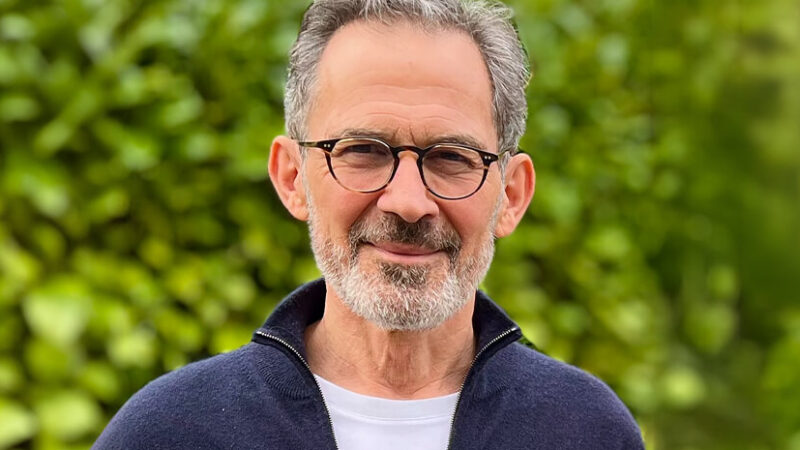
Rupert Spira discovered Rumi’s poetry at age fifteen, sparking a lifelong journey to understand the nature of being. He studied Advaita with Dr. Francis Roles, explored Sufism, and drew inspiration from Krishnamurti, Ramana Maharshi, and Nisargadatta Maharaj. He also pursued an interest in ceramics, training with British pioneers before opening his own studio. Meeting teacher Francis Lucille in the 1990s deepened Rupert’s understanding, integrating the teachings of Advaita and Kashmir Shaivism. Rupert holds regular in-person retreats, as well as online retreats and webinars. For more, see rupertspira.com.

600 Podcasts and Counting…

Subscribe to Insights at the Edge to hear all of Tami’s interviews (transcripts available too!), featuring Eckhart Tolle, Caroline Myss, Tara Brach, Jack Kornfield, Adyashanti, and many more.

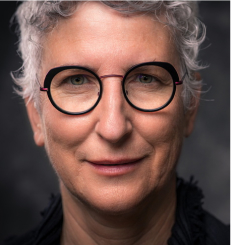
Meet Your Host: Tami Simon

Founded Sounds True in 1985 as a multimedia publishing house with a mission to disseminate spiritual wisdom. She hosts a popular weekly podcast called Insights at the Edge, where she has interviewed many of today's leading teachers. Tami lives with her wife, Julie M. Kramer, and their two spoodles, Rasberry and Bula, in Boulder, Colorado.

Photo © Jason Elias

Also By Author

Love: The Shining of Being in Every Heart: A Message f...

Being is the shared element in all people, animals and things. Just as there is one universal physical space that pervades all individual buildings without being limited to them, likewise there is just one unlimited being from which everyone and everything borrows its apparent existence.

Just as the space in a room is not contained within its walls but is an apparent limitation of universal space, likewise the individual being that each of us seems to be is not contained within or generated by the body but is an apparent limitation of the one infinite being.

Infinite being is felt by each of us as the amness of our self. This feeling of ‘I am-ness’ is infinite being shining in each of our finite minds. Just as universal space seems to acquire the limitations of the four walls within which it seems to be contained, but in fact always remains the universal space,likewise infinite being – God’s being – seems to acquire the limitations of the body within which it seems to be housed, without ever actually ceasing to be infinite being. The apparent mixture of infinite being plus the content of experience seems to create a temporary finite being, a separate self or ego.

As a concession to the separate self or ego that we seem to be, most spiritual teachings give us something to do to become enlightened. This is like giving the space of a room a practice in order to become universal space. But the space needs no liberation, for it was never bound. The space inside is always and already identical to the space outside.

Likewise, our self needs no liberation or enlightenment. If we go deeply into the simple experience of being, we find no limit there – it is already infinite, already free. While thoughts, memories, feelings, sensations and so on have limits, these limitations do not pertain to our being.

Even to say being is mixed with experience isn’t quite right. Just as space remains unmixed with the walls that seem to contain it and the objects that it seems to contain, our being is never really mixed with experience. It always shines in its original condition: untarnished, unmixed, unlimited, unmodified. Inherently free and at peace.

Infinite being needs no enlightenment or spiritual practice. So, for whom are the teachings and the innumerable practices that have been elaborated in the various religious and spiritual traditions? For the temporary, finite separate self we seem to be. They are, as such, compassionate concessions –legitimate ones – but ones that ultimately perpetuate the illusion of a separate self. Therefore, the highest teaching is no teaching, no teacher, no effort, no practice – just the shining of being, the one being we all are.

Imagine that the vast physical space of the universe is conscious. If you were to ask the aware space in the room in which you are sitting about its nature, it may look at the walls around it and describe itself in terms of their limitations. And it would imagine that the space outside the walls was separate from it, and might engage in various efforts to know it or unite with it. But if instead it looked only at itself, it would recognize that it contained no inherent limitation. It would recognize that it is already the vast space of the universe. All its efforts would cease with that recognition.

Similarly, our apparently finite being, seemingly located in and bound by the body, looks beyond its limitations at the vast universe and ponders the nature of its reality. It may even engage in great efforts to know that or unite with it. But all we need do is look closely, to taste the nature of our own being. If we do so, we find no limitation there – our being finds no limitation in itself. Our being is already the one infinite being, the only being there is – in religious terms, God’s being. There is just that, just this.

This utter absence of anything other than itself – this absence of otherness, separation, duality – is the experience we know as love. Love is, as such, the shining of infinite being in each of our hearts. It is the taste of God’s being in us, as us.

Rupert Spira discovered Rumi’s poetry at age fifteen, sparking a lifelong journey to understand the nature of being. He studied Advaita with Dr. Francis Roles, explored Sufism, and drew inspiration from Krishnamurti, Ramana Maharshi, and Nisargadatta Maharaj. He also pursued an interest in ceramics, training with British pioneers before opening his own studio. Meeting teacher Francis Lucille in the 1990s deepened Rupert’s understanding, integrating the teachings of Advaita and Kashmir Shaivism. Rupert holds regular in-person retreats, as well as online retreats and webinars. For more, see rupertspira.com.


Learn More
Amazon | Sounds True

Rupert Spira: The Quiet Joy of Being

What is the treasure that we all seek? What is it that we are looking for above all else? Contemporary spiritual teacher and author Rupert Spira believes that it’s the feeling of sufficiency, of ease, of peace—or the realization of our innermost nature as being. In this podcast that is at once expansive and experiential, Tami Simon speaks with Rupert about his book You Are the Happiness You Seek and the insights he has gleaned through a lifetime of spiritual exploration and practice. 

Tune in for a liberating conversation covering the practice of pausing or “going back to being”; letting go of resistance and turning toward our unhappiness; bringing a complete “yes” to your current experience; the inquiry, who is the one that’s experiencing?; the pure “I Am”; the original ADD: Awareness Deficit Disorder; the problem with the word “enlightenment”; recognizing the gaps between our thoughts and feelings; why what happens to the body doesn’t happen to our being; the absolute level and the relative level; the practical implications of deepening our recognition of being; love: the felt sense of our shared being; freedom from “the tyranny of ego”; and more.

Note: This episode originally aired on Sounds True One, where these special episodes of Insights at the Edge are available to watch live on video and with exclusive access to Q&As with our guests. Learn more at join.soundstrue.com.
You Might Also Enjoy

Jasper Young Bear: “Prophecies for This Time: Wh...

Something is shifting in the world—and the Indigenous peoples of Turtle Island have seen it coming for generations.

This week, Tami Simon speaks with Jasper Young Bear—wisdom keeper, storyteller, founder of the Medicine Lodge Confederacy, and member of the Mandan, Hidatsa, and Arikara Nation—about the sacred oral teachings he was entrusted to carry, and why he has chosen this urgent moment to share them with the world. Jasper is the featured teacher in a new medicine film and four-part audio series, The Creation Story, available to watch and listen to for free at thecreationstory.co.

Join Tami and Jasper to explore:

  • The Seventh Generation prophecy—and why we are living inside its fulfillment right now
  • The Prophecy of the Eagle and the Condor, and what the reunification of North and South means for the human family
  • Why the greatest preparation for coming change is spiritual and emotional—not physical
  • The sacred laws woven into Indigenous creation stories, and what whole-to-part perception makes possible
  • The importance of forgiving the unforgivable—and how it opens the frequency of true freedom
  • Ceremony as living technology: sweat lodges, sacred instruments, and star knowledge as tools of consciousness
  • Why Jasper believes love—not systems, not ideology—is ultimately what will heal the human family

This interview is unlike most. Tami listens more than she asks. And what Jasper Young Bear offers is truly a transmission: a vision of where we are, where we’re headed, and what each of us can do to become a worthy ancestor for the generations yet to come.

Watch and listen to The Creation Story for free at thecreationstory.co.

This conversation offers genuine transmission—not just concepts about awakening, but the palpable presence of realized teachers exploring the growing edge of spiritual understanding together. Originally aired on Sounds True One.

Andrew Holecek: Stop, Drop, and Be Held in the Dark

What if the most transformative place you could go isn’t a retreat center or a therapist’s office—but complete and total darkness?

This week, Tami Simon speaks with Andrew Holecek—interdisciplinary scholar, longtime practitioner of Tibetan Buddhism, and author of the new Sounds True book Total Eclipse of the Mind: Unleashing the Power of Darkness for Creativity, Healing, and Transformation—about the practice of dark retreat: full immersion in sealed, lightless environments used by yogis for centuries to accelerate inner transformation.

Holecek calls it the single most transformative practice of his fifty years of meditation, psychedelic exploration, and three-year Tibetan retreat—and in this interview, he explains why.

Join Tami and Andrew to explore:

  • What actually happens to the mind in extended darkness—and the neurological science behind why it’s so transformative
  • The descent of the mind through conscious, subconscious, and collective unconscious layers—and what waits at the bottom
  • Dark retreat as a “sober psychedelic”: how the brain generates its own endogenous DMT in extended darkness
  • The practice of enantiodromia—when extreme contraction suddenly flips into extraordinary openness
  • How to work with panic, trauma, and unwanted experience using the “reverse meditation” principle: feel it, but don’t feed it
  • Why appearances don’t matter in the dark—and why so many people emerge in tears, feeling safe and held for the first time
  • The four-step process for integrating darkness into daily life, from sleep masks to dedicated dark rooms

This interview was recorded with both Tami and Andrew wearing blackout masks—making it one of the most immersive listening experiences in Insights at the Edge history.

Listen now and discover what’s been waiting in the dark. →

This conversation offers genuine transmission—not just concepts about awakening, but the palpable presence of realized teachers exploring the growing edge of spiritual understanding together. Originally aired on Sounds True One.

This episode is sponsored by Omega Institute, a global gathering hub for lifelong learning and spiritual exploration. Located in upstate New York’s beautiful Hudson Valley, Omega offers weekend workshops, special events, rest and rejuvenation retreats, professional trainings, online learning, and more. Discover what calls to you at eomega.org/true.

Serene older woman in nature with hand on heart

What does it mean to listen to the soul when it feels most exposed? In Marion Woodman’s teachings, moments of vulnerability are not interruptions but invitations to pay attention. Soul vulnerability often shows up through the body, through emotion, or through a quiet sense that something within us is asking to be heard. When we stay present, these experiences begin to reveal deeper meaning through the Jungian feminine, aging wisdom, and Jungian psychology depth.

For decades, we have been devoted to sharing the living wisdom of transformative teachers, preserving their voices in ways that remain true to their depth and presence. Our work brings forward teachings from leading spiritual visionaries, offering guidance that supports inner growth, emotional honesty, and a more embodied way of being .

Here, we look at Marion Woodman on the soul’s vulnerability and how listening to our deepest wisdom can guide a more grounded and aware life.

Key Takeaways:

  • Embodied Wisdom: Soul vulnerability reveals insight through the body, emotions, and inner experience.
  • Feminine Awareness: The Jungian feminine supports deeper listening, intuition, and connection to the psyche.
  • Aging Insight: Aging wisdom deepens reflection and helps integrate life experiences with greater clarity.

Discover the Hidden Power of Daily Meditation

Marion Woodman on Soul Vulnerability, Jungian Feminine, Aging Wisdom, and Jungian Psychology Depth

What does it mean to truly listen to the soul, especially in moments when we feel most exposed or uncertain? In the teachings of Marion Woodman, soul vulnerability is not something to avoid or overcome. It is a vital expression of the psyche asking for our attention. At Sounds True, we have long been devoted to sharing living wisdom in the authentic voices of transformative teachers, preserving insights that invite us into deeper presence and self-understanding. Woodman’s work within Jungian psychology offers a compassionate and embodied path toward this kind of listening. She reminds us that the Jungian feminine lives not in abstraction but in the body, in feeling, and in the rhythms of lived experience. As we grow and change, aging wisdom begins to shape how we meet our vulnerability. Rather than turning away, we are invited to stay, to sense, and to trust that something meaningful is unfolding within us.

Understanding Soul Vulnerability Through Jungian Feminine, Aging Wisdom, and Jungian Psychology Depth

Soul vulnerability often appears at the edges of our comfort. It may arise through loss, illness, transition, or moments when our usual ways of coping no longer hold. Within Jungian psychology, these moments are not seen as failures. They are invitations into a deeper relationship with the psyche.

Soul Vulnerability as an Opening to the Jungian Feminine

The Jungian feminine speaks in a language that is often quiet and symbolic. It is present in dreams, in bodily sensations, and in the subtle shifts of emotion that move through us. When we allow ourselves to experience soul vulnerability, we begin to soften the barriers that keep us disconnected from this inner voice. Woodman taught that the body is not separate from the psyche. It carries memory, truth, and intelligence. When we listen closely, we begin to recognize how the Jungian feminine guides us toward wholeness through feeling and presence rather than force or control.

Aging Wisdom and the Deepening of Jungian Psychology Depth

With time, our relationship to vulnerability changes. Aging wisdom brings perspective, allowing us to see how earlier experiences have shaped our inner life. Within Jungian psychology, this is part of the individuation process, a gradual unfolding of the self. Soul vulnerability becomes less overwhelming and more meaningful. We begin to trust that even difficult experiences carry insight. This trust does not remove pain, but it creates space for reflection and integration.

Soul Vulnerability and the Jungian Feminine in Aging Wisdom and Jungian Psychology Depth

As these elements come together, we begin to sense a different way of being with ourselves. There is less urgency to fix and more willingness to understand.

The Body as a Guide in Soul Vulnerability

Woodman’s work consistently returns to the body as a source of wisdom. Physical sensations, fatigue, or tension can reflect deeper emotional truths. When we approach these experiences with curiosity, we open a pathway into soul vulnerability. The Jungian feminine supports this process by inviting us to feel rather than analyze. Aging wisdom allows us to recognize patterns and respond with greater care. Over time, we learn that the body is not an obstacle but a guide.

Integrating Experience Through Jungian Psychology Depth

Integration within Jungian psychology depth involves holding complexity. We are not asked to eliminate contradiction but to remain present with it. Soul vulnerability allows us to acknowledge both strength and fragility. The Jungian feminine encourages us to stay connected to our inner experience, while aging wisdom reminds us that understanding unfolds gradually. This integration creates a sense of groundedness that supports authentic living.

Exploring Soul Vulnerability, Jungian Feminine, Aging Wisdom, and Jungian Psychology Depth

There is a natural rhythm to inner work that cannot be rushed. Woodman’s teachings invite us to honor that rhythm and to trust the unfolding process of the psyche.

The Role of Relationship in Soul Vulnerability

Relationships often bring our vulnerability into focus. They reflect aspects of ourselves that may remain hidden when we are alone. Through connection, we encounter both our capacity for love and our fears of being seen. The Jungian feminine encourages openness in these moments, while aging wisdom helps us respond with patience and understanding. Within Jungian psychology, depth and relationships are understood as essential to growth, offering mirrors that reveal where healing is needed.

Trusting the Unfolding of the Psyche

The psyche moves in cycles rather than straight lines. There are times of clarity and times of uncertainty. Soul vulnerability is part of this movement. The Jungian feminine invites us to remain present with what is emerging, even when it feels unclear. Aging wisdom supports a longer view, helping us recognize that meaning often appears over time. Within Jungian psychology, this unfolding is part of becoming more fully ourselves.

Learn How your Mind Really Works with Sounds True

The Jungian Feminine, Soul Vulnerability, Aging Wisdom, and Jungian Psychology Depth in Practice

Bringing these insights into daily life can begin with small, intentional shifts in attention. We do not need to change everything at once. We can begin by listening more closely.

  • Take time for quiet reflection each day, allowing space for inner awareness to arise naturally
  • Notice bodily sensations without judgment, recognizing them as expressions of the psyche
  • Record dreams or images that stay with you, honoring their symbolic meaning
  • Engage in creative practices that allow feeling and imagination to take form
  • Reflect on life experiences and how they have contributed to your growing aging wisdom

These practices are gentle invitations. They support a relationship with soul vulnerability that is rooted in care rather than pressure. Over time, they help cultivate a deeper connection to the Jungian feminine and the insights of Jungian psychology depth.

Aging Wisdom, Soul Vulnerability, Jungian Feminine, and Jungian Psychology Depth in Inner Work

Inner work asks for honesty and patience. It is not always comfortable, yet it is deeply meaningful. Aging wisdom brings a willingness to reflect rather than react. Soul vulnerability becomes a guide, pointing toward areas that call for attention. The Jungian feminine supports a compassionate approach, one that honors both the body and the emotions that arise. Within the depth of Jungian psychology, this work is essential to individuation. It invites us to engage with unconscious material and bring it into awareness. As we do so, we begin to experience a sense of coherence within ourselves. We are no longer divided between what we show and what we hide. Instead, we move toward a more integrated way of being.

Soul Vulnerability and Aging Wisdom Through the Lens of Jungian Feminine and Jungian Psychology Depth

As we continue to listen to the soul, vulnerability begins to feel less threatening. It becomes a source of guidance. Aging wisdom allows us to recognize patterns and approach them with greater openness. The Jungian feminine deepens our connection to feeling and intuition, helping us navigate the complexities of inner life. Within Jungian psychology, this transformation reflects a growing relationship with the self. Soul vulnerability is no longer something to resist. It is something to honor.

Integrating Soul Vulnerability, Jungian Feminine, Aging Wisdom, and Jungian Psychology Depth

Integration is a living process that unfolds over time. It asks for attention, patience, and a willingness to remain open. Soul vulnerability remains at the center, inviting us to stay connected to our experience. The Jungian feminine offers a way of understanding the body, emotion, and imagination as sources of wisdom. Aging wisdom deepens our capacity to reflect and integrate what we have lived. Within Jungian psychology depth, this movement toward wholeness is ongoing. As we continue to listen, we begin to sense a quiet alignment within ourselves. It is not something we force. It emerges through presence, through care, and through a growing trust in the intelligence of the soul.

Awaken Your Inner Healing Power with Guided Practices by Sounds True

Final Thoughts

Soul vulnerability invites us to stay present with our inner experience, even when it feels uncertain. Through the lens of the Jungian feminine, aging wisdom, and Jungian psychology depth, we begin to recognize this vulnerability as a source of insight rather than something to overcome.

Over time, this way of listening deepens our connection to ourselves, shaping a more grounded and attentive way of being.

Frequently Asked Questions About Marion Woodman and Soul Vulnerability

What is Marion Woodman best known for in spiritual psychology?

Marion Woodman is known for her work in analytical psychology, particularly her focus on embodiment, the feminine psyche, and the relationship between psyche and soma.

How does Marion Woodman define the soul in her teachings?

She often describes the soul as a living presence expressed through the body, dreams, and emotions rather than something abstract or separate from daily life.

What role does the body play in Jungian psychology depth?

The body is seen as an essential messenger of the unconscious, offering signals that reflect deeper psychological and emotional realities.

How is the Jungian feminine different from traditional ideas of femininity?

The Jungian feminine refers to an archetypal energy present in all people, emphasizing receptivity, intuition, and connection to inner life rather than gender roles.

Why is aging wisdom important in inner development?

Aging wisdom brings perspective, helping individuals reflect on life experiences and integrate lessons that support emotional and spiritual maturity.

How can someone begin studying Jungian psychology depth?

Many begin through books, guided courses, therapy, or lectures that introduce core concepts like archetypes, dreams, and the unconscious.

What makes Marion Woodman’s teachings relevant today?

Her emphasis on embodiment and emotional honesty resonates in a time when many feel disconnected from their inner lives and physical experience.

Can soul vulnerability support creative expression?

Yes, being open to vulnerability often allows deeper emotional material to surface, which can enrich creative practices like writing, art, or movement.

How do dreams relate to soul vulnerability?

Dreams can reveal hidden emotions and symbolic messages, offering insight into areas where the psyche seeks attention or healing.

Is Jungian psychology’s depth connected to spiritual practice?

While rooted in psychology, it often intersects with spirituality by addressing meaning, purpose, and the experience of the inner self.

Michelle Cassandra Johnson is an author, activist, spiritual teacher, racial equity consultant, and intuitive healer. She is the author of six books, including Skill in Action and Finding Refuge. Amy Burtaine is a leadership coach and racial equity trainer. With Robin DiAngelo, she is the coauthor of The Facilitator's Guide for White Affinity Groups. For more, visit https://www.michellecjohnson.com/wisdom-of-the-hive.
