Customer Favorites

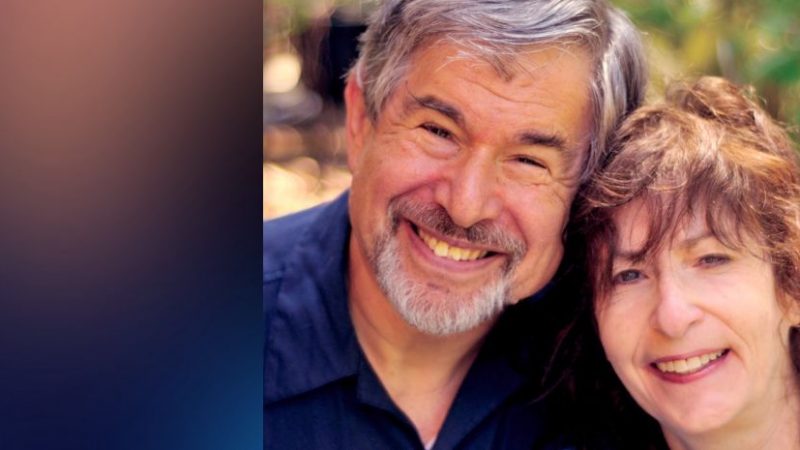
Bret Lyon and Sheila Rubin: Turning Shame into an Ally

Brett Lyon, PhD, SEP, and Sheila Rubin, MA, LMFT, RDT/BCT, are the founders of the Center for Healing Shame and co-creators of the Healing Shame Lyon-Rubin Method. Through their in-person and popular online trainings, they’ve taught hundreds of psychotherapists throughout the world how to more effectively identify and work with shame. With Sounds True, Brett and Sheila have created a new audio series designed for the general public called Healing Shame: How to Work with This Powerful, Mysterious Emotion—and Transform It into an Ally. In this podcast, Sounds True founder Tami Simon speaks with Bret and Sheila about how we can learn to understand and appreciate shame in a deeper way. This healing conversation covers the different types of shame we encounter, normalizes our experiences of shame, and explores how shame, though painful, can actually be a helpful emotion.

Meet Your Subtle Body: Discover Cyndi Dale’s 12-Chak...

Meet Your Subtle Body Header Image


“I think [the 12-chakra system] is a good compilation to get us going so that we can be the entirety of the human that we are—the human divine being that we are.”


—Cyndi Dale

As seekers, instead of following set rules, we may set out to discover routes that feel uniquely true and right for us.

Cyndi Dale, a luminary writer on the subtle body and its connection to the physical world, works with a unique 12-chakra system in her healing practice.

Cyndi’s 12-chakra vision helps her pinpoint feelings and where wounds are emanating from the invisible, spiritual self.

Chakras Infographic

from Enlightened Energetics

WHAT IS THE SUBTLE BODY?

Each of us have both a physical body and a subtle body. The physical is what we think of normally: our shape, our volume, and that which we can touch. The subtle body arises from a different place: the intuition. 

The subtle body seems to be some sort of underground pathway for our physical one. It is invisible not because it doesn’t exist, but because it’s sub-observable to the five senses we normally use. I might even argue that she sees the intuition as the 6th sense, and that the creative nature of our spirits gives us the ability to wield this power for healing.

Just like quantum physicists are starting to say, our world (or, at least, some dimension of our world) is not physical at all, but actually consists of “immaterial energy waves.” These waves somehow come together and entangle to create the material world.

As I listened to Cyndi’s interview with Tami, I was struck by the idea that healers like her use the subtle body every day. In the interview, she really helps you comprehend how that’s possible by guiding you through an exercise that’s less about understanding and way more about feeling. (It made me whisper, “whoa!” out loud.)

Here’s an exercise from that part of the interview if you want to try it:

Rub your hands together until you create some friction, and then put your hands palms facing each other about three or four inches apart. You’ll feel that there’s still an energy in between those hands—because there’s chakras in the hands and because there’s fields of energy emanating from the hands.

If you start patting your hands, not touching them, but kind of patting that energy ball. Again, you can bring your consciousness into your hands and pour more energy into that ball that’s being created. All of a sudden, you’re going to feel like your hands are moving farther away from each other. If you turn the spigot down, your hands—in order to feel that friction or the energy between them—are going to move closer together. Then a really fun thing to do is imagine or turn that energy red—it’s not clear anymore; it’s red—and get a sense of how that red energy field can have a certain reaction to red, especially in comparison to blue . . . as we’re now going to turn that energy blue. It’s really different, isn’t it?

About energy workers and healers she says: “They’re consciously kind of deciding what type of energy might be useful, what might be helpful for them, for somebody else, and they’re sending that.” 

THE 12-CHAKRA SYSTEM

According to Cyndi, the western tradition of the 7-chakra system is based on a book by Sir Arthur Avalon. 

Chakras are eddies of light and sound. They interact, dance, rotate and orbit us like our very own planets.

7 Chakras Infographicfrom MindBodyGreen

THE 12 CHAKRAS

1. Root

The root chakra is about spirituality, purpose and connection, as well as our relationship to Mother Nature and the Earth. It is associated with the underlying structures (both intuitive and ordered) of our minds. It is associated with pheremones and our sense of smell

2. Sacral

This is a chakra of motion and flow, representing the water element in the body. It bears a relationship to reproduction and fertility, joy and desire, and the kind of rest that encourages immune system recovery. It is associated with our sense of taste.

3. Solar Plexus

The solar plexus is a fiery center for our unique powers and gifts. When it’s in balance, we can feel like our lives are autonomous and in harmony with our value system. It helps define the energy that guides our motivations, disposition and mood, and it expands our idea of what’s possible when we are inspired by it.

4. Heart 

The heart chakra is related to our personal and romantic relationships. When it is in balance, we might be immersed in feelings of joy and real freedom. It is strengthened through trust, non-manipulative communication, and authentic respect for ourselves and others. It is also strengthened by the exploration and implementation of personal boundaries. With the heart, we send and receive our gifts.

5. Throat 

Here is our center for speaking and listening. The throat enables expression and facilitates spiritual dawnings of both rational and emotional understanding. Balancing the throat chakra can help prevent burnout. If you have writer’s block, it can be helpful to check with this chakra.

6. Third Eye

The third eye is associated with the pineal gland and rules telepathic ability. A vortex of sublimation, it is empowered by critical thinking, especially when we seek to release fear and guilt. Through the third eye, we can become more lucid, deepening our understanding that duality is an illusion. Opening it helps us to understand symbols and receive messages in both dreams and waking life.

7. Crown

The crown chakra is related to your nervous system and brain. Tap into its power by becoming present in the body through meditation, visualization and relaxation. It can look like a circle of light around your head, and is an expansion into space where you connect with the rest of the universe. It is related to transcendence & wisdom.

8. Soul/Shaman

Located a few inches above the head, this chakra encompasses past lives and your memories of other dimensions. From Cyndi’s description, it is a beautiful, mysterious chakra that connects our physical body to our soul’s experience in its totality. It empowers our ability to transcend spacetime and engage with “the sphere of potentialities in the making.” When it’s in harmony, it becomes easier to communicate with beings in other realms, like your spirit guides.

9. Luminary

This chakra is about an arm’s length above the top of your head. Lift your hand all the way up to connect with where it is. Cyndi sees this chakra as gold, related to our connection to the divine. It is the space of the greater spirit, the “seat of the soul,” which can act as a doorway into your divine self and your archetypal patternings.

10. Earth

This chakra blooms from beneath your feet. It is how your body connects to the earth, a cord that goes through the legs and feet into the ground. It is associated with nature and the cosmos in their simple essence, and the memories that arise from it can be related to ancestral lessons and inherited traumas. Substantial healing can arise from relationship with this chakra.

11. Supernatural

This chakra is “actually around the body. It’s like this lovely rose film, like way out in our energy field, but it’s collected around the hands and the feet.” Through this chakra, you can discover your inherent connection with both natural and supernatural forces. In this part of the interview, Cyndi mentions that chakras are located in multiple dimensions, existing in different places at the same time. She observes this chakra, which is responsible for our ability to move energy, as energy balls around the hands and feet.

12. Auric

This chakra surrounds the auric field of the body like a halo. Cyndi says, “I think of [it] as the outer bounds of our own unique essence or our own spirit.” She emphasizes the uniqueness of this chakra—its defining characteristic is you, and your individual purpose as a spiritual being. There is a connection between this chakra and the ability to envision, create and become, alongside the truth of universal unity.

*

Listen to Tami’s full interview with Cyndi Dale here on Insights at the Edge.


ABOUT CYNDI

Cyndi Dale is an internationally renowned author, speaker, intuitive healer, and visionary who has taught thousands of students to access their spiritual gifts through her books and workshops. She has authored several groundbreaking books and audio programs on energy healing and the chakras, including The Subtle Body, The Subtle Body Practice Manual, Advanced Chakra Healing, Energy Clearing, Attracting Prosperity Through the Chakras, and New Chakra Healing. Her work has been translated into nine languages.

*
*
*

ABOUT THE AUTHOR

When she isn’t writing poetry or music, Dani Ferrara blogs for Sounds True and seeks to learn more about healing alchemy. Learn more about her art at daniferrarapoet.com.

Lance Allred: The New Alpha Male

Lance Allred is a former NBA player (who was the first legally deaf player in the league), public speaker, and author. With Sounds True, he has published The New Alpha Male: How to Win the Game When the Rules Are Changing. In this episode of Insights at the Edge, Tami Simon speaks with Lance about the experiences he had in professional sports that led him to reevaluate what it means to be a man in contemporary society. Lance explains how his upbringing in a rural, polygamous commune informed his original ideas about masculinity, highlighting the subconscious assumptions about money and power that affect American men’s self-worth. Tami and Lance also discuss the roles of emotional vulnerability and surrender in the lives of modern men. Finally, they talk about the principle of perseverance and the increasingly urgent need for all cultures to reexamine their assumptions and core values.(63 minutes)

5 Tools to Create More Space in Your Mind

Busyness, distraction, and stress have all led to the shrinking of the modern mind.

I realize that’s a strange thing to say. Most of us don’t think of our mind as something with space in it, as a thing that can either be big or small, expensive or claustrophobic.

But just think about the last time you felt overwhelmed, stressed, or out of control. Chances are, you might not even have to think that hard. You might be experiencing that state right now as you read these words.

What happens in these moments? 

First, our mind wanders. It spins through all sorts of random thoughts about the past and the future. As a result, we lose touch with the direct experience of present time.

Second, we lose perspective. We can’t see the big picture anymore. Instead, it’s like we’re viewing life through a long and narrow tunnel. We become blind to possibility, fixated on problems.

Put these two together and you’ve got the perfect recipe for eradicating space in the mind. The landscape of the mind begins to feel like a calendar jammed with so many meetings, events, and obligations that these neon colored boxes cover-up even the smallest slivers of white space. 

So it could be nice for our partner, for our kids, and, mostly, for our ourselves to consider: how can we create more space in the mind?

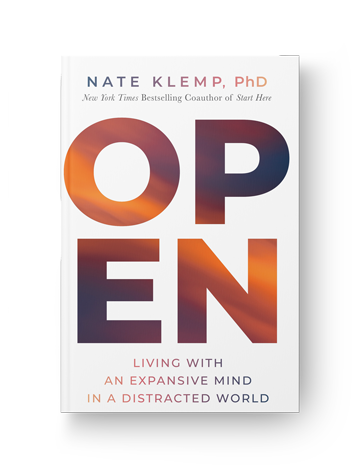
Here are five tools for creating mental space. If you want to go deeper, check out my new book with Sounds True on the topic called OPEN: Living With an Expansive Mind in a Distracted World.

1. Meditation.

You’ve no doubt heard about all of the scientifically validated benefits of this practice. It reduces stress. It boosts productivity. It enhances focus.

That is all true. But here is the real benefit of meditation: it creates more space in the mind. To get started, try it out for just a few minutes a day. Use an app or guided practice to help you.

2. Movement.

So, maybe you’re not the meditating type. That’s fine. You can still create space in the mind by setting aside time for undistracted movement.

The key word here is “undistracted.” For many of us, exercise and movement have become yet another time where our headspace gets covered over by texts, podcasts, or our favorite Netflix series. 

There’s nothing wrong with this. But it can be powerful to leave the earbuds behind every once in a while and allow the mind to rest while you walk, stretch, run, bike, swim, or practice yoga.

3. Relax.

When it comes to creating headspace, we moderns, with our smartphone-flooded, overly-stimulated, minds seem to inevitably encounter a problem: we’re often too stressed, amped, and agitated to open.

Relaxation – calming the nervous system – is perhaps the best way to counter this effect and create more fertile ground for opening. When we relax – the real kind, not the Netflix or TikTok kind –  the grip of difficult emotions loosens, the speed of our whirling thoughts slows, and, most important, the sense of space in our mind begins to expand.

How can you relax? Try yoga. Try extended exhale breathing, where you inhale four counts, exhale eight counts. Try yoga nidra. Or, just treat yourself to a nap.

4. See bigger.

When life gets crazy, the mind isn’t the only thing that shrinks. The size of our visual field also gets smaller. Our eyes strain. Our peripheral vision falls out of awareness.

What’s the antidote to this tunnel vision view? See bigger.

Try it right now. With a soft gaze, allow the edges of your visual field to slowly expand. Imagine you’re seeing whatever happens to be in front of you from the top of a vast mountain peak. Now bring this more expansive, panoramic, way of seeing with you for the rest of the day.

5. Do nothing.

Now for the most advanced practice. It’s advanced because it cuts against everything our culture believes in. In a world where everyone is trying desperately to get more done, one of the most radical acts is to not do — to do nothing.

Even just a few minutes of this paradoxical practice can help you experience an expansion of space in the mind.

Lie on the floor or outside on the grass. Close your eyes. Put on your favorite music if you want. Set an alarm for a few minutes so you don’t freak out too much. 

Then, stop. Drop the technique. Drop the effort. Just allow yourself to savor this rare experience of doing absolutely nothing.

Nate Klemp, PhD, is a philosopher, writer, and mindfulness entrepreneur. He is the coauthor of the New York Times bestseller Start Here and the New York Times critics’ pick The 80/80 Marriage. His work has been featured in the LA Times, Psychology Today, the Times of London, and more, and his appearances include Good Morning America and Talks at Google. He’s a cofounder of LifeXT and founding partner at Mindful. For more, visit nateklemp.com or @Nate_Klemp on Instagram.

Learn More
Amazon | Barnes & Noble | Bookshop | Sounds True

Karla McLaren:Making Friends with Anxiety … and All ...

Karla McLaren is an award-winning author, social science researcher, and empathy pioneer. Her work focuses on a “grand unified theory of emotions,” in which she moves us beyond looking at some emotions as negative and some as positive, and instead helps people see the genius that lives inside every single emotion. In this podcast, Tami Simon speaks with Karla about managing the multiple emotions that many of us are experiencing as we navigate both a pandemic and a time of societal transformation. Tami and Karla also discuss the importance of creating a community that shares an “emotional vocabulary,” the four keys to unlocking the wisdom of our emotions, and much more.

A Soberful Life

Veronica Valli is a former psychotherapist who now works as a sobriety coach. With almost 20 years of experience, she has helped thousands of people live happy, healthy lives and reach their full potential by being alcohol free. She’s been the keynote speaker at annual conferences such as Women for Sobriety and Soberistas, and she is the cohost of the popular Soberful podcast.

In “A Soberful Life,” Sounds True founder, Tami Simon, speaks with Veronica about her new book, Soberful: Uncover a Sustainable, Fulfilling Life Free of Alcohol. Tami and Veronica also discuss: making a cost-benefit analysis of your own relationship with alcohol; alcohol-free living as a new norm for our society; finding a community of sober people, and other lifestyle changes; the myth of willpower; honoring an inner call to growth; why we need skills and support (not strength) to quit drinking for good; the five pillars of sustainable sobriety; the importance of boundaries; human connection and the power of vulnerability; the art of finding balance in ever-changing circumstances; understanding how our past shows up in our present; a trauma-informed approach to recovery; two primary childhood needs: attachment and authenticity; how “doing the right next thing” gets us where we need to go; and more.

>
Copy link
Powered by Social Snap