Nate Klemp

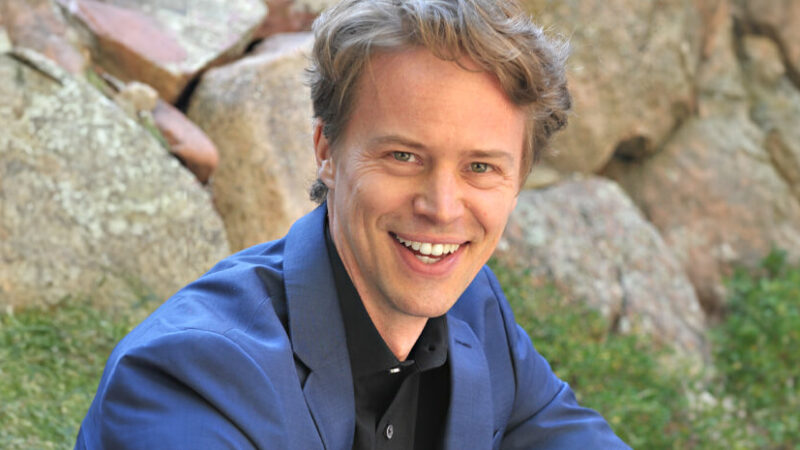
Nate Klemp, PhD, is a philosopher, writer, and mindfulness entrepreneur. He is the coauthor of the New York Times bestseller Start Here and the New York Times critics’ pick The 80/80 Marriage. His work has been featured in the LA TimesPsychology Today, the Times of London, and more, and his appearances include Good Morning America and Talks at Google. He’s a cofounder of LifeXT and founding partner at Mindful. For more, visit nateklemp.com or @Nate_Klemp on Instagram.

Author photo © Stacy Moore

Also By Author

Nate Klemp: Open, Expansive, and Free

It’s not just you. Millions upon millions of people today are feeling more stressed, anxious, and overwhelmed than ever before. As a result, explains philosopher and writer Dr. Nate Klemp, a lot of us are contracting ourselves—closing our minds in an effort to shield ourselves from the constant noise of the 21st century. With his new book, Open, Nate explores possible solutions to help us shift into a life of expansiveness, creativity, and wonder. 

Press the play button and join Tami Simon in conversation with this innovative and inspiring thinker, discussing: breaking free from screen addiction; the drivers of closure; the concept of “feast practice”; our need for novelty; an experiment that may shock you; the practice of staying; shifting from a wandering mind to “meta awareness”; how an open mind is synonymous with an open heart; overcoming separateness; noticing your “closure cues”; skillful closing; the intent to win versus the intent to understand; the portal of bliss and the portal of suffering; getting unstuck; letting go; and more.

Note: This episode originally aired on Sounds True One, where these special episodes of Insights at the Edge are available to watch live on video and with exclusive access to Q&As with our guests. Learn more at join.soundstrue.com.

5 Tools to Create More Space in Your Mind

Busyness, distraction, and stress have all led to the shrinking of the modern mind.

I realize that’s a strange thing to say. Most of us don’t think of our mind as something with space in it, as a thing that can either be big or small, expensive or claustrophobic.

But just think about the last time you felt overwhelmed, stressed, or out of control. Chances are, you might not even have to think that hard. You might be experiencing that state right now as you read these words.

What happens in these moments? 

First, our mind wanders. It spins through all sorts of random thoughts about the past and the future. As a result, we lose touch with the direct experience of present time.

Second, we lose perspective. We can’t see the big picture anymore. Instead, it’s like we’re viewing life through a long and narrow tunnel. We become blind to possibility, fixated on problems.

Put these two together and you’ve got the perfect recipe for eradicating space in the mind. The landscape of the mind begins to feel like a calendar jammed with so many meetings, events, and obligations that these neon colored boxes cover-up even the smallest slivers of white space. 

So it could be nice for our partner, for our kids, and, mostly, for our ourselves to consider: how can we create more space in the mind?

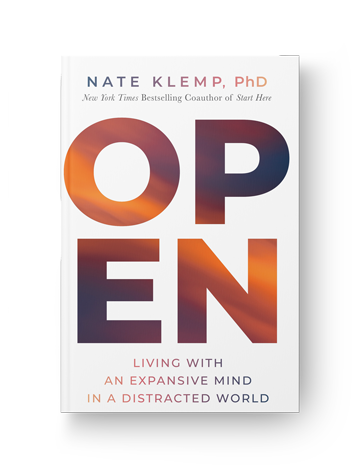
Here are five tools for creating mental space. If you want to go deeper, check out my new book with Sounds True on the topic called OPEN: Living With an Expansive Mind in a Distracted World.

1. Meditation.

You’ve no doubt heard about all of the scientifically validated benefits of this practice. It reduces stress. It boosts productivity. It enhances focus.

That is all true. But here is the real benefit of meditation: it creates more space in the mind. To get started, try it out for just a few minutes a day. Use an app or guided practice to help you.

2. Movement.

So, maybe you’re not the meditating type. That’s fine. You can still create space in the mind by setting aside time for undistracted movement.

The key word here is “undistracted.” For many of us, exercise and movement have become yet another time where our headspace gets covered over by texts, podcasts, or our favorite Netflix series. 

There’s nothing wrong with this. But it can be powerful to leave the earbuds behind every once in a while and allow the mind to rest while you walk, stretch, run, bike, swim, or practice yoga.

3. Relax.

When it comes to creating headspace, we moderns, with our smartphone-flooded, overly-stimulated, minds seem to inevitably encounter a problem: we’re often too stressed, amped, and agitated to open.

Relaxation – calming the nervous system – is perhaps the best way to counter this effect and create more fertile ground for opening. When we relax – the real kind, not the Netflix or TikTok kind –  the grip of difficult emotions loosens, the speed of our whirling thoughts slows, and, most important, the sense of space in our mind begins to expand.

How can you relax? Try yoga. Try extended exhale breathing, where you inhale four counts, exhale eight counts. Try yoga nidra. Or, just treat yourself to a nap.

4. See bigger.

When life gets crazy, the mind isn’t the only thing that shrinks. The size of our visual field also gets smaller. Our eyes strain. Our peripheral vision falls out of awareness.

What’s the antidote to this tunnel vision view? See bigger.

Try it right now. With a soft gaze, allow the edges of your visual field to slowly expand. Imagine you’re seeing whatever happens to be in front of you from the top of a vast mountain peak. Now bring this more expansive, panoramic, way of seeing with you for the rest of the day.

5. Do nothing.

Now for the most advanced practice. It’s advanced because it cuts against everything our culture believes in. In a world where everyone is trying desperately to get more done, one of the most radical acts is to not do — to do nothing.

Even just a few minutes of this paradoxical practice can help you experience an expansion of space in the mind.

Lie on the floor or outside on the grass. Close your eyes. Put on your favorite music if you want. Set an alarm for a few minutes so you don’t freak out too much. 

Then, stop. Drop the technique. Drop the effort. Just allow yourself to savor this rare experience of doing absolutely nothing.

Nate Klemp, PhD, is a philosopher, writer, and mindfulness entrepreneur. He is the coauthor of the New York Times bestseller Start Here and the New York Times critics’ pick The 80/80 Marriage. His work has been featured in the LA Times, Psychology Today, the Times of London, and more, and his appearances include Good Morning America and Talks at Google. He’s a cofounder of LifeXT and founding partner at Mindful. For more, visit nateklemp.com or @Nate_Klemp on Instagram.

You Might Also Enjoy

Michael Singer: Living Untethered

What would change if you could witness your thoughts and emotions without being consumed by them? What if the energy you seek through external circumstances has been flowing within you all along, simply waiting to be untethered?

This week, Tami Simon revisits a beloved conversation with Michael Singer—bestselling author of The Untethered Soul and its profound sequel, Living Untethered: Beyond the Human Predicament. Michael is also the author of The Surrender Experiment and the creator of Sounds True’s transformative online course Living From a Place of Surrender.

Join Tami and Michael to explore:

  • The seat of awareness and what it means to truly be “in there” • The three-ring circus of consciousness: sense perceptions, thoughts, and emotions • Shakti—the energy flow within that either expands or contracts based on our internal blockages • Samskaras: the stored impressions from past experiences that shape our present reactions • Practical techniques for letting go: positive thinking, mantra repetition, and witness consciousness • The profound process of transmutation—how blocked energy transforms into love when we stop resisting • The difference between the conditional lower heart and the boundless spiritual heart • Why “you must die to be reborn”—letting go of who you think you are to discover who you really are

If you’re ready to stop bothering yourself about the moments in front of you, to untether from patterns that no longer serve you, and to discover the inexhaustible source of energy already flowing within—this conversation offers a clear, practical roadmap home.

Listen now and discover what it means to live untethered.

Richard Rudd: The Soft Journey to the Future Human


What if the challenges we face—both personal and collective—are signs of humanity crawling up the reed, preparing for a metamorphosis as dramatic as a dragonfly’s transformation?

This week on Insights at the Edge, Tami Simon speaks with Richard Rudd—a teacher, mystic, award-winning poet, and founder of the Gene Keys. Richard shares the story of his remarkable three-day awakening at age 29, when he experienced what he now understands as glimpses through “the future human”—a state of pure light, intelligence, and complete absence of fear. This experience led him to develop the Gene Keys, a synthesis of ancient wisdom traditions with modern understanding that helps people transform shadow patterns into creative gifts.

Join Tami and Richard to explore:

  • Richard’s extraordinary awakening and memories of both past and future consciousness
  • The dragonfly as an allegory for humanity’s evolutionary metamorphosis
  • Why 2026-2027 may mark a critical turning point—”the year of the closing door”
  • The Gene Keys system: transforming 64 shadow patterns into gifts and divine attributes
  • The art of contemplation as gentle, patient transformation
  • Why fear increases as old paradigms decline—and what’s emerging beneath the surface
  • Strange attractors and signs that systems are preparing for quantum leaps • Heart intelligence versus AI and the resistance of remembering what’s real
  • How doubt, corruption, conflict, and other shadows contain hidden gifts of inquiry, equilibrium, and peace

If you’re sensing both the collapse of old structures and the emergence of something new, this conversation offers poetic wisdom for navigating the threshold between worlds.

Listen now to discover the contemplative path through transformation.

This conversation offers genuine transmission—not just concepts about awakening, but the palpable presence of realized teachers exploring the growing edge of spiritual understanding together. Originally aired on Sounds True One.

Frank Ostaseki: “I’m Allergic to the Notion of a G...

What truly matters when we face the end of life? After decades of sitting at the bedside of hundreds of dying people, Frank Ostaseski has distilled the deepest human concerns into two essential questions: Am I loved? Have I loved well?

This week on Insights at the Edge, Tami welcomes Frank Ostaseski—co-founder of America’s first Buddhist hospice, the Zen Hospice Project, founder of the Metta Institute, and author of The Five Invitations: Discovering What Death Can Teach Us About Living Fully. Frank brings extraordinary wisdom from his pioneering work in compassionate end-of-life care, along with profound personal insights from his own encounters with heart surgery, strokes, and the transformative vulnerability of being “on the other side of the sheets.”

Join Tami and Frank to explore:

  • The two essential questions that arise when facing death—and what they reveal about living fully now
  • Why emotional flexibility is the true condition for healing and transformation
  • How to meet our own fear and pain without abandoning ourselves or others
  • The practice of “allowing” as a path to both wisdom and compassion
  • What happens in the dying process: surrender, reconstitution, and coming home
  • Why Frank is allergic to the notion of a “good death”
  • The indestructible love that emerges when we keep our hearts open through pain
  • How to practice dying by paying attention to everyday endings

This conversation is for anyone grappling with loss, change, or the fundamental questions of existence—offering not prescriptive answers, but the profound medicine of honest presence and the recognition that our vulnerability itself is one of our most beautiful human qualities.

For more with Frank Ostaseski:

Year to Live Course (Spirit Rock Meditation Center)

Spirit of Service (Upaya Zen Center)

Awareness in Action: The Role of Love (Upaya Zen Center, Frank Ostaseski & Sharon Salzberg)

This conversation offers genuine transmission—not just concepts about awakening, but the palpable presence of realized teachers exploring the growing edge of spiritual understanding together. Originally aired on Sounds True One.

>