Customer Favorites

Great Doubt, Great Confidence, Great Courage

Tami Simon speaks with Stephen Batchelor a former monk in the Tibetan and Koran Zen traditions with a humanistic, non-dogmatic approach to Buddhism. He is the author of the new book Confession of a Buddhist Atheist, and the Sounds True audio learning program Buddhism Without Beliefs: A Contemporary Guide to Awakening. Stephen speaks about the importance of doubt in spiritual practice, lessons from the historical life of the Buddha, and how he is exploring the Buddha’s teachings in a post-modern world. (61 minutes)

Find Your Beastie of the Year for 2018

Find your Beastie of the Year for 2018 with these printable Beastie Cards for More Love, from Sarah Bamford Seidelman, the author of the forthcoming Book of Beasties.  Click here to download!
  1. Print out the PDF (double-sided) and cut them each into their own little cards. We encourage you to share with family and friends! Bring them to your New Year’s eve party or to your next luncheon with friends.
  2. Before you select your beastie, take a few deep breaths, center yourself and do anything else that feels good to create a good atmosphere for this process (light a candle, do a few jumping jacks, stretch, sing a few bars of Dolly Parton).
  3. Shuffle your “cards” slowly while day dreaming for a bit about your heart’s desire.
  4. Set your intention: “I am going to select a beastie that inspires and guides me”.
  5. Choose your card.
  6. Look at the results.
  • For even more aligning affirmations you can look up your beastie in the What the Walrus Knows app (available at iTunes) which has 10 aligning affirmations for each beastie.
  • If you got a beastie you are not tooooo sure about- remember that with divination, we may not always get what we WANT but we always get what we NEED. I got cockroach one year for my beastie of the year and it was magnificent in every way (though I initially resisted!).
More helpful hints: 
  • Skeptical? That is perfectly OK. To explore, just set aside your skepticism for a moment and see if your results “help” you in any way. If the answer is yes, then continue to explore and work with the beasties if it feels good. The only proof in divination is if it helps you on your path. If it serves you, then why not use it?
  •  Ah-ha! If you received information, had an “ah-ha” moment or a new revelation from this process and it helped then, hooray! Celebrate! Bless and thank the beasties.
  •  Take what you like and leave the rest. If one line resonates with you then forget about the lines that don’t. If the information contained in them is important then it will come back to you again in another way.
Sarah Bamford Seidelman was a physician living a nature-starved, hectic lifestyle until a walrus entered her life and changed everything. She has trained at the Martha Beck Institute and Michael Harner’s Foundation for Shamanic Studies, and is author of Swimming with Elephants (Conari Press, 2017). She lives in northern Minnesota. For more, visit followyourfeelgood.com.

Buzz on, buzz off

While visiting a friend in Denver last summer, I was amazed to see in her front garden hundreds of honey bees dancing in the perfect dusk light. Luckily, I had my awesome new high-tech pro digital SLR camera with me.

“Ha!” I thought, “Finally a chance to use this baby’s rapid-fire, super auto-focus, image-optimizing, mega-sensor, anti-shake, bla-bla BADass-ness!”

Among photographers, the sure sign of an amateur is a behavior called “chimping”—bobbing your head obsessively from viewfinder to LCD screen to see if you got the shot. Well, I was chimpin’ like a National Geographic fanboy (oh wait, I AM a NatGeo fanboy). Anyway, half an hour and about 200 shots later, I did not have the perfect apiary masterwork. I had a camera full of blurry and out-of-frame bugs.

When I visited my friend again the next week, all the bees were gone, except for a few late summer stragglers. And it was gloomy overcast. And all I had in my bag this time was an old film camera—the kind that you have to focus and crank by hand and then apply “percussive maintenance” (i.e., smack hard) just to get the light meter working.

And there were exactly three shots left on the roll.

“Forget it,” I thought, “nature photography is for wussies.”

But the next thing I knew, the ancient Nikon was in my hand.

clickity click click!

Cut to one month later. I’m standing at the drugstore photo counter, and in ye olde-school stack of 4-by-6’s (remember “prints?”), this appeared:

Andrew Young Photography

If you’re not impressed, okay fine. But I was. Not by any proof of my artistic prowess, but by what I learned.

Am I about to wax scholastic about master street photographer Henri Cartier-Bresson’s “decisive moment?” Or reflect on the Tibetan teacher Chögyam Trungpa Rinpoche’s love for miksang, photography as dharma art? Nope, though both luminaries came to mind. What did in fact leave an impression were these thoughts:

1. When I realize that each frame in my camera—or day in my life—is precious, I get MUCH more out of each one.

2. All those restless hours of meditation practice and shoeboxfuls of crappy contact sheets may have led to a mastery that shows up, when it matters, as effortless flow.

3. Between the two poles that I call “intense concentration” and “effortless awareness” lies the vast majority of my life’s geography, and that I might want to enjoy the scenery regardless of the mode I’m in.

4. I am SO done with insect photography. No, really. Bugs are disgusting.

Okay, your turn. Was there a time when your years of practice paid off, effortlessly and unexpectedly? If so, do post a comment, I’d love to hear about it.

From Stress Relief to Inner Growth: Exploring the Bene...

Learn about the life-changing benefits of meditation, from stress relief to inner growth. Explore practical wisdom and start your journey to well-being today!

The Greatest Wealth Is Found When We Gather Together

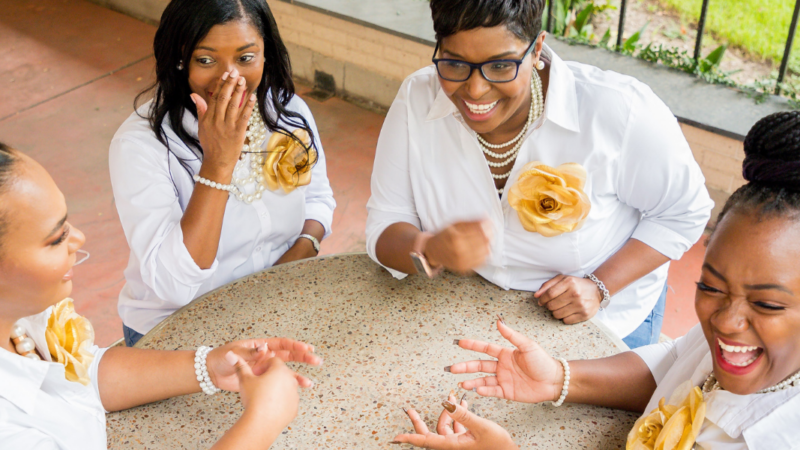
When people ask for my personal secret to living a life that is authentically happy and liberating, the first thing that comes to mind are my friends. I’ve known for a long time that I am a wealthy and blessed person. The wealth that I’m referring to has nothing to do with my bank account balance. The wealth that I’m talking about are the meaningful connections that have sustained me over the years. What I lacked in familial bonds, the divine provided in long-term platonic relationships.

One of the clearest indicators of someone who is flourishing is their ability to build and keep meaningful connections and quality relationships. When designing a life that supports your becoming the most fully expressed version of yourself, the people who are closest to you can either support or hinder your progress. This is why I’m adamant about being intentional about my connections.

My “Presidential Cabinet,” which is basically what I call my trusted circle of friends, is filled with some amazing folks. I’m forever grateful for my community of friends that became family, strangers that became mentors, and colleagues that became accountability partners.

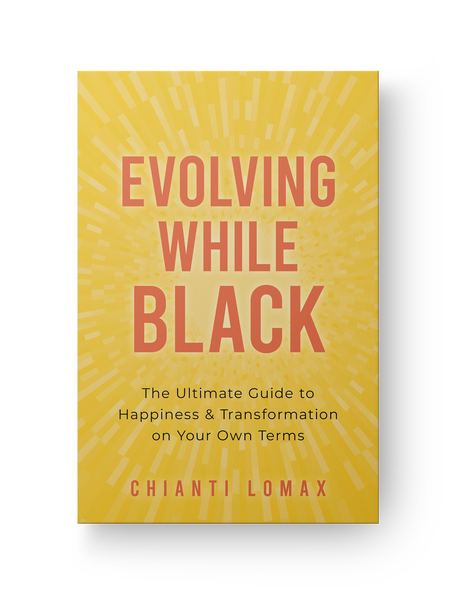
In the chapter “What About Your Friends?” from my book, Evolving While Black, I share with you that people who have strong relationships feel the support of family, friends, and others in their community. When you know you have a village of folks you can count on, it improves your ability to recover from stress, anxiety, and depression.

An agreement I made with myself in my early thirties was to commit to choosing connection and community over isolation. This decision is the gift that keeps on giving. The investment you make in choosing your connections is the greatest pathway to wholeness, prosperity, and longevity.

What you should consider as you’re continuing to build out your own Presidential Cabinet

Your connections should include people who:

  • Energize you and help you to create a life of ease
  • Encourage you to make your mental and emotional well-being a priority 
  • Consider you for opportunities when you’re not in the room
  • Show mutual support and respect 

Now that you know what to consider, use these prompts to create a plan

  • Who’s in your Presidential Cabinet, and how do they support you? 
  • Who do you need to add, and how will they support your journey? 
  • If you change nothing, what will your life look like three months from now? How does this make you feel?

My hope for you is that you attract meaningful connections that bring you joy and make your heart smile, laughs that make your cheeks hurt, and love that covers you like a warm blanket. You deserve to feel loved, supported, and cared for.

Until we meet again.

Currently evolving,

Chianti

Evolving While Black
Amazon | Barnes & Noble | Bookshop | Sounds True

Evolving While Black
Sounds True

Chianti Lomax is a sought-after international speaker, certified mindset coach, and leadership trainer who thrives at the intersection of mindfulness, technology, and transformative coaching. As a registered yoga instructor, certified personal and executive coach, certified workplace mindfulness facilitator, and positive psychology practitioner, Chianti teaches doable habit changes to help increase our well-being and elevate the overall human experience. For more, visit chiantilomax.com.


Author photo © Ambreia Williams

Self-Compassion & Self-Reflection: Recommended Re...

Exploring the Science of Self-Compassion


The Art of Empathy by Karla McLaren

What if there were a single skill that could directly and radically improve your relationships and your emotional life? Empathy, teaches Karla McLaren, is that skill. With The Art of Empathy, she teaches us how to perceive and feel the experiences of others with clarity and authenticity—to connect with them more deeply and effectively.

Informed by current insights from neuroscience, social psychology, and healing traditions, this book explores some of the following:

  • Why empathy is not a mystical phenomenon but a natural, innate ability that we can strengthen and develop
  • How to identify and regulate our emotions and boundaries


The Science of Compassion by Kelly McGonigal

Stories, dynamic meditations, and innovative writing exercises to spark creativity and spiritual awakening.

The best writers say their work comes from a source beyond the thinking mind. But how do we access that source? “We must first look inside ourselves and be willing to touch that raw emotional core at the heart of a deeper creativity,” Writes Albert Flynn DeSilver. In Writing as a Path to Awakening, this renowned poet, writer, and teacher shows you how to use meditation to cultivate true depth in your writing—so your words reveal layers of profound emotional insight and revelation that inspire and move your readers.


The Language of Emotions by Karla McLaren

Emotions—especially the dark and dishonored ones—hold a tremendous amount of energy. We’ve all seen what happens when we repress or blindly express them. With The Language of Emotions, empathic counselor Karla McLaren shows you how to meet your emotions and receive their life-saving wisdom to safely move toward resolution and equilibrium. Through experiential exercises covering a full spectrum of feelings from anger, fear, and shame to jealousy, grief, joy, and more, you will discover how to work with your own and others’ emotions with fluency and expertise.

Here is a much-needed resource filled with revolutionary teachings and breakthrough skills for cultivating a new and empowering relationship with your feeling states through The Language of Emotions.


Awakening Compassion by Pema Chödrön

On Awakening Compassion, Pema Chödrön, one of the Western world’s best-known lojong teachers and practitioners, shows you how to use your own painful emotions as stepping stones to wisdom, compassion, and fearlessness. You will learn how to make friends with the painful parts of your life experience and how to use your natural courage and honesty to transform even the most difficult situations.

With an informal teaching style, both playful and insightful, Pema Chödrön makes this timeless way of bringing compassion into the world easy to understand and apply to your own life. More than seven hours of practical, compassionate guidance for shedding your cocoon and meeting your world with fresh appreciation. Includes a nine-page study guide with lojong slogans and additional resources.


The Force of Kindness by Sharon Salzberg

Distill the great spiritual teachings from around the world down to their most basic principles, and one thread emerges to unite them all: kindness. In The Force of Kindness, Sharon Salzberg, one of the nation’s most respected Buddhist authors and meditation teachers, offers practical instruction on how we can cultivate this essential trait within ourselves.

Through her stories, teachings, and guided meditations, Sharon Salzberg takes readers on an exploration of what kindness truly means and the simple steps to realize its effects immediately. She reveals that kindness is not the sweet, naive sentiment that many of us assume it is, but rather an immensely powerful force that can transform individual lives and ripple out, changing and improving relationships, the environment, our communities, and ultimately the world. Readers will learn specific techniques for cultivating forgiveness; turning compassion into action; practicing speech that is truthful, helpful, and loving; and much more.


>
Copy link
Powered by Social Snap