
Customer Favorites

Bigger Isn’t Always Better (and Other Cultural Myths...

Some of our beliefs aren’t even ours. Like old wives’ tales passed down through generations or reflected back to us through society, we inherited certain cultural and familial narratives, adopted them, and left them unquestioned as “Truth.” Sometimes these inherited narratives and beliefs manifest as unquestioned traditions. For example, when making the Thanksgiving turkey, my friend’s mother always cut the breast of the bird off and roasted it separately. This process was embedded in my friend’s view of “how to cook a turkey.” When she moved to New York and began hosting her own Thanksgivings, she also sliced the top off the turkey and cooked it separately. Naturally. 

One year a guest asked her why she didn’t cook the turkey whole, which got her to thinking. She didn’t actually know why. It’s just the way it had always been done. So she called her mother to ask about the tradition: Why do we cut the tops off our turkeys? Her mother replied that she had always taken the top off because her mother had always taken the top off; it’s just the way she had learned how to cook a turkey. Naturally curious as to where this learned behavior all began, her mother called her mother, my acquaintance’s grandmother, and asked: Why do we cut the tops off our turkeys?

The grandmother, stumped, thought for a long, hard minute. “Oh,” she remembered, “the oven in my very first apartment was too small to fit an entire turkey, so I had to cook it with the top cut off.” Sixty years later, in a city across the country, my acquaintance was still cooking turkeys as a result of an oven that was too small. This is how inherited narrative works.

Here are some of the narratives that I inherited over the years, in order from most helpful to least: You can be anything that you want to be. Money isn’t very important. It is what it is, and it can’t be changed. Men prefer pretty over smart. Asking for help means you’re weak and needy. These are the ones that I’ve managed to tease out; I’m sure there are plenty more operating in the background that I can’t see.

Part of developing a wholesome or Beneficial View is identifying the stories that we live by, where they came from, and, perhaps most importantly, whether or not they are helpful on the path of waking up to our worthiness. Shariputra, one of the Buddha’s chief disciples, described Beneficial View as the practice of identifying which of our views spring from beneficial beliefs and which spring from harmful beliefs, and then choosing which to nourish and cultivate. Sometimes this also means looking at the views of the culture that we live in.

A few times every year, I host group coaching programs for a rather large online training institute with a global reach, drawing students from a dozen countries, primarily women of varying ages. These groups offer an encouraging environment in which we can speak openly about our fears and hesitations. Over the past decade, working as a coach has revealed to me just how many of us feel a chronic sense of falling behind and a nagging suspicion that we’re not quite _________ enough. You can fill in the blank here with your own particular flavor of not-enough-ness. Not educated enough, smart enough, good-looking enough, likable enough, thin enough . . . You get the picture. A consistent element of these groups has been a gobsmacking number of women sharing that they view their capabilities as insufficient or lacking. Sometimes this feeling extends to the way that they view themselves as people. It’s said that if one fish washes up on the shore, the scientist will call it what it is: a dead fish. Nothing of note, really. However, if hundreds of fish wash up on the shore, the biologist won’t look to the fish for answers. They’ll test the water that the fish are swimming in. So what’s up with the water that we all seem to be swimming in?

In the Western hemisphere, there is a deeply embedded narrative of scarcity that is nearly invisible. I don’t know about you, but I clearly remember playing the childhood game of musical chairs. It begins as a cheerful romp around the circle, with kids squealing and running to nab a chair once the music stops. As the game progresses, however, the stakes get higher. The chairs begin to disappear. The slowest, smallest, and most accommodating kids get disqualified. And the fastest, most aggressive kids advance amidst the dwindling resource of chairs. Good, clean childhood fun. Also, a wonderful way to implicitly teach kids this prevailing myth of scarcity: There is simply not enough to go around. And you better get yours before someone else takes it.

Author, activist, and fund-raiser Lynne Twist illustrates this phenomenon exquisitely in her book The Soul of Money. She likens the scarcity narrative to a “helmet” of insufficiency that we wear throughout our day that flavors every interaction we have. For example, our first thought when getting up in the morning tends to be I didn’t get enough sleep. As we get ready for the day, we think, I don’t have enough to wear, I don’t have enough time, I don’t have enough room on the subway, I don’t have enough help to get this job done well, There aren’t enough good men or women on Tinder, I don’t have enough energy to meet up with my friends, and then our final thought before falling asleep is I didn’t get enough done. This view of not having enough is truly pervasive. It’s no wonder that the women I’ve worked with consistently communicate that they don’t feel like they can live up to their own, or society’s, expectations.

Even if we try to address the messages we might tell ourselves about what we have and don’t have, we can’t avoid them altogether. I was riding the subway to Brooklyn one day when a father and his daughter, who was all of five or six years old, entered the train and stood toward the center of the car. She was chatting to her dad about her day at school until one of the many subway ads caught her eye. In it, there were two juxtaposed photos of a blonde woman. In one photo, the woman was frowning while holding a lemon in each hand, which were hovering at chest height. In the other, she was holding two grapefruits, also at chest height, but she was grinning. “Dad, why is she happy in that one and sad in that one?” the girl asked, pointing to the ad for breast augmentation. I swear the entire subway car went silent in anticipation of how her father would respond. He awkwardly and skillfully lobbed the question back to his daughter. “Well . . . what do you think?” The girl waited a beat and then answered, “She’s happy there because she has big ones and sad there because she has small ones.”

Clearly she had understood the message this poster was communicating to us all: a message of scarcity, insufficiency, and how one might always be “better.” And in that instant I understood how conditioning works. Hello, demon of self-doubt. Just like the fish in the ocean, we’re bound to swallow the water that we swim in. When considering what it means to develop Beneficial View, and the view of our own worthiness, it can be helpful to identify why we might not feel worthy to begin with. If our cultural perspective is rooted in the myth of “not enough,” it would logically follow that we would inherit this not-so-beneficial view of ourselves. Through looking at our own mind in meditation practice, we begin to take stock of the stories and beliefs that are not serving us, unraveling this myth of “not enough,” and revealing the Beneficial View of our innate wholeness and worth.

This is an excerpt from Tea and Cake with Demons: A Buddhist Guide to Feeling Worthy by Adreanna Limbach.

 

adreanna limbachAdreanna Limbach is a personal coach and a lead meditation instructor at MNDFL, NYC’s premier drop-in meditation studio. Her teachings have been featured in the New York Times, Women’s Health, and Refinery29. She lives in New York City. For more, visit adreannalimbach.com.
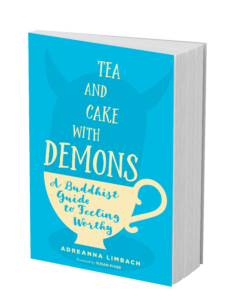


tea and cake with demons

Buy your copy of Tea and Cake with Demons at your favorite bookseller!

Sounds True | Amazon | Barnes & Noble | Indiebound | Bookshop

Hardwiring Happiness: Rick Hanson on Why the Brain Has...

Have you ever noticed that a critical comment tends to replay in your mind long after a warm moment of connection has faded? This is not a personal failing. Rick Hanson explains that this response is rooted in the brain’s natural negativity bias, a pattern wired into every human being.

The good news is that the brain can change. At Sounds True, we have spent more than four decades sharing transformative teachings from trusted voices in psychology, neuroscience, mindfulness, and spiritual wisdom. Through teachers like Rick Hanson, we bring practical insights to people ready to create real and lasting change.

Read on for Rick Hanson’s perspective on the negativity bias brain, the principles of hardwiring happiness, and how positive neuroplasticity can support a more resilient and grounded daily life.

Key Takeaways:

  • Why Negative Experiences Linger Longer: Rick Hanson explains how the brain evolved to hold onto difficult moments more readily than joyful ones, leaving many of us feeling more stressed, anxious, and disconnected than our circumstances actually require.
  • Hardwiring Happiness Builds Lasting Strength: Consciously staying with positive moments, a practice Hanson calls installing positive experiences, helps train the brain to access joy, calm, and connection more readily each day.
  • Neuroplasticity Supports Real Emotional Growth: Positive neuroplasticity and neuroscience wellbeing research show that consistent daily habits can gently reshape the brain’s patterns, fostering greater emotional balance and a deeper sense of presence.

Discover how your mind really works

Rick Handson’s Approach to a Negativity Bias Brain 

Rick Hanson, PhD, is a psychologist, Senior Fellow at UC Berkeley’s Greater Good Science Center, and a New York Times bestselling author. An expert on positive neuroplasticity, his work has been featured on CBS, NPR, and the BBC, and he has been practicing meditation since 1974. 

At the heart of his teaching is a direct observation: because of the negativity bias brain, we have evolved to learn quickly from painful experiences and slowly from positive ones. This ancient survival mechanism once helped our ancestors stay alert. Today, the same wiring can leave us feeling more stressed, anxious, lonely, irritated, and inadequate than our real-life circumstances call for.

Recognizing this pattern is the first step toward shifting it. When you begin to see that the brain’s pull toward worry or threat is biological, each difficult thought becomes less of a verdict and more of a habit that can be gently redirected. Many of our listeners have found their way into this kind of self-awareness through the Insights at the Edge Podcast, where conversations like these take on a deeply personal dimension.

Hardwiring Happiness in Everyday Life 

Hardwiring happiness is the practice of giving positive experiences enough time and attention to become lasting inner resources. When a moment of warmth, calm, or gratitude arises, Hanson encourages pausing to fully absorb it instead of letting it pass by. Spending a few extra seconds with the ease of a good conversation, a quiet moment of sunlight, or the satisfaction of a completed task can strengthen the brain’s ability to hold onto those feelings later.

A key part of the practice is learning how to respond to difficult thoughts with awareness. When a critical inner voice grows loud,  Hanson suggests a gentle approach: acknowledge what is present, then consciously return your attention to something steadying, whether that is a breath, a sensation of warmth in the chest, or the memory of a moment that brought ease. 

People who pause to take in positive moments often report feeling less reactive in stressful situations, more connected to those around them, and more capable of recovering from setbacks. Something as small as fully receiving a compliment or noticing the warmth of a shared laugh can shift the brain’s baseline patterns across weeks of steady practice. Courses from our Meditation & Mindfulness collection can deepen this capacity.

Positive Neuroplasticity and How the Brain Learns to Change

Positive neuroplasticity is the science of how the brain changes in response to repeated experience. Hanson’s approach is grounded in the understanding that every thought and experience shapes neural pathways, making certain patterns stronger with repetition. 

His practice centers on building habits that encourage gratitude, compassion, and emotional steadiness. Difficult emotions are acknowledged as part of the landscape and moved through with care, treated as information to work with rather than conditions to eliminate.

Installing positive experiences is one of Hanson’s most practical teachings. When a pleasant moment arises, he recommends staying with it long enough for the brain to encode it more fully. Resting your attention on the warmth you feel after a kind exchange, or holding the quiet satisfaction of a project completed, gives the brain time to register those moments at a deeper level. These experiences become easier to access during harder times, building a stronger and more resilient inner foundation.

Hanson teaches a practice he calls HEAL: Have a positive experience, enrich it by staying with it, absorb it and let it settle, and link it to a related area of pain to soothe what’s beneath. Practitioners drawn to the connection between healing and the mind will find a rich range of programs within our Health & Healing collection, from somatic approaches to neuroscience-informed frameworks.

Discover the Power of Daily Meditation and Inner Stillness

Neuroscience Wellbeing and the Habits That Support Happiness

Modern neuroscience wellbeing research confirms that daily habits shape how the brain responds to life. The practices Hanson teaches are accessible to anyone, and they work because they meet us exactly where we are, in ordinary moments that do not require a dramatic overhaul of daily routines.

Starting the Morning with Awareness

One of the most productive times to work with the brain is first thing in the morning. A few minutes of sitting quietly, noticing three things you feel grateful for, or simply breathing with presence before reaching for your phone, can set a different tone for the hours ahead. Hanson describes this as giving the brain an early signal of safety and connection, and starting from that place can shape what you notice throughout the rest of the day.

Weaving Kindness into Ordinary Moments

Acts of kindness do more than lift the mood of those around us. For example, holding a door, offering a sincere compliment, or truly listening during a conversation activates the same neural circuits Hanson connects to reduced stress and greater social connection. Research shows that those who practice small acts of generosity benefit alongside those who receive them. 

Pausing to Absorb What’s Good

During any moment of connection, calm, or accomplishment, Hanson recommends resisting the urge to move on immediately. Pausing for ten or twenty seconds to stay with the warmth of a good conversation or the quiet satisfaction of a completed task gives the brain enough time to begin encoding that experience more deeply. 

Awaken Your Inner Healing Power: Your Wellness Journey Starts Now

Final Thoughts

Rick Hanson’s work is a reminder that the brain is not fixed. With consistent practice, even the simplest moments of appreciation, calm, or connection can become lasting inner strengths. The negativity bias brain can be gently and steadily redirected.

Sounds True has long served as a portal to presence for those seeking real transformation, holding a living library of teachers whose work invites exactly this kind of change. From Rick Hanson’s neuroscience-rooted practices to the contemplative paths of teachers like Pema Chödrön and Tara Brach, the breadth of what we offer is built for every stage of the journey. 

Visit our All Teachers & Authors page to find the voices and programs that resonate most with where you are right now.

Frequently Asked Questions About Rick Hanson and Hardwiring Happiness

What inspired Rick Hanson to write Hardwiring Happiness?

The book was inspired by research showing that the brain naturally gives more attention to negative experiences than positive ones, along with practical ways to change that pattern.

Can anyone practice hardwiring happiness?

Yes. The practices are designed to be simple and accessible, allowing people of all backgrounds to integrate them into everyday life.

How long does it take to notice changes from these practices?

Results vary from person to person. Consistent practice over weeks or months can gradually strengthen positive mental habits and emotional resilience.

Does hardwiring happiness mean ignoring negative emotions?

No. The approach encourages acknowledging difficult emotions while also giving positive experiences enough attention to become lasting inner resources.

What are examples of positive experiences to focus on?

Moments of gratitude, meaningful relationships, personal accomplishments, acts of kindness, and feelings of safety or calm can all be intentionally reinforced.

How does stress affect the brain’s negativity bias?

High levels of stress can make the brain even more sensitive to perceived threats, making it easier to overlook positive moments unless they are consciously noticed.

Is Hardwiring Happiness helpful for mindfulness practitioners?

Yes. Many mindfulness practitioners find that the methods complement meditation by helping positive states become more deeply integrated into daily life.

Where can I learn more about Rick Hanson’s teachings?

You can learn more through Rick Hanson’s books, talks, courses, and podcast interviews, where he shares practical guidance on resilience, well-being, and personal growth.

Michelle Cassandra Johnson is an author, activist, spiritual teacher, racial equity consultant, and intuitive healer. She is the author of six books, including Skill in Action and Finding Refuge. Amy Burtaine is a leadership coach and racial equity trainer. With Robin DiAngelo, she is the coauthor of The Facilitator’s Guide for White Affinity Groups. For more, visit https://www.michellecjohnson.com/wisdom-of-the-hive.

Rick Hanson: Self-Directed Brain Change, Part 2

Tami Simon speaks with Dr. Rick Hanson, a neuropsychologist and the founder of the Wellspring Institute for Neuroscience and Contemplative Wisdom. He is the author of the books Buddha’s Brain and Hardwiring Happiness, and with Sounds True has created several audio programs, including The Enlightened Brain and the new learning course Self-Directed Brain Change. In the second half of a two-part interview, Tami speaks with Dr. Hanson about how we can move from a “red” reactive state to a “green” state of calm, how this progression aligns with the Four Noble Truths of Buddhism, and his vision for how healthy brains can change the state of our world. (63 minutes)

Turning Towards What’s Difficult

Tami Simon speaks with Lama Tsultrim Allione, an author, former Tibetan nun, internationally known Buddhist teacher, and founder of the Tara Mandala retreat center. Lama Tsultrim has created several audio programs with Sounds True, including The Mandala of the Enlightened Feminine and Cutting through Fear, which helps us meet and release the demons of fears and other unhelpful emotions and obsessions. In this episode, Tami and Lama Tsultrim speak about the sacred feminine within Buddhism and how to understand it without creating duality. They also discuss the eleventh-century Tibetan yogini Machig Labdrön and Lama Tsultrim’s journey through grief over the sudden loss of her husband. (69 minutes)

Noah Levine’s Revolution of Kindness

Noah Levine is someone whose name I was familiar with long before I had the opportunity to record with him last fall in Los Angeles. I’d been intrigued by his story. He was someone from my own generation, 20 or 30 years younger than the most prominent American-born Buddhist teachers. He had a punk sensibility and a made-for-movies backstory of anguished teen years filled with drug use, incarceration, and suicide attempts—all chronicled in his first book Dharma Punx.

Through Against the Stream Buddhist Meditation Society, which he founded, Noah has worked to bring the dharma to inner city youths, prisoners, and many others. With his shaved head and tattooed torso featuring a giant OM symbol over the heart, he seemed like the quintessential outsider.

Yes, he was also an insider, inheriting a rich lineage through his father, Stephen Levine and his teacher Jack Kornfield. As I headed west for our recording, I wondered how those two strands would weave together.

Effortlessly, as it turns out. Noah’s desire to make the tools of meditation available to all certainly stems from his own experience as an outsider, and the sense of rebellion that fueled his teen years has not diminished—but now it’s turned inward, toward an inner revolution whose goal is ultimate freedom.

His teachings—especially on lovingkindness practice and what he terms “kind awareness”—fall squarely within the tradition, but have a flavor and energy that I find really resonate for me.

My usual meditation practice, such as it is, is simply to sit and see what arises. The more formal structure of lovingkindness practice took me a little while to get used to, but, while editing the program I recorded with Noah last fall—Kind Awareness: Guided Meditations for an Inner Revolution—I took time to work with all the guided practices, and I found them to be extraordinarily powerful.

In particular, I was moved by the practice of asking for forgiveness from those I’ve harmed, and in turning compassionate acceptance toward myself. Doing so, I discovered a tenderness just beneath the surface—one that, when I softened, brought me to a new sense of openness and quietude. If you haven’t done a guided lovingkindness practice recently, give it a try—especially if you ever find your meditation practice becoming dry or detached. There’s an emotional sweetness to be found here—right on the other side of our vulnerability.

Footsteps of Buddha, United States, 2005

Nourishing Loving Relationships – a live worksho...

We cherish the important relationships in our lives. But when so many of us have experienced these relationships as a source of insecurity, hurt, and betrayal, how do we overcome the obstacles between us and cultivate genuine bonds of trust, understanding, intimacy, and love?

Nourishing Loving Relationships brings you a two–day intensive workshop with Dr. Tara Brach in Tucson, Arizona. Through talks, experiential reflections and meditations, journaling, and periods of questions and sharing, we will explore the beliefs and feelings that separate us—and how to heal and nourish the loving relationships we all long for.

“At the end of our lives, as we look back,” reflects Dr. Brach, “what will most matter will be the moments of loving presence in our relationships.” Join us in the warm weather of Tucson as she brings her signature blend of Western psychology and Eastern wisdom practices for bringing mindful attention to our inner lives and engaging in our outer world fully and compassionately.

Continuing education credits available. Learn more here.

tara