Customer Favorites

If You Are Postpartum and Bereaved, Know You Are Not A...

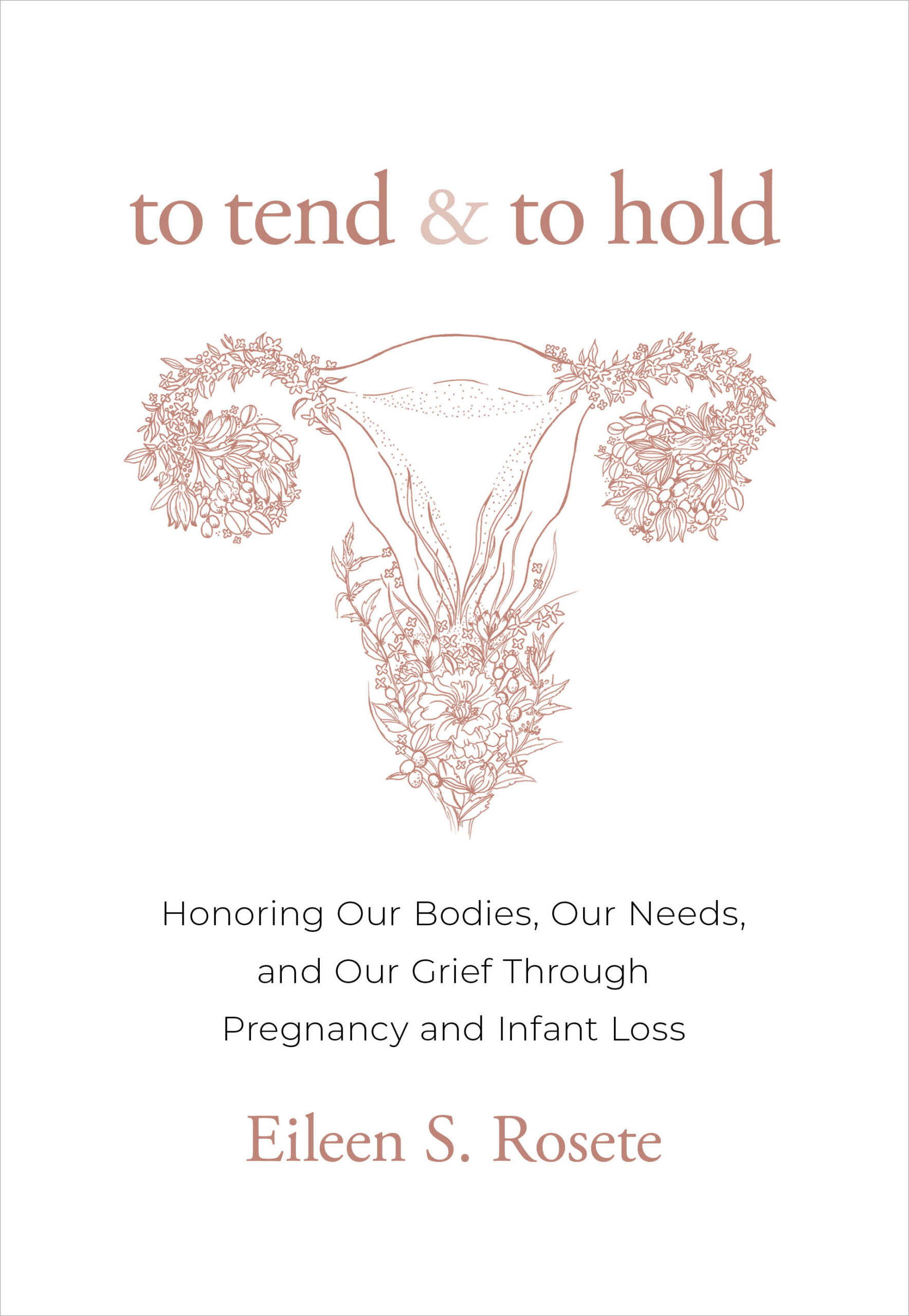
An Excerpt From To Tend And To Hold: Honoring Our Bodies, Our Needs, and Our Grief Through Pregnancy and Infant Loss

For as long as there has been life, there has been death. For as long as we have birthed life, we have also birthed death. What you feel has been felt since time immemorial, and it has been felt by many, though womb loss is still not widely known or acknowledged. Consider that even in the most optimal conditions, there is only a 30 to 40 percent chance that a clinically recognized pregnancy will occur in a given menstrual cycle, and only about 30 percent of conceived pregnancies progress to live birth.1 Globally, approximately one in four pregnancies end in miscarriage and 2.6 million pregnancies end in stillbirth.2 In 2022, 2.3 million newborns died in the first month of life,3 and approximately 73 million induced abortions occur every year.4 Womb loss in and after pregnancy is, in fact, a common and regular occurrence, though many of us may struggle with feelings of inadequacy and shame as if such loss is atypical and we are deserving of blame. The prevailing stigma surrounding womb loss makes enduring it all the more challenging as we may feel reluctant to reach out for support and hold on to harmful ideas about our worth. You are not alone, nor are you any less precious and deserving of support. You are not alone as the anguish of womb loss has been felt, is being felt at this very moment, and will continue to be felt the world over.

Before we go any further, let us reconnect with our breath. It can be hard to breathe if you’ve recently learned about your womb loss or impending loss and feel pressure to make decisions right away. Or if you have learned of the potential for a loss and have to endure a waiting period before you know for certain. It can be hard to breathe even as you process a loss long since passed. The following practice is an invitation to make the resilient choice to slow down and allow yourself a moment to breathe. So that you can feel grounded. So that you can have the capacity to be present to your grief. So that you can tend to your needs.

GROUNDING BREATHING PRACTICE

Three Deep Breaths
This offering is a simple and short breathing practice. Because you deserve breathing room, and because there is power in the pause. In that fleeting moment between what was and what can be, if you can breathe deeply and connect with your body, you may find yourself more able to understand what you feel and then what you need. Allow yourself this pause so you can make a more intentional decision about what comes next.

The Invitation

When you are ready, take three deep breaths at your own pace and in your own way. You might inhale and exhale through the nose or inhale through the nose and exhale audibly through the mouth. You might close your eyes or soften your gaze as you do so, allowing your awareness to gently follow each breath, letting everything else fade to the background. You might even think the following words as you breathe, allowing them to help you feel grounded in this moment.

Inhale. Exhale. One.

Inhale. Exhale. Two.

Inhale. Exhale. Two.

Your body may want to continue breathing this way, or it may feel like this was enough. Honor what feels right for you.

Sometimes breathing is the most we can bring ourselves to do, the best we can do, when our whole being is overcome. Deciding what comes next may feel like too much to ask of ourselves. If so, breathe, and trust that it is enough for this moment.

Eileen Santos Rosete, MSMFT, PCD(DONA), CYT 200, holds a master of science in marriage and family therapy from Northwestern University and is certified as a DONA International postpartum doula, trauma-informed yoga teacher, and grief educator. Her brand, Our Sacred Women®, is known for its elevated offerings that help women feel seen, held, and honored. She is especially passionate about supporting all who give birth and are postpartum both after live births and after loss. To learn more, visit eileensantosrosete.com.
To Tend and to Hold

Learn More

Amazon | Barnes & Noble | Bookshop | Sounds True

E68: The Illusion of Control and the Power of Acceptan...

It should be obvious that most of life unfolds beyond your control. Your heart beats, your lungs expand and contract, 35 trillion living cells provide you with your body, atoms bond into molecules, and billions of other vital things go on every moment that you do not control. In spite of all of this, you suffer by resisting reality instead of appreciating it. Your desires and struggles come from storing the past experiences you liked and didn’t like and then comparing reality to what you want it to be. Eventually, you will realize that true peace and joy arise not from controlling life but from letting go of your inner blockages and learning to appreciate and fully embrace the gift of creation.

For more information, go to michaelsingerpodcast.com.

© Sounds True Inc. Episodes: © 2025 Michael A. Singer. All Rights Reserved.

Paul Hawken: A Love Letter to the Flow of Life

The realities of human-driven climate change are only just starting to hit home for many of us. Meanwhile, activists like Paul Hawken—along with the people who have endured the devastating impacts of environmental degradation in the places they call home—continue to raise the alarm for a planet in peril. In this podcast, Tami Simon speaks with the renowned environmentalist and entrepreneur about his latest work, Carbon: The Book of Life, an awe-inspiring read that Tami dubs “a love letter to the flow of life.”

Give a listen to their conversation on: why the climate is never really in crisis (and who is); the narratives of disconnection that perpetuate a sense of separation from life; why “the only way forward is regeneration”; how humanity’s “othering” in order to get ahead just puts us all behind; the concept of flow in the natural world; the extraordinary complexity of life and the trillions of creatures communicating with each other every day; tapping into the power of curiosity and wonder; overcoming the overwhelming inertia of the existing capitalist system; why our grief is a measure of our love; embodying the timeless qualities of compassion, cooperation, and respect; the connection between the loss of Indigenous languages and species loss; apocalypse—the revelation of that which is hidden; how the discovery of fire impacted human evolution; mystical experiences in nature; leadership—listening to all the voices; and more.

Note: This episode originally aired on Sounds True One, where these special episodes of Insights at the Edge are available to watch live on video and with exclusive access to Q&As with our guests. Learn more at join.soundstrue.com.

E46: From Attachment to Liberation: Redefining Life...

Society is focused on setting external goals for career, relationships, and wealth, but this does not always lead to satisfaction. True well-being arises from working through internal disturbances rather than avoiding them through external compensation. This is achieved by letting go of past emotional blockages and being open to the richness of life’s experiences, both positive and challenging. Ultimately, this path leads to a deeper state of consciousness and liberation, fostering joy and harmony both within yourself and in your relationships with others.

For more information, go to michaelsingerpodcast.com.

© Sounds True Inc. Episodes: © 2025 Michael A. Singer. All Rights Reserved.

E45: Learning to Channel Lower Energies

All of life’s experiences are manifestations of energy at one level or another. By viewing challenges as energy, you can learn to channel them in a constructive manner. To do this, you must practice allowing uncomfortable energies to flow instead of suppressing or resisting them. Through methods like mindfulness, meditation, and conscious self-reflection, you can release past energy blockages and stop creating new ones. Ultimately, this process leads to spiritual growth, inner peace, and the ability to live passionately and positively in the present moment.

For more information, go to michaelsingerpodcast.com.

© Sounds True Inc. Episodes: © 2025 Michael A. Singer. All Rights Reserved.


How to Cope with Shame, the Master Emotion

Shame has been called the master emotion because it takes over our bodies and our minds.  It can freeze our nervous system.  It can place us in a fog, unable to seek help, reassess a situation or reassess what is really going on. Shame defeats our ability to reflect on ourselves, get some support, and move on. Shame can be overwhelming, but if we can look at it clearly and catch it before it takes over, we can cope with it and create conditions that can transform it from an enemy into a friend.

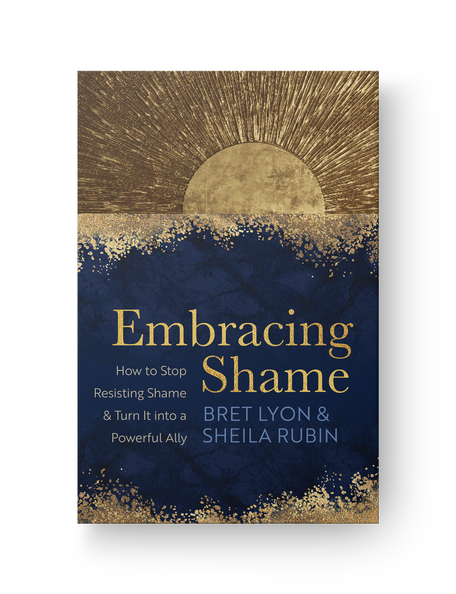
This is not academic to us.  We are both well-acquainted with the experience of shame. Co-author of Embracing Shame, Sheila Rubin has been researching shame since she was a shy five-year-old. “In my twenties, I remember having a new job and being so worried about being late for a first meeting that I showed up early and accidentally interrupted a lunch that was happening in the room,” notes Sheila. “I froze in embarrassment. I remember the shame voice saying to me: ‘What’s wrong with me?  Maybe they shouldn’t hire me because something is wrong with me.’  Fortunately, while I was holding the door knob, frozen in shame, someone opened the door and invited me in with kindness.”

Embracing Shame co-author, Bret Lyon, remembers that, as a kid, when the gym teacher blew the whistle and said to pick teams. Everyone else was picked first. He still remembers trying to pretend it didn’t matter while he felt like dying inside.

One client accepted extra work even though he does not want to work weekends because he wants to be liked and couldn’t say “no” because it would be embarrassing.

Another client spoke of shame seeping into her mind about the changes in her body since giving birth. She is happy to be a mother, but the changes in her body and the inner dialogue in her mind keep her in shame circles. The differences between how she experienced her body and how she feels now is shame.

Our inner conversations may say a variety of unhelpful things. For many of us, it is the voice of not being good enough. Or we might feel like an imposter. If our partner or boss says that we made a mistake, that may be a trigger for a shame attack.

Here are some clues to know when shame may be operating in your mind and body:

Thoughts: There’s something wrong with me and I don’t want anyone to know. Maybe I am an imposter and I need to hide.

Sensations: Feeling shy, face flushed, brain can freeze, difficulty having a conversation.

Reactions: Embarrassed, going blank, blaming others, using activity to numb, withdrawing. Not able to write or think clearly and not know why.

Coping with shame

If, instead of letting shame take over, we can be with and observe our shame, we can actually begin to learn something from it.  We can begin to transform shame from a toxic disruptor to a useful informant, from a devastating foe to a useful ally.

Here are a few experiments to try when you notice shame coming up. Instead of putting yourself down, try one, then reflect on the results and write them down in a journal or in your notes app:

Be kind to yourself. Say something kind to yourself to ease the shame.

Pause and take a breath. Pausing for even a few seconds or one minute can offer a new perspective. How might this allow you to set a new boundary or reframe your story in a healthier way?

Set boundaries. Is there an extra shift you cannot take this week? Can you say stop or politely decline?

Name your feelings. Notice what didn’t feel good in your reaction. Can you talk about what you’re feeling in a different way?

Ground yourself. Tap your feet or feel the earth under your feet.

Get support. Talk to a friend who is kind and who can hear your feelings.

Spend time in nature. Take a few minutes to bathe in nature to refresh and replenish.

Understand that change happens slowly. Talk back to the shame inside yourself for a bit and find if the shame can be a little less toxic. Even a small shift or change can help you move forward rather than staying stuck.

Being friends with your shame can begin to change yourself and your life. When toxic shame lifts there can be access to creativity and new doors can open. The weight of heaviness can be put down and we can have new hope for the future. The reason we do this work is so others can find hope when there is shame and they can transform it and heal it.

Sheila Rubin, MA, LMFT, RDT/BCT, has been researching shame since she was five years old. Along with her husband and colleague, Bret Lyon, she is a founder and codirector of the Center for Healing Shame, and cocreator of the Healing Shame–Lyon/Rubin Method. Through their popular workshops, they have taught thousands of psychotherapists, coaches, and other helping professionals across the world to more effectively identify and work with shame. Sheila is a Licensed Marriage and Family Therapist, a Registered Drama Therapist, and has taught at JFK University and CIIS, as well as being the eating disorder specialist at a hospital and directing Embodied Life Stories performances. For more, visit healingshame.com.

Bret Lyon, PhD, SEP has devoted almost two decades of his life to healing shame. Along with his wife and colleague, Sheila Rubin, he is a founder and codirector of the Center for Healing Shame, and cocreator of the Healing Shame–Lyon/Rubin Method. Through their popular workshops, they have taught thousands of psychotherapists, coaches, and other helping professionals across the world how to more effectively identify and work with shame. Bret holds doctorates in both psychology and drama and has taught at Tufts University, Pomona College, and the American Academy of Dramatic Arts, as well as writing and directing plays in regional theater and off-off Broadway. For more, visit healingshame.com.

Amazon | Barnes and Noble | Bookshop | Sounds True

>
Copy link
Powered by Social Snap