Your life is the fleeting moments between your birth and death. During this time, true fulfillment does not come from external achievements but from an internal state of unconditional joy and love. Because we condition our happiness on outside circumstances, it often leads to suffering, attachment, and endless striving for some satisfaction. By letting go of stored past disturbances that have blocked your natural well-being, you can unlock a state of unconditional happiness and appreciate each moment as it unfolds.
There is a line—below this line you are being pulled down into your psyche and above it you are pulled up into the source of Self. You generally live below this line and identify with your thoughts and emotions. This leads to suffering and an ego-driven existence. True awakening comes from recognizing that you are not your body, thoughts, or past experiences but the consciousness that is aware of them. By letting go of ego-based attachments and conditioned responses, you can transcend suffering and experience inner peace, love, and true spiritual awakening.
Tami Simon and renowned spiritual teacher Shai Tubali explore the intriguing concept of the flexible heart and delve into how emotional flexibility can be pivotal for trauma healing and personal evolution in today’s changing and challenging world.
This episode is sponsored by BetterHelp. Listeners of Insights At The Edge get 10% off their first month at www.betterhelp.com/soundstrue.
Note: This interview originally aired on Sounds True One, where these special episodes of Insights at the Edge are available to watch live on video and with exclusive access to Q&As with our guests. Learn more at join.soundstrue.com.
Sex, health, happiness, and wealth . . . you know you want it all. And there’s no better time than now for having it all and “gettin’ it good! ”
Without social networking, motorized vehicles, or modern-day technology, many of our ancestors went for what they wanted and got it. One trailblazing “I’ve got this” woman I revere is Dr. Rebecca Lee Crumpler. As the Civil War raged in 1864, 33-year-old Rebecca Lee became the first Black female physician in the US. She graduated from what is now Boston University School of Medicine. In 1865, with her husband, Arthur Crumpler, she courageously journeyed to Richmond, Virginia, to provide medical care to recently freed slaves that the White doctors would not touch.
Her life in Virginia wasn’t easy. While there, many pharmacists refused to honor her prescriptions, some hospitals denied her admitting privileges, and some—reportedly, even physician colleagues—wisecracked that the “MD” after her name stood not for medical doctor, but for “mule driver.” But Dr. Crumpler persevered!
She remained in Virginia for almost four years then returned to Boston in 1869, established her medical practice, and wrote a book about women’s and children’s health. She blazed a trail upon which many have and do tread.
Hers is just one story of a brave, determined, capable Black woman. Over the centuries, there have been more in numbers untold! In the 1900s, especially during the Civil Rights Movement, Black women were instrumental in the reckoning of a nation. While their husbands got the most notoriety, matriarchs such as Coretta Scott King, Juanita Abernathy, and Lillian Lewis stood along- side their men and played pivotal roles in moving the nation forward to live up to its creed.
And as the first decade of 2000 ended and a new one began, Black women became increasingly on the move, onward and upward, and are now doctors, accountants, judges, pilots, investment managers, nurses, and elected officials as well as wives, mothers, and caregiving daughters. Undoubtedly, many of today’s Black women are carving out lives about which our great-great- grandmothers may have only dared to dream.
Black women’s voices are no longer muted or silenced; instead, they are heard around the world, with sophisticated, strong, and successful style. In 2020, America elected its first Black female vice president, Kamala Harris, at whose 2021 inauguration the words of the first Youth Poet Laureate of the US, Amanda Gorman, rang forth for the world to hear. But there’s more!
In February 2021, Georgia Tech engineering major Breanna Ivey interned at NASA and helped put their rover, Perseverance, on Mars! And as the COVID-19 pandemic stole lives around the globe, vaccine researcher Kizzmekia Corbett, who has a PhD in microbiology and immunology that she earned at the University of North Carolina at Chapel Hill, worked with the National Institutes of Health and was instrumental in bringing safe, effective vaccines to the world.
Indeed, Black Girl Magic is in full force! When we look around, seemingly there’s hardly any- thing Black women can’t do—and do well—in any field, including medicine, the military, politics, education, technology, business, sports, aeronautics, and the arts. What we put our minds to, we can achieve! With an “I’ve got this” approach and determination, it is ours to be had.
But life is not a bed of roses for all Black women. Too often (and still) negative images barrage our psyches, loved ones in our community lose their lives in gun violence, and our health often needs dramatic improvement. Black women still carry the highest incidence of, and the poorest prognosis for, medical conditions that affect practically every organ system in the body. We are more obese and have a shorter life expectancy than other women in the female demographic, and we carry the highest mortality rate for many killer diseases such as diabetes, heart disease, cancer, infant mortality, HIV/AIDS, and more.
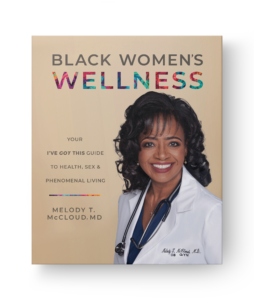
Despite those findings, the plight of Black women’s health is rarely, if ever, specifically addressed at length in general women’s health books. For that reason I have stepped outside of my medical office, outside of the sacred space of the surgical suite, even outside of my city and state to offer women in America and abroad Black Women’s Wellness: Your “I’ve Got This!” Guide to Health, Sex, and Phenomenal Living. May it be the one-stop source you can reference on your personal quest to achieve total wellness, health, and happiness in every important aspect of your life. I offer this book as a Black female who grew up poor in a single-parent household. I never knew any of my grandparents, had an absentee father (who I later found when I was 49), a mother with some “issues,” no siblings, and many naysayers in my midst. But to achieve my goals to become a physician and a surgeon, I studied to show myself approved. It wasn’t easy, but I got it done.
Over the years, I’ve seen thousands of women of various ethnicities suffer with chronic diseases, some of which can be avoided, or at least, better controlled. I also know the remarkable and re- warding joy of practicing medicine and performing surgery to remove disease, help women with their infertility, or free them from cancer.
As a physician, my question to you is, Are you taking time to take care of your health? In fact, when did you last really think about—and take time for—your health in a comprehensive, serious, deliberate manner?
Jack Kornfield’s Buddha’s Little Instruction Book reminds us that “each morning we are born again. What we do today is what matters most.” Kornfield also tells us, “If your compassion does not include yourself, it is incomplete.” Whatever your schedule, lifestyle, religious preference, or personal obligation to others, the reality is you won’t be able to do anybody any good if you’re in poor or failing health. As said in the 2021 movie Robin Roberts Presents: Mahalia, “Take one seed of what you give others and plant it in yourself.”
The words and images within these pages present information that is applicable to the specific medical, spiritual, emotional, and social needs of Black women. However, non- Black women can glean valuable information about their health and standing in this book as well because I also provide comparative data for Black, White, Hispanic, Asian, and Native American women, as well as some data about our male counterparts. But special attention is given to Black women because the fact is, Black women’s health concerns and challenges are different from those of other women.
In these pages you will find staggering statistics and a less-than-desirable legacy of Black women’s health. But you will also find tools, medical information, and encouragement that can liberate you and Black women everywhere from a similar fate. With knowledge comes power.
Look at all the wonderful things Black women have done and continue to do when they employ their mind and determination in force. Hold on to that because improving one’s physical health is doable—you can do it!— and changing the trajectory of Black women’s health is also doable. It can be done, and it must be done because changing the health of Black women can change the health of the Black fam- ily and that of all future generations. As you review and compare the health statistics across racial lines presented herein, remember one thing: the goal isn’t to be like White or Asian women; the goal is to be healthier Black women. Black Women’s Wellness provides a head-to-toe medical reference, with information that will carry you for years to come. Some of you might read this book cover to cover, as a whole. Others might read chapters that address your, or a loved one’s, current medical concern, circumstance, or curiosity. Or as you flip through the pages, you might see a pie chart or graph that grabs your attention or gives you pause.
In chapter 1, I begin with my “Societal Stress and Black Women’s Health” flowchart that ties together the psychosocial challenges and micro- aggressions that we face as Black women and how those psychosocial stressors can affect our physi- cal well-being.
In part 1, I present timely information about heart disease, diabetes, maternal mortality, cancers, and HIV/AIDS . . . the top five conditions that are robbing Black women of life and longevity.
In part 2, I hone in on our womanly feminine form and function. As with all creation, the hu- man body is a thing of beauty with wonders it performs! No one would be alive today without a woman’s body, for it is through women that all life is formed and born.
Medical conditions can affect all of us—whether we are tall or short; “thick” or thin; heterosexual or homosexual; light-skinned, “olive-complected,” or the color of rich, dark chocolate. You’ll read about your reproductive anatomy and physiol- ogy and the diseases that can affect your female organs, such as fibroid tumors and endometriosis, but also other medical conditions that cause mid- life “female” problems such as a dropped bladder, urinary incontinence, and pelvic pain. You’ll read about vision problems, arthritic conditions, sickle cell disease, multiple sclerosis, and more. And if you are menopausal and utterly confused about hormone replacement therapy, this part can give you guidance.
No book on wellness is fully complete with- out addressing sex. Can I get an amen? Given my personal experience and professional expertise, I wrote the sex, sensuality, and relationships section with a heterosexual approach. But regardless of your sexual preference or identity, in part 3, you’ll read about the health benefits of having sex (with whoever rocks your boat). There’s also sage infor- mation about sexually transmitted diseases and how to identify any residual sexual hang-ups you may have so you can fully enjoy and benefit from the experience that love-making was meant to be.
Maybe your love life has gone from a sizzle to a fizzle, you have trouble achieving orgasm, or you experience pain with intercourse. Or perhaps you’re wondering if male enhancement medica- tions work in women or how you can possibly en- joy sex in a day of rampant sexually transmitted diseases and men “on the down-low.” Fret not; you’ve come to the right place! I give you tips on how to boost your sex life and get or keep the passion going with your sweetie. I also offer you advice on how to address these intimate issues (including sexual dysfunction) with your doctor.
And last, in part 4, I round out the call for total wellness with information on relationships, love, beauty, mental health, mindfulness, and financial well-being. I also provide a checklist for you to take stock of your health to identify the specific areas that require your medical attention.
To find happiness in a world of frequent, near-daily rejection, it is important to have inner strength, self-assurance, emotional balance, and reliable friends and family. Part 4 will give you useful tips to achieve inner peace, to keep your brain active and alert, and to avoid toxic people. It will advise you on how to capitalize on your best traits and, if needed, minimize those traits you find less desirable or that impede your personal or professional goals.
Proper diet and physical activity for increasing the secretion of endorphins—the “feel good” body chemicals—will be addressed, and tips for hair and skin care will be presented. Lastly, unique medical “pearls of wisdom” will help you improve your interpersonal relationships. Along the way, I will share a few anecdotes of my life’s journey; perhaps they will encourage you to keep moving forward when you feel you just can’t take another step.
I am excited for you and me. Despite the doom and gloom of the past, it is possible for Black women to achieve medical parity and live the best, healthiest life possible in the 21st century. We need not give up hope, for there have been and will continue to be victories and successes in the lives of women whose skin has been bountifully kissed by the sun. As never before, the 21st century presents a new day and an exciting time in health-care technology, research education, and improved medical outcomes, and no woman—whether Asian, Hispanic, Native American, White, or Black—should be left behind. Not anymore. This can yet be our time to shine, as many of us are living well past the statistical projections of life and death . . . and doing so in healthy, fine, fun, and sexy style!
Total wellness and phenomenal living are aspirations many Black women enjoy and others seek to attain. It can be done; the journey begins with just one step. Black Women’s Wellness may prove to be the long-needed source that can encourage, educate, comfort, and celebrate you, me, and Black women everywhere. With the information in this book, the evergreen list of resources I’ve provided at the end, and an “I’ve got this!” determination, your 21st-century journey to total wellness, physical health, and phenomenal living can begin right now. Let’s get started!
Melody T. McCloud, MD, is an obstetrician-gynecologist-surgeon, media consultant, public speaker, and author. She lectures nationwide on women’s health, sex, and social issues and has served on an advisory council of the CDC. Affiliated with Emory University Hospital Midtown, Dr. McCloud was honored as one of the 25 most influential doctors in Atlanta and named Physician of the Year by the Atlanta Business Chronicle. She has appeared on CNN, ABC, NBC, Court TV, and in the New York Times, USA Today, the Washington Post, Parade, the New England Journal of Medicine, the Atlanta Journal-Constitution, and more.
Trauma is a word we hear often, yet many of us still wonder what it truly means. Is it only about extreme events, or can it take root in quieter moments of disconnection? Why do patterns like anxiety, addiction, or emotional shutdown persist even when we genuinely want change? Gabor Maté invites us to look beneath behaviors and symptoms to the deeper emotional wounds that shape how we relate to ourselves and others. His perspective reframes trauma not as a flaw in our character, but as an adaptation to experiences that once felt overwhelming.
At Sounds True, we have been recording and sharing the living wisdom of transformative teachers since 1985. With a library of thousands of titles and conversations with leading voices in psychology, spirituality, and human development, we are devoted to preserving teachings in their authentic, unscripted voice. Our mission is to support awakening and healing by offering resources that speak to the heart as well as the mind.
Here, we will discuss Gabor Maté’s insights on trauma, the connection between addiction and trauma, and how understanding the roots of healing can guide meaningful trauma healing grounded in compassion and awareness.
Key Takeaways:
Trauma Defined: Gabor Maté describes trauma as the internal impact of overwhelming experiences, not simply the event itself.
Addiction and Trauma Link: Addictive behaviors often serve as coping mechanisms for unresolved emotional pain rooted in early attachment wounds.
Roots of Healing: Compassionate awareness and relational safety form the foundation of sustainable trauma healing.
Gabor Maté on Trauma: A New Understanding of Emotional Wounds
In this conversation, Gabor Maté reframes trauma as an inner wound rather than a single external event. Trauma is not only what happened to us. It is what occurred inside us when we felt overwhelmed, unseen, or unsafe.
From this perspective, many of our adult patterns began as intelligent adaptations. A child who suppresses emotion to preserve attachment is not dysfunctional. That child is surviving. Over time, these survival strategies can become anxiety, self-criticism, emotional numbness, or people-pleasing.
Understanding Gabor Mate’s trauma means recognizing that these patterns are rooted in protection. When we ask, “What happened to you?” instead of “What is wrong with you?” shame loosens its grip. Compassion becomes possible.
At Sounds True, we have long been devoted to preserving the living wisdom of teachers like Dr. Maté. His work points us toward the roots of healing by inviting awareness, honesty, and self-compassion. Trauma healing begins with understanding how we adapted and gently reconnecting with the parts of ourselves that had to go into hiding.
Addiction and Trauma: Why Coping Mechanisms Begin in Childhood
Gabor Maté explains that addiction and trauma often begin long before adulthood. Coping mechanisms form in childhood as intelligent responses to emotional stress or disconnection.
Addiction as an Attempt to Regulate Pain
Addiction is not primarily about substances or behaviors. It is about relief. When children lack consistent emotional attunement, they may suppress overwhelming feelings. Later in life, compulsive behaviors can become ways to regulate what was never safely processed.
Seeing addiction through this lens shifts the focus from blame to understanding and supports meaningful trauma healing.
Attachment Wounds and the Roots of Healing
Children prioritize attachment over authenticity. If expressing anger, fear, or sadness threatens connection, those emotions are pushed aside. Over time, this creates internal disconnection that can fuel addiction and trauma patterns.
Recognizing these early attachment wounds reveals the roots of healing. With awareness and compassion, survival strategies can gradually give way to healthier forms of connection.
The Roots of Healing: How Trauma Shapes the Developing Self
Gabor Maté explains that trauma shapes not only behavior, but identity. A child adapts to their environment in order to preserve attachment. Over time, these adaptations influence how the developing self relates to emotion, stress, and connection.
Adaptation and the Loss of Authenticity
When certain emotions threaten belonging, a child learns to suppress them. Anger, sensitivity, or fear may be hidden to maintain closeness with caregivers. These strategies protect attachment, yet they can create a lasting split between authenticity and connection.
Trauma healing begins by recognizing these patterns without judgment. As awareness grows, the parts of the self that were once silenced can gradually return.
Reclaiming the Self and the Roots of Healing
Healing involves reconnecting with the authentic self beneath survival strategies. With compassionate attention, individuals begin to see how early experiences shaped their beliefs and coping mechanisms. Trauma and the Embodied Brain offers a deeper look at how trauma lives in the nervous system and body, providing a somatic foundation for understanding why healing requires more than insight alone. As these insights unfold, the roots of healing become grounded in self-understanding, presence, and renewed connection.
Compassionate Inquiry: A Pathway to Trauma Healing
Gabor Maté presents Compassionate Inquiry as a gentle method for uncovering the beliefs and emotional patterns shaped by trauma. Rather than focusing only on symptoms, it brings awareness to the deeper wounds beneath them.
What Is Compassionate Inquiry?
This approach uses careful, attuned questioning to help individuals recognize how past experiences shape present reactions. By slowing down and listening inwardly, hidden narratives come into awareness, creating space for trauma healing.
Professionals seeking formal training can learn this modality through the Compassionate Inquiry Professional Training.
Compassion and the Roots of Healing
Compassion is central to this work. When shame softens, the nervous system feels safer, and authentic expression becomes possible. In this way, compassionate inquiry supports the roots of healing by restoring connection to the self. The Trauma Skills Program builds on this foundation, offering structured tools for developing the practical skills that support lasting nervous system regulation and emotional resilience.
Trauma Healing Through Presence, Awareness, and Self-Compassion
In this portion of the conversation, Gabor Maté emphasizes that trauma healing is not a technique to master but a way of relating to ourselves differently. Healing unfolds through steady awareness, nervous system regulation, and compassionate self-observation.
Core Elements of Trauma Healing
Presence with bodily experience: Trauma is stored in the body. Healing begins when we learn to notice physical sensations without immediately reacting or suppressing them.
Awareness of triggers: Emotional reactions often point to unresolved wounds. By observing triggers with curiosity, we trace them back to their origins in earlier experiences.
Understanding addiction and trauma patterns: Recognizing how coping behaviors once protected us allows those patterns to soften rather than intensify.
Safe relational support: Healing deepens in the presence of attuned connection, where authenticity no longer threatens attachment.
Dr. Maté reminds us that trauma healing is gradual. It is not about erasing the past but about building capacity to stay present with ourselves. Through awareness and compassion, the nervous system learns that it no longer has to remain in survival mode.
Addiction and Trauma in Adults: Recognizing the Hidden Pain
In adulthood, addiction and trauma often show up as chronic stress, compulsive behaviors, or emotional numbness. What appears to be self-sabotage is frequently an attempt to regulate unresolved pain rooted in early attachment wounds. Gabor Maté invites us to look beneath the behavior and ask what the nervous system is trying to soothe. When addiction is seen as an adaptation rather than a failure, space for trauma healing opens.
For deeper insight and practical guidance, the Trauma Skills Summit brings together leading experts on trauma healing. Those seeking a structured approach to understanding how trauma lives in the body can turn to the Healing Trauma Online Course. Through awareness and informed support, the hidden pain beneath addiction and trauma can be met with compassion and clarity.
The Roots of Healing in Relationships and Community
Gabor Maté reminds us that trauma often forms in relationships and healing unfolds there as well. Early attachment patterns shape how we connect as adults, influencing trust, boundaries, and emotional expression.
When we experience safe, attuned relationships, the nervous system begins to settle. Authenticity no longer feels threatening to belonging. In a supportive community, addiction and trauma can be understood with compassion rather than shame.
The roots of healing deepen when we are seen, heard, and accepted as we are.
Compassionate Inquiry and the Future of Trauma Healing
In closing, Gabor Maté points toward a future of trauma healing grounded in compassion rather than pathology. If trauma is an adaptive response to disconnection, healing must center on reconnection to self and others.
Compassionate Inquiry reflects this shift. Instead of labeling symptoms, it listens beneath them. It recognizes that addiction and trauma arise from unmet needs and suppressed emotions. With awareness, long-held beliefs begin to soften.
The roots of healing are found in presence, relational safety, and authenticity. As we continue sharing these conversations at Sounds True, our intention remains clear: to support trauma healing that honors the whole person and restores connection at every level.
Final Thoughts
Gabor Maté reminds us that trauma is not a personal flaw but an adaptive response to pain and disconnection. When we understand the link between addiction and trauma, self-judgment begins to soften, and compassion takes its place.
The roots of healing are found in awareness, relational safety, and the courage to gently face what once felt overwhelming. Through compassionate inquiry and embodied presence, trauma healing becomes less about fixing ourselves and more about returning to who we have always been beneath survival patterns.
At Sounds True, we remain devoted to sharing conversations that support this return to wholeness.
Frequently Asked Questions About Gabor Maté Trauma and the Roots of Healing
What does Gabor Maté mean by trauma?
Gabor Maté defines trauma as the internal wound that forms when a person feels overwhelmed and unsupported. It is less about the event itself and more about the lasting impact on the nervous system and sense of self.
How does Gabor Maté connect trauma to physical health?
He suggests that chronic stress rooted in early trauma can affect the body over time. Emotional suppression and prolonged survival states may contribute to illness by keeping the nervous system in constant activation.
Is trauma always caused by extreme events?
No. Gabor Maté emphasizes that trauma can result from subtle, repeated experiences such as emotional neglect, lack of attunement, or pressure to suppress authentic feelings.
What role does authenticity play in trauma?
According to Maté, many people sacrifice authenticity to preserve attachment in childhood. This split between the true self and the adapted self becomes a core element of trauma.
How does Gabor Maté approach trauma differently from traditional models?
Rather than focusing only on symptoms or diagnoses, he looks at the emotional and relational roots beneath behaviors. His approach centers on compassion and curiosity rather than correction.
Can trauma exist even in loving families?
Yes. Trauma can occur even when caregivers have good intentions. Stress, distraction, or unresolved wounds in parents can limit emotional attunement, affecting a child’s development.
How does trauma affect decision-making in adulthood?
Unresolved trauma can influence choices through unconscious beliefs about worth, safety, and belonging. These beliefs may shape relationships, work patterns, and self-perception.
What is the relationship between stress and trauma?
Trauma often creates a heightened stress response. The body may remain on alert long after the original threat has passed, leading to chronic tension or emotional reactivity.
Is trauma healing a linear process?
No. Healing tends to unfold gradually and sometimes unevenly. Progress often involves increased awareness and capacity rather than a simple elimination of symptoms.
Why is compassion central to Gabor Maté’s view of trauma?
Compassion helps regulate shame and defensiveness. When individuals feel safe and understood, they are more willing to face painful memories and long-held beliefs.
Michelle Cassandra Johnson is an author, activist, spiritual teacher, racial equity consultant, and intuitive healer. She is the author of six books, including Skill in Action and Finding Refuge. Amy Burtaine is a leadership coach and racial equity trainer. With Robin DiAngelo, she is the coauthor of The Facilitator’s Guide for White Affinity Groups. For more, visit https://www.michellecjohnson.com/wisdom-of-the-hive.
The idea of inner work can feel abstract at first. Many of us notice a steady flow of thoughts, emotions, and reactions shaping how we move through daily life. At times, this creates ease. At other times, it brings tension or a sense of being caught in patterns that seem to repeat no matter what we do. Michael Singer’s inner work offers a grounded, simple approach to this experience. It points toward awareness and the practice of letting go, helping shift how we relate to what arises within us rather than trying to control it.
Here at Sounds True, we have spent four decades sharing transformational teachings from trusted spiritual voices, preserving their wisdom in its most authentic form. Through that work, the teachings of Michael Singer have supported a global community of seekers drawn to greater presence, clarity, and inner freedom. His insights speak directly to what so many of us are quietly asking: How do I stop being at war with my own mind?
Here, we walk through Michael Singer’s inner work, including real inner work, letting go practice, and how these teachings open a path to freeing yourself.
Key Takeaways:
Watch Without Losing Yourself: Real inner work begins by observing your thoughts and emotions from a place of steady awareness, without getting pulled into them.
Release What You’ve Been Holding: Letting go of resistance allows experiences to move through you naturally, easing the tension that builds when we hold on too tightly.
Freedom Begins with Staying Open: Freeing yourself is less about changing your circumstances and more about returning to openness and presence in each moment.
Michael Singer: Inner Work and the Journey of Freeing Yourself
Michael Singer’s inner work begins with a simple question: what keeps you from feeling at ease within yourself? Many people experience a steady stream of thoughts and emotions that shape their daily lives. Rather than trying to fix this, his teaching invites you to understand it.
Freeing yourself does not come from changing external conditions. It comes from shifting how you relate to your inner experience. Thoughts and emotions will continue to arise, but you can learn to remain open instead of reacting.
This path is not about detachment. It is about presence. As you notice where you resist and begin to soften, you create space. Over time, that space becomes a steady sense of freedom.
Understanding Real Inner Work Through Michael Singer’s Teachings
Real inner work is often mistaken for effort or self-improvement. In Michael Singer’s teaching, it is the practice of noticing and allowing your inner world without becoming lost in it.
What Real Inner Work Really Means
Real inner work begins with awareness. You notice your thoughts and emotions without becoming caught in them. Instead of reacting, you observe and allow. In the Michael Singer Podcast, this is described as sitting in the seat of awareness. This creates clarity, not distance. You are not stepping away from your experience; you are meeting it from a steadier place.
With this awareness, patterns that once felt automatic begin to loosen, and reactions lose their hold. Situations that used to pull you off center start to feel more workable.
The Role of Awareness in Freeing Yourself
Awareness creates choice. Without it, reactions feel automatic and inevitable. With it, a pause opens up, and something new can emerge in that space. Freeing yourself comes from this shift, so you are no longer suppressing your emotions or controlling your thoughts, but rather you are acknowledging them and allowing them to pass.
As awareness deepens, thoughts and feelings lose their urgency, creating a steady sense of openness throughout your day. Even small moments, like pausing before responding to a difficult email or noticing tension before it builds, become opportunities to practice. The Freedom to Choose Something Different is a podcast rooted in exactly this kind of shift, helping you build the awareness that makes a different response possible.
Why Freeing Yourself Requires Real Inner Work
There is often an assumption that freedom comes from changing what is outside. While external changes can bring temporary relief, lasting freedom comes from within. This is why freeing yourself requires real inner work.
The Nature of Inner Resistance
Inner resistance shows up in many forms. It can be subtle, like a quiet tightening in the body when something unexpected happens, or more obvious, like frustration, avoidance, or a restless need to fix things. When something feels uncomfortable, the natural response is to push it away.
This resistance creates tension, and instead of allowing experiences to move through, they become held. Over time, this builds layers of discomfort that influence thoughts, emotions, and behavior. The very thing we resist tends to stay with us longer because of that resistance.
Through Michael Singer’s inner work, it becomes clear that resistance does not solve the problem. It adds to it. The more something is resisted, the more energy we pour into keeping it at bay.
Letting Go as a Path to Freeing Yourself
Letting go practice offers a different approach. It invites you to allow experiences to arise and pass without holding onto them. You fully feel what is present without adding resistance on top of it.
In the Michael Singer Podcast, this is described as relaxing the need to control. Instead of tightening around what arises, you open. You allow energy to move naturally through you rather than getting caught and held in place. Living from a Place of Surrender takes this teaching even deeper, guiding you through the practice of releasing what no longer serves you so life can move through you more freely.
With consistent practice, emotions pass more easily, thoughts soften, and inner tension begins to release, creating genuine space for freedom.
Letting Go Practice as the Foundation of Real Inner Work
Letting go practice is not something separate from daily life. It is woven into each moment. Every experience becomes an opportunity to either hold on or release.
How Letting Go Practice Works in Daily Life
In daily situations, letting go begins with noticing. A reaction arises, and instead of immediately acting on it, you pause. You bring awareness to what you are feeling.
This might be irritation, worry, or impatience. Rather than feeding the reaction, you allow it to be present. You feel it without adding a story or trying to change it. Think of a moment when someone said something that stung. The usual response is to replay it, analyze it, or push it away. Letting go practice asks you to simply let it be present, and watch it begin to soften on its own.
This simple shift changes your relationship with the experience. The feeling moves through instead of staying stuck, and over time, this becomes a more natural response.
Common Challenges in Letting Go Practice
Letting go can feel unfamiliar, especially when emotions are strong. There may be a pull to hold on or to revisit certain thoughts repeatedly. This is a natural part of the process, not a sign that something has gone wrong.
Confusion between letting go and avoiding is also common. Letting go is not turning away from your experience. Turning toward it with openness is what this practice actually asks of you.
As this sense of allowing deepens, letting go becomes less about effort and more about allowing. It begins to feel like a natural way of being rather than something you have to remember to do.
How Letting Go Practice Supports Freeing Yourself
Letting go practice gently supports the process of freeing yourself by shifting how you relate to your inner experience.
Emotional energy moves instead of getting stored. When we hold onto a frustrating interaction or an anxious thought, the energy stays with us. Allowing it to pass naturally keeps that weight from building into something heavier over time.
Space opens between awareness and reactive patterns. That pause, even a brief one, gives you room to choose how to respond rather than simply react from habit.
The impulse to control or resist begins to soften. Rather than tightening around discomfort, you start to meet it with a gentler, more curious presence.
A steady return to presence becomes more natural throughout the day. Even ordinary moments, like pausing before a hard conversation or taking a breath in the middle of a busy afternoon, become chances to come back to yourself.
Openness grows during both ease and challenge. This creates a more consistent inner ground that does not rise and fall with every circumstance.
As these shifts accumulate, there is a growing sense of ease. Situations that once felt overwhelming begin to feel more workable, and there is more clarity in how you respond and less urgency to react.
It’s important to note that this practice does not remove life’s challenges; it changes how they are experienced. Letting go becomes a steady support, helping you move through each moment with greater openness and less resistance. Realization Unfolds offers a guided path into this kind of awakening, supporting you as awareness opens and inner freedom becomes less of a concept and more of a lived experience.
Key Insights from the Michael Singer Podcast on Inner Work
Michael Singer’s path to teaching did not begin in a classroom. In 1971, he stepped away from studying economics to focus entirely on yoga and meditation, and in 1975, he founded the Temple of the Universe, a yoga and meditation center open to people of any background or belief. What he built there over nearly five decades of teaching is a body of work that reaches far beyond spiritual circles, touching the fields of business, education, health care, and environmental stewardship.
That breadth shows up in the Michael Singer Podcast. The teachings return again and again to the simplicity of the path. Singer believes that inner work is not about achieving a future state. The focus is on how you relate to what is happening right now.
One of the central insights is that freedom is already present beneath the layers of resistance. When you stop holding onto thoughts and emotions, a natural sense of openness emerges. This openness does not need to be created. Stopping the habit of covering it over is what reveals it.
Another key teaching is the value of consistency. Real inner work happens throughout the day. This practice lives in ordinary moments as much as in challenging ones. Each time you choose to remain open, you strengthen this capacity in yourself.
There is also an emphasis on trust. Letting go practice requires a willingness to allow life to unfold without constant control. This trust grows with practice, creating a deeper sense of ease that does not depend on getting everything right.
Applying Real Inner Work and Letting Go Practice in Daily Life
Applying real inner work in daily life begins with awareness. You notice what is happening within you and choose how to respond. That choice becomes clearer and more available as you continue to practice.
In a moment of stress, you might feel tension arise. Instead of reacting immediately, you pause. You allow the feeling to be present. This reduces its intensity and creates space for a more grounded response.
In conversations, you may notice emotional reactions rising. Rather than following them, you observe them. This changes the dynamic, allowing for more clarity and less reactivity in how you show up. The Freedom Collection brings together some of our most loved teachings on this journey, offering a rich resource for anyone ready to commit to this kind of inner shift.
These small moments build over time. They create a foundation of presence that supports every area of life. Relationships feel more open, decisions feel less pressured, and there is a growing alignment between inner awareness and outward action.
Freeing Yourself Through the Teachings of the Michael Singer Podcast
Freeing yourself through Michael Singer’s inner work is not a single event. It is an ongoing process that unfolds with each moment of awareness and each choice to remain open rather than close.
As you continue this practice, there is less need to hold onto experiences. Thoughts and emotions move through more freely. A sense of lightness develops naturally, not because life becomes easier, but because your relationship with it changes.
Real inner work and letting go practice support this shift. They offer a grounded, heart-led approach to living with greater presence and ease. Over time, this becomes less of a practice and more of a way of being.
Final Thoughts
Michael Singer’s inner work points to something both simple and profound. Freedom is not something you chase or manufacture. That openness unfolds as you learn to stay open to your experience and allow life to move through you. Through real inner work and consistent letting go practice, there is less resistance and more ease. Over time, this quiet shift becomes a lived sense of freeing yourself, grounded in awareness, presence, and a willingness to meet each moment as it is.
Frequently Asked Questions About Michael Singer’s Inner Work
What is Michael Singer’s inner work in simple terms?
Michael Singer’s inner work is the practice of observing your thoughts and emotions without getting caught in them. It focuses on awareness and allowing experiences to pass naturally.
How is real inner work different from traditional self-help?
Real inner work is not about fixing or improving yourself. It is about changing your relationship with your inner experience through awareness and letting go.
Can beginners practice letting go without prior meditation experience?
Yes, letting go practice does not require any background in meditation. It begins with simply noticing your reactions and allowing them without resistance.
How long does it take to see results from inner work?
The experience varies for each person. Some notice small shifts quickly, while bigger changes develop gradually through consistent awareness and practice.
Is the Michael Singer podcast suitable for beginners?
Yes, the Michael Singer podcast is accessible to beginners while still offering depth for those familiar with spiritual teachings.
Do I need to follow a strict routine for real inner work?
No strict routine is required. Real inner work can be practiced throughout the day in ordinary moments by staying aware and open.
Can letting go practice help with stress and anxiety?
Letting go practice can help reduce the intensity of stress and anxiety by allowing emotions to move through instead of building up.
What is the biggest challenge in freeing yourself through inner work?
One of the main challenges is recognizing and releasing the habit of resisting uncomfortable experiences.
How does awareness improve daily decision-making?
Awareness creates a pause before reaction, allowing you to respond with more clarity instead of acting from habit.
Is inner work a lifelong process?
Yes, inner work is an ongoing process. It continues to deepen as awareness grows and becomes part of daily life.
Michelle Cassandra Johnson is an author, activist, spiritual teacher, racial equity consultant, and intuitive healer. She is the author of six books, including Skill in Action and Finding Refuge. Amy Burtaine is a leadership coach and racial equity trainer. With Robin DiAngelo, she is the coauthor of The Facilitator’s Guide for White Affinity Groups. For more, visit https://www.michellecjohnson.com/wisdom-of-the-hive.