Customer Favorites

Joanna Macy: We Belong: Hope, Choice, and Our Relation...

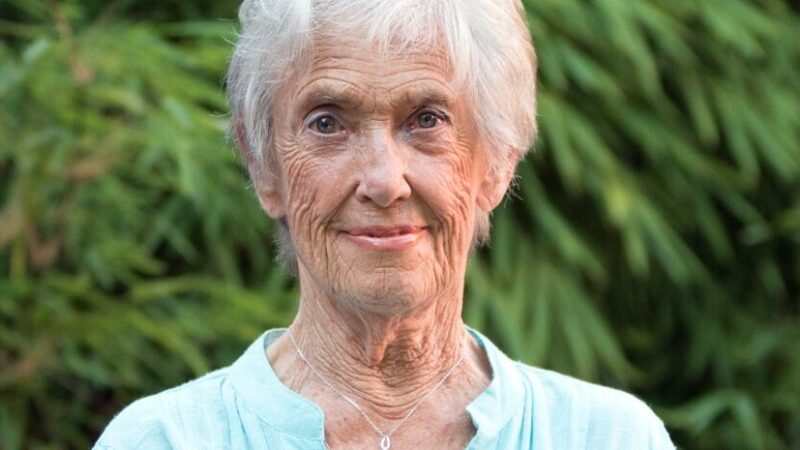
Dr. Joanna Macy is an ecophilosopher, activist, and Buddhist scholar who has been at the forefront of movements for social justice and environmentalism for more than five decades. She founded the Work That Reconnects Network and has written many books, including World as Lover, World as Self. In this episode of Insights at the Edge, Tami Simon speaks with Joanna about hope in times of chaos and dissolution, as well as how hope is something we do rather than just feel. Joanna and Tami discuss apathy as a refusal to face the inevitability of suffering and why the state of the environment can be especially heartbreaking. Finally, Tami and Joanna talk about our relationship with the earth as a natural birthright—one that is actually the source of all our energy and joy.

Tony Schwartz and Kimberly Manns: The Reckoning: Seein...

Who could you become if you fully allowed yourself to accept what you really want and go for it without reservation? What’s standing in your way? With their audio learning program, The Reckoning, celebrated leadership consultants Tony Schwartz and Kimberly Manns invite you to a deep-dive exploration of why you are the person you are, and who you can be—as a human being and a leader in today’s world. 

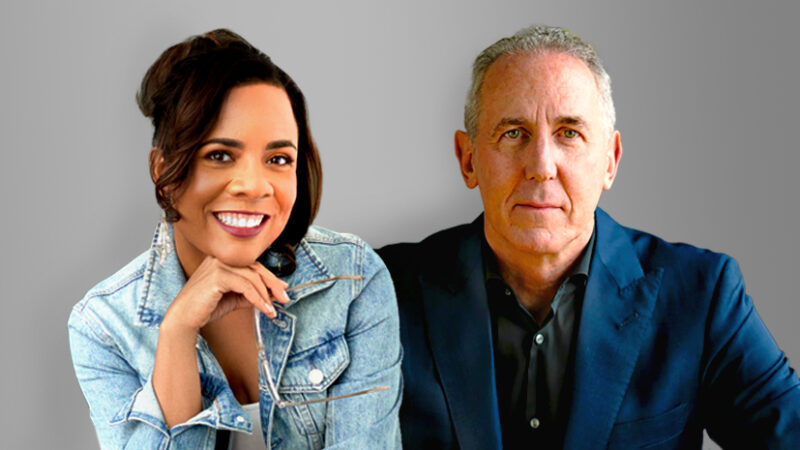
In this podcast, Tami Simon speaks with Schwartz and Manns about their empowering seven-session audio program and their own journeys through the material they continue to learn even as they teach it. Give a listen as they discuss childhood development and confirmation bias; white male privilege and power; superiority, worthiness, and “defender” personas; the insecurity of oscillating between better than and less than; the three selves framework; encountering your core self; IFS (Internal Family Systems) therapy; the Enneagram; somatic work and trauma healing; the brave act of personal evolution called “the reckoning”; re-parenting yourself; the profound starting place called noticing; becoming a “chief energy officer”; the collective reckoning for the human species at this time; upgrading the human operating system; the four intelligences—the mind, the heart, the body, and the spirit; the qualities of one who reckons; responsibility and ownership; and more.

Note: This episode originally aired on Sounds True One, where these special episodes of Insights at the Edge are available to watch live on video and with exclusive access to Q&As with our guests. Learn more at join.soundstrue.com.

The Basics of Natural Awareness 101: Dropping Objects

The Basics of Natural Awareness: Dropping Objects Header Image

There are three deliberate mental shifts you can make during classical mindfulness meditation that can help point you toward natural awareness: relaxing effort, broadening attention, and dropping objects.

If you have not read the previous two steps, you can find Relaxing Effort and Broadening Attention on our blog.

Dropping Objects

When you’re practicing classical mindfulness meditation, probably the most important shift you can make to invite in natural awareness is to move your attention from objects to objectless-ness. Now what on earth does that mean?

Objects of meditation are, simply put, the things we focus on, such as the breath, body sensations, emotions, thoughts. An object can also be something outside us, like another person, sights, or sounds. Any kind of thing can be an object of meditation. Taking something as the object of our awareness is basic to classical mindfulness meditation, as you saw in the previous chapters. Focusing on objects and attending to them is generally how we live our life as well.

Objectless awareness, typically developed in meditation and uncommon in daily life, is when we focus less on the objects of awareness and instead focus on the awareness itself. There will be objects arising in our meditation—thoughts, emotions, sensations, for example—but since they are not the focus, they are less distinct, and we become aware of awareness itself. So instead of our anchor being our breath, for example, our anchor is awareness itself.

People tend to experience objectless awareness in three different ways: that in which everything is contained, that which knows, and that which just is.

That in which everything is contained. Broadening attention from a narrow focus to a more panoramic perception is closely aligned with the experience of objectless awareness as that in which everything is contained. You will notice me using analogies like “Our mind is like the sky, and everything in it is like clouds floating by.” This helps me convey the idea that awareness contains everything. So when we turn our attention to the sky-like nature of our mind, noticing the boundless space around things, we are noticing the field of awareness in which everything is contained. Some people experience objectless awareness in this way.

Think about looking out a window at a busy street. When we look out the window, we take in the full view in a relaxed way. Rather than specifically focusing on individual vehicles, we somehow are aware of everything that is happening simultaneously, and our vision seems to contain everything.

That which knows. The second idea that objectless awareness focuses on is a little tricky. Most of us are used to focusing on objects when we meditate, but what happens when we make the shift to noticing that which is being aware—to seeking the knower? Oftentimes this shift can feel quite joyful and freeing. Many of the practices in the book move us toward awareness of awareness, as you will see. If you start searching for the knower, what do you find?

The idea is that we can notice things, and we also notice the thing that notices things. We can take our attention from an outward focus on objects and turn it inward, as if we are reversing our attention—trying to move from that which we are aware of, to that which is aware of what we are aware of.

This is excerpted from The Little Book of Being: Practices and Guidance for Uncovering Your Natural Awareness by Diana Winston.

Little Book of Being

Diana Winston headshot

Diana Winston is the director of Mindfulness Education at UCLA Semel Institute’s Mindful Awareness Research Center (MARC) and the coauthor, with Dr. Susan

Smalley, of Fully Present: The Science, Art, and Practice of Mindfulness. She is a well‑known teacher and

speaker who brings mindful awareness practices to the general public to promote health and well‑being. Called by the LA Times “one of the nation’s best‑known teachers of mindfulness,” she has taught mindfulness since 1993 in a variety of settings, including hospitals, universities, corporations, nonprofits, schools in the US and Asia, and online. She developed the evidence‑based Mindful Awareness Practices (MAPS) curriculum and the Training in Mindfulness Facilitation, which trains mindfulness teachers worldwide.

Her work has been mentioned or she has been quoted in the New York TimesO, The Oprah Magazine; Newsweek; the Los Angeles TimesAllure; Women’s Health; and in a variety of magazines, books, and journalsShe is also the author of Wide Awake: A Buddhist Guide for Teens, the audio program Mindful Meditations, and has published numerous articles on mindfulness. Diana is a member of the Teacher’s Council at Spirit Rock Meditation Center in Northern California. She has been practicing mindfulness meditation since 1989, including a year as a Buddhist nun in Burma. Currently, Diana’s most challenging and rewarding practice involves trying to mindfully parent an eight‑year‑old. She lives in Los Angeles.

For more information, visit dianawinston.com and marc.ucla.edu.

Buy your copy of The Little Book of Being at your favorite bookseller!

Sounds True | Amazon | Barnes & Noble | Indiebound


The Basics of Natural Awareness: Dropping Objects Pinterest

Diane Poole Heller: We Are Designed for Connection

Diane Poole Heller is a licensed therapist and noted expert in trauma, integrative healing, and secure attachment. With Sounds True, she has published The Power of Attachment: How to Create Deep and Lasting Intimate Relationships. In this episode of Insights at the Edge, Tami Simon speaks with Diane about the different attachment styles that we pick up in childhood and carry subconsciously into our adult behaviors. Diane explains how these attachment patterns are engraved in both the mind and body, highlighting the long-term effects of trauma and neglect. Tami and Diane discuss strategies for coping with and healing from insecure and disorganized childhood attachment. Finally, Diane shares a visualization practice for disidentifying from generational trauma and strategies for increasing our innate connection to others. (67 minutes)

Connie Zweig: “Meeting One of the World’s Leading ...


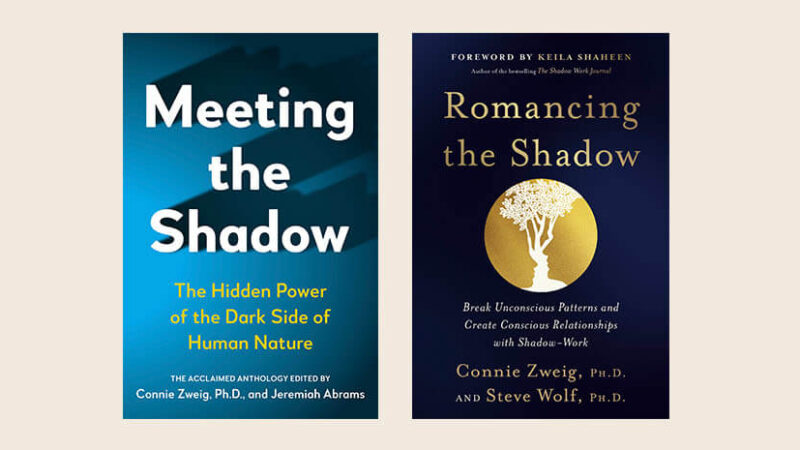
As a new generation joins the search for understanding and meaning in our ambiguous and uncertain world, there’s a growing resurgence of interest in the Shadow—Carl Jung’s famous term for the aspects of ourselves that hide in our unconscious yet often drive behaviors we’d rather not repeat. In this podcast, Tami Simon speaks with acclaimed Jungian therapist and author Dr. Connie Zweig about her life’s mission to help us grow in self-awareness and move toward personal and collective healing by learning how to work with the Shadow. 

This aha-moment-filled conversation explores: meeting the Shadow on the spiritual path; ego formation during childhood; the concept of repression and the problem with the closet metaphor; why the Shadow hides—and when it erupts; “romancing the Shadow”; three cues to explore with respect to compulsive behaviors; “Shadow characters” and the practice of personifying aspects of the Shadow; the intergenerational aspect; engaging Shadow work at midlife; the superego; projection in relationships; sharing our secrets; money, sex, and power; shifting from a persona marriage to a Shadow marriage; the Vedanta tradition and the teaching on leshavidya, “the remains of ignorance”; the moral development missing in many spiritually advanced practitioners; illusions, idealizations, and archetypal projections; why the first reaction to meeting the Shadow is denial; Shadow projection in the politics of our times; step one: self-examination; bridging inner work and outer work wisely; how to practice “holding the tension of opposites”; cultivating nonduality in your own psychology; the “third thing” and the transcendent function; and more.

Note: This episode originally aired on Sounds True One, where these special episodes of Insights at the Edge are available to watch live on video and with exclusive access to Q&As with our guests. Learn more at join.soundstrue.com.

Reginald A. Ray: Dark Retreat

Tami Simon speaks with Reggie Ray, a teacher and scholar in the Tibetan Buddhist tradition with four decades of experience with the practice of meditation. He’s the founder and spiritual director of Dharma Ocean and an author whose writings include Touching Enlightenment, Indestructible Truth, and Secret of the Vajra World, as well as several audio programs including Your Breathing Body and Meditating with the Body. Reggie is also a teacher with whom Tami has studied closely for the past eight years. Reggie discusses his recent experiences in dark retreat as well as the true goal of meditation and Reggie’s view of the meaning of spiritual practice. (51 minutes)