Jeff Foster is a spiritual teacher whose methods do not belong to any one lineage or style. He teaches a form of total acceptance—a dismantling of the armor of the heart so that we can live vibrantly in the here and now. With Sounds True, Jeff has published several books and audio programs, including The Way of Rest: Finding The Courage to Hold Everything in Love. In this episode of Insights at the Edge, Jeff and Tami Simon speak on the obstacles that stand between us and rest, and how learning to abide in discomfort is a difficult but necessary step to achieving true rest. Reading an excerpt from his newest book, Jeff explains why it’s actually a daring act to choose to rest. Finally, Jeff and Tami talk about depression and the desire to die, and why that desire can be a gateway to a deeper, richer understanding of the self. (71 minutes)
Steven Hayes is a professor, the chair of the Department of Psychology at the University of Nevada, and the author of more than 35 books and 500 scientific articles. The cofounder of the acclaimed Acceptance and Commitment Therapy (known as ACT), Steven is a contributor to the Sounds True book The Self Acceptance Project: How to Be Kind and Compassionate Towards Yourself in Any Situation. In this episode of Insights of the Edge—which previously aired as part of an interview series on self-acceptance—Tami Simon and Steven discuss his experiences living with a panic disorder at a young age, and how his own bouts with anxiety shaped his clinical studies. They talk about the practice of perspective-taking and how it can be a powerful bulwark against self-recrimination. Finally, Steven offers his perspective on spirituality and how that perspective informs the core tenets of Acceptance and Commitment Therapy.
(42 minutes)
A.H. Almaas is the pen name of of Hameed Ali, the author of more than 14 books, founder of The Ridhwan School, and creator of the “the Diamond Approach” of spiritual inquiry and development. With Sounds True, Hameed has created a new online course called Endless Enlightenment: The view of totality in the Diamond Approach. In this episode of Insights at the Edge, Tami Simon and Hameed converse on the markers one can recognize on the path to enlightenment—and beyond. They talk about how nondual realization isn’t the endpoint of the spiritual path, and how setting goals for that journey may do more harm than good. Finally, Hameed explains his teaching of the view of totality, its development over a span of 20 years, and why he’s decided to share it now with the world.
(67 minutes)
Many people know about meditating during the day, but few are aware of the “nocturnal meditations.” They’ve been around for thousands of years, tucked away under the blanket of darkness. Until recently, the nocturnal practices have been secret, deemed too subtle for the West. But with the mindfulness revolution in full swing and meditation now in the public domain, these “dark” practices are finally coming to light in the modern world. What surprises most people is how deep and vast these nocturnal meditations are—and how applicable to daily life.
The practices start with lucid dreaming, which is when you wake up to the fact that you’re dreaming while still remaining in the dream. Once it was scientifically proven in 1975, lucid dreaming has gained traction in the West. Initially, lucid dreaming isn’t much of a meditation. Most people use it to indulge their fantasies—to fulfill their wildest dreams in the privacy of their own mind. At this entry level, lucid dreaming is the ultimate in home entertainment, where you become the writer, producer, director, and main actor in an Academy Award-winning production of your own mind.
But the higher levels of lucid dreaming have extraordinary psychological and even physical benefits. You can transform nightmares, rehearse things, resolve interpersonal issues, even improve athletic performance. Neuroscience has shown that you can use your mind to change your brain (neuroplasticity), and modern dream research continues to show that you can use your dreaming mind to enhance a host of daily psychological and physical activities. Lucid dreaming at this higher level is like going to night school.
With some proficiency in lucid dreaming you can progress into dream yoga,which is when dreams are used for spiritual transformation. While lucid dreaming is largely about self-fulfillment, dream yoga is all about self-transcendence. It’s been around for thousands of years, and the Buddha (the “awakened one”) was really the ultimate lucid dreamer.
Dream yoga, like lucid dreaming, progresses from beginning to advanced stages. A beginning yogi starts by addressing the question, “What are dreams made of?” They’re made of your mind. So, by working with your dreams at this refined level, you’re working to transform your mind. One early stage of dream yoga involves transforming the objects in your dreams, like changing a dream flower to a dream chair. In so doing, one discovers the malleable nature of mind and the truth of the saying, “Blessed are the flexible, for they are never bent out of shape.” This is the “yoga” or “stretching” part of dream yoga, which develops increased pliability of mind.
One amazing quality of both lucid dreaming and dream yoga is that the benefits of what you do in your dreams don’t stay tucked into the nighttime mind. By changing a flower into a chair in your dreams (not as easy as it sounds!), you realize you can change anger into compassion in your life. In other words, your emotional states are not as solid as you think. They’re essentially as solid as a dream, and therefore as workable.
At higher levels of dream yoga, you use the “example dream” or “double delusion” of the nighttime dream to wake you up from the “real dream” or “primary delusion” of daily life—which is precisely what the Buddha did. You eventually come to the shattering conclusion that this is a dream. When seen properly—when you’re lucid to it—your waking reality is no more concrete than a dream. So a dream yogi lives by the maxim, “This is a dream; I am free; I can change.” It’s a liberating wake-up call, with profound implications for all of life.
For most people, lucid dreaming and dream yoga are enough. But for those wanting to go to “graduate school,” one can advance into sleep yoga(related to yoga nidra in Hinduism). As incredible as it may sound, this is when you learn how to become lucid in deep, dreamless sleep. In Buddhism this is called “luminosity yoga” and adheres to the teaching that fundamentally there is no darkness within—only light unseen. Sleep yoga turns on this nightlight, a luminosity so radiant that it eventually illuminates even the day. Scientists are currently trying to prove this outrageous claim with advanced meditators and dream yogis.
“Lucidity” is a code word for awareness. So, by working with any of these three practices, you’re working to cultivate greater awareness. And what doesn’t benefit with more awareness? All three of these practices engage the principle of bi-directionality, which is all about opening a two-way street between the daytime and nighttime mind. What we do during the day affects how we sleep and dream; and what we do when we sleep and dream affects how we live during the day. By becoming lucid to our dreams and to dreamless sleep, we’re secretly becoming more lucid or aware of our daily lives. So lucid dreaming leads to lucid living.
As fruitful as these three practices are, there is one final step for those wanting to take the deepest dive. With some proficiency in sleep yoga, one can advance into bardo yoga(“gap” yoga), which is when the darkness of sleep is used to prepare for the darkness of death. In Greek mythology, Thanatos (the god of death) and Hypnos (the god of sleep) aren’t just brothers—they’re twins. Death and sleep are intimately related. In Buddhism, death is referred to as “the dream at the end of time.” So bardo yoga, which is a Tibetan contribution, engages the tenet that dreamless means formless, and formless means deathless. Bardo yoga therefore introduces you to your formless/deathless nature—to who you really are. It points out the deepest part of you that doesn’t get old, sick, or die. Bardo yoga is a “dead end” practice that points out eternal life.
We spend a third of our lives in sleep. If you live to be 90, you’ve slept for 30 years. Imagine what you could do if you had even a fraction of that time. We spend 25% of our sleep time in dreams, which adds up to about a month a year. Think of what you could do if you added a month to each year! That’s real “overtime.”
The nocturnal meditations are cutting-edge practices. Neuroscientist Matthew Walker writes, “It is possible that lucid dreamers represent the next iteration in Homo sapiens’ evolution.” How evolutionary does that make lucid sleepers, let alone lucid “die-ers”? Do you want to be the first one on your block to take the lead in evolution? Then open your eyes to the dark, engage the nocturnal meditations, and discover the leading light within.
Shannon Kaiser is the bestselling author of five books on the psychology of happiness and fulfillment, including The Self-Love Experiment, Adventures for Your Soul,and Joy Seeker. As a life coach, international speaker, and retreat leader, she helps people align with their true selves so they can live their highest potential.
In this podcast, Sounds True founder Tami Simon speaks with Shannon about her new book, Return to You, and how we can embrace every part of ourselves and realize “an unshakable inner peace.” They also discuss the spiritual lesson that “if you don’t go within you go without,” identifying your particular intuitive style and tapping your innate wisdom, working with anxiety and shifting from fear to love, the practice of “alchemizing fear” so as not to bypass it, ways to amplify our sense of love and connection, why in order to really know something you must know its opposite, personal expansion and reclaiming your power, how to “turn your resistance into assistance,” cultivating an “activation mindset” to sustain calm, and much more.
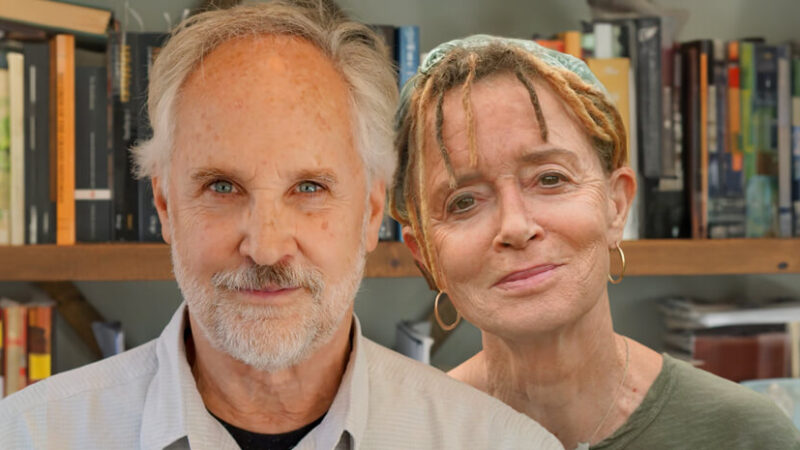
Many people have written and taught about the inner critic. But few have illuminated the subject with an approach as refreshing, innovative, and accessible as the one Neal Allen presents in his new book, Better Days—which includes a foreword by his wife, the celebrated writer Anne Lamott.
In this podcast, Tami Simon sits down with the uniquely talented, often quirky, and always insightful couple to hear how they’ve come to understand and reframe the sneaky inner voice that manifests as an unnecessary source of torment for millions of people. Give a listen as they discuss: vulnerability as a path to relationship—and to the divine; radical silliness; the protective role of the superego (and why it’s so reluctant to give up control); the empty chair technique in gestalt therapy; giving your inner critic a new assignment in life; reclaiming the value of curiosity; destroying your false identities; anxiety and its source; tips for identifying the sometimes subtle voice of the inner critic; the futility of arguing with your inner critic; exploring the truth of who you really are; the “saying yes” practice; acceptance and surrender; and more.
Note: This episode originally aired on Sounds True One, where these special episodes of Insights at the Edge are available to watch live on video and with exclusive access to Q&As with our guests. Learn more at join.soundstrue.com.