Customer Favorites

Jack Kornfield and Tara Brach: Big Insights: The Power...

Jack Kornfield and Tara Brach are two of the leading authorities on mindfulness and meditation in the West. Jack is the bestselling author and teacher widely credited with combining mindfulness with modern western psychology. Tara has been teaching meditation for more than four decades and is the author of Radical Acceptance and True Refuge. In this special edition of Insights at the Edge originally recorded in 2015, Tami Simon sits down with both Jack and Tara to discuss the big insights that form the foundation of mindfulness practice. They speak on the concept of awareness itself and how to distinguish “awareness” from “thinking.” Tara and Jack share some of the everyday benefits of a meditation practice, including personal clarity and more conscious relationships. Finally, Jack, Tara, and Tami have a frank conversation on how awareness training could affect the state of the world. (60 minutes)

DIY Rose Essence and Heart Breathing Ritual

The heart chakra is the central integrating chamber of the chakra system. Through the healing power of love, all things eventually find their way to connection and wholeness. 

ANODEA JUDITH

Heart Medicine Rituals

The greatest lesson I have learned so far is to exist within my heart. This is a lifelong practice for me because, like many, I was not taught to inhabit my heart space. On a physical level, the general collective is not doing so well in our hearts. This is evidenced by the stark reality that heart disease is the leading cause of death worldwide. This high incidence of disease points to a deeper situation of the heart, but in order to be open to the possibility that more profound heart healing is necessary and possible, we must open our minds to a more metaphysical or energetic interpretation of what the heart is and what it does. Ancestrally, the heart held a much higher evolutionary significance, and as our consciousness split, we moved from inhabiting our hearts to glorifying our minds. Perhaps this disconnect can illuminate some clues for us to consider to reclaim more balance within our hearts, ourselves, and our world. 

Vibrationally, the heart contains the strongest electromagnetic field of any organ in the body. Transference of heart energy can occur in close proximity with another human or animal; and if you apply the theories of quantum entanglement and wave function collapse, transference of heart energy can resonate beyond space or time. Plants and the elements, too, can have a positive entrainment effect on the heart, reiterating the interconnectedness of all life and the organic balance nature engenders. In both traditional Chinese and Tibetan medicines, the heart is the mind. In TCM, grief is stored in the lungs and closely related to the heart. The Hopi defined harmony as one’s heartbeat in resonance with others and the Earth.

Our liberation is tied to the heart. The cost of liberation is unique to every person and is cosmically linked to each of us. The price of liberation varies for each individual, but we are given choices: in what we think, what we feel, what we believe, how we want to be. The inability to see choice is the unconsciousness of the fear-based toxic masculine that seeks to keep us disconnected and disempowered. 
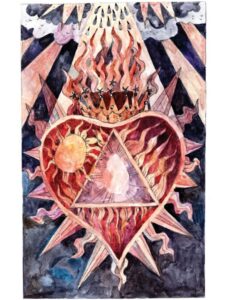
Image 1

Our liberation depends largely on our ability to love unconditionally. Unconditional love means loving without circumstance or codependence. This can take different forms, from exiting a toxic relationship to taking more care of yourself. And it doesn’t stop there. If you want to get really free, you have to love yourself no matter what, and love all beings no matter what. Tall order? Yes. Impossible? No! While humans are conditioned to be in separation, plants (and animals) hold only unconditional love for all life. There are people on this Earth who radiate unconditional love, and when you are in their company, your heart is completely relaxed and open. For instance, my heart feels completely free when I am with people and animals who love me unconditionally. My heart also feels free in this way when I am in nature. Can you think of anyone who loves you unconditionally? Or perhaps it’s easier to think of an animal or pet? What if you loved yourself and everyone like that? What if you loved all your uncomfortable parts, illnesses, and neuroses like that?

EXERCISE: Making a Rose Essence and Heart Breathing Exercise

There are a few plants whose application is almost universal, and the rose is one such flower. Roses hold the frequency of unconditional love and have an affinity for the heart chakra. This ritual works best with either a wild growing or organically cultivated rose; it can be any species within the Rosa genus. Some of the lower vibratory states that can be addressed with rose include grief, loss, heartbreak, depression, and panic. 

This ritual is very simple. You’re going to combine the process for making your own medicine (see a simple how-to video here) using the rose of your choice, with the heart breathing exercise that follows. The heart breathing can be done while the flowers are in the water, working their magic. The heart energy you engage during the medicine-making process will become part of the energetic signature of your flower essence. After you bottle it and make the dosage bottle, take a few drops and see what you notice around your heart. Be sure to notate your findings. You now have a rose flower essence for your apothecary whenever you or someone else needs it. 

HEART BREATHING RITUAL

After you have placed the flowers in the bowl with the water, sit comfortably on the ground, if possible. Close your eyes or set your gaze low. Place both hands over your heart and begin to breathe into the heart space. Visualize the rose you are working with. Notice how the breath moves in and out of the heart—not forcing the air, just allowing it to move. See if you can sense into how the heart is feeling—in the front, in the back, all sides. Be sure to breathe into the back of the heart space. Notice how the heart feels when you place your awareness on it. See if it’s okay to allow whatever is arising, witnessing without judgment. 

After a few minutes, begin to bring the heart back into a neutral position. Thank your heart and the spirit of rose for sharing with you. Feel your body making contact with the Earth, deepen the breath, and slowly open your eyes.

The video on how to make your own flower essence medicine can be found here.

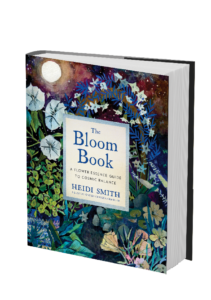
This is an excerpt from The Bloom Book: A Flower Essence Guide to Cosmic Balance by Heidi Smith.

Heidi Smith Bio

Bloom Book

Heidi Smith, MA, RH (AHG), is a psychosomatic therapist, registered herbalist, and flower essence practitioner. Within her private practice, Moon & Bloom, Heidi works collaboratively with her clients to empower greater balance, actualization, and soul-level 

healing within themselves. She is passionate about engaging both the spiritual and scientific dimensions of the plant kingdom, and sees plant medicine and ritual as radical ways to promote individual, collective, and planetary healing. She lives in Brooklyn, New York, with her partner and two cats. For more, visit moonandbloom.com.


Learn More

Sounds True | Amazon | Barnes & Noble | Bookshop

Communicating with ‘Calmfidence’

Patricia Stark is a personal coach and certified body language trainer. With Sounds True, she’s released the book Calmfidence: How to Trust Yourself, Tame Your Inner Critic, and Shine in Any Spotlight. In this episode of Insights at the Edge, Tami Simon talks with Patricia about what it takes to cultivate “calmfidence”—a combination of robust confidence and inner calm that grounds you no matter the circumstances. Patricia details her own journey from a painfully shy childhood to becoming a sought-after speaker. Tami and Patricia discuss tools and tricks for building calmfidence, including on-the-spot exercises such as the Snow Globe or the Sack of Potatoes practices. Finally, they talk about the hidden advantages of nervousness, the necessity of active listening, and why each of us has a personal truth waiting to be shared with the world.  

Elaine Gibson: Learning from Family Systems Theory

How do you view your family of origin? Our family dynamics have a tremendous influence on how we feel about ourselves, show up in the world, and relate to others. When these dynamics are subconscious, we remain bound and encumbered by them. But when we bring them to the surface, we can engage our power to change and grow. 

In this thought-provoking podcast, Tami Simon speaks with marriage and family therapist Elaine Carney Gibson about her new book, Your Family Revealed: A Guide to Decoding the Patterns, Stories, and Belief Systems in Your Family. They discuss family systems that serve each individual, making sacrifices versus being sacrificial, the metaphor of the labyrinth, healing emotional wounds, what a healthy functioning hierarchy looks like, the advice “wear beige and be quiet,” setting and maintaining clear boundaries, using disagreements as a tool for growth and connection, the parentified child, the phenomenon of triangulation in relationships, intergenerational trauma, the future of family therapy, and more.

Judson Brewer: Ending Worry Addiction and Unwinding An...

Do you have a habit you just can’t break no matter how hard you try or how badly you want to? Renowned addiction psychiatrist, neuroscientist, and bestselling author Judson Brewer—or Dr. Jud, as he’s widely known—has helped millions of people find freedom from excessive worry, overeating, cigarette smoking, and many other challenging behaviors. In this podcast, Tami Simon speaks with Dr. Jud about his life-changing books—The Craving Mind, Unwinding Anxiety, and most recently, The Hunger Habit—and his compassionate and respectful approach to habit change. 

Enjoy this empowering and “aha!-inducing” conversation about breaking the cycle of anxiety; the process of negative reinforcement; fear of the future vs planning for the future; the three elements of a habit loop: trigger, behavior, reward; the pros and cons of distraction; distress tolerance—a survival skill for our times; changing the reward value of a behavior; karma and reinforcement learning; exploring gratification to its end; the brain as a smoke detector; recalibrating the nervous system after trauma; the concept of dependent origination; the superpower of interest curiosity; hedonic hunger vs homeostatic hunger; paying attention to your “pleasure plateau” when it comes to food; awareness as the key ingredient for behavior change; the mantra “What’s this?”; and more.

Note: This episode originally aired on Sounds True One, where these special episodes of Insights at the Edge are available to watch live on video and with exclusive access to Q&As with our guests. Learn more at join.soundstrue.com.

Personal, Interpersonal, Transpersonal

I was recently sitting in the audience of a talk by a spiritual teacher who was pointing out, again and again, the timeless nature of being. Although I could feel the depth and profundity of the eternal moment, at a certain point, I noticed myself feeling contracted and frustrated. I thought to myself, “What about focusing on interpersonal relationships and helping us develop skills for being intimate with other people and communicating well at work, that type of thing? I am sick of timeless being!”

And then I remembered that some people are what could be called “subject matter experts” and everyone can’t be good at everything. And that the way I could benefit the most from this talk was to relax into timelessness and learn from this teacher what he is gifted at transmitting and communicating. Fortunately, that approach worked, and my critical mind relaxed.

However, I also started reflecting on something I read in a book by Robert Augustus Masters. Robert is a new author with Sounds True and has written a new book on Emotional Intimacy, and created a new audio series called Knowing Your Shadow. Robert talks about the “personal, interpersonal, and transpersonal” dimensions of experience. And when I read his description of these three different aspects or dimensions, I just loved it! I notice that whenever people just talk about the “transpersonal”, about what is formless, I begin to long for the personal and interpersonal. And when people just talk about the “personal”, about their challenges and woes, I begin to long for a bigger view that doesn’t place any limits anywhere. Maybe I am just a chronic complainer?

But actually, I think it is more than that. My sense is that the personal, interpersonal, and transpersonal are always all three happening simultaneously. And if we leave any dimension out (in a chronic type of way), we are missing something. And when we include all three —  how we are feeling individually, how we are experiencing inter-relating with others, and what it is like to transcend any sense of self and other and experience pure being – then we are experiencing a type of wholeness that leaves nothing out.

So I guess we could say I am happy in wholeness and cranky when transcendence is favored instead of recognized as one dimension of multi-dimensional being. And I feel cranky because I have seen people walk out of these transcendence-focused talks without any clue about how to work with difficult emotional states when they arise (and as we all know, they arise). Teachings that are wholly focused on the transpersonal dimension can be a breeding ground for what Robert Augustus Masters calls “spiritual bypassing” – using our spirituality to avoid facing aspects of our experience, particularly difficult emotional experiences. Robert’s focus is on “emotional literacy”, that we can learn to be fluent with all of our emotions, appreciating their nuances and what is being called forth in us in any given situation. To learn more about Robert’s work, you can check out this two-part podcast I did with him recently on Emotional Intimacy, here and here. Listening to Robert, I felt the opposite of “cranky”; I felt whole.

emotionalintimacy