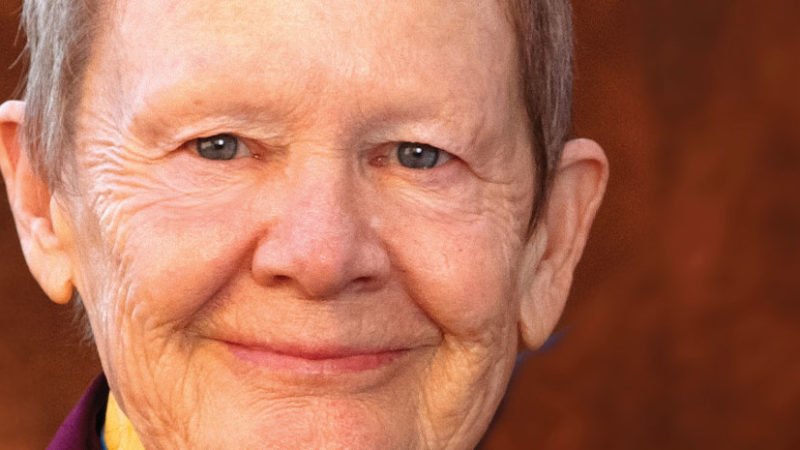
What if the bravest thing you can do right now is refusing to close your heart? This week, Tami Simon speaks with Tara Brach—beloved meditation teacher, clinical...
Lorem ipsum dolor sit amet, consectetur adipiscing elit, sed do eiusmod tempor incididunt ut labore et dolore magna aliqua. Ut enim ad minim veniam, quis nostrud exercitation ullamco.
Tami Simon’s in-depth audio podcast interviews with leading spiritual teachers and luminaries. Listen in as they explore their latest challenges and breakthroughs - the leading edge of their work.
Join the New York Times bestselling author of The Untethered Soul, The Surrender Experiment, and Living Untethered for this free series of curated teaching sessions, recorded at his Temple of the Universe yoga and meditation center.
People suffer because they try to control the outside world to fix the disturbances they carry inside. Fear and desire are natural emotions, but when we resist or cling to them and project them into the future, they distort perception and drive poor decisions. True wisdom comes from letting experiences pass through without leaving lasting impressions, allowing decisions to arise from clarity rather than from fear or desire.
What if the secret to better writing isn’t more technique—but more truth?
This week, Tami Simon speaks with Anne Lamott—beloved author of Bird by Bird, Traveling Mercies, and more than twenty books—and her husband Neal Allen, writer and spiritual coach, about their new collaborative book, Good Writing: 36 Ways to Improve Your Sentences. Together, they unpack the craft of writing as both a technical discipline and a deeply human practice.
Join Tami, Anne, and Neal to explore:
The three-draft process: from the “child’s draft” to the “dental draft”—and where the real work of writing begins
How to find your natural writing voice and stop trying to sing someone else’s song
Writing as melody, rhythm, and harmony—and what the Beatles can teach us about our own creative strengths
Why the rules of good writing are really about respect: for the reader, for truth, and for your own story
The power of writing “toward the really real”—and why plain-spoken, heart-centered writing connects more deeply than literary pyrotechnics
Rule 33: writing the hard stuff—life, death, mystery, and the things that are difficult to say but essential to try
Why writing is collaborative, not solitary—and how talented editors and trusted readers can save your work (and your skin)
Whether you’re a lifelong writer or someone who has always wanted to tell your story, Anne and Neal offer practical tools and generous encouragement to help you get your words on the page—and make them matter.
Listen now and start writing toward the really (really) real.
This conversation offers genuine transmission—not just concepts about awakening, but the palpable presence of realized teachers exploring the growing edge of spiritual understanding together. Originally aired on Sounds True One.
Consciousness is the experiencer of all things, and spiritual growth means realizing you are that consciousness, not what you are conscious of. When our awareness is consistently distracted by objects, be they outside or in, we begin to identify with them, which creates lasting inner impressions. From these, we form the ego with its constant attempts to control life. Liberation comes through inwardly relaxing, letting go, and remaining in witness consciousness, allowing stored disturbances to dissolve and restoring us to the natural state of freedom and oneness.
Pema Chödrön is an American-born Buddhist nun who currently resides at Gampo Abbey in Nova Scotia. Her many publications include How to Meditate, Getting Unstuck, and Fail, Fail Again, Fail Better. This special episode of Insights at the Edge—originally broadcast as part of the Living with Vulnerability online program—features a deeply heartfelt conversation between Pema and Tami Simon. Here they discuss why it can feel so hard to live with your innermost self open to the world. Pema emphasizes that choosing to be vulnerable brings a more genuine and fulfilling experience of your daily life. Finally, Tami and Pema talk about listening to the inherent lessons of your emotions and why acceptance of the moment will open you to ever-greater opportunities for joy and enrichment.(66 minutes)
Terri Cole is a licensed psychotherapist and global leading expert in personal empowerment. For two decades, she has worked with some of the world’s most well-known personalities, from international pop stars to Fortune 500 CEOs. She has a gift for making complex psychological concepts accessible and then actionable. With Sounds True, Terri Cole is the author of Boundary Boss: The Essential Guide to Talk True, Be Seen, and (Finally) Live Free. In this podcast, Sounds True founder Tami Simon speaks with Terri about how absolutely critical it is to have good boundaries. Terri shares the personal journey that brought her into this work, explores where our boundary blueprints come from, and gives us her five keys for self-mastery. Together Tami and Terri discuss why having healthy boundaries might very well be the apex of how humans can learn to put truth and truth-telling at the very center of our lives.
Dr. Lise Van Susteren is a psychiatrist in private practice in Washington, DC, and has served as an assistant clinical professor of psychiatry at Georgetown University. With her writing partner, Stacey Colino, she has authored the new book Emotional Inflammation: Discover Your Triggers and Reclaim Your Equilibrium During Anxious Times. In this episode of Insights at the Edge, Dr. Van Susteren joins Tami Simon to discuss the modern condition she calls emotional inflammation, the primary drivers behind it, and her innovative RESTORE process for coming back into balance and wholeness in our lives. (1 hour, 2 minutes)
We don’t realize how tightly confined we are to our personal mind—its thoughts, beliefs, preferences, past experiences, and suppressed emotions. This represents such a tiny subset of reality compared to the vastness of what actually exists. Spirituality is about transcending that limited frame of reference and opening up to a world that is not filtered through our ego. Every moment is part of a vast cosmic unfolding, and the key to joy and spiritual freedom lies in expanding awareness beyond oneself.
Meditation alone cannot bring lasting peace into this world. This is because we return from meditation to the same deeply seated, unresolved disturbances we’ve been storing in the mind. True liberation comes by relaxing through and releasing these disturbances rather than struggling with them on a daily basis. As we purify the mind, divine energy (Shakti) rises naturally, lifting our consciousness into our true nature—oneness with all of creation.
We misperceive life and spirituality by fixating on tiny fleeting experiences and projecting personal meaning onto them. We build our entire self-concept and emotional world out of a narrow slice of reality that we selectively store in the mind—what we liked, disliked, feared, or attached to—while ignoring the vastness of the universe unfolding all around us. True spiritual growth lies in learning to accept, honor, and handle reality as it is, with openness and reverence. By releasing our fixation on our own mind, we can awaken into joy, love, and freedom, becoming examples of great light that can uplift the world through our presence.
Spiritual liberation is not about attaining extraordinary experiences; it is about releasing the internal blockages that keep us from a permanent state of well-being. The cause of suffering is not life—it is our belief that life must be what we want in order for us to be okay. We can learn to let go of this constant sense of lacking by releasing the stored blockages from our past. When this purification takes place, we become open, peaceful, and capable of living with unconditional joy regardless of circumstances.
True spiritual masters are not mystical icons, they are beings who have transcended the distractions of mind and emotion to rest in the constant ecstasy of pure consciousness (Sat Chit Ananda). This is in drastic contrast to the suffering we incur by allowing our preference-driven mind to control our lives. The path back is simple but profound: begin by noticing the reactive nature of your mind, then work on relaxing and releasing those impulsive reactions. Stop always needing life to match your preferences, and instead, learn to honor and appreciate life as a miraculous gift.
Spirituality is about realizing that all experiences, thoughts, and emotions are just objects that consciousness is aware of. It is awareness that gives meaning to the object, but we get fixated on the object itself. By learning to remain centered as the objects of consciousness pass before you, you can stop being pulled down into suffering and begin to rest naturally in your true seat of Self. Ultimately, when you surrender completely, your individual consciousness merges into Universal Consciousness, revealing a state of boundless peace and love.
“Do you mind?” We “mind” everything, from traffic to childhood memories, and this habitual minding creates endless mental ripples that disturb our peace. Spiritual growth is not found through adding practices but through subtracting resistance, through relaxing and letting go of what disturbs us. Every moment becomes an opportunity to free ourselves by choosing not to mind, and over time this unlocks profound freedom and transformation.
In most cases, the quality of your life is not determined by external circumstances but by your own mental dialogue. Your awareness is trapped by thoughts, desires, and past experiences, which dictate your ability to enjoy life. The key to liberation is learning to let go of these mental preferences, rather than trying to manipulate external circumstances to satisfy the mind. Through awareness and conscious practice, you can learn to embrace life’s experiences and explore the higher states of your being.
There is a profound relationship between beliefs, faith, and direct spiritual experience. Beliefs are constructs of the human mind and are not truths; they can change. Genuine spiritual understanding comes from direct experience rather than intellectual belief. Experiencing the relationship between energy and consciousness serves to bridge the gap between modern physics and ancient spiritual teachings. Exploring this involves letting go of the ego, staying open, and directly experiencing the inner energy flow that leads to profound self-realization.
Spiritual growth is about removing the inner blockages that prevent us from experiencing the joy, love, and spiritual energy that are always present. The problem is that the mind becomes disturbed because it accumulates stored impressions—samskaras—from past experiences that were never fully processed. These impressions shape our preferences, fears, desires, and judgments, causing us to react to life through the lens of our past. Suffering arises when we expect the outside world to conform to our internal preferences. It naturally dissolves when we let go of these blockages, allowing clarity, peace, and spiritual awakening to flourish.
There is a fundamental difference between knowing something intellectually and experiencing it directly. In spiritual practice, realization arises not from thinking or believing but from resting in the seat of consciousness and ceasing to be distracted by thoughts, emotions, and ego. The ultimate path to enlightenment involves letting go of identification with the personal self and returning to the direct, experiential awareness of one’s divine nature. God-realization is not a belief, it is a lived experience of merging back into the ocean of universal consciousness.
People suffer because they try to control the outside world to fix the disturbances they carry inside. Fear and desire are natural emotions, but when we resist or cling to them and project them into the future, they distort perception and drive poor decisions. True wisdom comes from letting experiences pass through without leaving lasting impressions, allowing decisions to arise from clarity rather than from fear or desire.
The personal mind creates suffering by making everything be about “me,” which generates fears about the future and attachments to the past. These stored impressions form the ego, which distorts reality and causes continuous psychological disturbance. Liberation comes from letting go of these patterns and practicing acceptance—learning to handle whatever arises without resistance.
Suffering comes from resisting and then holding on to life’s experiences, not from life itself. By practicing witness consciousness and allowing experiences to pass through, you stop creating inner disturbances. This leads to unconditional wellbeing, where you can handle anything that happens without fear or attachment.
The key to opening the heart is learning not to close it. The heart is very sensitive, and it closes due to stored past impressions that create a sense of fear and the need for self-protection. Thus, people seek external conditions for the heart to feel safe enough to open. But as conditions change, the tendency to close is still there. The true path to living with an open heart is learning not to close, by handling life’s experiences without resistance. Through awareness and practice, one can release stored impressions and live in a naturally open, loving state.
The personal mind creates suffering by taking everything personally and forming preferences about how life should be. In truth, life’s events are the outcomes of vast chains of cause and effect stretching through time and space. Suffering arises when we deny the reality of these causes and resist the events that are unfolding before us, as well as those that have unfolded in the past. Spiritual liberation comes from learning to align with reality as it is and then working to raise it as it passes before us.
Suffering is not caused by external events but by our resistance to reality and our inability to handle what has already happened. Acceptance means acknowledging reality and our internal reactions to it, not through suppression, but through allowing stored emotional energy to release. Through this process, one becomes peaceful, free from ego-driven preferences, and capable of living in harmony with life as it unfolds.
Reality can be defined as that which has already happened; after all, no one can make it not have happened. Suffering comes from resisting reality rather than accepting it. But acceptance does not mean passively allowing harmful situations to continue; it means letting go of the inner resistance and stored emotional reactions to what has happened, and then acting from a place of clarity. By consistently accepting and processing experiences instead of suppressing them, one releases inner blockages and returns to a natural state of peace, love, and clarity.