
Love is an inner energy that flows naturally when the heart is open, but people block it by holding onto past pain and resisting reality. The external world does...
Lorem ipsum dolor sit amet, consectetur adipiscing elit, sed do eiusmod tempor incididunt ut labore et dolore magna aliqua. Ut enim ad minim veniam, quis nostrud exercitation ullamco.
Tami Simon’s in-depth audio podcast interviews with leading spiritual teachers and luminaries. Listen in as they explore their latest challenges and breakthroughs - the leading edge of their work.
Join the New York Times bestselling author of The Untethered Soul, The Surrender Experiment, and Living Untethered for this free series of curated teaching sessions, recorded at his Temple of the Universe yoga and meditation center.
The personal mind creates suffering by taking everything personally and forming preferences about how life should be. In truth, life’s events are the outcomes of vast chains of cause and effect stretching through time and space. Suffering arises when we deny the reality of these causes and resist the events that are unfolding before us, as well as those that have unfolded in the past. Spiritual liberation comes from learning to align with reality as it is and then working to raise it as it passes before us.
What if everything you believed about a healthy relationship—the harmony, the peace, the perfectly matched wheels—was the very thing getting in the way?
This week, Tami Simon speaks with nico and devon hase—married Buddhist teachers, longtime meditation practitioners, and co-authors of the new Sounds True book This Messy, Gorgeous Love: A Buddhist Guide to Lasting Partnership—about what it actually takes to build a partnership that transforms rather than just endures.
Join Tami, nico, and devon to explore:
Why relationships are inherently rough—and why accepting that is the first act of real intimacy
The three conflict styles (volcanoes, diplomats, and dodgers) and how to work skillfully with your own
The tightrope principle: why lasting partnership means always finding your balance, never holding it
The daily check-in practice nico and devon discovered during three years of solitary retreat—and why it’s deceptively powerful
How death contemplation can dissolve petty resentments and bring fierce clarity to what actually matters
The “third space” in relationship: listening to the partnership itself as its own living being
Body shame, shifting desire, and sexuality as an awakening path—from devon’s own retreat discoveries
Why bodhichitta—the awakened heart of service—might be the most honest metric for whether a relationship is worth tending
Whether you’re navigating a decades-long partnership or wondering if intimacy and spiritual depth can coexist at all, nico and devon offer both radical honesty and genuine hope.
Listen now →
This conversation offers genuine transmission—not just concepts about awakening, but the palpable presence of realized teachers exploring the growing edge of spiritual understanding together. Originally aired on Sounds True One.
This episode is sponsored by Omega Institute, a global gathering hub for lifelong learning and spiritual exploration. Located in upstate New York’s beautiful Hudson Valley, Omega offers weekend workshops, special events, rest and rejuvenation retreats, professional trainings, online learning, and more. Discover what calls to you at eomega.org/true.
The key to opening the heart is learning not to close it. The heart is very sensitive, and it closes due to stored past impressions that create a sense of fear and the need for self-protection. Thus, people seek external conditions for the heart to feel safe enough to open. But as conditions change, the tendency to close is still there. The true path to living with an open heart is learning not to close, by handling life’s experiences without resistance. Through awareness and practice, one can release stored impressions and live in a naturally open, loving state.
Karla McLaren is an award-winning author, social science researcher, and empathy pioneer. Her work focuses on a “grand unified theory of emotions,” in which she moves us beyond looking at some emotions as negative and some as positive, and instead helps people see the genius that lives inside every single emotion. In this podcast, Tami Simon speaks with Karla about managing the multiple emotions that many of us are experiencing as we navigate both a pandemic and a time of societal transformation. Tami and Karla also discuss the importance of creating a community that shares an “emotional vocabulary,” the four keys to unlocking the wisdom of our emotions, and much more.
Richard “Dick” Schwartz earned his PhD in marriage and family therapy from Purdue University. He coauthored the most widely used family therapy text in the United States, Family Therapy: Concepts and Methods, and is the creator of the Internal Family Systems Model, which he developed in response to clients’ descriptions of various “parts” within themselves. With Sounds True, Dick has written a new book titled No Bad Parts: Healing Trauma and Restoring Wholeness with the Internal Family Systems Model. In this episode of Insights at the Edge, Tami Simon talks to Dick about the transformation that occurs when we welcome every part of who we are. He explains that even our most destructive parts have protective intentions, put in place to shield us from unprocessed pain, and details his method for accessing and mending these inner wounds. They also discuss the myth of the “mono mind,” and why the mind is naturally multiple; how “exiled” trauma can manifest as bodily pain; connecting with our core Self and letting it lead us in our healing; and how the language of “parts” can be useful in our relationship dynamics.
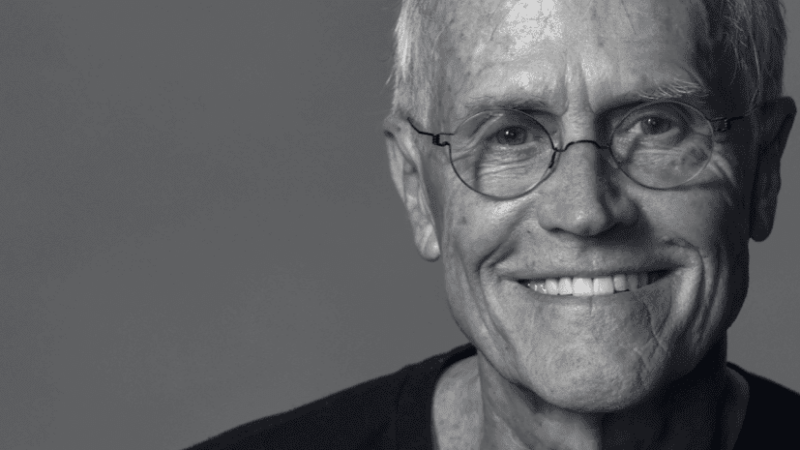
Michael A. Singer is the author of the #1 New York Times bestseller The Untethered Soul: The Journey Beyond Yourself, the New York Times bestseller The Surrender Experiment: My Journey into Life’s Perfection, and, most recently, Living Untethered: Beyond the Human Predicament. In 1971, while pursuing his doctoral work in economics, he experienced a deep inner awakening and went into seclusion to focus on yoga and meditation. In 1975, he founded Temple of the Universe, a retreat center where people of any religion or set of beliefs can come together to experience inner peace. Through the years, he has made major contributions in the areas of business, the arts, education, health care, and environmental protection.
In this podcast, Michael joins Sounds True’s founder, Tami Simon, to speak about his latest book. Tami and Michael discuss the first question for the spiritual journey, “Are you in there?”; the “three-ring circus” of the outside world, the thoughts in your head, and the emotions that emanate from your heart; the energy of Shakti; removing the samskaras (or energy blockages) within you; resistance, will, and accepting reality; practicing the little things—the “low-hanging fruit”—on the path of surrender; the proper use of positive thinking; the mantra “I can handle this”; witness consciousness and the practice of “relax and release”; the art of transmutation; piercing the spiritual heart; and more.
Diana Winston is is the director of mindfulness education at UCLA’s Mindful Awareness Research Center, a member of the Teachers Council at Spirit Rock Meditation Center, and a pioneer in mindfulness education for children. With Sounds True, she has released The Little Book of Being: Practices and Guidance for Uncovering Your Natural Awareness. In this episode of Insights at the Edge, Tami Simon speaks with Diana about “natural awareness”—an always-available, foundational flow state distinguishable from deliberate mindfulness practice. They share “glimpse practices” designed to open up perception and embodiment of natural awareness, commenting on how each can be practiced in day-to-day life. Diana and Tami discuss the value of going on retreat, the spectrum of different awareness practices, and common misconceptions about what it takes to become a mindfulness teacher. Finally, Diana explains why it’s important not to become a “bliss-ninny” as well as the difference between natural awareness and spacing out. (64 minutes)
Seth Godin is a bestselling author and popular blogger who is known for his writing on marketing, the spread of ideas, and mindful business strategies. With Sounds True, he released the audio program Leap First: Creating Work That Matters. In this episode of Insights at the Edge, Tami Simon and Seth discuss the concept of resistance and how it must be sought out in any effective pursuit of art. They also talk about the contemporary “connection economy” and how there is no guarantee that one can make a living through genuine self-expression—but also how one should do so anyway. Finally, they spoke on the necessity of taking leaps and Seth’s concept of living a life of faith. (62 minutes)
Tami’s Takeaway: Seth Godin looks at a picture every day that depicts a person triumphantly jumping off of a third story building onto a street below. The caption: “Leap into the Void.” Seth leaps every day and inspires others to do the same. He teaches us not to wait to be discovered—for someone to choose us to come forward. Instead, we take the leap and “pick ourselves,” engaging in the creative act of being vulnerable, making art, and expressing ourselves. And whether 10 people notice or 10 million, we have the deep satisfaction of living courageously and pouring out our creative souls in ways that matter.
Van Jones is a New York Times bestselling author, public speaker, and host of The Van Jones Show on CNN. This special edition of Insights at the Edge re-broadcasts Van’s powerful session from Sounds True’s Waking Up in the World online event. In this in-depth interview, Tami Simon speaks with Van about the necessary meeting between spiritual practice and social activism. They discuss the currently fraught political climate and why it’s essential for everyone to break out of their respective bubbles to engage with people with diverse views. At the same time, Van emphasizes the need to combat rising hate and why we all need to stay true to what we value most in life. Finally, Tami and Van talk about the possibility of broad societal change and how spiritual people can catalyze that movement. (66 minutes)
Tami’s Takeaway: Van Jones challenges people who drive hybrid cars, eat lots of kale, listen to NPR, and go to yoga classes (people like me!) to break out of what he calls our “resistance bubble.” This means connecting with people who live dramatically different lives, in different socio-economic circumstances, and with radically different political views and affiliations. When we do, we stop polarizing and congratulating ourselves on our progressive ideals and start building coalitions that lift up everyone, especially the people in greatest need.
Spiritual growth is not about reaching for higher states; it’s about releasing the ego that keeps pulling you down. The mind and heart are conditioned by past experiences, and reacting to them creates endless suffering. By observing and letting go instead of resisting or controlling, you naturally rise into peace and alignment with something greater.
The world around us unfolds in accordance with the vast universal forces of cause and effect, which have been going on throughout time. In contrast, our inner world is created by the tiny sum of our individual experiences. Human beings create suffering by filling the space between themselves and reality with their likes and dislikes. By practicing acceptance, surrender, and non-resistance, one can live freely, engage fully with life, and act from a place of openness rather than personal preference. True peace arises when one stops resisting reality and instead honors and participates in it fully.
Suffering is created by the mind’s demand that reality match its preferences, and the attempt to control the world only deepens the sense of disturbance. Spiritual growth comes from letting go of these egocentric demands, accepting reality as it is, and refusing to engage with the inner voice that insists things should be different. When this letting go occurs, life becomes an act of effortless service, where actions arise naturally from the unfolding moment rather than from personal desire.
People rely on external goals for their inspiration and happiness. But the sense of happiness is actually experienced inside and, with right understanding, can be an unconditional state of being. Conditions for our happiness exist because we have stored past disturbances that must be avoided if we want to feel okay inside. True liberation comes from letting go of these inner blockages, staying open to life, and choosing happiness regardless of what happens.
There are times when people experience deep love, joy, and inspiration. But these states disappear the moment we close ourselves because life does not match our expectations. We end up storing every uncomfortable experience inside, and these suppressed impressions create the fears, judgments, and egocentric thoughts and emotions that block our natural openness. Spiritual growth is not about achieving something new but about letting go of stored inner disturbances so that the natural state of love and energy can flow freely again.
Human suffering comes from trying to control the outside world so that our inner state feels good, all of which is based on impressions from our past experiences. Spiritual growth begins when we stop clinging to these impressions and instead learn to handle whatever reality presents. By letting experiences pass through without resistance, inner energy rises naturally, eventually dissolving the personal self and leading to liberation.
There’s nothing even remotely spiritual about going through life reacting to events. In this episode, Michael Singer explores how to become aware of our emotional reactions, navigate the energies that drive them, and learn to respond to triggering events with greater consciousness.
What do you plan to do with your “next lap around our star”?
Nearly everyone, Michael Singer observes, will do the same thing they do every other year of their lives: try to get what they want and avoid what they don’t want. And they’ll be just as unhappy.
Why do we do this? Can’t we liberate ourselves from this no-win situation? Here, Michael shines an optimistic light on the New Year.
“When your personal self isn’t taking over,” teaches Michael Singer, “your heart is full and your mind is clear.” So what stops this from happening? Our fears and our desires.
In this episode, Michael shows us how to replace the never-ending pursuit of what you think will make you OK with that which will actually fill you with unconditional love and joy.
Like a boat sailing on the sea, there are two significant forces guiding our journey through life: the natural forces all around us and the practical skills needed to reach our destinations. Here, Michael Singer explores the essentials for making our way on the spiritual path.
The mind is not the brain but a subtler field of vibrations that consciousness becomes distracted by and clings to. It identifies with these mental and emotional impressions and creates a false self (ego) resulting in a life of inner conflict and misperceived reality. True liberation comes from witnessing these vibrations without resistance and allowing experiences to pass through, revealing the expansiveness of pure, undistracted Consciousness.
Problems occur when consciousness becomes identified with external objects and forgets its own nature as pure, eternal witnessing presence. Ego emerges when we build a self-concept based on our past experiences, which leads to suffering whenever reality doesn’t align with internal expectations. The path to liberation begins by accepting what is and allowing our past stored blockages to be transmuted through spiritual practice and clarity. The true self is the unchanging observer, resting in pure consciousness beyond the personal mind, where the divine experiences creation.
True spiritual maturity is not about seeking momentary highs but about dealing with the lows that inhibit one’s spiritual ascent. The real obstacles to spiritual fulfillment come in the form of emotional blockages and self-imposed personal limitations. By focusing on letting go of these internal tethers, we can naturally rise to higher states of consciousness without forcing the process.
The essence of spirituality is directly experiencing awareness itself. Your thoughts, emotions, body, and external objects are simply things you are aware of. They are not aware of you—you are aware of them. Spiritual growth is learning to remain centered in that awareness, letting experiences pass without clinging or resisting. This allows you to handle reality as it is, instead of as a reaction to your past, and leads to a life filled with love and inspiration.
The deep spiritual teachings emphasize that the real problem is not the mind itself but our attachment to it and the impressions we’ve stored inside that distort our experience of life. We mistakenly look outward for solutions to this problem, when the real work is to release the inner disturbances that block the natural flow of energy and cause suffering. Spiritual liberation is found by turning inward, observing the mind, letting go of stored pain, and returning to the joyful, transcendent nature of consciousness itself.
All of life is Shakti, the universal conscious energy that vibrates at different rates to manifest as physical form, thoughts, emotions, and the flow of spiritual energy. Our suffering arises when we resist life’s experiences and block this flow, storing disturbances that shape the personal mind and distort our lives. Freedom comes when we stop pushing experiences down, let old disturbances rise and pass, and learn to relax in the face of life so that the inner flow of shakti can carry us back to our natural state of joy, openness, and oneness with God.
The purpose of life is to release the inner blockages (samskaras) that obscure the natural flow of energy and keep us trapped in patterns of fear, desire, and resistance. External events are not punishments but opportunities to see and let go of what is stored within, transforming suffering into growth. Liberation comes through non-resistance, relaxation, and surrender—using every moment of life as a chance to purify and return to the wholeness of the Self.
The essence of spiritual growth is learning to work directly with your inner energy rather than trying to affect it indirectly by controlling outer circumstances. When the outer world does not meet your preferences, your inner energy gets disturbed, and you either try to suppress it (which creates blockages) or reactively express it (which can cause its own problems). Instead, by relaxing in the face of the disturbed energy, welcoming it, and allowing it to rise and purify—the energy can be transmuted into spiritual growth. Practiced steadily in everyday life, this returns you to the seat of the Self, where joy is natural because the energy flow is unblocked.