
Just One Question | Rev angel Kyodo williams: How Do We Find Joy In the Heart of Our Suffering?

August 6, 2026

Just One Question | Rev angel Kyodo williams: How Do We Find Joy In the Heart of Our Suffering?

Rev. angel Kyodo Williams August 6, 2026

Reverend angel Kyodo williams has spent decades bridging Zen practice and social change, and she doesn’t offer the version of spirituality where relief is waiting somewhere down the road. She told Tami Simon that our joy lives at the center of our suffering, and Tami, to her credit, pushed back. Really? Right in the middle of my deep suffering and the world’s deep suffering?

Reverend angel’s answer is why this segment felt so powerful and transformative to us. She argues we’ve been handed a spiritual life that lives in a box: well-maintained, kept in good order, scheduled for Tuesday evenings from 6:30 to 8:30. Real practice, she says, pulls the lens all the way back to take in a whole life: the trauma, the history, the parts we’ve been trained to walk around. And when we refuse to touch our own suffering, we don’t contain it. We leave it behind us like roadkill, in how we treat each other and in what we let stand: patriarchy, racism, xenophobia.

In this episode:

  • Why “radical” means whole rather than extreme, and what a complete dharma asks of us
  • The cold-water method—entering your suffering ankle-deep, then further
  • What joy actually is, and why it isn’t an ice cream cone in the middle of the mess
  • The question Reverend angel keeps returning to in her own practice: where have I not yet looked?
  • Why fearlessness isn’t something you choose, but something that surfaces once the path is clear

Taken from the full Insights at the Edge conversation with Reverend angel Kyodo williams. Find the complete interview here: Reverend angel Kyodo williams: Warrior Spirit.

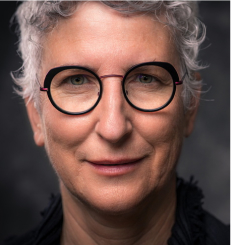
Rev. angel Kyodo williams, the "change angel," is a Zen priest, author, and founder of the organization Transformative Change. Her work centers on the essential link between inner work, wholeness, and social transformation and how we leverage love on behalf of justice for people and the planet at scale.
 
A social visionary and leading voice for transformative social change, she is the author of Being Black: Zen and the Art of Living with Fearlessness and Grace, and coauthor, with Lama Rod Owens and Jasmine Syedullah, of Radical Dharma: Talking Race, Love, and Liberation.
 
Her work engages at the root, field, and resource levels of social transformation. She is also a queer feminist, who understands how to use suffering as a path to liberation.

Rev. angel speaks, consults, and coaches as an interventionist of old paradigms, and designs programs and training that disrupt the patterns that hinder love and justice. She has served on boards, and has both taught and lectured widely across lines of faith and action including at the Omega Women's Leadership Center, the historic Rankin Chapel at Howard University, Authentic Leadership, and Mind and Life Institutes.
 
Her work has been featured in the New York Times, the On Being podcast, the Washington Post, Ms., and Essence.
 
Rev. angel notes, "Love and Justice are not two. Without inner change, there can be no outer change. Without collective change, no change matters." She was made for these times.
 
Learn more at angelkyodowilliams.com.

Author photo © Christine Alicino

600 Podcasts and Counting…

Subscribe to Insights at the Edge to hear all of Tami’s interviews (transcripts available too!), featuring Eckhart Tolle, Caroline Myss, Tara Brach, Jack Kornfield, Adyashanti, and many more.

Meet Your Host: Tami Simon

Founded Sounds True in 1985 as a multimedia publishing house with a mission to disseminate spiritual wisdom. She hosts a popular weekly podcast called Insights at the Edge, where she has interviewed many of today's leading teachers. Tami lives with her wife, Julie M. Kramer, and their two spoodles, Rasberry and Bula, in Boulder, Colorado.

Photo © Jason Elias

Also By Author

Just One Question | Rev angel Kyodo williams: How Do W...

Reverend angel Kyodo williams has spent decades bridging Zen practice and social change, and she doesn’t offer the version of spirituality where relief is waiting somewhere down the road. She told Tami Simon that our joy lives at the center of our suffering, and Tami, to her credit, pushed back. Really? Right in the middle of my deep suffering and the world’s deep suffering?

Reverend angel’s answer is why this segment felt so powerful and transformative to us. She argues we’ve been handed a spiritual life that lives in a box: well-maintained, kept in good order, scheduled for Tuesday evenings from 6:30 to 8:30. Real practice, she says, pulls the lens all the way back to take in a whole life: the trauma, the history, the parts we’ve been trained to walk around. And when we refuse to touch our own suffering, we don’t contain it. We leave it behind us like roadkill, in how we treat each other and in what we let stand: patriarchy, racism, xenophobia.

In this episode:

  • Why “radical” means whole rather than extreme, and what a complete dharma asks of us
  • The cold-water method—entering your suffering ankle-deep, then further
  • What joy actually is, and why it isn’t an ice cream cone in the middle of the mess
  • The question Reverend angel keeps returning to in her own practice: where have I not yet looked?
  • Why fearlessness isn’t something you choose, but something that surfaces once the path is clear

Taken from the full Insights at the Edge conversation with Reverend angel Kyodo williams. Find the complete interview here: Reverend angel Kyodo williams: Warrior Spirit.

The Core of Belonging

Rev. angel Kyodo williams is an author, activist, Zen priest, and founder of the organization Transformative Change, which centers on the link between inner work, wholeness, and social transformation at scale. With Sounds True, Rev. angel has created a new six-part audio series called Belonging: From Fear to Freedom on the Path to True Community. In this episode of Insights at the Edge, Tami Simon speaks with Rev. angel about how society shapes our sense of belonging, and what it means to take back our power to belong. They discuss how embodied belonging transcends that which our entire sense of self and reality is based upon, and offers us a deep awareness of our essential truth. Tami and Rev. angel also touch on: forgiveness as a healing self-practice, the meaning of true community, and how growing comfortable in our own skin gives us the capacity to heal, enact conscious change, and belong in any environment.

Reverend angel Kyodo williams: Warrior Spirit


Reverend angel Kyodo williams is an activist, master trainer, founder of the Center for Transformative Change, and the acclaimed author of Being Black: Zen and the Art of Living with Fearlessness and Grace and Radical Dharma: Talking Race, Love, and Liberation. Rev. angel will be a featured presenter on Sounds True’s upcoming A Year of Mindfulness program—a unique yearlong series of monthly talks given by a group of meditation teachers from a diverse background of traditions. In this episode of Insights at the Edge—adapted from an earlier presentation given by Rev. angel during Sounds True’s online Meditation Summit—she and Tami Simon speak on the sense of retreat that attracts many to mindfulness, even when it is an engagement with our inner fullness that is meditation’s most valuable gift. Rev. angel discusses the cultivation of a “warrior spirit” that enriches and empowers our interactions with the world. Finally, Rev. angel offers a meditation practice on these themes called “Effort and Release.” (47 minutes)

You Might Also Enjoy

Just One Question | Rev angel Kyodo williams: How Do W...

Reverend angel Kyodo williams has spent decades bridging Zen practice and social change, and she doesn’t offer the version of spirituality where relief is waiting somewhere down the road. She told Tami Simon that our joy lives at the center of our suffering, and Tami, to her credit, pushed back. Really? Right in the middle of my deep suffering and the world’s deep suffering?

Reverend angel’s answer is why this segment felt so powerful and transformative to us. She argues we’ve been handed a spiritual life that lives in a box: well-maintained, kept in good order, scheduled for Tuesday evenings from 6:30 to 8:30. Real practice, she says, pulls the lens all the way back to take in a whole life: the trauma, the history, the parts we’ve been trained to walk around. And when we refuse to touch our own suffering, we don’t contain it. We leave it behind us like roadkill, in how we treat each other and in what we let stand: patriarchy, racism, xenophobia.

In this episode:

  • Why “radical” means whole rather than extreme, and what a complete dharma asks of us
  • The cold-water method—entering your suffering ankle-deep, then further
  • What joy actually is, and why it isn’t an ice cream cone in the middle of the mess
  • The question Reverend angel keeps returning to in her own practice: where have I not yet looked?
  • Why fearlessness isn’t something you choose, but something that surfaces once the path is clear

Taken from the full Insights at the Edge conversation with Reverend angel Kyodo williams. Find the complete interview here: Reverend angel Kyodo williams: Warrior Spirit.
Matthew Fox on Original Blessing: Why You Were Born Go...

What if the first step on your spiritual path wasn’t about fixing something broken in you, but about recognizing how whole you already are? Matthew Fox has spent decades asking this question, and his answer, rooted in the teaching of original blessing, invites us to begin our spiritual lives with wonder rather than with shame.

At Sounds True, we are dedicated to sharing the living wisdom of trusted spiritual teachers through immersive podcasts, digital courses, and transformational programs that support personal growth and awakening.

Here, we’ll walk through Matthew Fox’s teachings on original blessing, creation spirituality, the influence of Meister Eckhart, and how these ideas offer a grounded, compassionate path forward for anyone who longs for a more reverent relationship with life.

Key Takeaways:

  • Learn Why You Were Born Good: Original blessing reframes the spiritual journey by centering humanity’s inherent goodness, offering a life-affirming path rooted in wonder rather than shame.
  • Creation as Sacred Ground: Creation spirituality teaches that the divine is woven into nature, community, and everyday life, inviting us to meet the sacred right where we are.
  • The Mystic Who Shaped Fox: Meister Eckhart’s vision of a God present in all things continues to shape Matthew Fox’s teachings on creativity, compassion, and sacred connection.

Awaken Your Inner Healing Power: Your Wellness Journey Starts Now

Matthew Fox and the Meaning of Original Blessing

Many spiritual traditions begin with the idea that humanity arrived in this world already broken, separated from the divine through original sin. Matthew Fox gently but firmly challenges this starting point. His teaching of original blessing asks us to return to the very beginning, to the opening pages of Genesis, where something far warmer is waiting.

In the first chapter of the Bible, God’s spirit hovers over the waters like a brood hen watching over her eggs, nurturing and alive with creative energy. Fox sees this image as living, not static. God here is a verb, a dynamic creator who calls all of life good. This reading opens with vitality, growth, and a love that precedes any misstep. When we begin from goodness, the spiritual journey takes on a different quality.

Readers who feel called to go deeper into this kind of spiritually grounded inquiry will find our Spirituality & Awakening collection brings together teachings that help cultivate that sense of sacred connection in daily life.

Original Blessing as an Original Sin Alternative

The original sin alternative that Fox offers is a reorientation, not a rejection of accountability or depth. Original blessing invites us to arrive in this life carrying a gift to live, and to let that gift be the foundation. This shifts the entire atmosphere of the spiritual journey.

When we start from goodness, compassion flows more naturally. Responsibility becomes something we can embrace openly. Care for the Earth, for one another, and for ourselves becomes an act of reverence. Fox honors the full complexity of being human. His invitation is simply to stop making the hard parts the foundation.

What Is Creation Spirituality?

Creation spirituality teaches that the sacred is woven into creation itself, present in a forest, in a conversation, in a piece of music that stops you mid-step. The divine isn’t something we reach only by turning away from the physical world. This path invites us to encounter God within it.

Fox describes creation spirituality as a recovery project, a return to the awe that the earliest humans felt standing inside a world too vast and beautiful to explain. That sense of wonder is still available to us. Readers drawn to practices that cultivate this kind of felt presence may find resonance in the teachings within our Subtle Energy collection, which opens pathways into the deeper dimensions of human experience.

Fall Redemption vs Creation Spirituality

The conversation around fall redemption vs creation spirituality highlights two distinct starting points. The fall/redemption framework begins with human failure, emphasizing original sin and the need for rescue. Creation spirituality begins with God’s creative energy already alive and generous in the world. While one starts in the wound, the other starts with the gift.

In fall redemption theology, faith centers on trust in an external authority to restore what was lost. Creation spirituality offers something complementary: faith as trust in the aliveness already present within you and around you. Compared to the fall redemption theory, creation spirituality is feminist and gender-balanced. To hear this conversation in Fox’s own voice, visit our Insights at the Edge Podcast, where he and other teachers speak openly about these ideas in conversation with host Tami Simon.

Uncover Hw Your Mind Really Works With Sounds True

How Meister Eckhart Shaped Matthew Fox’s Teachings

Few thinkers have shaped Matthew Fox’s work as deeply as Meister Eckhart, the 14th-century German Dominican mystic whose writings continue to stir spiritual imagination centuries after his death. Eckhart taught that the divine is not remote or indifferent but present at the very ground of every soul, a living God who dwells within all things.

Fox engaged with Eckhart as a living guide. He saw in Eckhart’s teachings a confirmation of what creation spirituality already sensed: that the sacred pervades the world, that creativity is a form of prayer, and that every person carries a spark of the divine. Fox’s deep engagement with Eckhart helped bring these 700-year-old ideas to contemporary seekers in language they could feel and act on.

Those who want to learn more about Matthew Fox and the many teachers whose work touches these themes can visit our All Teachers & Authors page for a full look at the voices in our community.

Living Original Blessing Through Creation Spirituality

Receiving original blessing isn’t a single moment of insight. Living it is an ongoing practice, a way of meeting each day with a different set of assumptions. Fox’s vision of creation spirituality gives us language for that practice and a few grounded ways to begin.

  • Start the Day with Gratitude: Pause before the mental inventory of what needs fixing. Acknowledge what is already here: your breath, the light, the life moving through you. This is a choice to place goodness at the center of the day before anything else takes over.
  • Let Nature Be a Teacher: Creation spirituality invites us to treat the natural world as a living text. A walk outside, a moment watching clouds shift, or tending a small garden becomes an act of communion. Fox’s work reminds us that the Earth participates in the sacred, and that paying attention to it is itself a form of prayer.
  • Create Without an Agenda: Fox views creativity as one of the most direct expressions of divine energy available to us. Cooking, drawing, writing, singing, building — any act of making can become a form of spiritual practice when approached with presence and care.

Discover the Power of Daily Meditation and Inner Stillness

Final Thoughts

Matthew Fox’s teachings ask us to do something both simple and radical: begin with ourselves as good. From that foundation, creation spirituality opens into a way of living that honors the sacred in everything, in other people, in the natural world, in the creativity and care we bring to ordinary days. The influence of Meister Eckhart runs through all of this as a reminder that this longing to find the divine close has deep roots.

Frequently Asked Questions About Matthew Fox on Original Blessing

What is Matthew Fox best known for?

Matthew Fox is a spiritual teacher, theologian, and author known for developing creation spirituality, a path that emphasizes the sacredness of creation and humanity’s inherent goodness.

Why did Matthew Fox write about original blessing?

Matthew Fox introduced the concept of original blessing to encourage a more life-affirming view of spirituality. His teachings invite people to begin with gratitude and sacred connection instead of focusing on human faults.

Is original blessing a religious belief?

Original blessing is a spiritual perspective that can resonate with people from many faith traditions. It emphasizes the goodness of creation and encourages a deeper relationship with the divine through everyday life.

How does creation spirituality relate to environmental care?

Creation spirituality teaches that the natural world is sacred. This perspective encourages respect for the Earth and inspires people to care for the environment as an expression of their spiritual values.

Who was Meister Eckhart, and why is he important?

Meister Eckhart was a Christian mystic whose teachings emphasized experiencing the divine within. His writings continue to influence spiritual thinkers, including Matthew Fox.

What can readers gain from Matthew Fox’s teachings?

Readers often find a renewed sense of purpose, compassion, and connection with the world. His teachings encourage a spiritual practice rooted in gratitude, creativity, and reverence for life.

Why does Matthew Fox emphasize creativity?

Matthew Fox views creativity as a reflection of the divine. Artistic expression, problem-solving, and innovation can all become meaningful spiritual practices that celebrate the gift of creation.

Michelle Cassandra Johnson is an author, activist, spiritual teacher, racial equity consultant, and intuitive healer. She is the author of six books, including Skill in Action and Finding Refuge. Amy Burtaine is a leadership coach and racial equity trainer. With Robin DiAngelo, she is the coauthor of The Facilitator's Guide for White Affinity Groups. For more, visit https://www.michellecjohnson.com/wisdom-of-the-hive.

What Is Brainspotting? David Grand on Using Eye Positi...

What happens when healing needs to go deeper than words can reach? For many people, the most profound emotional experiences resist easy articulation. Brainspotting is a therapeutic approach developed by David Grand that uses specific eye positions to access what the brain and body hold onto, even when language falls short.

At Sounds True, we’ve spent more than 40 years sharing trusted teachings from therapists, authors, and spiritual teachers whose work nurtures healing, personal growth, and lasting transformation. From online courses and in-depth programs to podcasts and digital resources, we bring the voices that matter most directly to you.

We cover what brainspotting is, how David Grand developed the approach, the role of eye position in trauma therapy, and how brainspotting compares with EMDR.

Key Takeaways:

  • Healing Beyond Words: Brainspotting uses specific eye positions to access unresolved trauma and emotional experiences stored in the brain and body, creating a path forward that doesn’t require verbal storytelling alone.
  • David Grand’s Path to Healing: David Grand developed brainspotting after observing that a client’s eye position reflected deeper emotional processing during trauma treatment, giving rise to an approach built around the brain’s natural capacity to heal.
  • EMDR vs. Brainspotting: While both approaches help people process trauma, brainspotting and EMDR differ in structure and session style. The right fit depends on your history, goals, and therapeutic relationship.

Discover the Power of Daily Meditation and Inner Stillness

What Is Brainspotting?

Brainspotting is designed to help people access and process unresolved trauma through focused attention on specific eye positions. The method rests on the idea that where a person looks can correspond to where difficult experiences are stored in the brain and body. Staying with a brainspot while remaining aware of physical sensations and emotions, people can work through material that language alone might not reach.

Since David Grand developed this approach, brainspotting therapy has been applied broadly, with athletes, artists, business leaders, and survivors of large-scale events, among others. Grand also offers an online course through Sounds True that walks through the core principles behind brainspotting therapy, available to those who want to learn directly from the source.

His insights align with the conversations we host on the Insights at the Edge Podcast, where therapists, teachers, and practitioners share what healing really looks like from the inside out.

David Grand and the Development of Brainspotting Therapy

Brainspotting therapy came out of a significant clinical observation. During trauma treatment, David Grand noticed that a client’s eye position seemed to shift when deeper emotional material surfaced. That moment became the foundation for a method built around the brain’s own capacity to process and release what it has long held in place.

Since its introduction, brainspotting therapy has been used by clinicians around the world to help people facing trauma, anxiety, grief, chronic stress, and performance-related challenges. Grand’s work continues to shape the field by drawing attention to the connection between the brain, the body, and emotional healing.

Sounds True is home to teachers like David Grand alongside hundreds of other practitioners, healers, and visionaries whose work spans a wide range of healing traditions. Those who want to trace that full breadth can visit our All Teachers & Authors collection, where every teacher’s body of work is gathered in one place.

Trauma Therapy Eye Position and the Brain-Body Connection

Trauma therapy eye position describes the relationship between where someone directs their gaze and what emotional or physical experiences become accessible as a result. During a session, a therapist guides the client to a specific visual point and invites them to notice what arises in the body as they hold that focus. Sensations, emotions, and memories can surface as the nervous system begins to process material it has held in place for years.

The body carries what the mind sometimes can’t articulate. A shift in eye position can open access to experiences held below conscious awareness, gently creating conditions for the nervous system to complete what was once interrupted. Healing, in this way, becomes a process the whole person takes part in, not just the thinking mind.

The teachers and practitioners gathered in our Health & Healing collection share this same orientation: that real healing often begins when we learn to listen to what the body already knows.

How the Brainspotting Technique Uses Eye Position to Access Trauma

The brainspotting technique begins with identifying an eye position linked to an emotional or physical response. From there, the therapist invites the client to rest their attention on that visual point while remaining aware of what arises in the body. The process creates space for the nervous system to do what it naturally knows how to do, without demanding that memories surface on command.

A concrete example might be this: someone working through anxiety tied to an experience might start by calling that experience to mind. As the therapist slowly moves a pointer across their field of vision, the client notices a position where a physical sensation intensifies, perhaps tightness in the chest or a change in breath. That’s the brainspot. The session then focuses there while the client tracks what unfolds internally, allowing the nervous system to process what it has previously stored.

Awaken Your Inner Healing Power: Your Wellness Journey Starts Now

EMDR vs Brainspotting: Understanding the Key Differences

EMDR follows a standardized eight-phase protocol and uses bilateral stimulation, typically through guided eye movements, sounds, or tapping, to help the brain reprocess traumatic memories. Brainspotting focuses on identifying one significant eye position and following the client’s internal experience from there. Sessions tend to be more open-ended, allowing the individual’s nervous system to lead.

Neither method is universally better than the other. A qualified therapist can help determine which fits a person’s history, goals, and comfort level. Many clinicians receive training in both and draw on each as the situation calls for it.

Those who want to go deeper into trauma healing and related practices can find immersive learning through our In-Depth Programs, where experienced practitioners bring both clinical knowledge and heart to each course.

Discover how your mind really works

Final Thoughts

Brainspotting offers a distinctive perspective on trauma healing, one that trusts the body’s capacity to know where attention is needed. Working with eye position rather than narration alone, this approach creates conditions for healing to happen at the body’s own pace.

As David Grand has shown through decades of clinical work, healing is often less about forcing change and more about creating the conditions for it to unfold. That belief is at the heart of what we do at Sounds True. We share the work of practitioners and teachers who honor the full range of human experience, including the places where language falls short, and the body quietly holds the way forward.

Frequently Asked Questions About Brainspotting

Is brainspotting backed by research?

Brainspotting is supported by a growing body of clinical research and case studies. While research continues to evolve, many mental health professionals use it as part of trauma-informed care for emotional and psychological concerns.

Who can benefit from brainspotting?

Brainspotting may benefit adults and adolescents experiencing trauma, anxiety, grief, stress, or performance-related challenges. A qualified mental health professional can determine whether it is an appropriate approach for an individual’s needs.

Do I have to talk about my trauma during brainspotting?

Not necessarily. While some people choose to discuss their experiences, brainspotting can also focus on physical sensations and emotions, allowing processing without requiring detailed verbal storytelling.

Can brainspotting be combined with other therapies?

Yes. Many therapists integrate brainspotting with other evidence-based approaches, such as cognitive behavioral therapy, mindfulness practices, or somatic therapies, to create a personalized treatment plan.

Is brainspotting only used for trauma?

No. Although it is widely recognized for trauma treatment, brainspotting is also used to support people dealing with anxiety, creative blocks, chronic stress, and performance enhancement in sports, music, and public speaking.

What should I expect after a brainspotting session?

Some people feel calm or relieved after a session, while others may continue processing emotions or physical sensations for a short time. Therapists often recommend rest, hydration, and self-reflection between sessions.

Is brainspotting suitable for everyone?

Brainspotting may not be the best fit for every individual or situation. A licensed therapist can evaluate your mental health history and recommend the most appropriate treatment approach.

Michelle Cassandra Johnson is an author, activist, spiritual teacher, racial equity consultant, and intuitive healer. She is the author of six books, including Skill in Action and Finding Refuge. Amy Burtaine is a leadership coach and racial equity trainer. With Robin DiAngelo, she is the coauthor of The Facilitator's Guide for White Affinity Groups. For more, visit https://www.michellecjohnson.com/wisdom-of-the-hive.
