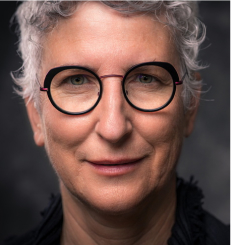
Barbara Marx Hubbard: Conscious Evolution

April 21, 2009

Barbara Marx Hubbard: Conscious Evolution

Barbara Marx Hubbard April 21, 2009

Tami Simon interviews leading futurist Barbara Marx Hubbard who explains that we are currently in a time where the “thinking field of humanity”—what Teilard de Chardin called the noosphere—is in the process of opening its eyes. Or in other words that the process of evolution is becoming conscious of itself… (43 minutes)

Author Info for Barbara Marx Hubbard Coming Soon

600 Podcasts and Counting…

Subscribe to Insights at the Edge to hear all of Tami’s interviews (transcripts available too!), featuring Eckhart Tolle, Caroline Myss, Tara Brach, Jack Kornfield, Adyashanti, and many more.

Meet Your Host: Tami Simon

Founded Sounds True in 1985 as a multimedia publishing house with a mission to disseminate spiritual wisdom. She hosts a popular weekly podcast called Insights at the Edge, where she has interviewed many of today's leading teachers. Tami lives with her wife, Julie M. Kramer, and their two spoodles, Rasberry and Bula, in Boulder, Colorado.

Photo © Jason Elias

Also By Author

Barbara Marx Hubbard: Conscious Evolution

Tami Simon interviews leading futurist Barbara Marx Hubbard who explains that we are currently in a time where the “thinking field of humanity”—what Teilard de Chardin called the noosphere—is in the process of opening its eyes. Or in other words that the process of evolution is becoming conscious of itself… (43 minutes)

You Might Also Enjoy

Laurie Nealon: “Energy Healing with Help From the Ot...

What if you were never working alone—and neither was anyone you were trying to help?

This week, Tami Simon speaks with Laurie Nealon, an intuitive energy healer, medium, and educator whose work is profiled on the Sounds True podcast Phenomena: The Science and Stories of Energy Healing. Seventeen years ago, Laurie began seeing and hearing those who had passed—not in dreams, but in the middle of her waking life. She resisted it. Then she built a practice around it.

Join Tami and Laurie to explore:

  • What Laurie actually perceives when someone who has died “appears”—and how she learned to filter it
  • Integrated Energy Therapy (IET), attunement, and why she calls the practitioner a facilitator rather than a healer
  • The “spiritual support group”: angels, guides, ascended masters, and loved ones she says fill the room during a session
  • A guided practice—rolling the energy—you can do in two minutes before you get out of bed
  • The screen technique: how to stay open to love without carrying everyone else’s journey
  • Why “lightening someone’s load” may actually dishonor their path
  • Entity energy, imprints, and what clearing a block really means
  • Tami’s hardest question: what about the people who did everything right and still died?
  • A closing prayer Laurie offers for every listener

Laurie’s conviction is that none of this is exotic. Everyone, she says, should be trained in energy healing the way everyone is trained in CPR—and everyone has the capacity to open to their own gifts.

Listen now, and find out who else is in the room. →

This conversation offers genuine transmission, not just concepts about awakening, but the palpable presence of realized teachers exploring the growing edge of spiritual understanding together, and originally aired on Sounds True One.

Alberto Villoldo on Shamanic Healing: The Light Body a...

What would change if healing began not with symptoms, but with the energy beneath them? Alberto Villoldo has spent decades exploring that question, and the answers have shaped some of the most compelling teachings in modern shamanism.

At Sounds True, we have been sharing the voices of respected spiritual teachers since 1985, when our founder Tami Simon set out to preserve the living wisdom of those with something real to offer the world. Today, our library holds more than 3,000 titles spanning audio programs, digital courses, and conversations that meet seekers wherever they are on their path. 

This post walks through Villoldo’s core teachings on shamanic healing, the light body, and energy medicine, and how these practices connect to lasting personal growth.

Key Takeaways:

  • Healing Through Ancient Wisdom: As Alberto Villoldo, shamanic healing is a practice rooted in indigenous traditions from the Andes and Amazon that works with energetic patterns to restore balance and a deeper sense of wholeness.
  • Your Light Body’s Hidden Influence: The light body is an energetic field that may shape how we feel and respond daily. Energy medicine works by identifying and clearing the imprints that lock us into familiar, limiting patterns.
  • Energy Medicine, Everyday Practice: From the Four Winds Society to the Munay Ki rites, Villoldo’s teachings lay out concrete pathways for living with greater awareness, all supported through Sounds True’s courses, podcasts, and programs.

Discover the Power of Daily Meditation and Inner Stillness

Alberto Villoldo and the Foundations of Shamanic Healing

Alberto Villoldo is a medical anthropologist and psychologist who spent years living among indigenous healers in the Andes and the Amazon basin. What he witnessed there reshaped his sense of what healing could be. Shamanic healing holds that our energetic patterns shape our experience just as powerfully as physical ones do.

These traditions teach that recurring emotional struggles, persistent patterns, and illness may have roots in the energetic field surrounding the body. A shamanic healer works beneath the visible wound by tending to memories and imprints. Villoldo’s fieldwork led him to synthesize indigenous Andean and Amazonian wisdom with contemporary frameworks for personal growth, making these teachings accessible to all students.

We have been honored to share his voice alongside many others through our Insights at the Edge Podcast, a weekly conversation series where healers, scientists, and spiritual teachers speak honestly about consciousness, transformation, and the practices that have shaped their lives.

Understanding the Light Body Through Energy Medicine

One of the most distinctive ideas in Villoldo’s work is the concept of the light body, an energetic field said to interpenetrate our physical selves. This luminous layer carries the imprints of past experiences, emotional wounds, and inherited patterns that may influence how we feel, respond, and relate to others.

According to Villoldo, energy medicine works with this field. Practitioners learn to identify and clear the imprints fueling recurring challenges, drawing on Andean cosmology, Amazonian healing lineages, and Villoldo’s own background in neuroscience and psychology. What makes this perspective compelling is the shift in agency it invites. Healing becomes something we actively participate in, a relationship we tend rather than an outcome we wait for.

Those drawn to these ideas can continue their journey through our Subtle Energy collection, where teachings on the energetic body and holistic healing are gathered from a wide range of respected voices and traditions.

Uncovering The Origins of These Teachings

The wisdom Villoldo draws from spans thousands of years and several distinct indigenous cultures. Andean shamanism carries a rich cosmology centered on the relationship between human consciousness and the natural world. Practitioners work with the four directions, elemental forces, and archetypal energies as partners in the healing process, a view that places us in genuine relationship with something far larger than our individual concerns.

How Shamanic Healing Supports Lasting Transformation

Shamanic healing asks us to become active participants in our own growth. Villoldo speaks of the importance of shifting the energetic stories we carry, going deeper than surface circumstances. When the root pattern changes, the outer experience tends to follow. Practices that support this path include:

  • Guided Visualization and Ceremony: These create a structured, safe space for moving through emotional or spiritual material. A visualization practice might invite you to meet a part of yourself carrying a wound and offer it compassion and release. Many practitioners find this builds greater emotional clarity, steadier presence, and a more grounded relationship with life.
  • Compassionate Self-Reflection Practice: Shamanic teachings place great weight on honesty and self-awareness. Examining the recurring stories we tell about ourselves, our relationships, and our limitations is central to the path. This kind of clear-eyed witnessing opens the door to real, lasting change.
  • Meditation and Breathwork: These practices cultivate the inner stillness from which insight can arise. Even brief, consistent sessions can make the patterns held within the light body more visible and the process of releasing them more accessible, even for those new to these practices.

The Four Winds Society’s Living Mission

Alberto Villoldo founded the Four Winds Society in the 1980s to preserve and pass on the wisdom he received from Andean and Amazonian elders. The organization offers training in energy medicine and shamanic healing to students from many different backgrounds.

Their guiding values include honoring the sacredness of life and respecting the cultural origins of these traditions. Students are trained in technique as well as the ethical responsibility that comes with this kind of work.Central to the Four Winds curriculum is the Munay Ki rites, nine traditional initiations drawn from Andean shamanic lineages. The word “munay” in Quechua carries the combined meaning of love and will. Each rite is transmitted heart to heart between teacher and student.

These themes resonate with many of the teachings we gather through our Spirituality & Awakening collection, where many paths come together in service of greater consciousness.

Awaken Your Inner Healing Power: Your Wellness Journey Starts Now

Bringing the Light Body and Energy Medicine into Everyday Life

A shamanic perspective holds that healing belongs in everyday life, woven through small choices and simple moments.

A Morning Grounding Practice

Begin the day with a few quiet minutes, ideally seated in a calm, dedicated space or with feet on the earth. Shamanic traditions speak of connecting to the natural world as an anchor for energetic balance. Even five minutes of conscious breath can shift the quality of the day ahead and help you move with greater presence from the very first hour.

Gratitude as Energetic Medicine

Gratitude runs deeper than a fleeting mood. From a shamanic view, it actively shifts the quality of the energetic field we move through the day. Starting or ending the day with genuine appreciation for the body, for those we love, for simple beauty, changes how we relate to life at a fundamental level.

Meeting What Arises 

Shamanic healing encourages meeting challenges with curiosity. Asking “what is this experience here to show me?” transforms daily life into a practice of ongoing growth and self-knowing, a small but powerful reframe that accumulates into real change.

At Sounds True, we are proud to bring voices like Alberto Villoldo’s to this community alongside many other respected teachers, including Jack Kornfield, Pema Chödrön, and others featured through our All Teachers & Authors page.

Discover how your mind really works

Final Thoughts

Alberto Villoldo’s teachings remind us that healing is an ongoing journey. Shamanic healing, the light body, and energy medicine are accessible to anyone willing to engage with them, carrying an invitation extended across thousands of years: a call to remember that we are more than our symptoms, more than our stories, and far more capable of transformation than we may have believed. 

At Sounds True, we are honored to walk alongside teachers who carry this kind of wisdom and to share it with seekers at every stage of their path. 

Frequently Asked Questions About Alberto Villoldo on Shamanic Healing

What is Alberto Villoldo best known for?

Alberto Villoldo is best known for his work as a medical anthropologist, psychologist, and teacher of shamanic healing. His teachings combine indigenous wisdom with contemporary perspectives on personal growth and well-being.

How does shamanic healing differ from conventional healing practices?

Shamanic healing focuses on restoring energetic and spiritual balance alongside physical and emotional well-being. It is intended to complement personal growth rather than replace professional medical care.

Is the light body connected to a specific spiritual tradition?

The concept of the light body appears in several spiritual traditions, although Alberto Villoldo teaches it through the lens of Andean and Amazonian shamanic practices and energy medicine.

Can anyone learn energy medicine?

Many teachers, including Alberto Villoldo, believe that energy medicine practices can be learned through study, guidance, and consistent practice. Some techniques are suitable for beginners, while others require more advanced training.

What are the Munay Ki rites?

The Munay Ki rites are a series of traditional initiations that are intended to support spiritual growth, deepen self-awareness, and strengthen one’s connection with nature and compassionate living.

How can energy medicine become part of a daily routine?

Many people incorporate energy medicine through meditation, mindful breathing, gratitude practices, visualization, or spending intentional time in nature as part of their daily spiritual practice.

Michelle Cassandra Johnson is an author, activist, spiritual teacher, racial equity consultant, and intuitive healer. She is the author of six books, including Skill in Action and Finding Refuge. Amy Burtaine is a leadership coach and racial equity trainer. With Robin DiAngelo, she is the coauthor of The Facilitator's Guide for White Affinity Groups. For more, visit https://www.michellecjohnson.com/wisdom-of-the-hive.

Sharon Salzberg on Real Happiness: The Myth of Permane...

Happiness is often seen as a destination, but Sharon Salzberg reminds us that it is a practice we cultivate each day. Rather than seeking a life free from challenges, she encourages us to meet every experience with mindfulness, compassion, and an open heart. Her teachings offer a practical path toward greater peace and emotional resilience.

At Sounds True, we have been sharing the wisdom of trusted spiritual teachers for more than four decades, making transformational teachings accessible through audio recordings, digital courses, and programs that nurture personal growth and mindful living. 

In this piece, we’ll discuss Sharon Salzberg’s perspective on real happiness, the myth of permanent happiness, and how loving kindness meditation and metta meditation can help cultivate lasting well-being.

Key Takeaways:

  • Happiness Is a Daily Practice: Sharon Salzberg describes real happiness not as a fixed emotional state but as a living practice grown through awareness, presence, and an open heart.
  • Metta Opens Your Heart: Loving-kindness meditation and metta meditation build a foundation for compassion, soften self-judgment, and deepen your connection with those around you.
  • Consistency Builds Resilience: A regular loving kindness practice, even just a few quiet minutes each day, can reshape how you move through difficulty and strengthen the relationships that matter most.

Awaken Your Inner Healing Power: Your Wellness Journey Starts Now

Sharon Salzberg on Real Happiness and the Myth of Permanent Happiness

Sharon Salzberg has been a student of Buddhism since 1971 and began leading meditation retreats worldwide in 1974. Drawing on more than twenty-five years of deep study with Burmese, Indian, and Tibetan teachers, her work centers on two foundational traditions: vipassana, also known as insight meditation, and the cultivation of lovingkindness and compassion, called the Brahma Viharas. 

As one of the most respected insight meditation teachers, she brings ancient wisdom into language that is warm, accessible, and deeply practical for the rhythms of modern life.

The Foundations of Insight Meditation

Insight meditation is a practice rooted in direct observation of experience. Instead of trying to control or silence the mind, practitioners learn to witness thoughts, sensations, and emotions with steady, non-reactive awareness. That quality of clear seeing allows us to recognize that all experience, including the uncomfortable kind, is impermanent. 

Sharon Salzberg says that expecting permanent happiness often creates unnecessary suffering. Joy and sorrow naturally come and go, and trying to hold onto pleasant experiences only leads to frustration. Rather than measuring life by how often we feel happy, she encourages developing the inner stability to face every experience with openness and care.

Real happiness, in Sharon’s view, grows from acceptance rather than control. As we grow more aware of our thoughts and emotions, we come to see that difficult moments do not define us. Sharon’s teachings on this topic are part of an ongoing conversation we host through the Insights at the Edge Podcast, where leading spiritual teachers share practical wisdom for navigating everyday life with greater awareness and heart.

Loving Kindness Meditation and the Path to Inner Peace

One of Sharon’s most influential teachings is loving kindness meditation. This practice invites us to cultivate goodwill toward ourselves before extending that same warmth outward to others. Rather than forcing positive emotions, loving kindness meditation strengthens our capacity to respond with patience and compassion, even when life makes that difficult.

Sharon’s Loving-kindness program gets at something essential about why this practice matters. Metta meditation is a way to dissolve the mental barriers that quietly separate us from the people around us, and from ourselves. Through consistent practice, we can release feelings of isolation and awaken real compassion. We free ourselves from cycles of needless suffering while learning to trust the loving, wise heart that lives within each of us. 

Loving kindness meditation also helps soften self-criticism while opening the door to more connected, authentic relationships. The shift may be gradual, but it is real and lasting.

Discover the Power of Daily Meditation and Inner Stillness

How Metta Meditation Supports Compassion and Connection

Metta meditation is a structured practice of silently repeating phrases of well-being directed first toward yourself, then extending outward to a close friend, a neutral person, someone with whom you feel friction, and eventually to all beings. The phrases themselves are simple, something like “May you be safe. May you be at peace.” 

Sharon explains that these intentions may seem small at first, yet they reshape how we respond to ourselves and those around us. Rather than waiting for compassion to arise naturally, metta meditation gives us a way to practice it every day. With patience, kindness becomes less of an idea and more of a natural response to life’s changing circumstances.

To see how this works in real life, consider someone navigating tension with a family member after a disagreement. Compassion can feel out of reach in the middle of that kind of friction. A metta practice offers a place to begin, not by pretending the conflict does not exist, but by silently extending well-being first to yourself, acknowledging your own hurt, and then, when ready, to the other person. 

Resources in our Meditation & Mindfulness collection bring together teachings from Sharon and other respected guides, exploring both the depth and the daily application of these traditions to help you build a sustainable practice.

Building a Loving Kindness Practice for Everyday Life

A loving kindness practice does not require long formal sessions. Even a few quiet moments offering kind wishes can create real shifts in daily life. Sharon encourages beginning where we are, knowing consistency matters far more than perfection:

  • Start With Yourself Each Morning. Kindness toward yourself is often the most challenging part of a metta practice. Sharon teaches self-compassion is the ground from which all other compassion grows. Try sitting quietly for five minutes, silently offering words of care: “May I be at peace. May I be well.”
  • Extend Kindness Into Your Relationships. Once the practice becomes familiar, extending it outward grows more natural. A few silent phrases during a commute or before a difficult conversation can shift the texture of an ordinary moment. Compassion is not demanded on a timeline. The practice simply sets the conditions for it to arise.
  • Build Consistency With Short, Daily Sessions. Five to ten minutes of metta practice each morning, paired with brief moments of conscious kindness throughout the day, creates more lasting change than occasional longer sessions. 

Those looking to develop greater gentleness and emotional balance alongside their meditation journey will find resources in our Self-Compassion collection, which brings together teachings from some of the most respected voices in this space.

Discover how your mind really works

Final Thoughts

As Sharon Salzberg shares, real happiness grows through presence, compassion, and a willingness to meet each experience with an open heart. By embracing practices like loving kindness meditation and metta meditation, we can develop greater resilience, deepen our connection with others, and cultivate a more peaceful way of living.

If you would like to continue learning from Sharon and many other respected teachers, visit our All Teachers & Authors page to find teachings that support your own path toward greater presence and compassion.

Frequently Asked Questions About Sharon Salzberg on Real Happiness

What inspired Sharon Salzberg to begin teaching meditation?

Sharon Salzberg’s interest in meditation began during her studies in India, where she encountered Buddhist teachings that shaped her lifelong commitment to mindfulness and compassion.

Why has Sharon Salzberg’s work remained influential for so many years?

Her teachings combine timeless Buddhist wisdom with practical guidance that is accessible, compassionate, and relevant to everyday life, making them meaningful for both new and experienced meditators.

Is loving kindness meditation connected to Buddhism?

Yes. Loving kindness meditation originates from the Buddhist tradition and is based on cultivating unconditional goodwill. Today, it is practiced by people of many backgrounds, regardless of religious belief.

How long should I practice metta meditation each day?

Even five to ten minutes a day can be beneficial. Building a regular habit is generally more effective than practicing for long periods only occasionally.

Can beginners practice loving kindness meditation?

Absolutely. Loving kindness meditation is one of the most approachable meditation practices because it focuses on simple intentions of kindness instead of trying to quiet every thought.

Why do some people find it difficult to offer kindness to themselves?

Many people are accustomed to self-criticism and may initially feel uncomfortable directing compassion inward. Like any skill, self-kindness becomes more natural with consistent practice.

What is the difference between mindfulness meditation and metta meditation?

Mindfulness meditation focuses on observing present-moment experience with awareness, while metta meditation intentionally cultivates feelings of kindness, compassion, and goodwill.

Michelle Cassandra Johnson is an author, activist, spiritual teacher, racial equity consultant, and intuitive healer. She is the author of six books, including Skill in Action and Finding Refuge. Amy Burtaine is a leadership coach and racial equity trainer. With Robin DiAngelo, she is the coauthor of The Facilitator's Guide for White Affinity Groups. For more, visit https://www.michellecjohnson.com/wisdom-of-the-hive.

Leave a Reply

Your email address will not be published. Required fields are marked *