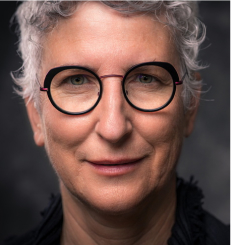
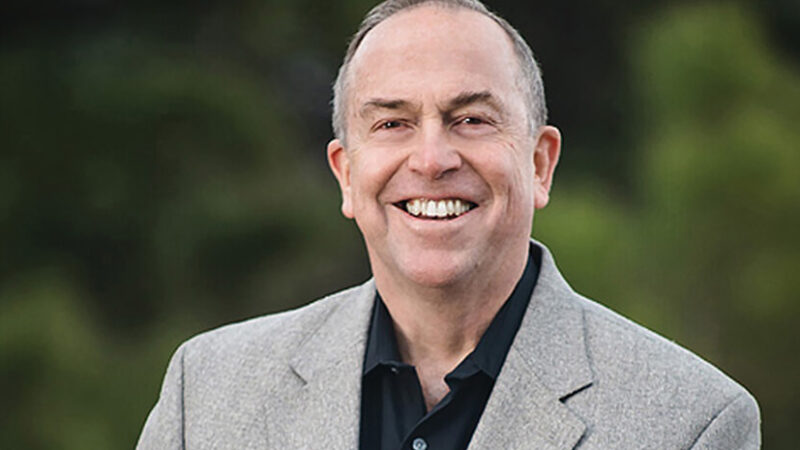
Bruce Tift has been in private practice as a psychotherapist in Boulder, Colorado since 1979. He taught at Naropa University for 24 years and was a student of Chögyam Trungpa Rinpoche. With Sounds True, he has published the book Already Free: Buddhism Meets Psychotherapy on the Path of Liberation. In this episode of Insights at the Edge, Bruce and Tami Simon compare and contrast two different approaches to personal transformation: the “developmental” approach of psychotherapy and the “fruitional” approach of Buddhist practice. They discuss the blind spots inherent in each approach, as well as the ways they can be addressed. Tami and Bruce talk about the nature of neurosis and how neurotic tendencies almost always involve a sense of disembodiment. Finally, they speak on “unconditional practices,” and how unconditional kindness can transform one’s outlook on the procession of life. (70 minutes)
Bruce Tift, MA, LMFT has been in private practice since 1979, has taught at Naropa University for 25 years, and has given presentations in the US, Mexico, and Japan. A practitioner of Vajrayana Buddhism for more than 35 years, he had the good fortune to be a student of Chogyam Trungpa Rinpoche and to meet a number of realized teachers.
Subscribe to Insights at the Edge to hear all of Tami’s interviews (transcripts available too!), featuring Eckhart Tolle, Caroline Myss, Tara Brach, Jack Kornfield, Adyashanti, and many more.
Founded Sounds True in 1985 as a multimedia publishing house with a mission to disseminate spiritual wisdom. She hosts a popular weekly podcast called Insights at the Edge, where she has interviewed many of today's leading teachers. Tami lives with her wife, Julie M. Kramer, and their two spoodles, Rasberry and Bula, in Boulder, Colorado.
Have you ever wondered how to hold the following two seemingly contradictory experiences? On the one hand, you feel in touch with the vast expanse of being. You sense that your true nature is infinite, boundless, unconditionally loving, and outside of time. And on the other hand, you know that in certain situations (usually involving other people!), you are avoidant, dismissive, reactive, and shut down, and—truth be told—you have a lot of healing and personal growth work to do.
Buddhist psychotherapist Bruce Tift is a master at holding these two seemingly contradictory views, and—ready for this?—he does so “without any hope of resolution.” In this podcast, Tami Simon and Bruce Tift talk about how, in his work with clients, he skillfully embraces both the developmental view of psychotherapy and the fruitional view of Vajrayana Buddhism, the blind spots that come with each approach, and how combining them can help people avoid these pitfalls.
Tune in as they discuss unconditional openness, and how it is important to be “open to being closed”; how neurosis requires disembodiment, and further, how our neurosis is fundamentally an avoidance strategy—“a substitute for experiential intensity”; our complaints about other people (especially our relationship partners) as opportunities to take responsibility for our own feelings of disturbance (instead of blaming other people for upsetting us); how to engage in “unconditional practices,” such as the practice of unconditional openness, unconditional embodiment, and unconditional kindness; and more.
Bruce Tift has been in private practice as a psychotherapist in Boulder, Colorado since 1979. He taught at Naropa University for 24 years and was a student of Chögyam Trungpa Rinpoche. With Sounds True, he has published the book Already Free: Buddhism Meets Psychotherapy on the Path of Liberation. In this episode of Insights at the Edge, Bruce and Tami Simon compare and contrast two different approaches to personal transformation: the “developmental” approach of psychotherapy and the “fruitional” approach of Buddhist practice. They discuss the blind spots inherent in each approach, as well as the ways they can be addressed. Tami and Bruce talk about the nature of neurosis and how neurotic tendencies almost always involve a sense of disembodiment. Finally, they speak on “unconditional practices,” and how unconditional kindness can transform one’s outlook on the procession of life. (70 minutes)
Bruce Tift has been a psychotherapist since 1979, a practitioner of Vajrayana Buddhism for more than 35 years, and has taught at Naropa University for 25 years. He is the author of the Sounds True audio learning course Already Free: Buddhism Meets Psychotherapy on the Path of Liberation. In this episode of Insights at the Edge, Tami Simon speaks with Bruce about his perspectives on therapy as informed by Buddhist insights—examining how our “neurotic organization” exists to insulate us from legitimate suffering, why much of our growth comes from acting in ways that are counter-instinctual, and what it might mean to practice psychotherapy with the view that there is no problem we actually need to solve. (66 minutes)
What does it mean to truly see another person—not just their surface, but their soul, their yearning, their infinite dignity?
This week, Tami speaks with David Brooks—acclaimed New York Times columnist, author, and PBS NewsHour commentator—about his remarkable journey from emotional guardedness to what he calls “heart vision.” In this profound interview on Insights at the Edge, David shares the mystical experiences that transformed his understanding of human connection, including a pivotal moment in a New York subway when he suddenly perceived everyone around him as souls in motion.
Join Tami and David to explore:
David’s emotional awakening and the journey from cerebral detachment to human vulnerability
The distinction between diminishers and illuminators—and how we see others
Why attention is the ultimate form of generosity and morality
The difference between heart intelligence and mental intelligence
How perception itself is an act of creation, not passive observation
Practical skills for seeing others deeply: the on/off switch of attention, being a loud listener, and avoiding the topper trap
Why he identifies as a religious rather than a spiritual person
The moral order of the universe and how our yearnings reflect something woven into reality itself
How rupture and repair shape us—and why staying in pain can be necessary for growth
David’s wisdom reminds us that in a world increasingly dominated by data and algorithms, the art of truly seeing another human being remains our most sacred—and most practical—capacity.
Listen now to discover how cultivating the illuminator’s gaze can transform every relationship in your life.
This conversation offers genuine transmission—not just concepts about awakening, but the palpable presence of realized teachers exploring the growing edge of spiritual understanding together. Originally aired on Sounds True One.
What truly matters when we face the end of life? After decades of sitting at the bedside of hundreds of dying people, Frank Ostaseski has distilled the deepest human concerns into two essential questions: Am I loved? Have I loved well?
This week on Insights at the Edge, Tami welcomes Frank Ostaseski—co-founder of America’s first Buddhist hospice, the Zen Hospice Project, founder of the Metta Institute, and author of The Five Invitations: Discovering What Death Can Teach Us About Living Fully. Frank brings extraordinary wisdom from his pioneering work in compassionate end-of-life care, along with profound personal insights from his own encounters with heart surgery, strokes, and the transformative vulnerability of being “on the other side of the sheets.”
Join Tami and Frank to explore:
The two essential questions that arise when facing death—and what they reveal about living fully now
Why emotional flexibility is the true condition for healing and transformation
How to meet our own fear and pain without abandoning ourselves or others
The practice of “allowing” as a path to both wisdom and compassion
What happens in the dying process: surrender, reconstitution, and coming home
Why Frank is allergic to the notion of a “good death”
The indestructible love that emerges when we keep our hearts open through pain
How to practice dying by paying attention to everyday endings
This conversation is for anyone grappling with loss, change, or the fundamental questions of existence—offering not prescriptive answers, but the profound medicine of honest presence and the recognition that our vulnerability itself is one of our most beautiful human qualities.
This conversation offers genuine transmission—not just concepts about awakening, but the palpable presence of realized teachers exploring the growing edge of spiritual understanding together. Originally aired on Sounds True One.
What if awakening isn’t a single destination but an endless unfolding of reality’s many faces? This week on Insights at the Edge, Tami Simon facilitates a groundbreaking conversation between two of the most profound spiritual teachers of our time: A.H. Almaas (Hameed Ali), founder of the Diamond Approach, and Zen teacher Henry Shukman.
In this rare dialogue, these teachers—meeting for the first time—explore how different wisdom traditions point to distinct dimensions of awakened experience. Rather than claiming all paths lead to the same mountaintop, they celebrate the unique territory each tradition reveals: from the “blazing forth” of creative emptiness to experiences where consciousness itself dissolves, from the recognition that each point contains the entire universe to the discovery that everything is made of love.
Join Tami, Hameed, and Henry to discover:
Why awakening is an endless process rather than a final arrival
The profound difference between thinking and heart-knowing
How to navigate the fear that arises at the threshold of ego dissolution
The role of trust, compassion, and basic trust in profound transformation
What happens when individual consciousness completely ceases
Why nothingness and being are inseparable faces of reality
How grief and catastrophic loss can become doorways to awakening
The Zen teaching of uni-locality—experiencing that one point is everything
Why love may be the most fundamental nature of reality itself
This conversation offers genuine transmission—not just concepts about awakening, but the palpable presence of realized teachers exploring the growing edge of spiritual understanding together. Originally aired on Sounds True One.
Session expired
Please log in again.
The login page will open in a new tab. After logging in you can close it and return to this page.