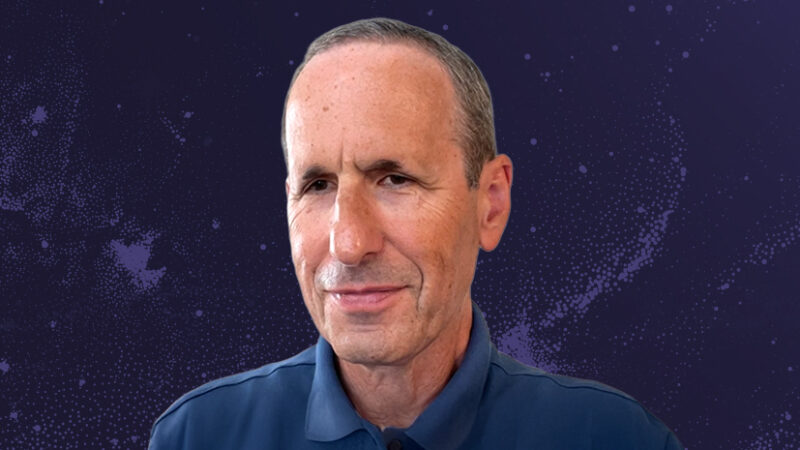
David Spiegel: Self-Hypnosis for Well-Being

    —
August 29, 2023

David Spiegel: Self-Hypnosis for Well-Being

David Spiegel — August 29, 2023

The practice of hypnosis is considered by many people within and outside of the medical profession to be useless, dangerous, or both. Yet studies are showing how hypnosis offers us a reliable, remarkably powerful therapeutic tool for managing pain and stress, changing unwanted habits, improving sleep, and overcoming a broad range of health challenges. 

In this podcast, Tami Simon speaks with author and psychiatrist Dr. David Spiegel to separate the facts from the fiction, exploring: hypnosis as a naturally occurring state of highly focused attention; letting go of our usual preconceptions about ourselves; cognitive flexibility (not “suggestibility”); Dionysians, Apollonians, and Odysseans—three categories of hypnotizability; the Spiegel eye-roll technique; a guided experience of self-hypnosis for stress and anxiety; hypnosis vs. meditation; respecting and protecting your body; focusing on what you’re for instead of what you’re against; and a case example using self-hypnosis to heal trauma and dissociation (please note: this example occurs at 39:10–41:03 and includes a reference to sexual assault).

Note: This episode originally aired on Sounds True One, where these special episodes of Insights at the Edge are available to watch live on video and with exclusive access to Q&As with our guests. Learn more at join.soundstrue.com.

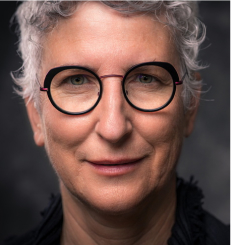
Dr. David Spiegel is Willson Professor and Associate Chair of Psychiatry & Behavioral Sciences, Director of the Center on Stress and Health, and Medical Director of the Center for Integrative Medicine at Stanford University School of Medicine, where he has been a member of the academic faculty since 1975, and was Chair of the Stanford University Faculty Senate from 2010-2011. Dr. Spiegel has more than 40 years of clinical and research experience studying psycho-oncology, stress and health, pain control, psychoneuroendocrinology, sleep, hypnosis, and conducting randomized clinical trials involving psychotherapy for cancer patients. He has published thirteen books, 404 scientific journal articles, and 170 book chapters on hypnosis, psychosocial oncology, stress physiology, trauma, and psychotherapy. His research has been supported by the National Institute of Mental Health, the National Cancer Institute, the National Institute on Aging, the National Center for Complementary and Integrative Health, the John D. and Catherine T. MacArthur Foundation, the Fetzer Institute, the Dana Foundation for Brain Sciences, and the Nathan S. Cummings Foundation. He was a member of the work groups on stressor and trauma-related disorders for the DSM-IV and DSM-5 editions of the American Psychiatric Association’s Diagnostic and Statistical Manual of Mental Disorders. He is Past President of the American College of Psychiatrists and the Society for Clinical and Experimental Hypnosis, and is a Member of the National Academy of Medicine. He was invited to speak on hypnosis at the World Economic Forum in Davos in 2018.

900 Episodes and Counting…

Subscribe to Insights at the Edge to hear all of Tami’s interviews (transcripts available too!), featuring Eckhart Tolle, Caroline Myss, Tara Brach, Jack Kornfield, Adyashanti, and many more.

Meet Your Host: Tami Simon

Each week on Insights at the Edge, Tami Simon interviews leading voices in the Mind/Body/Spirit space about a vast spectrum of fascinating ideas. Since 2009, Tami and her guests have been exploring the edge of understanding, nearly 1,000 episodes on the honest work of change, including spiritual discovery, awakening, intuition, purpose, trauma, and grief.

Photo © Jason Elias

Also By Author

David Spiegel: Self-Hypnosis for Well-Being

The practice of hypnosis is considered by many people within and outside of the medical profession to be useless, dangerous, or both. Yet studies are showing how hypnosis offers us a reliable, remarkably powerful therapeutic tool for managing pain and stress, changing unwanted habits, improving sleep, and overcoming a broad range of health challenges. 

In this podcast, Tami Simon speaks with author and psychiatrist Dr. David Spiegel to separate the facts from the fiction, exploring: hypnosis as a naturally occurring state of highly focused attention; letting go of our usual preconceptions about ourselves; cognitive flexibility (not “suggestibility”); Dionysians, Apollonians, and Odysseans—three categories of hypnotizability; the Spiegel eye-roll technique; a guided experience of self-hypnosis for stress and anxiety; hypnosis vs. meditation; respecting and protecting your body; focusing on what you’re for instead of what you’re against; and a case example using self-hypnosis to heal trauma and dissociation (please note: this example occurs at 39:10–41:03 and includes a reference to sexual assault).

Note: This episode originally aired on Sounds True One, where these special episodes of Insights at the Edge are available to watch live on video and with exclusive access to Q&As with our guests. Learn more at join.soundstrue.com.
You Might Also Enjoy

Richard Schwartz and Tamala Floyd: Healing Across Gene...


What if the anxiety, grief, or fear you’ve struggled with for years is a burden you inherited—not one you earned?

This week, Tami Simon speaks with Richard Schwartz—founder of Internal Family Systems and author of the bestselling No Bad Parts—and Tamala Floyd, psychotherapist, IFS lead trainer, and author of Listening: When Parts Speak: A Practical Guide to Healing with IFS Therapy and Ancestor Wisdom. Together, they explore how IFS and ancestral healing converge to help us release intergenerational trauma at its root.

Join Tami, Dick, and Tamala to explore:

  • What “legacy burdens” are in IFS—and how to recognize when what you’re carrying came from someone else
  • How personal, ethnic, and cultural legacy burdens operate differently—and why racism, historical trauma, and collective suffering require their own healing
  • The concept of the “well ancestor”: why every lineage has one, and how to invite them into your healing
  • Heirlooms vs. burdens: how our ancestral lines carry gifts as well as wounds—and how to receive them
  • Why legacy burdens are often easier to release than personal ones—and what fear most commonly gets in the way
  • Tamala’s guided ancestral meditation, offered live: a practice for releasing what no longer serves you
  • What we offer future generations simply by doing our own inner work

The episode includes a full guided meditation led by Tamala Floyd—drawn directly from her ancestors—that listeners can return to again and again.

Listen now and begin your own healing across generations. →

This conversation offers genuine transmission—not just concepts about awakening, but the palpable presence of realized teachers exploring the growing edge of spiritual understanding together. Originally aired on Sounds True One.

Tian Dayton: If You Grew Up with Addicts, Healing Is a...

Trauma doesn’t show up in what we remember. It shows up in how we react.

This week, Tami Simon speaks with Dr. Tian Dayton—award-winning scholar, senior fellow at The Meadows, and author of Growing Up with Addiction: How Adult Children of Addicts Can Heal Family Trauma, Complex PTSD and Codependency—about what it means to grow up inside a family shaped by addiction, and what it actually takes to heal.

Drawing on decades of clinical work, her own lived experience, and her innovative Relational Trauma Repair (RTR) method, Dr. Dayton explores the neuroscience of relational trauma and the embodied, experiential path through it.

Join Tami and Tian to explore:

  • Why addiction is a family disease—and how process addictions like workaholism and overeating leave the same marks as substance use
  • How childhood trauma gets stored in the body, not the story—and why you can’t think your way out of complex PTSD
  • The neuroscience of overreaction: why triggers feel present-tense even when they’re decades old
  • Cognitive and somatic distortions—and how to recognize when the past is hijacking the present
  • Psychodrama and Relational Trauma Repair: the power of talking to instead of about
  • Timelines, social atoms, and letter writing as tools for putting fragmented memories back in order
  • Why healing is a discipline—and what it means to take ownership of your own darkness as a path to freedom

Whether you grew up in a home shaped by addiction or simply recognize the patterns Dr. Dayton describes, this interview offers both a map and the courage to begin the journey.

Listen now and start where you are. 

This conversation offers genuine transmission—not just concepts about awakening, but the palpable presence of realized teachers exploring the growing edge of spiritual understanding together. Originally aired on Sounds True One.

Aviv Shahar: This Epochal Moment

Aviv Shahar explores why we’re living through an Epochal Moment—a rare transition between ages where one epoch dies as another emerges. He maps the five-thousand-year journey that brought us here, reveals the “bugs” in our collective evolution that require remedying, and describes the emerging capacities of the universal human we’re becoming as we navigate this bewildering, transformative threshold.

Note: This interview originally aired on Sounds True One, where these special episodes of Insights at the Edge are available to watch live on video and with exclusive access to Q&As with our guests. Learn more at https://www.join.soundstrue.com