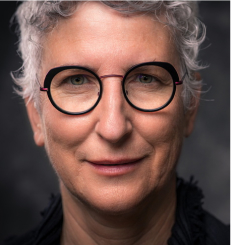
Mary O’Malley: What’s in the Way Is the Way

    —
March 1, 2016

Mary O’Malley: What’s in the Way Is the Way

Mary O’Malley March 1, 2016

Mary O’Malley is an author, counselor, and acknowledged leader in the field of spiritual awakening. With Sounds True, Mary has published What’s in the Way Is the Way: A Practical Guide for Waking Up to Life. In this episode of Insights at the Edge, Tami Simon and Mary discuss the eight “spells” that keep us feeling separate from life—as well as the remedies that bring us more fully into the energetic flow of existence. They speak on the need for curiosity, and the role it plays in uniting our attention with our present-moment experience. Finally, Mary explains her understanding of the awakening process and the skills one can cultivate to come into a robust and joyous alignment with life itself.
(60 minutes)

Photo of ()\

Mary O'Malley is an author, counselor, and acknowledged leader in the field of awakening. Through her writing and teaching, she empowers people to work with the difficulties of life in a way that enhances their capacity for joy. For more, visit maryomalley.com.

Listen to Tami Simon's in-depth audio podcast interview with Mary O'Malley:
What's in the Way Is the Way »

600 Podcasts and Counting…

Subscribe to Insights at the Edge to hear all of Tami’s interviews (transcripts available too!), featuring Eckhart Tolle, Caroline Myss, Tara Brach, Jack Kornfield, Adyashanti, and many more.

Meet Your Host: Tami Simon

Founded Sounds True in 1985 as a multimedia publishing house with a mission to disseminate spiritual wisdom. She hosts a popular weekly podcast called Insights at the Edge, where she has interviewed many of today's leading teachers. Tami lives with her wife, Julie M. Kramer, and their two spoodles, Rasberry and Bula, in Boulder, Colorado.

Photo © Jason Elias

Also By Author

Mary O’Malley: What’s in the Way Is the Way

Mary O’Malley is an author, counselor, and acknowledged leader in the field of spiritual awakening. With Sounds True, Mary has published What’s in the Way Is the Way: A Practical Guide for Waking Up to Life. In this episode of Insights at the Edge, Tami Simon and Mary discuss the eight “spells” that keep us feeling separate from life—as well as the remedies that bring us more fully into the energetic flow of existence. They speak on the need for curiosity and the role it plays in uniting our attention with our present-moment experience. Finally, Mary explains her understanding of the awakening process and the skills one can cultivate to come into a robust and joyous alignment with life itself. (60 minutes)

Tami’s Takeaway
One of the worst feelings for me is helplessness. Mary teaches that “life is destined to bring up what is bound up.” This podcast brought up for me how I push away feelings of helplessness. According to Mary, “what’s in the way is the way,” and we can become what she calls “tightness detectives” to see how we clamp down in certain situations and resist what we don’t want to feel. When instead we meet our feelings with curiosity and spaciousness, we discover the free flow of aliveness and the absolute trustworthiness in every experience.

Are You Enough?

By Mary O’Malley

Are you enough?  Take a moment and be honest with yourself.  Do you live with a sense that you are okay and life is okay exactly as it is? Probably not, because you, like most people, have been conditioned to think that you need to be better or different to be okay. This brings forth the belief that it is only when you get it all together (in the future) that you will be enough.

To get a glimpse into this constant seeking, ask yourself these questions:

Is your body enough because you have gotten rid of the weight, the wrinkles, the too big nose?

Is your mate enough, always relating to you in ways that you want them to?

Are your meditations enough, or are you always seeking for better states of mind?

Are your career, your finances, even your children ever enough in your mind?

If you look closely, you would have to say that, even though your life is how you want it to be for moments, your mind always takes over again in its endless search for lasting satisfaction. We are all like a hungry ghost searching, searching, searching. We seek and long and grasp at what our mind says will bring lasting satisfaction, only to get caught in the illusion that more, more, more will finally fill the empty hole inside of us:

You finally lose the weight and then think either you should lose five more pounds or you become afraid of gaining it back.

You find your perfect mate only to discover six months into the relationship that there are things about them that drive you crazy.

You finally get a raise at work only to find out that you’re living in the same financial stress because you can now buy fancier toys or more complex plastic surgeries, hoping that this will bring you lasting satisfaction.

Stephen Levine once told a story about a 93-year-old woman on her deathbed who said, “It can’t end now because it hasn’t started yet!” It is amazing that most of us don’t see this endless search for satisfaction and how unsatisfying it is in the long run.

If you look with great curiosity, you will see that this search for something out there – a skinnier body, a different mate, more money, deeper meditations, better sex, a happier mind, a fancier house, more, more, more – is a thirst that will never be quenched except for a moment here and a moment there. Read the studies on how much misery winning the lottery brings into people’s lives and you will see the truth of this.

What would happen if you discovered that there is a field of enoughness that is always with you? What would happen if you finally understood that the deep and lasting satisfaction you have been searching for your whole life is always here? To look for lasting satisfaction in the constantly changing flow of life is suffering. To relax the search for more, more, more and to discover an intimate connection with this living moment of your life is to finally come home.

I invite you for a moment to stop reading this blog and lift your eyes to receive your life. This is a unique moment in your life and it is the only moment that matters. See it as if you have never been on this planet before.  Even if you have been in this exact place a thousand times, still, it is brand new.

If your attention doesn’t yet know how to ground here, close your eyes and focus on all the sounds that are arising and passing. There are loud sounds like somebody talking in the next room and soft sounds, like the hum of your computer.  There are sounds far away like an airplane in the sky and there are sounds very close like your breath in your nostrils.

To truly listen to your life is to come home to the only moment that matters – right now. And in an intimate connection with Life the moment it appears out of mystery, you are no longer caught in the endless and unsatisfactory search for satisfaction.

Of course, when your mind sees this, it is very likely that its newest search will be to try to live in ‘the now’, for it believes that will bring it lasting satisfaction.  This doesn’t work! Why? For you are already in the now and any attempt to get there is just more searching.

But what you can do is remember that in all your searching you are already home. You don’t need to try to get here. Instead you can discover how to see and not get seduced into the endless search for satisfaction. Whenever you are caught in wanting things to be different than what they are, it can help to simply say to yourself, “This moment is enough, exactly as it is. I am enough, exactly as I am.”

In order to rest in your natural enoughness, it is important to recognize that nothing in this ever-changing world will bring lasting satisfaction. It can certainly bring temporary happiness and we can enjoy that happiness. But to require that Life, in its ever-changing flow, is where lasting satisfaction will be found is truly suffering.

You can also understand that life is putting you in the exact set of circumstances that will allow you to see how restless and busy your mind is in trying to get to the peace you long for.

You can also finally understand that it is truly a blessing to not get what you want. The pain of having your constant search blocked is the doorway out of the endless seeking and back into an intimate connection with Life. For, what is in the way IS the way!

If you are interested in exploring this further, I encourage you to visit my website and listen to my Radio Show. I am also offering a class on What’s in the Way IS the Way.

———————————–

Mary O’Malley is an author, counselor and awakening mentor in Kirkland, Washington. In the early 1970’s, a powerful awakening led Mary to begin changing her relationship with her challenges, freeing her from a lifelong struggle with darkness. Mary’s latest book, What’s In the Way Is the Way, provides a revolutionary approach for healing your fears, anxieties, shame, and confusion, so you can live from a place of ease.


Mary O’Malley: What’s in the Way Is the Way

Mary O’Malley is an author, counselor, and acknowledged leader in the field of spiritual awakening. With Sounds True, Mary has published What’s in the Way Is the Way: A Practical Guide for Waking Up to Life. In this episode of Insights at the Edge, Tami Simon and Mary discuss the eight “spells” that keep us feeling separate from life—as well as the remedies that bring us more fully into the energetic flow of existence. They speak on the need for curiosity, and the role it plays in uniting our attention with our present-moment experience. Finally, Mary explains her understanding of the awakening process and the skills one can cultivate to come into a robust and joyous alignment with life itself.
(60 minutes)

You Might Also Enjoy

Phenomena Finale: Not a Machine but a Flame [Takeover]

What is the “energy” in energy healing? Healers channel it. Patients reach for it. Ancient healing traditions built entire systems around it, and modern researchers are working to study it. But what is energy, biologically, physically, measurably…but also spiritually, and how does it move through the body to influence health and healing?

In this special feed takeover, we’re bringing you the season finale of Phenomena: The Science and Stories of Energy Healing, in which host Ivy Ross brings together three renowned scientists whose visions, taken together, begin to answer that question:

  • Martin Picard, PhD, of Columbia University, has spent his career studying mitochondria, the body’s cellular power sources, and has found them far more connected to our inner experience and consciousness than biomedicine ever assumed, and likely far more central to how we heal.
  • Richard Hammerschlag, PhD, co-authored the paper that helped define the modern science of the biofield: the organizing fields of energy and information that operate within the body and extend outward from it, echoing the nested qi fields of older healing traditions.
  • Neil Theise, MD, of NYU, helped identify the interstitium, a major recent discovery of a fluid-filled network running throughout the body that may explain how signals fundamental to health and healing actually travel.

Together, these three voices offer a compelling, deeply human vision of the body and mind not as a machine, but as a dynamic energetic ecosystem.

To close out the season, Ivy and researcher Meredith Sprengel also welcome special guest Jonathan Cohen, co-creator and executive producer of Mayim Bialik’s Breakdown, to help land these big ideas about energy, healing, and life.

This episode marks the finale of Phenomena‘s first season. To continue the journey and explore the full docuseries, visit phenomenahealing.com. →

Just One Question | Martha Beck: What Do I Do At Three...


Three in the morning. Brain already running. Every unfinished thing in your life suddenly very urgent. Sound familiar?

We pulled this week’s question because when Tami asked Martha Beck what to actually do in that moment, her answer was genuinely not what we were expecting. No breathwork protocol. No journaling prompt. What Martha offers is something way simpler — and honestly, kind of revolutionary in how low the bar is.

Martha Beck is a Harvard-trained sociologist, bestselling author, and one of the sharpest minds out there on anxiety and how we actually heal it. She’s been working through her own anxiety since childhood, and she’s arrived somewhere really good. (Spoiler: it involves audiobooks, furry blankets, and thinking like a golden retriever.)

Here’s some of what she gets into:

  • Why she plays Sounds True audiobooks at half-speed in the middle of the night — and why slowing down is the whole point
  • The self-kindness practice she uses when her brain won’t quit, including the exact question she asks herself
  • A story from Liz Gilbert’s Eat, Pray, Love about a two-word message that Martha keeps coming back to — it’s a good one
  • How decades of anxiety can actually rewire into something peaceful, and why what fires together really does wire together

Honestly, this one left us wanting to go take a nap. In the best way.

Taken from the full Insights at the Edge conversation with Martha Beck. Find the complete interview in this feed or at soundstrue.com.

This episode is sponsored by Omega Institute, a global gathering hub for lifelong learning and spiritual exploration. Omega offers weekend workshops, special events, rest and rejuvenation retreats, professional training, online learning, and more. Discover what calls to you at eomega.org/true.

Russ Hudson on the Enneagram: 9 Gateways to Presence a...

The enneagram offers a deeper understanding of personality, emotional patterns, and relationships. Through Russ Hudson’s teachings, the enneagram nine types explained become more than personality labels. They reveal the habits, fears, and motivations that shape everyday life and personal growth.

At Sounds True, we have spent decades sharing transformational teachings that support greater self awareness, presence, and conscious living. Through conversations with teachers like Russ Hudson, we continue to offer guidance for meaningful inner growth.

Below, we’ll look at Russ Hudson’s perspective on the enneagram personality types and how the enneagram can support greater awareness, connection, and personal transformation.

Key Takeaways:

  • Self Awareness: Learn how the enneagram helps identify unconscious emotional patterns and habitual reactions.
  • Russ Hudson’s Teachings: Understand Russ Hudson’s perspective on presence, compassion, and personal growth through the enneagram.
  • The Nine Types: Gain a clearer enneagram types overview and how each type approaches fear, relationships, and motivation.

Discover how your mind really works

Why Russ Hudson Says the Enneagram Personality Types Matter for Presence

Many people first encounter the enneagram personality types while searching for answers about relationships, communication, or emotional habits. Russ Hudson teaches that the enneagram offers something deeper than personality analysis alone. He describes the system as a pathway toward greater presence, emotional honesty, and self understanding. Instead of placing people into limiting categories, the enneagram helps reveal the unconscious patterns that shape reactions, fears, and desires.

Through careful observation, people begin to notice the habits that keep them trapped in self criticism, anxiety, avoidance, or emotional reactivity. That awareness creates room for compassion and meaningful growth.

The enneagram also speaks to a universal longing for connection and belonging. Each type reflects a different strategy for seeking love, stability, or recognition. By understanding these patterns, people gain language for experiences they may have struggled to explain before.

Russ Hudson Enneagram Teachings and the Path to Self Awareness

Russ Hudson approaches the enneagram as a living system that deepens through reflection and experience. His teachings encourage people to slow down and notice what is happening beneath their surface reactions and emotional patterns.

The Enneagram as a Tool for Honest Observation

According to Hudson, the enneagram becomes most useful when people approach themselves with curiosity instead of judgment. Every type develops habits that once offered protection but eventually limit emotional freedom and connection. By recognizing these habits, individuals can respond more consciously rather than reacting automatically.

Hudson teaches that lasting growth develops gradually through awareness, not through trying to become a different person. The enneagram supports this process by helping people identify recurring emotional patterns and unconscious motivations.

Self Awareness Creates Room for Change

One of the central themes in Russ Hudson enneagram teachings is that awareness changes the relationship people have with their inner world. Instead of feeling overwhelmed by fear, anger, shame, or anxiety, individuals learn to observe those emotions without becoming consumed by them.

As people strengthen self awareness, they often become more compassionate toward themselves and others. The enneagram encourages reflection on how personal struggles connect to universal human experiences. This understanding can soften defensiveness and create more authentic relationships.

Enneagram Nine Types Explained Through Core Motivations and Patterns

The enneagram nine types explained by Hudson are rooted in motivations that influence behavior, attention, and emotional responses. Each type represents a different way of navigating life while searching for security, connection, or meaning.

Understanding the Core Motivations Behind Each Type

Some types move toward achievement and recognition, while others seek peace, certainty, independence, or emotional depth. Hudson explains that these motivations are not simply preferences. They are deeply ingrained survival strategies developed over many years of experience.

Type Two may focus on helping others to feel needed, while Type Five protects energy through privacy and observation. Recognizing these motivations helps people understand why certain situations feel emotionally charged or difficult to navigate.

Patterns Become More Visible Through Presence

Hudson teaches that emotional patterns become easier to recognize when people practice presence during ordinary moments. The enneagram is not only about analyzing behavior afterward. It also supports awareness in real time.

As people notice how they react under stress, avoid discomfort, or seek approval, they gain greater emotional clarity. This awareness allows individuals to pause before repeating familiar habits. Over time, those pauses can support healthier choices and meaningful personal growth.

An Enneagram Types Overview of Attention, Fear, and Desire

An enneagram types overview often begins with behavior, but Hudson emphasizes the importance of attention. Each type focuses on different concerns, fears, and desires that shape perception and emotional experience.

Attention Shapes the Way People Experience Life

Hudson explains that people rarely notice how selective attention influences their inner world. Certain details feel urgent or emotionally significant depending on type structure. Some individuals focus on possible problems, while others seek harmony, achievement, excitement, or emotional intensity.

By becoming aware of where attention naturally goes, people gain insight into the emotional habits that shape everyday experiences.

Fear and Desire Influence Every Type

Every enneagram type contains a central fear and desire that influences decisions and behavior. A Type Three may fear failure or worthlessness, while a Type Six may fear uncertainty and instability. At the same time, each type also longs for something meaningful, such as peace, competence, connection, or security.

Hudson encourages people to approach these fears gently instead of treating them as flaws. The enneagram creates an opportunity to understand how fear operates beneath the surface and how greater awareness can loosen its influence over daily life.

Discover the Power of Daily Meditation and Inner Stillness

How the Enneagram Personality Types Shape Relationships and Growth

The enneagram personality types influence communication, conflict, and emotional connection. Russ Hudson teaches that relationships often become mirrors that reveal unconscious habits and defensive patterns. Through reflection, people can better understand how their type affects others and how emotional reactions develop during moments of stress or vulnerability.

  • Type One may struggle with criticism and perfectionism in relationships.
  • Type Two often seeks connection through helping and emotional support.
  • Type Three may focus heavily on achievement and external validation.
  • Type Four tends to value emotional depth and personal meaning.
  • Type Five often protects energy through distance and privacy.
  • Type Six may seek reassurance and stability during uncertainty.
  • Type Seven often avoids painful emotions through distraction or activity.
  • Type Eight may express strength to avoid vulnerability or losing control.
  • Type Nine often seeks harmony while neglecting personal priorities.

Hudson explains that recognizing these tendencies can improve communication and empathy.

Russ Hudson Enneagram Insights on Presence, Compassion, and Inner Work

A consistent message in Russ Hudson enneagram teachings is that inner work begins with presence. Many people spend years trying to change themselves without fully understanding what drives their reactions. Hudson encourages a different approach rooted in observation, compassion, and patience. Rather than fighting uncomfortable emotions, people can learn to stay present with them and listen carefully to what they reveal.

This approach supports a more grounded relationship with growth. Instead of chasing constant self improvement, the enneagram invites people to reconnect with qualities that already exist beneath defensive patterns. Compassion becomes an essential part of the process because shame and harsh self judgment often reinforce the habits people hope to change.

Hudson also emphasizes the importance of awareness in ordinary life. Personal growth does not happen only during meditation, study, or spiritual practice. It also unfolds during conversations, routines, moments of frustration, and experiences of joy.

Using the Enneagram for Self Awareness in Everyday Life

The enneagram for self awareness becomes most meaningful when applied consistently in everyday situations. Hudson teaches that small moments of awareness can gradually transform long standing habits. Pausing during conflict, noticing emotional reactions, or observing patterns of avoidance all create opportunities for greater understanding.

Many people use the enneagram to strengthen relationships, deepen spiritual practice, and improve emotional resilience.

Hudson encourages people to approach the enneagram with humility and openness. The deeper purpose is learning how to live with more awareness, compassion, and presence.

Enneagram Nine Types Explained as Gateways to Personal Growth

Russ Hudson teaches that the enneagram becomes transformative when people use it as a practice of awareness rather than a fixed identity system. The enneagram nine types explained through his perspective invite people to notice how automatic patterns influence thoughts, emotions, relationships, and spiritual connection. Instead of remaining trapped in habitual reactions, individuals can begin creating space for more conscious choices.

This process takes honesty and patience. Growth rarely happens through dramatic breakthroughs alone. More often, it develops through small moments of awareness that gradually shift the way people respond to themselves and others. Hudson reminds listeners that compassion is essential during this process because meaningful transformation cannot grow from shame or harsh self judgment.

The enneagram also encourages people to recognize the humanity shared across all nine types. Every person experiences fear, longing, vulnerability, and the desire for connection. Through presence and self awareness, the enneagram offers support for a more grounded and connected way of living.

Discover how your mind really works

Final Thoughts

Russ Hudson’s teachings on the enneagram remind us that personal growth begins with awareness. The enneagram personality types are not meant to confine people to labels but to help illuminate the patterns that shape thoughts, emotions, and relationships. Through greater presence and self observation, the enneagram offers a meaningful path toward compassion, connection, and lasting inner growth.

Frequently Asked Questions About Russ Hudson and the Enneagram

What makes Russ Hudson’s enneagram teachings different?

Russ Hudson emphasizes presence, awareness, and inner observation rather than treating the enneagram as a simple personality quiz. His teachings focus on emotional honesty and conscious growth.

Can the enneagram support spiritual growth?

Yes. Many people use the enneagram as part of spiritual practice because it helps uncover unconscious patterns that affect thoughts, emotions, and relationships.

Is the enneagram based on behavior alone?

No. The enneagram also examines motivations, fears, desires, and patterns of attention that influence behavior beneath the surface.

Why do people identify strongly with certain enneagram types?

People often recognize themselves in a type because the enneagram describes familiar emotional patterns, coping strategies, and inner struggles with surprising accuracy.

How long does it take to understand your enneagram type?

For some people, recognition happens quickly. Others need time for reflection because several types may initially feel familiar. Honest self observation usually brings greater clarity over time.

Can someone relate to more than one enneagram type?

People may see aspects of themselves in several types, but the enneagram teaches that one core type usually shapes a person’s primary motivations and emotional patterns.

How does the enneagram improve communication?

The enneagram helps people understand how different personalities respond to stress, conflict, and emotional needs, which can create more empathy and patience in conversations.

Is the enneagram helpful in relationships?

Yes. Many people use the enneagram to better understand emotional reactions, relationship dynamics, communication styles, and personal boundaries.

Does the enneagram change over time?

A person’s core type remains consistent, but emotional maturity, awareness, and life experiences can influence how that type is expressed.

Why is presence important in enneagram work?

Presence helps people notice automatic reactions before acting on them. This awareness creates opportunities for healthier responses and deeper personal growth.

Michelle Cassandra Johnson is an author, activist, spiritual teacher, racial equity consultant, and intuitive healer. She is the author of six books, including Skill in Action and Finding Refuge. Amy Burtaine is a leadership coach and racial equity trainer. With Robin DiAngelo, she is the coauthor of The Facilitator's Guide for White Affinity Groups. For more, visit https://www.michellecjohnson.com/wisdom-of-the-hive.