Matthieu Ricard: Finding Inner Freedom

    —
December 8, 2020

Matthieu Ricard: Finding Inner Freedom

Matthieu Ricard December 8, 2020

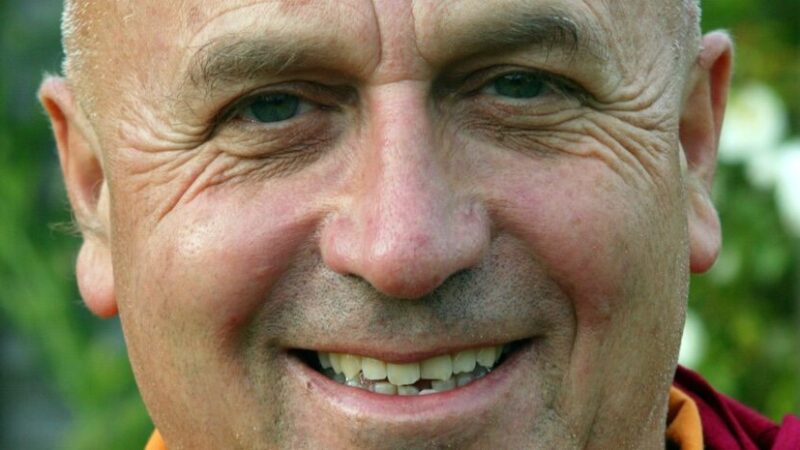
Matthieu Ricard is a French author, photographer, translator, and Buddhist monk. With Sounds True, he has joined with coauthors Christophe André, a well-known French psychiatrist, and Swiss philosopher Alexandre Jollien to create two books: In Search of Wisdom: A Monk, a Philosopher, and a Psychiatrist on What Matters Most and, most recently, Freedom for All of Us: A Monk, a Philosopher, and a Psychiatrist on Finding Inner Peace. In this episode of Insights at the Edge, Tami Simon speaks with Matthieu about the path to inner freedom. They discuss the obstacles we encounter on the path, such as addiction or confusing our willpower with true freedom. Matthieu also explores what supports inner freedom, the nature of optimism, and the training we must go through. Finally, they move into the “harvest” that comes from cultivating deep and lasting inner freedom.


Photo of ()\

Matthieu Ricard is a Buddhist monk and has authored several books, including The Monk and the Philosopher and The Quantum and the Lotus. He is a major participant in the research collaboration between cognitive scientists and Buddhist practitioners, spearheaded by the Dalai Lama and the Mind and Life Institute. Ricard is a noted translator and photographer, and initiates and oversees humanitarian projects in India, Tibet, and Nepal. For more information, visit www.shechen.org.

Author photo © PhilippeDanais2017

Listen to Tami Simon's in-depth audio podcast interview with Matthieu Ricard:
The Altruistic Revolution: Transform Ourselves to Better Serve Others »
Happiness Is a Skill »

600 Podcasts and Counting…

Subscribe to Insights at the Edge to hear all of Tami’s interviews (transcripts available too!), featuring Eckhart Tolle, Caroline Myss, Tara Brach, Jack Kornfield, Adyashanti, and many more.

Meet Your Host: Tami Simon

Founded Sounds True in 1985 as a multimedia publishing house with a mission to disseminate spiritual wisdom. She hosts a popular weekly podcast called Insights at the Edge, where she has interviewed many of today's leading teachers. Tami lives with her wife, Julie M. Kramer, and their two spoodles, Rasberry and Bula, in Boulder, Colorado.

Photo © Jason Elias

Also By Author

Matthieu Ricard: Finding Inner Freedom

Matthieu Ricard is a French author, photographer, translator, and Buddhist monk. With Sounds True, he has joined with coauthors Christophe André, a well-known French psychiatrist, and Swiss philosopher Alexandre Jollien to create two books: In Search of Wisdom: A Monk, a Philosopher, and a Psychiatrist on What Matters Most and, most recently, Freedom for All of Us: A Monk, a Philosopher, and a Psychiatrist on Finding Inner Peace. In this episode of Insights at the Edge, Tami Simon speaks with Matthieu about the path to inner freedom. They discuss the obstacles we encounter on the path, such as addiction or confusing our willpower with true freedom. Matthieu also explores what supports inner freedom, the nature of optimism, and the training we must go through. Finally, they move into the “harvest” that comes from cultivating deep and lasting inner freedom.


How Does Meditation Liberate Us?

MATTHIEU RICARD: In the beginning, our mind is very turbulent, so it is very difficult to complete an analytical meditation and to cultivate compassion, and it’s still more difficult to observe the nature of awareness. We just have to deal with a whirligig of thoughts. The first step, therefore, as we have seen, is to achieve a certain level of calm. We don’t do this by knocking out the mind the way we would knock somebody out with a stick; rather we give it a chance to become a little clearer, a little more stable.

That’s why most meditations begin with observation of the breath. It is at the same time practical (the breath is always there), simple (a constant movement of coming and going), and subtle (it’s invisible, and if we don’t pay attention, it disappears instantly from our perceptual field). It is, therefore, an excellent object for refining our attentional faculty. This simple training is not necessarily easy, however. We can even be discouraged at the beginning by seeing that “I have more thoughts now than I had before; meditation is not for me.” There are not necessarily more of the thoughts; rather we have begun to perceive what is going on, to be able to gauge the extent of the damages. However, like a waterfall turning into a mountain torrent, and then into a river, and finally a still lake, the mind calms down with time.

After a few weeks or even a few months, I can pass on to the next stage: “Now that I have a more flexible and accessible mind and can direct it like a well-trained horse, I can say to it: ‘Apply yourself to compassion.’” This sequence of progression should be respected, and it is of no use trying to skip ahead. If you try to meditate on compassion when your mind still won’t hold still, you won’t cultivate compassion; you’ll simply be distracted.

I can also ask myself, “In the end, who is meditating? The ego? Awareness?” I can analyze the nature of all that. In a more contemplative and direct fashion, I can deepen my questioning: “What is behind all these thoughts? Is it not awakened presence, the quality of pure awareness that is behind all mental events?” At that point, I begin to glimpse that which, underlying all thoughts, is always there like the unmoving sky behind the clouds. I can then let the mind rest in this pure awareness.


A Toolbox for Meditation

CHRISTOPHE ANDRÉ:

Meditation is not only a religious or spiritual practice; it is also a form of mind training. It can help us cultivate attention, detachment, understanding, and emotional balance. It can also help us to develop our basic human virtues, which otherwise might lie dormant deep within us and not express themselves. I’m talking about kindness, compassion, generosity, and so on.

Meditation is simple. It only requires us to regularly pause and observe the nature of our experience—our breathing, sensations, emotions, thoughts. Everything starts with that.

Starting with very simple kinds of exercises like those recommended in mindfulness meditation (the kind of meditation we use in health care and education), there are many meditative traditions that are much more demanding and complex. As with the piano, we can very quickly learn to play a few little pleasant tunes; then we can go on to cultivate virtuosity for the rest of our lives.


ALEXANDRE JOLLIEN:

Let things pass. If I had to sum up the practice in three words, without hesitation, I’d go for “Let things pass.” In the midst of chaos or deep in one’s inner battlefields, dare to make the experiment of not controlling, of dropping the self. It’s mayhem, but there’s no problem! Far from giving up and far from resignation, letting things pass means distinguishing between the psychodramas (the problems created by conceptual mind) and the genuine tragedies of existence, which call for solidarity, commit- ment, and perseverance.

Meditating is stripping down, daring to live nakedly in order to give oneself, contributing to the welfare of the world, giving one’s share. Why don’t we look at the day that lies ahead of us not as a store where we can acquire things, but as a clinic, a dispensary of the soul, where together we can recover and advance?


MATTHIEU RICARD:

Meditation requires diligence, which should be nourished by enthusiasm, by joy in the virtues, by inner peace, by compassion, and by the feeling of having a clear direction in life.

Meditation, in itself, does not have harmful effects. Meditation is not contraindicated unless it is not properly understood or properly used—used in the wrong conditions or at the wrong time. Whether we like it or not, from morning till night we are dealing with our mind. Who wouldn’t want their mind to be functioning in the optimal fashion and to be providing them with inner freedom rather than playing rotten tricks on them?

This is an adapted excerpted from the newest book from Matthieu Ricard, Christophe André, and Alexandre Jollien, Freedom For All Of Us: A Monk, A Philosopher, and a Psychiatrist on Finding Inner Freedom.

Copy of MatthieuRicard-AlexandreJollien-ChristopheAndré©PhilippeDanais2017

Matthieu Ricard is a Buddhist monk, a photographer, and a molecular geneticist who has served as an interpreter for the Dalai Lama. 

Christophe André is a psychiatrist and one of the primary French specialists in the psychology of emotions and feelings.

Alexandre Jollien is a philosopher and a writer whose work has been attracting an ever-growing readership. Together, they are the authors of In Search of Wisdom and Freedom For All of Us.

Learn More

Sounds True | Amazon | Barnes & Noble | Bookshop | IndieBound


Tools for Cultivating Supportive Friendships & Re...

Tools for Cultivating Supportive Friendships & Relationships:

CHRISTOPHE ANDRÉ:

For this toolbox I’d like to put forward a little bit of theory about how we are supported by relationships — that is, to offer an overall look at what we receive from our relationships with others.

The five benefits of relationships. Studies show that social support can be broken down into several families of benefits:

  1. Material support: Others can help us in concrete ways. If I’ve broken my leg, I will be glad if somebody will do my shopping for me. If I have to move, I will be happy to have my friends help me transport the boxes.
  2. Informational support: Others can advise us, give us useful infor- mation, and play the role of human search engines — as intelligent as Google but alive and compassionate — and they won’t resell our personal information afterward.
  3. Emotional support: Others are the source of positive emotions; they give us affection, love, friendship, trust, admiration.
  4. The support of esteem. Others can remind us of our value and good qualities, tell us what they like about us, and sustain our self-esteem at moments of uncertainty.
  5. The inspiration of their example: This is more difficult to evaluate scientifically, but it’s quite real, as we have indicated.

The four varieties of relationships. Another important point is that it is helpful to cultivate varied social relationships, just as it is important to have a varied diet. There are four families of relationships, distributed in four concentric circles:

  1. Our intimates: the people we live with, whom we touch and embrace practically every day. This means mostly our family and best friends.
  2. Our close relations: our friends and colleagues, people with whom we regularly have close and regular exchanges.
  3. Our acquaintances: the whole network of people with whom we have a connection, even occasional, and who we keep track of and who keep track of us.
  4. Unknowns: those who we might also have relationships with, depending on our character. This includes people we might speak to on the street, on public transport, in stores. They can also be sources of help or information for us, as we can for them.

Specialists in social relations remind us that it is important to draw sup- port from these four circles — not only from our intimate and close relations—and to sustain our connections with these four relational spheres by giving and receiving help, information, support, eye contact, advice, and smiles. Because the idea is not only to receive but also to give, by speaking to unknowns and maintaining warm relations with our acquaintances, neighbors, and shopkeepers, we do ourselves good. And we embellish the world, improve it, and make it more human!


MATTHIEU RICARD:

The importance of social connection. We should choose to live in an environment where people are warm, altruistic, and compassionate. If this isn’t the case in all areas of our living space, we should progressively try to establish these values or, if it’s possible, we should leave the toxic environment.

In this connection, I like to cite the case of a community on the Japanese island of Okinawa, which claims to have one of the world’s highest concentrations of people aged a hundred or over. It appears that the main factor in this exceptional longevity is not the climate or the food, but the power of this community, where people maintain particularly rich social relationships. From cradle to grave, they relate very closely with one another. The elderly people in particular get together several times a week to sing, dance, and have a good time. Almost every day they go to schools to greet the children (whether they have familial links with them or not) at the end of the school day. The elders take the children in their arms and give them treats.

Draw inspiration from the righteous, from people who, in our eyes, embody the values of impartiality, tolerance, compassion, love, and kindness. In these times of the migratory crisis, I think of all those who have taken great risks, and I remember those who protected Jewish people during the Nazi persecutions of World War II, particularly those who hid Jews in their homes. These people have since come to be called “The Righteous.” The only common point that emerges from their many accounts is a view of others based on recognition of their common human- ity. All human beings deserved to be treated with kindness. Where we saw a stranger, they saw a human being.

Meditate on altruistic love. Studies in psychology have shown that meditating on altruistic love increases people’s feelings of belonging to a community; it enhances the quality of social connections and compassionate attitudes toward unknown people, while at the same reduc- ing discrimination toward particular groups, like people of color, homeless people, and immigrants.

Draw inspiration from friends in the good and spiritual masters. I recommend that everyone see a historical documentary made in India by Arnaud Desjardins at the end of the 1960s, in which we are shown the most respected of the Tibetan masters who took refuge on the Indian slopes of the Himalayas following the Chinese invasion of their country. The film is called The Message of the Tibetans.


ALEXANDRE JOLLIEN:

The audacity to live. Existing, opening oneself to the other, is running a risk. It means dropping one’s armor, one’s protective coverings, and opening one’s eyes and daring to give oneself to the other and to the entire world. There’s no way you can invest in a relationship, so throw out your logic of profit and loss! What if we were to embark on our day without any idea of gain or of using our fellow human beings? What if we stayed attentive to all the women and men it is given to us to encoun- ter on that day, looking to find among them masters in being human? 

Identify our profound aspirations. Helping others can often amount to imposing a view of the world on them without really paying any attention to what they really want in their hearts. A man bought an elephant without giving any thought in advance to how he was going to feed it. At a loss, he was obliged to turn for help to those around him, and what he got from them was, “You never should have bought such a big animal!” What does it mean to help others? Does it mean committing completely to being there for them? Does it mean going all the way with them?

Authentic compassion. A will to power might enter into our move- ment toward the other—a thirst for recognition, a twisted attempt to redeem ourselves. Daring a true encounter means quitting the sphere of your neurosis and walking the path of freedom together. There’s no more “me,” no more “you,” but a coalescent “us,” a primordial solidarity.

Coming out of the bunker. As a result of having been burned in our relationship with another, the temptation is great to put on armor, to completely shut ourselves up in a bunker-like fortress, even to the point of suffocation. Don’t our passions, our griefs, our loves, and the fierce- ness of our desire remind us that we are essentially turned toward the other, in perpetual communication? Is there a way to live the thousand and one contacts of daily life without our ego appropriating them?

This is excerpted from the newest book from Matthieu Ricard, Christophe André, and Alexandre Jollien, Freedom For All Of Us: A Monk, A Philosopher, and a Psychiatrist on Finding Inner Freedom.

Copy of MatthieuRicard-AlexandreJollien-ChristopheAndré©PhilippeDanais2017


Matthieu Ricard is a Buddhist monk, a photographer, and a molecular geneticist who has served as an interpreter for the Dalai Lama. 

Christophe André is a psychiatrist and one of the primary French specialists in the psychology of emotions and feelings.

 Alexandre Jollien is a philosopher and a writer whose work has been attracting an ever-growing readership. Together, they are the authors of In Search of Wisdom and Freedom For All of Us.

picture of the book titles Freedom for All of Us

Learn More

Sounds True | Amazon | Barnes & Noble | Bookshop | IndieBound


You Might Also Enjoy

Spirituality And Religion: Understanding The Pathways ...

When it comes to seeking meaning, healing, or connection to something greater than ourselves, we often find ourselves standing at a crossroads: one path lined with traditions, rituals, and long-established doctrines; the other shaped by intuition, personal reflection, and direct experience. This is where many people begin to ask deeper questions about the difference between spirituality vs religion, and how both might serve their longing for purpose, belonging, and awakening. These paths aren’t always opposites; sometimes, they overlap, complement, or evolve in relation to one another. Understanding how people navigate these sacred choices reveals just how diverse and personal the journey can be.

At Sounds True, we’ve spent over four decades curating one of the world’s most trusted archives of spiritual wisdom. From the voices of Eckhart Tolle, Tara Brach, Pema Chödrön, and Michael Singer, to emerging teachers reshaping the future of inner work, we share teachings that are raw, unscripted, and alive. Our courses and digital programs are not just content; they’re living transmissions that meet people where they are, offering companionship on a path that is deeply personal and profoundly sacred.

In this piece, we’ll be discussing the distinctions and connections between spirituality and religion, how sacred paths unfold in unique ways, and how Sounds True supports those on the journey of personal transformation.

Key Takeaways:

  • Definition Clarity: The article distinguishes spirituality from religion without judgment, emphasizing personal experience and structured tradition.
  • Inclusive Pathways: Readers will gain insight into how sacred paths vary across cultures, personal choices, and evolving beliefs.
  • Supportive Resources: Sounds True offers tools, courses, and teachings to help people deepen their spiritual journey in accessible, transformative ways.

What Does It Mean To Walk A Sacred Path?

A sacred path can look different for every seeker, yet it often begins with a quiet longing for deeper meaning and connection. People step onto this path when they feel called to explore the inner landscape of the heart and the mystery that surrounds them. This exploration often leads to a richer understanding of life, truth, and the presence of the sacred:

Honoring The Many Forms Of Sacred Exploration

To begin understanding sacred paths, a person must recognize that the sacred can reveal itself through many experiences. Some find it through community and shared ritual, and others discover it through silence, nature, or personal reflection. Every expression of connection carries wisdom that shapes a seeker’s unfolding journey.

Recognizing Differences In Spiritual Beliefs

There are countless differences in spiritual beliefs across cultures and traditions, yet each carries its own doorway to meaning. These differences are not barriers; they are invitations to appreciate the diversity of human experience. When seekers approach these differences with openness, they often discover insights that deepen their personal path.

Embracing The Inner Journey As Lifelong Practice

A sacred path is less about arriving at a final truth and more about the gradual awakening that unfolds over time. The journey involves presence, compassion, and a willingness to listen inwardly. Through this gentle unfolding, the seeker recognizes the sacred not only in extraordinary moments but also in the simplicity of daily life.

Discover The Power Of Daily Meditation With Sounds True.

Spirituality Vs Religion: How Do We Define Each?

Understanding the nuances between spirituality vs religion helps us appreciate how people seek the sacred in different ways. Both offer meaningful frameworks for connection and awakening, yet they shape inner experience through distinct approaches. Here is how these two pathways can be understood with clarity and compassion:

Defining Religion As A Structured Pathway

Religion offers shared beliefs, communal practices, and traditions that have guided seekers for generations. It provides a framework for understanding the sacred within a collective, and it supports individuals through ritual, moral teachings, and spiritual lineage.

Understanding Spirituality As Personal Inner Practice

Spirituality is often described as a personal journey of inner discovery and presence. While it may draw from religious teachings, it is shaped by reflection, intuition, and direct experience. Many people exploring spirituality vs religion resonate with the freedom that spirituality offers, since it adapts naturally to each individual’s unfolding path.

Bridging Differences In Spiritual Beliefs With Openness

There are countless differences in spiritual beliefs, and each one reflects the diversity of the human search for meaning. These differences invite curiosity rather than separation. When seekers honor these variations with openness, they learn to listen more deeply to one another and to themselves.

Supporting The Individual Journey With Resources

For those exploring spirituality in personal ways, resources like the Spirituality at Sounds True can offer guidance and companionship. These teachings support seekers as they clarify their path and deepen their sense of connection.

Exploring Faith Traditions Across Time And Culture

Faith traditions have shaped human experience for thousands of years. From ancient rites to contemporary contemplative practices, these pathways help individuals connect with the sacred through lineage, symbolism, and ritual. Each tradition offers its own doorway into the mystery of being:

Recognizing The Wisdom In Ancient Traditions

Many seekers begin exploring faith traditions by studying ancient paths such as Buddhism, Christianity, Indigenous teachings, or Sufi mysticism. These systems carry centuries of lived wisdom and provide tested frameworks for spiritual transformation, community, and insight.

Understanding Cultural Expressions Of The Sacred

Spiritual practice is deeply influenced by geography, culture, and time. What may be sacred in one tradition can look very different in another. Honoring these differences supports a deeper understanding of sacred paths and the wide variety of ways people access the divine.

Welcoming Modern Expressions Of Spiritual Seeking

Today, people often blend elements from multiple faith traditions into their personal practice. This integrative approach reflects the evolving nature of spiritual identity. Whether rooted in tradition or emerging through personal experience, these paths reflect the changing face of spirituality vs religion.

Learning Through Modern Teachings And Courses

Sounds True offers digital programs that support this kind of integrative seeking. The Spiritual Courses collection allows seekers to engage with diverse teachings and deepen their understanding from the comfort of their own space.

Differences In Spiritual Beliefs And Personal Meaning

Each person’s relationship with the sacred is shaped by experience, upbringing, and inner resonance. While spiritual traditions offer shared language, the deeper truths we uncover are often intimate and unique. Recognizing and honoring the variety of perspectives helps us move beyond division and toward understanding:

Noticing The Spectrum Of Belief

From structured religious frameworks to unbound spiritual exploration, there are countless differences in spiritual beliefs. Some hold firm to doctrine; others follow intuition or direct experience. Each position, whether inherited or chosen, reflects a deep desire to live in alignment with truth.

Personal Meaning As The Core Of Connection

For many, the heart of the spiritual path lies in meaning-making. The sacred becomes real not just through belief, but through lived experience. People navigating spirituality vs religion often find clarity when they trust their own encounters with insight, love, and mystery.

Creating Space For Curiosity And Compassion

Understanding these differences calls us to soften our assumptions and open ourselves to learning. When we approach diverse beliefs with presence and care, we strengthen the collective field of awakening and deepen our understanding of sacred paths.

Supporting Healing And Integration

Many seekers come to spirituality during moments of personal transition, grief, or transformation. Offerings like the Spiritual Healing Courses at Sounds True help guide that process, providing tools and teachings that support emotional and spiritual integration.

Expand Your Consciousness With Sounds True.

How Sounds True Supports Your Spiritual Journey

As seekers explore their own path, finding resources that reflect both depth and authenticity becomes essential. Sounds True was created to serve this exact purpose to offer teachings that honor each person’s unique experience while connecting them to timeless wisdom. Here’s how Sounds True walks beside you:

Sharing The Voices Of Visionary Teachers

For over 40 years, Sounds True has partnered with spiritual leaders such as Eckhart Tolle, Pema Chödrön, Tara Brach, and many others. These teachers bring alive the richness of exploring faith traditions from multiple perspectives, all with a commitment to presence and personal transformation.

Offering Courses That Meet You Where You Are

Whether someone is new to the path or has been walking it for decades, accessible resources matter. That’s why Sounds True emphasizes experiential learning through audio teachings, online retreats, and digital workshops, tools that support real-life application and inner growth.

Creating A Living Library Of Spiritual Wisdom

The company’s deep archive has been lovingly built as a space of spiritual preservation. Its mission is to transmit the essence of a teaching through the teacher’s unscripted voice, allowing the energy behind the words to be felt, not just understood.

Inviting You To Go Deeper With Limited-Time Offerings

For those seeking guidance during pivotal seasons of their life, the BFCM Spirituality from Sounds True provides access to exclusive programs designed to support transformation. These teachings meet you where you are and help you deepen your relationship with the sacred.

Build Relationships That Nourish And Sustain.

Final Thoughts

The path to the sacred is not one-size-fits-all. Whether someone finds depth through tradition or through personal discovery, both are valid, powerful, and worthy of respect. In honoring both spirituality vs religion, we open ourselves to deeper compassion, for others and for ourselves.

It is through this openness that we begin truly understanding sacred paths. Each belief system, each story, and each practice reflects a thread in the larger fabric of human longing. While our paths may look different, our destination is shared: wholeness, presence, and connection to something greater than ourselves.

As you walk your own sacred path, may you trust your inner knowing, find nourishment in your chosen practices, and remain open to the evolving journey ahead.

Read also:

Frequently Asked Questions About Spirituality And Religion

What Is The Main Difference Between Spirituality And Religion?

The main difference lies in structure and approach. Religion typically follows organized doctrines and communal practices, while spirituality is often personal, fluid, and guided by individual experience.

Can Someone Be Both Spiritual And Religious?

Yes, many people identify as both. They may follow religious traditions while also cultivating a personal spiritual practice that reflects their inner life.

Why Do Some People Leave Religion To Pursue Spirituality?

Some leave religion due to rigid doctrines, institutional experiences, or personal disconnection, and turn to spirituality for a more intuitive, direct connection to meaning.

Is Spirituality Always Non-Theistic?

No. While some spiritual paths are non-theistic, others include a belief in God or divine presence. Spirituality is flexible and may or may not involve theism.

Does Spirituality Require A Teacher Or Guide?

Not necessarily. Some individuals learn through books, inner reflection, or life experience. Others benefit from mentors, teachers, or spiritual communities.

How Do Cultural Backgrounds Influence Spirituality Vs Religion?

Cultural heritage often shapes religious upbringing, symbols, and practices. As people grow, they may evolve beyond those frameworks or integrate them into spiritual inquiry.

Are There Ethical Systems In Spirituality Like In Religion?

Yes. Many spiritual paths promote values such as compassion, integrity, mindfulness, and non-harming, even when not tied to formal commandments or doctrines.

Can Spirituality Provide Community Like Religion Does?

Spirituality can offer community through retreats, meditation groups, online platforms, or shared practices, but it often requires more active seeking than religion-based groups.

How Do Rituals Fit Into A Spiritual Practice Without Religion?

Spiritual rituals may include meditation, journaling, lighting candles, or observing nature. These acts mark intention, presence, or transition, even outside religious tradition.

Is One Path Better Than The Other, Spirituality Or Religion?

Neither is better; both paths serve different needs. What matters most is alignment, choosing the path that feels authentic, meaningful, and supportive for your growth.

Michelle Cassandra Johnson is an author, activist, spiritual teacher, racial equity consultant, and intuitive healer. She is the author of six books, including Skill in Action and Finding Refuge. Amy Burtaine is a leadership coach and racial equity trainer. With Robin DiAngelo, she is the coauthor of The Facilitator's Guide for White Affinity Groups. For more, visit https://www.michellecjohnson.com/wisdom-of-the-hive.

Lorena Saavedra Smith: Heeding the Jaguar’s Call

Lorena Saavedra Smith shares how ancestral Pacha philosophy transforms the immigration experience into spiritual reclamation. Through the metaphor of the jaguar, she reveals a four-step method for calling back fragmented soul parts and reconnecting with nature’s wisdom. Discover how replanting yourself in new soil doesn’t require abandoning your roots—and why the matriarchs are calling us home.

Note: This interview originally aired on Sounds True One, where these special episodes of Insights at the Edge are available to watch live on video and with exclusive access to Q&As with our guests. Learn more at join.soundstrue.com.

What Is Spirituality? A Simple Guide to Meaning, Purpo...

Explore mindfulness vs meditation and discover how each can uplift your mental health. Unravel the benefits, and start your transformative journey today!

>
Share via
Copy link
Powered by Social Snap