
Miles Neale: Entering a Tibetan Buddhist Flight Simulator: Merging with a Mentor

    —
October 9, 2018

Miles Neale: Entering a Tibetan Buddhist Flight Simulator: Merging with a Mentor

Miles Neale October 9, 2018

Miles Neale is a prominent member of the current generation of Buddhist teachers, championing the emerging field of contemplative psychotherapy. With Sounds True, Miles has published Gradual Awakening: The Tibetan Buddhist Path of Becoming Fully Human. In this episode of Insights at the Edge, Tami Simon speaks with Miles about Lam Rim, the Tibetan Buddhist framework for moving into enlightened awakening step by measured step. They discuss the difference between gradually awakening and coming to enlightenment in a sudden burst, as well as the potential interplay between the two. Miles also leads Tami and the audience in a seven-step mentor bonding visualization that takes advantage of the mind’s capacity to create a “flight simulator” for felt experience. Finally, Miles and Tami talk about the need to re-embrace religion and ritual in order to transcend the “cinderblock civilization” of materialism and nihilism. (69 minutes)

Tami’s Takeaway
When Miles led us through a brief version of the mentor-bonding process that he teaches, I was surprised by who showed up in my mind’s eye. It was not a spiritual mentor, business mentor, or a psychological guide, but someone who has recently begun helping me become physically fit. This underscored for me how many different dimensions there are to mentorship, as well as how important it is to be utterly open to receiving help from a surprising source.

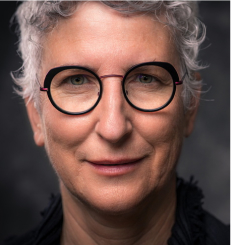
MILES NEALE, PSYD, is among the leading voices of the current generation of Buddhist teachers and a forerunner in the emerging field of contemplative psychotherapy. He is a Buddhist psychotherapist in private practice, assistant director of the Nalanda Institute for Contemplative Science, and faculty at Tibet House US and Weill Cornell Medical College.
 
Dr. Neale is coeditor of and contributor to the groundbreaking volume Advances in Contemplative Psychotherapy: Accelerated Healing and Transformation and author of Gradual Awakening: The Tibetan Buddhist Path of Becoming Fully Human. For more visit milesneale.com.

Author photo © Darren Ornitz

600 Podcasts and Counting…

Subscribe to Insights at the Edge to hear all of Tami’s interviews (transcripts available too!), featuring Eckhart Tolle, Caroline Myss, Tara Brach, Jack Kornfield, Adyashanti, and many more.

Meet Your Host: Tami Simon

Founded Sounds True in 1985 as a multimedia publishing house with a mission to disseminate spiritual wisdom. She hosts a popular weekly podcast called Insights at the Edge, where she has interviewed many of today's leading teachers. Tami lives with her wife, Julie M. Kramer, and their two spoodles, Rasberry and Bula, in Boulder, Colorado.

Photo © Jason Elias

Also By Author

Creating an Altar in Your Home

Creating An Altar in Your Home Sounds True Blog

Most of us come from secularized backgrounds from which spiritual forms, practices, and rituals have been scrubbed away, and we tend to have an aversion toward things like altars. However, most members of the world’s religious population keep a personal altar or shrine in their home, where they connect with and perform rituals to ancestors, saints, and the Divine, even amid modern, urban lives. In Western secular culture, altars have morphed into man caves, home theaters, or packed closets where we worship the gods of fame, beauty, and success. Consider how much time, energy, and prioritization we give these. Sound judgmental? Would it be judgmental for me to say a crisp, fresh kale salad is healthier than a bucket of fried chicken, or a run in the park more vitalizing than a television binge? We’ve been trained to abandon discernment—some things are better for us than others. It’s not all good.

If you can see an altar as psychological or emotional equipment—a bench press for the mind, augmentation for the heart—it might change your opinion. One of my teachers once said, “Clean your house as if the Dalai Lama was coming to visit for tea.” Now imagine sitting down at your altar with the Dalai Lama. It makes for an incredibly different experience if you picture an inspiring person right there with you. This may change your mind, not because of anything magical or special that is out there, but because the visualization shifts the quality of your experience. This altar is not for anybody else. Whose mind improves if you look at your altar and see a real Buddha instead of a bronze statue of a Buddha? Yours.

When Tibetan Buddhists set up altars, they put many objects on them, but three are central:

  • Buddha statue (symbolizing awakened body)
  • Scripture or other text (symbolizing awakened speech)
  • Stupa or other shrine (symbolizing awakened mind)

So when you sit facing an altar, you become familiar with transforming your own body, speech, and mind.

The body or form of a Buddha (rupakaya), particularly the aspects of compassion and engagement, is represented by a statue placed in the middle of the altar. Your Buddha might be a Tibetan thangka painting or a simple stone. It might be a photograph of the Dalai Lama or Pope Francis, an image of Pema Chödrön or Martin Luther King, Jr. No matter who or what it is, imagine it’s the embodiment of a real, living Buddha inviting you to practice, inspiring you to evolve.

Here is how I set up my Buddhist altar, but you can always arrange things and add or take away things as it works for you:

Create Your Own Altar Sounds True Blog

Excerpted from Gradual Awakening: The Tibetan Buddhist Path of Becoming Fully Human, by Miles Neale.

Miles Neale Creating An Alta in Your Home Sounds True Blog

MILES NEALE, PSYD, is among the leading voices of the current generation of Buddhist teachers and a forerunner in the emerging field of contemplative psychotherapy. He is a Buddhist psychotherapist in private practice, assistant director of the Nalanda Institute for Contemplative Science, and faculty at Tibet House US and Weill Cornell Medical College.

Dr. Neale is co-editor of and contributor to the groundbreaking volume Advances in Contemplative Psychotherapy: Accelerated Healing and Transformation and author of Gradual Awakening: The Tibetan Buddhist Path of Becoming Fully Human. For more visit milesneale.com.


Gradual Awakening Creating An Altar in Your Home Sounds True Blog


Buy your copy of Gradual Awakening at your favorite bookseller!

Sounds True | Amazon | Barnes & Noble | Indiebound


Creating An Altar in Your Home Sounds True Blog

Miles Neale: Entering a Tibetan Buddhist Flight Simula...

Miles Neale is a prominent member of the current generation of Buddhist teachers, championing the emerging field of contemplative psychotherapy. With Sounds True, Miles has published Gradual Awakening: The Tibetan Buddhist Path of Becoming Fully Human. In this episode of Insights at the Edge, Tami Simon speaks with Miles about Lam Rim, the Tibetan Buddhist framework for moving into enlightened awakening step by measured step. They discuss the difference between gradually awakening and coming to enlightenment in a sudden burst, as well as the potential interplay between the two. Miles also leads Tami and the audience in a seven-step mentor bonding visualization that takes advantage of the mind’s capacity to create a “flight simulator” for felt experience. Finally, Miles and Tami talk about the need to re-embrace religion and ritual in order to transcend the “cinderblock civilization” of materialism and nihilism. (69 minutes)

Tami’s Takeaway
When Miles led us through a brief version of the mentor-bonding process that he teaches, I was surprised by who showed up in my mind’s eye. It was not a spiritual mentor, business mentor, or a psychological guide, but someone who has recently begun helping me become physically fit. This underscored for me how many different dimensions there are to mentorship, as well as how important it is to be utterly open to receiving help from a surprising source.

You Might Also Enjoy

Just One Question | Osho Zenju Earthlyn Manuel: How Ca...

When we heard Osho Zenju Earthlyn Manuel share her story of a terrifying night she couldn’t breathe, it was eerily similar to a personal experience—and helpful too. We knew we had to share this moment from her conversation with Tami Simon on Insights at the Edge, in which she tells the story of the night she nearly died from a severe anaphylactic reaction and how she got through it not by searching for light at the end of the tunnel, but by staying present with the darkness itself. 

Zenju, a poet and ordained Zen Buddhist priest, challenges the instinct most of us have to fear darkness, rush out of it, or wait for a gift on the other side. Instead, she describes an experience of profound non-struggle — a moment of near-death where she wasn’t afraid, didn’t fight, and somehow found a way to keep breathing by trusting her body completely.

Key themes from this episode:

  • Why darkness — and even light — may be far more unknown and unknowable than we assume
  • How struggling against a frightening experience can make it worse, while staying present with it can be transformative
  • A firsthand account of surviving a full-blown anaphylactic shock without fear
  • Rethinking our cultural instinct to rush ourselves and others out of difficult emotional or physical states
  • Why “the absence of light” might be less about despair and more about a different kind of awakening

Taken from the full Insights at the Edge conversation with Zenju Earthlyn Manuel “Opening to Darkness,” which is also the title of her book. Find the complete interview in this feed or at soundstrue.com.

This episode is sponsored by Omega Institute, a global gathering hub for lifelong learning and spiritual exploration. Omega offers weekend workshops, special events, rest and rejuvenation retreats, professional training, online learning, and more. Discover what calls to you at eomega.org/true.

Michael A. Singer: The Pain That Ends All Pain


What if the pain you’ve been avoiding is actually the thing that could set you free?

This week, Tami Simon speaks with Michael A. Singer, beloved wisdom teacher, founder of the Temple of the Universe, and author of The Untethered Soul, The Surrender Experiment, Living Untethered, and his newest book, Wisdom Untethered: The Time for Questions. Drawn from 1,200 reader questions distilled into 200 essential ones, the conversation keeps returning to a single teaching Michael once received from a saint: “It’s the pain that ends all pain.”

Join Tami and Michael to explore:

  • Why “letting go” is an inner practice, not spiritual bypassing or passivity
  • What samskaras are, and why blocked energy, not memory, is the real source of inner darkness
  • Why the willingness to feel disturbance, rather than suppress it, is the actual path of purification
  • The practice of “falling behind” resistance, and other techniques for letting stuck energy move and release
  • The difference between preferences and fears, and why the Buddha named preference as the root of suffering
  • How to face real-world injustice with clarity instead of ego-driven reactivity
  • Why the true motive of spiritual practice is simply to let go of what’s in the way

Whether you’ve read The Untethered Soul a dozen times or are new to Michael’s teachings, this conversation offers both the practical tools and the felt experience of what it means to stop blocking the shakti that’s already flowing within you.

Listen now, and discover why the pain you’ve been running from might be exactly what ends it. →

This conversation offers genuine transmission, not just concepts about awakening, but the palpable presence of realized teachers exploring the growing edge of spiritual understanding together, and originally aired on Sounds True One.

Insights at the Edge is supported by Magic Hour, whose ceremonial teas carry more presence, beauty, and ritual into ordinary days. Magic Hour draws its leaves and botanicals from regenerative small farms around the world, in blends made to nourish the body and open the mind.

Explore their teas, matchas, and herbal rituals at clubmagichour.com. Get 20% off your first order with the code TRUE.

Just One Question | Connie Zweig: What Does It Mean to...

You know the object of your addiction is bad for you. So why can’t you stop? Dr. Connie Zweig has spent decades working with people who feel stuck in exactly that gap between knowing and changing.

Zweig is a retired Jungian therapist and the author of the newly republished Meeting the Shadow and Romancing the Shadow — the books that helped launch the shadow-work movement, and the reason a new generation is now discovering it on TikTok.

In this clip, she walks Tami through her method step by step, using the story of a client who couldn’t stop eating ice cream every night while waiting for an unavailable boyfriend to call. Awareness alone, Zweig explains, is never enough. You have to name the shadow character, trace it back to where it was first modeled, and uncover the valid need hiding underneath it.

What you’ll take away from this clip:

  • Why awareness of a compulsive pattern rarely changes it on its own
  • How to identify a “shadow character” through its recurring thoughts, feelings, and body sensations
  • Why every addictive or compulsive behavior is protecting a valid, hidden need
  • Zweig’s own story of discovering her “judge” shadow character — inherited from her father

This clip is taken from the full Insights at the Edge conversation with Connie Zweig: “Meeting One of the World’s Leading Experts on the Shadow.” 

This episode is sponsored by Omega Institute, a global gathering hub for lifelong learning and spiritual exploration. Omega offers weekend workshops, special events, rest and rejuvenation retreats, professional training, online learning, and more. Discover what calls to you at eomega.org/true.

Leave a Reply

Your email address will not be published. Required fields are marked *
