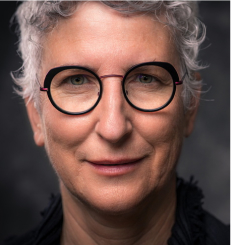
Tami Simon speaks with Julia Cameron, an award-winning writer and director. In addition to her many films, television episodes, plays, and articles in publications such as Rolling Stone, Vogue, and the New York Times, Julia is the author of the bestselling book The Artist’s Way. With Sounds True, she has recorded the audio teaching program Reflections on the Artist’s Way and, along with Natalie Goldberg, The Writing Life. In this episode, Tami speaks with Julia about how to break through creative blocks, how to deal with the internal censor that we all have when we write, and why creativity requires that we take risks. (50 minutes)
Julia Cameron is the author of the national bestselling book, The Artist's Way. An award winning writer and director, she has created feature films, movies of the week and episodic television, six full-length plays, and hundreds of articles and stories for national publications ranging from Rolling Stone to Vogue to the New York Times. Julia Cameron's current focus is music and sound healing. Her most recent work, Avalon, is a musical based on the Arthurian legend and set in modern times.
Listen to Tami Simon's interview with Julia Cameron: On the Creative Life
Subscribe to Insights at the Edge to hear all of Tami’s interviews (transcripts available too!), featuring Eckhart Tolle, Caroline Myss, Tara Brach, Jack Kornfield, Adyashanti, and many more.
Each week on Insights at the Edge, Tami Simon interviews leading voices in the Mind/Body/Spirit space about a vast spectrum of fascinating ideas. Since 2009, Tami and her guests have been exploring the edge of understanding, nearly 1,000 episodes on the honest work of change, including spiritual discovery, awakening, intuition, purpose, trauma, and grief.
Tami Simon speaks with Julia Cameron, an award-winning writer and director. In addition to her many films, television episodes, plays, and articles in publications such as Rolling Stone, Vogue, and the New York Times, Julia is the author of the bestselling book The Artist’s Way. With Sounds True, she has recorded the audio teaching program Reflections on the Artist’s Way and, along with Natalie Goldberg, The Writing Life. In this episode, Tami speaks with Julia about how to break through creative blocks, how to deal with the internal censor that we all have when we write, and why creativity requires that we take risks. (50 minutes)
What if the anxiety, grief, or fear you’ve struggled with for years is a burden you inherited—not one you earned?
This week, Tami Simon speaks with Richard Schwartz—founder of Internal Family Systems and author of the bestselling No Bad Parts—and Tamala Floyd, psychotherapist, IFS lead trainer, and author of Listening: When Parts Speak: A Practical Guide to Healing with IFS Therapy and Ancestor Wisdom. Together, they explore how IFS and ancestral healing converge to help us release intergenerational trauma at its root.
Join Tami, Dick, and Tamala to explore:
What “legacy burdens” are in IFS—and how to recognize when what you’re carrying came from someone else
How personal, ethnic, and cultural legacy burdens operate differently—and why racism, historical trauma, and collective suffering require their own healing
The concept of the “well ancestor”: why every lineage has one, and how to invite them into your healing
Heirlooms vs. burdens: how our ancestral lines carry gifts as well as wounds—and how to receive them
Why legacy burdens are often easier to release than personal ones—and what fear most commonly gets in the way
Tamala’s guided ancestral meditation, offered live: a practice for releasing what no longer serves you
What we offer future generations simply by doing our own inner work
The episode includes a full guided meditation led by Tamala Floyd—drawn directly from her ancestors—that listeners can return to again and again.
Listen now and begin your own healing across generations. →
This conversation offers genuine transmission—not just concepts about awakening, but the palpable presence of realized teachers exploring the growing edge of spiritual understanding together. Originally aired on Sounds True One.
Trauma doesn’t show up in what we remember. It shows up in how we react.
This week, Tami Simon speaks with Dr. Tian Dayton—award-winning scholar, senior fellow at The Meadows, and author of Growing Up with Addiction: How Adult Children of Addicts Can Heal Family Trauma, Complex PTSD and Codependency—about what it means to grow up inside a family shaped by addiction, and what it actually takes to heal.
Drawing on decades of clinical work, her own lived experience, and her innovative Relational Trauma Repair (RTR) method, Dr. Dayton explores the neuroscience of relational trauma and the embodied, experiential path through it.
Join Tami and Tian to explore:
Why addiction is a family disease—and how process addictions like workaholism and overeating leave the same marks as substance use
How childhood trauma gets stored in the body, not the story—and why you can’t think your way out of complex PTSD
The neuroscience of overreaction: why triggers feel present-tense even when they’re decades old
Cognitive and somatic distortions—and how to recognize when the past is hijacking the present
Psychodrama and Relational Trauma Repair: the power of talking to instead of about
Timelines, social atoms, and letter writing as tools for putting fragmented memories back in order
Why healing is a discipline—and what it means to take ownership of your own darkness as a path to freedom
Whether you grew up in a home shaped by addiction or simply recognize the patterns Dr. Dayton describes, this interview offers both a map and the courage to begin the journey.
Listen now and start where you are.
This conversation offers genuine transmission—not just concepts about awakening, but the palpable presence of realized teachers exploring the growing edge of spiritual understanding together. Originally aired on Sounds True One.
Can the simple act of being kind to yourself actually be a doorway to awakening?
In this special episode of Insights at the Edge, Tami Simon brings together two remarkable teachers whose friendship has sparked a revolutionary approach to inner transformation. Kristin Neff—the researcher who first measured self-compassion and author of Fierce Self-Compassion—joins Caverly Morgan, a meditation teacher and former Zen monk, to explore how self-compassion practices can become what they call “a lifeboat” to our deepest nature.
Together, they reveal why self-compassion isn’t just a psychological tool for feeling better—it’s a direct path to recognizing who we really are beyond our limited sense of self.
In this interview, Tami, Kristin, and Caverly explore:
Why every moment of self-compassion is a moment of “letting go of identification with the small, separate, limited self”
The difference between witnessing awareness and embodied loving awareness—and why it matters
How gender conditioning shapes our relationship to both compassion and awakening practices
The power of “relational dharma” and why we sometimes need another person to help us access self-compassion
A guided practice for moving from suffering into the “stance-less stance” of presence
If you’ve practiced self-compassion but sensed there’s something deeper available, or if awakening teachings have felt too abstract or disembodied, this conversation offers a bridge between heart and awareness that could transform your practice.
This conversation offers genuine transmission—not just concepts about awakening, but the palpable presence of realized teachers exploring the growing edge of spiritual understanding together. Originally aired on Sounds True One.