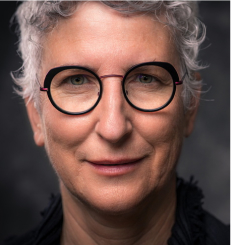
Patrick O’Malley is a grief counselor with more than 35 years of experience. He has written many well-regarded articles on grieving, including the namesake New York Times article that inspired his new Sounds True book Getting Grief Right: Finding Your Story of Love in the Sorrow of Loss. In this episode of Insights at the Edge, Tami Simon and Patrick discuss his unique approach to grief and how it diverts from the popularly accepted five-stage model created by Elizabeth Kübler-Ross. Patrick asserts that the Kübler-Ross model, while helpful as a foundation, can actually create an emotional cage for people as they struggle to find the acceptance and closure that they expect to end their grieving. Tami and Patrick also talk about the odd way in which the concept “closure” became entwined with grief therapy and why sharing our stories of loss can be the most important step in the process. Finally, Patrick shares his own story of loss and explains that the simple act of being compassionately heard can be the most important step toward healing. (60 minutes)
Subscribe to Insights at the Edge to hear all of Tami’s interviews (transcripts available too!), featuring Eckhart Tolle, Caroline Myss, Tara Brach, Jack Kornfield, Adyashanti, and many more.
Founded Sounds True in 1985 as a multimedia publishing house with a mission to disseminate spiritual wisdom. She hosts a popular weekly podcast called Insights at the Edge, where she has interviewed many of today's leading teachers. Tami lives with her wife, Julie M. Kramer, and their two spoodles, Rasberry and Bula, in Boulder, Colorado.
Patrick O’Malley is a grief counselor with more than 35 years of experience. He has written many well-regarded articles on grieving, including the namesake New York Times article that inspired his new Sounds True book Getting Grief Right: Finding Your Story of Love in the Sorrow of Loss. In this episode of Insights at the Edge, Tami Simon and Patrick discuss his unique approach to grief and how it diverts from the popularly accepted five-stage model created by Elizabeth Kübler-Ross. Patrick asserts that the Kübler-Ross model, while helpful as a foundation, can actually create an emotional cage for people as they struggle to find the acceptance and closure that they expect to end their grieving. Tami and Patrick also talk about the odd way in which the concept “closure” became entwined with grief therapy and why sharing our stories of loss can be the most important step in the process. Finally, Patrick shares his own story of loss and explains that the simple act of being compassionately heard can be the most important step toward healing. (60 minutes)
Can the simple act of being kind to yourself actually be a doorway to awakening?
In this special episode of Insights at the Edge, Tami Simon brings together two remarkable teachers whose friendship has sparked a revolutionary approach to inner transformation. Kristin Neff—the researcher who first measured self-compassion and author of Fierce Self-Compassion—joins Caverly Morgan, a meditation teacher and former Zen monk, to explore how self-compassion practices can become what they call “a lifeboat” to our deepest nature.
Together, they reveal why self-compassion isn’t just a psychological tool for feeling better—it’s a direct path to recognizing who we really are beyond our limited sense of self.
In this interview, Tami, Kristin, and Caverly explore:
Why every moment of self-compassion is a moment of “letting go of identification with the small, separate, limited self”
The difference between witnessing awareness and embodied loving awareness—and why it matters
How gender conditioning shapes our relationship to both compassion and awakening practices
The power of “relational dharma” and why we sometimes need another person to help us access self-compassion
A guided practice for moving from suffering into the “stance-less stance” of presence
If you’ve practiced self-compassion but sensed there’s something deeper available, or if awakening teachings have felt too abstract or disembodied, this conversation offers a bridge between heart and awareness that could transform your practice.
This conversation offers genuine transmission—not just concepts about awakening, but the palpable presence of realized teachers exploring the growing edge of spiritual understanding together. Originally aired on Sounds True One.
What if aging isn’t about decline, but about becoming brighter—like a meteor that grows more luminous even as it falls through the atmosphere?
Tami Simon speaks with beloved poet-philosopher Mark Nepo about his deeply moving new book, The Fifth Season: Creativity in the Second Half of Life. Drawing from Chinese wisdom traditions and his own journey through chronic pain and back surgery, Mark illuminates aging as the “heavenly pivot” (love that phrase) which is the transformative shift from living outwardly to inhabiting life from the inside out.
Join Mark and Tami for this episode to explore:
The meteor metaphor: how we grow brighter as our outer casing flakes away • “Entering time” versus moving through it—and why slowing down opens the eternal moment • The paradox of limitation: how loss simultaneously deepens and expands us • Breaking through to joy as the depth of being that holds all the waves • Why the heart, not the mind, must lead in the second half of life • Living with chronic pain and learning to let beauty in while suffering • The difference between being victims of life versus initiates into life • How grief changes everything and why we don’t get over it, we get under it • Being swift of heart—living without hesitation from the inside out
Mark’s wisdom arises from decades of spiritual practice, surviving cancer, and facing the inevitable losses that come with a long life—essential listening for anyone navigating aging, chronic pain, loss, or simply seeking to live more fully present to the life they have.
Listen now to discover how the second half of life can be your most luminous yet.
This conversation offers genuine transmission—not just concepts about awakening, but the palpable presence of realized teachers exploring the growing edge of spiritual understanding together. Originally aired on Sounds True One.
What truly matters when we face the end of life? After decades of sitting at the bedside of hundreds of dying people, Frank Ostaseski has distilled the deepest human concerns into two essential questions: Am I loved? Have I loved well?
This week on Insights at the Edge, Tami welcomes Frank Ostaseski—co-founder of America’s first Buddhist hospice, the Zen Hospice Project, founder of the Metta Institute, and author of The Five Invitations: Discovering What Death Can Teach Us About Living Fully. Frank brings extraordinary wisdom from his pioneering work in compassionate end-of-life care, along with profound personal insights from his own encounters with heart surgery, strokes, and the transformative vulnerability of being “on the other side of the sheets.”
Join Tami and Frank to explore:
The two essential questions that arise when facing death—and what they reveal about living fully now
Why emotional flexibility is the true condition for healing and transformation
How to meet our own fear and pain without abandoning ourselves or others
The practice of “allowing” as a path to both wisdom and compassion
What happens in the dying process: surrender, reconstitution, and coming home
Why Frank is allergic to the notion of a “good death”
The indestructible love that emerges when we keep our hearts open through pain
How to practice dying by paying attention to everyday endings
This conversation is for anyone grappling with loss, change, or the fundamental questions of existence—offering not prescriptive answers, but the profound medicine of honest presence and the recognition that our vulnerability itself is one of our most beautiful human qualities.
This conversation offers genuine transmission—not just concepts about awakening, but the palpable presence of realized teachers exploring the growing edge of spiritual understanding together. Originally aired on Sounds True One.